From the backAdolf Hitler lined up three million men along his Eastern border and expected to crush Russia in eight weeks. Tow ferocious, excruciating years later, his forces met a final devastating defeat in the frozen streets of Stalingrad. Now this entire campaign has been recreated so accurately and vividly by the author of The Foxes of the Desert that you can hear its noise, feel its exhaustion, gasp at the blunders on both sides, follow every movement of the great armies.
Paul Carell (born Paul Karl Schmidt) was an Obersturmbannführer (lieutenant colonel) in the Allgemeine-SS (General SS) in Nazi Germany. He worked as the chief press spokesman for Joachim von Ribbentrop's Foreign Ministry, where he formulated propaganda for the foreign press. In this capacity during World War II, he maintained close ties with the Wehrmacht (German Army). After the war, he became a successful author, mostly of revisionist books that romanticized and whitewashed the Wehrmacht's role in World War II.
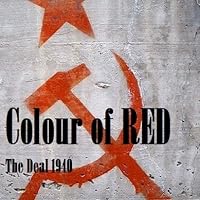
The cover art evokes the look and feel of the first days of Operation Barbarossa and reflects the aura of this immensely readable book. The author easily intertwines the higher level strategic and tactical aspects with the stories of the soldier on the ground.
Detailed enough that I used it on occasion to try to reenact Avalon Hill war games with the information. Also, there are about a dozen maps throughout to help set the scene.
When this book first came out in the sixties there was precious little from the German perspective of the Eastern Front, or any other part of the war for that matter, so it was quite interesting and popular if just from that aspect.
Since, there has been some controversy over the author whose real name is Paul Schmidt and worked at a high level in the German propaganda departments during the days of the Third Reich. I'll leave it as an exercise for the reader to do your on line lookups and decide whether this validates his writings or not.
I say who better to tell the tale? Knowing the source does help you judge the angles.
Signs of the times - My paperback edition covers says
A thundering best seller at $10.00. Now only $1.25
What was it like to experience the Russo-German War through German eyes? This mind-blower explodes the old cliche' that "history is written by the winners". The author is the controversial Paul Carell, the post-guerre name of Paul Schmidt, who worked for the Nazi regime throughout the war. Yet, this makes the writing of this particular piece of history, the greatest land war ever fought, more exact and the reading more exciting. Every German offensive is here, from planning through execution (also, executions) at the time the Germans still held the upper hand on the Eastern front. The English translation is superb.
A vivid panorama of a colossal conflict, told at the strategic, tactical and personal level. Tales of savage fighting and unimaginable hardship. Strictly a military history. That allows the author to ignore all the horrendous killing going on in the rear areas. The studious avoidance is hardly surprising. Carell (real name Paul Schmidt) was chief press spokesman for the Nazi foreign ministry from 1940 to the end of the war. His book seems intended to serve as a memorial for all the German soldiers on the Eastern Front, from the lowliest private to the most senior commanders. He does allow that Russians often fought bravely and effectively. However, a Russian soldier's diary entry decrying German looting and rape offers the only reference to malice in the wake of the German invasion (even then, looting and rape are mentioned, but not mass murders and attempted genocide); that's offset by several references to ethnic non-Russians or religious communities welcoming the German army as saviours from Communist tyranny. Nor is there any comment about what Europe and the world might have looked like if a few more divisions and several hundred more tanks had been available and allowed the capture of Moscow and Stalingrad and Murmansk. Carell says in the book that lack of material resources would have prevented an eventual victory even if Stalingrad had not turned into a disaster. There's still a whiff of a longing thought behind the admission: if only the Fuhrer had left the war to the generals. Clausewitz, cited a number of times, would probably have counselled against the invasion but following his principles probably also would have led to more success. The book was first published in 1963, which meant limited access to Russian sources. Some reviewers describe the book as dated on that and other grounds. I'm insufficiently familiar with the history to comment. However, this book does paint a broad and compelling picture based on information from hundreds of sources. The Nazis had a good military at their disposal, and apparently at least one good writer, even if there are hints of slyness in his work.
Outdated history by a discredited author. Paul Carell is a pseudonym for Paul Karl Schmidt who became a member of the Nazi Party in 1931 and a member of the SS in 1938. He graduated from university in 1934, and became an assistant at the Institute of Psychologie of the Universität Kiel in Germany. He held several positions in the Nazi Student Association.
In the SS, Schmidt was promoted to the rank of Obersturmbannführer in 1940. During the same year, he became the chief press spokesman for foreign minister Joachim von Ribbentrop. In this position, he was responsible for the German Foreign Ministry’s news and press division.
The author is a former PR man for the Nazis and any reader should evaluate any of his books with this in mind.
This book begins with a classic account of the German invasion of Russia in 1941, Operation Barbarossa. The book ends with the destruction of the German 6th Army in Stalingrad in early 1943. I really liked this book. It is told from the German perspective and there are a lot of personal accounts and events, that happened during this time frame. Usually from the account of a landser or key officer. This book may be dated, but I feel for the East Front grognard this account is one of the best from the German side. I have been reading military history for years. My favorite interest has always been World War 2, and the East Front in particular. This book is in my top 10 of East Front histories. No matter the date.
This book details invasion of the Soviet Union with a level of description immensely satisfying to fans of World War II history without becoming too technical. The overall perspective is from the German side, but avoids getting exuberant about that angle, focusing more on the collapse of the Red Army. I strongly recommend this book.
This is thorough and lively history. It's hard to believe that two individuals actually conspired to divide a continent and its peoples between themselves. Yet that is what happened. Inevitably one would desire to destroy the other and it was Hitler who struck first. One can understand why Soviet soldiers fought to the death in defense of their homeland. But what compelled the average German soldier to fight so tenaciously in a foreign land for an immoral cause despite hunger, cold, and shortages of clothing, supplies and ammunition? The book does not answer this question. It testifies to the superior training and skills of the German military. It clearly states that Operation Barbarossa failed because Hitler tried to accomplish too much with too little, that he overestimated his own strength and underestimated Stalin's might. It identifies Hitler's blunders which doomed his well trained, disciplined and eager soldiers.
Written by a German historian, the tale is told from a German perspective. At times it is very difficult to keep track of division and battalion and corps identifying numbers, but that is true of every military history. Fortunately there are interesting anecdotes about both the Germans and Soviet soldiers. Since this was published over forty years ago, there are probably more updated histories of Operation Barbarossa available now. Still, I'm glad I read it.
This one is a classical account of German eastern campaign. I really enjoyed reading this one. Author takes from the very start and builds the operation logically. innumerable personal accounts make it cheesy and worth more than any other I've read on same campaign. One feels the hard ships, the adventurism and the excitement of German soldiers and commanders moving east that summer and feels a part of them. The Stalingrad fiasco is covered at the end and its Marshal's surrender. thus marking the end of offensive strength of Wehrmacht in the east. its overall an excellent account full of heroics of Wehrmacht on the Eastern front. luved reading it
I read this a long time ago, but I was able recently to find an old copy at a used book story. I have no idea how this now holds up as history, but at the time I remember being blown away by the sheer scale of the Nazi attack. Also, Carell is never boring.
I actually checked this out from the library a number of times before purchasing it after I'd read it. It has a lot of detail and accounts that I found fascinating. It is written during those years, with a slanted view towards the Germans.
Great books to give detail of military strategy and important battles since Hitler launched "Barbarossa" operation to attack USSR in June 1941 until the formidable flesh grinder combats at Stalingrad in January 1943.
Von Überraschungsangriff auf die Sowjetunion 1941 bis zum Untergang der 6. Armee in Stalingrad 1943 wird in diesem Buch detailliert die militärische Perspektive von deutschen Soldaten, Generälen, Feldmarschälen und auch dem Oberkommando gezeigt. Die Mischung aus strategischer kühler Überlegenheit zu Beginn des Krieges und dem fanatischen Kampf bis zum Ende in Stalingrad zeigt einige Facetten der Wehrmacht im Zweiten Weltkrieg und hilft das menschliche Leid der Soldaten beider Seiten nachzuvollziehen. Aus einer rein militärischen Sicht ist dieses Buch daher nur zu empfehlen.
Jedoch gilt es natürlich auch Kritik zu üben, da das Buch von dem ehemaligen Pressechef des deutschten Außenministeriums unter Joachim von Ribbentrop geschrieben wurde und dieser die Legende der sauberen Wehrmacht maßgeblich förderte. Daher werden in diesem Buch keine Kriegsverbrechen oder Pogromme erwähnt, wie etwa 1941 als die Deutschen nach der Eroberung von Kiew 35.000 jüdische Einwohner ermordeten. Es empfiehlt sich daher zusätzlich zu dem Buch, auch deutsche Kriegsverbrechen in der Sowjetunion zu recherchieren, um eine nicht zu einseitige Bewertung aufzunehmen.
Ich würde dieses Buch trotzdem weiterempfehlen, da es nicht nur die deutsche Seite darstellt, sondern auch von den großen Opfern und der Widerstandskraft der Sowjetsoldaten berichtet. Ein Spruch ist mir besonders in Erinnerung geblieben: Während es in den USA stets hieß „Zeit ist Geld“, wurde der Spruch von den Sowjets an der Front umgedeutet zu „Zeit ist Blut“. Nur durch das große Opfer der Sowjetsoldaten konnte das Nationalsozialistische Deutschland schließlich besiegt werden.
Ein erschütterndes, minutiös recherchiertes, von Detailwissen strotzendes Dokument des - nach Napoleons Versuch - zweiten Feldzuges einer westeuropäischen Streitkraft ins Herz Russlands. Unvorstellbar die Leistungen und Leiden der Soldaten beider Seiten, erschütternd der Wagemut und der Durchhaltewille sowohl der sowjetischen als auch der deutschen Soldaten, unverständlich aus heutiger Sicht die Entschlossenheit auch persönlich alles einzusetzen für zwei menschenverachtende, totalitäre Systeme.
Kann man ein Werk, dessen Autor selbst SS-Offizier war, überhaupt positiv beurteilen? Eine schwierig zu beantwortende Frage, denn in ihr schwingt gefährlich ein Gutheißen des Regimes mit. Aber hätte ein kritischerer, besser beleumundeter Historiker in den Jahren nach dem Krieg überhaupt das Vertrauen der über 1000 Informationsgeber, vom einfachen Soldaten bis zum Feldmarschall erlangen können und hätte Einblick in persönlichste Aufzeichnungen erhalten? In dieser minutiösen Recherchearbeit und der persönlichen Detailkenntnis des Autors um die Frontvorgänge liegt der Wert des Werkes. Hier bedarf es jedoch stets einer kritischen Rezeption durch den Leser, der nicht vergessen kann und darf, wer hier die Quellen ausgewählt hat und wes Geistes Kind der Autor zumindest im Krieg gewesen ist.
For the World War II historian, this is a classic and "must" read. While originally published way back in 1966, it is still extremely relevant today.
The book is dense. Its nearly 700 pages covers the entirety of Operation Barbarossa through the massive defeat of the German army at Stalingrad. While the book does contain the mandatory order of battle, it also contains many personal accounts and stories, including many German generals and officers. Archival data from both Germany and the USSR is included. While the casual reader -- or just about anyone -- can get bogged down in the often detailed descriptions of the many divisions, army groups, etc. involved in the dozens upon dozens of battles discussed, it is well worth slogging through this information as the author's descriptions of the battles and day-to-day ordeals of the soliders is often fascinating.
While more information has come to light in the 50+ years since the original publication of this tome, it is still a vivid and enthralling read, packed with great insights and information.
Detailed account of the Russo-German War from June 1941 to 1 February 1943. Primary focus is on the tactical and operational level with countless anecdotal entries to add color and a human element to what was a campaign on a colossal scale. I suspect that access to unit combat diaries and commendation recommendations provides some of the anecdotal detail. The pro-German slant of the author is to be expected and must be taken into consideration when reading. The fact that the author was a field grade officer in the SS and a member of the Ministry of Propaganda does not detract from the quality of the information contained in the book.
One of Paul Carell's many "clean Wehrmacht" myth-making books. Reading through this pictorial record - including many interesting maps and infographics - you can easily be convinced that the Eastern Front was a human tragedy that befell Nazi Germany and the USSR completely out of thin air, without, say, it being the result of a genocidal dictatorship led by a fantasist deciding to invade a genocidal dictatorship led by a former bank robber.
This is a mediocre text. To me, it shifted too much between rank and file anecdotes and discussions on grand strategy. I understand the author was a German staff officer but at times the book reads more of an aggrandizement of the German war effort than an impartial description of what actually took place. Several of the anecdotes about common soldiers didn't enhance the quality of the book.
Ne vien par neprātu, apmātību un iznīcību, bet arī par ar apbrīnojamu drosmi un pašaizliedzību. Par stratēģiskām kļūdām un tām sekojošām aplamām rīcībām, kas ir atstājušas joprojām redzamus nospiedumus mūsu šodienā.
One of the best books on the Eastern front of the war. Includes both high level strategic views as well as detail firsthand on the front line. If you are interest in this theater of the war it doesn’t disappoint.
After finding a dusty copy in a second hand bookshop I have started reading this, but aware that the author has some baggage and that care must be taken to temper the possible pro German bias.
However, so far it’s an interesting read and there are some points raised about pre war Russian and German co-operation that bear thinking about. As a high level Nazi, the writer also had access to a number of high ranking Generals and other figures, so from those insights and quotes alone it assists in understanding why they took on Russia and the rationale behind some of strategic and operational decisions.
Having now finished this, I am pretty impressed. Tries to tell the story from both sides. Has a lot of eyewitness accounts from Axis participants which at times make gripping reading. It also outlines how the Soviets learnt from their earlier mistakes and became increasingly formidable.
The book ends with the fall of Stalingrad in early 1943, would be interesting to read the second volume.
Immense, engrossing, detailed, filled with human stories and... clearly partisan.
One of the best books on this theatre of war ever written, but to be taken wih a grain of salt, possibly while reading in parallel a non nazi-German (which is what Carell was, without any doubt) historian.
Carell brings forward (not alone in that) the theory that Barbrossa was a pre-emptive attack to avoid the Soviet one which was undoubtly coming. That has been confirmed by several soviet historians.
If you're interested in the Eastern Front, you will find this book interesting, but Carell is not a reliable historian--this is a sanitized and artful piece of revisionist history.