The sole excuse which a man can have for writing," says Remy de Gourmont, "is to unveil for others the sort of world which mirrors itself in his individual glass." No doubt if we cared to quibble we could point to other and lesser excuses for writing, such as are assumed by makers of directories, committee reports, and literary excitants or sedatives. What the eminent critic had in mind, however, was the kind of writing which, whatever its particular incentives and aims, reveals the accents of a man speaking to fellow men. To speak forth honestly is to report the world as it is beheld (however precariously) in one's own perspective.
Things have contexts, but only a person has perspectives. The essential excuse for writing, then, is to unveil as best one can some perspective that has not already become ordered into a public map. The present book is concerned with the kind of writing that is radically perspectival. All writing, to be sure, is perspectival in the most general sense for even the most banal cliche or the most plainly factual report is formulated from a certain standpoint, and represents a certain trend of associations and expectations. The difference is not between the perspectival and the universal for every universal, at least every humanly intelligible universal, is perspectivally conceived. No, the difference is between perspectives that have become standardized and perspectives that are freshly born and individual.
The latter are perspectives in the making, rather than perspectives already publicly established it is with them that the following pages are concerned.
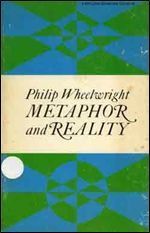
Really enjoyed this short but potent book. Its two main topics are given in the title. The author writes about our perception of reality and our ability to communicate it through language, specifically the power of poetic language and metaphor for expressing the nuances of our perspective on reality. His main thesis on metaphor (defined broadly) gives it two cooperative functions. I'll leave it to the author to describe these, but both functions ultimately serve to create a 'tension' between the two images in the metaphor. Each component image in the metaphor grants the listener a different perspective on reality (or at least, the reality presented in the poem/statement). Like the differing views between our two eyes, the additional point of perspective creates a depth dimension which a non-metaphoric statement cannot produce.
This book's emphasis on metaphor, juxtaposition, and poetic language reminded me of John Ciardi's How Does a Poem Mean, which I read last year. Ciardi's is longer, and more focused on all aspects of poetry as an art form. This book is at once more focused on metaphor specifically, but also ultimately broader in its scope and philosophy.
I have a bad habit of only reading those books which I've heard of one way or another and which I expect to like. This is probably one of the best random pulls off a library shelf I've had in years. It's not perfect, and the author stumbles over his own definitions occasionally, but easily warrants five stars for me. Probably not everyone's cup of tea.
This is probably my favourite book for explaining the enduring function and power of poetic language. Wheelwright's thesis is that metaphor (which he employs as a representative feature of poetic language in general) grants us the ability to "mean more than the words actually say", and therefore to represent those aspects of lived reality that are beyond the reach of conventional speech. This is because poetic language aims to be 'tensive' in nature - self-conflicting, like life itself.
The writing is warm and rich, and not overly dry or steeped in academic jargon. Here he is on the use of symbols in poetry:
"Because of the nutritive darkness of proto-semantic experience in which it has taken root, and also because of its aim, which is to represent and evoke something of the richness and wonder and mystery of the world, a tensive symbol will allow some degree (preferably not too much) both of obscurity and variation in the responses of awareness that it calls forth."
I hesitate to recommend this book only because I want to selfishly keep its secrets for myself.
Those interested in linguistics and writing I think will enjoy this esoteric book. Well laid out by this professor and includes some philosophical aspects. No doubt the reader will learn some new terms and ways of approaching reading and writing.