3.5 stars
Did I find this to be a particularly original or incisive work of scholarship? No.
Did I nevertheless get something out of it? Yes.
Did I enjoy reading it? Yes.
Natalie Haynes is a classicist who has dipped into the feminist mythological retelling craze herself, and this nonfiction work is worth a read if, like me, you’re interested in learning a bit more about the women portrayed in Greek myths and how they’ve been reinterpreted over the years. A key takeaway is that while some of these women were sidelined or poorly treated by ancient authors, in many cases they were actually complex, sympathetic and/or powerful figures, who have in fact been watered down, dehumanized or sidelined in 19th and 20th century versions of their stories rather than by the Greeks themselves.
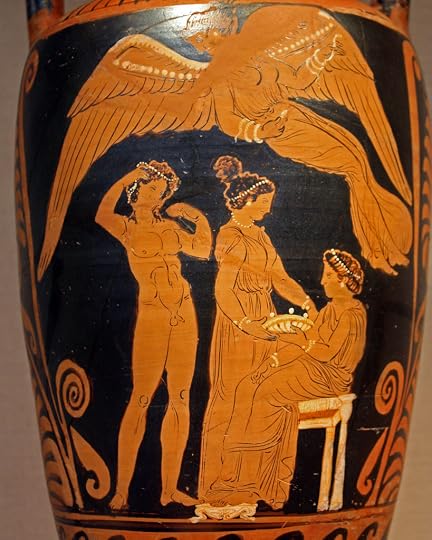
Much of the book consists of simply describing portrayals of particular myths, recounting the plays of Euripides (this was my favorite part—at least in Haynes’s interpretation of them, the women in these plays were vibrant and complex characters, and the stories are quite compelling) or describing vase paintings (there is an egregious lack of color plates in this book, forcing readers to turn to the internet for the visual art described). The pointing out of misogyny is generally pretty obvious, the modern works Haynes relates to the classics don’t always seem to merit the space she gives them, and the informal tone can be a bit jarring. Nevertheless, I enjoyed it as a fun, unchallenging work of nonfiction that left me conversant on the content and development of stories I knew nothing about before. It has definitely given me direction on which retellings I want to seek out.
There are 10 essays here, and I’ve ordered them by how much I now want to read retellings focused on these characters:
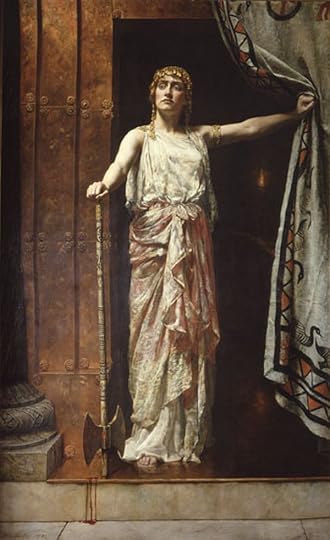
1-3: The villains, of course! Clytemnestra, Medea and Phaedra all sound like fascinating characters, though a Phaedra retelling would perhaps work better as a movie or novella than a novel. But the biggest challenge for a modern author would be not whitewashing them, morally speaking (except perhaps Clytemnestra, who depending on your interpretation of her motives, was pretty sympathetic to begin with).
4: The Amazons: This is a single chapter, because they were generally depicted more as a team than individuals. They fought as a unit and were considered the equals of male warriors, though in the wars they always seemed to lose. I’d love to see someone take them on in fiction, but an author who would do serious research on the setting and not focus on (heterosexual) romance—Nicola Griffith, perhaps.
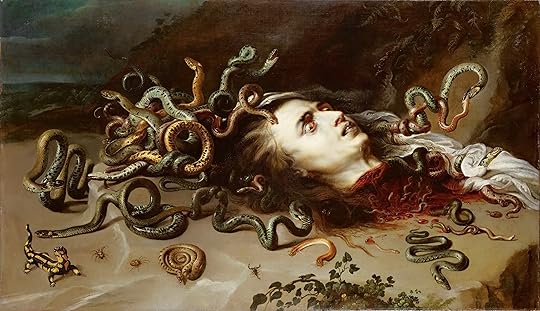
5: Medusa: In Haynes’s telling, she was always pure victim—turned into a monster as punishment for being raped, went to live in a remote cave to avoid harming anyone with her curse (accompanied by her sisters, who were unaffected), then murdered in her sleep by some douche whose stepfather sent him on a quest to have a clearer path to his mom. Haynes has in fact written this retelling, and I’m interested.
6: Penelope: More than just the perfect, long-suffering wife, she’s very clever beneath the surface, and keeps her secrets close. Perhaps one of the harder ones to mess up, as long as the author gets the voice right.
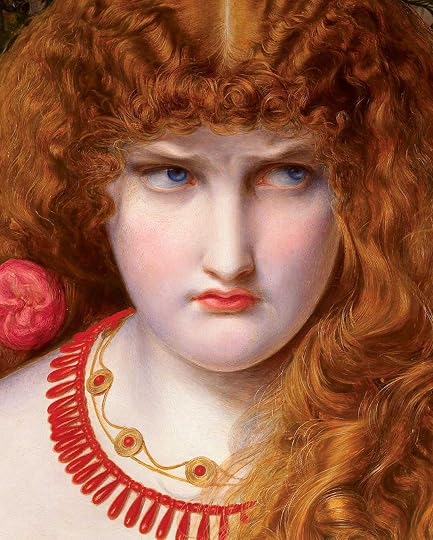
7: Helen: There are some interesting variations on Helen’s story (in one, she never went to Troy at all—that was just a simulacrum, and she was safely in Egypt the whole time!), and some telling details about her relationships with Paris’s family. I also didn’t know about her kidnapping as a young girl. This retelling seems difficult to do in a way that would interest me, though also a potential crowd-pleaser.
8: Jocasta: I’m not sure why this section came so early in the book; while it’s interesting to view the Oedipus story from the mom’s perspective, and some of the details are quite telling when you think about them, the character doesn’t generally seem to have had much substance.
9: Eurydice: Has even less substance, though those modern poems from the perspective of a Eurydice who wasn’t that into Orpheus sound like fun.
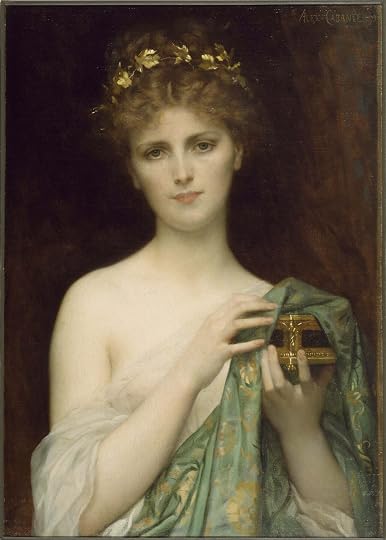
10: Pandora: The Eve parallel is notable, and the discussion about culpability worth having, though the character herself doesn’t sound very interesting. A bit of trivia: Pandora originally had a jar, not a box; that was a later mistranslation.
Because all the characters in Greek myth seem to intersect, I’ve also now learned enough to know that I don’t care about Ariadne (young woman finds hormones to override sense, the end?). Interestingly, Haynes’s feminism definitely does not extend to goddesses (except perhaps Persephone), who are often at fault for mortal women’s plights. While that’s a reasonable line to draw, I’d be interested in reading more about how they’ve been depicted and interpreted over the years, and why certain portrayals might have developed. I’d never thought of Athena as an embodiment of “not like other girls,” but her favorites really are always men, aren’t they?