

What do you think?

Dante's Inferno
A faithful yet totally original contemporary spin on a classic, Dante's Inferno as interpreted by acclaimed artist Sandow Birk and writer Marcus Sanders is a journey through a Hell that bears an eerie semblance to our own world. Birk, hailed by the Los Angeles Times as one of "realism's edgier, more visionary painters," offers extraordinarily nuanced and vivid illustrations inspired by Gustave Dore's famous engravings. This modern interpretation depicts an infernal landscape infested with mini-malls, fast food restaurants, ATMs, and other urban fixtures, and a text that cleverly incorporates urban slang and references to modern events and people (as Dante did in his own time). Previously published in a deluxe, fine-press edition to wide praise, and accompanied by national exhibitions, this striking paperback edition of Dante's Inferno is a genuinely provocative and insightful adaptation for a new generation of readers.
240 pages, Paperback
First published December 1, 2003
Ratings & Reviews
Friends & Following
Create a free account to discover what your friends think of this book!
Community Reviews
Displaying 1 - 30 of 272 reviews

Want to Read
March 2, 2023the new hozier album gonna be based on this 🤭

November 18, 2008
Yeah.....sorry, just not working for me.
Ok, this is a brave endeavor to undertake. Re-writing (and re-drawing) what is considered the greatest work written in the Western World.
But for me it just fell flat. It read like a combination of the Divine Comedy and "Hey Dude! Where's my car?!" It simply makes no sense to have a modern day "cool" Dante talking passionately about 1300's Italian politics.
Also, on some level you have to respect the structure and rules of hell that Dante set up. For example, you may hate George W. Bush but you can't simply throw him in the burning river in the 7th circle along with Hitler and have the centaurs poke away at him. Even if you believe Bush is/was a mass murderer the fact remains that:
a. He isn't dead
b. I think it is reasonable to assume he has acknowledged Christ as his savior and thus would end up in purgatory
c. Bush next to Hitler! Be reasonable. I think he was a terrible president but you just can't put him with Hitler
Ok, this is a brave endeavor to undertake. Re-writing (and re-drawing) what is considered the greatest work written in the Western World.
But for me it just fell flat. It read like a combination of the Divine Comedy and "Hey Dude! Where's my car?!" It simply makes no sense to have a modern day "cool" Dante talking passionately about 1300's Italian politics.
Also, on some level you have to respect the structure and rules of hell that Dante set up. For example, you may hate George W. Bush but you can't simply throw him in the burning river in the 7th circle along with Hitler and have the centaurs poke away at him. Even if you believe Bush is/was a mass murderer the fact remains that:
a. He isn't dead
b. I think it is reasonable to assume he has acknowledged Christ as his savior and thus would end up in purgatory
c. Bush next to Hitler! Be reasonable. I think he was a terrible president but you just can't put him with Hitler
October 28, 2007
...back in yore of days Cal & me used to wax/wank about doin' a modern vernacular translastion of Eliot's "Waste Land" which would render the famous passage
To Carthage then I came
burning burning burning
as
den I wen' to da big city an'
BOY'D I WANNA GET LAID
BOY'D I WANNA GET LAID
After only 20 or so years someone has beaten us to the schtick at least as far as The Comedia is concerned. Sandow Birk and Marcus Sanders have done an amazing job violating Dante's High Italian into Modern American Slacker and moving the scene of the action to 21st Century Los Angeles. Birk has added 30-40 sumptuous, piquant, pen & inks that punctuate the Cantos and better known scenes.
Is there a Falafel King on the banks of the River Styx? Does Greyon fly an LAPD chopper? Is there any parking near the corner of Dis & Vine?
Abandon hope all ye and read...ask Cal; he Has People and do the police in different voices.
To Carthage then I came
burning burning burning
as
den I wen' to da big city an'
BOY'D I WANNA GET LAID
BOY'D I WANNA GET LAID
After only 20 or so years someone has beaten us to the schtick at least as far as The Comedia is concerned. Sandow Birk and Marcus Sanders have done an amazing job violating Dante's High Italian into Modern American Slacker and moving the scene of the action to 21st Century Los Angeles. Birk has added 30-40 sumptuous, piquant, pen & inks that punctuate the Cantos and better known scenes.
Is there a Falafel King on the banks of the River Styx? Does Greyon fly an LAPD chopper? Is there any parking near the corner of Dis & Vine?
Abandon hope all ye and read...ask Cal; he Has People and do the police in different voices.
October 26, 2023
the first fanfic about the bible

November 6, 2024
|1.5 Stars|Ages 15+|Narrative Poetry|
Why do schools pick the most boring books for us to read ToT
Why do schools pick the most boring books for us to read ToT

February 27, 2026
Dante, what a guy. It takes a special kind of person to write a self-insert fantasy novel with their idol positioned as their personal mentor. Every time Virgil and Dante interacted, I couldn't help but laugh, knowing this was all Dante's wishful thinking.
Going into the writing itself, his descriptions of the layers of Hell were visceral and violent, and after reading, I understand why this novel is so pervasive centuries after its publication. The Christian guilt, pressure, and shame were constant undercurrents to Dante's perception of the afterlife, and the final scene of Judas, Cassius, and Brutus, doomed to forever be eaten alive, was both cruel and almost gratuitous.
I love drama, and Dante is full of it.
Going into the writing itself, his descriptions of the layers of Hell were visceral and violent, and after reading, I understand why this novel is so pervasive centuries after its publication. The Christian guilt, pressure, and shame were constant undercurrents to Dante's perception of the afterlife, and the final scene of Judas, Cassius, and Brutus, doomed to forever be eaten alive, was both cruel and almost gratuitous.
I love drama, and Dante is full of it.

June 16, 2007
This is a fascinating volume, as it modernizes Dante's well-known classics not only with great illustrations of contemporary America, but also with a much more contemporary translation. While it does, of course, take some liberties with the translation, I like this volume because it really shows why this book is a classic- it endures because it is still applicable today, despite Dante's constant references to 13th century Florentine religion and politics.
September 30, 2024
An interesting book which changed the perspective and entire aspects of religion due to its incredible popularity.

February 28, 2015
This is a paraphrase/loose translation of the Inferno. While I certainly wouldn't recommend it as a replacement for reading an actual translation, as a supplement its quite enjoyable. The biggest draw though is not the text but the extremely unique artwork, which places scenes from the Inferno in a modern LA. It's every bit as bizarre and fascinating as it sounds.
My four star rating is due to two main deficiencies in the translation. The first is that, at times, the language is too casual or updated. Mostly this updating works, but at times its jarring and feels anachronistic in a bad way.
The more grievous offense, however, is their inexplicable choice to include the names Jesus, God, and Mary in the text. Anytime Dante refers to those three in the Inferno he does so euphemistically. It's a subtle, but important, part of his art and theology. It may seem a minor point, but if you're going to translate Dante this is the sort of thing you need to be aware of. For many readers it will likely go unnoticed. For me it was unbearably obvious
My four star rating is due to two main deficiencies in the translation. The first is that, at times, the language is too casual or updated. Mostly this updating works, but at times its jarring and feels anachronistic in a bad way.
The more grievous offense, however, is their inexplicable choice to include the names Jesus, God, and Mary in the text. Anytime Dante refers to those three in the Inferno he does so euphemistically. It's a subtle, but important, part of his art and theology. It may seem a minor point, but if you're going to translate Dante this is the sort of thing you need to be aware of. For many readers it will likely go unnoticed. For me it was unbearably obvious

Read
August 25, 2022okay well i didn't understand any of this but it's for school so i'm sure i'll have more thoughts later

April 20, 2021
I am Italian and I know the Inferno very well. I have read the original many times and several different English translations, from Pinsky to Musa to Longfellow to Kirkpatrick.
This book's illustrations are L.A.-based reinterpretations of Gustave Dore's famous engravings, and they are, in my opinion, the best thing about the project.
The translation is creative and sincere but, in all honesty, it takes far too many liberties, it doesn't respect the multi-layered meaning of the original and it's so tacky. I'm referring especially to the choices of:
1) replacing many of Dante's metaphors and similes with "modern" reinventions that scream out of the text like neon-colored stickers on a Raffaello painting; and of:
2) including many modern-day people chosen arbitrarily from Western pop culture to be condemned souls: celebrities and politicians whose faces appear in the poem with the same elegance of ripped pieces of photographs glued on the Mona Lisa.
In short, my personal votes are 1 star to the translation and 4 stars to the illustrations.
I would hope nobody uses this book as their first introduction to the Divine Comedy, although I have noticed from the other reviews that some people thought it was a good idea. It is not. Read the original first, in any of the English translations available.
This book's illustrations are L.A.-based reinterpretations of Gustave Dore's famous engravings, and they are, in my opinion, the best thing about the project.
The translation is creative and sincere but, in all honesty, it takes far too many liberties, it doesn't respect the multi-layered meaning of the original and it's so tacky. I'm referring especially to the choices of:
1) replacing many of Dante's metaphors and similes with "modern" reinventions that scream out of the text like neon-colored stickers on a Raffaello painting; and of:
2) including many modern-day people chosen arbitrarily from Western pop culture to be condemned souls: celebrities and politicians whose faces appear in the poem with the same elegance of ripped pieces of photographs glued on the Mona Lisa.
In short, my personal votes are 1 star to the translation and 4 stars to the illustrations.
I would hope nobody uses this book as their first introduction to the Divine Comedy, although I have noticed from the other reviews that some people thought it was a good idea. It is not. Read the original first, in any of the English translations available.

Read
January 10, 202334 cantos of Dante's raging boner for Virgil. enough!!
on a serious note, though - while I understand the impact of this on the Western literary tradition etc. etc. - it's definitely something I feel as though the vast majority of people will not truly value.
Ofc I am not worse for the wear having read it, but it's a massive investment for a pretty low return in and of itself. Despite having taken 2/3/4 runs at the content of the work it's still so dense (and old) that I've barely made a dent in it.
All this is to say that I think I would be on almost equal standing now vs. 6 weeks ago if I'd simply read a very detailed summary of the plot ft. explanations of how it's affected later major literary works. Sorry Dr. Hall mb
on a serious note, though - while I understand the impact of this on the Western literary tradition etc. etc. - it's definitely something I feel as though the vast majority of people will not truly value.
Ofc I am not worse for the wear having read it, but it's a massive investment for a pretty low return in and of itself. Despite having taken 2/3/4 runs at the content of the work it's still so dense (and old) that I've barely made a dent in it.
All this is to say that I think I would be on almost equal standing now vs. 6 weeks ago if I'd simply read a very detailed summary of the plot ft. explanations of how it's affected later major literary works. Sorry Dr. Hall mb

August 7, 2024
I CAN SENSE FALL, IT'S COMING

March 16, 2009
This book contains modern illustrations and a slang version of the text of The Inferno. Now, the cover and the illustrations are phenomenal, but I expected the text to go with the drawings a LOT more...
I think for a true modern rendition, one would have to adapt the text and topics to a large extent, and make areas of hell correspond to things like being forced to eat McD's for eternity, or being repeatedly run over by trains, or have drug-related tragedies.
Still an interesting read, but I think someone could take the challenge further and make this a much better adaptation.
Since this book prompted me to actually read the real Inferno, I am pleased to have stumbled on it in a used bookstore.
I think for a true modern rendition, one would have to adapt the text and topics to a large extent, and make areas of hell correspond to things like being forced to eat McD's for eternity, or being repeatedly run over by trains, or have drug-related tragedies.
Still an interesting read, but I think someone could take the challenge further and make this a much better adaptation.
Since this book prompted me to actually read the real Inferno, I am pleased to have stumbled on it in a used bookstore.

May 13, 2016
I would describe this adaptation in the same vein of the Harvard Lampoon's adaptation of Lord of the Rings (Bored of the Rings). Well, not that bad, but you get the idea. And I mean this with the utmost respect and admiration for the authors. I read it side-by-side with a more conventional translation. I suppose that’s kind of a Cliff Notes approach to literature but it was the only way I was going to get through Dante. Anyway, it was worth reading just to see Bill Clinton and Gary Hart down in hell with the seducers. I don’t know how Donald Trump got a pass.

February 25, 2013
Intended for semi-illiterate teenage Americans. If your over the age of 14 read the real thing.
December 16, 2025
He decidido que haré reseñas de cada stage por el que pasa Dante en este libro, porque es demasiado como para abordarlo todo de una sola vez.
Creo que está bastante claro el propósito de este stage.
Aunque pueda parecer que todo gira en torno a la religión, si se lee entre líneas no se trata de eso. Se trata de ser una buena persona, tanto para los demás como para uno mismo. De abogar por el amor, la simpatía, la paz, la amistad y la mirada crítica.
Me gustó especialmente el canto en el que Dante se reencuentra con un viejo amigo en las cumbres del infierno. Dante deja de lado todos los estigmas y pecados que esa persona ha cometido para reencontrarse con el sentimiento del amor. Está para él, le dice que lo quiere. Y ahí es donde todo cobra sentido: aceptar que todos tenemos nuestros más y nuestros menos, y que se puede intentar entender y aceptar (ciertas cosas solo) en nombre del amor.
Como este, hay muchísimos cantos que invitan a pensar que no se trata únicamente de religión.
Me hubiera gustado más profundidad, pero dada la magnitud del libro en su totalidad, era inviable.
Muy buen stage, sin duda continuaré porque le tengo mucho hype al purgatorio.
Creo que está bastante claro el propósito de este stage.
Aunque pueda parecer que todo gira en torno a la religión, si se lee entre líneas no se trata de eso. Se trata de ser una buena persona, tanto para los demás como para uno mismo. De abogar por el amor, la simpatía, la paz, la amistad y la mirada crítica.
Me gustó especialmente el canto en el que Dante se reencuentra con un viejo amigo en las cumbres del infierno. Dante deja de lado todos los estigmas y pecados que esa persona ha cometido para reencontrarse con el sentimiento del amor. Está para él, le dice que lo quiere. Y ahí es donde todo cobra sentido: aceptar que todos tenemos nuestros más y nuestros menos, y que se puede intentar entender y aceptar (ciertas cosas solo) en nombre del amor.
Como este, hay muchísimos cantos que invitan a pensar que no se trata únicamente de religión.
Me hubiera gustado más profundidad, pero dada la magnitud del libro en su totalidad, era inviable.
Muy buen stage, sin duda continuaré porque le tengo mucho hype al purgatorio.
January 19, 2026
I really think this is really cool. On an initial read that’s all it really was, it’s biblical fan fiction. Then I actually looked at context and stuff and did research into Dante’s background and a lot of the references the book makes. As an atheist this was obviously difficult without much prior knowledge; I’ve skimmed the bible. I think that there’s a lot to talk about, with Dante’s ideas about evil originating from humanity, and a lot of the ideas in the book is important. I appreciate the idea of crimes against love being more severe, and the punishments are so interesting from a horror perspective.
At the same time, it’s a massive embellishment obviously, and at the end of the day a single perspective misrepresentation. If you really have to dig so incredibly deep into a book then you’re kind of skewing the point of it, like that idiotic book Ulysses. Still super fun though! Massive investment but great.
At the same time, it’s a massive embellishment obviously, and at the end of the day a single perspective misrepresentation. If you really have to dig so incredibly deep into a book then you’re kind of skewing the point of it, like that idiotic book Ulysses. Still super fun though! Massive investment but great.

September 4, 2023
Loved the beginning, his creativity in the circles of hell were truly fascinating and damning (if you're a pope!!) As the book progresses into purgatory and beyond I had to push to finish the book. The poetic style was great.

May 19, 2023
I remember dying to this book but RN106 was the greatest class ever
October 5, 2023
xuli això de tenir notes que expliquin que collons es va fumar Dante
mmmmmmmm xulu com s’imagina l’infern
la quantitat de referències???!!
com li agradava en Virgili e
mmmmmmmm xulu com s’imagina l’infern
la quantitat de referències???!!
com li agradava en Virgili e
December 9, 2023
Jestem jak ofwieram ksiazke 5 minut pozniej jestem w 3 kregu piekla damn wez mnie na randke najpierw

March 1, 2025
I couldn't finish it, the language was too hard for me but it was good tbh

October 9, 2025
reread for my book

December 12, 2025
really good!

February 19, 2026
A terrifying book that makes hell really feel like a living nightmare. I really liked the reference to Roman Empire. Dante was one of us

Read
August 10, 2026was pretty decent surprisingly
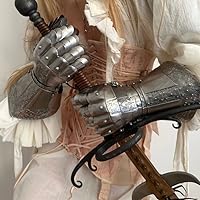
September 22, 2023
Andrew Hozier Bryne officially made a whole new take on this and I love him for it
September 24, 2021
Just wasn’t for me. I tried but a lot of it was really boring

December 31, 2013
I've read a few different translations of Dante's Inferno I found this version to be the worse translation by far. You can literally tell this book was written by a surfer, probably while stoned. The only redeeming quality of the book are the drawings of hell. I liked the modern take on the different scenes yet keeping with the original style.
The book is about Dante's journey through the different circles and levels of hell. With vivid descriptions of the various tortures to the different sinners. I found it distracting that he would basically translate the tortures happening to different politicians that lived during the 1300s and then throw in a modern politician that is still alive...I had hoped if he was going to do a modern translation and throw in modern technology that he would change all of the sinners of the book to be dead sinners of the last couple hundred years. Not talk about 14th century clergy, royalty and politicians which I will admit I had to google a few to know who they were and then throw in a handful of people from modern times, living or dead.
My biggest gripe with the book is the painfully boring dialogue between Virgil and Dante. Some of the dialogue is so loosely translated that it no longer makes sense. I think even an urban dictionary would fail to know what the point of the conversations was. Would I recommend this book? No, I think learning middle Florentine and reading the original would be more fun.
The book is about Dante's journey through the different circles and levels of hell. With vivid descriptions of the various tortures to the different sinners. I found it distracting that he would basically translate the tortures happening to different politicians that lived during the 1300s and then throw in a modern politician that is still alive...I had hoped if he was going to do a modern translation and throw in modern technology that he would change all of the sinners of the book to be dead sinners of the last couple hundred years. Not talk about 14th century clergy, royalty and politicians which I will admit I had to google a few to know who they were and then throw in a handful of people from modern times, living or dead.
My biggest gripe with the book is the painfully boring dialogue between Virgil and Dante. Some of the dialogue is so loosely translated that it no longer makes sense. I think even an urban dictionary would fail to know what the point of the conversations was. Would I recommend this book? No, I think learning middle Florentine and reading the original would be more fun.
Displaying 1 - 30 of 272 reviews