

What do you think?
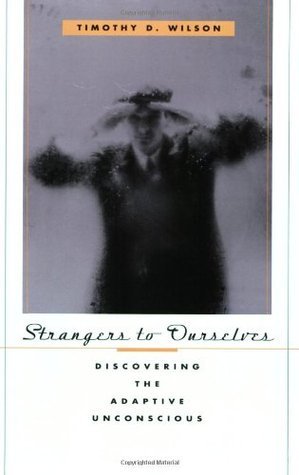
Strangers to Ourselves: Discovering the Adaptive Unconscious
"Know thyself," a precept as old as Socrates, is still good advice. But is introspection the best path to self-knowledge? What are we trying to discover, anyway? In an eye-opening tour of the unconscious, as contemporary psychological science has redefined it, Timothy D. Wilson introduces us to a hidden mental world of judgments, feelings, and motives that introspection may never show us.
This is not your psychoanalyst's unconscious. The adaptive unconscious that empirical psychology has revealed, and that Wilson describes, is much more than a repository of primitive drives and conflict-ridden memories. It is a set of pervasive, sophisticated mental processes that size up our worlds, set goals, and initiate action, all while we are consciously thinking about something else.
If we don't know ourselves―our potentials, feelings, or motives―it is most often, Wilson tells us, because we have developed a plausible story about ourselves that is out of touch with our adaptive unconscious. Citing evidence that too much introspection can actually do damage, Wilson makes the case for better ways of discovering our unconscious selves. If you want to know who you are or what you feel or what you're like, Wilson advises, pay attention to what you actually do and what other people think about you. Showing us an unconscious more powerful than Freud's, and even more pervasive in our daily life, Strangers to Ourselves marks a revolution in how we know ourselves.
This is not your psychoanalyst's unconscious. The adaptive unconscious that empirical psychology has revealed, and that Wilson describes, is much more than a repository of primitive drives and conflict-ridden memories. It is a set of pervasive, sophisticated mental processes that size up our worlds, set goals, and initiate action, all while we are consciously thinking about something else.
If we don't know ourselves―our potentials, feelings, or motives―it is most often, Wilson tells us, because we have developed a plausible story about ourselves that is out of touch with our adaptive unconscious. Citing evidence that too much introspection can actually do damage, Wilson makes the case for better ways of discovering our unconscious selves. If you want to know who you are or what you feel or what you're like, Wilson advises, pay attention to what you actually do and what other people think about you. Showing us an unconscious more powerful than Freud's, and even more pervasive in our daily life, Strangers to Ourselves marks a revolution in how we know ourselves.
262 pages, Paperback
First published January 1, 2002
About the author
Timothy D. Wilson
23 books144 followersTimothy D. Wilson is the Sherrell J. Aston Professor of Psychology at the University of Virginia. He has written for Science and The New York Times, among other publications and journals, and is the author of Strangers to Ourselves, which was named by New York Times Magazine as one of the Best 100 Ideas of 2002. Wilson is also the coauthor of the best-selling social psychology textbook, now in its seventh edition.
Ratings & Reviews
Friends & Following
Create a free account to discover what your friends think of this book!
Community Reviews
Displaying 1 - 30 of 157 reviews

May 31, 2014
Pursuing our goals is as satisfying as achieving them. Avoid rumination. Trust your gut. And perhaps my favorite line: "… if we want to change some aspect of our adaptive unconscious, a good place to start is deliberately to begin acting like the person we want to be."

February 3, 2013
NOTE: Review originally written in 2013.
I liked this book a lot (which makes the 3 star ratting seem odd, even to myself). The important points in brief are:
1. although we commonly identify with our explicit (conscious) mental processes, implicit mental processes (what the author terms the adaptive unconscious) play a much more central role in our daily functioning.
2. our explicit mental processes play much less of a causal role in our behavior than we commonly believe.
3. the adaptive unconscious bares little resemblance to the unconscious described by Freud and Jung.
4. many introspective processes are (necessarily) much more superficial than folk psychology and folk philosophy generally assume.
5. the narratives that we construct about our selves and our behavior (even if they are necessarily fictitious in many respects) play a much more important role in our adaptive functioning than we commonly assume (particularly in the social domain).
The author does an outstanding job of presenting convincing research findings to support his claims, making is book a terrific resource.
So why the 3 stars?
Because the book is a little stuffy and dry.
Particularly after reading R Kurzban's funny and brilliant Why Everyone (else) Is A Hypocrite, and J. Haidt's amazingly well executed The Righteous Mind.
Both of these books cover similar territory, in a much more memorable (and therefore effective) presentation style.
That being said, I don't think any of us can hear these messages enough, and the book is clarifying and helpful, so by all means, read this book, but read it after Kurzban and Haidt.
I liked this book a lot (which makes the 3 star ratting seem odd, even to myself). The important points in brief are:
1. although we commonly identify with our explicit (conscious) mental processes, implicit mental processes (what the author terms the adaptive unconscious) play a much more central role in our daily functioning.
2. our explicit mental processes play much less of a causal role in our behavior than we commonly believe.
3. the adaptive unconscious bares little resemblance to the unconscious described by Freud and Jung.
4. many introspective processes are (necessarily) much more superficial than folk psychology and folk philosophy generally assume.
5. the narratives that we construct about our selves and our behavior (even if they are necessarily fictitious in many respects) play a much more important role in our adaptive functioning than we commonly assume (particularly in the social domain).
The author does an outstanding job of presenting convincing research findings to support his claims, making is book a terrific resource.
So why the 3 stars?
Because the book is a little stuffy and dry.
Particularly after reading R Kurzban's funny and brilliant Why Everyone (else) Is A Hypocrite, and J. Haidt's amazingly well executed The Righteous Mind.
Both of these books cover similar territory, in a much more memorable (and therefore effective) presentation style.
That being said, I don't think any of us can hear these messages enough, and the book is clarifying and helpful, so by all means, read this book, but read it after Kurzban and Haidt.

February 9, 2010
In
On Being Certain: Believing You Are Right Even When You're Not
, the author castigates Malcolm Gladwell for getting it wrong in Blink. Gladwell claims this book, Strangers to Ourselves as "probably the most influential book I've ever read", and cites it as instrumental in his decision to write Blink. And yet it appears that Gladwell fundamentally misunderstood the nature of how unconscious decision making takes place and whether it can be trusted.
(Selected for the Cognitive Science Reading & Discussion Group in March 2010.)
That group is meeting tomorrow, and I'm roughly one-third the way into the book, so I want to get some thoughts clarified. (We typically read the same book two months in a row, so I'm okay with not having finished it).
Accessible cognates are an expansion (to me, at least) on the idea of the availability heuristic. I was first exposed to the latter as type of cognitive bias, but what Wilson explores is the idea that *all* mental constructs have a "energy level" that makes them more or less accessible. When we think — consciously or unconsciously — the more recently and more in-depth our cognates are the more easily they are accessed, and the mere act of accessing them bumps their energy state up. This is due simply to efficiency: memories or concepts that are used more often and intensively are kept closer at hand.
But when this idea is applied to *all* concepts, a crucial insight is made. As a child, the complex of ideas that makes up "mother" (or, at least, primary caregiver) will always be close to the top of this accessibility hierarchy. When a new person comes along — perhaps a preschool teacher — who shares many similar attributes, the brain will re-use the mother concept if that seems like a good fit (explaining the childhood faux pas of calling a teacher "mom").
The Freudian idea that we frame new relationships in terms of our infantile relationships to our parents is close to this idea, but not quite the same. One peculiar outcome of this: consider the stereotypical talk therapy situation of a man trying to stop acting out his relationship with his mother within the context of his other female intimates. The mere act of talking about his relationship with his mother — over and over, and over — would tend to solidify her premier position as the most accessible female pattern. A better approach would probably be to deeply explore other variations of female relationships in order to break that dominance. Perhaps modern talk therapy does deal with this paradox, I don't know.
Normal schizophrenia: perhaps the central theme of the book, so far, is that we all have two personalities. First, the conscious self, which may or may or may not be in control. Second, the agglomeration of many unconscious mechanisms also forms a consistent pattern of behavior and thought, and is thus also a personality. Not all of those varied mechanisms work together, some are more deeply buried than others (the fear response to what looks like a snake is different and not really related to one's reaction to embarrassment in front of peers, for example). But crucially, those two personalities are independent enough that they might work at cross purposes. The conscious mind might find a prospective friend intelligent, charming and interesting all while completely oblivious to the signs that friendly discussions with this person will quickly devolve into acrimony because they they trigger memories of an overbearing older brother.
A crucial problem is that the unconscious is unavailable for inspection. Navel gazing, per se, won't reveal these buried tendencies.
Furthermore, those tendencies will be heavily context dependent. A person might react to embarrassment in front of peers with clownish bravado, while a similar reaction in front of an attractive person of the appropriate sex results in sheepishness, and an authority figure might witness clumsy and panicked denial. A question like "do you embarrass easily?" becomes meaningless.
Take this question from the Myers-Briggs personality test:
And even if the question is made very explicit, the inherent divide between the conscious and unconscious might mean that we might remain fundamentally confused about what we "prefer". Perhaps we think that a small group of peer co-workers would be preferred, but unconsciously we react very poorly to the chaos implied by a lack of direction and thus the typical outcome of such a meeting is less preferred; meanwhile the presence of authority at a larger meeting might be consciously resented as paternalistic, but unconsciously we might end up more satisfied with our performance and behavior when such a control is present.
I recall taking that test many years ago and feeling frustrated at these ambiguities. Does "preference" mean who I want to be? Or who I think I actually am? Or, worse, who I'm worried I might have to admit to being if I were more honest with myself?
What Wilson promises later in the book is a kind of indirect self-help technique. This isn't nominally a self-help book; with human consciousness under discussion, I'm pretty confident that any book that actually tries to sell itself as such would be uselessly simplistic anyway. At the same time, the possibility for advice is inherent, and many books that examine the many aspects of cognition will offer pointers that the author suspects might help. They'll sometimes call them heuristics, of course, in order not to be tarred with the self-help brush.
I haven't gotten to the details yet, but the gist of it seems to be that whereas introspection per se isn't useful, it is possible to use our interactions with others in our past as a dark mirror. By examining situations in which our behavior bewildered or frustrated us, we can try to compose a description of who that "other person" inside our skin is, and learn which situations trigger their antics and how to avoid those situations, and perhaps even to understand where "their" past intersects with our conscious past.
Back to the book for a bit more reading before tomorrow's meeting.
(Selected for the Cognitive Science Reading & Discussion Group in March 2010.)
That group is meeting tomorrow, and I'm roughly one-third the way into the book, so I want to get some thoughts clarified. (We typically read the same book two months in a row, so I'm okay with not having finished it).
Accessible cognates are an expansion (to me, at least) on the idea of the availability heuristic. I was first exposed to the latter as type of cognitive bias, but what Wilson explores is the idea that *all* mental constructs have a "energy level" that makes them more or less accessible. When we think — consciously or unconsciously — the more recently and more in-depth our cognates are the more easily they are accessed, and the mere act of accessing them bumps their energy state up. This is due simply to efficiency: memories or concepts that are used more often and intensively are kept closer at hand.
But when this idea is applied to *all* concepts, a crucial insight is made. As a child, the complex of ideas that makes up "mother" (or, at least, primary caregiver) will always be close to the top of this accessibility hierarchy. When a new person comes along — perhaps a preschool teacher — who shares many similar attributes, the brain will re-use the mother concept if that seems like a good fit (explaining the childhood faux pas of calling a teacher "mom").
The Freudian idea that we frame new relationships in terms of our infantile relationships to our parents is close to this idea, but not quite the same. One peculiar outcome of this: consider the stereotypical talk therapy situation of a man trying to stop acting out his relationship with his mother within the context of his other female intimates. The mere act of talking about his relationship with his mother — over and over, and over — would tend to solidify her premier position as the most accessible female pattern. A better approach would probably be to deeply explore other variations of female relationships in order to break that dominance. Perhaps modern talk therapy does deal with this paradox, I don't know.
Normal schizophrenia: perhaps the central theme of the book, so far, is that we all have two personalities. First, the conscious self, which may or may or may not be in control. Second, the agglomeration of many unconscious mechanisms also forms a consistent pattern of behavior and thought, and is thus also a personality. Not all of those varied mechanisms work together, some are more deeply buried than others (the fear response to what looks like a snake is different and not really related to one's reaction to embarrassment in front of peers, for example). But crucially, those two personalities are independent enough that they might work at cross purposes. The conscious mind might find a prospective friend intelligent, charming and interesting all while completely oblivious to the signs that friendly discussions with this person will quickly devolve into acrimony because they they trigger memories of an overbearing older brother.
A crucial problem is that the unconscious is unavailable for inspection. Navel gazing, per se, won't reveal these buried tendencies.
Furthermore, those tendencies will be heavily context dependent. A person might react to embarrassment in front of peers with clownish bravado, while a similar reaction in front of an attractive person of the appropriate sex results in sheepishness, and an authority figure might witness clumsy and panicked denial. A question like "do you embarrass easily?" becomes meaningless.
Take this question from the Myers-Briggs personality test:
True or False:Context is missing: is this with co-workers in front of the group's authority figure? Or a peer-only team meeting? Or Thanksgiving dinner with relatives you haven't seen in a year? Or a reunion with high school friends?
You prefer meeting in small groups to interaction with lots of people.
And even if the question is made very explicit, the inherent divide between the conscious and unconscious might mean that we might remain fundamentally confused about what we "prefer". Perhaps we think that a small group of peer co-workers would be preferred, but unconsciously we react very poorly to the chaos implied by a lack of direction and thus the typical outcome of such a meeting is less preferred; meanwhile the presence of authority at a larger meeting might be consciously resented as paternalistic, but unconsciously we might end up more satisfied with our performance and behavior when such a control is present.
I recall taking that test many years ago and feeling frustrated at these ambiguities. Does "preference" mean who I want to be? Or who I think I actually am? Or, worse, who I'm worried I might have to admit to being if I were more honest with myself?
What Wilson promises later in the book is a kind of indirect self-help technique. This isn't nominally a self-help book; with human consciousness under discussion, I'm pretty confident that any book that actually tries to sell itself as such would be uselessly simplistic anyway. At the same time, the possibility for advice is inherent, and many books that examine the many aspects of cognition will offer pointers that the author suspects might help. They'll sometimes call them heuristics, of course, in order not to be tarred with the self-help brush.
I haven't gotten to the details yet, but the gist of it seems to be that whereas introspection per se isn't useful, it is possible to use our interactions with others in our past as a dark mirror. By examining situations in which our behavior bewildered or frustrated us, we can try to compose a description of who that "other person" inside our skin is, and learn which situations trigger their antics and how to avoid those situations, and perhaps even to understand where "their" past intersects with our conscious past.
Back to the book for a bit more reading before tomorrow's meeting.

January 31, 2017
"Strangers to Ourselves" is a relatively quick and easy read that will spur an internal dialogue about things you may already intuit, but could stand to delve into a bit deeper (hence, the talk about conscious and unconscious thought).
Assertions, quotes and thoughts that made me think:
- our adaptive unconscious can do a better job of interpreting people's behavior/understanding in general than our conscious mind (subliminal ads affect us less than overt ones)
- the 'feel good motive' as a form of self-distortion (I didn't get the promotion, not because I don't possess the skills needed, but b/c my boss is an a-hole-- which thought is ultimately in your self-interest? Self-acceptance vs. self-improvement)
- personality defined as "characteristic personality and thought."
- we develop our perceptions in one of three ways: (1) observations of covariation- assess feelings that accompany/follow an experience, repeatedly (2) idiosyncratic theories- could result from observations of covariation, usually held by the individual but not society (3) private knowledge-thoughts, feelings, memories
- the greater the aversion to something, the greater the potential for an unconscious inclination toward it
- fear and anger as necessary for survival (fight or flight)
- conscious vs. unconscious prejudice, where unconscious prejudice is more pervasive, and thus, more dangerous - can be remedied by regularly observing how you act, not just how you feel
- the "thwack" experience when something traumatic happens (break-up, a family member dies, etc.) and people underestimate their own resilience due to focalism
- pros/cons lists as further convoluting the accurate gut instinct, that should prevail over all other methods, assuming one has enough information to guide the gut
- journaling regularly and in-depth about trauma will decrease happiness at first, but over time serve to construct a solid narrative that lends clarity and acceptance, with more positive than negative outcomes due to the resolution of the dissonant parts of the previously neglected story that was constantly up for debate and revision
- introspection as the vehicle for a falsely constructed narrative vs. an uncovering
- rumination and thought suppression can be harmful by now allowing space for the formation of a new narrative, or the new narrative is skewed negatively
- a reflected appraisal is living out the traits that others have told you-you have
- "unnoticed feelings" as the sense of mutual attachment that others observe, with delayed realization by those experiencing the connection directly
- it's possible for the life of the party to still think he's shy because of an outdated conscious belief that's in conflict with his adaptive unconscious that understands his behavior has changed, and as long as it's positive, it's okay and beneficial for his self-concept to shift
- a study in which teachers were told that some students would "bloom" academically, and those students (actually random) did indeed test better throughout the year, likely due to more attention. girls were also reprimanded more for talking out-of-turn but actually did so less often than their male counterparts.
- self-perception is rarely as accurate as the perceptions that others have of you, although there's only a 20% overlap in these perceptions on average
Assertions, quotes and thoughts that made me think:
- our adaptive unconscious can do a better job of interpreting people's behavior/understanding in general than our conscious mind (subliminal ads affect us less than overt ones)
- the 'feel good motive' as a form of self-distortion (I didn't get the promotion, not because I don't possess the skills needed, but b/c my boss is an a-hole-- which thought is ultimately in your self-interest? Self-acceptance vs. self-improvement)
- personality defined as "characteristic personality and thought."
- we develop our perceptions in one of three ways: (1) observations of covariation- assess feelings that accompany/follow an experience, repeatedly (2) idiosyncratic theories- could result from observations of covariation, usually held by the individual but not society (3) private knowledge-thoughts, feelings, memories
- the greater the aversion to something, the greater the potential for an unconscious inclination toward it
- fear and anger as necessary for survival (fight or flight)
- conscious vs. unconscious prejudice, where unconscious prejudice is more pervasive, and thus, more dangerous - can be remedied by regularly observing how you act, not just how you feel
- the "thwack" experience when something traumatic happens (break-up, a family member dies, etc.) and people underestimate their own resilience due to focalism
- pros/cons lists as further convoluting the accurate gut instinct, that should prevail over all other methods, assuming one has enough information to guide the gut
- journaling regularly and in-depth about trauma will decrease happiness at first, but over time serve to construct a solid narrative that lends clarity and acceptance, with more positive than negative outcomes due to the resolution of the dissonant parts of the previously neglected story that was constantly up for debate and revision
- introspection as the vehicle for a falsely constructed narrative vs. an uncovering
- rumination and thought suppression can be harmful by now allowing space for the formation of a new narrative, or the new narrative is skewed negatively
- a reflected appraisal is living out the traits that others have told you-you have
- "unnoticed feelings" as the sense of mutual attachment that others observe, with delayed realization by those experiencing the connection directly
- it's possible for the life of the party to still think he's shy because of an outdated conscious belief that's in conflict with his adaptive unconscious that understands his behavior has changed, and as long as it's positive, it's okay and beneficial for his self-concept to shift
- a study in which teachers were told that some students would "bloom" academically, and those students (actually random) did indeed test better throughout the year, likely due to more attention. girls were also reprimanded more for talking out-of-turn but actually did so less often than their male counterparts.
- self-perception is rarely as accurate as the perceptions that others have of you, although there's only a 20% overlap in these perceptions on average

July 7, 2018
A delightfully approachable book on the intricacies of human motivation and decision making. This book really made me reconsider some of the primary drivers behind my own choices. Wilson’s conversational style makes his hard research findings understandable and practical.
I’ve always felt the adaptive unconscious mind was a big motivator of our choices, but this book left me awed at the hidden brain’s strength and pervasiveness. Here’s the primary model: the hidden brain feels something, then our conscious mind seeks out confirmation of what the adaptive unconscious already believes. We kid ourselves into believing our choices are primarily driven by our rational mind, but Wilson’s scientific evidence strongly suggests the opposite.
Sure, we live in a very civilized structured society now, but our decision making process is still optimized for basic survival. For most of humanoid history our brains have been optimized to life on the African savannah. Two million years of evolution fine tuned our brains to the fundamentals: finding food, avoiding pain, seeking shelter and procreating. Fancy skills like agriculture and living in houses are just the last 10,000 years.
We in modern society are smitten with the power of our own rational mind, but this hubris is being solidly rebuked by brain science. We’re really all just a bunch of well dressed cavemen.
Here is my favorite metaphor of how the adaptive unconscious interacts with the conscious brain: imagine a toddler playing with a video game console that is in demo mode. She watches the screen and diligently presses random buttons on the controller. She confidently believes she’s controlling the game but the game is being driven by a much more foundational force.
Wilson’s book really made me think and I thoroughly enjoyed it.
I’ve always felt the adaptive unconscious mind was a big motivator of our choices, but this book left me awed at the hidden brain’s strength and pervasiveness. Here’s the primary model: the hidden brain feels something, then our conscious mind seeks out confirmation of what the adaptive unconscious already believes. We kid ourselves into believing our choices are primarily driven by our rational mind, but Wilson’s scientific evidence strongly suggests the opposite.
Sure, we live in a very civilized structured society now, but our decision making process is still optimized for basic survival. For most of humanoid history our brains have been optimized to life on the African savannah. Two million years of evolution fine tuned our brains to the fundamentals: finding food, avoiding pain, seeking shelter and procreating. Fancy skills like agriculture and living in houses are just the last 10,000 years.
We in modern society are smitten with the power of our own rational mind, but this hubris is being solidly rebuked by brain science. We’re really all just a bunch of well dressed cavemen.
Here is my favorite metaphor of how the adaptive unconscious interacts with the conscious brain: imagine a toddler playing with a video game console that is in demo mode. She watches the screen and diligently presses random buttons on the controller. She confidently believes she’s controlling the game but the game is being driven by a much more foundational force.
Wilson’s book really made me think and I thoroughly enjoyed it.

July 30, 2012
Wilson makes a good argument for his conceptualisation of the (adaptive) unconscious. I agree with much of it and enjoyed the book - it had just the right balance of literature review and witty anecdata - but I personally believe we have far more power to bring our awareness to many of the processes Wilson assumes are inherently unconscious. I don't think he gives us enough credit there.
Also I hated the example of Susan assuming she was in love with Stephen because he was her idea of a model boyf, whilst meanwhile all her "friends" could plainly "see" she did not in "fact" "love" him at all. UGH. I BET WHEN SHE "REALISED" SHE HAD BEEN MISTAKEN, ALL YOU HER MARVELLOUS FRIENDS PATTED YOURSELVES ON YOUR SMUG SOB BACKS FOR BEING THE MOST RIGHT OBSERVING NONINTERFERING INSIGHTFUL SCIENTISTS EVAR.
um, yeah. Something about that whole story really rubbed me the wrong way. I might go have a cup of tea now.
Also I hated the example of Susan assuming she was in love with Stephen because he was her idea of a model boyf, whilst meanwhile all her "friends" could plainly "see" she did not in "fact" "love" him at all. UGH. I BET WHEN SHE "REALISED" SHE HAD BEEN MISTAKEN, ALL YOU HER MARVELLOUS FRIENDS PATTED YOURSELVES ON YOUR SMUG SOB BACKS FOR BEING THE MOST RIGHT OBSERVING NONINTERFERING INSIGHTFUL SCIENTISTS EVAR.
um, yeah. Something about that whole story really rubbed me the wrong way. I might go have a cup of tea now.

April 14, 2014
Interesting stuff. The big idea is that we can change ourselves by both changing our behaviour and the stories we tell about it. Wilson does a good job of presenting an updated view of Freud, and links his ideas to more recent studies that present serious questions about the extent to which we make conscious decisions in many situations. I'm not entirely convinced, but this are still important ideas.

June 3, 2019
The main idea in this book, from what I gather, is that the unconscious mind is real, and it is powerful.
What does that even mean? Consider some examples. Say you are walking through a crowded city and bump in to someone. You don't have to consciously tighten and loosen certain muscles to remain on balance. Your unconscious handles that for you, via the vestibular system.
But the unconscious isn't limited to this sort of low level operation. It deals with "high level" things like emotions, judgements, and goals as well. One example from the book stuck out to me. The author was going to some sort of parent teacher conference. Before going, his wife told him that this guy Matt was a bad guy. The author went to the conference, saw Matt interrupting people and pushing his own agenda. He went home and told his wife about Matt. His wife responded by saying that she was talking about Pat, not Matt. And that Matt is actually a great guy. Then the author reflected back and noticed that Matt wasn't interrupting more than any other parents, and that all parents were concerned about their children and trying to argue for what they felt was best for them. That Matt was acting just like everyone else, and probably was one of the more considerate and civil ones.
There was a chapter that talked about which analogy is most fitting to describe the conscious and unconscious. One analogy was the conscious mind as a CEO of a large corporation. The CEO certainly makes some decisions, but hardly makes all of them. They delegate low level tasks to lower level employees, but they also delegate high level tasks to various executives, vice presidents, and managers. This analogy demonstrates just how large a role the unconscious mind plays. And this was the analogy that gave the smallest role to the unconscious. Other analogies gave an even larger role to it.
After reading this book, I get a strong impression that the study of the unconscious mind is really going to be one of the next big things in psychology. A new frontier to explore.
What does that even mean? Consider some examples. Say you are walking through a crowded city and bump in to someone. You don't have to consciously tighten and loosen certain muscles to remain on balance. Your unconscious handles that for you, via the vestibular system.
But the unconscious isn't limited to this sort of low level operation. It deals with "high level" things like emotions, judgements, and goals as well. One example from the book stuck out to me. The author was going to some sort of parent teacher conference. Before going, his wife told him that this guy Matt was a bad guy. The author went to the conference, saw Matt interrupting people and pushing his own agenda. He went home and told his wife about Matt. His wife responded by saying that she was talking about Pat, not Matt. And that Matt is actually a great guy. Then the author reflected back and noticed that Matt wasn't interrupting more than any other parents, and that all parents were concerned about their children and trying to argue for what they felt was best for them. That Matt was acting just like everyone else, and probably was one of the more considerate and civil ones.
There was a chapter that talked about which analogy is most fitting to describe the conscious and unconscious. One analogy was the conscious mind as a CEO of a large corporation. The CEO certainly makes some decisions, but hardly makes all of them. They delegate low level tasks to lower level employees, but they also delegate high level tasks to various executives, vice presidents, and managers. This analogy demonstrates just how large a role the unconscious mind plays. And this was the analogy that gave the smallest role to the unconscious. Other analogies gave an even larger role to it.
After reading this book, I get a strong impression that the study of the unconscious mind is really going to be one of the next big things in psychology. A new frontier to explore.

November 6, 2011
There were some interesting insights here. Wilson contrasts his ideas about the subconscious with those of Freud. He argues that most subconscious thoughts are the result not of repression, but of biology and evolution. We survive because with have a host of semi-automatic processes that handle a huge amount of our lives.
This is really a book that presents Wilson's theories in a readable way. It does not have a lot of practical advice; it does not purport to provide a good way to use much of this knowledge. Still, it helped me to understand some of my thinking and what might be going on in my unconscious brain.
This is really a book that presents Wilson's theories in a readable way. It does not have a lot of practical advice; it does not purport to provide a good way to use much of this knowledge. Still, it helped me to understand some of my thinking and what might be going on in my unconscious brain.

July 24, 2012
Beach reading. Most of this is general, common sense type "scientific findings." Though there is a notes section at the back and references throughout, the way they're presented are much more as anecdotes than scientific references with summary and conditions outwaying numbers/ stats. Most of this book can be skimmed, as all the potentially relevant information is really contained in a few sentences but quite thoroughly ensconced in filler.

September 20, 2015
I see why this book is so well-regarded by other psychologists, but the impact of it has dulled a little since it's been built on so well by other books.

October 6, 2019
A rational enquiry into the irrational adaptive subconscious. If one is interested in the workings of the subconscious this is a must read. Highly recommend it!

April 16, 2021
"Най-голямата ни илюзия е да вярваме, че сме това, което си мислим, че сме." - А. Ф. Амиел (1889)
Основната идея и цел на книгата е да отговори на два въпроса -защо не познаваме добре себе си и как да подобрим самопознанието си, има любопитни теории, доста споделени примери и изследвания.
Човешката психика, без съмнение е изумителна, дълбока и многопластова, темата като цяло е наистина интересна за мен, но въпреки големите ми очаквания, някак не ми тръгна успешно четенето. Според мен книгите на издателство "Изток-Запад" в тази област са страхотни и са сред най-любимите ми, но тук не „уцелих“ подходящия момент и нагласа може би…
Основната идея и цел на книгата е да отговори на два въпроса -защо не познаваме добре себе си и как да подобрим самопознанието си, има любопитни теории, доста споделени примери и изследвания.
Човешката психика, без съмнение е изумителна, дълбока и многопластова, темата като цяло е наистина интересна за мен, но въпреки големите ми очаквания, някак не ми тръгна успешно четенето. Според мен книгите на издателство "Изток-Запад" в тази област са страхотни и са сред най-любимите ми, но тук не „уцелих“ подходящия момент и нагласа може би…

April 23, 2018
О, прекрасен, прекрасен! Жесток и в двата смисъла на дума :)
По един неочаквано научен начин Уилсън излага доста красноречиво проблема за несъзнаваното... и тук думата "проблем" е в най-проблематичния си смисъл. Авторът прави един кратък обзор на историята на несъзнаваното, излага доста факти, които за по-запознатите с материята са известни, ОБАЧЕ ги свързва по неочакван начин. Хубавото е, че Уилсън е един рядко разумен човек, който разглежда и контрааргументите, с което за съжаление, много учени не могат да се похвалят.
Изпъстрена с най-любопитни експерименти и водеща до неудобни заключения, тази книга определено ще ви обезпокои. Дори самият Уилсън по някое време заявява, че той интуитивно отхвърля заключенията си и честно, би предпочел въобще да не беше стигал до тях. :) Хипотезата, която се прокрадва като водеща нишка в цялата книга е доста изненадваща - че не само че не се познаваме особено добре, ами май и предполагаемото ни познание само ни пречи. :)
Със сигурност няма да се съгласите с всичко в тази книга. Предположенията в нея са доста обезпокояващи, но най-забавното е, че всъщност колкото по-яростно ги отхвърляме, толкова повече това доказва техните основания. Книгата най-малкото е провокативна, чете се много приятно, смяла съм се с глас на места, особено на шегичката за това какво правят бихейвиористите след секс :D Е, трябва да стигнете до края на книгата, за да разберете.
Препоръчвам горещо! Браво на "Изток-Запад" за поредната добра психологическа книга!
По един неочаквано научен начин Уилсън излага доста красноречиво проблема за несъзнаваното... и тук думата "проблем" е в най-проблематичния си смисъл. Авторът прави един кратък обзор на историята на несъзнаваното, излага доста факти, които за по-запознатите с материята са известни, ОБАЧЕ ги свързва по неочакван начин. Хубавото е, че Уилсън е един рядко разумен човек, който разглежда и контрааргументите, с което за съжаление, много учени не могат да се похвалят.
Изпъстрена с най-любопитни експерименти и водеща до неудобни заключения, тази книга определено ще ви обезпокои. Дори самият Уилсън по някое време заявява, че той интуитивно отхвърля заключенията си и честно, би предпочел въобще да не беше стигал до тях. :) Хипотезата, която се прокрадва като водеща нишка в цялата книга е доста изненадваща - че не само че не се познаваме особено добре, ами май и предполагаемото ни познание само ни пречи. :)
Със сигурност няма да се съгласите с всичко в тази книга. Предположенията в нея са доста обезпокояващи, но най-забавното е, че всъщност колкото по-яростно ги отхвърляме, толкова повече това доказва техните основания. Книгата най-малкото е провокативна, чете се много приятно, смяла съм се с глас на места, особено на шегичката за това какво правят бихейвиористите след секс :D Е, трябва да стигнете до края на книгата, за да разберете.
Препоръчвам горещо! Браво на "Изток-Запад" за поредната добра психологическа книга!

August 23, 2011
The book is great. It is based strictly on research, but the author does much more than review some experimental data and come up with a conclusion. Wilson paints a grand all-inclusive picture of our inner structure which clarifies lots of age-old questions.
In short, there are two personalities in every one of us: one based on our consciousness, another based on our "adaptive unconscious". And neither do we know ourselves, nor can we gain this knowledge by introspection.
The parts of the books concerning the opportunities for changing ourselves to the better (resolving conflicts between the two personalities either by changing the unconscious or the conscious one) contain more questions than answers. But still there are enough hints for anyone who really wants to experiment on themselves. Also, I have high hopes for the next Wilson's book, Redirect, which seems to promise much more practical advice.
In short, there are two personalities in every one of us: one based on our consciousness, another based on our "adaptive unconscious". And neither do we know ourselves, nor can we gain this knowledge by introspection.
The parts of the books concerning the opportunities for changing ourselves to the better (resolving conflicts between the two personalities either by changing the unconscious or the conscious one) contain more questions than answers. But still there are enough hints for anyone who really wants to experiment on themselves. Also, I have high hopes for the next Wilson's book, Redirect, which seems to promise much more practical advice.

May 9, 2018
This is really an exasperating book. There’s a lot of interesting information collected here but the conclusions drawn from that information are often wrongheaded and based on dichotomous assumptions that if it’s not one thing it’s another, both defined by the author. Also this seems to be a misunderstanding of psychoanalytic theory through a kind of statistical brain. Most troubling are the implications here that people don’t need to change or need only to change once, when the far smarter and more ethical conclusion is that people need to change and (pun intended) adapt constantly. The book seems to posit that in most cases acting without knowledge is better than acting with bad knowledge, without reflecting enough on acting with good knowledge. When it does get to this point it makes only obvious general-knowledge type conclusions. It’s a cultural understanding of psychoanalysis rather than an intellectual one. Maybe that’s the pathetic fallacy of the book.

August 25, 2019
You don’t know your self at all. You either have an exaggerated positive self image or an exaggerated negative self image. Finding out from other people who you trust or through anonymous letters from friends will help you understand yourself better than using introspection. Finding your own truths may help you or may delete your coping mechanisms for survival. The key though, is balance. Knowing enough about yourself so you aren’t hurting yourself in the long run is key, but the little lies can be a blanket to prevent painful affects. (Obviously right?)
Ruminating is bad for you. Especially if you have a negative self image. Your own thoughts are a danger to yourself and your balanced self concept.
I didn’t get much from this book. That’s my quick summary.
Ruminating is bad for you. Especially if you have a negative self image. Your own thoughts are a danger to yourself and your balanced self concept.
I didn’t get much from this book. That’s my quick summary.

January 21, 2012
About halfway through the book the author makes reference to his colleague Daniel Gilbert,whose own book , "Stumbling on Happiness" won the Royal Society prize and henceforth voluminous authoritative accolades.In my opinion they overlooked the better writer as I found Wilson's Style,although drier and less frivolous, much more suited to its subject and although it lacked the humorous cultural anecdotes of Gilbert's' book I found it more engaging and informative and less like an exercise in populist generic pop psychology.

November 24, 2018
Quite a good book. I suspect that he undersells Freud a little and I have to imagine that he simplifies Descartes (although, not having read either, I am vastly underqualified to judge) but he needs someone to argue against so hey.
I've read many of these ideas elsewhere so I was not entirely engaged in the first few chapters, but by chapter 4 he had me in a state of arousal (was it because of my excitement over the ideas or the pretty woman I saw outside my window? Read on to chapter 9 to figure out how to judge your adaptive unconscious as an outside observer).
I've read many of these ideas elsewhere so I was not entirely engaged in the first few chapters, but by chapter 4 he had me in a state of arousal (was it because of my excitement over the ideas or the pretty woman I saw outside my window? Read on to chapter 9 to figure out how to judge your adaptive unconscious as an outside observer).
January 23, 2013
It is very illuminating to think of the things that our minds do unconsciously. The relationship between the unconscious and the conscious is fascinating, and this book explores this in several interesting ways. It was a bit slow reading at first, but picks up more in later chapters. I enjoyed it as informative non-fiction, and it made me think a lot about my brain and my ways of thinking and being, how humans interact in general.

April 13, 2013
This is one of a growing number of books on the brain that argues that it is more plastic than previous thinkers have believed. We can change our minds, our habits, our fears, and so on. We can learn throughout our adulthood. We can even become better people by behaving better. The book is clearly written and an excellent introduction to the idea of brain plasticity.
December 28, 2010
**The duality of personality proposed by this book make me doubt the behavioral genetics 50-0-50 rule. What personality were they measuring? I at least want more information. This reinforces the question of what do you need to doubt "common knowledge"? How do you go about it? On the one hand it could just be a myth. On the other it could be a truth honed by hundreds of years of trial and error. How do you properly challenge tradition? So that you're not just taking the easy anti-tradition position that I take all the time.**
This book makes the key distinction between two systems of thought; the conscious mind and the unconscious. The main point was that the unconscious does a lot of things that are commonly thought to be the sole domain of the conscious mind; emotions, problem solving, reactions, information processing, decision making. Another important point was the that the unconscious can have a personality that is different from people's self reported personality.
The adaptive unconscious is not a single entity. It is a system of modules each performing a specific task.
Descartes's error was to divide the mind from the body. His catastrophe was to declare the mind to be solely the conscious mind.
Personality research is hard. It rarely predicts people's actual behavior.
Your mind is not your own. Most of it is beyond you, beyond introspection. You may only be able to see yourself in the reflection of other people.
I probably rated this lower than I would if it were new to me. But the many of the ideas, I've already been exposed to. I would definitely recommend this book to anyone with little psych background.
Quotes:
"The mind operates most efficiently by relegating a good deal of high-level, sophisticated thinking to the unconscious, just as a modern jumbo jetliner is able to fly on automatic pilot with little or no input form the human."
"It is thus best to think of the adaptive unconscious as a collection of city-states of the human mind and not as a single homunculus like the Wizard of Oz, pulling strings behind the curtain of conscious awareness."
"The adaptive unconscious is not governed by accuracy and accessibility alone. People's judgments and interpretations are often guided by a quite different concern, namely the desire to view the world in the way that gives them the most pleasure."
"One of the most enduring lessons from social psychology is that like Mrs. Reed, people go to great lengths to view the world in a way that maintains a sense of well-being. We are masterly spin doctors, rationalizers, and justifiers of threatening information. Daniel Gilbert and I have called this ability the "Psychological immune system." Just as we posses a potent physical immune system that protects us from threats to our physical well-being, so do we possess a potent psychological immune system that protects us from threats to our psychological well-being. When it comes to maintaining a sense of well-being, each of us is the ultimate spin doctor."
"The conflict between the need to be accurate and the desire to feel good about ourselves is one of the major battlegrounds of the self, and how this battle is waged and how it is won are central determinants of who we are and how we feel about ourselves. The best way to "win" this battle, in terms of being a healthy, well-adjusted person, is not always obvious. We must, of course, keep in touch with reality and know out own abilities well enough to engage in self-improvement. Bit it turns out that a dose of self-deception can be helpful as well, enabling us to maintain a positive view of ourselves and an optimistic view of the future."
"The fact that non-conscious processes are adaptive does not mean that they always produce error-free judgments. One reason for this is that it is not always to people's advantage to see the world accurately; a dose of congratulatory self-deception can be useful as well. Further, just because a trait or process has evolved due to natural selection does not mean it is a perfect system that cannot be improved...Second, many advantageous traits come with a trade-off: though generally beneficial, they have by-products that are not."
"Descartes was wrong on two fronts-the mind is not separate from the body, and consciousness and the mind are not the same thing."
"Does gaining insight (becoming conscious of previously unknown things about ourselves) change anything? Does the person who has limited insight into the reasons for her actions, for example, behave any differently from the person who has great insight."
""Conscious inessentialism" or "epiphenomenalism," holds that consciousness is an epiphenomenal byproduct of a skilled, nonsconious mind that does all the real work. Consciousness is like the child who "plays" a video game at an arcade without putting any money into it. He moves the controls, unaware that he is seeing a demonstration program that is independent of his actions. The child (consciousness) believes he is controlling the action, when in fact the software in the machine (nonconsciousness) is completely in control."
"The point is that one can feel presidential, and indeed be presidential, but still be less in control than it seems from either the inside or outside."
"Our consciousness-as-Ronald Regan model, however, portrays longterm planning a little differently. The federal government (the mind) is a vast, interrelated system that operates quite well on a day-to-day basis. The chief executive can look into the future and try to set long-term goals, but might find it difficult to make major changes in policy. Often the best he or she can do is to nudge the vast bureaucracy onto a slightly different course. In fact there is a danger to making major policy changes for which the rest of the mind is unsuited."
"Consider Herman, who believes that he is a longer who is happiest when by himself doing his own thing, when in fact he has a strong, nonconscious need for affiliation with other people, Because it is his conscious self-view that plans his future and determines his behavior, Herman avoids large gatherings and parties and chooses a career as a computer consultant so that he can work out of his home. His nonconscious need for affiliation is unfulfilled by these choices, however, leading to unhappiness. Perhaps the best use of consciousness is to put ourselves in situations in which our adaptive unconscious can work smoothly. This is best achieved by recognizing what our nonconscious needs and traits are and planning accordingly."
"The disadvantage of a system that processes information quickly and efficiently is that it is slow to respond to new, contradictory information. In fact we often unconsciously bend new information to fit our preconceptions, making it next to impossible to realize that our preconceptions are wrong."
"The adaptive unconscious is an older system designed to scan the environment quickly and detect patters, especially ones that might pose a danger to the organism. It learns patterns easily but does not unlearn them very well; it is a fairly rigid, inflexible inference maker. It develops early and continues to guide behavior into adulthood. Rather than playing the role of CEO, the conscious self develops more slowly and never catches up in some respects, such as in the are of pattern detection. But it provides check-and-balance to the speed and efficiency of nonconscious learning, allowing people to think about and plan more thoughtfully about the future."
"Many of people's chronic dispositions, traits, and temperaments are part of the adaptive unconscious, to which they have no direct access. Consequently, people are forced to construct theories about their own personalities from other sources, such as what they learn from their parents, their culture, and yes, ideas about who they prefer to be. These constructions may be driven less by repression and the desire to avoid anxiety then by the simple need to construct a coherent narrative about ourselves, in the absence of any direct access to our nonconscious personalities. Like Henry Higgins, people often construct narratives that correspond poorly to the nonconscious dispositions and abilities."
"Rather than a collection of static traits that we can use to classify people, Mischel argued, personality is better conceived as a set of unique cognitive and affective variables that determine how people construe the situation. People have chronic ways of interpreting and evaluating different situations, and it is these interpretations that influence their behavior."
"These two selves appear to be relatively independent. There is increasing evidence that people's constructed self bears little correspondence to their nonconscious self. One consequence of this fact is that the two personalities predict different kinds of behavior. The adaptive unconscious is more likely to influence people's uncontrolled, implicit responses, whereas the constructed self is more likely to influence people's deliberative, explicit responses."
"Other people agree more among themselves about what another person is like than they agree with that person's own ratings."
"You are allowed to think that adult life consists of a constant exercise of personal will; but it wasn't really like that, Jean thought. You do things, and only later do you see why you did them, if ever you do." [Julian Barnes, Staring at the Sun
"Wegner and Wheatley's provocative theory illustrates that a sense of conscious will cannot betaken as evidence that conscious thoughts really did cause our behavior. The causal role of conscious thought has been vastly overrated; instead, it is often a post-hoc explanation of responses that emanated from the adaptive unconscious."
"The amount of inside information we have produces a misleading feeling of confidence, namely the sense that with so much information we must be accurate about the causes of our responses, even when we are not...Similarly, the vast amount of inside knowledge we have about ourselves increases confidence in our self-knowledge, but does not always lead to greater accuracy."
"Does this prove, however, that people have nonconscious emotions, or simply mental processes of which they are unaware? This seems to be largely a semantic issue."
"People's affective forecasts often involve a durability bias, a tendency to overestimate the duration of reactions to future emotional events."
"The sad fact is that there may be a cost to extremely pleasurable experiences. They are wonderful when they occur, but they give us a new reference point against which all future experiences are compared, and many of them will suffer by comparison."
"Psychological processes are triggered, I suggest, that transform the events from the extraordinary to the ordinary, in a way that robs them of their emotional power. We weave events into our knowledge of ourselves and the world, in a way that makes the even seem normal, ordinary, even expected. When something happens that is novel or inconsistent with people's expectations about the world, they engage in mental work to come to terms with and explain the new event. If possible, people assimilate it into their current theories and expectations. Doing this often involves a reconstrual of the event to make it seem more understandable and predictable."
"We have found that the feelings people report after analyzing reasons are often incorrect, in the sense that they lead to decisions that people later regret, do not predict their later behavior very well, and correspond poorly with the opinion of experts."
"When people analyzed reasons, they constructed stories based on faulty data, such as which aspects of the relationship were easiest to put into words, were on their minds, or were consistent with their theories about how they should feel, leading to attitudes that were less well informed than those of people in the control group, who just gave their unanalyzed, gut feelings. As Goethe put it, "He who deliberates lengthily will not always choose the best."
"It is important to distinguish between informed and uninformed gut feelings. We should gather as much informations as possible, to allow our adaptive unconscious to make a stable, informed evaluation rather than an ill-informed one."
This book makes the key distinction between two systems of thought; the conscious mind and the unconscious. The main point was that the unconscious does a lot of things that are commonly thought to be the sole domain of the conscious mind; emotions, problem solving, reactions, information processing, decision making. Another important point was the that the unconscious can have a personality that is different from people's self reported personality.
The adaptive unconscious is not a single entity. It is a system of modules each performing a specific task.
Descartes's error was to divide the mind from the body. His catastrophe was to declare the mind to be solely the conscious mind.
Personality research is hard. It rarely predicts people's actual behavior.
Your mind is not your own. Most of it is beyond you, beyond introspection. You may only be able to see yourself in the reflection of other people.
I probably rated this lower than I would if it were new to me. But the many of the ideas, I've already been exposed to. I would definitely recommend this book to anyone with little psych background.
Quotes:
"The mind operates most efficiently by relegating a good deal of high-level, sophisticated thinking to the unconscious, just as a modern jumbo jetliner is able to fly on automatic pilot with little or no input form the human."
"It is thus best to think of the adaptive unconscious as a collection of city-states of the human mind and not as a single homunculus like the Wizard of Oz, pulling strings behind the curtain of conscious awareness."
"The adaptive unconscious is not governed by accuracy and accessibility alone. People's judgments and interpretations are often guided by a quite different concern, namely the desire to view the world in the way that gives them the most pleasure."
"One of the most enduring lessons from social psychology is that like Mrs. Reed, people go to great lengths to view the world in a way that maintains a sense of well-being. We are masterly spin doctors, rationalizers, and justifiers of threatening information. Daniel Gilbert and I have called this ability the "Psychological immune system." Just as we posses a potent physical immune system that protects us from threats to our physical well-being, so do we possess a potent psychological immune system that protects us from threats to our psychological well-being. When it comes to maintaining a sense of well-being, each of us is the ultimate spin doctor."
"The conflict between the need to be accurate and the desire to feel good about ourselves is one of the major battlegrounds of the self, and how this battle is waged and how it is won are central determinants of who we are and how we feel about ourselves. The best way to "win" this battle, in terms of being a healthy, well-adjusted person, is not always obvious. We must, of course, keep in touch with reality and know out own abilities well enough to engage in self-improvement. Bit it turns out that a dose of self-deception can be helpful as well, enabling us to maintain a positive view of ourselves and an optimistic view of the future."
"The fact that non-conscious processes are adaptive does not mean that they always produce error-free judgments. One reason for this is that it is not always to people's advantage to see the world accurately; a dose of congratulatory self-deception can be useful as well. Further, just because a trait or process has evolved due to natural selection does not mean it is a perfect system that cannot be improved...Second, many advantageous traits come with a trade-off: though generally beneficial, they have by-products that are not."
"Descartes was wrong on two fronts-the mind is not separate from the body, and consciousness and the mind are not the same thing."
"Does gaining insight (becoming conscious of previously unknown things about ourselves) change anything? Does the person who has limited insight into the reasons for her actions, for example, behave any differently from the person who has great insight."
""Conscious inessentialism" or "epiphenomenalism," holds that consciousness is an epiphenomenal byproduct of a skilled, nonsconious mind that does all the real work. Consciousness is like the child who "plays" a video game at an arcade without putting any money into it. He moves the controls, unaware that he is seeing a demonstration program that is independent of his actions. The child (consciousness) believes he is controlling the action, when in fact the software in the machine (nonconsciousness) is completely in control."
"The point is that one can feel presidential, and indeed be presidential, but still be less in control than it seems from either the inside or outside."
"Our consciousness-as-Ronald Regan model, however, portrays longterm planning a little differently. The federal government (the mind) is a vast, interrelated system that operates quite well on a day-to-day basis. The chief executive can look into the future and try to set long-term goals, but might find it difficult to make major changes in policy. Often the best he or she can do is to nudge the vast bureaucracy onto a slightly different course. In fact there is a danger to making major policy changes for which the rest of the mind is unsuited."
"Consider Herman, who believes that he is a longer who is happiest when by himself doing his own thing, when in fact he has a strong, nonconscious need for affiliation with other people, Because it is his conscious self-view that plans his future and determines his behavior, Herman avoids large gatherings and parties and chooses a career as a computer consultant so that he can work out of his home. His nonconscious need for affiliation is unfulfilled by these choices, however, leading to unhappiness. Perhaps the best use of consciousness is to put ourselves in situations in which our adaptive unconscious can work smoothly. This is best achieved by recognizing what our nonconscious needs and traits are and planning accordingly."
"The disadvantage of a system that processes information quickly and efficiently is that it is slow to respond to new, contradictory information. In fact we often unconsciously bend new information to fit our preconceptions, making it next to impossible to realize that our preconceptions are wrong."
"The adaptive unconscious is an older system designed to scan the environment quickly and detect patters, especially ones that might pose a danger to the organism. It learns patterns easily but does not unlearn them very well; it is a fairly rigid, inflexible inference maker. It develops early and continues to guide behavior into adulthood. Rather than playing the role of CEO, the conscious self develops more slowly and never catches up in some respects, such as in the are of pattern detection. But it provides check-and-balance to the speed and efficiency of nonconscious learning, allowing people to think about and plan more thoughtfully about the future."
"Many of people's chronic dispositions, traits, and temperaments are part of the adaptive unconscious, to which they have no direct access. Consequently, people are forced to construct theories about their own personalities from other sources, such as what they learn from their parents, their culture, and yes, ideas about who they prefer to be. These constructions may be driven less by repression and the desire to avoid anxiety then by the simple need to construct a coherent narrative about ourselves, in the absence of any direct access to our nonconscious personalities. Like Henry Higgins, people often construct narratives that correspond poorly to the nonconscious dispositions and abilities."
"Rather than a collection of static traits that we can use to classify people, Mischel argued, personality is better conceived as a set of unique cognitive and affective variables that determine how people construe the situation. People have chronic ways of interpreting and evaluating different situations, and it is these interpretations that influence their behavior."
"These two selves appear to be relatively independent. There is increasing evidence that people's constructed self bears little correspondence to their nonconscious self. One consequence of this fact is that the two personalities predict different kinds of behavior. The adaptive unconscious is more likely to influence people's uncontrolled, implicit responses, whereas the constructed self is more likely to influence people's deliberative, explicit responses."
"Other people agree more among themselves about what another person is like than they agree with that person's own ratings."
"You are allowed to think that adult life consists of a constant exercise of personal will; but it wasn't really like that, Jean thought. You do things, and only later do you see why you did them, if ever you do." [Julian Barnes, Staring at the Sun
"Wegner and Wheatley's provocative theory illustrates that a sense of conscious will cannot betaken as evidence that conscious thoughts really did cause our behavior. The causal role of conscious thought has been vastly overrated; instead, it is often a post-hoc explanation of responses that emanated from the adaptive unconscious."
"The amount of inside information we have produces a misleading feeling of confidence, namely the sense that with so much information we must be accurate about the causes of our responses, even when we are not...Similarly, the vast amount of inside knowledge we have about ourselves increases confidence in our self-knowledge, but does not always lead to greater accuracy."
"Does this prove, however, that people have nonconscious emotions, or simply mental processes of which they are unaware? This seems to be largely a semantic issue."
"People's affective forecasts often involve a durability bias, a tendency to overestimate the duration of reactions to future emotional events."
"The sad fact is that there may be a cost to extremely pleasurable experiences. They are wonderful when they occur, but they give us a new reference point against which all future experiences are compared, and many of them will suffer by comparison."
"Psychological processes are triggered, I suggest, that transform the events from the extraordinary to the ordinary, in a way that robs them of their emotional power. We weave events into our knowledge of ourselves and the world, in a way that makes the even seem normal, ordinary, even expected. When something happens that is novel or inconsistent with people's expectations about the world, they engage in mental work to come to terms with and explain the new event. If possible, people assimilate it into their current theories and expectations. Doing this often involves a reconstrual of the event to make it seem more understandable and predictable."
"We have found that the feelings people report after analyzing reasons are often incorrect, in the sense that they lead to decisions that people later regret, do not predict their later behavior very well, and correspond poorly with the opinion of experts."
"When people analyzed reasons, they constructed stories based on faulty data, such as which aspects of the relationship were easiest to put into words, were on their minds, or were consistent with their theories about how they should feel, leading to attitudes that were less well informed than those of people in the control group, who just gave their unanalyzed, gut feelings. As Goethe put it, "He who deliberates lengthily will not always choose the best."
"It is important to distinguish between informed and uninformed gut feelings. We should gather as much informations as possible, to allow our adaptive unconscious to make a stable, informed evaluation rather than an ill-informed one."
This entire review has been hidden because of spoilers.

June 25, 2026
I read this book pretty much in one sitting on the plane, and it was exactly what I needed for developing an idea for a study at work. Wilson's thesis is that we are comprised of two selfs, the conscious (our thoughts) and the unconscious (our behavior), and that these two selves are often misaligned. Our unconscious self is unknowable to our conscious self, and the best thing we can do to unite the two is to watch our behavior as if we were an outsider to determine how we really feel. Introspection, which is something that feels so conventionally essential to coming to know the self, is often counterproductive in Wilson's eyes: he suggests we go with our gut. Gave me a lot to think about! Highly recommend.

April 2, 2019
Fascinating book. I now realized why there is big gap between my desires and goals and my actions, Between the person I think I am and between who I am really in the world. I need to act like the person I want to be not the person my unconscious makes me.

March 16, 2023
Helped me understand the value of subjectivity. Immensely powerful for my then too analytic, too scientific mind.

September 15, 2008
Non si finisce mai di conoscere se stessi. Ci vuole forse tutta una vita per farlo, e non ci si riesce. Per tempo, per capacità, per volontà o incapacità. Mettetela come volete ....
"Strangers to Ourselves: Discovering the Adaptive Unconscious" di Timothy D. Wilson è un'esplorazione affascinante e accessibile della mente inconscia. Il libro sfida la nozione comune secondo cui siamo pienamente consapevoli delle ragioni dietro le nostre azioni, sentimenti e decisioni. Wilson argomenta in modo convincente che gran parte della nostra vita mentale si svolge al di fuori della nostra consapevolezza cosciente.
Il pensiero centrale di Wilson si basa sulla distinzione tra l'inconscio freudiano (spesso visto come represso e potenzialmente patologico) e quello che lui chiama l'inconscio adattivo. Quest'ultimo non è un deposito di desideri oscuri, ma un sistema incredibilmente efficiente e sofisticato che opera in background per aiutarci a navigare nel mondo. È come un "pilota automatico" mentale che elabora enormi quantità di informazioni, forma giudizi e guida le nostre risposte in modo rapido e automatico, permettendo alla nostra mente cosciente di concentrarsi su compiti più complessi e deliberati.
Wilson usa una metafora efficace per illustrare questo concetto: la nostra mente cosciente è simile a un giornalista che tenta di dare un senso a un evento, ma ha accesso solo a frammenti di informazioni. Il "vero" evento (ovvero il complesso processo inconscio) è molto più vasto e articolato. Spesso, il giornalista (la nostra mente cosciente) elabora una storia che appare logica e coerente, ma che in realtà è un'invenzione o un'inferenza basata su prove limitate e non sulla piena comprensione dei processi sottostanti.
Contrariamente all'inconscio freudiano, quello adattivo non è un luogo di repressione, ma un meccanismo estremamente utile. Ci permette di prendere decisioni rapide, formare impressioni sugli altri e affrontare situazioni sociali complesse senza dover analizzare ogni singolo dettaglio in modo cosciente.
La nostra capacità di comprendere noi stessi attraverso la sola introspezione è sorprendentemente limitata. Wilson presenta numerosi esperimenti che dimostrano come spesso non abbiamo una reale consapevolezza del perché proviamo certe emozioni, preferiamo determinate cose o facciamo determinate scelte. Le nostre spiegazioni coscienti sono spesso razionalizzazioni post-hoc.
Per mantenere un senso di coerenza e controllo, la nostra mente cosciente crea delle narrazioni plausibili per spiegare i nostri sentimenti e comportamenti. Queste storie, pur essendo spesso imprecise, ci aiutano a mantenere un'immagine di noi stessi che è stabile e comprensibile.
Comprendere l'inconscio adattivo ha importanti implicazioni per la nostra autoconoscenza e per come interagiamo con il mondo. Ci rende più umili riguardo alla nostra capacità di capire noi stessi e ci invita a prestare maggiore attenzione ai nostri comportamenti e alle nostre reazioni istintive, che sono spesso un riflesso più fedele dei nostri veri stati interni rispetto alle nostre spiegazioni razionalizzate. Wilson suggerisce che per conoscerci meglio dovremmo agire più come "scienziati" che osservano i propri comportamenti e le proprie reazioni, piuttosto che come "giornalisti" che inventano storie.
"Strangers to Ourselves" è un libro estremamente valido e consigliato. Wilson riesce a presentare concetti complessi della psicologia sociale e cognitiva in modo straordinariamente chiaro e accessibile, senza mai sacrificare il rigore scientifico. Il testo è arricchito da numerosi esperimenti e studi di ricerca che illustrano in modo vivido e convincente i punti chiave del suo argomento. Lo stile di scrittura è coinvolgente e scorrevole, evitando il gergo accademico e rendendo il tema interessante anche per i lettori non specialisti. È un'opera che invita a una profonda riflessione su chi siamo veramente e su quanto poco sappiamo dei complessi meccanismi che guidano le nostre vite.
"Strangers to Ourselves: Discovering the Adaptive Unconscious" di Timothy D. Wilson è un'esplorazione affascinante e accessibile della mente inconscia. Il libro sfida la nozione comune secondo cui siamo pienamente consapevoli delle ragioni dietro le nostre azioni, sentimenti e decisioni. Wilson argomenta in modo convincente che gran parte della nostra vita mentale si svolge al di fuori della nostra consapevolezza cosciente.
Il pensiero centrale di Wilson si basa sulla distinzione tra l'inconscio freudiano (spesso visto come represso e potenzialmente patologico) e quello che lui chiama l'inconscio adattivo. Quest'ultimo non è un deposito di desideri oscuri, ma un sistema incredibilmente efficiente e sofisticato che opera in background per aiutarci a navigare nel mondo. È come un "pilota automatico" mentale che elabora enormi quantità di informazioni, forma giudizi e guida le nostre risposte in modo rapido e automatico, permettendo alla nostra mente cosciente di concentrarsi su compiti più complessi e deliberati.
Wilson usa una metafora efficace per illustrare questo concetto: la nostra mente cosciente è simile a un giornalista che tenta di dare un senso a un evento, ma ha accesso solo a frammenti di informazioni. Il "vero" evento (ovvero il complesso processo inconscio) è molto più vasto e articolato. Spesso, il giornalista (la nostra mente cosciente) elabora una storia che appare logica e coerente, ma che in realtà è un'invenzione o un'inferenza basata su prove limitate e non sulla piena comprensione dei processi sottostanti.
Contrariamente all'inconscio freudiano, quello adattivo non è un luogo di repressione, ma un meccanismo estremamente utile. Ci permette di prendere decisioni rapide, formare impressioni sugli altri e affrontare situazioni sociali complesse senza dover analizzare ogni singolo dettaglio in modo cosciente.
La nostra capacità di comprendere noi stessi attraverso la sola introspezione è sorprendentemente limitata. Wilson presenta numerosi esperimenti che dimostrano come spesso non abbiamo una reale consapevolezza del perché proviamo certe emozioni, preferiamo determinate cose o facciamo determinate scelte. Le nostre spiegazioni coscienti sono spesso razionalizzazioni post-hoc.
Per mantenere un senso di coerenza e controllo, la nostra mente cosciente crea delle narrazioni plausibili per spiegare i nostri sentimenti e comportamenti. Queste storie, pur essendo spesso imprecise, ci aiutano a mantenere un'immagine di noi stessi che è stabile e comprensibile.
Comprendere l'inconscio adattivo ha importanti implicazioni per la nostra autoconoscenza e per come interagiamo con il mondo. Ci rende più umili riguardo alla nostra capacità di capire noi stessi e ci invita a prestare maggiore attenzione ai nostri comportamenti e alle nostre reazioni istintive, che sono spesso un riflesso più fedele dei nostri veri stati interni rispetto alle nostre spiegazioni razionalizzate. Wilson suggerisce che per conoscerci meglio dovremmo agire più come "scienziati" che osservano i propri comportamenti e le proprie reazioni, piuttosto che come "giornalisti" che inventano storie.
"Strangers to Ourselves" è un libro estremamente valido e consigliato. Wilson riesce a presentare concetti complessi della psicologia sociale e cognitiva in modo straordinariamente chiaro e accessibile, senza mai sacrificare il rigore scientifico. Il testo è arricchito da numerosi esperimenti e studi di ricerca che illustrano in modo vivido e convincente i punti chiave del suo argomento. Lo stile di scrittura è coinvolgente e scorrevole, evitando il gergo accademico e rendendo il tema interessante anche per i lettori non specialisti. È un'opera che invita a una profonda riflessione su chi siamo veramente e su quanto poco sappiamo dei complessi meccanismi che guidano le nostre vite.

November 21, 2022
This is a book that took me a long time to read due to my workload. I may have lost track from time to time but I enjoyed the book overall.
It is a book that focuses on the power of the unconscious in our behavior and way of understanding what surrounds us.
It is a book that focuses on the power of the unconscious in our behavior and way of understanding what surrounds us.
June 27, 2022
This book provides a lucid survey of modern psychological research on the unconscious.
I am a casual reader of this subject. I am aware of the findings of behavioral economics (eg Khanemmans system 1, that generates all sorts of errors), historical theories that give unconscious life an important role (eg Freud and Jung) and quirky books like Jaynes Origin of Consciousness. And of course I was familiar with the litany of research on unconscious bias as it relates to race and gender, which has largely come from psychology. I did not realize psychologists were probing the unconscious more thoroughly than that and I was certainly not expecting a book that placed unconscious mental activity as equal in importance to one’s identity as conscious mental activity. So this was a really pleasant surprise.
The book argues that a huge portion of our activity as people derives from unconscious activity and capabilities. Our conscious mind cannot observe how this unconscious activity works and often tells itself stories to convince itself that it is in charge. But it’s not. Our unconscious mind controls huge swaths of our lives, including our: personality, preferences, interpretations of others, most goals and motivations, most forms of learning, and ability to observe the world. These elements of ourself are not available to our conscious mind but are consistent over time and differ from individual to individual. Collectively, this mass of mental activity is as much ‘us’ as the booming conscious voice that narrates our life. And in most of these areas, the unconscious part of us is clearly in control.
So what to do about that?
Well, first demote the conscious mind. Recognize that we act not from logical syllogisms but from wellsprings of motivation that we cannot observe. For instance, when you make a decision, banish conscious-dominated ‘pros and cons’ in favor of a process of construction and inference to tease out what your unconscious wants to do and align conscious and unconscious objectives. Focus on surfacing feelings rather than dictating ideas. You are aiming for what the author calls an informed gut feelings. But gut feelings you are aiming for (apologies to Kahnemann). Better to get a feeling for what it would be like to live with a decision and figure out how your gut would do with that reality than to calculate utility based on abstract reasoning.
Two, recognize that your opinion of yourself lacks objectivity. Your conscious mind has constructed a theory of self that almost certainly was not based on your unconscious minds tendencies. Why? Well, your conscious mind isn’t very good at observing them. The two don’t talk. On the other hand, your friends and coworkers likely understand your needs for attachment, dependency, and your personality traits quite well. Or at least better than you might. Be a student of your own unconscious. Learn to observe how it operates in the world and what it wants.
Three, stop ruminating about yourself. Instead try to process your life as a narrative, incorporating personality, values, and unconscious tendencies. Instead of writing these things out of your life, try to understand them and use them as part of your theory of self. And then, once the internal confusion has been silenced in the face of a narrative you believe in, for gods sake stop thinking about yourself and go live your life with other people.
There’s a lot more in here, but those were the main things I walked away with.
Great book.
FOUR STARS!
I am a casual reader of this subject. I am aware of the findings of behavioral economics (eg Khanemmans system 1, that generates all sorts of errors), historical theories that give unconscious life an important role (eg Freud and Jung) and quirky books like Jaynes Origin of Consciousness. And of course I was familiar with the litany of research on unconscious bias as it relates to race and gender, which has largely come from psychology. I did not realize psychologists were probing the unconscious more thoroughly than that and I was certainly not expecting a book that placed unconscious mental activity as equal in importance to one’s identity as conscious mental activity. So this was a really pleasant surprise.
The book argues that a huge portion of our activity as people derives from unconscious activity and capabilities. Our conscious mind cannot observe how this unconscious activity works and often tells itself stories to convince itself that it is in charge. But it’s not. Our unconscious mind controls huge swaths of our lives, including our: personality, preferences, interpretations of others, most goals and motivations, most forms of learning, and ability to observe the world. These elements of ourself are not available to our conscious mind but are consistent over time and differ from individual to individual. Collectively, this mass of mental activity is as much ‘us’ as the booming conscious voice that narrates our life. And in most of these areas, the unconscious part of us is clearly in control.
So what to do about that?
Well, first demote the conscious mind. Recognize that we act not from logical syllogisms but from wellsprings of motivation that we cannot observe. For instance, when you make a decision, banish conscious-dominated ‘pros and cons’ in favor of a process of construction and inference to tease out what your unconscious wants to do and align conscious and unconscious objectives. Focus on surfacing feelings rather than dictating ideas. You are aiming for what the author calls an informed gut feelings. But gut feelings you are aiming for (apologies to Kahnemann). Better to get a feeling for what it would be like to live with a decision and figure out how your gut would do with that reality than to calculate utility based on abstract reasoning.
Two, recognize that your opinion of yourself lacks objectivity. Your conscious mind has constructed a theory of self that almost certainly was not based on your unconscious minds tendencies. Why? Well, your conscious mind isn’t very good at observing them. The two don’t talk. On the other hand, your friends and coworkers likely understand your needs for attachment, dependency, and your personality traits quite well. Or at least better than you might. Be a student of your own unconscious. Learn to observe how it operates in the world and what it wants.
Three, stop ruminating about yourself. Instead try to process your life as a narrative, incorporating personality, values, and unconscious tendencies. Instead of writing these things out of your life, try to understand them and use them as part of your theory of self. And then, once the internal confusion has been silenced in the face of a narrative you believe in, for gods sake stop thinking about yourself and go live your life with other people.
There’s a lot more in here, but those were the main things I walked away with.
Great book.
FOUR STARS!

August 2, 2021
This was a really interesting book about the unconscious mind and how much it drives our actual behavior. Lots of food for thought, including studies that have shown the limits of introspection. For example, it may not be necessary to spend years trying to figure out why your subconscious impels you to behave in x way, as almost any narrative you tell yourself about the root of your behavior, so long as it is coherent and adaptively helpful in allowing you to move forward in a positive way, appears to be interchangeably fine. Some very interesting ideas to ponder in here.

December 21, 2015
This is the precursor book to many of the "Blink" type books out there. It's more academic and focuses on the modules working out of perception of the "thinking" mind. It is clear that we do not have introspective access to the workings of most of these modules. That limits the power of self-introspection and self-explanation. I liked "Strangers" because many of the things I am trying to get good at have a big intuitive component. I have seen many teachers/coaches fall into the narrative fallacy when they are explaining things that were performed with the subconscious mind in terms of the conscious mind. Further, teaching methods which attempt to substitute the thinking mind (explicit thinking systems and rules-of-thumb) are bound to be weaker than training the subconscious. It therefore seems that getting external data on the adapting subconscious components, as I'm practicing, would be a more valuable way to help the subconscious adapt to a higher level of performance. One basic message is that evaluating behavior is more powerful than rumination, but that not all introspection is worthless. Getting other people to help you infer what might be wrong about a subconscious process is better than trying to figure it out from introspection, given the limited access we have to those hidden mental processes. For tasks which require the conscious mind, self-introspection is actually very useful. Knowing which tasks require more of which part of the mind for high performance then will help decide the right approach to improvement.
Displaying 1 - 30 of 157 reviews