

What do you think?

The Peoples of Europe
The Huns
This is a history of the Huns in Europe from their first attacks on the Goths north of the Black Sea to the collapse of their central European empire after the death of the legendary Attila. In the only connected narrative account of the rise and fall of the Huns in English, Professor Thompson reconstructs their campaigns in detail from disparate and often fragmentary sources. In the process, there emerges a clear picture of their dramatic successes, and failures, against the non-Roman peoples of central and eastern Europe, and of their many invasions of the eastern and western halves of the Roman Empire.
326 pages, Paperback
First published January 1, 1948
About the author
Edward Arthur Thompson
8 books11 followersEdward Arthur Thompson (22 May 1914 – 1 January 1994) was a British classicist, medievalist and professor at the University of Nottingham from 1948 to 1979. He wrote from a Marxist perspective, and argued that the Visigoths were settled in Aquitaine to counter the internal threat of the peasant bagaudae. Thompson's work remains the most substantial study of the Goths in Spain.
Thompson was born on 22 May 1914 in the town of Waterford, southern Ireland to an Presbyterian family of both Irish and Scottish descent. Although taught to read only at the age of eight, Thompson proceeded to attend and finish at The High School, Dublin, with which he maintained sufficient links to be requested by its then-headmaster, Dr. John Bennett, to send a copy of A History of Attila and the Huns when Thompson published the book in 1948.
Although his father worked for the administration of the National Health Insurance, Edward Thompson would be the first of his family to enter university: he graduated with First Class Honours in Classics from Trinity College, Dublin in 1936, later attributing his selection of the classics as a discipline to the arbitrary choice of his headmaster at The High School.
Thompson's first appointment in academe, as Lecturer in Classics, was a two-year stint at Trinity College, Dublin – although initially appointed for one year, Thompson's contract was renewed, and he stayed on (though at a reduced salary) until 1941. Already prepared to enter the Second World War with an enlistment in the British Army, Thompson finally secured an appointment at the University of Swansea, having learned of an opening for somebody who could teach Greek from a friend, Swansea classicist Ben Farrington.
From Swansea, Thompson transferred to King's College, London, teaching as a classics lecturer from 1945 to 1948. It was during this time that Thompson's first book, Ammianus Marcellinus, was published in Britain. He subsequently moved once more – this time to direct the classics department at the University of Nottingham, where Thompson worked from 1948 to 1979. Until his retirement in 1979, Thompson served as the first Chairman of the Editorial Board of the scholarly journal Nottingham Medieval Studies, founded by Lewis Thorpe in 1957.
He was elected a Fellow of the British Academy in 1964 – the first University of Nottingham academic to be so honoured.
Although Thompson left the staunchly pro-Soviet Communist Party of Great Britain in 1956, the year of the Soviet Union's intervention in Hungary, Thompson's academic work continued to demonstrate a Marxist-oriented outlook on history. No longer active in political life, he continued his enthusiastic interest for politics. Thompson's interest in the class structure of societies, and in their material basis, continued to direct the structure of his studies. He died, aged 79, in Nottingham.
Thompson was born on 22 May 1914 in the town of Waterford, southern Ireland to an Presbyterian family of both Irish and Scottish descent. Although taught to read only at the age of eight, Thompson proceeded to attend and finish at The High School, Dublin, with which he maintained sufficient links to be requested by its then-headmaster, Dr. John Bennett, to send a copy of A History of Attila and the Huns when Thompson published the book in 1948.
Although his father worked for the administration of the National Health Insurance, Edward Thompson would be the first of his family to enter university: he graduated with First Class Honours in Classics from Trinity College, Dublin in 1936, later attributing his selection of the classics as a discipline to the arbitrary choice of his headmaster at The High School.
Thompson's first appointment in academe, as Lecturer in Classics, was a two-year stint at Trinity College, Dublin – although initially appointed for one year, Thompson's contract was renewed, and he stayed on (though at a reduced salary) until 1941. Already prepared to enter the Second World War with an enlistment in the British Army, Thompson finally secured an appointment at the University of Swansea, having learned of an opening for somebody who could teach Greek from a friend, Swansea classicist Ben Farrington.
From Swansea, Thompson transferred to King's College, London, teaching as a classics lecturer from 1945 to 1948. It was during this time that Thompson's first book, Ammianus Marcellinus, was published in Britain. He subsequently moved once more – this time to direct the classics department at the University of Nottingham, where Thompson worked from 1948 to 1979. Until his retirement in 1979, Thompson served as the first Chairman of the Editorial Board of the scholarly journal Nottingham Medieval Studies, founded by Lewis Thorpe in 1957.
He was elected a Fellow of the British Academy in 1964 – the first University of Nottingham academic to be so honoured.
Although Thompson left the staunchly pro-Soviet Communist Party of Great Britain in 1956, the year of the Soviet Union's intervention in Hungary, Thompson's academic work continued to demonstrate a Marxist-oriented outlook on history. No longer active in political life, he continued his enthusiastic interest for politics. Thompson's interest in the class structure of societies, and in their material basis, continued to direct the structure of his studies. He died, aged 79, in Nottingham.
Ratings & Reviews
Friends & Following
Create a free account to discover what your friends think of this book!
Community Reviews
Displaying 1 - 9 of 9 reviews

Read
February 24, 2015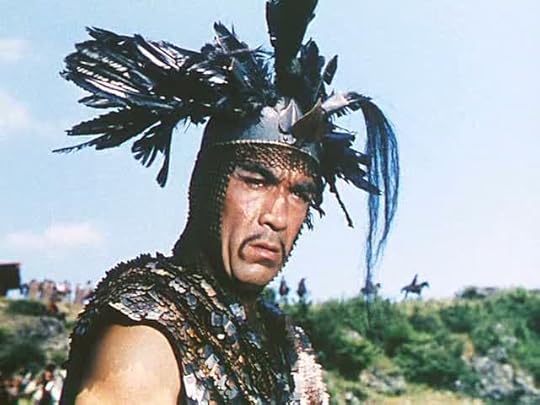
Anthony Quinn as Attila wearing surely the most absurd helmet in the history of cheapo film productions.
The nation of the Huns, scarcely known to ancient documents, dwelt beyond the Maeotic marshes beside the frozen ocean, and surpassed every extreme of ferocity.
- Ammianus Marcellinus
Attila the Hun! Is there any name more evocative of barbarian hordes looting, burning and murdering their way through civilization except possibly Genghis Khan's?
In the final, thirty-first book of Ammianus Marcellinus' magnificent history of the late Roman Empire is to be found the earliest extant source on the customs of the Turkic nomads called the Huns. Since the Huns were little more than bogey men to me, I thought it was time to see what one knows about them.
Precious little, as it turns out. They were illiterate nomads leaving behind them no written and a very thin and quite controversial archaeological record. When their empire collapsed soon after Attila's death, they disappeared from history. What one knows about the Huns now is due to the reports of their victims, curious travellers and a few diplomats. E.A. Thompson collected what he could in order to write what still appears to be one of the most important books on the topic. Though the very readable A History of Attila and the Huns appeared in 1948, a thorough updating by Peter Heather as The Huns (1996) changed little in the text. Other books concerning the Huns appeared in the meanwhile, but according to Heather these differ from Thompson's text primarily by purporting to describe the activities of the Huns before and after the contact with the Roman Empire. And until his death in 1994 Thompson doubted the reliability of the sources for those efforts.(*)
So this book is about the Huns at the fringes of the Roman Empire between c. 370 and c. 470 CE., and much of it must be taken cum grano salis since the author has so little to work with. Some things are rather certain, however. Around 376 the Huns' westward migration pressured the Goths to move from north of the Danube River and what is now Ukraine and Romania into the Roman Empire, where, due to the arrogance and incompetence of Emperor Valens and some of his lackeys, it soon came to open warfare (this is all described well in Marcellinus' Book XXXI, as is Valens' ignominious death; a fine modern account is to be found in Michael Kulikowski's Rome's Gothic Wars).
Some bands of Huns participated in that fateful battle outside Adrianopolis, but in the winter of 395 the Danube froze and the Huns came over in force. Simultaneously they overrode Armenia, much of Asia Minor and even Antioch was threatened. In 406 swarms of Vandals, Sueves, Burgundians and Alans were pushed by the Huns across the Rhine after fierce battles, placing another nail into the coffin of Celto-Roman Gaul. Constant Hun raids into the lower Danube motivated the completion of the Theodosian walls around Constantinople in 413.
The Romans, Germans and Huns all formed alliances with each other against the third, but the ferocity of the Huns was telling. For example, a large force of Huns stopped the Visigoth Alaric from marching on Rome in 409, and the Romans induced bands of Huns to massacre the Burgundians in 437.(**) Hun mercenaries were even used by the Romans against each other during the civil wars that ensued at the death of each emperor. For a few decades a certain equilibrium was established, temporarily.
Though the exact nature of the social and political organization of the Huns before Attila is not clear (Thompson asserts they were quite loosely organized; Maenchen-Helfen doesn't agree), in 434 Attila, together with his elder brother Bleda, acceded to the military command of a confederation of Huns which had been put together somehow by their uncle, Rua. Their first act was to extort a huge yearly tribute from the Eastern Empire, which was unhappily occupied with the Vandals in North Africa.
The unanimous reports that the Huns didn't get off their horses to eat, excrete or sleep are striking; the lengthy negotiations leading to the just-mentioned Peace of Margus were held on horseback. According to the Roman witnesses, the Huns spent so much time on their horses that their walk was clumsy and unsure. Their inbred horsemanship, along with a compound bow and the speed at which they maneuvered, gave them a military advantage that the Romans and Germans found difficult to overcome.
So every time Attila campaigned against Rome (he killed his brother in 445), either in the East or the West, he triumphed. We have some reasonably complete details about these campaigns, though had the quite engaging books of Priscus (Priskos), a Greco-Roman who spent time as a diplomat at Attila's court, survived intact, we would know a great deal more. Attila finally suffered a few defeats when Marcian became Emperor in the East, but only Attila's curious death (supposedly he had a nose bleed while dead drunk and suffocated) in 453 saved the Empire's bacon. Attila's sons were soon warring among themselves; the many peoples who had been suffering under the Hun's rule seized the opportunity and swept the weakened Huns away in relatively short order. The next wave of Asian nomads, the Avars, then finished the job. The Huns disappeared from History's view unlamented.
(*) An incomplete text by Otto Maenchen-Helfen (The World of the Huns) is able to provide another interpretation of the surviving texts concerning the Huns due to the paucity, incompleteness and mutual inconsistency of the ancient sources. I'll mention that recent archaeological finds are acquiring more coherence and thus significance than was the case 60 years ago.
(**) This formed the historical basis of the Nibelungen legend.
Rating
http://leopard.booklikes.com/post/118...

November 2, 2018
There are not many books about the Huns written for a general audience, and fewer still that look at their history and society. There is The World of the Huns: Studies in Their History and Culture, by Otto Maenchen-Helfen, which is comprehensive but disorganized and dry reading. For the general reader E.A. Thompson’s The Huns is still the best choice, even though it was first published back in 1948 (revised edition 1991). Readers can find books specifically about Attila, but many of them are not worth reading. If you really think you can learn leadership secrets from Attila, you might also want to try learning them from Tamerlane and history’s other mass murderers as well. The only lesson they have to teach you about how to act is that they have no lessons to teach.
The standard narrative about the Huns is that they appeared from nowhere, destroyed everything in their path, scourged Europe to create a vast but short-lived empire, and then vanished again. Not surprisingly, the reality is more complex. They had appeared decades before Attila, destroyed the Visigoths and raided the Persians and the eastern frontiers of the Roman Empire, but there was nothing unified about them, and they fought as mercenaries and foederati on the side of the Romans as often as against them. It was only when unified under Attila with the promise of unlimited plunder that they became the spearhead of war.
And then they were almost unstoppable. Their nation-on-horseback gave them high mobility and allowed them to choose when and where they struck. They could descend on a city, destroy it, and be gone before their infantry-based enemies could muster their forces. In addition, their mastery with the compound bow allowed them to focus deadly attacks from well beyond the range of their opponents.
It is interesting to speculate about what would have happened had they arrived two centuries earlier, when the Empire was at its height. They would surely have been turned back. The Romans’ better led, better organized, and better disciplined armies would have broken the Huns’ cavalry assaults and driven them off the field. The Huns would still have wreaked much havoc and destruction, but they would be a historical footnote today. As the author points out, their nomadic lifestyle put them at a disadvantage against stable, well organized societies, and their dependence on a constant supply of fodder for their horses kept them on the move. When their progress was halted by the Roman legions, they would have been forced to turn back toward the steppes to sustain their herds. And then, since unified leadership was temporary and dependent on the leader’s success, they would have fragmented back into their clans and tribes, as they did after the death of Attila.
Unfortunately, the Eastern Roman Empire upon which the Huns descended was unable to mount an effective defense, since it had to divide its troops between the Huns to the north, the Persian empire to the east, and the Vandals in North Africa. The Western Empire seemed even less prepared, but did somehow manage to turn the Huns back in 451 at Orleans. They let them slip away, however, and the next year northern Italy suffered horrific devastation.
Another interesting idea to speculate about is what would have happened to the Eastern Empire if Attila had not suddenly died. The previous emperor had carefully built up a policy of accommodation and payment of tribute to keep the Huns away, but after his death his successor adopted a defiant policy and essentially dared the Huns to attack. This was a suicidal position to take. The armies of the Empire had shown little ability to hold back the Huns previously, and there was no reason to expect that they could have been successful this time. Attila, enraged by the new emperor’s position, sent a message saying he intended to wage war on the Empire, conquer it completely, and make its people slaves. Had he not died suddenly in 453 he very likely would have accomplished this, and much of the knowledge, literature, philosophy, and arts of the Greeks and Romans would have been lost. Civilization would have been retarded for centuries, and we might still today be plowing fields behind a brace of oxen.
Attila was fated not to die in battle but on his wedding night. He was known to get nose bleeds when he was drunk, and on this night he was so drunk he ended up suffocating in his own blood. Somehow, there is a bit of cosmic justice in having a man who shed so much of others’ blood die ignominiously in his own.
After that, the end of the Huns as a force in history was swift. His empire was divided among his many sons, who soon began quarreling with each other. The subjugated races revolted, and the power of the Huns was broken, though they did not, of course, go quietly, and much blood remained to be spilt. Eventually, however, they were crushed between their former vassals and the new hordes of tribes migrating from the East. With that, they slip from the pages of history, after having dominated and terrified Europe for eighty years.
The standard narrative about the Huns is that they appeared from nowhere, destroyed everything in their path, scourged Europe to create a vast but short-lived empire, and then vanished again. Not surprisingly, the reality is more complex. They had appeared decades before Attila, destroyed the Visigoths and raided the Persians and the eastern frontiers of the Roman Empire, but there was nothing unified about them, and they fought as mercenaries and foederati on the side of the Romans as often as against them. It was only when unified under Attila with the promise of unlimited plunder that they became the spearhead of war.
And then they were almost unstoppable. Their nation-on-horseback gave them high mobility and allowed them to choose when and where they struck. They could descend on a city, destroy it, and be gone before their infantry-based enemies could muster their forces. In addition, their mastery with the compound bow allowed them to focus deadly attacks from well beyond the range of their opponents.
It is interesting to speculate about what would have happened had they arrived two centuries earlier, when the Empire was at its height. They would surely have been turned back. The Romans’ better led, better organized, and better disciplined armies would have broken the Huns’ cavalry assaults and driven them off the field. The Huns would still have wreaked much havoc and destruction, but they would be a historical footnote today. As the author points out, their nomadic lifestyle put them at a disadvantage against stable, well organized societies, and their dependence on a constant supply of fodder for their horses kept them on the move. When their progress was halted by the Roman legions, they would have been forced to turn back toward the steppes to sustain their herds. And then, since unified leadership was temporary and dependent on the leader’s success, they would have fragmented back into their clans and tribes, as they did after the death of Attila.
Unfortunately, the Eastern Roman Empire upon which the Huns descended was unable to mount an effective defense, since it had to divide its troops between the Huns to the north, the Persian empire to the east, and the Vandals in North Africa. The Western Empire seemed even less prepared, but did somehow manage to turn the Huns back in 451 at Orleans. They let them slip away, however, and the next year northern Italy suffered horrific devastation.
Another interesting idea to speculate about is what would have happened to the Eastern Empire if Attila had not suddenly died. The previous emperor had carefully built up a policy of accommodation and payment of tribute to keep the Huns away, but after his death his successor adopted a defiant policy and essentially dared the Huns to attack. This was a suicidal position to take. The armies of the Empire had shown little ability to hold back the Huns previously, and there was no reason to expect that they could have been successful this time. Attila, enraged by the new emperor’s position, sent a message saying he intended to wage war on the Empire, conquer it completely, and make its people slaves. Had he not died suddenly in 453 he very likely would have accomplished this, and much of the knowledge, literature, philosophy, and arts of the Greeks and Romans would have been lost. Civilization would have been retarded for centuries, and we might still today be plowing fields behind a brace of oxen.
Attila was fated not to die in battle but on his wedding night. He was known to get nose bleeds when he was drunk, and on this night he was so drunk he ended up suffocating in his own blood. Somehow, there is a bit of cosmic justice in having a man who shed so much of others’ blood die ignominiously in his own.
After that, the end of the Huns as a force in history was swift. His empire was divided among his many sons, who soon began quarreling with each other. The subjugated races revolted, and the power of the Huns was broken, though they did not, of course, go quietly, and much blood remained to be spilt. Eventually, however, they were crushed between their former vassals and the new hordes of tribes migrating from the East. With that, they slip from the pages of history, after having dominated and terrified Europe for eighty years.

October 16, 2015
This book is a fine piece of work on the Huns, predominantly from the Roman perspective and for students of Roman history, which is acceptable given that Thompson clearly states this to be the case in the Introduction.
I got this book because I have a general interest in nomadic peoples and their confederations in the Eurasian steppes, from the Scythians to the post-Mongol states. I found the book to extremely enjoyable and well assembled; one gets the feeling that Thompson has a true in-depth knowledge of the writings of Ammianus and Priscus (the primary written sources for the history of the Huns in Europe).
Now one draw back for me, and it is a big one given my general respect for nomadic societies, is that Thompson is extraordinarily negative towards the Huns; this is perhaps forgiveable given that the Huns, once at the Danube frontier, caused mass devastation and are rather unsympathetic. But Thompson's contempt seems to extend to nomadic societies in general, though admittedly in a rather unobtrusive manner. I would never throw away an entire magnificent work of scholarship just based on one difference of opinion, but for me it means taking Thompson's arguments with a grain of salt.
Another minor issue is the constant inclusion of untranslated Greek, Latin, German and French; I read the 1975 edition, a direct reprint of the original 1948 edition, so I assumed this would be corrected in the Wiley-Blackwell edition of 1999. But, as I gather from the reviews here, it was not! This lack of translation simply makes it a little harder to follow than necessary.
So to conclude this is essentially the introduction to the history of the Huns, and thus indispensable; it has inspired me to continue research into the subject, and perhaps from a more Hunnic perspective.
I got this book because I have a general interest in nomadic peoples and their confederations in the Eurasian steppes, from the Scythians to the post-Mongol states. I found the book to extremely enjoyable and well assembled; one gets the feeling that Thompson has a true in-depth knowledge of the writings of Ammianus and Priscus (the primary written sources for the history of the Huns in Europe).
Now one draw back for me, and it is a big one given my general respect for nomadic societies, is that Thompson is extraordinarily negative towards the Huns; this is perhaps forgiveable given that the Huns, once at the Danube frontier, caused mass devastation and are rather unsympathetic. But Thompson's contempt seems to extend to nomadic societies in general, though admittedly in a rather unobtrusive manner. I would never throw away an entire magnificent work of scholarship just based on one difference of opinion, but for me it means taking Thompson's arguments with a grain of salt.
Another minor issue is the constant inclusion of untranslated Greek, Latin, German and French; I read the 1975 edition, a direct reprint of the original 1948 edition, so I assumed this would be corrected in the Wiley-Blackwell edition of 1999. But, as I gather from the reviews here, it was not! This lack of translation simply makes it a little harder to follow than necessary.
So to conclude this is essentially the introduction to the history of the Huns, and thus indispensable; it has inspired me to continue research into the subject, and perhaps from a more Hunnic perspective.

Read
January 24, 2017E.A Thompson's book entitled "A History of Attila and the Huns" was first published in 1948. This is a slightly revised version of that same book, with a different title to make it fit into Wiley-Blackwell's "People of Europe" series. Given the original title, the reign of the Attila is the bulk of this book. While I would consider this to be a limitation, it is hardly one that I can fault Thompson for, given the paucity of source material on the Huns around that period. The books starts off with a discussion of those sources, and this is to Thompson's credit, as far too many history books fail to give a discussion of the relevant source material before diving into it. He analyzes the main literary sources and discusses the limitations of archaeological evidence, although in the afterward, Peter Heather suggests that the archaeological understanding of the Huns has advanced since Thompson's day.
Thompson takes the reader through a journey of the obscure early days of the Huns, of which very little is known. It is good that he includes some excellent maps to illustrate their early movements, as I suspect most readers will not be familiar with many of the geographical features of Eastern Europe mentioned. The focus from this point on is the relationship between the Huns and the Roman Empire. With careful analysis, Thompson details the events that led up to the rise of Attila, his wars with Rome, the embassy that Priskos participated in, and his eventual fall. The book ends with an afterward by Peter Heather, one of the most renowned historians on the barbarians of the later Roman Empire, which provides a nice supplement. However, it would have been a lot better if Heather had simply edited the text, as currently it forces readers to go through the final section and decide whether they would prefer to believe Thompson or Heather on several issues.
Unfortunately, while the book ends with a short description of why the Hun Confederacy was unable to stay together following Attila's death, that is its end. It never goes on to detail the many interactions between small Hun groups and the later Eastern Roman Empire, which is really too bad because Dr. Thompson's insight would certainly have been appreciated given the questionable "Hun" status of many of those groups. I am aware that this is a book focusing on the interactions between Rome and the Huns, but even a paragraph or two on the Huns against the Sassanian Empire would have rounded it out nicely. Additionally, the reason why Attila received the title "Flagellum Dei" and so much notoriety in later European thought is never explained. Thompson also makes a few questionable points, such as the Huns being present at the Battle of Adrianople, and the issue of Attila's strategic competence. There is little information on the former, and Thompson's thesis is nothing more than speculation, whereas for the latter I wonder if perhaps Attila was being driven to maintain the Hun Confederacy the only way he knew, and as such was on the proverbial tiger that he could not get off.
This is a good book, although it is dated and should be read critically. Nonetheless, it remains an excellent account of Attila and the Huns, and will probably remain the standard work on the field for some time.
Thompson takes the reader through a journey of the obscure early days of the Huns, of which very little is known. It is good that he includes some excellent maps to illustrate their early movements, as I suspect most readers will not be familiar with many of the geographical features of Eastern Europe mentioned. The focus from this point on is the relationship between the Huns and the Roman Empire. With careful analysis, Thompson details the events that led up to the rise of Attila, his wars with Rome, the embassy that Priskos participated in, and his eventual fall. The book ends with an afterward by Peter Heather, one of the most renowned historians on the barbarians of the later Roman Empire, which provides a nice supplement. However, it would have been a lot better if Heather had simply edited the text, as currently it forces readers to go through the final section and decide whether they would prefer to believe Thompson or Heather on several issues.
Unfortunately, while the book ends with a short description of why the Hun Confederacy was unable to stay together following Attila's death, that is its end. It never goes on to detail the many interactions between small Hun groups and the later Eastern Roman Empire, which is really too bad because Dr. Thompson's insight would certainly have been appreciated given the questionable "Hun" status of many of those groups. I am aware that this is a book focusing on the interactions between Rome and the Huns, but even a paragraph or two on the Huns against the Sassanian Empire would have rounded it out nicely. Additionally, the reason why Attila received the title "Flagellum Dei" and so much notoriety in later European thought is never explained. Thompson also makes a few questionable points, such as the Huns being present at the Battle of Adrianople, and the issue of Attila's strategic competence. There is little information on the former, and Thompson's thesis is nothing more than speculation, whereas for the latter I wonder if perhaps Attila was being driven to maintain the Hun Confederacy the only way he knew, and as such was on the proverbial tiger that he could not get off.
This is a good book, although it is dated and should be read critically. Nonetheless, it remains an excellent account of Attila and the Huns, and will probably remain the standard work on the field for some time.

June 12, 2012
In the beginning of the book, Thompson spends an amusing amount of time telling the reader what he can't tell them and about what evidence is missing. By the time he starts the main body of the book, I wondered if there was anything left to tell! But he does a very impressive job of covering a subject about which so little evidence is left. Like most nomadic peoples, the Huns left little archaeological evidence. The early sources that are left are often fragmented and unreliable. Where he uses questionable material, Thompson discusses issues of reliability and confirming or dis-confirming evidence.
He doesn't believe that Attila was an exceptional leader and thinks that his military successes were a matter of lucky timing. His military successes led to wealth and that wealth led to power. But his army got overextended and when they could no longer win battles, they were cut off from their source of wealth--the subject peoples and trade. Without those thing, a Hun leader could not hold his people's allegiance.
"There is no indication in our sources that in the days of Attila the Huns still drove flocks and herds from summer to winter pastures and back again. Instead of herding cattle they had now learned the more profitable business of herding men. Sharp differences of wealth have appeared among them,/though not differences of class. Their society could be maintained as long as Attila was able to supply the mass of his men with the necessities of life and a few luxuries, and his [leaders] with those additional goods and facilities which served to mark them off from the humbler horsemen. Attila extorted these goods and facilities, which formed the corner-stone of Hun society as it was organized in his time, from the subject peoples and from the Eastern Empire by means of his military strength, and by that means alone." 195-6
He doesn't believe that Attila was an exceptional leader and thinks that his military successes were a matter of lucky timing. His military successes led to wealth and that wealth led to power. But his army got overextended and when they could no longer win battles, they were cut off from their source of wealth--the subject peoples and trade. Without those thing, a Hun leader could not hold his people's allegiance.
"There is no indication in our sources that in the days of Attila the Huns still drove flocks and herds from summer to winter pastures and back again. Instead of herding cattle they had now learned the more profitable business of herding men. Sharp differences of wealth have appeared among them,/though not differences of class. Their society could be maintained as long as Attila was able to supply the mass of his men with the necessities of life and a few luxuries, and his [leaders] with those additional goods and facilities which served to mark them off from the humbler horsemen. Attila extorted these goods and facilities, which formed the corner-stone of Hun society as it was organized in his time, from the subject peoples and from the Eastern Empire by means of his military strength, and by that means alone." 195-6
July 5, 2012
This book is truly fantastic. It is extraordinarily well written and the subject is really interesting. The topic of the book is somewhat narrow as it is more about the interaction of the Huns and the Romans, both directly and indirectly, than about the Huns in general.
The original edition of the book called, I think, 'Attila and the Huns', was released in the late 50's so is not all that up to date. This edition is much more recent and the shortcomings resulting from lack of information are in part addressed and based on the afterword, written for the new edition, I think that the book remains very accurate.
Of course, there is a real lack of primary sources. There are only a few literary sources used by the author, all from the Roman side of things. Naturally, not everyone agrees with Thompson about which sources should be taken how seriously. Additionally, even at the time of this edition, there was not much in the was of archaeological evidence. I get the idea that the most important new information was presented, briefly, in the afterward.
Lastly, there are several instances of untranslated Greek words, written in the Greek alphabet. This gave me very little trouble as I could get a pretty good idea of what was meant. With the knowledge that the person most likely to read this will have even less (if any) difficulty, I mention it only for the sake of completeness.
The original edition of the book called, I think, 'Attila and the Huns', was released in the late 50's so is not all that up to date. This edition is much more recent and the shortcomings resulting from lack of information are in part addressed and based on the afterword, written for the new edition, I think that the book remains very accurate.
Of course, there is a real lack of primary sources. There are only a few literary sources used by the author, all from the Roman side of things. Naturally, not everyone agrees with Thompson about which sources should be taken how seriously. Additionally, even at the time of this edition, there was not much in the was of archaeological evidence. I get the idea that the most important new information was presented, briefly, in the afterward.
Lastly, there are several instances of untranslated Greek words, written in the Greek alphabet. This gave me very little trouble as I could get a pretty good idea of what was meant. With the knowledge that the person most likely to read this will have even less (if any) difficulty, I mention it only for the sake of completeness.
November 20, 2020
This book attempts to describe the lives and deeds of the ancient people known as the Huns, how did they come to power after their migration into Europe and their influence over the Roman empire, being one of the main causes of the fall of the western empire. The book dives into the Huns more as they encounter the Romans as of the Huns itself. Sadly, the scant sources are to blame as the author thoroughly explains in his first chapter, as anything known about them was written mostly by eastern romans in diplomatic matters or as historians of the Eastern Empire. Even as they are so known in the popular culture, much of them besides the name Attila is totally unknown, even for scholars.
The author wrote this book already in the 1940s and it would appear as it the archeological records hadn’t discover many new things on the Huns, weather on their origins or on the kingdoms that harassed the romans for almost a century. We are then only left with ancient sources (at least in classic languages), presented to us in a fluid narrative, trying to escape ancient biases. An Afterward is added in this edition by Heather and he tries to clear the void on relevant work from Thompson’s work until the edition’s date at the beginning of the 90s. Sadly for us, the author did not live enough to have edited his book to a second edition himself, even as it was his intention. After reading Heather right before, is hard not get annoyed by the use of the Ostrogoths and Visigoths titles on the goths previous to their entrance to the roman empire, as they probably did not yet would have been known like this.
The book ends up more being about some theories about the Huns origins, the scant stories written by Graeco-Roman sources about Attila, his family and his kingdom, leaving much of any important event regarding other Hun leaders, the multiple nations under them and the possible territories and kingdoms that arose after his death in the dark. Like many other books on ancient peoples from this time, much is concentrated on the romans and its politics towards them rather than the people itself. Nonetheless is a very welcome read and is interesting to find out about the little we know today about them.
The author wrote this book already in the 1940s and it would appear as it the archeological records hadn’t discover many new things on the Huns, weather on their origins or on the kingdoms that harassed the romans for almost a century. We are then only left with ancient sources (at least in classic languages), presented to us in a fluid narrative, trying to escape ancient biases. An Afterward is added in this edition by Heather and he tries to clear the void on relevant work from Thompson’s work until the edition’s date at the beginning of the 90s. Sadly for us, the author did not live enough to have edited his book to a second edition himself, even as it was his intention. After reading Heather right before, is hard not get annoyed by the use of the Ostrogoths and Visigoths titles on the goths previous to their entrance to the roman empire, as they probably did not yet would have been known like this.
The book ends up more being about some theories about the Huns origins, the scant stories written by Graeco-Roman sources about Attila, his family and his kingdom, leaving much of any important event regarding other Hun leaders, the multiple nations under them and the possible territories and kingdoms that arose after his death in the dark. Like many other books on ancient peoples from this time, much is concentrated on the romans and its politics towards them rather than the people itself. Nonetheless is a very welcome read and is interesting to find out about the little we know today about them.
July 17, 2026
O istorie a hunilor scrisă de un autor marxist: un studiu sec, o lectură informativă, dar nu prea captivantă.
Așa cum ne-am aștepta de la un istoric aflat sub influența „opiului intelectualilor”, religia este aproape complet ignorată în această carte, autorul limitându-se la un scurt paragraf pentru a descrie întâlnirea Papei Leon cel Mare cu Attila. Nu suntem scutiți nici de limbajul ideologic: aflăm că societatea hunilor era organizată în „familii patriarhale”.
Cartea poate fi interesantă pentru pasionații de istorie, însă este regretabil că editura Humanitas nu menționează explicit școala de gândire și orientarea intelectuală a autorului.
Luați cu Boia!
Așa cum ne-am aștepta de la un istoric aflat sub influența „opiului intelectualilor”, religia este aproape complet ignorată în această carte, autorul limitându-se la un scurt paragraf pentru a descrie întâlnirea Papei Leon cel Mare cu Attila. Nu suntem scutiți nici de limbajul ideologic: aflăm că societatea hunilor era organizată în „familii patriarhale”.
Cartea poate fi interesantă pentru pasionații de istorie, însă este regretabil că editura Humanitas nu menționează explicit școala de gândire și orientarea intelectuală a autorului.
Luați cu Boia!
November 18, 2025
Good overview but does leave some questions. IE the Huns didnt have wood to make bows, or enough clothing, but they started out in covered wagons. he does a good job woth the limited information available for that time period. Follows the history of Priscus and Jordanes.
Displaying 1 - 9 of 9 reviews