
What do you think?
Rate this book


Mass Market Paperback
First published January 1, 1990


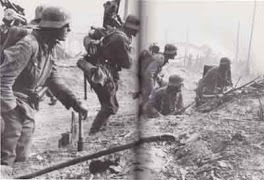
We have fought for fifteen days for a single house with mortars, grenades, machine-guns and bayonets. Already by the third day fifty-four German corpses are strewn in the cellars, on the landings, and the staircases. The front is a corridor between burnt-out rooms; it is the thin ceiling between two floors. Help comes from neighboring houses by fire-escapes and chimneys. There is a ceaseless struggle from noon to night. From storey to storey, faces black with sweat, we bombed each other with grenades in the middle of explosions, clouds of dust and smoke … Ask any soldier what hand-to-hand struggle means in such a fight. … Stalingrad is no longer a town. By day it is an enormous cloud of burning, blinding smoke ... when night arrives ... the dogs plunge into the Volga and swim desperately to gain the other bank. The nights of Stalingrad are a terror for them. Animals flee this hell; the hardest storms cannot bear it for long; only men endure.Keegan comments that, apart from the “Nietzschean-Nazi rhetoric”, this is not an exaggerated picture, and follows up with a quote from Chuikov, the commander of the Soviet 66th Army:
On October 14 the Germans struck out; that day will go down as the bloodiest and most ferocious of the whole battle. Along a narrow front of four or five kilometers the Germans threw in five infantry divisions and two tank divisions supported by masses of artillery and planes … during the day there were over two thousand Luftwaffe sorties. That morning you could not hear the separate shots or explosions, the whole merged into one continuous deafening roar. At five yards you could no longer distinguish anything, so thick were the dust and the smoke … That day sixty-one men in my headquarters were killed. After four or five hours of this stunning barrage, the Germans started to attack …”
Extraneous factors--gross disparity in the opposed technologies of war-making or in the dynamism of opposed ideologies, or, as Professor William McNeill has suggested, susceptibility to unfamiliar germ strains transported by an aggressor--had usually explained one society's triumph over another; and they certainly underlay such military sensations as the Spanish destruction of the Aztec and Inca empires, the Islamic conquests of the seventh century and the American extinction of Red Indian warriordom.


