

What do you think?
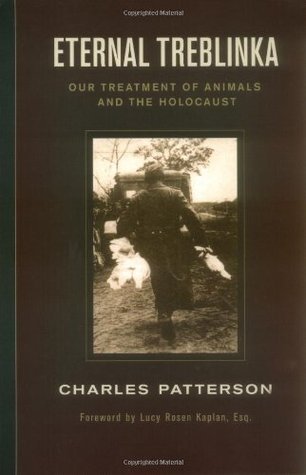
Eternal Treblinka: Our Treatment of Animals and the Holocaust
The book examines the origins of human supremacy, describes the emergence of industrialized slaughter of both animals and people in modern times, and concludes with profiles of Jewish and German animal advocates on both sides of the Holocaust.
ETERNAL TREBLINKA describes disturbing parallels between how the Nazis treated their victims and how modern society treats animals. The title is taken from a story by the Yiddish writer and Nobel Laureate Isaac Bashevis Singer: "In relation to them, all people are Nazis; for the animals it is an eternal Treblinka."
The Foreword is by Lucy Kaplan, former attorney for People for the Ethical Treatment of Animals (PETA), who is the daughter of Holocaust survivors. ETERNAL TREBLINKA has already received support from more than 200 humane, animal protection, and environmental groups around the world.
312 pages, Paperback
First published January 1, 2002
About the author
Charles Patterson
24 books14 followersPatterson is an author, historian, editor, therapist, and teacher.
Ratings & Reviews
Friends & Following
Create a free account to discover what your friends think of this book!
Community Reviews
Displaying 1 - 30 of 64 reviews

August 14, 2013
When I added this book to my reading list, I deleted the notification Goodreads had sent to Facebook. I did this in part because I knew that the comparison might be upsetting people, and likely lead to "well, I knew it, animal protection people are all nuts, so I'll discount everything they're saying, phew, nom, nom"-thought cascades. And I did not want to risk triggering those reflexes with a book that couldn't stand up to scrutiny. But it can and now I do risk that.
I doubt this review will be read much, or spark a discussion, but I'll be happy to be surprised. I post it either way. The subject feels too important not to.
Not surprisingly, the comparison of the holocaust with animal maltreatment is controversial. One main argument against it, as mentioned in the book, is this: from the fact that Jews then were treated like cattle was, it does not follow that cattle now is treated now like the Jews were then. It is not symmetrical, people are special. Respect for the victims of the Nazis demands that we not diminish their suffering by comparing it to that of chickens and pigs.
But this argument seems as misguided to me as it does to Patterson. It is based on the assumption that humans, as a species, are something above and beyond all other species, and that harm done to non-humans can never be in the same category as that same harm done to humans. I do not believe this.
And not only do I not believe this argument, I believe that it actually supports the perpetrators more than it helps the victims. If animals are less than human, and if harm done to them is morally not to be judged the same way harm against humans is, then humans who are perceived to be closer to animals than to other humans, who behave in animal-like fashion, or can be made to look to have animal attributes, can lose that protection.
The subhuman, the apelike, the swine, the pigs, the rats, the vermin, the lice, the leeches, all these are common names for those who were meant to become victims in the mind of those who wanted to become killers. If it is all right to torture and kill animals, then any human who we can make to sound or look or smell like an animal becomes, quite literally, fair game. And for those in power, it is not hard to keep their victims under conditions that resemble animal pens, that dehumanize, and invoke farm comparisons. Unkempt beards in caves, naked bodies in cattle cars, ravenous hunger, enforced filth. The options are many.
In arguments about the meat industry, I repeatedly encounter two lines of thought. The first is the argument from enjoyment and personal freedom: I like meat, I like the taste, I need the nutrients, I require the protein, I do not want to give it up, it should be my choice. The second is the argument of not-my-job: I kind of know, but I do not want to know. Someone must kill the animals, and I'm grateful they do, because if it is not me, how can I be guilty. It's division of labor, not everyone is good at everything, and the fact that I don't want to see a living cow scream as she is hung upside down from a hook does not mean it is wrong, it just means I'm not cut out to work there.
The first argument truly ought to be irrelevant. If it is in fact wrong to kill and mistreat animals, then doing it for personal gain will make it more wrong, not less so. At the very least it is deliberate ignorance of a possibly severe wrong, for personal benefit. If you think otherwise, I'd love to hear how and why.
The second argument is worse. The meat industry is one of the most horrible places to work in. It has fantastically high turnover rates, and destroys its workers as it does the animals it "processes". To turn away from this fact, is not a solution to a potential wrong, it creates additional victims in workers, whose job it becomes to be cruel for our sake.
Looking at statements from the SS, from the camps, from the survivors, the mindset in the population of wartime Germany was similar to this. That the task was difficult for the killers was well known within the ranks, but the general belief was that this was a job that needed doing, and sacrifices needed to be made for the greater good. The repetitiveness of the tasks, the degradation of the victims, and the language of dehumanization and animal comparisons, are all designed to make it easier and more efficient, just as is the case in modern slaughterhouses.
Lock eyes with one of calves you're supposed to hit in the head with a bolt, wonder who his mother was, and whether she got to see him before the workers took him away, wonder if she had given him a name yet, as we now find most big mammals do, and the task becomes very difficult indeed.
But think of it as "just an animal", and you can brain the beast, and then go home at night and enjoy your steak. For a while, anyway, till the deaths you dealt catch up with you. And they will, as we have known since modern slaughterhouses were invented.
Respect for the victims of violence anywhere, and maybe in particular the systematic madness of industrialized slaughter the Nazis orchestrated, demands that we stop similar violence wherever we encounter it. In the end, whether the murders of millions of humans in several years, and the murder of millions of animals a days (mostly chickens, but still) are metaphysically comparable, is unimportant. They need to stop.
I doubt this review will be read much, or spark a discussion, but I'll be happy to be surprised. I post it either way. The subject feels too important not to.
Not surprisingly, the comparison of the holocaust with animal maltreatment is controversial. One main argument against it, as mentioned in the book, is this: from the fact that Jews then were treated like cattle was, it does not follow that cattle now is treated now like the Jews were then. It is not symmetrical, people are special. Respect for the victims of the Nazis demands that we not diminish their suffering by comparing it to that of chickens and pigs.
But this argument seems as misguided to me as it does to Patterson. It is based on the assumption that humans, as a species, are something above and beyond all other species, and that harm done to non-humans can never be in the same category as that same harm done to humans. I do not believe this.
And not only do I not believe this argument, I believe that it actually supports the perpetrators more than it helps the victims. If animals are less than human, and if harm done to them is morally not to be judged the same way harm against humans is, then humans who are perceived to be closer to animals than to other humans, who behave in animal-like fashion, or can be made to look to have animal attributes, can lose that protection.
The subhuman, the apelike, the swine, the pigs, the rats, the vermin, the lice, the leeches, all these are common names for those who were meant to become victims in the mind of those who wanted to become killers. If it is all right to torture and kill animals, then any human who we can make to sound or look or smell like an animal becomes, quite literally, fair game. And for those in power, it is not hard to keep their victims under conditions that resemble animal pens, that dehumanize, and invoke farm comparisons. Unkempt beards in caves, naked bodies in cattle cars, ravenous hunger, enforced filth. The options are many.
In arguments about the meat industry, I repeatedly encounter two lines of thought. The first is the argument from enjoyment and personal freedom: I like meat, I like the taste, I need the nutrients, I require the protein, I do not want to give it up, it should be my choice. The second is the argument of not-my-job: I kind of know, but I do not want to know. Someone must kill the animals, and I'm grateful they do, because if it is not me, how can I be guilty. It's division of labor, not everyone is good at everything, and the fact that I don't want to see a living cow scream as she is hung upside down from a hook does not mean it is wrong, it just means I'm not cut out to work there.
The first argument truly ought to be irrelevant. If it is in fact wrong to kill and mistreat animals, then doing it for personal gain will make it more wrong, not less so. At the very least it is deliberate ignorance of a possibly severe wrong, for personal benefit. If you think otherwise, I'd love to hear how and why.
The second argument is worse. The meat industry is one of the most horrible places to work in. It has fantastically high turnover rates, and destroys its workers as it does the animals it "processes". To turn away from this fact, is not a solution to a potential wrong, it creates additional victims in workers, whose job it becomes to be cruel for our sake.
Looking at statements from the SS, from the camps, from the survivors, the mindset in the population of wartime Germany was similar to this. That the task was difficult for the killers was well known within the ranks, but the general belief was that this was a job that needed doing, and sacrifices needed to be made for the greater good. The repetitiveness of the tasks, the degradation of the victims, and the language of dehumanization and animal comparisons, are all designed to make it easier and more efficient, just as is the case in modern slaughterhouses.
Lock eyes with one of calves you're supposed to hit in the head with a bolt, wonder who his mother was, and whether she got to see him before the workers took him away, wonder if she had given him a name yet, as we now find most big mammals do, and the task becomes very difficult indeed.
But think of it as "just an animal", and you can brain the beast, and then go home at night and enjoy your steak. For a while, anyway, till the deaths you dealt catch up with you. And they will, as we have known since modern slaughterhouses were invented.
Respect for the victims of violence anywhere, and maybe in particular the systematic madness of industrialized slaughter the Nazis orchestrated, demands that we stop similar violence wherever we encounter it. In the end, whether the murders of millions of humans in several years, and the murder of millions of animals a days (mostly chickens, but still) are metaphysically comparable, is unimportant. They need to stop.
February 6, 2018
I like the book very much because I wrote it. :) The reason I'm (re)reading it now is I'm thinking about revising--expanding some parts and condensing others--to make a sort of sequel. Nobody wanted to publish it because it was too controversial, but I finally got it into print thanks to Lantern Books. It's now in 16 languages with Chinese, Arabic, Brazilian Portuguese, and Norwegian translations underway.

May 21, 2012
A very disturbing book that shocks you out of the state of numb ignorance.
A great quote from the book:
'Auschwitz begins wherever someone looks at a slaughterhouse and thinks: they're only animals.'
Theodor Adorno
A great quote from the book:
'Auschwitz begins wherever someone looks at a slaughterhouse and thinks: they're only animals.'
Theodor Adorno

October 18, 2007
This book gave some of the greatest arguments against the murder of animals for human consumption. Eternal Treblinka takes you through a methodical treatment of how hypocritical it is to condemn murder when millions of living beings are killed every year in our towns.

April 26, 2015
A someone who visited Treblinka, and having had a grandfather who escaped Treblinka, I found this a crucial read.
No other book covers the history of people's treatment of each other and its relationship to our treatment of animals. It is a hard read, but it is worth every word.
No other book covers the history of people's treatment of each other and its relationship to our treatment of animals. It is a hard read, but it is worth every word.

February 9, 2014
What a good read!
Patterson uses a daring approach to the mistreatment of animals. In fact, his book was rejected by some editors because it was "too heavy." He describes the disturbing similarities between the emergence of the food (animal) industry and the Nazi methods for exploiting and eliminating their "enemies."
What I found very interesting was the author's discussions about how humans have degraded animals to a very low level. In fact, in everyday's language humans use animal names to insult or demean other human beings. This has been largely used by different cultures to make their members neglect other people's suffering and the injustices inflicted on them: Jews were called rats by Germans, black people were called monkeys by their masters, Chinese people called dogs by the Japanese, and so on: "ass", "brute", "animal", "cockroach", "beast", "bitch"...
I think this book is very smartly written, and I see why some readers might find it heavy or extreme. But that does not make it less true.
Patterson uses a daring approach to the mistreatment of animals. In fact, his book was rejected by some editors because it was "too heavy." He describes the disturbing similarities between the emergence of the food (animal) industry and the Nazi methods for exploiting and eliminating their "enemies."
What I found very interesting was the author's discussions about how humans have degraded animals to a very low level. In fact, in everyday's language humans use animal names to insult or demean other human beings. This has been largely used by different cultures to make their members neglect other people's suffering and the injustices inflicted on them: Jews were called rats by Germans, black people were called monkeys by their masters, Chinese people called dogs by the Japanese, and so on: "ass", "brute", "animal", "cockroach", "beast", "bitch"...
I think this book is very smartly written, and I see why some readers might find it heavy or extreme. But that does not make it less true.

May 3, 2012
The title of this book is taken from Isaac Bashevis Singer's famous quote and the theme of the book is, to quote, that "throughout the history of our ascent to dominance as the master species, our victimization of animals has served as the model and foundation for our victimization of each other. The study of human history reveals the pattern: first, humans exploit and slaughter animals; then, they treat other people like animals and do the same to them."
This is an interesting thesis and there are lots of fascinating historical examples of human and animal exploitation in the book. However, the book really needed to be chopped off about half way through as it lost its impact by going on and on dredging up more and more examples to "prove" his theory. It all got too much. I was sympathetic to the theme but gagged on the overload of the lecture.
And then the last third of the book was an endless succession of mini biographies which were totally unnecessary to the book, concluding with entire plots of many of Singer's stories - an extraordinary conclusion to the book and annoying if you wanted to read those stories.
So - a very flawed book, which is a pity because it explores some important and challenging ideas as we seek to understand our cruelty to both animals and people.
This is an interesting thesis and there are lots of fascinating historical examples of human and animal exploitation in the book. However, the book really needed to be chopped off about half way through as it lost its impact by going on and on dredging up more and more examples to "prove" his theory. It all got too much. I was sympathetic to the theme but gagged on the overload of the lecture.
And then the last third of the book was an endless succession of mini biographies which were totally unnecessary to the book, concluding with entire plots of many of Singer's stories - an extraordinary conclusion to the book and annoying if you wanted to read those stories.
So - a very flawed book, which is a pity because it explores some important and challenging ideas as we seek to understand our cruelty to both animals and people.

Want to Read
December 11, 2008When I first saw the title I rolled my eyes and thought of Godwin's Law, but reading the actual description has opened my mind quite a bit...

February 9, 2018
One of the most important books ever written. Like a veil being lifted.
January 15, 2008
Jarring, eye-opening stuff. Holocaust comparisons are almost universally shunned, often for good reason, and this could have been as trite as a PETA ad. Yet the devil's in the details -- the animal husbandry backgrounds of prominent SS leaders, for instance; the close readings of Isaac Bashevis Singer; the profiles of survivors who went on to work on animal issues.
Five centuries before the birth of Christ, Pythagoras wrote, "So long as men massacre animals, they will kill each other." Shocking evidence is accumulated here, and presented in dispassionate, scholarly prose.
Five centuries before the birth of Christ, Pythagoras wrote, "So long as men massacre animals, they will kill each other." Shocking evidence is accumulated here, and presented in dispassionate, scholarly prose.

January 5, 2010
While Eternal Treblinka was not as earth-shattering for me as some reviews have positioned it, it was the most emotionally difficult book I’ve ever read.
Atrocities against victims human and otherwise are catalogued, in their many manifestations throughout history. This isn’t the sort of book to read if you still harbor a rosy view of the implicit goodness of humanity, especially when in a place of power. The voices raised against the tremendous cruelty and injustice seem but a mouse’s squeak over the roar of a locomotive.
Atrocities against victims human and otherwise are catalogued, in their many manifestations throughout history. This isn’t the sort of book to read if you still harbor a rosy view of the implicit goodness of humanity, especially when in a place of power. The voices raised against the tremendous cruelty and injustice seem but a mouse’s squeak over the roar of a locomotive.

December 9, 2014
An excellent book. For anyone who cares at all about animals, please read this book.
The atrocities perpetrated on the innocent during Nazi Germany continue daily for millions of sentient beings around the world. Eating the flesh and secretions of animals or using any part of their bodies makes one complicit in the horrors experienced by small, innocent, defenseless sentient beings in concentration camps (a.k.a. slaughterhouses.)
I won't even feed my pets animals any longer. There are several excellent nutritionally-balanced vegan pet foods available in the US and abroad.
Some salient points from the book:
p. 116-117 Robert Louis Stevenson once wrote, "Nothing more strongly arouses our disgust than cannibalism, yet we make the same impression on vegetarians, for we feed on babies, not our own." Some of the animals people feed on are "babies" in the most literal sense. Baby suckling pigs, killed and sold intact, minus their innards, weigh between twenty and thirty-five pounds, while bottle-fed lambs, considered a "delicacy", are only one to nine weeks old when they are slaughtered. The youngest of the veal calves - called bob or bobby veal - is the closest human beings come to robbing the cradle. These baby calves are only one to five days old when they are killed and eaten.
Even the female animals whom the dairy and egg industries exploit for their milk and eggs live out only a small part of their natural lives before their usefulness ends and they are sent to slaughter. Dairy cows who could live up to twenty-five years in a healthy environment are usually slaughtered for ground beef after three or our years, while hens used for egg production live less than one tenth of the time they would live ordinarily.
Workers have confided ...that the hardest part of their job is killing lambs and calves because "they're just babies." Long says it's a poignant moment "when a bewildered little calf, torn from its mother, sucks the slaughterman's fingers in the hope of drawing milk and gets the milk of unkindness." He calls what goes on in slaughterhouses "a relentless, merciless, remorseless business."
p. 114-115 In 1989 Becky Sanstedt captured on film the plight of downed animals at the United Stockyards in South St. Paul, Minnesota. The scenes she filmed were not unlike those described 124 years earlier in the [New York] Times editorial: downed animal left in holding pens for days unable to reach for food or water; injured cows dragged by their hind legs behind trucks with heavy chains tearing their sockets and breaking their bones; bulldozers scooping injured cows up off the ground and depositing them on "dead piles." In the winter Sandredt saw injured cows and pigs frozen to the ground.
Since downers impede stockyard and slaughterhouse operations, workers usually leave them where they fall or drag them out of the way until they can deal with them later. If a downer is dead or looks dead, she gets dragged to a "dead pile." If it turns out she is alive, she will be killed for human consumption. If she's dead, she will go off to the renderer, where she will be stripped of her valuable parts, with the rest of her going to pet food. One worker says that because injured cows called "haulers" have to be dragged through the kill alley to the knocking box, they come out on the line "covered with [cow shit]."
Sick and injured pigs fare no better. One meat inspector who worked at a "distress kill plant" in the Midwest described the plant as the end of the line for worn-out, sick, and crippled pigs: "Most of these animals aren't old, they're just abused - malnourished, frostbitten, injured. Lots of DOAs [dead on arrivals]. Sows with broken pelvises who pull themselves around with their front legs, scooting along on their rumps for so long they get emaciated. They call them 'sccoters.'" The meat from these distress kill plants that passes inspection gets used for sausages, hot dogs, pork by-products, and ham, while condemned animals get rendered into animal feed, cosmetics, plastics, and assorted household and industrial products.
"On the farm where I work," she said, "they drag the lives ones who can't stand up anymore out of the crate. They put the metal snare around her ear or foot and drag her the full length of the building. These animals are just screaming in pain. They're dragging them across the concrete, it's ripping their skin, the metal snares are tearing up their ears." Worn-out sows are dumped on a pile, where they stay for up to two weeks until the cull truck picks them up and takes them to renderers who grind them up to make into something profitable.
p. 116 "Two workers use a six-foot whip on the horse as she gives birth, to get her to speed up and go onto the kill floor. The foal is thrown into a spare parts bucket. The boss in his cowboy hat observes from the overhead walkway."
p. 170"...we do to God's creatures what the Nazis did to us."
p. 180 As Yoineh Meir stands at the pit all day, slaughtering hens, roosters, geese and ducks, and the pit fills with blood, he wonders if he's losing his mind. "Feathers flew, the yard was full of quacking, gabbling, the screaming of roosters. Now and then, a fowl cried out like a human being."
p. 186 "I am absolutely convinced that so long as people shed the blood of God's creatures, there'll be no peace on earth. It's one step from spilling animal blood to spilling human blood."
p. 195 "There is no better way to serve the Creator than to be kind to His creatures."
..."how complicated these beings were, how rich in character and individuality."
p. 211 "I think my animal rights disposition came from simply realizing that animal abuse is cruel and totally unnecessary for human survival or comfort."
p. 220 "...as long as man tortures and kills animals, he will torture and kill humans as well - and wars will be waged - for killing must be practiced and learned on a small scale. We should try to overcome our own small thoughtless cruelty, to avoid it, to abolish it. But all of us are stil asleep in our traditions. Traditions are like greasy tasteless gravy, which lets us swallow up our own heartlessness without noticing how bitter it is."
...he often uses the Holocaust analogy in his speeches and writings "because it is - for speciesists -as politically provocative as it is ethically sound."
p. 221 ...quoted Isaav Bashevis Singer about how human beings are Nazis when it comes to their treatment of animals. "If you don't believe it, then you should read reports of the experiments the Nazis carried out in their research labs on Jews, and then read reports on the experiments done today with animals. Then you'll lose your blindfold: the parallels are plain to see. Everything the Nazis did to the Jews we are practicing on animals. Our grandchildren will ask us one day: Where were you during the Holocaust of the animals? What did you do against these horrifying crimes? We won't be able to offer the same excuse for the second time, that we didn't know."
The atrocities perpetrated on the innocent during Nazi Germany continue daily for millions of sentient beings around the world. Eating the flesh and secretions of animals or using any part of their bodies makes one complicit in the horrors experienced by small, innocent, defenseless sentient beings in concentration camps (a.k.a. slaughterhouses.)
I won't even feed my pets animals any longer. There are several excellent nutritionally-balanced vegan pet foods available in the US and abroad.
Some salient points from the book:
p. 116-117 Robert Louis Stevenson once wrote, "Nothing more strongly arouses our disgust than cannibalism, yet we make the same impression on vegetarians, for we feed on babies, not our own." Some of the animals people feed on are "babies" in the most literal sense. Baby suckling pigs, killed and sold intact, minus their innards, weigh between twenty and thirty-five pounds, while bottle-fed lambs, considered a "delicacy", are only one to nine weeks old when they are slaughtered. The youngest of the veal calves - called bob or bobby veal - is the closest human beings come to robbing the cradle. These baby calves are only one to five days old when they are killed and eaten.
Even the female animals whom the dairy and egg industries exploit for their milk and eggs live out only a small part of their natural lives before their usefulness ends and they are sent to slaughter. Dairy cows who could live up to twenty-five years in a healthy environment are usually slaughtered for ground beef after three or our years, while hens used for egg production live less than one tenth of the time they would live ordinarily.
Workers have confided ...that the hardest part of their job is killing lambs and calves because "they're just babies." Long says it's a poignant moment "when a bewildered little calf, torn from its mother, sucks the slaughterman's fingers in the hope of drawing milk and gets the milk of unkindness." He calls what goes on in slaughterhouses "a relentless, merciless, remorseless business."
p. 114-115 In 1989 Becky Sanstedt captured on film the plight of downed animals at the United Stockyards in South St. Paul, Minnesota. The scenes she filmed were not unlike those described 124 years earlier in the [New York] Times editorial: downed animal left in holding pens for days unable to reach for food or water; injured cows dragged by their hind legs behind trucks with heavy chains tearing their sockets and breaking their bones; bulldozers scooping injured cows up off the ground and depositing them on "dead piles." In the winter Sandredt saw injured cows and pigs frozen to the ground.
Since downers impede stockyard and slaughterhouse operations, workers usually leave them where they fall or drag them out of the way until they can deal with them later. If a downer is dead or looks dead, she gets dragged to a "dead pile." If it turns out she is alive, she will be killed for human consumption. If she's dead, she will go off to the renderer, where she will be stripped of her valuable parts, with the rest of her going to pet food. One worker says that because injured cows called "haulers" have to be dragged through the kill alley to the knocking box, they come out on the line "covered with [cow shit]."
Sick and injured pigs fare no better. One meat inspector who worked at a "distress kill plant" in the Midwest described the plant as the end of the line for worn-out, sick, and crippled pigs: "Most of these animals aren't old, they're just abused - malnourished, frostbitten, injured. Lots of DOAs [dead on arrivals]. Sows with broken pelvises who pull themselves around with their front legs, scooting along on their rumps for so long they get emaciated. They call them 'sccoters.'" The meat from these distress kill plants that passes inspection gets used for sausages, hot dogs, pork by-products, and ham, while condemned animals get rendered into animal feed, cosmetics, plastics, and assorted household and industrial products.
"On the farm where I work," she said, "they drag the lives ones who can't stand up anymore out of the crate. They put the metal snare around her ear or foot and drag her the full length of the building. These animals are just screaming in pain. They're dragging them across the concrete, it's ripping their skin, the metal snares are tearing up their ears." Worn-out sows are dumped on a pile, where they stay for up to two weeks until the cull truck picks them up and takes them to renderers who grind them up to make into something profitable.
p. 116 "Two workers use a six-foot whip on the horse as she gives birth, to get her to speed up and go onto the kill floor. The foal is thrown into a spare parts bucket. The boss in his cowboy hat observes from the overhead walkway."
p. 170"...we do to God's creatures what the Nazis did to us."
p. 180 As Yoineh Meir stands at the pit all day, slaughtering hens, roosters, geese and ducks, and the pit fills with blood, he wonders if he's losing his mind. "Feathers flew, the yard was full of quacking, gabbling, the screaming of roosters. Now and then, a fowl cried out like a human being."
p. 186 "I am absolutely convinced that so long as people shed the blood of God's creatures, there'll be no peace on earth. It's one step from spilling animal blood to spilling human blood."
p. 195 "There is no better way to serve the Creator than to be kind to His creatures."
..."how complicated these beings were, how rich in character and individuality."
p. 211 "I think my animal rights disposition came from simply realizing that animal abuse is cruel and totally unnecessary for human survival or comfort."
p. 220 "...as long as man tortures and kills animals, he will torture and kill humans as well - and wars will be waged - for killing must be practiced and learned on a small scale. We should try to overcome our own small thoughtless cruelty, to avoid it, to abolish it. But all of us are stil asleep in our traditions. Traditions are like greasy tasteless gravy, which lets us swallow up our own heartlessness without noticing how bitter it is."
...he often uses the Holocaust analogy in his speeches and writings "because it is - for speciesists -as politically provocative as it is ethically sound."
p. 221 ...quoted Isaav Bashevis Singer about how human beings are Nazis when it comes to their treatment of animals. "If you don't believe it, then you should read reports of the experiments the Nazis carried out in their research labs on Jews, and then read reports on the experiments done today with animals. Then you'll lose your blindfold: the parallels are plain to see. Everything the Nazis did to the Jews we are practicing on animals. Our grandchildren will ask us one day: Where were you during the Holocaust of the animals? What did you do against these horrifying crimes? We won't be able to offer the same excuse for the second time, that we didn't know."

January 3, 2022
ako se uspiješ probiti kroz prvih stotinjak stranica gdje su brutalno, slikovito i drito-u-glavu opisivani različiti načini mučenja i klanja životinja koje, nedugo potom, s guštom gledamo servirane na tanjuru i uživamo u njihovom okusu, čeka te mnogo zanimljiviji (ali podjednako mučan i bolan) prikaz paralele između onoga što su u nacističkoj njemačkoj radili židovima, romima i ostalima nepodobnima i onoga što mi radimo životinjama (u širem smislu i generalno, ne samo za hranu).
nisam vegetarijanka, jedem i volim meso.
ali ovo je bilo.... za stati i misliti.
i nije poanta samo u "voljeti i poštivati životinje", poanta je i u obrascu koji se ponavlja: čovjek, na koncu, uzima sebi za pravo odlučivati tko će živjeti, a tko ne, koja je vrsta moćnija, dominantnija, koja vrsta je ona koja ima si uzima za pravo preživjeti.
ne mislim dalje ulaziti sad u to. knjiga je vrijedna čitanja (ako nemaš problema s time da jasno i relativno agresivno propagira vegetarijanstvo i veganstvo), ako već ne da bi se čitatelj preobratio i konačno izbacio konzumiranje životinja iz svoje prehrane -ali to je primarni cilj-, onda i zbog generalno važnih moralnih, etičkih, religioznih -pa i filozofskih- pitanja koja nameće.
na kraju knjige upoznaješ neke važne veganske aktiviste, njihove životne puteve, a osobito isaaca bashevisa singera koji je cijeli svoj literarni opus prožeo posveti pravu na život životinja.
ako si vegan/vegetarijanac, ova knjiga će te učvrstiti u tvom stilu života; ako razmišljaš o tome da postaneš - moguće da će ti požuriti odluku; ako nisi - drugim ćeš očima gledati bolonjez u svom tanjuru. i doista nije za one slabijeg želuca jer poanta je jasna: pokazati ti proces koji stoji iza tvog pohanog pilećeg krilca/ćevapa/bifteka i koji je mentalni sklop doveo do toga da tu hranu vidiš na svom tanjuru.
nisam vegetarijanka, jedem i volim meso.
ali ovo je bilo.... za stati i misliti.
i nije poanta samo u "voljeti i poštivati životinje", poanta je i u obrascu koji se ponavlja: čovjek, na koncu, uzima sebi za pravo odlučivati tko će živjeti, a tko ne, koja je vrsta moćnija, dominantnija, koja vrsta je ona koja ima si uzima za pravo preživjeti.
ne mislim dalje ulaziti sad u to. knjiga je vrijedna čitanja (ako nemaš problema s time da jasno i relativno agresivno propagira vegetarijanstvo i veganstvo), ako već ne da bi se čitatelj preobratio i konačno izbacio konzumiranje životinja iz svoje prehrane -ali to je primarni cilj-, onda i zbog generalno važnih moralnih, etičkih, religioznih -pa i filozofskih- pitanja koja nameće.
na kraju knjige upoznaješ neke važne veganske aktiviste, njihove životne puteve, a osobito isaaca bashevisa singera koji je cijeli svoj literarni opus prožeo posveti pravu na život životinja.
ako si vegan/vegetarijanac, ova knjiga će te učvrstiti u tvom stilu života; ako razmišljaš o tome da postaneš - moguće da će ti požuriti odluku; ako nisi - drugim ćeš očima gledati bolonjez u svom tanjuru. i doista nije za one slabijeg želuca jer poanta je jasna: pokazati ti proces koji stoji iza tvog pohanog pilećeg krilca/ćevapa/bifteka i koji je mentalni sklop doveo do toga da tu hranu vidiš na svom tanjuru.

Read
June 9, 2022Patterson comienza haciendo un recorrido por las formas de dominación empleada desde el principio del neolítico sobre los animales para terminar exponiendo la tesis de que el Holocausto (y entiendo que otros muchos genocidios) no habría sido posible de no ser por la crueldad con la que a diario nos comportamos con los animales. Desde la identificación de los esclavos, en épocas antiguas, con los animales domesticados, hasta los epítetos animales usados en las guerras, conflictos y opresiones a lo largo y ancho del planeta y de la historia, el hecho de que los animales sean considerados como un ser inferior al humano permite que entre los humanos mismos nos maltratemos, vejemos y explotemos mediante la animalización del otro. Puesto que el animal no goza de la categoría suficiente no es digno de consideraciones morales hacia su vida y su sufrimiento; de la misma forma, si el otro es "una rata", "una víbora", "un cerdo", etc., tampoco merece la dignidad que la categoría de ser humano garantiza a priori.
Por otra parte, rastrea algunas condiciones de posibilidad del antisemitismo de Hitler y las espeluznantes fábricas de muertos que el nazismo instituyó por unos años en europa a través de la figura de Henry Ford (cuyas publicaciones antisemitas fueron una piedra angular del discurso nazi previo a la guerra) y del modelo fordista de producción. Este modelo a su vez se habría inspirado en los crueles mecanismos de las cadenas de producción de cadáveres de vacas, cerdos y pollos en los enormes mataderos de Estados Unidos, cuyo pueblo era el mayor consumidor de carne del mundo.
Por otra parte, rastrea algunas condiciones de posibilidad del antisemitismo de Hitler y las espeluznantes fábricas de muertos que el nazismo instituyó por unos años en europa a través de la figura de Henry Ford (cuyas publicaciones antisemitas fueron una piedra angular del discurso nazi previo a la guerra) y del modelo fordista de producción. Este modelo a su vez se habría inspirado en los crueles mecanismos de las cadenas de producción de cadáveres de vacas, cerdos y pollos en los enormes mataderos de Estados Unidos, cuyo pueblo era el mayor consumidor de carne del mundo.

March 4, 2016
I know this book has incredible potential to be extremely polarizing, considering that the title alone is drawing a metaphor between animal suffering and the Holocaust, a comparison that is pretty controversial and more than a little condemning, and that condemnation is not without merit. But regardless, this book goes into great detail about the legacy of domestication and livestock farming, a legacy that includes slavery. For that alone, this book is worth reading. I don't think that this book is using the Holocaust as an easy frame of reference and diverting attention away of the horrors of that particular period of history and the people that suffered from it. Instead, I think it cultivates greater understanding of intersectionality, and sheds light on an all too often ignored oppression, that of humans' treatment of animals.

November 2, 2016
Very informative book, looking at similarities between the Holocaust and how we treat animals now. A lot of things I didn't know in here from Henry Ford's antisemitism to the eugenics in the US and how it all influenced Hitler and the Nazi's. Also how "lesser" people have been treated in general during the last several hundred years and our views on "lesser" beings.

August 1, 2026
n paar Zitate:
Auschwitz begins wherever someone looks at a slaughterhouse and thinks: they’re only animals.
—Theodor Adorno
“Animals are innocent casualties of the world view that asserts that some lives are more valuable than others, that the powerful are entitled to exploit the powerless, and that the weak must be sacrificed for the greater good.”
„True human goodness, in all its purity and freedom, can come to the fore only when its recipient has no power. Mankind’s true moral test, its fundamental test (which lies deeply from view), consists of its attitude towards those who are at its mercy: animals.“
However, once animals were “domesticated,” herdsmen and farmers adopted mechanisms of detachment, rationalization, denial, and euphemism to distance themselves emotionally from their captives.31 The main coping mechanism humans employed was the adoption of the view that they were separate from and morally superior to the other animals,
Once animal exploitation was institutionalized and accepted as part of the natural order of things, it opened the door to similar ways of treating other human beings, thus paving the way for such atrocities as human slavery and the Holocaust.35 As Aviva Cantor writes, “Nowhere is patriarchy’s iron fist as naked as in the oppression of animals, which serves as the model and training ground for all other forms of oppression.”
For a civilization built on the exploitation and slaughter of animals, the “lower” and more degraded the human victims are, the easier it is to kill them.
As her study of the Holocaust deepened, Chicago learned that since one of the essential steps in being able to slaughter human beings is to dehumanize them, ghettoization, starvation, filth, and brutality all helped to turn Jews into “subhumans.” By constantly describing Jews as “vermin” and “pigs,” the Nazi regime convinced the German public that it was necessary to destroy them.
It is significant that the Nazis treated their victims like animals before they murdered them. As Boria Sax writes, many Nazi practices were designed to make killing people seem like slaughtering animals. “The Nazis forced those whom they were about to murder to get completely undressed and huddle together, something that is not normal behavior for human beings. Nakedness suggests an identity as animals; when combined with crowding, it suggests a herd of cattle or sheep. This sort of dehumanization made the victims easier to shoot or gas.”1
Making the process as smoothly efficient as possible also helps suppress the emergence of moral scruples on the part of the killers. Neil Kressel writes that organizers of genocides try to make the acts of mass murder as routine, mechanical, repetitive, and programmed as possible. “By reducing the need for thinking and making decisions, the routinization of the massacre diminishes the chance that participants will recognize the moral dimension of their acts.”
One bitterly ironic feature of killing operations is their attempt to make the killing more “humane.” By “humane,” the operatives mean they want the killing to be done more efficiently and to be less stressful on the killers. The truth is, of course, they’re not really interested in being “humane.” If they were, they wouldn’t be killing in the first place.
Those who kill “humanely” often contend that their victims suffer minimally or not at all. This contention helps ease their guilt and makes the continuation of the killing more acceptable.
Our grandchildren will ask us one day: Where were you during the Holocaust of the animals? What did you do against these horrifying crimes? We won’t be able to offer the same excuse for the second time, that we didn’t know.
The most difficult part of advocating for animals, he says, is trying to reach seemingly kind, compassionate people who have complicity in horrific animal suffering but just won’t take it seriously or just don’t care. It’s an indifference he wants to see changed. “If the public is allowed to remain detached from the suffering of the factory farms, animal laboratories, fur farms, steel-jaw leg hold traps, rodeos, circuses, and other atrocities, these atrocities will continue. We must make them feel the pain of the creatures whose screams are hidden behind the locked doors, out of sight, out of mind. Their language may not be understandable to others, but we know what they are saying.”24
Singer argued that if a being suffers, “there can be no moral justification for refusing to take that suffering into consideration, and indeed, to count it equally with the like suffering (if rough comparisons can be made) of any other being.”
Cantor believes the Holocaust is the ultimate expression of the principle of domination that defines power as power over others. “What made the Holocaust possible (and, some may argue, inevitable) is the fact that patriarchal values dominate our society. Men seek power over each other, over women, over children, over animals, over the natural world, and justify this on the grounds of utility. It is these values which have made the Holocaust possible.”
Blanke sees parallels between the Nazi era and what is being done to animals today. First of all, there is the decision to strip the animals of their dignity. Once there is no individuality left, then everything becomes possible. Secondly, there is the same kind of mind-splitting among the bystanders. Blanke says that during the Nazi period many Germans had some kind of “pet Jews,” the ones who were really nice and not to be mixed up with the “ordinary ones.” She says the same thing happens to the animals. There are pets like minipigs and riding horses, not to be confused with “slaughter pigs” and “slaughter horses.” Blanke says this ethical schizophrenia is openly supported by governments and the meat industry, while the various media brainwash the public, as they did in Hitler’s day.
What she did see, she writes, was “the degradation of the victim that always precedes a murder.” We saw animals—who belong outside where the grass and trees grow, where the wind caresses them and the sun warms them, where their senses and their survival instincts are supported— crushed together, smeared in feces, standing fearfully behind iron bars on the cement floor of a large hall. There is no place to hide, no protection, nowhere to escape danger.
At home that night, as she feeds the animals, Blanke thinks how 130 years ago the church remained silent about the slave trade because they were only black people. Fifty years ago the church remained silent because they were only Jews. Today the church remains silent because they are only animals. “How many millions of animals must be slaughtered and exterminated, sparing only a few ‘useful’ groups, until the church discovers that God also loves those among His creatures who have feathers and fur, claws and hoofs, horns and quills?”
By way of conclusion, I say the sooner we put an end to our cruel and violent way of life, the better it will be for all of us—perpetrators, bystanders, and victims.
Auschwitz begins wherever someone looks at a slaughterhouse and thinks: they’re only animals.
—Theodor Adorno
“Animals are innocent casualties of the world view that asserts that some lives are more valuable than others, that the powerful are entitled to exploit the powerless, and that the weak must be sacrificed for the greater good.”
„True human goodness, in all its purity and freedom, can come to the fore only when its recipient has no power. Mankind’s true moral test, its fundamental test (which lies deeply from view), consists of its attitude towards those who are at its mercy: animals.“
However, once animals were “domesticated,” herdsmen and farmers adopted mechanisms of detachment, rationalization, denial, and euphemism to distance themselves emotionally from their captives.31 The main coping mechanism humans employed was the adoption of the view that they were separate from and morally superior to the other animals,
Once animal exploitation was institutionalized and accepted as part of the natural order of things, it opened the door to similar ways of treating other human beings, thus paving the way for such atrocities as human slavery and the Holocaust.35 As Aviva Cantor writes, “Nowhere is patriarchy’s iron fist as naked as in the oppression of animals, which serves as the model and training ground for all other forms of oppression.”
For a civilization built on the exploitation and slaughter of animals, the “lower” and more degraded the human victims are, the easier it is to kill them.
As her study of the Holocaust deepened, Chicago learned that since one of the essential steps in being able to slaughter human beings is to dehumanize them, ghettoization, starvation, filth, and brutality all helped to turn Jews into “subhumans.” By constantly describing Jews as “vermin” and “pigs,” the Nazi regime convinced the German public that it was necessary to destroy them.
It is significant that the Nazis treated their victims like animals before they murdered them. As Boria Sax writes, many Nazi practices were designed to make killing people seem like slaughtering animals. “The Nazis forced those whom they were about to murder to get completely undressed and huddle together, something that is not normal behavior for human beings. Nakedness suggests an identity as animals; when combined with crowding, it suggests a herd of cattle or sheep. This sort of dehumanization made the victims easier to shoot or gas.”1
Making the process as smoothly efficient as possible also helps suppress the emergence of moral scruples on the part of the killers. Neil Kressel writes that organizers of genocides try to make the acts of mass murder as routine, mechanical, repetitive, and programmed as possible. “By reducing the need for thinking and making decisions, the routinization of the massacre diminishes the chance that participants will recognize the moral dimension of their acts.”
One bitterly ironic feature of killing operations is their attempt to make the killing more “humane.” By “humane,” the operatives mean they want the killing to be done more efficiently and to be less stressful on the killers. The truth is, of course, they’re not really interested in being “humane.” If they were, they wouldn’t be killing in the first place.
Those who kill “humanely” often contend that their victims suffer minimally or not at all. This contention helps ease their guilt and makes the continuation of the killing more acceptable.
Our grandchildren will ask us one day: Where were you during the Holocaust of the animals? What did you do against these horrifying crimes? We won’t be able to offer the same excuse for the second time, that we didn’t know.
The most difficult part of advocating for animals, he says, is trying to reach seemingly kind, compassionate people who have complicity in horrific animal suffering but just won’t take it seriously or just don’t care. It’s an indifference he wants to see changed. “If the public is allowed to remain detached from the suffering of the factory farms, animal laboratories, fur farms, steel-jaw leg hold traps, rodeos, circuses, and other atrocities, these atrocities will continue. We must make them feel the pain of the creatures whose screams are hidden behind the locked doors, out of sight, out of mind. Their language may not be understandable to others, but we know what they are saying.”24
Singer argued that if a being suffers, “there can be no moral justification for refusing to take that suffering into consideration, and indeed, to count it equally with the like suffering (if rough comparisons can be made) of any other being.”
Cantor believes the Holocaust is the ultimate expression of the principle of domination that defines power as power over others. “What made the Holocaust possible (and, some may argue, inevitable) is the fact that patriarchal values dominate our society. Men seek power over each other, over women, over children, over animals, over the natural world, and justify this on the grounds of utility. It is these values which have made the Holocaust possible.”
Blanke sees parallels between the Nazi era and what is being done to animals today. First of all, there is the decision to strip the animals of their dignity. Once there is no individuality left, then everything becomes possible. Secondly, there is the same kind of mind-splitting among the bystanders. Blanke says that during the Nazi period many Germans had some kind of “pet Jews,” the ones who were really nice and not to be mixed up with the “ordinary ones.” She says the same thing happens to the animals. There are pets like minipigs and riding horses, not to be confused with “slaughter pigs” and “slaughter horses.” Blanke says this ethical schizophrenia is openly supported by governments and the meat industry, while the various media brainwash the public, as they did in Hitler’s day.
What she did see, she writes, was “the degradation of the victim that always precedes a murder.” We saw animals—who belong outside where the grass and trees grow, where the wind caresses them and the sun warms them, where their senses and their survival instincts are supported— crushed together, smeared in feces, standing fearfully behind iron bars on the cement floor of a large hall. There is no place to hide, no protection, nowhere to escape danger.
At home that night, as she feeds the animals, Blanke thinks how 130 years ago the church remained silent about the slave trade because they were only black people. Fifty years ago the church remained silent because they were only Jews. Today the church remains silent because they are only animals. “How many millions of animals must be slaughtered and exterminated, sparing only a few ‘useful’ groups, until the church discovers that God also loves those among His creatures who have feathers and fur, claws and hoofs, horns and quills?”
By way of conclusion, I say the sooner we put an end to our cruel and violent way of life, the better it will be for all of us—perpetrators, bystanders, and victims.

August 28, 2020
This is a thoughtful, compassionate, horrifying book. Survivors of the Holocaust and their descendents draw detailed, specific, sickening parallels with the ways we treat slaughter animals. The first half of the book examines the rise industrialized slaughterhouses in the USA, and how they shifted the context in how we treat creatures labeled as subhumans. The second half gives stories of Jews and other people in Germany, the USA, or Israel who were moved by the Holocaust's horrors to become lifelong defenders of animal rights.
The book's note of moral anguish is quite incontestable, but it doesn't go much further to explore workable alternative visions. Clearly in nature, all creatures are kept in balance through a circle of predation. But predation does not require the transformation of farming and hunting into industrialized mass murder, where living creatures are reduced to products on an assembly line. Beyond that, we are fools to target whole species of undesired creatures for extermination through chemical or other weapons. We can treat our ecological community much better than that.
The book's note of moral anguish is quite incontestable, but it doesn't go much further to explore workable alternative visions. Clearly in nature, all creatures are kept in balance through a circle of predation. But predation does not require the transformation of farming and hunting into industrialized mass murder, where living creatures are reduced to products on an assembly line. Beyond that, we are fools to target whole species of undesired creatures for extermination through chemical or other weapons. We can treat our ecological community much better than that.

August 17, 2015
The title of this book is one that can quickly turn someone off to reading it but the content is absolutely important. It does an excellent job highlighting how US eugenics movements and the implementation of assembly lines for product production and nonhuman animal exploitation inspired and was used as a model for what was done to humans. The first half is a bit of a theory and history lesson and the last half is Jewish folks from a variety of backgrounds discussing how animals fit into their understanding of this topic.

December 16, 2017
Going in, I was aware that the comparison this book makes is considered controversial by some. Those people are the ones that I believe would most benefit from reading Eternal Treblinka. (If they don't read the book in it's entirety, I beg them to read the series of essays by Holocaust touched individuals who are active in animal rights.)
This was a truly enlightening book. That's all I can really say, short of just copy and pasting quotes from the book. Which wouldn't be too difficult, considering how many passages and quotes I have highlighted and marked.
Just excellent.
This was a truly enlightening book. That's all I can really say, short of just copy and pasting quotes from the book. Which wouldn't be too difficult, considering how many passages and quotes I have highlighted and marked.
Just excellent.

Read
September 8, 2012I am really looking forward to this one. I was dipping in and out of it already today and found some very interesting parallels. Added bonus: Mine was used and came signed by the author which was a nice surprise.

February 28, 2014
Lots of history and interesting facts. Would like to see an updated version with more modern studies comparing the mindsets of Nazi soldiers from the holocaust to slaughterhouse workers and the meat industry. Over all, pretty eye opening.

April 18, 2018
After reading this book you never have to wonder again if holocaust comparisons in human treatment of animals are justified.

August 7, 2016
La première fois que j'ai vu quelqu'un faire une comparaison entre la Shoah et la maniere dont on traite les animaux non-humains, c'était au tout début de mon véganisme. La comparaison m'avait dérangée et j'avais décidé de l'ignorer et de ne pas m'attarder dessus.
La deuxième fois j'ai vu cette comparaison abordée dans le livre de T. Lepeltier, "La révolution végétarienne". Il disait qu'en comparant deux choses, on n'affirme pas que ces choses sont identiques, mais on souhaite mettre en avant leurs similitudes afin de mieux se concentrer sur le problème posé. Les différences que l'auteur mettait en avant étaient, entre autres:
- on ne souhaite pas exterminer les animaux non-humains, au contraire on souhaite les faire se reproduire a l'infini afin de continuer a les massacrer;
- la mémoire des Juifs est vivante (musées, diverses initiatives), alors que celle des animaux tués n'existe pas, ce qui arrange tout le monde;
Ce point de vue m'a semblé légitime.
Puis, j'ai décidé de lire "Un éternel Treblinka".
C. Patterson a été passionné par le régime nazi et la Shoah depuis ses années d'étudiant. Il est devenu historien et professeur, et a commencé a écrire sur l'antisémitisme et l'holocauste. Ce n'est que des années plus tard qu'il a pris conscience de la violence institutionnalisée contre les animaux sur laquelle notre société a été construite.
Dans ce livre troublant, C. Patterson nous parle des similarités qu'existent entre l'extermination des Juifs et le massacre des animaux non-humains d'aujourd'hui: même cruauté, même indifférence du public a la souffrance, même logique, mêmes procédés pour désensibiliser les bourreaux, mêmes modes d'acheminement des victimes par convois, mêmes stratagèmes pour qu'elles ne s'effraient pas avant d'être exécutées... Cette analogie n'a d'ailleurs rien d'ordinaire : les nazis se sont inspirés des processus industriels d'abattage des animaux apparus au XIXe siècle aux États-Unis.
Le chemin d'Auschwitz a donc commencé à l'abattoir.
Les liens entre la manière dont les nazis avaient traités les Juifs et celle dont nous traitons les animaux ont tout d'abord été établis par des survivants de la Shoah et leurs descendants:
"Les animaux sont faibles, ils ne peuvent se faire entendre, ils ne peuvent pas s'aider l'un l'autre ni eux-mêmes. Nous étions comme ça, nous aussi." (Anne Muller)
"(...) dans leur comportement vis-a-vis d'autres créatures, les hommes sont des nazis. Les êtres humains voient clairement leur propre oppression quand ce sont eux les victimes. Sinon, ils persécutent aveuglement et sans réfléchir." (membre de l'Animal Liberation Front, survivant de la Shoah)
Il est tout aussi bouleversant d'apprendre que les plus grands mouvements de libération animale ont été crées par des survivants de la Shoah (Animal Liberation Front, Committee to abolish sport hunting, Coalition to prevent the destruction of the Canada geese, IDA - In Defense of Animals, etc.). Les trois derniers chapitres donnent la parole a ces survivants et descendants de familles Juives décimées dans la Shoah. On comprend que l'extermination des Juifs a été possible uniquement parce qu'on disait qu'ils n'étaient que des Juifs, qu'ils ne méritaient pas de considération morale (attitude identique a celle que la société a aujourd'hui a l'égard des animaux). De la même façon que des pères de familles ordinaires faisaient fonctionner la machine de la Shoah en Europe, notre société actuelle "perpètre depuis longtemps un holocauste contre les animaux et l’écosystème tout en refusant de le considérer comme un holocauste". Il s'agit d'une banalisation du crime de masse, processus qui a toujours été utilisé lors des exterminations de populations entières, et qui continue aujourd'hui avec les autres espèces, que l'Homme s'est arrogé le droit de dominer, réduire en esclavage et exterminer.
C'est un livre qui aborde les périodes les plus noires de l'histoire de l'Humanité ("découverte" de l'Amérique, travail a la chaîne dans les abattoirs de Chicago, eugénisme et stérilisation forcée dans le monde occidental au 20e siecle, Shoah) et qui risque de vous faire perdre foi en cette dernière.
La deuxième fois j'ai vu cette comparaison abordée dans le livre de T. Lepeltier, "La révolution végétarienne". Il disait qu'en comparant deux choses, on n'affirme pas que ces choses sont identiques, mais on souhaite mettre en avant leurs similitudes afin de mieux se concentrer sur le problème posé. Les différences que l'auteur mettait en avant étaient, entre autres:
- on ne souhaite pas exterminer les animaux non-humains, au contraire on souhaite les faire se reproduire a l'infini afin de continuer a les massacrer;
- la mémoire des Juifs est vivante (musées, diverses initiatives), alors que celle des animaux tués n'existe pas, ce qui arrange tout le monde;
Ce point de vue m'a semblé légitime.
Puis, j'ai décidé de lire "Un éternel Treblinka".
C. Patterson a été passionné par le régime nazi et la Shoah depuis ses années d'étudiant. Il est devenu historien et professeur, et a commencé a écrire sur l'antisémitisme et l'holocauste. Ce n'est que des années plus tard qu'il a pris conscience de la violence institutionnalisée contre les animaux sur laquelle notre société a été construite.
Dans ce livre troublant, C. Patterson nous parle des similarités qu'existent entre l'extermination des Juifs et le massacre des animaux non-humains d'aujourd'hui: même cruauté, même indifférence du public a la souffrance, même logique, mêmes procédés pour désensibiliser les bourreaux, mêmes modes d'acheminement des victimes par convois, mêmes stratagèmes pour qu'elles ne s'effraient pas avant d'être exécutées... Cette analogie n'a d'ailleurs rien d'ordinaire : les nazis se sont inspirés des processus industriels d'abattage des animaux apparus au XIXe siècle aux États-Unis.
Le chemin d'Auschwitz a donc commencé à l'abattoir.
Les liens entre la manière dont les nazis avaient traités les Juifs et celle dont nous traitons les animaux ont tout d'abord été établis par des survivants de la Shoah et leurs descendants:
"Les animaux sont faibles, ils ne peuvent se faire entendre, ils ne peuvent pas s'aider l'un l'autre ni eux-mêmes. Nous étions comme ça, nous aussi." (Anne Muller)
"(...) dans leur comportement vis-a-vis d'autres créatures, les hommes sont des nazis. Les êtres humains voient clairement leur propre oppression quand ce sont eux les victimes. Sinon, ils persécutent aveuglement et sans réfléchir." (membre de l'Animal Liberation Front, survivant de la Shoah)
Il est tout aussi bouleversant d'apprendre que les plus grands mouvements de libération animale ont été crées par des survivants de la Shoah (Animal Liberation Front, Committee to abolish sport hunting, Coalition to prevent the destruction of the Canada geese, IDA - In Defense of Animals, etc.). Les trois derniers chapitres donnent la parole a ces survivants et descendants de familles Juives décimées dans la Shoah. On comprend que l'extermination des Juifs a été possible uniquement parce qu'on disait qu'ils n'étaient que des Juifs, qu'ils ne méritaient pas de considération morale (attitude identique a celle que la société a aujourd'hui a l'égard des animaux). De la même façon que des pères de familles ordinaires faisaient fonctionner la machine de la Shoah en Europe, notre société actuelle "perpètre depuis longtemps un holocauste contre les animaux et l’écosystème tout en refusant de le considérer comme un holocauste". Il s'agit d'une banalisation du crime de masse, processus qui a toujours été utilisé lors des exterminations de populations entières, et qui continue aujourd'hui avec les autres espèces, que l'Homme s'est arrogé le droit de dominer, réduire en esclavage et exterminer.
C'est un livre qui aborde les périodes les plus noires de l'histoire de l'Humanité ("découverte" de l'Amérique, travail a la chaîne dans les abattoirs de Chicago, eugénisme et stérilisation forcée dans le monde occidental au 20e siecle, Shoah) et qui risque de vous faire perdre foi en cette dernière.

January 16, 2015
The connection between the treatment of animals and the treatment of people is an important topic but this book is basically just a bad piece of vegan propaganda. I should probably start by saying that I'm not some right-wing Christian patriot or dogmatic free-market fundamentalist or something. I do get these problems. I hate industrial farming, vivisection labs, circuses, zoos, the way environmentalists routinely tranquilize wild animals to measure their genitals (because clearly lack of data is why 200 species go extinct every day) and even the way people keep pets. Unfortunately though this guy's analysis isn't much better than "You like to eat meat, huh? Well, you know who else ate meat? HITLER!!!" In a nutshell, he considers eating meat to be the root of all evil, which isn't just an over simplification. It's totally wrong. He claims the natural diet of our ancestors was meatless, not specifying where in the world or how far back he's talking about (when we were rodents maybe?). Sorry vegans but there weren't any herbivorous hunter-gatherers. The good old days that so many romanticize were actually times of empire-induced poverty, not a natural or preferable condition. And your soy and quinoa farms aren't having any better effect on the planet for the most part. The problem isn't herbivore versus omnivore but industry versus ecosystem. This guy really doesn't show any sign of understanding this at all. It was also strange that he constantly brings up the hypocrisy of Jews not caring about animals being treated as they were during the holocaust yet he never brings up the hypocrisy of Israel's treatment of Palestinians. It definitely seemed like that should have been in there at least once. Overall, this one's just a waste of time.
January 2, 2019
Woah. As someone sympathetic to the cause who would still cringe a bit when the words 'animal' and 'Holocaust' appeared in the same sentence, I'd have to agree after reading this with another review that argued that by not allowing the comparison, we support the perpetrators more than we hurt the victims. Although, I realize I'm not in a position to make it myself. Highly recommended to anyone who feels put off by this at all. I'm only rating it 4 stars because I thought it fell off a bit at the end talking about the plots of Isaac Bashevis Singer's books. This book explored the history of our domestication of animals and industrialization of slaughter, and concluded with profiles of animal advocates with ties to the Holocaust. I wish I could quote the whole book, but here's a couple snippets that I found interesting:
"The most shocking part of it all for (Barbara) Stagno is 'how massive numbers of people could desensitize themselves to extreme human suffering. Because that is the real lesson of the Holocaust, isn't it? That people could do anything and everything to those that they deemed 'sub-human.' Which is, of course, what we do to the animals.'"
"I am absolutely convinced that so long as people shed the blood of God's creatures, there'll be no peace on earth. It's one step from spilling animal blood to spilling human blood." -Isaac Bashevis Singer
"The vast majority of Holocaust survivors are carnivores, no more concerned about animals' suffering than the Germans concerned about Jews' suffering. What does it all mean? I will tell you. It means we have learned nothing from the Holocaust. Nothing. It was all in vain." -Albert Kaplan
"The most shocking part of it all for (Barbara) Stagno is 'how massive numbers of people could desensitize themselves to extreme human suffering. Because that is the real lesson of the Holocaust, isn't it? That people could do anything and everything to those that they deemed 'sub-human.' Which is, of course, what we do to the animals.'"
"I am absolutely convinced that so long as people shed the blood of God's creatures, there'll be no peace on earth. It's one step from spilling animal blood to spilling human blood." -Isaac Bashevis Singer
"The vast majority of Holocaust survivors are carnivores, no more concerned about animals' suffering than the Germans concerned about Jews' suffering. What does it all mean? I will tell you. It means we have learned nothing from the Holocaust. Nothing. It was all in vain." -Albert Kaplan

March 10, 2011
"Zauzimite strane. Neutralnost pomaze tiraninu, nikad zrtvi. Tisina ohrabruje mucitelja, nikad onog koji je mucen." Elie Wiesel
" Jednog dana unucad ce nas pitati: Gdje ste bili tijekom holokausta zivotinja? Sto ste ucinili protiv tih uzasnih zlocina? Necemo im moci i drugi put ponuditi istu izliku- da nismo znali." Helmut Kaplan
" Harman je u mislima slavio misicu koja je podijelila s njim dio svog zivota i zbog njega napustila ovaj svijet: Sto oni znaju- svi ti znanstvenici, svi ti filozofi, sve vodje svijeta- o osobi poput tebe? Uvjerili su sami sebe da je covjek, najgori prekrsitelj od svih zivih bica, kruna stvaranja. Sva druga stvorenja stvorena su tek da bi mu osigurala hranu, krzno, da bi bila mucena i istrebljena. U svojemu odnosu prema njima, svi su ljudi nacisti; zivotinjama je to vjecna Treblinka. "
" Jednog dana unucad ce nas pitati: Gdje ste bili tijekom holokausta zivotinja? Sto ste ucinili protiv tih uzasnih zlocina? Necemo im moci i drugi put ponuditi istu izliku- da nismo znali." Helmut Kaplan
" Harman je u mislima slavio misicu koja je podijelila s njim dio svog zivota i zbog njega napustila ovaj svijet: Sto oni znaju- svi ti znanstvenici, svi ti filozofi, sve vodje svijeta- o osobi poput tebe? Uvjerili su sami sebe da je covjek, najgori prekrsitelj od svih zivih bica, kruna stvaranja. Sva druga stvorenja stvorena su tek da bi mu osigurala hranu, krzno, da bi bila mucena i istrebljena. U svojemu odnosu prema njima, svi su ljudi nacisti; zivotinjama je to vjecna Treblinka. "

June 29, 2007
I didn't like this book. I understood Charles Patterson argument, but I still think it is pretty inappropriate to compare the treatment of animals to the Holocaust... BUT, if you read it, you must remember that he is not comparing the atrocities of the Holocaust to the treatment of animals, he is comparing the mindset that drives both.

December 9, 2013
"Da ebreo cresciuto in un quartiere pieno di sopravvissuti dell'Olocausto e di gente che ha perduto i suoi cari, non penso di banalizzare il loro dolore.Ma non sono forse i macelli, gli allevamenti intensivi e i laboratori di ricerca,cosi' accuratamente nascosti alla nostra vista,le Auschwitz di oggi? Dolore, violenza e sofferenza non sono piu' accettabili solo perche' inflitti ad animali innocenti invece che a persone innocenti" Steward David

August 3, 2021
The most effective and comprehensive text to make the connection between interspecies and intraspecies violence. For the animals, the holocaust has been ongoing for at least 10,000 years. Violence against humans won't stop until we reckon with the systematic oppression of our fellow earthlings.
Displaying 1 - 30 of 64 reviews