Jump to ratings and reviews
Rate this book

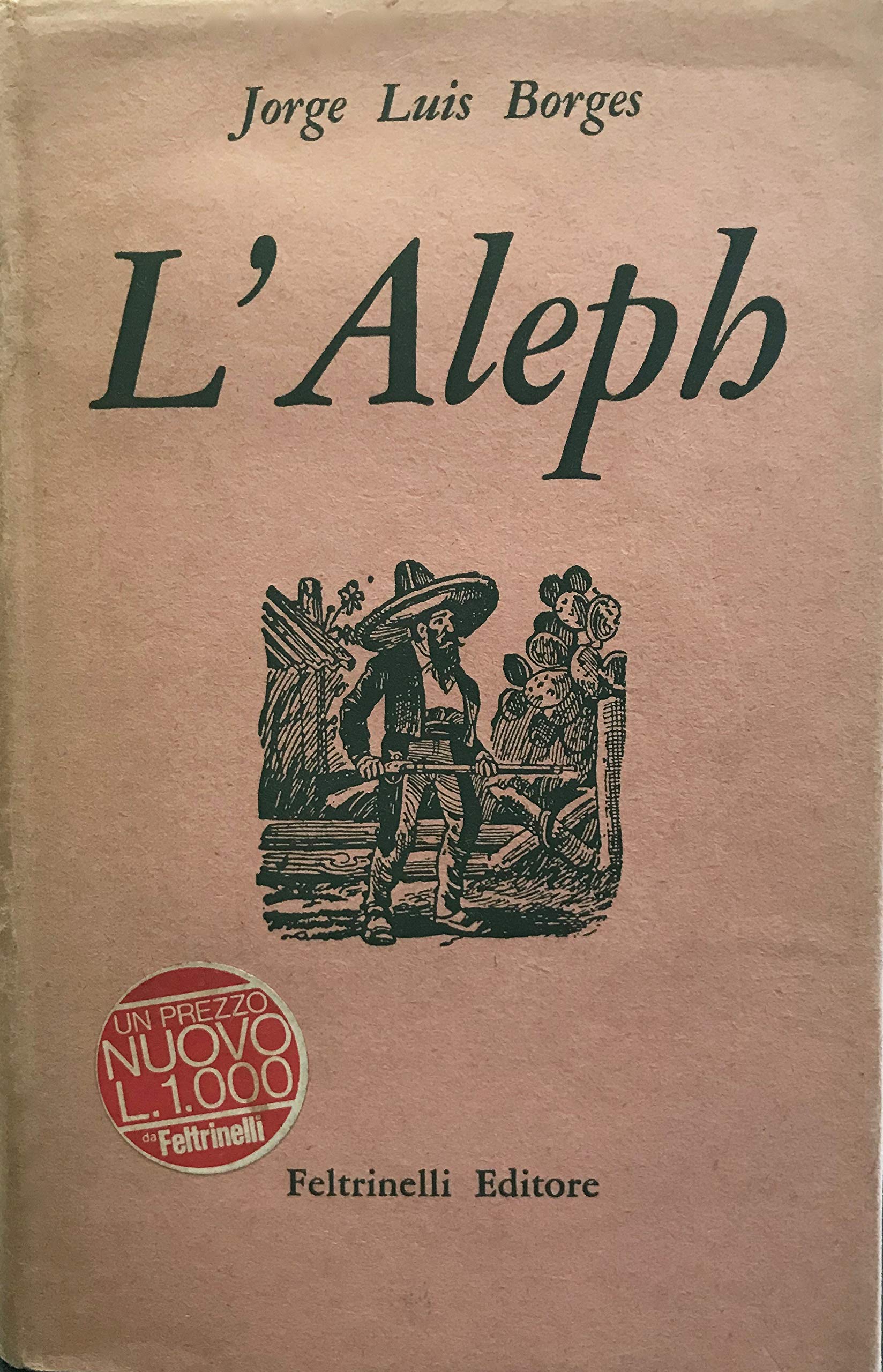
L'Aleph

Rate this book
Cuento "El Aleph", de Jorge Luis Borges, originalmente publicado en el libro El Aleph, en 1949.

Hardcover

First published January 1, 1945

591 people are currently reading
9764 people want to read

About the author

Jorge Luis Borges

1,586 books14.3k followers
Jorge Francisco Isidoro Luis Borges Acevedo was an Argentine short-story writer, essayist, poet and translator regarded as a key figure in Spanish-language and international literature. His best-known works, Ficciones (transl. Fictions) and El Aleph (transl. The Aleph), published in the 1940s, are collections of short stories exploring motifs such as dreams, labyrinths, chance, infinity, archives, mirrors, fictional writers and mythology. Borges's works have contributed to philosophical literature and the fantasy genre, and have had a major influence on the magic realist movement in 20th century Latin American literature.
Born in Buenos Aires, Borges later moved with his family to Switzerland in 1914, where he studied at the Collège de Genève. The family travelled widely in Europe, including Spain. On his return to Argentina in 1921, Borges began publishing his poems and essays in surrealist literary journals. He also worked as a librarian and public lecturer. In 1955, he was appointed director of the National Public Library and professor of English Literature at the University of Buenos Aires. He became completely blind by the age of 55. Scholars have suggested that his progressive blindness helped him to create innovative literary symbols through imagination. By the 1960s, his work was translated and published widely in the United States and Europe. Borges himself was fluent in several languages.
In 1961, he came to international attention when he received the first Formentor Prize, which he shared with Samuel Beckett. In 1971, he won the Jerusalem Prize. His international reputation was consolidated in the 1960s, aided by the growing number of English translations, the Latin American Boom, and by the success of Gabriel García Márquez's One Hundred Years of Solitude. He dedicated his final work, The Conspirators, to the city of Geneva, Switzerland. Writer and essayist J.M. Coetzee said of him: "He, more than anyone, renovated the language of fiction and thus opened the way to a remarkable generation of Spanish-American novelists."

Ratings & Reviews

What do you think?
Rate this book

Friends & Following

Create a free account to discover what your friends think of this book!

Community Reviews

5 stars
5,065 (52%)
4 stars
2,853 (29%)
3 stars
1,337 (13%)
2 stars
341 (3%)
1 star
107 (1%)
Displaying 1 - 30 of 611 reviews
Profile Image for Fergus, Weaver of Autistic Webs.
1,270 reviews18.3k followers
May 5, 2025
Just sayin' - but What IF? What if the Aleph, being a Fantasy Story, were a prescient look from way back in Borges' time -

Towards our current very mixed blessing, the World Wide Web?

Imagine, if you will, a vantage point from which you can see the infinite permutations of Everything that goes on in the world around us...

Back then, it was unimaginable. But now it's US.

The premise is far out, but the writing is MAGICAL!

***

The summer of 1968 was a good one for me and my old friends, especially my late friend Larry Ballard.

That summer he invited us to his family cottage, an invitation that hinged on the approval of our parents - Doug's, the third member of our Birchwood Avenue Buddies - and my own.

My Mom was dead set against it. I couldn't swim, having chickened out of swimming instruction at the YMCA.

Back at 12, you see, I couldn't stomach the thought of swimming with other preteen boys in my birthday suit!

My introversion had once again scuttled my bravery. Oh, well.

But Larry's bravery crescendoed in '68, having proven himself as a linebacker on the Merivale gridiron squad.

Football had become a passion. But head injuries plagued him!

Already that year his academics suffered. So repeating senior year was a setback. But he had a compensation: a new Yamaha 350!

***

And we all finally went to his cottage together, too. I brought along this Borges to read.

This story stood out for me that summer. The Aleph is the insight of satori! Or so, I fondly understood the symbolism of it back then.

Today I read a fantastic GR review that restored all my memories of that long-ago read -

And I didn't know it then, but it had set me on a warped Quest. Like the White Rabbit did for Alice.

Insight is pretty rum. For it's a blessing - and a curse. Alice sees both.

So one summer after that summer at the cottage, in 1969 a marvellous epiphany did that to me in spades, as I say on my homepage here.

I chanced within myself upon an incredible revelation of the perpetual Newness of Life - a newness pregnant with Hope! But it was edgy.

Habitual faith softens that edge, so you can sleep. But that initial vision was like the First Day.

Like my new Catholic Faith, it was both a blessing and a Cross...

For then and there, lo and behold, entered the Aleph.

***

Built into any blessing is awakening to pain - for having had a great insight, we must go on living everyday life. And living is chronic pain, satori or not.

For me that's the joy of a beautiful Mass. In the Mass we may see that God became just like us. And chronic pain is terminal.

If nothing else speeds our death, disappointment may tilt the balance. That's why Catholics always strive to see the blessed side of life, in story and song.

My faith therefore is a balancing act -

Especially nowadays -

When having hope might mollify all the monstrous daily news webcasts...

If it weren't for the Aleph's monstrously Two Faced LIES.
Profile Image for Jairo Morales.
Author 2 books25 followers
October 31, 2014
La literatura de Borges es exigente con el lector. Es necesario sentarse y aislarse del mundo para ser uno solo con el libro. Al terminar de leer "El Aleph" he llegado a una conclusión que quizás le sirva a los que quieren comenzar a leerlo: Antes de leer a Borges, primero tienes que haber leído mucho.
Profile Image for Sidharth Vardhan.
Author 23 books770 followers
August 31, 2017

"All language is a set of symbols whose use among its speakers assumes a shared past."

.... and so there must be things beyond describing powers of language. What if some day you were to come across a thing or an experience who is nothing like shared past? The human impulse to communicate must find a let out, and where mere words are not enough we need poetry:

Daneri’s real work lay not in the poetry but in his invention of reasons why the poetry should be admired.

Daneri, like most good poets, didn’t invent reasons, he found them - found them in the inexplicable Aleph.

Borges is not only talking about nature of language or importance of poetry, he also seems to be speculating why the descriptions of supernatural are so vague or strange:

“How, then, can I translate into words the limitless Aleph, which my floundering mind can scarcely encompass? Mystics, faced with the same problem, fall back on symbols: to signify the godhead, one Persian speaks of a bird that somehow is all birds; Alanus de Insulis, of a sphere whose center is everywhere and circumference is nowhere; Ezekiel, of a four-faced angel who at one and the same time moves east and west, north and south.”

And...

“Aleph is the first letter of the Hebrew alphabet. Its use for the strange sphere in my story may not be accidental. For the Kabbalah, that letter stands for the En Soph , the pure and boundless godhead; it is also said that it takes the shape of a man pointing to both heaven and earth, in order to show that the lower world is the map and mirror of the higher; for Cantor’s Mengenlehre , it is the symbol of trans- finite numbers, of which any part is as great as the whole.”

Again, if Borges and Daneri who have seen Aleph find themselves doubting the reality of same (perhaps an intellectual fear (fear of being ourselves insande makes us doubt anything we experience beyond that shared past), how can a reader who has but their words is supposed to believe in its existence?

Anyways, Daneri’s is taken from DANte aleghERI and like the great poet – he suffers a hell in being exposed to the inexplicable Aleph; puratory (which comes from author’s little lie) and paradise (latter success).

But why should Daneri find that sudden success? Borges stories are like little riddles in which everything strange has a beautiful explanation and that explanation is probably hinted at somewhere else in the story itself. Daneri’s obsession finds a mirror in narrator’s obsession for Beatriz Viterbo – and there lies the answer. The doubt created by narrator has same effect on Daneri that death of Beatriz had on narrator; it made him feel easy – when object of one’s obsession is set beyond possibility of possession, it doesn't kill the obsession itself (or it couldn't really be a strong obsession in first place) but it does ease one's mind about thinking of possibilities to possess. Daneri probably just stopping try too hard too hard to interpret Aleph.

“...now that she was dead, I could devote myself to her memory, without hope but also without humiliation.


*

"So foolish did his ideas seem to me, so pompous and so drawn out his exposition, that I linked them at once to literature and asked him why he didn’t write them down."
Profile Image for Owlseyes .
1,805 reviews300 followers
February 22, 2019
Biographical


His mother played the piano and sang. She spoke the languages. Their correspondence is still studied. Leonora Acevedo.

Borges had some pride acknowledging his lineage: many races involved: from Belgium, Normand, Spanish, English, Portuguese; even Jewish ascendancy.

His father was a lawyer and professor of Psychology, in Argentina.

In his father’s library, in a humble suburb of his poor "bairro”, he read from: Plato, Stevenson, Goethe, Chesterton…;…Don Quixote, El Fausto. Adding to it: Greek mythology. At 6 years of age Borges had “a precocious imagination”.

Due to problems in father’s sight, the family moved to Switzerland; there, Borges had the chance to develop his Latin, French and German languages.
...


Aleph:
ʾĀlp is the first letter of many Semitic abjads (alphabets), including Phoenician Aleph Phoenician aleph.svg, Syriac 'Ālap ܐ, Hebrew Aleph א, and Arabic Alif ا.(FROM WIKI)


He just liked her: Beatriz Viterbo. And then on a February day of 1929, she died. So, to demonstrate his devotion to her, he visited her place every 30th of April, her birthday. Namely, to study her “many portraits”.

In 1933 he was invited to dinner, in that place. In 1934, the cousin of Beatriz, Carlos Argentino Daneri, a writer, invited him. They both wrote.

Carlos read his poetry to the narrator; the latter found nothing that memorable in the piece; it was Carlos intention to “versify the entire planet’s roundness”.

On a second invitation, Carlos read more of his verses in a café; then again, the narrator felt the “verbal ostentation” ; like, instead of “lactario,lactinoso or lechal”: lechoso; or instead of “azulino,azulenco or azulillo”: azulado.

“Daneri is crazy”, thought the narrator; Carlos “inspired in me rancor”; “he used me”.

But all is not that bad for the narrator. Daneri has got something to be prized: though the house is meant to go down, Daneri tells the narrator the place has got an Aleph: “a point of space which contains all the points”. Somewhere in the cellar, Daneri has discovered it.

“Then you can have a dialogue with all the images of Beatriz”.
It’s “the microcosm of the cabalist and the alchemist”.

What´s so best for the narrator? Will he try it?

Yes, he will; he’ll get to see the "fading traits" of Beatriz.

“I closed my eyes and then saw the Aleph”.
How to tell about it? Was it a true Aleph?

Ezekiel saw a 4-winged angel.

Ah, by the way: Carlos got a prize for his writing; the narrator’s prose got : not a single vote.

The house has been demolished. …it’s the 1st of March of 1943.

Maybe too hermetic, but worth the try reading it. You’ll never get to say: “there’s no point doing it”.

Aleph, the point, is there.


Profile Image for Pau.
66 reviews178 followers
November 26, 2023
"El Aleph" es un punto mágico desde el cual se puede ver todo lo que existe. Pero antes de llegar a esta respuesta, el Borges del relato cuenta cómo llegó a él, cómo después de mucho hablar con el primo de su querida Beatriz, inesperadamente le es revelado que existe un Aleph, de la manera más casual y cotidiana.

En el cuento escribe que en el sótano de la casa de Carlos Argentino Daneri había un Aleph, “uno de los puntos del espacio que contienen todos los puntos… un lugar donde están todos los lugares del orbe, vistos desde todos los ángulos”. Un punto en el que todo converge, un punto que es como un inicio...

Metonimia, porque desde este único punto se accede al todo. Metáfora, porque la lectura del libro permite inducir que hay otros Alephs, y que cada quien puede encontrar su propio Aleph en el sótano, en las profundidades, de su propia casa. En "La escritura de Dios" Borges también incluye la relación de la parte con el todo: “Aún en los lenguajes humanos no hay proposición que no implique al universo entero; decir el tigre es decir los tigres que lo engendraron, los ciervos y tortugas que devoró, el pasto de que se alimentaron los ciervos, la tierra que fue madre del pasto, el cielo que dio luz a la tierra.”

El Aleph es la primera letra del alfabeto hebreo, también la primera letra del alfabeto árabe. Cabalísiticamente, la letra Aleph está presente en el resto de las letras hebreas y por extensión en todas las cosas. Nombrarla trae implícito nombrar todo lo demás. Es difícil, sino imposible describir el Aleph, las palabras no alcanzan para explicarlo realmente. Pero Borges nos invita a pensar que en cada parte hay una ventana hacia el todo.

El cuento El Aleph, en cualquier caso, me parece uno de los mejores y mas memorables. Y ese maravilloso y eterno párrafo final: ¿Existe ese Aleph en lo íntimo de una piedra? ¿Lo he visto cuando vi todas las cosas y lo he olvidado? Nuestra mente es porosa para el olvido; yo mismo estoy falseando y perdiendo, bajo la trágica erosión de los años, los rasgos de Beatriz.
Profile Image for TheBookWarren.
547 reviews209 followers
July 20, 2023
4.25 ⭐️ — This was an absolute joy to read, and anyone at all whom enjoys a bold, yet simple novella must fit this little gem into their TBR shelf posthaste!

In Jorge Luis Borges' mesmerizing novella "The Aleph," the reader embarks on an ethereal odyssey of metaphysical exploration and poetic reflection. Borges' literary prowess shines as he unfurls a tapestry of philosophical musings, gracefully interwoven with surreal and enchanting imagery.

At the heart of the narrative lies the enigmatic Aleph, a celestial point where the universe's entirety converges, transcending the boundaries of comprehension. Borges' prose dances between reality and unreality, inviting readers to question the fabric of existence itself.

The characters, though sparse, are rich in complexity, their interactions punctuating the philosophical ponderings. Borges masterfully traverses the depths of memory and time, leaving us with existential musings to contemplate.

While the novella's intellectual depth is near unparalleled, some may find its labyrinthine narrative style a challenging pursuit, even though it’s a novella, it actually makes this perspective all the more challenging. Yet, those willing to immerse themselves in Borges' labyrinth of ideas will discover a profound & largely enlightening journey.

Borges weaves a literary tapestry that lingers, inspiring introspection and stirring the imagination—a bewitching exploration of the ineffable & the boundless nature of human thought, and reflection.
Profile Image for Reemi Reader.
307 reviews201 followers
November 7, 2017
The version i read (English) was 11 pages long , yet it was one of the hardest things i have ever read.

the Aleph is the first letter of the Hebrew
alphabet. Its use for the strange sphere in my story may not be accidental. For the
Kabbala, the letter stands for the En Soph, the pure and boundless godhead; it is
also said that it takes the shape of a man pointing to both heaven and earth, in
order to show that the lower world is the map and mirror of the higher


i can't describe what this books is about , you have to read it and see how your mind interprets its meaning . all i know that now , all i'm thinking about is El Aleph , would i be able to handle it if i found it ? would i be able to handle the absolute truth ?

Some quotes that i liked :

---------------------------------------------------

"Of course, if you don’t see it, your
incapacity will not invalidate what I have experienced"

---------------------------------------------------

---------------------------------------------------

last one , i describes that one particular moment , in which after u witness if , nothing will ever be the same :


"I was afraid that not a
single thing on earth would ever again surprise me; I was afraid I would never
again be free of all I had seen."


I loved it , but i can guarantee , its not for everybody . at . all.
Profile Image for Gonzalo Guma.
Author 8 books191 followers
December 6, 2024
Necesito hacer varias confesiones a causa de Borges. La primera, que me costó bastante encontrarle la vuelta para leerlo y poder disfrutarlo. La Segunda, que finalmente logré disfrutarlo con el siguiente método: tomo un cuento y lo leo muy despacio, lo medito, lo analizo. Luego estoy casi un mes -por cuento- viendo tutoriales del cuento por YouTube. Es un viaje alucinante. Borges es una inmensa cebolla, con infinitas capas de entendimiento, simbolismo e información. La última confesión personal es que, cuando decidí animarme con la escritura de cuentos fantásticos (luego de mis tres novelas) lo primero que hice fue releer los cuentos de Borges. Y por supuesto que me influyó demasiado y está presente -de alguna forma u otra- en mis historias y textos. Infinitas gracias Jorge Francisco Isidoro Luis Borges Acevedo
Profile Image for Connie  G.
2,140 reviews706 followers
April 5, 2022
The Aleph is a point in space that contains all the other points so everything in the universe can be seen simultaneously. Borges has wrapped the story about the Aleph in two other story ideas--the first about unrequited love and death, and the second about writers and artistic merit.

The idea of the Aleph is very complex. In a commentary on the short story, Borges stated, "What eternity is to time, the Aleph is to space." Borges has combined this science fiction element with a realistic story line so that it seemed believable. Great story!
Profile Image for Federico DN.
1,163 reviews4,356 followers
July 3, 2025
Convergence.

Jorge Luis Borges, the famous argentine author, terribly mourns the loss of Beatriz Viterbo, and each April 30th visits her previous home, now under the care of one of her cousins, Carlos Argentino Daneri. The tradition dutifully maintained each year for decades, unknowing of the mysterious secret hidden in one of the dark corners of the basement, the Aleph.

Along with 'The Circular Ruins' and 'Funes, the memorious', one of few short stories I ever enjoyed by Borges. Well, maybe 'enjoy' is a too exaggerated word, it would be closer to say I appreciated the idea. Tolerated it. This short writing still has Borges unbearable tendency to overload paragraphs with uncountable untraceable references, incomprehensible explanations, and even some lines of poetry. Ugh. Yet fortunately those parts are at least brief and not unbearably overwhelming; and on the whole, this short story, renowned as it may be, does live up to its fame. Sort of.


-----------------------------------------------
PERSONAL NOTE :
[1968] [13p] [Fiction] [3.5] [Conditional Recommendable]
-----------------------------------------------

★★☆☆☆ Ficciones
★★☆☆☆ Borges: Cuentos
★☆☆☆☆ Borges profesor: Curso de literatura inglesa en la Universidad de Buenos Aires [1.5]
★☆☆☆☆ El tamaño de mi esperanza [0.5]

-----------------------------------------------

Convergencia.

Jorge Luis Borges, el célebre autor argentino, lamenta terriblemente la pérdida de Beatriz Viterbo, y cada 30 de abril visita su anterior casa, ahora bajo el cuidado de uno de sus primos, Carlos Argentino Daneri. La tradición mantenida obedientemente cada año durante décadas, sin saber del misterioso secreto escondido en uno de los rincones oscuros del sótano, el Aleph.

Junto con 'Las ruinas circulares' y 'Funes, el memorioso', uno de los pocos cuentos que he disfrutado de Borges. Bueno, tal vez "disfrutar" sea una palabra demasiado exagerada, sería más cercano decir que aprecié la idea. La toleré. Este breve escrito todavía tiene la insoportable tendencia de Borges a sobrecargar párrafos con innumerables referencias imposibles de rastrear, explicaciones incomprensibles e incluso algunas líneas de poesía. Puaj. Pero afortunadamente esas partes son dentro de todo breves y no insoportablemente abrumadoras; y esta historia corta, en su todo, por muy reconocida que sea, vive a la altura de su fama. Más o menos.


-----------------------------------------------
NOTA PERSONAL :
[1968] [13p] [Ficción] [3.5] [Recomendable Condicional]
-----------------------------------------------
Profile Image for Floripiquita.
1,474 reviews169 followers
December 23, 2021
“Un hombre se confunde, gradualmente, con la forma de su destino; un hombre es, a la larga, sus circunstancias”.

Solo sé que no sé nada y que me queda mucho por leer y aprender. Leer a Borges es muy exigente y nada fácil, pero precisamente por eso me ha parecido toda una experiencia.

#Popsugar21 Reto 28: Un libro de realismo mágico
Profile Image for Marisa Galarza.
97 reviews10 followers
January 24, 2024
Este libro reúne relatos muy bien contados, con un estilo único, ricos en referencias históricas y literarias. Algunos tienen características más reales y otros más de corte fantástico.
En estos cuentos, Borges logra contar en pocas palabras situaciones muy intensas. Por eso, es bueno leerlos pausadamente y descubrir en estas obras la genialidad de su escritura.
Profile Image for Pedro.
822 reviews329 followers
January 23, 2024
El narrador (Borges) ha quedado con un vínculo incómodo con el Ing. Carlos Daneri, a quien conoció en algún momento por ser el primo de una de sus amores imposibles.

Cuando Daneri intenta convencerlo de mostrarle un notable descubrimiento que ha hecho, después de haber eludido una y otra vez la invitación con mil excusas, el narrador termina aceptando resignado.

Y cuando finalmente llega al rincón del sótano, se encuentra con un hallazgo por el que agradece al azar, o a regañadientes, a la insistencia del "pariente".

Todo. Los lugares, los tiempos, el principio y el fin, todo está en este portal del espacio tiempo, en el que la pobre mente humana está a la vez fascinada e impotente frente al infinito y la eternidad.

Otro de los excelentes cuentos de Borges, en que que juega a la hipótesis de "¿Que pasaría si...?", para invitarnos a acompañarlo a los universos que su imaginación prodigiosa fue capaz de explorar. Y todo con su habitual lenguaje, elegante y pulido, casi musical.
Profile Image for Josefa De la Barra.
43 reviews277 followers
December 21, 2023
Mi experiencia con este libro es muy peculiar, porque siento que tener una sola experiencia lectora con este libro es imposible. Es necesario, obligatorio, releer este libro porque la cantidad de información oculta en sus relatos y palabras es grandísimo: lees un relato, obtienes un resultado, lo lees otra vez y obtienes otro; constantemente en metamorfosis.

Al principio no estaba segura de si me iba a gustar o no, debido a que hubieron relatos que me cautivaron más que otros, pero cuando comencé a llegar al final del libro me terminó gustando un montón; Borges literal guardó lo mejor para el final (a mi parecer).

Le di cuatro estrellas porque este libro aún me tiene algo vulnerable e indecisa, ni siquiera estoy segura de lo que siento por esta obra. Aún así lo recomiendo, es buenísimo.
Profile Image for Pepe Llopis Manchón.
321 reviews39 followers
January 14, 2019
La literatura y el alma de Borges son tan grandes como aquello que puede vislumbrarse más allá del Aleph.
Profile Image for Luis Diego Camacho Mora.
405 reviews4 followers
June 1, 2014
Probablemente es el cuento de Borges que más han analizado literariamente. Pero a mí lo que me atrapó es lo que lo hace sentir este cuento. La alegoría hacia la eternidad y la conceptualización del Aleph como el punto donde se encuentran todos los puntos. Termina uno con el pensamiento de encontrar ese Aleph propio, personal, más allá de la sola lectura del cuento.
Profile Image for Paras2.
327 reviews69 followers
June 1, 2019
Weird but cool. Might need to read about it.
Profile Image for Gonzalo.
51 reviews
February 7, 2022
“Ser inmortal es baladí; menos el hombre, todas las criaturas lo son, pues ignoran la muerte”

Eterno Borges.
Profile Image for  Aggrey Odera.
253 reviews59 followers
November 11, 2021
I claim to hate "metaphysical bullshit", then I run into something like this story, with all its insistence that profundity exists in the world even if we lack the language to describe it, and suddenly, in ironic confirmation of how wrong I can be, I lack the words to express my prior disagreement. This story is so beautiful. It takes all the useless philosophizing and brings it down to life in the most beautiful prose. Through vivid description and not logical argumentation, it suggests (rightly, I think) that literature (and especially poetry), not philosophy, presents our best hope for trying to see the world. Literature offers a window into the world, one that necessarily assumes a multitude of perspectives. It forces us to acknowledge the messiness of the world and the limits of our perceptive capacities. Philosophy, on the contrary, in its aspiration to representationalism, pretends to provide a mirror. Per philosophy, the "real" world is as philosophy claims it sees it- a one-to-one relationship between what exists in actuality and what exists in our minds. And yet the beauty of the world, and one might even say the "truth" of it, is in its intense complicatedness, its contingency that leaves us forever seekers. I had my doubts about reading Borges again since I remember strongly disliking "Tlon, Uqbar, Orbis, Tertius." But my, my, what a champ! I may just have discovered my next fixation.

Thanks to Alasdair Phillips-Robins for the recommendation.
Profile Image for B. P. Rinehart.
765 reviews292 followers
October 3, 2018
"All language is an alphabet of symbols whose use presupposes a past shared by all other interlocutors."


Hola Señor Borges. I was recently reminded that I have not read Jorge Luis Borges, and this fact weighed heavily on my heart. I decided to read this short story (translated to English by Anthony Kerrigan) since I had it on-hand. This is a story about memory, language and time. How does one describe something that is indescribable? Indescribable, because it describes everything. That's what this story is about. It uses real-life people (including Borges as the protagonist), to tell this story of happening on something that invokes, but also conceals--and that's what interest me about this tale.
Profile Image for Patrick.
146 reviews6 followers
May 30, 2020
Esto lo lees bien fumado, y no sales vivo de la lectura. Cierto es que es muy exigente, y en mi caso, al terminar de escribir mi opinión, iré raudo a cotillear por la red porque fijo que se me han pasado un montón de cosas. Además, unas frases como: "Estaba satisfecho con la derrota, porque era un fin, y estaba cansado", que hacen que todo esté ahí bien puesto y bien sexy, no como literatura metralla. (Decir que yo he leído un recopilatorio de relatos, no solo el Aleph, que es uno de ellos).
Recomendado pero a sabiendas que se viene densidad guapa y que toca saborear frase a frase.
Profile Image for Guillermo Maddalena.
452 reviews2 followers
April 25, 2024
Bravooo Borges!!!!👏👏👏 Lectura obligatoria para todo aquel que ame la literatura!! La erudición de su lenguaje para mi es inalcanzable, (diccionario en mano) ✍️ . Maravillosa narración!!! Con Borges aprendes o aprendes, sin duda un maestro!!! Y no lo digo solo por esta obra, me refiero a toda su obra. Complejo??? Noooo jajaja requiere de bastante esfuerzo, voluntad y tiempo!! Pero estoy satisfecho y agradecido de poder ser partícipe de tan grandiosa obra!!! 💚👏💚 Quiero másssss y voy por los ensayos y poesías!!!
Profile Image for Claire.
96 reviews
June 24, 2015
Some short stories are simply amazing: witty, full of philosophy, dreamy... And others resonated a bit less. The theme of the maze is there throughout the novels, either as real, concrete mazes or as philosophical, abstract mazes.
Profile Image for SemneBune.
382 reviews42 followers
August 7, 2014
Nu există literatură modernă fără scriitorii Gabriel García Márquez sau Jorge Luis Borges. Este inestimabil rolul literelor lor în crearea unei noi literaturi. Practic, oamenii au reinventat modul de a spune o poveste. Este de ajuns să citim ”Un veac de singurătate” sau ”Aleph”, pentru a înțelege că literatura lor este aparte. Pe aceeași linie cu Sabato, Casares sau Cortazar, minunata abilitate de a îmbina realul cu fantasticul, în cel mai natural mod posibil, este fără doar și poate o realizare demnă de cercetat și de admirat.

Talentul nu ține cont de întinderea pe pagini, iar Borges nu a scris roma, pentru că nu avea nevoie de întinderi mari, pentru a crea lumi în lumi,în lumi. Avem aici un volum de povestiri, dintre cele mai bune, care susținea această teorie.

de la sursă: Jorge Luis Borges – Aleph – SemneBune http://semnebune.ro/2012/jorge-luis-b...
Profile Image for Saúl Girón.
483 reviews9 followers
June 22, 2016
Leer a Borges me ha resultado un tanto exigente! No se le puede leer si no está uno en total armonía con el libro, en soledad (a lo sumo, con algo de música ambiental).
Algunos cuentos me encantaron. Todos los tuve que releer.
Indiscutiblemente, mi español ha sufrido cambios (para mejorar) después de leer al Maestro Borges.
Sencillamente, me gustó!
Profile Image for Alex.
213 reviews14 followers
October 2, 2017
Fascinating story. I really don't know what to say except WOW. As someone wrote on their review, it requires an appealing prior literature knowledge to fully digest it, but it's worth reading. At some point, the story, like the Aleph, gobbles you up into its infinite space and doesn't let you go.
Profile Image for Felipe CZ.
514 reviews31 followers
August 9, 2018
A strange but incredible story by Borges. The point of conversion for all things and a metaphor for other metaphors. One of Borges' most representative works. Must-read.
Displaying 1 - 30 of 611 reviews

Can't find what you're looking for?

Get help and learn more about the design.