

What do you think?

The Folded Leaf
In the suburbs of Chicago in the 1920s, two boys initiate an unusual friendship: Lymie Peters, a skinny and somewhat clumsy boy who always gets good grades, and newcomer Spud Latham, a star athlete and mediocre student. Spud accepts Lymie’s devotion without questioning it, but once high school ends and the boys enter college, tensions begin to arise between them. Lymie is the first to meet Sally Forbes, but she will fall in love with Spud, and this will mark the beginning of the rift between them. But this rupture will be more than Lymie can bear. William Maxwell provides the reader with a moving portrayal of adolescence and the shift from youth into adulthood.
En los suburbios de Chicago en los años veinte, dos chicos inician una insólita amistad: Lymie Peters, un muchacho delgado y un poco torpe que siempre saca buenas notas, y el recién llegado Spud Latham, un auténtico atleta y estudiante mediocre. Spud acepta la devoción de Lymie sin cuestionarla, pero al terminar la escuela secundaria y comenzar la universidad, aparecen las primeras tensiones entre ellos. Lymie es el primero en conocer a Sally Forbes, pero ella se enamorará de Spud, y este hecho marcará el inicio del distanciamiento entre los dos amigos. Pero la ruptura es más de lo que Lymie podrá soportar. He aquí un conmovedor retrato de la adolescencia y el paso de la juventud a la edad adulta.
304 pages, Paperback
First published January 1, 1948
About the author
William Maxwell
133 books385 followersLibrarian Note: There is more than one author by this name in the Goodreads database.
William Keepers Maxwell Jr. was an American novelist, and fiction editor at the New Yorker. He studied at the University of Illinois and Harvard University. Maxwell wrote six highly acclaimed novels, a number of short stories and essays, children's stories, and a memoir, Ancestors (1972). His award-winning fiction, which is increasingly seen as some of the most important of the 20th Century, has recurring themes of childhood, family, loss and lives changed quietly and irreparably. Much of his work is autobiographical, particularly concerning the loss of his mother when he was 10 years old growing up in the rural Midwest of America and the house where he lived at the time, which he referred to as the "Wunderkammer" or "Chamber of Wonders". He wrote of his loss "It happened too suddenly, with no warning, and we none of us could believe it or bear it... the beautiful, imaginative, protected world of my childhood swept away." Since his death in 2000 several works of biography have appeared, including A William Maxwell Portrait: Memories and Appreciations (W. W. Norton & Co., 2004), My Mentor: A Young Man's Friendship with William Maxwell by Alec Wilkinson (Houghton-Mifflin, 2002), and William Maxwell: A Literary Life by Barbara Burkhardt (University of Illinois Press, 2005). In 2008 the Library of America published the first of two collections of William Maxwell, Early Novels and Stories, Christopher Carduff editor. His collected edition of William Maxwell's fiction, published to mark the writer's centenary, was completed by a second volume, Later Novels and Stories in the fall of 2008.'
William Keepers Maxwell Jr. was an American novelist, and fiction editor at the New Yorker. He studied at the University of Illinois and Harvard University. Maxwell wrote six highly acclaimed novels, a number of short stories and essays, children's stories, and a memoir, Ancestors (1972). His award-winning fiction, which is increasingly seen as some of the most important of the 20th Century, has recurring themes of childhood, family, loss and lives changed quietly and irreparably. Much of his work is autobiographical, particularly concerning the loss of his mother when he was 10 years old growing up in the rural Midwest of America and the house where he lived at the time, which he referred to as the "Wunderkammer" or "Chamber of Wonders". He wrote of his loss "It happened too suddenly, with no warning, and we none of us could believe it or bear it... the beautiful, imaginative, protected world of my childhood swept away." Since his death in 2000 several works of biography have appeared, including A William Maxwell Portrait: Memories and Appreciations (W. W. Norton & Co., 2004), My Mentor: A Young Man's Friendship with William Maxwell by Alec Wilkinson (Houghton-Mifflin, 2002), and William Maxwell: A Literary Life by Barbara Burkhardt (University of Illinois Press, 2005). In 2008 the Library of America published the first of two collections of William Maxwell, Early Novels and Stories, Christopher Carduff editor. His collected edition of William Maxwell's fiction, published to mark the writer's centenary, was completed by a second volume, Later Novels and Stories in the fall of 2008.'
Ratings & Reviews
Friends & Following
Create a free account to discover what your friends think of this book!
Community Reviews
Displaying 1 - 30 of 187 reviews

February 18, 2019
Chicago, 1920's, two young boys meet, well sort of, for one it will be hero worship. The other will accept this devotion, and a relationship of a kind develops. A friendship, that will at times be more than friendship, a physical relationship at a time before this had a label assigned. When they get to college, things will change. One boy will move forward, the other unable to see ahead to a possible future that did not include the other.
Maxwell's writing is beautiful, spare, honest and insightful. He chronicles this relationship and develepments within with astuteness and grace. I read somewhere that his books are often taken from examples in his own life. Not sure if this is true or not, but I tend to think that is more than possible. His gift is to see inside his characters and bring them vividly to the page. This is a melancholy book, and things happen that are hard to experience, but within the situation created, understandable. Growing up is such a fraught time, a time of powerful feelings, and relationships. In this case, Maxwell gets so much right.
Maxwell's writing is beautiful, spare, honest and insightful. He chronicles this relationship and develepments within with astuteness and grace. I read somewhere that his books are often taken from examples in his own life. Not sure if this is true or not, but I tend to think that is more than possible. His gift is to see inside his characters and bring them vividly to the page. This is a melancholy book, and things happen that are hard to experience, but within the situation created, understandable. Growing up is such a fraught time, a time of powerful feelings, and relationships. In this case, Maxwell gets so much right.

October 14, 2013
4 and 1/2 stars
This novel is both extraordinary and ordinary: extraordinary in its prose, and its insights into the mind and behavior of two ordinary boys, their families, other friends and even teachers and university administrators. It has a lot to say about the impact of the early death of a mother and of a distant father on a boy, even during a time when that distance must've been viewed as ordinary.
The outline of the plot is ordinary, the intense friendship between two opposites inevitably tested when they are at college together; but the writing, especially those passages when the narratorial voice steps out of his storytelling at the perfect times to explore the wide spaces that come between even the closest of human beings, and what we must do to traverse those spaces, so we can expand beyond ourselves, so we can live, is extraordinary.
This novel is both extraordinary and ordinary: extraordinary in its prose, and its insights into the mind and behavior of two ordinary boys, their families, other friends and even teachers and university administrators. It has a lot to say about the impact of the early death of a mother and of a distant father on a boy, even during a time when that distance must've been viewed as ordinary.
The outline of the plot is ordinary, the intense friendship between two opposites inevitably tested when they are at college together; but the writing, especially those passages when the narratorial voice steps out of his storytelling at the perfect times to explore the wide spaces that come between even the closest of human beings, and what we must do to traverse those spaces, so we can expand beyond ourselves, so we can live, is extraordinary.

October 27, 2012
The Folded Leaf was written in 1945. Maxwell said it was his favorite novel for "personal reasons - the whole of my youth is in it". Set in the 1920s in Chicago, the story centered on the unlikely friendship between two adolescent males: Lymie Peters and Spud Latham. It depicted a true-to-life picture of life on an American university campus that came with horrific initiation parties, the facetious pomposity of being a member of a Fraternity or Sorority, drills of lectures, and after-class cafe chats.
I had a soft spot for Lymie who could not play a game to save his life. Lymie was also socially awkward and painfully thin. He was always the last to be chosen in any kind of team sport. But Lymie’s academic star was shining. Spud, by contrast, had the body of a Greek god. He was athletic, confident, and socially aloof. Lymie was drawn to Spud when the latter saved him from drowning. The friendship developed in heartwarming ways but became strained when Sally Forbes became a mutual love interest.
The novel, however, is no shallow coming of age story. I was surprised at the philosophical reflections that emerged at various points in the narrative; some of which, I felt, were out of place. For example, this interlude - "But to live in the world at all is to be committed to some kind of a journey." –appeared somewhat dislocated in the narrative. There was a chapter wholly devoted to the desert which did flow better from the story line: "The desert is the natural dwelling place not only of Arabs and Indians but also of people who can't speak when they want to and of those others who, like Lymie Peters, have nothing more to say, people who have stopped justifying and explaining, stopped trying to account for themselves or their actions, stopped hoping that someone will come along and love them, and so make sense out of their lives." Heartbreaking but real for some of us.
To me, the most disturbing reflection was on truth. "The truth is nothing like as simple or as straightforward a thing as Lymie believed it to be. It masquerades in inversions and paradoxes, is easier to get at in a lie than in an honest statement. If pursued, the truth withdraws, puts on one false face after another, and finally goes underground, where it can only be got at in the complex, agonizing absurdity of dreams." I could not help but wonder if even a strong friendship could confront the truth and not be irrevocably jeopardized. Truth comes at a cost.
The Folded Leaf is not a book for everyone. Maxwell said, "While I was working on it, in my mind's eye I kept seeing the manuscript burning in the fireplace; I was sure nobody would be interested in it." Well, I was. I was glad I read it.
I had a soft spot for Lymie who could not play a game to save his life. Lymie was also socially awkward and painfully thin. He was always the last to be chosen in any kind of team sport. But Lymie’s academic star was shining. Spud, by contrast, had the body of a Greek god. He was athletic, confident, and socially aloof. Lymie was drawn to Spud when the latter saved him from drowning. The friendship developed in heartwarming ways but became strained when Sally Forbes became a mutual love interest.
The novel, however, is no shallow coming of age story. I was surprised at the philosophical reflections that emerged at various points in the narrative; some of which, I felt, were out of place. For example, this interlude - "But to live in the world at all is to be committed to some kind of a journey." –appeared somewhat dislocated in the narrative. There was a chapter wholly devoted to the desert which did flow better from the story line: "The desert is the natural dwelling place not only of Arabs and Indians but also of people who can't speak when they want to and of those others who, like Lymie Peters, have nothing more to say, people who have stopped justifying and explaining, stopped trying to account for themselves or their actions, stopped hoping that someone will come along and love them, and so make sense out of their lives." Heartbreaking but real for some of us.
To me, the most disturbing reflection was on truth. "The truth is nothing like as simple or as straightforward a thing as Lymie believed it to be. It masquerades in inversions and paradoxes, is easier to get at in a lie than in an honest statement. If pursued, the truth withdraws, puts on one false face after another, and finally goes underground, where it can only be got at in the complex, agonizing absurdity of dreams." I could not help but wonder if even a strong friendship could confront the truth and not be irrevocably jeopardized. Truth comes at a cost.
The Folded Leaf is not a book for everyone. Maxwell said, "While I was working on it, in my mind's eye I kept seeing the manuscript burning in the fireplace; I was sure nobody would be interested in it." Well, I was. I was glad I read it.

June 27, 2023
This is a powerful book. A little different from the other Maxwell's I've read, and yet the same beautiful, stylistic prose telling a moving story of relationships, and loss, and coping with that loss.
Spud and Lymie meet in high school and become close friends, though on the surface they are worlds apart. Spud was uprooted from his Wisconsin home to move to Chicago for his father's job, but has a loving family. He's good looking, athletic and popular. Lymie's mother died when he was 10, his father is distant, their life together is fractured. Smart and a loner, he's the skinny little nerd with glasses, although that word was not around for the 1923 setting of this book.
They go to college together, room together, eat together, support each other, although at times Lymie seems to have devoted himself entirely to serving Spud. There are overtones of a homosexual nature, although it never develops and is never questioned by others in the dorm. Just a loving relationship between two boys, which was more easily accepted in that day than it would be now. There are girls and dates, but in any relationship one person always has a deeper need than the other. Spud and Lymie have problems, and that is the backbone of this novel.
There are interludes mixed in among the chapters that tell us about others in their world: professors, parents, other students, onlookers in class. Maxwell has made a perfect study of human nature in all its guises, and he gives it to us in microcosm. The ending is surprising and affecting, but seems to be the only way it could end, and is realistic in that things change, but still remain the same.
Spud and Lymie meet in high school and become close friends, though on the surface they are worlds apart. Spud was uprooted from his Wisconsin home to move to Chicago for his father's job, but has a loving family. He's good looking, athletic and popular. Lymie's mother died when he was 10, his father is distant, their life together is fractured. Smart and a loner, he's the skinny little nerd with glasses, although that word was not around for the 1923 setting of this book.
They go to college together, room together, eat together, support each other, although at times Lymie seems to have devoted himself entirely to serving Spud. There are overtones of a homosexual nature, although it never develops and is never questioned by others in the dorm. Just a loving relationship between two boys, which was more easily accepted in that day than it would be now. There are girls and dates, but in any relationship one person always has a deeper need than the other. Spud and Lymie have problems, and that is the backbone of this novel.
There are interludes mixed in among the chapters that tell us about others in their world: professors, parents, other students, onlookers in class. Maxwell has made a perfect study of human nature in all its guises, and he gives it to us in microcosm. The ending is surprising and affecting, but seems to be the only way it could end, and is realistic in that things change, but still remain the same.

June 19, 2025
William Maxwell’s The Folded Leaf is a masterfully told story of two boys searching for identity in a society of isolation, confusion and unreasonable expectation. It examines all the complex rituals and deep-seated feelings that can exist in boys who are struggling to become men in a world that gives them few guidelines and instructions.
Lymie Peters is an almost frail and certainly weaker boy, who has a lot of difficulty being accepted by his stronger, more athletic peers. In today’s jargon, we would call him a nerd. Lymie has lost his mother, and his father is a cold and removed figure, showing up sometimes for meals, but not interacting at anything more than a surface level with his son.
Stud Latham is a natural athlete, displaced from his home in Wisconsin into the faster-paced world of Chicago, and also unsure of his place in society. What Stud does have is a mother and a family unit, with a somewhat present father. They form an unlikely duo, with Lymie falling into a kind of worship of Stud and a longing for the family-life he imagines Stud has.
When Sally Forbes enters their lives, she begins as a friend of Lymie’s from class and develops into a girlfriend for Stud. This natural progression takes on a complicated and sometimes cruel aspect, and Lymie, particularly, has to make extreme adjustments. Where the friendship had been a kind of life preserver for Lymie, it becomes an anchor and begins to pull him under.
This is a profound look at what it is to love another human being, what it is to search for self-identity, and what it is to navigate the changing world from adolescence to adulthood, with all the possible pitfalls for both body and soul.
William Maxwell brings to life, through his unparalleled use of language, all the intensity of emotion this coming-of-age entails:
Something had burst inside of him, something more important than any organ, and there was a flowing which was like blood. Though he kept on breathing and his heart after a while pounded less violently, there it was all the same, an underground river which went on and on and was bound to keep on like that for years probably, never stopping, never once running dry.
And, he understands what is going on beneath the surface of a person, in his dreams and in his desires.
Lymie, who from long habit should have been sensitive to the changes in Spud’s mood, had no idea that anything was wrong. The person who is both intelligent and observing cannot at the same time be innocent. He can only pretend to be; to others sometimes, sometimes to himself. Since Lymie didn’t notice that anything was wrong with Spud, one is forced to conclude that he didn’t wish to notice it.
Most of all, he recognizes the longing in each of us to be accepted, to be loved, to be recognized.
The desert is the natural dwelling place not only of Arabs and Indians but also of people who can’t speak when they want to and of those others who, like Lymie Peters, have nothing more to say, people who have stopped justifying and explaining, stopped trying to account for themselves or their actions, stopped hoping that someone will come along and love them and so make sense out of their lives.
I have long been enamored of the writing of William Maxwell. I passed from that to a very deep admiration of the man himself when I read his letters to Eudora Welty. I think of him as one of the underappreciated great writers of our time. He was recognized far more during his life as an editor than as a writer, but what he left us in print from himself equals or exceeds what he recognized as greatness and helped bring to life from his contemporaries. We owe him on two levels, but if I could only choose one, I would be clamoring for his legacy to be the masterful stories he gave to the world.
My sincere thanks to my reading partner, Megan, for helping me explore this beautifully written novel and for adding so much to my joy in reading it.
Lymie Peters is an almost frail and certainly weaker boy, who has a lot of difficulty being accepted by his stronger, more athletic peers. In today’s jargon, we would call him a nerd. Lymie has lost his mother, and his father is a cold and removed figure, showing up sometimes for meals, but not interacting at anything more than a surface level with his son.
Stud Latham is a natural athlete, displaced from his home in Wisconsin into the faster-paced world of Chicago, and also unsure of his place in society. What Stud does have is a mother and a family unit, with a somewhat present father. They form an unlikely duo, with Lymie falling into a kind of worship of Stud and a longing for the family-life he imagines Stud has.
When Sally Forbes enters their lives, she begins as a friend of Lymie’s from class and develops into a girlfriend for Stud. This natural progression takes on a complicated and sometimes cruel aspect, and Lymie, particularly, has to make extreme adjustments. Where the friendship had been a kind of life preserver for Lymie, it becomes an anchor and begins to pull him under.
This is a profound look at what it is to love another human being, what it is to search for self-identity, and what it is to navigate the changing world from adolescence to adulthood, with all the possible pitfalls for both body and soul.
William Maxwell brings to life, through his unparalleled use of language, all the intensity of emotion this coming-of-age entails:
Something had burst inside of him, something more important than any organ, and there was a flowing which was like blood. Though he kept on breathing and his heart after a while pounded less violently, there it was all the same, an underground river which went on and on and was bound to keep on like that for years probably, never stopping, never once running dry.
And, he understands what is going on beneath the surface of a person, in his dreams and in his desires.
Lymie, who from long habit should have been sensitive to the changes in Spud’s mood, had no idea that anything was wrong. The person who is both intelligent and observing cannot at the same time be innocent. He can only pretend to be; to others sometimes, sometimes to himself. Since Lymie didn’t notice that anything was wrong with Spud, one is forced to conclude that he didn’t wish to notice it.
Most of all, he recognizes the longing in each of us to be accepted, to be loved, to be recognized.
The desert is the natural dwelling place not only of Arabs and Indians but also of people who can’t speak when they want to and of those others who, like Lymie Peters, have nothing more to say, people who have stopped justifying and explaining, stopped trying to account for themselves or their actions, stopped hoping that someone will come along and love them and so make sense out of their lives.
I have long been enamored of the writing of William Maxwell. I passed from that to a very deep admiration of the man himself when I read his letters to Eudora Welty. I think of him as one of the underappreciated great writers of our time. He was recognized far more during his life as an editor than as a writer, but what he left us in print from himself equals or exceeds what he recognized as greatness and helped bring to life from his contemporaries. We owe him on two levels, but if I could only choose one, I would be clamoring for his legacy to be the masterful stories he gave to the world.
My sincere thanks to my reading partner, Megan, for helping me explore this beautifully written novel and for adding so much to my joy in reading it.

March 27, 2026
I kept thinking about this book all day, and writing the review made me realise it deserves five stars. I gave it four stars immediately after finishing, but the more I sat with it, the more I understood how deeply I'd felt it.
Music never comes unbidden to the mind. It is a beautiful private language, independent of words, made up of association and memory. And no one listens to it.
But to live in the world at all is to be committed to some kind of a journey.
If you are ready to go and cannot, either because you are not free or because you have no one to travel with—or if you have arbitrarily set a date for your departure and dare not go until that day arrives, you still have no cause for concern.
Without knowing it, you have actually started. On a turning earth, in a mechanically revolving universe, there is no place to stand still.
This book follows two boys at a Midwestern school in 1920s America who, in different ways, find refuge in one another. Each is, consciously or not, leaning on the other as a means of escape, projecting needs, fears, and longings that neither can fully articulate. What begins as a fragile connection gradually takes deep root, but not in equal ways, and not without consequence.
Their friendship becomes a kind of emotional shelter, intimate, complicated, and quietly intense. When a girl enters their orbit, that delicate balance begins to shift. The trust they've built, and the sense of safety they provide for each other, starts to waver under the pressure of jealousy, insecurity, and unspoken expectations. What makes this dynamic so compelling is how subtle and human it feels. Nothing is exaggerated, yet everything carries weight.
The prose is restrained, elegant, and quietly powerful. The third-person narration works perfectly here, offering just enough distance to observe the characters while still letting you feel the undercurrents of their inner lives.
I was particularly drawn to Lymie. There's a depth and vulnerability to him that feels very real, his sensitivity, his need for connection. Maxwell captures something fragile and hard to name about adolescence and dependency, and does so with remarkable subtlety.
This is a quiet but deeply affecting novel about friendship, identity, and the often unbalanced ways we rely on others to steady ourselves.
Music never comes unbidden to the mind. It is a beautiful private language, independent of words, made up of association and memory. And no one listens to it.
But to live in the world at all is to be committed to some kind of a journey.
If you are ready to go and cannot, either because you are not free or because you have no one to travel with—or if you have arbitrarily set a date for your departure and dare not go until that day arrives, you still have no cause for concern.
Without knowing it, you have actually started. On a turning earth, in a mechanically revolving universe, there is no place to stand still.
This book follows two boys at a Midwestern school in 1920s America who, in different ways, find refuge in one another. Each is, consciously or not, leaning on the other as a means of escape, projecting needs, fears, and longings that neither can fully articulate. What begins as a fragile connection gradually takes deep root, but not in equal ways, and not without consequence.
Their friendship becomes a kind of emotional shelter, intimate, complicated, and quietly intense. When a girl enters their orbit, that delicate balance begins to shift. The trust they've built, and the sense of safety they provide for each other, starts to waver under the pressure of jealousy, insecurity, and unspoken expectations. What makes this dynamic so compelling is how subtle and human it feels. Nothing is exaggerated, yet everything carries weight.
The prose is restrained, elegant, and quietly powerful. The third-person narration works perfectly here, offering just enough distance to observe the characters while still letting you feel the undercurrents of their inner lives.
I was particularly drawn to Lymie. There's a depth and vulnerability to him that feels very real, his sensitivity, his need for connection. Maxwell captures something fragile and hard to name about adolescence and dependency, and does so with remarkable subtlety.
This is a quiet but deeply affecting novel about friendship, identity, and the often unbalanced ways we rely on others to steady ourselves.

September 29, 2021
Although I had been aware of Maxwell's classic novel of repressed homoerotic longing, what finally impelled me to read it is that it figures prominently in the recently read Diary of a Film - in fact, it's pretty much the titular character (in the sense that the film in question is a loose adaptation of the book). Maxwell's works all appear to be at least partially autobiographical, and the central character of Lymie Peters is surely a thinly veiled portrait of the author. The book covers the years 1923-7, when Lymie and his 'crush', Charles 'Spud' Latham age from fifteen to nineteen. Everything is heavily coded and subject to interpretation until a final revelatory scene makes the desire not only clear-cut, but in some sense reciprocal. A fine, low-key example of American domestic realism.

October 21, 2010
One can see the coming perfection of Time Will Darken It (1948) all over William Maxwell's 1945 novel. I first read this 15-20 years ago, and liked it enough to later read Time and adore it. But a 2010 revisit to The Folded Leaf revealed qualities I seemed not to have fully appreciated earlier. Perhaps I wasn't completely ready for its simplicity and beauty then; maybe I'm wiser.
But, wisdom: Maxwell was one of the wisest, purest, sparest writers around, weaving his simple, ordinary plots with, seemingly, magic spells that made you look at life in a unique way.
The Folded Leaf tells the lovely and at times heartbreaking story of an unusual friendship, a love story, if you will, between male friends with no labels attached. Lymie Peters is an unathletic, thin, smart "geek," I suppose, though I'm not sure that word existed in 1920s Illinois. Lymie isn't picked on; he's liked as a sort of quiet appendage to other groups of boys. Spud Latham is everything Lymie wishes he were: athletic and broodingly charismatic, popular. Spud, just moved to the small Illinois town, gets in fights as a way to prove something to himself. Maxwell follows the boys' friendship for about four years, from high school into college. Viewed from a distance, it might seem as if Lymie is always underfoot: he's constantly at Spud's side to lace up his boxing gloves, hand him a towel; the two are physically close, even spooning in the cold upper floor of their college residence. When walking outdoors, Lymie puts his hand in Spud's coat pocket and their fingers intertwine. It is the way their friendship works, and it certainly is love in its simplest state. Though one could glean hints that Lymie's love might be unthinking homosexuality or that he might be bisexual, that's a pretty modern look at the relationship and the truth here doesn't really matter. I think it's better to leave it be. As Maxwell writes: "The truth is nothing as simple or as straightforward a thing as Lymie believed it to be. It masquerades in inversions and paradoxes, is easier to get at in a lie than in an honest statement. If pursued, the truth withdraws, puts on one false face after another, and finally goes underground, where it can only be got at in the complex, agonizing absurdity of dreams."
In college, Lymie, Spud and Spud's girlfriend, Sally Forbes, are inseparable. Sally easily accepts Lymie not as a third wheel but as a true friend, a natural component of their three-way partnership. Spud joins a fraternity and no longer lives with Lymie, and cracks, never spoken about but sensed, start to form between Spud and Lymie. Spud, more a man of action than a thinker, better able to pound a Golden Gloves opponent into submission than understand what's really bothering him, becomes jealous of Lymie's relationship with Sally. Lymie, who really has done nothing wrong, is devastated by Spud's reaction.
This is a subtle, simple, sharply told story that doesn't reveal all its secrets.
But, wisdom: Maxwell was one of the wisest, purest, sparest writers around, weaving his simple, ordinary plots with, seemingly, magic spells that made you look at life in a unique way.
The Folded Leaf tells the lovely and at times heartbreaking story of an unusual friendship, a love story, if you will, between male friends with no labels attached. Lymie Peters is an unathletic, thin, smart "geek," I suppose, though I'm not sure that word existed in 1920s Illinois. Lymie isn't picked on; he's liked as a sort of quiet appendage to other groups of boys. Spud Latham is everything Lymie wishes he were: athletic and broodingly charismatic, popular. Spud, just moved to the small Illinois town, gets in fights as a way to prove something to himself. Maxwell follows the boys' friendship for about four years, from high school into college. Viewed from a distance, it might seem as if Lymie is always underfoot: he's constantly at Spud's side to lace up his boxing gloves, hand him a towel; the two are physically close, even spooning in the cold upper floor of their college residence. When walking outdoors, Lymie puts his hand in Spud's coat pocket and their fingers intertwine. It is the way their friendship works, and it certainly is love in its simplest state. Though one could glean hints that Lymie's love might be unthinking homosexuality or that he might be bisexual, that's a pretty modern look at the relationship and the truth here doesn't really matter. I think it's better to leave it be. As Maxwell writes: "The truth is nothing as simple or as straightforward a thing as Lymie believed it to be. It masquerades in inversions and paradoxes, is easier to get at in a lie than in an honest statement. If pursued, the truth withdraws, puts on one false face after another, and finally goes underground, where it can only be got at in the complex, agonizing absurdity of dreams."
In college, Lymie, Spud and Spud's girlfriend, Sally Forbes, are inseparable. Sally easily accepts Lymie not as a third wheel but as a true friend, a natural component of their three-way partnership. Spud joins a fraternity and no longer lives with Lymie, and cracks, never spoken about but sensed, start to form between Spud and Lymie. Spud, more a man of action than a thinker, better able to pound a Golden Gloves opponent into submission than understand what's really bothering him, becomes jealous of Lymie's relationship with Sally. Lymie, who really has done nothing wrong, is devastated by Spud's reaction.
This is a subtle, simple, sharply told story that doesn't reveal all its secrets.

January 22, 2021
As he did with much of his fiction, Maxwell worked this novel from the materials of his own youth in Illinois in the 1920s. Like the author, scrawny, awkward, and bookish Lymie Peters lost his mother in childhood, developed an intense friendship with a handsome, athletic high school classmate, Spud Latham in the book, and found this relationship threatened when the friend falls for a girl, professor's daughter Sally Forbes, when rooming together at university a few years later.
Maxwell can be nuanced to a fault and contemporary readers split as to whether they describe Lymie's devotion to Spud and pleasure in their frequent, but incidental, physical contact, as an artifact of male friendship of the era or coded homoeroticism. The novel was written while Maxwell was undergoing daily psychoanalysis with Theodor Reik, after a suicide attempt, and variant versions of the ending, based upon their discussions, were published over the years.
I found The Folded Leaf interesting, and especially enjoyed the depiction of campus life, but not as compelling as So Long, See You Tomorrow.
Maxwell can be nuanced to a fault and contemporary readers split as to whether they describe Lymie's devotion to Spud and pleasure in their frequent, but incidental, physical contact, as an artifact of male friendship of the era or coded homoeroticism. The novel was written while Maxwell was undergoing daily psychoanalysis with Theodor Reik, after a suicide attempt, and variant versions of the ending, based upon their discussions, were published over the years.
I found The Folded Leaf interesting, and especially enjoyed the depiction of campus life, but not as compelling as So Long, See You Tomorrow.

February 15, 2026
This is an unrequited love story set in post world war one Illinois. Lymie is an unathletic but smart and sensitive schoolboy when we first meet him. He is devoted to Spud, his friend, who is more athletic and courageous and who seems to have all Lymie wants: admiration from peers, a great physique, a normal family life with a living mother (Lymie grieves for his dead mother), and is good at sports. Their friendship blossoms as they finish high school and enter university where Lymie's devotion continues, and Sally, a new friend who both friends fall in love with, enters the scene and the waters become troubled.
Given the premise, even for the year of its publication, 1945, this is a very common and ordinary story. William Maxwell however achieves the extraordinary by exploring, without polemics and through delicate handling, the tumultuous emotions of the young. At some point it is intimated, or rather the reader becomes aware that the devotion Lymie has for Spud goes beyond ordinary adoration, and that the love he has for him isn't simply platonic. It is done so marvelously, perhaps because a love story between two young men in 1945 would have been detrimental to a writer, but under the exterior of a typical love triangle is a whole subterranean world created with subtlety and suffused with deep longing that is bound to be unreturned. As though wittingly or unwittingly the writer creates plausibility for denial if accused, but is winking at the reader the whole time.
This is a slow moving story, but the last forty or so pages were nothing short of an incredible tightrope act where everything set in place prior comes to a head. In the sense that even a whiff of cheap sentimentality and the funambulist is tipped over the rope and the whole thing falls apart. But Maxwell expertly steers the story to a beautiful finish.
Given the premise, even for the year of its publication, 1945, this is a very common and ordinary story. William Maxwell however achieves the extraordinary by exploring, without polemics and through delicate handling, the tumultuous emotions of the young. At some point it is intimated, or rather the reader becomes aware that the devotion Lymie has for Spud goes beyond ordinary adoration, and that the love he has for him isn't simply platonic. It is done so marvelously, perhaps because a love story between two young men in 1945 would have been detrimental to a writer, but under the exterior of a typical love triangle is a whole subterranean world created with subtlety and suffused with deep longing that is bound to be unreturned. As though wittingly or unwittingly the writer creates plausibility for denial if accused, but is winking at the reader the whole time.
This is a slow moving story, but the last forty or so pages were nothing short of an incredible tightrope act where everything set in place prior comes to a head. In the sense that even a whiff of cheap sentimentality and the funambulist is tipped over the rope and the whole thing falls apart. But Maxwell expertly steers the story to a beautiful finish.

April 30, 2017
Stunning ... a beautifully written account about the tensions within a friendship between two college students. Set in the Chicago suburbs in the 1920s, the tale is at times funny yet deeply profound and very moving. Maxwell has the ability of capturing snapshots of life and then describing them to the reader as if the scenario and characters are right in front of you. Without a doubt, I believe Maxwell truly is one of America's greatest writers.

March 3, 2013
Maxwell is a fine writer, one of the best I've read. So confident, so assured. Of an entirely different world than contemporary novelists, many of whom, even if they write beautifully, seem to suffer from a kind of tentativeness. This novel is particularly compelling.
July 15, 2009
Amazing book. Beautifully written. Maxwell describes the Latham apartment in paragraph after paragraph, which might turn boring in the hands of a lesser writer. But the description was lovely in and of itself, and also let me see who these people were, without Maxwell having to directly state it. Complicated, real characters and believable dialogue. I will remember these people for a long time.
May 15, 2013
a story about a boxer and his best friend. lots of gay subtext.

May 1, 2026
One of my favourite reads of 2026. A well crafted, nuanced story about a friendship between two men that is more intimate and erotically charged than either of them realizes, and how, despite love, devotion, and loyalty, humans' penchant for self-destruction can shake the foundation of even a sincere bond.
In the suburbs of Chicago back in the 1920s, smart, lanky and socially awkward Lymie Peters befriends the athletic, popular but withdrawn Spud Latham after Spud saves Lymie from drowning in the school pool. Lymie, devastated from the loss of his mother, is raised by his single father who is a cursory parental presence at best. Lymie is further uncomfortable with the coming and going of strangely dressed women in his father's room. In the Latham household, Spud has the semblance of peace and stability but is resentful of his father's travelling job which has forced them to relocate. Amidst these circumstances, a hesitant friendship develops which deepens into brotherhood.
Some years pass and Lymie and Spud make it to college. There is an incredible intimacy between the two beyond the sharing of room and lectures. It is hinted that Lymie's attachment to Spud is more than platonic. In fact, his attachment veers into the space of devotion, and this is where the conflict of their bond truly lies. The story introduces a classmate, Sally Forbes, who befriends Lymie but falls in love with Spud, and it would be simpler to call this a love triangle and see how it would impact the friendship but my interpretation of the story is different.
As Spud starts to explore life in college, a strange distance permeates his bond with Lymie. Neither is able to articulate but both feel the detachment gnawing at their hearts. Spud, used to boxing, brawling, and being aggressive to channel his emotions, finds it easier to distract himself. Lymie, unable to do much beyond what the curriculum expects, starts to sink into a despondent quicksand.
The story explores the flaw of relationships which are one-sided in their devotion. In charting how unvalued devotion can morph into resentment when one is an assumed side-character in their own life, it trails how in bonds whether platonic or not, the incapability to express (through words or actions) someone's importance in your life is going to become a wedge. It is inevitable for friends and friendships to drift and for time to slacken the rope that binds people. One can never predict how severe the impact of this slackening can be for some. It is also sharp in observing how love, hate, anger, compassion and violence are urges that can co-exist in a relationship at all times. The book explores this with grace and subtlety.
This atmospheric novel about two awkward teenage boys struggling to keep their friendship going was elegant and moving. The queer subtext is strong but it would be an oversimplification to call this homoerotic when it veers into how people can fall in love with their friends because of the people they are and the space that allows them to feel secure with them.
I adored William Maxwell's writing style and can't wait to read his other works.
In the suburbs of Chicago back in the 1920s, smart, lanky and socially awkward Lymie Peters befriends the athletic, popular but withdrawn Spud Latham after Spud saves Lymie from drowning in the school pool. Lymie, devastated from the loss of his mother, is raised by his single father who is a cursory parental presence at best. Lymie is further uncomfortable with the coming and going of strangely dressed women in his father's room. In the Latham household, Spud has the semblance of peace and stability but is resentful of his father's travelling job which has forced them to relocate. Amidst these circumstances, a hesitant friendship develops which deepens into brotherhood.
Some years pass and Lymie and Spud make it to college. There is an incredible intimacy between the two beyond the sharing of room and lectures. It is hinted that Lymie's attachment to Spud is more than platonic. In fact, his attachment veers into the space of devotion, and this is where the conflict of their bond truly lies. The story introduces a classmate, Sally Forbes, who befriends Lymie but falls in love with Spud, and it would be simpler to call this a love triangle and see how it would impact the friendship but my interpretation of the story is different.
As Spud starts to explore life in college, a strange distance permeates his bond with Lymie. Neither is able to articulate but both feel the detachment gnawing at their hearts. Spud, used to boxing, brawling, and being aggressive to channel his emotions, finds it easier to distract himself. Lymie, unable to do much beyond what the curriculum expects, starts to sink into a despondent quicksand.
The story explores the flaw of relationships which are one-sided in their devotion. In charting how unvalued devotion can morph into resentment when one is an assumed side-character in their own life, it trails how in bonds whether platonic or not, the incapability to express (through words or actions) someone's importance in your life is going to become a wedge. It is inevitable for friends and friendships to drift and for time to slacken the rope that binds people. One can never predict how severe the impact of this slackening can be for some. It is also sharp in observing how love, hate, anger, compassion and violence are urges that can co-exist in a relationship at all times. The book explores this with grace and subtlety.
This atmospheric novel about two awkward teenage boys struggling to keep their friendship going was elegant and moving. The queer subtext is strong but it would be an oversimplification to call this homoerotic when it veers into how people can fall in love with their friends because of the people they are and the space that allows them to feel secure with them.
I adored William Maxwell's writing style and can't wait to read his other works.

February 12, 2019
Ratings (1 to 5)
Writing: 5
Story: 5
Characters: 5
Emotional impact: 4
Overall rating: 4.75
Writing: 5
Story: 5
Characters: 5
Emotional impact: 4
Overall rating: 4.75

October 14, 2014
If this 1945 novel were published today it would be marketed as YA. Two fifteen year old boys, one solidly middle class, athletic, and good looking (Spud), the other lower middle class, half-orphaned, small, skinny, and ridiculously unathletic (Lymie), become best friends on the north side of Chicago in the 1920s. We're given vignettes of their daily lives at school, in sports activities, in their respective apartments with their families, such as they are. Lymie lives with his heavy-drinking salesman father and they take all their meals at the local cheap restaurant, where his father ogles the female customers and tries to look down the waitress's uniform. Spud's family has been forced to move from a large, comfortable house in Wisconsin to Chicago, and he sleeps in a closet-like porch in the apartment, but his family is whole and his mother serves big, nourishing meals every night. When she sees how skinny Lymie is, she deduces he is missing a mother, takes him under her wing, and insists he come over for dinner whenever possible. (Biographical note: William Maxwell's mother died when he was ten in the 1918 flu epidemic.)
The novel then skips ahead several years as the boys enroll at the University of Illinois. Their social lives continue apace: Spud boxes and is invited to join a fraternity and falls in love with a girl, while Lymie gets good grades, is ignored by the fraternities, and expands his crush on Spud.
I felt that literary claustrophobia brought on by too much youth and too much 1920s. Boys giving girls pins, boys calling each other "fella," fraternity initiations, sorority dances, ghastly young love.
Maxwell indicates this is a coming-of-age story with his title The Folded Leaf, taken from "The Lotos-Eaters" by Alfred Tennyson. The folded leaf is the form of the new leaf as it first emerges on the branch:
Lo! in the middle of the wood,
The folded leaf is woo’d from out the bud
With winds upon the branch, and there
Grows green and broad, and takes no care,
Sun-steep’d at noon, and in the moon
Nightly dew-fed; and turning yellow
Falls, and floats adown the air.
Lo! sweeten’d with the summer light,
The full-juiced apple, waxing over-mellow,
Drops in a silent autumn night.

March 15, 2025
The Folded Leaf follows two boys from their school to university days in 1920s Chicago. They are both similar and different, similar more so in their emotional worlds though physically worlds apart. As they grow up, their friendship grows more obsessively interdependent. One falls in love with a girl, and the other grieves the potential loss of friendship.
This is my second Maxwell, and I love the gentleness of his writing even amidst cruelty and despair. He is not very effusive, there is so much restraint, but you are constantly in the characters' heads and hearts. I wept through the last few chapters because it made me so hopeful. Strange, because there is no clean wrap-up, but it's so real about hope even amidst the lack of answers or certainty.
The Folded Leaf is also strongly queer coded or I would say it is queer. Even if not said aloud, there is much beauty and melancholy in Maxwell's depiction of unrequited yearning, infact where the person is not even aware they are yearning and it's never acknowledged by the characters. I try to imagine this experience in the early 20th century where you had no words to describe your 'difference', how suffocating, somehow full of possibilities too. And beyond it, it's about the act of 'becoming'. In this, the young protagonists often unbecome and unbecome again, because most of us arrive at an evolved self-awareness and acceptance of how life is meant to be so much later in life. And while one 'becomes', there is the loneliness and that desperate need to connect, the need to know, with one's families and sometimes even friends being the most unknowable. The distances between us and the people we love the most, even when physically near, which often feel impossible to traverse. The loss of friendships that hurt us deeper than the loss of blood relationships.
This book is slow slow slow, and it feels like one has traversed from childhood to adulthood alongside the characters, going from confusion to clarity, or at least the pretence to clarity. The Folded Leaf brought me back to reading when I was too busy being inside my head.
This is my second Maxwell, and I love the gentleness of his writing even amidst cruelty and despair. He is not very effusive, there is so much restraint, but you are constantly in the characters' heads and hearts. I wept through the last few chapters because it made me so hopeful. Strange, because there is no clean wrap-up, but it's so real about hope even amidst the lack of answers or certainty.
The Folded Leaf is also strongly queer coded or I would say it is queer. Even if not said aloud, there is much beauty and melancholy in Maxwell's depiction of unrequited yearning, infact where the person is not even aware they are yearning and it's never acknowledged by the characters. I try to imagine this experience in the early 20th century where you had no words to describe your 'difference', how suffocating, somehow full of possibilities too. And beyond it, it's about the act of 'becoming'. In this, the young protagonists often unbecome and unbecome again, because most of us arrive at an evolved self-awareness and acceptance of how life is meant to be so much later in life. And while one 'becomes', there is the loneliness and that desperate need to connect, the need to know, with one's families and sometimes even friends being the most unknowable. The distances between us and the people we love the most, even when physically near, which often feel impossible to traverse. The loss of friendships that hurt us deeper than the loss of blood relationships.
This book is slow slow slow, and it feels like one has traversed from childhood to adulthood alongside the characters, going from confusion to clarity, or at least the pretence to clarity. The Folded Leaf brought me back to reading when I was too busy being inside my head.

December 5, 2019
I am a big fan of William Maxwell. I have the 3rd edition of his book, written way back when. An American treasure.
I had the privilege of meeting Barbara Burkhardt in 2005 at the University of Chicago Bookstore (I believe it was then a Barnes and Noble store). She was an Assistant Professor at the University of Illinois at Springfield - she was a close acquaintance of his and organized his correspondence for the Maxwell archives. She had written a biography of William Maxwell and published it that year (University of Illinois Press, William Maxwell, A Literary Life). She was there for a book signing in the afternoon and I worked at the U of C and I made it a point to wander over there. There was only one other person there at the time talking to her and I think I rescued her from talking to him because he had no idea who William Maxwell was, and I think he enjoyed talking about himself to anybody who would listen to him. Anyway I told her how much I admired his work, and we had a very nice chat, and I bought her book and she was very gracious in her inscription of her book to me. And thankfully when I left her, there was another person who came up to her who was interested in William Maxwell and her work!
I had the privilege of meeting Barbara Burkhardt in 2005 at the University of Chicago Bookstore (I believe it was then a Barnes and Noble store). She was an Assistant Professor at the University of Illinois at Springfield - she was a close acquaintance of his and organized his correspondence for the Maxwell archives. She had written a biography of William Maxwell and published it that year (University of Illinois Press, William Maxwell, A Literary Life). She was there for a book signing in the afternoon and I worked at the U of C and I made it a point to wander over there. There was only one other person there at the time talking to her and I think I rescued her from talking to him because he had no idea who William Maxwell was, and I think he enjoyed talking about himself to anybody who would listen to him. Anyway I told her how much I admired his work, and we had a very nice chat, and I bought her book and she was very gracious in her inscription of her book to me. And thankfully when I left her, there was another person who came up to her who was interested in William Maxwell and her work!

July 9, 2024
"Music never comes unbidden to the mind. It is a beautiful private language, independent of words, made up of association and memory. And no one listens to it."
I thought I would like this one more than I did, while the prose is definitely beautiful, at least for me the story lacked what I can only describe as a certain honesty.
I did not find some of the behaviors between the Lymie and Spud characters or even the ending believable.
I suppose that given the year this novel was written it probably wouldn't have been published otherwise.
I thought I would like this one more than I did, while the prose is definitely beautiful, at least for me the story lacked what I can only describe as a certain honesty.
I did not find some of the behaviors between the Lymie and Spud characters or even the ending believable.
I suppose that given the year this novel was written it probably wouldn't have been published otherwise.

September 5, 2024
a homoerotic roommate bestfriendship does present a number of challenges
September 4, 2022
Oh the great love I feel for Lymie. Sweet Lymie who understands the sacredness of sharing a bed, the Lymie who came to see himself when he looked in a mirror. Lovely Lymie who learned to live his life as his own, to tie his own laces - to go to the woods, because he wants to go to the woods!
Special notes to chapter 59.
Below is my updated review of this book (15/06/2024), after having read it a second time, what reads above seems to me now as a mere first impression.
It has never been about Sally or Spud.
It is in its entirety all about Lymie.
About grief stricken Lymie (whether he knew it or not, the death of his mother would follow him at every turn) with Spud, the only love he had known after his mother.
About the tying of boxing gloves, the offering of towels, bare feet on a frozen night, a kiss in a hospital bed.
I somehow forgot completely about the horrors of chapter 53. As a consequence I've dedicated many tears to this book tonight.
About William Maxwell's writing in general... This was the first of his I had read, since then I have read his So Long, See You Tomorrow; Time Will Darken It; and They Came Like Swallows, and it has become unbearably obvious that Maxwell writes directly from the heart. His words are imbued with his own memories and nostalgia runs deep. It is clear to me that Maxwell's heart was entirely too huge for the words of others to appoint. But his words. Oh his words and sentences subscribe so to his genius and emotion.
He crafts his words into artful prose with such sense and concentration, with so much heart and consideration. He understood people so well: the aches, ebbs, and flows of the heart, including (or most ardently) heartbreak, confusion, and desire. Or, to put it into a singular phrase, the passions.
It is so clear that Maxwell writes from life. His presence in life and his lust for life are so obvious in the way he writes of the experience of living. It is obvious there was someone, a woman, a girl, in Maxwell's life whom he loved, and who loved to read under trees and lounge around in such a way that (I think) Maxwell adored. We see it (this character type) fleetingly here, in The Folded Leaf, and more so in his Time Will Darken It. We also see perceptive remarks on race; insights into the past and a social commentary that may remain contemporary and relevant forever.
Maxwell is so attentive and nourishing as an author, a poet. A craftsman of sentence and an artist in phrase. So in touch he was with human pleasures.
Maxwell's books are sewn together so attentively by the thread of life. One can almost see, feel, and hear the beating thread that ties Maxwell's lives together. Even the muddled, conflicting thoughts that appear inside the minds of his characters are unambiguous. I found his technique of writing (of provoking the reader's memory) far more effective upon my second read. An example: great emphasis is placed on Lymie's sense of belonging in the Latham house in the first part. In the fourth, after all that has happened between the two boys, a rift occurs between them and, more heartbreakingly so, between the house - or home - itself and Lymie. Between page 79 and 236, I felt grief stricken myself, realising that Lymie might be destined for the Alcazar.
Of course the reader finds this not to be the case. Through tears we read as Lymie finds himself, closes the door of his childhood, and plants his flowers, his roots of life, in the forest floor.
It would not be a book review by me if I did not offer some of my favourite passages... they exist as follows:
Page 85, But to live in the world at all is to be committed to some kind of journey.
Page 115, He was Samson without his hair.
Page 116, Outside it was the very peak of fall. (This sentence rolls, it flows, it is beautiful to read and visualise. In sentence is where Maxwell is his most powerful.)
On page 125/6 is where the reader will find the passage describing a girl admired.
Page 128, He gave his imitation of an overstimulated horse.
Page 143, Geraghty, who was a premedic, used to come into Lymie's room at night and make him take off his shirt. It was as having a skeleton, he said; he could find and name every bone in Lymie's body.
I'd paste the whole of page 144 here if I could. This is where I find myself in Lymie and where he finds his comfort in Spud: Then he moved his right foot until the outer part of the instep came in contact with Spud's bare toes, and from this one point of reality he swung out safely into darkness, into no sharing whatever.
Page 152, Lymie put his right hand inside the pocket of Spud's coat, a thing he often did when they were walking together. Spud's fingers interlaced with his.
Page 153, With his hand in the small of Lymie's back, pushing him, he came into the hall once more. (This is not the only instance of small touches, nudging hands, from Spud to Lymie... the un-asked-for guidance which Lymie later harnesses himself).
Page 170, We need Lymie the way a cat needs two tails. And later in the chapter... on Page 172, There is a species of cat that needs two tails.
Page 179, Lymie, old socks...
Page 260, (about Lymie setting out anything that Spud may need) The gesture was characteristic, but no more so than the rubber band that fastened one of the bottom buttons of his shirt to one of the top buttons on his fly, and kept his shirt front smooth. (It is just so. Just right. Lymie is just part of the framework that is Spud).
Page 276, ...revealing the secret shape of the skull. (I paused my crying to underline this while reading. Sweet, small Lymie was too lucid in this moment).
Chapter 59.
Page 304, (I love Lymie so much) ...then his eyes were only now beginning to grow accustomed to the light, after the continual darkness and gloom of the hut in the forest. (For Lymie, at this point, is taking hold. His love is so indomitable, and while he needs to be heard and have the feeling of safety returned to him, he also needs to set his knees down in wet soil and plant Hope's tall flowers in the long grass --- and only now have I realised the significance of Hope's name).
Page 308, The face that he saw in the mirror was his own.
Sorry for going on. I am infatuated with this novel.
Special notes to chapter 59.
Below is my updated review of this book (15/06/2024), after having read it a second time, what reads above seems to me now as a mere first impression.
It has never been about Sally or Spud.
It is in its entirety all about Lymie.
About grief stricken Lymie (whether he knew it or not, the death of his mother would follow him at every turn) with Spud, the only love he had known after his mother.
About the tying of boxing gloves, the offering of towels, bare feet on a frozen night, a kiss in a hospital bed.
I somehow forgot completely about the horrors of chapter 53. As a consequence I've dedicated many tears to this book tonight.
About William Maxwell's writing in general... This was the first of his I had read, since then I have read his So Long, See You Tomorrow; Time Will Darken It; and They Came Like Swallows, and it has become unbearably obvious that Maxwell writes directly from the heart. His words are imbued with his own memories and nostalgia runs deep. It is clear to me that Maxwell's heart was entirely too huge for the words of others to appoint. But his words. Oh his words and sentences subscribe so to his genius and emotion.
He crafts his words into artful prose with such sense and concentration, with so much heart and consideration. He understood people so well: the aches, ebbs, and flows of the heart, including (or most ardently) heartbreak, confusion, and desire. Or, to put it into a singular phrase, the passions.
It is so clear that Maxwell writes from life. His presence in life and his lust for life are so obvious in the way he writes of the experience of living. It is obvious there was someone, a woman, a girl, in Maxwell's life whom he loved, and who loved to read under trees and lounge around in such a way that (I think) Maxwell adored. We see it (this character type) fleetingly here, in The Folded Leaf, and more so in his Time Will Darken It. We also see perceptive remarks on race; insights into the past and a social commentary that may remain contemporary and relevant forever.
Maxwell is so attentive and nourishing as an author, a poet. A craftsman of sentence and an artist in phrase. So in touch he was with human pleasures.
Maxwell's books are sewn together so attentively by the thread of life. One can almost see, feel, and hear the beating thread that ties Maxwell's lives together. Even the muddled, conflicting thoughts that appear inside the minds of his characters are unambiguous. I found his technique of writing (of provoking the reader's memory) far more effective upon my second read. An example: great emphasis is placed on Lymie's sense of belonging in the Latham house in the first part. In the fourth, after all that has happened between the two boys, a rift occurs between them and, more heartbreakingly so, between the house - or home - itself and Lymie. Between page 79 and 236, I felt grief stricken myself, realising that Lymie might be destined for the Alcazar.
Of course the reader finds this not to be the case. Through tears we read as Lymie finds himself, closes the door of his childhood, and plants his flowers, his roots of life, in the forest floor.
It would not be a book review by me if I did not offer some of my favourite passages... they exist as follows:
Page 85, But to live in the world at all is to be committed to some kind of journey.
Page 115, He was Samson without his hair.
Page 116, Outside it was the very peak of fall. (This sentence rolls, it flows, it is beautiful to read and visualise. In sentence is where Maxwell is his most powerful.)
On page 125/6 is where the reader will find the passage describing a girl admired.
Page 128, He gave his imitation of an overstimulated horse.
Page 143, Geraghty, who was a premedic, used to come into Lymie's room at night and make him take off his shirt. It was as having a skeleton, he said; he could find and name every bone in Lymie's body.
I'd paste the whole of page 144 here if I could. This is where I find myself in Lymie and where he finds his comfort in Spud: Then he moved his right foot until the outer part of the instep came in contact with Spud's bare toes, and from this one point of reality he swung out safely into darkness, into no sharing whatever.
Page 152, Lymie put his right hand inside the pocket of Spud's coat, a thing he often did when they were walking together. Spud's fingers interlaced with his.
Page 153, With his hand in the small of Lymie's back, pushing him, he came into the hall once more. (This is not the only instance of small touches, nudging hands, from Spud to Lymie... the un-asked-for guidance which Lymie later harnesses himself).
Page 170, We need Lymie the way a cat needs two tails. And later in the chapter... on Page 172, There is a species of cat that needs two tails.
Page 179, Lymie, old socks...
Page 260, (about Lymie setting out anything that Spud may need) The gesture was characteristic, but no more so than the rubber band that fastened one of the bottom buttons of his shirt to one of the top buttons on his fly, and kept his shirt front smooth. (It is just so. Just right. Lymie is just part of the framework that is Spud).
Page 276, ...revealing the secret shape of the skull. (I paused my crying to underline this while reading. Sweet, small Lymie was too lucid in this moment).
Chapter 59.
Page 304, (I love Lymie so much) ...then his eyes were only now beginning to grow accustomed to the light, after the continual darkness and gloom of the hut in the forest. (For Lymie, at this point, is taking hold. His love is so indomitable, and while he needs to be heard and have the feeling of safety returned to him, he also needs to set his knees down in wet soil and plant Hope's tall flowers in the long grass --- and only now have I realised the significance of Hope's name).
Page 308, The face that he saw in the mirror was his own.
Sorry for going on. I am infatuated with this novel.

September 15, 2025
1920's two boys growing up in Chicago Lymie the skinny nerd who has a unlikely friendship with Spud who is athletic, physically strong and he has a home 2 parents and a sibling, things Lymie would like to have but does not. This story follows them as the go off to college. They have a very strong, loving connection but things change for them while in college.
This is a beautifully written book with a lot to ponder but I did not feel pulled into the story as I was by another book I have read by this author. Still I appreciate this.
This is a beautifully written book with a lot to ponder but I did not feel pulled into the story as I was by another book I have read by this author. Still I appreciate this.

July 13, 2025
Such a lovely coming-of-age book about the angst and anxiety of growing up, about two boys who have grown up together, about how their lives are intertwined, and about figuring out how to get through life..... and be happy.
I always enjoy this author, and I liked this one a lot :)
I always enjoy this author, and I liked this one a lot :)

December 2, 2014
I came to this with some reservations - a gay novel written in the 40's about a relationship in 1920's Chicago ran the risk of being irrelevant, coy, and too tragic for a post gay rights reader. I was pleasantly surprised. Maxwell writes simply with a slightly wry tone. It's obvious this was written in a time when the "love that could not be named - couldn't be written about in a novel. It's equally obvious that Maxwell didn't want to write one of those books wading in queer subtext - so he wrote about silence. The homosexuality is never mentioned, but there is never any doubt about what's going on. The Silences become cruel gaps which breed violence and despair - and its precisely those silences that keep this book fresh and meaningful today.
All the things unsaid between the characters - the fathers and sons, the girl friends - the mothers - and the deadly consequences that grow in these gaps are still us today. This is a study of human nature, not just a queer love affair in a time it wasn't allowed. The attempted suicide at the end - and the passages on recovery could have been written today. Maxwell certainly knew his stuff!
All the things unsaid between the characters - the fathers and sons, the girl friends - the mothers - and the deadly consequences that grow in these gaps are still us today. This is a study of human nature, not just a queer love affair in a time it wasn't allowed. The attempted suicide at the end - and the passages on recovery could have been written today. Maxwell certainly knew his stuff!

January 18, 2009
When I first came across this book in college, I really liked the plot and the author's style. In the Midwest in the 1920s, when childhood lasted longer than it does now and even adults were more naive about what life could bring, two boys find each other in the quietly observed but profoundly moving tale The Folded Leaf. The narrative centers on Lymie and Spud, two young boys who, despite their apparent differences, have a close friendship. The majority of the book is told from the viewpoint of Lymie, a quiet, reserved, introverted, and extremely sensitive young man who adores Spud. On the other hand, Spud is a little stronger and an athlete who is able to recognize his friend's sensitivity while not really understanding. They work well together, with Spud drawing strength from his friend and Lymie taking security from Spud's strength.
When they fall in love with the same girl, Sally Forbes, their intense, almost symbiotic high school friendship turns into a tense college rivalry. A dramatic and possibly tragic climax results from the tension that follows. The book has overtly homoerotic undertones, despite Maxwell's refusal to call it "gay fiction." Readers today see the boys' frequent bed sharing and physical intimacy through a queer lens. Because of the author's poetic prose, emotional accuracy, and psychological realism, I have read this again since I was in college.
It is a classic book written by one of our most esteemed authors, who has written such well-known books as So Long, See You Tomorrow and All the Days and Nights. These novels demonstrate why William Maxwell is am
When they fall in love with the same girl, Sally Forbes, their intense, almost symbiotic high school friendship turns into a tense college rivalry. A dramatic and possibly tragic climax results from the tension that follows. The book has overtly homoerotic undertones, despite Maxwell's refusal to call it "gay fiction." Readers today see the boys' frequent bed sharing and physical intimacy through a queer lens. Because of the author's poetic prose, emotional accuracy, and psychological realism, I have read this again since I was in college.
It is a classic book written by one of our most esteemed authors, who has written such well-known books as So Long, See You Tomorrow and All the Days and Nights. These novels demonstrate why William Maxwell is am

July 16, 2010
This novel, written in 1945, explores in sensitive and subtle details the love of two boys as they become young men, and is probably as direct a novel that could be written on that subject at the time, maybe even now. I am not generally a fan of the "pained adolescence" novel, having had several of them forced on me in junior high and high school. Maxwell's gorgeous, patient prose, by contrast, achieves the admirable task of placing the reader in the minds and milieus of these young men, without forgetting that there is an entire world of frustrated and failing adults around them. Indeed, in addition to the story of the boys, Maxwell also shows us the almost charming ignorance of the privileged, the isolated social realm of the university and those who subsist on its margins, and the pained self-awareness of men who have failed at their task of raising their sons. But it is the story of Lymie and Spud--one a nearly helpless physical specimen, the other full of misdirected anger--that is the core of this extraordinary, heartbreaking novel.

August 19, 2016
The reviewer on the back of the book described Maxwell's tone in this novel as 'anthropological.' I disagree. While it did seem somewhat detached--it felt detached in a "masculine" way--meaning in the way (particularly in the time the novel was set and written) men are expected to not express their emotions directly (this tendency being embodied, in particular, by Spud) rather than in a "scientific" or purely observational way. This detachment made the moments of poetry even more profound as well as contrasted with the eventual realization of Lymie's and even Spud's (actual) complete lack of detachment. This is the second Maxwell novel I've read and although I didn't like it quite as much as So Long, See You Tomorrow I liked it very much and plan to read the rest of his novels.
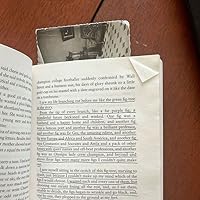
Did Not Finish
March 26, 2023good book, but the writing is complete ass imo. maybe my brain is too small to understand it but ill finish it soon, hopefully ill change my review

August 11, 2025
Perhaps my new favorite! I feel so deeply for Lymie. I began this book and within the first day I read 200 pages and then I got busy and took a break only to finish quickly once I picked it back up! It’s so easy to be swept away in William Maxwell’s words. He is so gentle in the way he observes and writes humans. I feel lucky being able to read what he’s written.
I was reading tonight while on break at work and unfortunately was just two chapters away from the end when my break finished and I absolutely couldn’t think of anything else. I felt so emotional. I had to sneak my way into reading the rest while working. But I felt that I wasn’t able to give it the attention it deserved so when I got home I reread the ending.
I want to reread the book from the beginning already, I feel so attached to Maxwell’s writing and to Lymie! I could probably say more if I took a longer beat to gather my thoughts but for now I just want to say that I highly recommend this one. Thank you, Lily for bringing the book to my attention! <3
I was reading tonight while on break at work and unfortunately was just two chapters away from the end when my break finished and I absolutely couldn’t think of anything else. I felt so emotional. I had to sneak my way into reading the rest while working. But I felt that I wasn’t able to give it the attention it deserved so when I got home I reread the ending.
I want to reread the book from the beginning already, I feel so attached to Maxwell’s writing and to Lymie! I could probably say more if I took a longer beat to gather my thoughts but for now I just want to say that I highly recommend this one. Thank you, Lily for bringing the book to my attention! <3
Displaying 1 - 30 of 187 reviews