Jump to ratings and reviews
Rate this book

Stridens skönhet och sorg

Schönheit und Schrecken

Rate this book
Der Erste Weltkrieg, die «Urkatastrophe des 20. Jahrhunderts», hat die alte Welt aus den Angeln gehoben. Ein epochales Ereignis, das seit vier Generationen im kollektiven Gedächtnis haftet – aber noch nie so erzählt wurde wie in diesem Buch. In «Schönheit und Schrecken» schildert Peter Englund, international renommierter Historiker und Vorsitzender der Nobelpreisjury, die Geschichte des Ersten Weltkriegs aus der Perspektive von neunzehn meist unbekannten Menschen – unter ihnen ein ungarischer Kavallerist, ein deutsches Schulmädchen, ein russischer Ingenieur, ein belgischer Kampfflieger, eine englische Krankenschwester und ein amerikanischer Feldchirurg. Sie alle erfahren den Krieg als eine Macht, die ihnen etwas Entscheidendes raubt: ihre Jugend, ihre Illusionen, ihre Hoffnung, ihre Mitmenschlichkeit – ihr Leben. So wird immer mehr die existenzielle Dimension des Krieges fühlbar: als Erlebnis und Alltag, als Rausch und Albtraum, als Versprechen und Lüge, als eine alles verschlingende Kraft. Es sind erschütternde Episoden, die sich wie nebenbei zu einem Gesamtbild fügen, romanhaft erzählt und doch auf zahllosen Selbstzeugnissen basierend: Briefen, Tagebüchern, Aufzeichnungen. Ein grandioses Geschichtsepos und zugleich ein bewegendes literarisches Zeugnis.

„Peter Englund zeigt, wie aufregend Geschichtsschreibung sein kann... Ein riskantes, aufregendes Werk, das die Gesetze des Genres sprengt.“ (Susanne Beyer, Der Spiegel)

704 pages, Hardcover

First published January 4, 2008

321 people are currently reading
6171 people want to read

About the author

Peter Englund

46 books175 followers
Peter Englund (born April 4, 1957 in Boden) is a Swedish author and historian, and a member of the Swedish Academy since 2002.

Englund was born into a military family in Boden and studied caretaking for two years and then humanistic subjects for another two years in secondary school. He was then conscripted and served 15 months in the Swedish Army at the Norrbotten Regiment located in Boden. He was politically active in his youth and supported the FNL.

Englund studied archaeology, history, and theoretical philosophy at Uppsala University, completing a bachelor's degree in 1983, after which he began doctoral studies in History. He was awarded his Ph.D. in 1989 for his dissertation Det hotade huset (English title in the dissertation abstract: A House in Peril) (1989), an investigation of the worldview of the 17th century Swedish nobility. During his period as a doctoral student, he had also worked for some time for the Swedish Military Intelligence and Security Service ("MUST"), and the year before receiving his doctorate he had published the bestselling Poltava, a detailed description of the Battle of Poltava, where the troops of Swedish king Charles XII were defeated by the Russian army of Tsar Peter I in 1709.

Englund has received the August Prize (1993) and the Selma Lagerlöf Prize for Literature (2002). He was elected a member of the Swedish Academy in 2002.

Englund writes non-fiction books and essays, mainly about history, and especially about the Rise of Sweden as a Great Power, but also about other historical events. He writes in a very accessible style, providing narrative details usually omitted in typical books about history. His books have gained popularity and are translated into several languages, such as German and Czech.

Ratings & Reviews

What do you think?
Rate this book

Friends & Following

Create a free account to discover what your friends think of this book!

Community Reviews

5 stars
1,107 (43%)
4 stars
951 (37%)
3 stars
406 (15%)
2 stars
72 (2%)
1 star
30 (1%)
Displaying 1 - 30 of 284 reviews
Profile Image for Ian.
982 reviews60 followers
September 8, 2023
There’s a short preface to this book, in which the author explains it isn’t a history of WW1, “but a book about what it was like.” He chooses from the journals of twenty relatively ordinary individuals, who provide us with their “feelings, impressions, expressions and moods”, as they lived through the long years of the conflict.

The twenty comprise fifteen men and five women. A wide range of different nationalities feature. Although all are relatively obscure, there is a noticeable bias towards the middle and upper echelons of society, and to the officer class. I suppose people from that background were more likely to write journals.

Before starting I had expected the book to consist largely of eyewitness accounts, but actually Peter Englund tells the story of each participant in his own words.

I won’t describe all of the people featured, but will mention some that stood out for me. I haven’t read any of the journals myself and had only previously heard of one – that of Elfriede Kuhr. In 1914 she was a 12-year schoolgirl in the town of Schneidemühl (today Piła in Poland). Initially wide-eyed at the sight of all the soldiers marching off to war, by 1918 she had seen enough suffering for a lifetime. Laura de Turczynowicz was a Canadian-American opera singer who married a Polish aristocrat, with several luxurious homes and numerous servants. In 1914 she was at a country house in Suwalki, then in the territory of the Russian Empire but close to the border with Germany. The area was quickly overrun by the German Army, something which led to a great deal of personal trauma for her. Richard Stumpf was a German sailor. A patriot in 1914, the war led him to become disillusioned with the class structure of German society. Andrei Lobanov-Rostovsky was a bookish Russian officer, who tries to make sense of the world through reading (I imagine many of us on GR will identify with that!)

Some of the individuals featured were changed in another way. In 1914 Alfred Pollard was a bored insurance clerk in London. He turned out to be one of those people very suited to war, and for him it offered an escape from boredom and mediocrity. The same might be said of the Belgian pilot, Willy Coppens.

Rafael de Nogales was a Venezuelan soldier of fortune who joined the Ottoman Army, and who witnessed massacres during the Armenian Genocide. Vincenzo D’Aquila was an Italian-American, who volunteered to fight for Italy. The war affects him in a very intense way. Kresten Andresen was an ethnic Dane from Schleswig, conscripted into the German Army. In the “Europe of the Great Powers” that existed in 1914, he is emblematic of millions from national minorities, made to serve in the armed forces of countries for which they had no patriotic feeling.

Several of those featured are killed or die during the war, others are badly wounded. The book finishes with telling us where some of the participants found themselves on the final day, but doesn’t cover their subsequent lives. I obtained more details on some through the miracle of the Internet search.

The book didn’t engage me quite as much as I expected. I sometimes refer to a book being more than the sum of its parts, but somehow I found this was the reverse, the overall effect being less than I would have expected from each individual account. Perhaps the author’s rendering of the accounts did not resonate with me.
Profile Image for Matt.
1,052 reviews31.1k followers
April 27, 2016
For obvious reasons, writers and historians usually approach history from the top down. The focus is on the kings and emperors and presidents and field marshals and generals who make the big decisions that set the dominoes falling. To be sure, any writer worth his salt will throw in a few viewpoints from the common man, for a bit of color; mainly, though, history is told through the eyes of the fellows atop the organizational flowchart.

This is all well and good if your sole object in reading a history book is to learn, in broad strokes, what happened. I’ve always been of a mind, though, that history is more than a timeline, or a recounting, or a description of abstract political/cultural/socioeconomic movements. It is the story of normal people in extraordinary times.

The central conceit of Peter Englund’s The Beauty and the Sorrow is to upend the usual construct and give us a history as told from the ground floor. As the subtitle states, this is an "intimate history" of World War I.

To that end, he has chosen to follow the lives of twenty men and women throughout the cataclysm of the Great War. With a couple exceptions – the glaring one being famed Belgium fighter ace Willy Coppens – these individuals come to us unknown. They are from thirteen different countries. They are soldiers, sailors, nurses, politicians, and civilians fleeing an oncoming army. Some of them see battle; others never fire a shot; still others are far away from the front lines.

Englund divides his book into five chapters – one chapter for each year of the war, from 1914-1918 – as well as a concluding chapter that (sort of) attempts to tie up loose ends. At the start of each chapter is a broad chronology of major events taking place that year. The chapters themselves are constructed much like a diary. There will be a heading with the date, and then a short introduction telling you which character is involved, where that person is, and what he/she is doing.

Englund does his best to minimize his own presence. He writes in the present tense (again, mimicking a diary or journal) and maintains the oft-constricted viewpoint of his chosen character, referring geopolitical contexts and broader explanations to footnotes.

The prose is oddly lifeless. At first, I attributed this to the translation from Swedish to English. Upon further reflection, though, I think it was intentional. When Englund directly quotes his characters, their words often leap off the page with piercing details, exceptional insights, and flashes of real elegance. In keeping his own writing minimalist and uninflected, I think Englund was just staying out of the way. For instance, at the beginning of 1918, we meet up with Pal Kelemen, a twenty year-old Austro-Hungarian cavalryman. He watches an Italian bomber crash:

By the time I get there the body of the Italian flying captain, killed by a machine gun bullet, is laid out on the turf beside the plane…The Italian officer is clad in a full leather suit, his faultless elegance disturbed only by the angle at which his cap is crushed over his clean-shaven face. A fine-worked silver wrist-watch ticks on unshaken and the whole body stretched out at ease seems to be only sleeping.

We search his pockets; his portfolio is handed to me. Besides letters, banknotes, slips of paper, there is a double-folded card in a hard black binding: “Season tickets to the circus, Verona.”

Here on this barren, shell-plowed field the circus is just a printed name on a piece of cardboard. The glittering lamps at the base of the box rows, the grubbed-up carpet of the sawdust, the snapping whip of the ringmaster, the bareback rider with her tulle skirt and flashing jewels, and all the other endless delights of youth have been left behind forever by one young life…

I should like to slide the card back under the bloodstained shirt so that, as in pagan times when everything that served the hero followed him into the tomb, this property of his also should disappear from the face of the earth and there should be at least one place left empty in his memory, in the circus in Verona.
When you have diarists and memoirists of such talent, it is perhaps wise to let them take center stage.

Despite the obvious literary talents of the people Englund chose to follow, I found the book uneven. Certain of the characters make a lasting impression; just as many, however, flit in and out of the narrative, leaving just the faintest mark. And frankly, some of the stories told in this book are barely worth the mention. Certainly, they illustrate a point – that a soldier’s life is just as much boredom as terror and excitement – but that doesn’t necessarily make for thrilling reading.

(Despite following a number of soldiers, The Beauty and the Sorrow is an unusual World War I book in that battles are the last thing on its mind. They are few are far between and described only fleetingly by the participants. This is only an observation, not a critique. Anyone looking for first-person accounts of trench warfare can easily pick up Storm of Steel).

When I finished The Beauty and the Sorrow, my overall impression was one of respect, rather than love. I really liked the idea of a pointillist view of World War I. History as seen through a pinhole. No generals. No politicians. No talk of strategy. Rather, a book that focused on the details: the fear and sadness of fleeing your home; the youthful pride of putting on a uniform and marching off to war; the mundane details about what people ate for dinner in 1916.

However much I liked the concept, I was not won over by the execution. In distributing the stories across twenty people and thirteen nationalities Englund provided breadth, but sacrificed depth and detail (and also left me trying to remember who was who). Moreover, Englund’s understated style of writing, while a humble choice, also kept me at arm’s length. As I noted before, he billed this book as an “intimate history,” but his style belies that assertion. This was a book that I wanted to cuddle with, but could not. I was kept at bay by the dry, often inert presentation.

Lately, I’ve been on a real World War I kick. After consuming a couple general histories, and then digging into a detailed study of the Battle of the Marne (a book meant to refute arguments I didn't know existed!), I found The Beauty and the Sorrow to be a bracing tonic. It cleared my head of hopelessly complicated maps and strategy and gave me a nice does of humanity. I’m glad it was written; I’m glad I read it. It just fell short of the emotional jolt I initially expected.
Profile Image for Adam.
558 reviews435 followers
May 9, 2012
Beauty and the Sorrow is appropriate in both its slightly pretentious title and its subtitle as an “intimate history” of the first world war. Pretentious may be the wrong word as this book is very much filled with beauty and with much, much sorrow. Tracing about twenty lives through the events of those years and revealing history only as it affect each of them (though Englund does provide witty and informed footnotes to hint at wider events.), this is an ideal fusing of historical narrative and novelistic technique. The non-fiction novel that was so sought in the sixties realized. Lightness of style and clearheaded prose (in translation) makes this addictively readable. Most discussion and portrayal of this war is dominated by the grim imagery of the western front, while not ignored in the book, a wider canvas is employed giving all the forgotten theaters their due, such as the destruction of Serbia, genocide of the Armenians, the terror of the Zeppelin bombing raids,the eastern front, the horrific siege of Kut, bloody battle for Gaza, and the absurd guerilla campaign in Africa. The cast of “characters” is varied and provides piece by piece a very epic and thorough history without losing it’s, for lack of a better word, intimacy. Whatever name you lay on this war, for all its cruelty and pointlessness, birthed the twentieth century and thus the world we inherited. Coming up on the hundredth year anniversary of its start I’m sure it will be much discussed, and this book should make the top shelf of books to turn to. A marvelous piece of history and literature.
228 reviews5 followers
September 29, 2013
I can't explain the rave reviews on this one. The reporting is definitely there. The author has found 20 ordinary, but interesting, people engaged at some level in World War I. They come from all sides of the conflict (no Turks -- but he's got a S. American who fought for the Ottoman Empire). It looks like quite a bit of the material comes from memoirs that would have been lost in some dusty old library (if they ever made it to one to begin with). Unfortunately, the writer just forgot to. . . write. The book takes the reader through the war years with short journal entry style chapters. Cutting to the chase is definitely not Mr. Englund's style. We're subjected to 500 pages of paragraphs that start with: "Early autumn, clear skies", "A light mist. Hazy sunshine." or "Nothing of any importance has occurred." Particularly aggravating is that some of the best material is in the footnotes -- long, footnotes that sometimes take up half the page in itty, bitty type. The author also makes the mistake of quoting some of the memoir writers at length. This is when you realize that while these people led interesting lives during the war, their turgid prose was probably one reason we haven't heard of them today. We don't have any Primo Levi's in the bunch.

I stuck it out because I was curious about the people but I wish the author had spent more time editing and crafting the narrative.
Profile Image for Елена Суббота.
244 reviews38 followers
April 13, 2021
Во Фландрии вновь маки расцвели
Среди крестов, что встали ряд за рядом
В том самом месте, где мы полегли.
Вновь жаворонки песни завели,
Едва слышны сквозь грохот канонады.
Мы пали. Но недавно жили мы.
Встречали и закаты, и рассветы.
Любимы были и любили мы,
Пока не полегли на поле этом
Во Фландрии.

Джон МакКри (1872-1918), канадский военный хирург, участник I Мировой войны

Задумка Энглунда очень хороша, это лучший нонфикшен от войне, который я когда-либо чи��ала. Скажу только, что книгу невозможно было читать в быстром темпе, - четыре года войны глазами девятнадцати её участников (автор взял за основу дневники) вместили в себя слишком много боли. И самым невероятным, абсурдным, тупым кажется то, что гибель миллионов людей и послевоенная разруха не насытили машину войны, а только отсрочили очередной её запуск.
Profile Image for João Carlos.
670 reviews315 followers
September 30, 2015

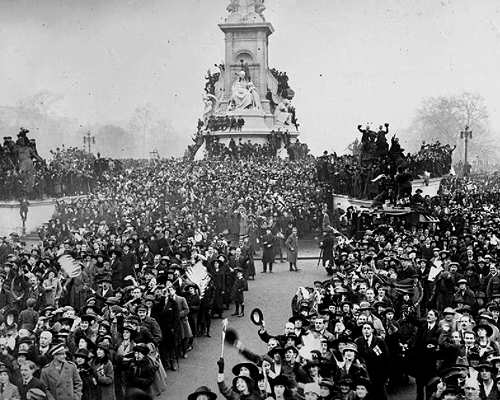
Buckingham Palace, Londres festejos do fim da Primeira Grande Guerra

“A Beleza e a Dor da Guerra – História Íntima da Primeira Guerra Mundial” é um livro do historiador sueco Peter Englund (n. 1957), que desde 2008, é o Secretário Permanente da Academia Sueca, que atribui o Prémio Nobel da Literatura.

“Este é um livro sobre a Primeira Guerra Mundial. Não é porém, um livro sobre o que foi essa guerra – as suas causas, a sua evolução, a sua conclusão e as suas consequências. É antes um livro como foi a guerra.” é com esta frase que Peter Englund nos relata que o mais importante são as pessoas, neste caso específico, dezanove indivíduos, homens e mulheres, de várias nacionalidades, com idades que variam entre os 12 anos, de uma menina alemã - Elfriede Kuhr, a mais nova, até aos 45 anos, de um funcionário público francês e de um médico americano, num relato autobiográfico, sobre os sentimentos de pessoas com existência real, sobre as vivências e as atmosferas, tanto da frente ocidental como da frente oriental, dos Alpes, dos Balcãs, da África Oriental e da Mesopotâmia.


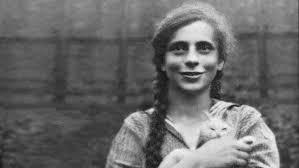
Elfriede Kuhr

Homens e mulheres que “Apesar dos seus diferentes destinos, papéis, sexo e nacionalidade, todos têm em comum o facto de a guerra lhes ter roubado alguma coisa: a juventude, as ilusões, a esperança, o sentimento de fraternidade – a vida.”
A narrativa de “A Beleza e a Dor da Guerra – História Íntima da Primeira Guerra Mundial” é construída cronologicamente, sobre o dia-a-dia da guerra, em que invariavelmente, acontecimentos dramáticos ou actos terríveis, presenciados e vividos pelas dezanove personagens, que vão anotando cada um no seu diário, pequenos fragmentos que Peter Englund utiliza e que enriquecem os relatos individuais de cada um, revelando uma combinação, quase sempre inexplicável, de ignorância e negação, numa das maiores catástrofes do século XX.
Peter Englund escreve um livro intenso e dramático, que exige uma atenção extrema e muitas anotações, que fala também sobre a honra e a bravura, sobre a imprevisibilidade dos comportamentos e sobre o heroísmo, numa escrita perfeita – mas que me suscitou algumas dúvidas sobre o “método” de leitura a utilizar – seguir a ordem cronológica (a do livro) ou acompanhar cada um dos dezanove indivíduos isoladamente, desde 1914 até 1918.
Profile Image for Christine.
7,223 reviews569 followers
March 19, 2015

Disclaimer: I won this book in a giveaway sponsored by Regal Literary.

Englund’s book isn’t a history of the First World War, at least not a normal history. Following the experiences of twenty nobodies, The Beauty and the Sorrow showcases the experience of people during the war, from the battlefields to the nursing stations to the home front. His cast is diverse, Germans, Brits, Americans, nurses, one house wife, and a schoolgirl. The book is organized by year and jumps around. The people come and go and not everyone makes it.

The book is more about personal experience than the general battle, though Englund does include a timeline for each year. So the reader discovers what the nurses went through or hears about cavalry man who had to see to the death of his horse and then eat the gelding. If works such as Tuchman’s give you a global scope, this is intimate, and far more important because of that.

In the 100 years since the War, it is important that we remember it simply because of how it changed everything. IN the US, we don’t really think about it, and while the National Mall in DC does boast a WW I memorial, it is for those from the area, not a National memorial like for the other wars. This book deals with the war in a far more intimate way, and does not romanticize it in a way that certain televised dramas do.

Highly recommended for history bluffs. Highly recommended for everyone.
Profile Image for James Murphy.
982 reviews26 followers
February 14, 2022
In my opinion this is an unfortunate title for a book which is essentially an eyewitness history of the Great War, and an interesting assembly of personal narratives covering the entire course of the war and every theater. He should have simply called it an eyewitness history. He traces the experiences of 20 people from varied backgrounds and nationalities whose stories are only a few of the millions forming the war's history. They range in age from the 14-year old German schoolgirl Elfriede Kuhr to the 49-year old Sarah Macnaughton, a Scottish aid worker. Several are soldiers, pilots, sailors. There's even a Venezuelan soldier of fortune who serves with the only army who'd accept him, the Turks. There's a French civil servant who spends the war working in Paris and recording life away from the fighting. Women serve as nurses and ambulance drivers. Each of Englund's subjects was chosen for the variety and breadth they give his structure and also because each left a written record in letters, diaries or memoirs which he mined to tell the story.. He usually quotes from his sources because his aim is to show what it was like to experience the war, and they breathe actuality into his chain of voices. Mostly it's fascinating, and for me many observations revealed facets of the war I'd never encountered before.
Profile Image for Olethros.
2,724 reviews534 followers
May 10, 2013
-Parafraseando al autor, del cómo y no del qué ni del por qué.-

Género. Historia (en formato no convencional).

Lo que nos cuenta. Relato de las vivencias cotidianas de veinte personas (y un fragmento de la obra de otro individuo, al final, a modo de epílogo) de diferentes condiciones, realidades y destinos durante la Primera Guerra Mundial, basado en hechos reales documentados a través de diarios, cartas, fotografías, etc…

¿Quiere saber más del libro, sin spoilers? Visite:

http://librosdeolethros.blogspot.com/...
Profile Image for Margarita Garova.
483 reviews264 followers
March 26, 2020
Това е книга с по-специална гледна точка. В нея няма да откриете изследване “отгоре” – какво бил казал кайзер Вилхелм или каква заповед дал маршал Фош. Няма карти, схеми, тактики и високопарни академични нравоучения. Вместо това присъства често пренебрегваната гледна точка на обикновения човек, на когото войната просто се случва. Веднага виждам защо този подход ми допада. Когато войната е представена през очите на малките хора, границите между враждуващите лагери бързо се размиват. Преживяванията стават общи. Най-вече страданията.

“Битката: красота и печал” представлява записки, извадки от дневници, лични бележки, които повечето от героите водят през четирите години, в които светът е във война. Понеже наративът се движи хронологично, в един същи ден може да прочетем разказа на британски войник, който изнемогва от жега в Източна Африка или за италиански стрелец, сражаващ се на някой заснежен алпийски връх. Гледната точка, мястото и случките се менят непрекъснато и ангажират цялото ви внимание.

Сред 19-те герои на книгата откриваме германска ученичка, унгарски кавалерист бохем, амбициозен и жаден за слава белгийски пилот, австралийка – шофьор на линейка в сръбската армия, италианец – стрелец в елитните алпийски части, американски военнополеви хирург, германски матрос на боен кораб, руски интелектуалец в инженерните войски, английска медицинска сестра, френски чиновник в тила, южноамерикански авантюрист в османската армия, безумно смел британски пехотинец.

Някои от тях нямат търпение да се изявят на фронта и да се окичат с бойна слава (говорим за 1914 и актуалността на тези желания все още не е увехнала); други са по-трезвомислещи и заминават на бой с огромно нежелание; трети наблюдават всичко от тила и регистрират фазите на войната с прецизна чувствителност; четвърти вярват, че войната ще донесе толкова нужния импулс за промяна и ще преобрази човечеството (прави са, но не по начина, по който са се надявали), пети са движени от милосърдни подбуди и искат да отдадат своята дан за общата кауза, а има и такива, на които им е все тая на чия страна ще се бият, приключение да става. Най-невероятното е, че въпреки огромния фронт и факта, че тези лица не се познават помежду си, в различни моменти от войната се оказват географски много близо един до друг.

Контрастите в мисленето и поведението на действащите лица правят книгата почти художествена като преживяване. Част от героите стават преки важни свидетели на ключови епизоди от конфликта – арменското клане, сраженията при Вердюн, Сома и Ипр, битката за германска Източна Африка, употребата на отровния газ иприт, големият пожар в Солун, революцията в Русия, краткото царуване на тихите гиганти - цепелините.

Трогателното е в изобилие. Един от героите се привързва към магаренце в окупирано френско село. Друг се зачита в учебник в изоставено училище. Трети инхалира като астматик аромата на топъл бял хляб след месеци консервна храна и клисав войнишки комат. Четвърти пристига едвам жив от бързане, за да хване последните две действия от опера на Вагнер. И животните, разбира се. Човешкият поглед на умиращ кон (осем милиона коне намират смъртта си във войната). Гълъбчето Шер Ами, което изпълнява успешно пощенската си мисия с едно око и едно краче. Примерите са много и всички имат разплакващ потенциал.

Понякога е и красиво – танцът на малкия славен кораб “Мьове”, който прави засукани пируети заедно с гигантите от своята ескадра.

И въобще, всичко делнично, нормално, ежедневно на фронта придобива вълшебни измерения. Такива неща, за щастие, или не, се виждат само на война.

Трагичното обаче е още повече. Може би най-бруталната истина за Първата световна война е безсмислието на огромна част от сраженията. Не че войната по принцип има смисъл. Но никога преди в човешката история не е имало толкова продължителна касапница, в която десетки хиляди млади здрави мъже се избиват, за да завоюват някое плешиво хълмче, получило помпозното име “кота 321” от някой земемер и намерило по случайност място като флагче на щабната карта. След три дни хълмчето е отвоювано от противната страна. И после пак същото.

Финалът на книгата е предвидимо зловещ и съдържа семената на последващи трагедии. Не съм очаквала оптимистичен финал “а ла въпреки всичко”, би било безвкусно на фона на 500 страници ужас и скръб. Но пък има и нещо хубаво – не във войната, разбира се, а в книгите за войната, и то е, че ти напомнят да не взимаш за даденост мирния живот.


Profile Image for Occhionelcielo.
120 reviews43 followers
December 14, 2017
Mi ci sono imbattuto per caso, una domenica, leggendone l'entusiastica recensione su "Il Sole 24 Ore".
Ho subito pensato: "E' mio"; un po' perché la Grande Guerra è un evento rimasto un po' in ombra nell'interesse generale, benché fondamentale per capire il nostro tempo; soprattutto, per la percezione di una qualche analogia con la mia parabola personale-professionale-generazionale, partita con grandi aspettative e. oggi, impantanata in una continua trincea fatta di pericoli senza avventura e senza gloria, dove ogni giorno cresce ill disgusto verso istituzioni, gerarchie e retoriche del potere. Peraltro, a quanto si intuisce dalla prefazione, si tratta delle stesse motivazioni che hanno spinto l'autore a scrivere.

Che dire della lettura? Oltre ogni aspettativa, appassionante, incalzante, coinvolgente, non vedi l'ora di tornare a casa per ritrovare i tuoi 17 amici al fronte, ne segui le alterne vicende, la lenta discesa da quella che in seguito sarà chiamata belle epoque sino all' abbruttimento totale.
Ti rendi conto che le nostre conquiste, il nostro benessere, le nostre certezze non sono acquisite per sempre. Il baratro è in agguato, nelle forme e nei modi che non ti aspetti, siano essi una guerra, un default economico-finanziario, una catastrofe ecologica.

I protagonisti non sono selvaggi allo stato brado, sono persone come noi che leggono, scrivono, provano i nostri stessi sentimenti, hanno sostanzialmente le nostre coordinate culturali, in alcuni casi sono menti brillanti. Semplicemente, sono nati negli anni sbagliati: prima di noi ma mica poi tanto.
Alla fine ti consola sapere che qualcuno sopravvisse alla guerra ed alla terribile influenza spagnola, qualcuno tornò alla vita di prima e qualche simpatico vecchietto hai pure fatto in tempo a conoscerlo quando da bambino andavi alle parate del 4 novembre e li vedevi nelle loro divise.
Ripensi a loro, alla trincea, quella vera.
Ti sei quasi dimenticato delle tue vicende personali.
Profile Image for D.
526 reviews84 followers
September 14, 2023
The book description is, unusually, very interesting and required reading as an introduction.

Aging generals, some of them probably suffering from dementia, eagerly sending thousands of young men to be slaughtered, remains incomprehensible.
This could only happen with a very effective propaganda machine that portrayed a gain of a few hundreds of meters of mud at an atrocious cost of lives. as an important victory.

In short, WWI was the most useless and destructive, in terms of lives as well as small cities that were erased to the ground and never rebuilt. Live ammunition is still being found in the fields of the West of Flanders where millions of shells were fired from both sides.

Interestingly, the country that lost most citizens was Serbia that lost about 2.5% of its population.

It is sad that the only important results of the war was the elimination of a good part of the young male population in Europe, the establishment of the Soviet Union and a peace treaty that, by strangling Germany, contained the seeds for a future Nazi power grab. It also put an end to the supremacy of Europe over the rest of the world.

The politicians at the time must have been raving mad to allow a minor incident (the murder of an Austrian aristocrat) lead to a chain reaction resulting in a war involving many countries, also outside of Europe.

A very interesting book that, by its design, is able to divulge a mountain of facts without sounding dull.
Profile Image for Karyl.
2,131 reviews151 followers
October 15, 2015
One hundred years ago (and some change), the Archduke Franz Ferdinand of Austria was assassinated by a Yugoslav nationalist, and it was this seemingly small event that touched off one of the bloodiest conflicts in modern history, that of World War I.

I have the sense that a lot of people have largely forgotten World War I. We still have veterans alive that fought in World War II, and there was a clear evil we were fighting in that war. But all of the people who fought in the First World War and most of the people who had to endure a war-torn Europe are dead now, and we tend to forget that it was Germany's loss in the WWI that set Adolf Hitler on his mad rise to power which ultimately turned into WWII.

Peter Englund has chosen to show us not the tactics or battle formations or even the lives of the most important characters of WWI, but instead the most ordinary of people. We see the war through the eyes of the soldiers, the sailors, the nurses, people drawn from all over the world to fight for their colonial rulers, or people who simply felt they needed to be part of this big adventure. We see the tedium of life in the trenches, of the horror of seeing men obliterated next to you, of dealing with the stench of rotting bodies when you're trying to eat a meal to keep your strength up. We see the hardships of the people left behind, the refusal of the governments to allow the media to publish the reality of losses, the lack of food and milk and diapers and coffee for the average person. We also see the class system that still existed in some of the armies, in which the common soldiers have barely enough to eat but the officers are still eating four-course dinners.

While it is fascinating to see how the long years of war affecting the common man, this book can be frustrating and long at times. It's difficult to keep all twenty characters straight, and when Englund does devolve into strategy and tactics of the war, it was difficult for those details to sink into my brain. I do appreciate that Englund composed it almost like a communal diary, going chronologically, but at the same time, I have to wonder if it would have been more effective to concentrate on one person at a time.

Highly recommend this book to people who enjoy history, and especially the history of the ordinary person. But just keep in mind it is really long and can be dry at times.
Profile Image for Христо Блажев.
2,597 reviews1,776 followers
June 26, 2019
Първата световна война отблизо в смайващи детайли: http://knigolandia.info/book-review/b...

Стогодишнината от Първата световна война стимулира излизането на много книги за нея, което попълни тази доста пренебрегвана област – и у нас, и по света, Втората световна война обира цялото внимание. Но Първата има толкова интересни мигове, особено в първия си месец, и до няколко дни ще пиша за още една изключителна книга, фокусирана изцяло в него – “Оръдия през август” на Барбара Тъкман. Но и задължително трябва да припомня тук за един роман, колкото и странно да е това: “Голямата война” на Александър Гаталица. Защото и той, и Енглунд използват сходен похват да проследят войната през живота на обикновени хора, които не попадат в големите исторически книги за периода. И ако сърбинът преминава дори към магически реализъм в своя завладяващ роман, то шведът прави обратното – стъпил здраво върху дневници, писма, спомени и свидетелства, той описва пътя на малко над дузина хора от различни страни и фронтове.

Университетско издателство "Св. Климент Охридски"
http://knigolandia.info/book-review/b...
Profile Image for Harry Maier.
45 reviews8 followers
August 8, 2013
Englund treats us to a masterful perspectival account of WW I. The narrative takes the form of a chronologically arranged set of diary entries from 20 different people who experienced the war, whether as soldiers, politicians, mothers, children, nurses etc. Englund offers an account that is thus non-reductive and that avoids cliches and moralizing. There is a kind of sleight of hand in the way Englund summarizes diary entries on the way toward quoting parts of them. This has a tendency to masque Englund's narration since selection, as is will known in historiography, is always value-laden. History is as much the history we tell as what happened and some would argue history is ever only the history we chose. Still, Englund honours an irreducible event by asking us to pause and see events unfold through the eyes of those the diaries represent.

This is not a patriot's history. Nor is it an objector's one. It is an account that asks us to take time to ponder a conflict whose aftershocks we still experience in our contemporary global order. It asks us to look down the well of history and see there an entire generation of 20-30 year olds wiped out in four years, a conflict so gruesome and so massive that its conclusion in 1918, as the term "armistice" implies, did not spell the end of the global conflict, only a hiatus while everyone waited for more people to be born, to grow up, and to fight.

Anyone who has a romantic view of war should read this book: what would it mean to drown in mud, to use cadavers or bits of them as barricades to hide behind to avoid being gunned down by machine guns, to starve to death at home to support a war no one believed in any more, to fall prey to insane generals and maniacal rulers? Englund does not answer these questions for us, he shows rather than tells, and this is what makes this such a masterful account. He does not wrap himself in the flag, nor does he put daisies in the barrels of guns. He honours history by asking us to take possession of it in these accounts of people whose lives were made and unmade in a terrible conflict. This is a great book.
Profile Image for Jaylia3.
752 reviews151 followers
February 21, 2012
Drawn from personal journals and letters, The Beauty and The Sorrow interweaves poignant and harrowing stories of twenty ordinary people with widely varying backgrounds, nationalities and occupations, who are all caught up in the turmoil of World War I. The individuals include an English nurse in Russia, a 12-year-old German girl, an Australian army engineer, a Venezuelan cavalryman in the Ottoman army, and an American opera singer married to a Polish aristocrat. The number of entries for each person varies, and their stories are intermingled, presented in the order that they happened, but I found I enjoyed the book more when I untangled some of the accounts using the index so I could follow the people I was most interested in straight through from start to finish.

Every chapter covers one year of the war, and begins with a chronological list of that year’s battles and invasions. Some of the source materials the author draws on are available in their entirety from Amazon or through Google Books, and the ones I’ve perused so far are well worth looking up if you want more information. I’ve especially enjoyed the book When the Prussians Came to Poland, written by Laura Turczynowicz, the American opera singer who was living in Poland with her family and leading a Downton Abbey-like life of luxury when the war began. As the Downton Abbey characters did, Laura abandoned some of her aristocratic lifestyle to tend to gravely wounded soldiers, but unlike her fictional British counterparts Laura’s grand family home had to be abruptly abandoned when it became the front line of battle, and she and her children escaped with little more than their lives.
Profile Image for Xan.
Author 3 books95 followers
November 8, 2014
A través de los recuerdos personales de varios protagonistas de la contienda (unos en el frente, otros en casa) el narrador construye una visión del avance de la guerra en la que el entusiasmo patriota va dejando paso al miedo y al hastío. Interesante porque la narración en primera persona se basa en los diarios y cartas de los protagonistas, que cubren un amplio espectro de la población que sufrió la guerra, de manera que son los detalles cotidianos que escapan a los grandes libros de historia los que ganan el interés del lector.
No sirve como guía de la guerra, son demasiados frentes y escenarios para un lector que no conozca la cronogía de la contienda, pero sirve para dar color a quién ya tenga una idea del desarrollo básico de las campañas.
Profile Image for 5greenway.
488 reviews4 followers
July 8, 2025
This was proper good. Nicely written, with authorial kind of novelistic linking together of memoirs and other primary sources, a lot of them focused on areas other than the 'usual' ones. Was going to say it would benefit from some maps, but then because of its wide focus you'd probably need a book of them.
Profile Image for Graham Catt.
564 reviews6 followers
August 30, 2022
Unlike the usual war histories, which focus on armies, battles and politicians, The Beauty and the Sorrow is compiled from the first-hand accounts, letters and diaries of twenty individuals - nurses, soldiers, pilots etc - from various sides of the conflict.

It is a unique, absorbing read.
Profile Image for Niklas Laninge.
Author 8 books78 followers
August 10, 2024
Snuddar ibland på att hålla samma kvalitet som en bok av Aleksevitj.
192 reviews
May 7, 2020
Totally different perspective of the Great War told through the experiences of twenty unique participants woven gracefully together by the author.
Profile Image for Alexandra.
671 reviews44 followers
July 27, 2016
It was great, if you love history or wars (which I do!). It had a lot of detail. I mean, right down to the way things sounded when they exploded or whizzed past your head. Or the way decaying bodies smelled. The details were sometimes hard to read (I mean, it's war. Things are horrible). But It followed the lives of several people throughout the war. It used their diaries and letters to loved ones to follow their lives during the war. Some were part of the army for various nations, some were nurses, doctors, pilots. Some were average people. Some died or went crazy. Others fell in love and got engaged. I loved it. I wish it had been assigned in school. Reading what each person was thinking gives different perspectives on the war. The youngest person was 12, and the oldest was 49, so it really covered a lot of emotions and thoughts. If anyone enjoys history, I would highly suggest this book.

My biggest complaint is that it lists every person on one page in the beginning of the book: their age, what they do and where they do it. Now, it gets confusing when reading the book because the book is arranged in chronological order, so it shows every diary or letter from that day for every person in the book (if they wrote that day). It gets confusing because it only gives their name, and remembering each person can be quite challenging. I had to bookmark the page in the beginning of the book so I could go back each time someone wrote so I could remember where they are from and what they do. Too many footnotes too.
Profile Image for Lindsey.
557 reviews
August 12, 2012
After "Birdsong" I wanted to read more about World War I, but whereas that novel had been solely about the western front, this history described every aspect of the war. I especially enjoyed the sections on East Africa and Mesopotamia, as I had very little prior knowledge about the fighting there.

The book also uses an unusual and highly effective format; basically, the author follows twenty individuals using their diaries, letters, and other sources, and as the years march from 1914-18, we read small vignettes of what each of them is experiencing in their daily life. What makes this book so unique is that the cast of characters includes both men and women ranging in age from about 12-55, who come from all over: Great Britain, Germany, Hungary, Russia, Venezuela, Australia, the U.S., Italy, and more. Some of these people are civilians, some are soldiers, and some are medics, but they are all changed irrevocably by the war.

I'll admit I expected it to be a bit of a slog, but it moved surprisingly quickly, due in part to Englund's decision to write most of the text himself and only use direct quotes where they made a moment more vivid. This editing kept the structure flowing smoothly, rather than getting hung up on minor details in the primary documents, like some other historical works I've read.

A fascinating book overall and highly recommended!

Profile Image for Gary Hook.
1 review
May 31, 2012
I approached this book with skepticism because it attempts to capture something of the essence of World War I through the individual experiences of 20 different people. Trying to weave 20 separate stories into a cohesive narrative would be a challenge for the most gifted writer/historian. But I think Peter Englund generally succeeds. Each of the stories is moving in its own way, and by focusing his attention on the lives of ordinary people caught up in an extraordinary time he vividly captures the reality of World War I in a way that a more conventional history could not.

My only quibble is that I found myself constantly flipping back to the list of individuals at the beginning of the book to remind myself who they were. With a less gifted writer I would have given up on the book early because of something like this. But Englund did such a commendable job narrating their stories he sustained my interest despite the challenge of keeping his subjects straight in my mind.

Peter Englund's writing is strong, intelligent and vivid. And he taught me some things about World War I that I did not know. I think anyone with an interest in World War I would find this an engaging read.
Profile Image for Jon.
1 review1 follower
September 21, 2012
After 500 pages you feel a little as though you've lived through it all yourself, but that's part of this book's appeal because as you begin to grow weary about two thirds of the way through, you gain an amazing sense of the drudgery and fatigue of five years of war. The book is skillfully pieced together from the letters and diaries of several different people, combatant and civilian from every corner of the conflict, and their stories are told chronologically and laced together day by day. It's wonderful to get such a broad overview of the war on such an intimate scale.
Some of the stories are extraordinary, especially that of Rafael De Nogales, a Venuezelan 'adventurer' who decides he has to be involved in the war at all costs and offers his services to several of the Allied armies all of whom turn him down, he then tries the Germans, who also turn him down and then finally, he is accepted by the Ottoman Cavalry. Whilst serving with the Ottomans he is a witness to the Armenian genocide, his observations are truly harrowing and they make you aware of just how badly served the Armenians have been by history.
Profile Image for Jose Luis.
256 reviews33 followers
August 29, 2015
Ah un libro imprescindible sobre la Primera Guerra Mundial, no tanto en el aspecto de conocer las batallas o movimientos de tropas sino mas bien es el punto de vista de los soldados en el frente de batalla, los escritos de aquellos que participaron en el combate se muestran aqui, una edición donde cada capítulo es más un pasaje en el dia a dia de lo que le aconteció a alguna persona al vivir la guerra.

Debo confesar que me costó mucho trabajo tomar el hilo de la trama al libro ya que esta acomodado por fechas y las historias de cada persona que se menciona se me perdía el entenderle bien de qué trataba o en que parte me habia quedado, desde un episodio en el África del Este, pasando por Rumanía, después en París, llegando a Gallípoli y terminando en Vladisvostok me perdía bastante, por algo duré leyendolo 4 meses.

Recomendado para personas interesadas o que ya conozcan un poco de la historia de la Primera Guerra Mundial.
Profile Image for Steve.
371 reviews113 followers
August 28, 2016
Peter Englund tells the story of the First World War through the eyes, letters, and diaries of twenty individuals. They cover a range of nationalities and social classes. All lives are changed, and sadly, some are lost. The result is a powerful book about what war does to the people who participate in it. The war took a profound toll on old world Europe. The seeds of the world we know today were sown in the conflict that started in June 1914 and really did not end until September 1945. During the coming centennial the book market,as well as the idiot box, will be flooded. Turn off the idiot box, pick this book, and say five other titles on the topic, and just read! You will have a much better understanding.
Profile Image for Donna.
417 reviews59 followers
December 11, 2014
I'm glad I read this after reading multiple non-fiction books on WWI - that allowed me to enjoy the stories having a lot of context.

I gave it 3 stars because while I enjoyed the book, it was rather easy for me to put it down. The nature of the method used - short sections - 2-3 pages - alternating between about 20 people, makes the reading a bit choppy.

The stories are definitely on the sorrowful side. But I do agree with what has been written about this book - this is the "feeling" of the war, and in that, it's fairly unique.
Profile Image for Christine Borchert.
4 reviews1 follower
November 9, 2012
Greg and I chose this as a book to read out loud to one another. It took us almost 6 months, however, it was absolutely worth the time invested. The Beauty and the Sorrow walks you through the 4 years of WWI through the diaries of 20 different people who lived through it. This was a great way for me to learn some history and stay emotionally connected to it. I'd highly recommend this book.
Profile Image for Ulrika Mars.
59 reviews
August 2, 2020
Ibland vill man inte läsa vidare för att det är Så jävla vidrigt.
Sen kommer man ihåg att det här var 100 år sen och har hänt klart vare sig man läser vidare eller inte.
Förutom det, en bok som inte går att lägga ifrån sig. Läste ut den på en vecka i stugan, fast barnen var med.
Krig är så jävla onödigt. Människor är idioter. Argh.
Displaying 1 - 30 of 284 reviews

Can't find what you're looking for?

Get help and learn more about the design.