

What do you think?

True North #1
True North
One of American literature's most significant authors delivers "a coming-of-age story, a familial saga of estrangement . . . A slow-burning revenge tragedy" (The New York Times Book Review).
An epic tale that pits a son against the legacy of his family's desecration of the earth, and his own father's more personal violations, Jim Harrison's True North is a beautiful and moving novel that speaks to the territory in our hearts that calls us back to our roots.
The scion of a family of wealthy timber barons, David Burkett has grown up with a father who is a malevolent force and a mother made vague and numb by alcohol and pills. He and his sister Cynthia, a firecracker who scandalizes the family at fourteen by taking up with the son of their Finnish-Native American gardener, are mostly left to make their own way. As David comes to adulthood—often guided and enlightened by the unforgettable, intractable, courageous women he loves—he realizes he must come to terms with his forefathers' rapacious destruction of the woods of Michigan's Upper Peninsula, as well as the working people who made their wealth possible.
Jim Harrison has given us a family tragedy of betrayal, amends, and justice for the worst sins. True North is a bravura performance from one of our finest writers, accomplished with deep humanity, humor, and redemptive soul.
"A provocative tale that explores the roots of wealth and privilege in America . . . Harrison's writing is superb, as always, rippling with thematic leaps and poetic insights." —The Oregonian
An epic tale that pits a son against the legacy of his family's desecration of the earth, and his own father's more personal violations, Jim Harrison's True North is a beautiful and moving novel that speaks to the territory in our hearts that calls us back to our roots.
The scion of a family of wealthy timber barons, David Burkett has grown up with a father who is a malevolent force and a mother made vague and numb by alcohol and pills. He and his sister Cynthia, a firecracker who scandalizes the family at fourteen by taking up with the son of their Finnish-Native American gardener, are mostly left to make their own way. As David comes to adulthood—often guided and enlightened by the unforgettable, intractable, courageous women he loves—he realizes he must come to terms with his forefathers' rapacious destruction of the woods of Michigan's Upper Peninsula, as well as the working people who made their wealth possible.
Jim Harrison has given us a family tragedy of betrayal, amends, and justice for the worst sins. True North is a bravura performance from one of our finest writers, accomplished with deep humanity, humor, and redemptive soul.
"A provocative tale that explores the roots of wealth and privilege in America . . . Harrison's writing is superb, as always, rippling with thematic leaps and poetic insights." —The Oregonian
400 pages, Paperback
First published August 9, 1994
About the author
Jim Harrison
183 books1,555 followersJim Harrison was born in Grayling, Michigan, to Winfield Sprague Harrison, a county agricultural agent, and Norma Olivia (Wahlgren) Harrison, both avid readers. He married Linda King in 1959 with whom he has two daughters.
Librarian Note: There is more than one author in the GoodReads database with this name. See this thread for more information.
His awards include National Academy of Arts grants (1967, 68, 69), a Guggenheim Fellowship (1969-70), the Spirit of the West Award from the Mountain & Plains Booksellers Association, and election to the American Academy of Arts and Sciences (2007).
Much of Harrison's writing depicts sparsely populated regions of North America with many stories set in places such as Nebraska's Sand Hills, Michigan's Upper Peninsula, Montana's mountains, and along the Arizona-Mexico border.
Librarian Note: There is more than one author in the GoodReads database with this name. See this thread for more information.
His awards include National Academy of Arts grants (1967, 68, 69), a Guggenheim Fellowship (1969-70), the Spirit of the West Award from the Mountain & Plains Booksellers Association, and election to the American Academy of Arts and Sciences (2007).
Much of Harrison's writing depicts sparsely populated regions of North America with many stories set in places such as Nebraska's Sand Hills, Michigan's Upper Peninsula, Montana's mountains, and along the Arizona-Mexico border.
Ratings & Reviews
Friends & Following
Create a free account to discover what your friends think of this book!
Community Reviews
Displaying 1 - 30 of 307 reviews

September 28, 2019
This is the first book I have read by Jim Harrison. I am torn on my rating. I would like to give it 4* but I feel it slogged a bit at times so I'm going to go with 3.5*. There is a lot of depth to this story and the characters. Even though I feel Harrison is a very "male" writer the female characters are very strong. This story is very disturbing but very good.
A few lines I liked:
"...we looked at each other and I saw the sight disappear from her eyes. She didn't so much die as withdraw...."
"Fred said that it was obvious that the project was my only personal problem and it might be immediately helpful if I drove up to Duluth and shot my father in the head. This threw me off balance because I had considered murdering my father a number of times...."
"Very few people bothered understanding each other, even brothers and sisters, husbands and wives.."
"According to Clarence, because of their short lives, dogs were due a birthday every two months or so."
A few lines I liked:
"...we looked at each other and I saw the sight disappear from her eyes. She didn't so much die as withdraw...."
"Fred said that it was obvious that the project was my only personal problem and it might be immediately helpful if I drove up to Duluth and shot my father in the head. This threw me off balance because I had considered murdering my father a number of times...."
"Very few people bothered understanding each other, even brothers and sisters, husbands and wives.."
"According to Clarence, because of their short lives, dogs were due a birthday every two months or so."
May 3, 2011
I read this at the perfect time which is to say after having read several volumes of his novellas, it was helpful to have a meaningful understanding of the themes that seem to concern Mr. harrison. Harrison strikes me as a special writer in terms of a particular kindness to his readers. He always intends delivers the goods to his readers in the form of a dynamic narrative. His stories are variously entertaining, his characters I certainly find endearing. Supporting his narrative is a lot of hard earned insight regarding what it is to be a human being. He takes on larger cultural concerns with equal passion. True North is one of my personal favorites by Harrison it stands alone and is worth the time to be read well. I must admit, for some reason, I am glad I read Farmers Daughter, The Woman Lit By Fireflies, The Summer He Didn't Die, Legends Of The Fall before I read this novel. The reasons I feel that way would be better discussed over coffee perhaps.

September 25, 2020
Protagonist David Burkett is descended from a line of wealthy timber barons in the Upper Peninsula of Michigan. He is part of a dysfunctional family. His alcoholic father takes advantage of underage girls. David wishes his he and his father could have an ordinary relationship but is appalled at his debauchery. David feels a sense of guilt for his ancestors’ role in the destruction of natural resources and their corrupt actions against the local people. He is obsessed with making amends but is uncertain how to go about it. He turns to writing. He gets involved with a number of women but has trouble forming lasting bonds. We follow David’s life as he searches for direction.
I have mixed feeling about this book. I appreciated the writing, especially the sense of place and descriptions of the natural world. I particularly liked the dog, a wonderful character – probably the most likeable of the bunch. The flow is choppy, and the ending did not work for me. This is my first book by this author, and I liked it enough to read more of Harrison’s work.
3.5
I have mixed feeling about this book. I appreciated the writing, especially the sense of place and descriptions of the natural world. I particularly liked the dog, a wonderful character – probably the most likeable of the bunch. The flow is choppy, and the ending did not work for me. This is my first book by this author, and I liked it enough to read more of Harrison’s work.
3.5

May 9, 2012
I’ve done it again, I think. I’ve probably missed out and misjudged. Jim Harrison seems to be an author of some note and some longevity. His books have been responsible for a couple of movies, one of which (Legends of the Fall) I’ve heard of, though not seen. However, I’d never heard of either True North, nor of Jim Harrison till my neighbor dropped the novel on my porch. What’s more, judging by this book, I’m not inclined to explore the his work further.
We join our protagonist, David Burkett (“...fourth in a line of David Burketts beginning in the 1860s when my great-grandfather emigrated from Cornwall, England, to the upper Peninsula of Michigan which forms the southern border of Lake Superior, that vast inland sea of freshwater .”), or rather he joins himself, at age 18 to begin telling us the story of his years from then till “now” at approximately age thirty-five. After a rather baffling, and to my mind unnecessary, prologue, we wend our way through Burkett’s life in the 1960s, 70s, and 80s. That life is filled with enormous angst and guilt over his timber-baron ancestors’ exploitation and desecration of the north woods, its natives, and its working folk. That exploitation has left him with means to live independently, and he can’t stand it.
He embarks on a project to write a grand expose of and apology for his family’s misdeeds. It’s obvious the grand design will never come to pass. Burkett is so mentally and emotionally unstable, wanders so aimlessly through life and loves, that anything he accomplishes will be purely by accident. He somehow becomes intensely involved with five females, one of whom is a dog (how pathetic is that?), and casually involved with a number of others. What the women (except the dog) find attractive about him is hard to fathom. Maybe he stimulates the maternal instinct or something. Whatever the case, I found little or nothing to admire about this sad sack except his moral idealism, which is whiny, flaccid, badly in need of viagra.
The narrative of True North wanders as much as the thoughts, emotions, and actions of its narrator, so I never got truly caught up in the tale. There was a great deal of polemic (always a bad sign), even more tell-not-show, and enough incomprehensible two-bit philosophy to drown a duck:
I thought that the natural world wasn’t meant to be soothing which was only an abstraction. People were nature too and it was schizophrenic to try to separate them from what we ordinarily though of as nature. When you allowed your view of the world to vastly expand the questions expanded with it.
and so on.
Nevertheless, the guy’s been a long-time commercial and literary success, so I’m sure I’m missing something. That happens a lot.
We join our protagonist, David Burkett (“...fourth in a line of David Burketts beginning in the 1860s when my great-grandfather emigrated from Cornwall, England, to the upper Peninsula of Michigan which forms the southern border of Lake Superior, that vast inland sea of freshwater .”), or rather he joins himself, at age 18 to begin telling us the story of his years from then till “now” at approximately age thirty-five. After a rather baffling, and to my mind unnecessary, prologue, we wend our way through Burkett’s life in the 1960s, 70s, and 80s. That life is filled with enormous angst and guilt over his timber-baron ancestors’ exploitation and desecration of the north woods, its natives, and its working folk. That exploitation has left him with means to live independently, and he can’t stand it.
He embarks on a project to write a grand expose of and apology for his family’s misdeeds. It’s obvious the grand design will never come to pass. Burkett is so mentally and emotionally unstable, wanders so aimlessly through life and loves, that anything he accomplishes will be purely by accident. He somehow becomes intensely involved with five females, one of whom is a dog (how pathetic is that?), and casually involved with a number of others. What the women (except the dog) find attractive about him is hard to fathom. Maybe he stimulates the maternal instinct or something. Whatever the case, I found little or nothing to admire about this sad sack except his moral idealism, which is whiny, flaccid, badly in need of viagra.
The narrative of True North wanders as much as the thoughts, emotions, and actions of its narrator, so I never got truly caught up in the tale. There was a great deal of polemic (always a bad sign), even more tell-not-show, and enough incomprehensible two-bit philosophy to drown a duck:
I thought that the natural world wasn’t meant to be soothing which was only an abstraction. People were nature too and it was schizophrenic to try to separate them from what we ordinarily though of as nature. When you allowed your view of the world to vastly expand the questions expanded with it.
and so on.
Nevertheless, the guy’s been a long-time commercial and literary success, so I’m sure I’m missing something. That happens a lot.

January 18, 2024
The interminably dull rambling of a self-obsessed, rich, apathetic bore who studies literature, but doesn’t care to read any books written by women. The text consists mainly of the relation of a series of sexually traumatic incidents either committed or observed by the protagonist. This is interspaced with him self-pityingly relaying his minor gripes about life. He shows no emotional response to anything other than his own personal misery, I assume due in part to the fact that he doesn’t seem to be entirely aware that women are human beings.
This is a repetitive trudge through three decades of a dull and selfish life which remains fundamentally unexamined despite the narrator’s tendency toward navel-gazing self obsession; unfortunately he is just too shallow to have any profound insights, despite his straining for meaning.
What we are left with is a collection of banalities about capitalism and the violence and rapacity of the American dream. This is very much treading old ground, with nothing new to bring to the conversation. Instead the book is passed out by the protagonist reminiscing about some walks he had taken throughout his life, detailing the cooking of various horrible meals he has eaten or discarded in favour of take-away, relating his dull dreams and humble-bragging about how his family is the embodiment of American capitalist destruction, which is important because it’s actually quite upsetting for him.
I even began to wonder for a while if it was an attempt at satire, referencing all those ‘state of the American male’ novels about a hard-drinking, quasi-intellectual misogynist who fucks every woman he sees and suffers from some sort of non-specific but much discussed existentialist malaise. After all, the main character actually compares himself to Holden Caulfield at one point. Surely that must be a joke? And then there’s his propensity to wax lyrical at us, the reader, about how much effort the is putting into not being too self-obsessed 😐 Plus he spends the entire book reading the type of novels True North appears to be attempting to emulate, and having his efforts to meet these standards with his own writing judged to be insufficient. But if parody was the intention then True North fell short, only achieving at best the level of a weak facsimile of other already flawed works.
Also, my god, please stop talking about your cock. No one cares.
The most sympathetic character is Carla the dog, who regularly falls asleep through boredom when burdened with the narrator’s company.
This is a repetitive trudge through three decades of a dull and selfish life which remains fundamentally unexamined despite the narrator’s tendency toward navel-gazing self obsession; unfortunately he is just too shallow to have any profound insights, despite his straining for meaning.
What we are left with is a collection of banalities about capitalism and the violence and rapacity of the American dream. This is very much treading old ground, with nothing new to bring to the conversation. Instead the book is passed out by the protagonist reminiscing about some walks he had taken throughout his life, detailing the cooking of various horrible meals he has eaten or discarded in favour of take-away, relating his dull dreams and humble-bragging about how his family is the embodiment of American capitalist destruction, which is important because it’s actually quite upsetting for him.
I even began to wonder for a while if it was an attempt at satire, referencing all those ‘state of the American male’ novels about a hard-drinking, quasi-intellectual misogynist who fucks every woman he sees and suffers from some sort of non-specific but much discussed existentialist malaise. After all, the main character actually compares himself to Holden Caulfield at one point. Surely that must be a joke? And then there’s his propensity to wax lyrical at us, the reader, about how much effort the is putting into not being too self-obsessed 😐 Plus he spends the entire book reading the type of novels True North appears to be attempting to emulate, and having his efforts to meet these standards with his own writing judged to be insufficient. But if parody was the intention then True North fell short, only achieving at best the level of a weak facsimile of other already flawed works.
Also, my god, please stop talking about your cock. No one cares.
The most sympathetic character is Carla the dog, who regularly falls asleep through boredom when burdened with the narrator’s company.

July 30, 2012
A disturbing yet satisfying read. As with all Harrison fiction (this is my sixth), you are immersed in the painful moral struggles of his protagonist, in this case the life long journey of David to come to terms with the evils of his ancestors and father. They made their money clearcutting vast areas of Michigan's Upper Peninsula, and his father became an alcoholic and sexual predator. David has a good heart, but finds no clear pathway to make amends or forge a healthy family of his own. Instead he endeavors for many years to explore the geography and people of the region and write what he learns of the history and consequences of his family's damage. The pleasure comes from Harrison's language and imagery as a poet, which is used to create a keen sense of place, the rhythms of the seasons spanning his childhood to middle age, his handful of failed attempts to find love and transformation through sex, and well developed set of characters that sustain or impede his progression. He does a good job of capturing the darkness in light and lightness in darkness, and his saga seems a fair allegory for how we must try to amend our damage to the natural world in order to recover the ability to find it a touchstone for human life.

February 29, 2020
This was a book challenge read and I didn't care for this one...at all. I liked this author's Legends of the Fall. He has a strong voice that shines in his characters. Usually I can give 2 stars to books that don't appeal to me, but this one had too many negatives for me so I couldn't edge it up to that mark.
The best thing was the light shining on his characters. But the "everything else" grated on me a bit.
It was singular in focus.....it was all about one thing. There also seemed to be a fair amount of male fantasy here. I mean, do all the male characters get sex thrust upon them so easily? Do all the women need to take it off so readily for everyone? It was an overused characteristic for the majority here. Male Fantasy just makes me roll my eyes. So 1 star.
The best thing was the light shining on his characters. But the "everything else" grated on me a bit.
It was singular in focus.....it was all about one thing. There also seemed to be a fair amount of male fantasy here. I mean, do all the male characters get sex thrust upon them so easily? Do all the women need to take it off so readily for everyone? It was an overused characteristic for the majority here. Male Fantasy just makes me roll my eyes. So 1 star.
July 31, 2025
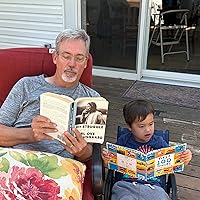
I chose this one because (1) I was on vacation along Lake Michigan and (2) I read and loved my first book by this author when living in Michigan in 1988-1990. It reads as a linear autobiography with three sections for each decade of 1960, 1970 and 1980. This is a novel, but the gritty realism of the interior monologue feels like a true story. It seemed to be resolving with the protagonist David Burckett, set in the upper peninsula of Michigan, as he mellowed finally into middle age, but had a shockingly violent surprise at the very end. I had started to read the sequel, Returning to Earth, but quickly saved it away when I realized I needed to read True North first. The title remains unexplained, other than the setting is the northern ridge of timber on the southern coast of Lake Superior, from Minnesota to the U.P. of Michigan. My copy is a lovely, well-marked hardback purged from library.
I love this author’s style, becoming engrossed in the mind of David, the son of a son of a son of a timber tycoon. He’s born into wealth but despises his distracted, hard-drinking, country club member parents as immoral “spenders” of generational wealth accumulated from forebearers who ravaged the virgin timber of the beautiful landscape in the late nineteenth and early twentieth centuries. Every boy needs a father, and a moral compass, but David and his younger sister Cynthia learn at an early age that their father is an unabashed pedophile, seeking out young girls at every opportunity. The father consorts with his cronies, a handsome, well educated WW2 veteran, who nonetheless is an alcoholic and seems to be inept in business, squandering the family fortune. But David doesn’t care about the money, he loves nature and seems determined to undo the sins of his ancestors by writing a grand account of their atrocities. In this regard he and his sister remain close, but she is strong willed and smart enough to simply escape, finding a husband in the son of the workman at their house, one of the many part native American (Chippewa) and Scandinavian workers who timbered and mined this land. Harrison knows this area well, and the history of inter-marriage and infidelities of the working class is fascinating.
The story is linear in the sense that we learn from a young age onward how David’s brooding unhappiness leads him into many relationships, explicitly sexual encounters, as he seeks someone who will accept him. His real advisors, the surrogate fathers, are the workmen on his family estate (Clarence and Jesse), his wayward uncle Fred, and, finally, a psychologist friend Coughlin from Chicago (his mother’s friend). Everything explodes when David’s father rapes the underage daughter of Jesse, and the family becomes scattered. Due to his father’s wealth and political connections, he escapes true justice and goes on to repeat his crimes over and over. David struggles with this mightily, even converting to Christianity, in a vain attempt to redeem his family’s reputation as entitled predators. His struggle is not heroic, it is private and shrouded and disjointed and very very furious.
Harrison excels at getting into the male mindset, and how physical toughness and strength are exalted. I think most women would be shocked at the constant sexual longings and observations of girls and women that run through David’s head as he struggles to overcome what he fears is a family curse. The religious musings, as the mark of Cain, and well-trod confusion and anger over New Testament god who created the inevitable nature and conflicts of humanity, are explored with tremendous nuance. Having struggled with this myself, especially as a younger man, I feel Harrison captures this self-loathing, and transient hope for redemption and forgiveness, better than any author I know. He reminds me of Peter Matthiessen and, to a lesser extent, Fred Exley in this regard. The author’s love of water, boating, fishing, and nature in general is beautifully reflected through our main character who finds relief in nature from what he believes is encroaching insanity. We understand David best through the many women he courts, and loves, who inevitably leave him because he just cannot move on from his self-hatred over his complicity by being the son what he perceives as an evil empire of privilege. David reminds me of a few men I’ve known, brilliant, well-educated and philosophical, yet are nearly unbearable to be around because of their obsessive brains.
David finds peace and respite in the enormous stumps he finds as he researches the territory of second-growth timber. One such giant becomes his temple, where he and his beloved dog Carla, finally find peace. He takes his lovers there, and they begin to understand him. My own boyhood secret place was near a pond where I fantasized about being with my future wife, and where I finally proposed to her, hoping she would absorb the location the way I had, and know me better. I too was a wanderer in the fields of Kansas, fighting wars with God and myself in my brain, trying vainly to make a loving God compatible with what my eyes were telling me. David’s Uncle Fred is someone he can confide in, and gets good advice, until Fred himself becomes a raging alcoholic. At this point the two are too much alike, so David finds his advisors elsewhere. They all, along with the feisty and beloved Bernice, advise him to give up his “Quixotic” revenge fantasy of destroying his family in the public sphere with a sprawling account of their many crimes. Having money, David has the luxury of spending a couple decades researching and ultimately creating a massive, uninteresting tome of a manuscript that collapses inevitably under its own weight. This book is really about the futility of trying to understand the dark heart of man, and the powerlessness of any one person to overcome, much less rectify, the flawed heart of the worst of our species. But try he does, and this book is a revelation of that thought process. He blindly flails at his white whale.
What strikes me most is how this novel reads so much like a life story of one man, an autobiography, where all the many twists and turns of one man’s life unfold. But the writing is so personal, and intense, and the prose and dialogue so down to earth, that I found it a page turner. I read this fast, enjoying every page where there is action and surprise and a raw account of life in this place and in this time (a decade or so earlier than my own life). I love learning about Michigan and the resilient and damaged people who lived and live there. I recall Harrison’s book about “big” Indians in one of the novella’s included in the Legends of the Fall. I’ve read a number of his other books and plan to read them all. He was a real outdoorsman, and seems to be completely embedded in his characters, lending them a level of authenticity rarely found in literature. He is obviously very well read, and his characters tend to be the same, teaching me a great deal about art, nature and the writing process through his people. In some ways this book is about the difficulties of writing truthfully, another example of I feel I know this author through the lives of his fictional characters. His own truth must surely be reflected in his characters, or else he’s just that brilliant. The women in this book are also well written, tougher and more intelligent than our protagonist in most cases.
David eventually resolves his issues with his own past and forgives his mother who also escapes the father and begins to recover herself. His relationship with his tough, smart sister Cynthia keeps David sane, and this brother sister connection is one of the more hopeful aspects of this otherwise dark book.
My own loved ones tell me I have a fascination for “dark” books, so I will not recommend this one to everyone, especially the women in my life. The father’s pedophilia and our protagonist’s own masculine, youthful urges for in young women that are part of the story will be abhorrent to many, not totally unlike the Lolita book by Nabokov or the uncouth salivations of a Bukowski. But understanding these peculiar flaws in some of the male gender, no matter how horrific, is something that is important insomuch as it is a fact of life to be acknowledged and to be protected against. In general, the book is quite graphic sexually, and there is no softening attempted by Harrison in with his sharp prose. The animalistic way David sees women is disturbing, as he tries to overcome these urges, fearful of being doomed by his father’s genes, including the appetite for liquor, drugs and oblivion.
The ending reveals a justice that surprised me, I thought the book was easing into denouement and resolution. It reminds me that the violence is always just a breath away, and can come quickly, as in a Cormac McCarthy novel. And, like the sexuality, and the blasphemy, the visceral violence is delivered with no compunction for sensitive feelings. The reader must have a strong stomach. Mine turned a time or two, but I think I’m stronger for it and I will never forget this book, it leaves that deep an impression. Now I’m ready for the sequel, told from the husband of David’s sister Cynthia, as he grapples with disease in later life. I really look forward to it.
Harrison’s nearly stream of consciousness style works well for me, as he remembers random events in the past that suddenly flash and make sense as he matures and begins to get beyond his rage and self-defeating obsessions. There are three loves in David’s life, and it takes him a very long time to figure out the true nature required to be a true human being capable of empathy and giving, rather than just consuming. We become enlightened through this style of writing, as he sorts it out in his own mind over time.
I’m also not reading any Goodreads’ review till after I post this, I want mine to uninfluenced while still fresh.
I love this author’s style, becoming engrossed in the mind of David, the son of a son of a son of a timber tycoon. He’s born into wealth but despises his distracted, hard-drinking, country club member parents as immoral “spenders” of generational wealth accumulated from forebearers who ravaged the virgin timber of the beautiful landscape in the late nineteenth and early twentieth centuries. Every boy needs a father, and a moral compass, but David and his younger sister Cynthia learn at an early age that their father is an unabashed pedophile, seeking out young girls at every opportunity. The father consorts with his cronies, a handsome, well educated WW2 veteran, who nonetheless is an alcoholic and seems to be inept in business, squandering the family fortune. But David doesn’t care about the money, he loves nature and seems determined to undo the sins of his ancestors by writing a grand account of their atrocities. In this regard he and his sister remain close, but she is strong willed and smart enough to simply escape, finding a husband in the son of the workman at their house, one of the many part native American (Chippewa) and Scandinavian workers who timbered and mined this land. Harrison knows this area well, and the history of inter-marriage and infidelities of the working class is fascinating.
The story is linear in the sense that we learn from a young age onward how David’s brooding unhappiness leads him into many relationships, explicitly sexual encounters, as he seeks someone who will accept him. His real advisors, the surrogate fathers, are the workmen on his family estate (Clarence and Jesse), his wayward uncle Fred, and, finally, a psychologist friend Coughlin from Chicago (his mother’s friend). Everything explodes when David’s father rapes the underage daughter of Jesse, and the family becomes scattered. Due to his father’s wealth and political connections, he escapes true justice and goes on to repeat his crimes over and over. David struggles with this mightily, even converting to Christianity, in a vain attempt to redeem his family’s reputation as entitled predators. His struggle is not heroic, it is private and shrouded and disjointed and very very furious.
Harrison excels at getting into the male mindset, and how physical toughness and strength are exalted. I think most women would be shocked at the constant sexual longings and observations of girls and women that run through David’s head as he struggles to overcome what he fears is a family curse. The religious musings, as the mark of Cain, and well-trod confusion and anger over New Testament god who created the inevitable nature and conflicts of humanity, are explored with tremendous nuance. Having struggled with this myself, especially as a younger man, I feel Harrison captures this self-loathing, and transient hope for redemption and forgiveness, better than any author I know. He reminds me of Peter Matthiessen and, to a lesser extent, Fred Exley in this regard. The author’s love of water, boating, fishing, and nature in general is beautifully reflected through our main character who finds relief in nature from what he believes is encroaching insanity. We understand David best through the many women he courts, and loves, who inevitably leave him because he just cannot move on from his self-hatred over his complicity by being the son what he perceives as an evil empire of privilege. David reminds me of a few men I’ve known, brilliant, well-educated and philosophical, yet are nearly unbearable to be around because of their obsessive brains.
David finds peace and respite in the enormous stumps he finds as he researches the territory of second-growth timber. One such giant becomes his temple, where he and his beloved dog Carla, finally find peace. He takes his lovers there, and they begin to understand him. My own boyhood secret place was near a pond where I fantasized about being with my future wife, and where I finally proposed to her, hoping she would absorb the location the way I had, and know me better. I too was a wanderer in the fields of Kansas, fighting wars with God and myself in my brain, trying vainly to make a loving God compatible with what my eyes were telling me. David’s Uncle Fred is someone he can confide in, and gets good advice, until Fred himself becomes a raging alcoholic. At this point the two are too much alike, so David finds his advisors elsewhere. They all, along with the feisty and beloved Bernice, advise him to give up his “Quixotic” revenge fantasy of destroying his family in the public sphere with a sprawling account of their many crimes. Having money, David has the luxury of spending a couple decades researching and ultimately creating a massive, uninteresting tome of a manuscript that collapses inevitably under its own weight. This book is really about the futility of trying to understand the dark heart of man, and the powerlessness of any one person to overcome, much less rectify, the flawed heart of the worst of our species. But try he does, and this book is a revelation of that thought process. He blindly flails at his white whale.
What strikes me most is how this novel reads so much like a life story of one man, an autobiography, where all the many twists and turns of one man’s life unfold. But the writing is so personal, and intense, and the prose and dialogue so down to earth, that I found it a page turner. I read this fast, enjoying every page where there is action and surprise and a raw account of life in this place and in this time (a decade or so earlier than my own life). I love learning about Michigan and the resilient and damaged people who lived and live there. I recall Harrison’s book about “big” Indians in one of the novella’s included in the Legends of the Fall. I’ve read a number of his other books and plan to read them all. He was a real outdoorsman, and seems to be completely embedded in his characters, lending them a level of authenticity rarely found in literature. He is obviously very well read, and his characters tend to be the same, teaching me a great deal about art, nature and the writing process through his people. In some ways this book is about the difficulties of writing truthfully, another example of I feel I know this author through the lives of his fictional characters. His own truth must surely be reflected in his characters, or else he’s just that brilliant. The women in this book are also well written, tougher and more intelligent than our protagonist in most cases.
David eventually resolves his issues with his own past and forgives his mother who also escapes the father and begins to recover herself. His relationship with his tough, smart sister Cynthia keeps David sane, and this brother sister connection is one of the more hopeful aspects of this otherwise dark book.
My own loved ones tell me I have a fascination for “dark” books, so I will not recommend this one to everyone, especially the women in my life. The father’s pedophilia and our protagonist’s own masculine, youthful urges for in young women that are part of the story will be abhorrent to many, not totally unlike the Lolita book by Nabokov or the uncouth salivations of a Bukowski. But understanding these peculiar flaws in some of the male gender, no matter how horrific, is something that is important insomuch as it is a fact of life to be acknowledged and to be protected against. In general, the book is quite graphic sexually, and there is no softening attempted by Harrison in with his sharp prose. The animalistic way David sees women is disturbing, as he tries to overcome these urges, fearful of being doomed by his father’s genes, including the appetite for liquor, drugs and oblivion.
The ending reveals a justice that surprised me, I thought the book was easing into denouement and resolution. It reminds me that the violence is always just a breath away, and can come quickly, as in a Cormac McCarthy novel. And, like the sexuality, and the blasphemy, the visceral violence is delivered with no compunction for sensitive feelings. The reader must have a strong stomach. Mine turned a time or two, but I think I’m stronger for it and I will never forget this book, it leaves that deep an impression. Now I’m ready for the sequel, told from the husband of David’s sister Cynthia, as he grapples with disease in later life. I really look forward to it.
Harrison’s nearly stream of consciousness style works well for me, as he remembers random events in the past that suddenly flash and make sense as he matures and begins to get beyond his rage and self-defeating obsessions. There are three loves in David’s life, and it takes him a very long time to figure out the true nature required to be a true human being capable of empathy and giving, rather than just consuming. We become enlightened through this style of writing, as he sorts it out in his own mind over time.
I’m also not reading any Goodreads’ review till after I post this, I want mine to uninfluenced while still fresh.

January 4, 2010
Writing is about making choices. We choose what to write about, from whose perspective to tell a story, and what we want our audience to take away from the narrative. In looking at, True North, let's examine the choices Harrison made. He chose this novel to be in the first person. The events are narrated by, David Burkett, the wealthy son from a family that logged and mined the Upper Peninsula of Michigan for three generations. Why use first person for this novel? What does it achieve?
First person narration shields the reader from the other characters in the novel. While the narrative may be about, Burkett, trying to understand his ancestors and make amends for the evils he believes they've brought upon the land, stripping away natural resources and bleeding their labor force in equal measure, it is really about, Burkett, the man, or Burkett, the shadow of man, trying to find his own stride against that of his father's. If this novel were in third person, the reader might end up sympathizing for some of the other characters. They couldn't be as evil unless they are seen through Burkett's skewed perspective. Of course, Burkett's father is a terrible man known for having sex with underage girls, sometimes consensually while other times forced. His terrible nature could still be represented in the third person, but it would be difficult to make him as evil as Burkett believes him to be.
The topic of the novel seems like it could be interesting. I'm from Northern Michigan, so there was a connection between me and the Upper Peninsula. However, while the narrator is writing a history of the logging industry, we never really see it and the story focuses exclusively on Burkett's relationship with the history. This process of writing for the narrator dominates his life for twenty years, in which he spends his time guiltily living off his family's wealth, wandering the woods, fishing, trolling the surface of Christianity, having sex with women, and feeling disconnected. Perhaps, this could be interesting, but Burkett is a bland narrator, and his story and obsessions come across as mediocre and whiny. As a reader, I found myself unable to sympathize or identify with Burkett. He's petulant. He's weak. If he's an idealist, then it is negated by his utter passivity. What does he risk in the novel? When does he grow? The novel moves from the 60's through the 70's and then the 80's. But the reader never gets a sense of time really moving. The decades seem of little consequence, except that Harrison can no longer use the casual sex of the late 60's as an excuse for Burkett's sexual romps. Burkett, while in his late 30's seems to be the same as when he was in his 20's.
This brings up my last question. What is the audience supposed to take away from this novel? Does the narrator overcome his father? Do we see enough of a change that it pays off? Is the investment of roughly 400 pages of prose worth the ending? Personally, I found very little to take away. In an earlier post, I'd written how I continued to read this book because I couldn't fall asleep and didn't want to get out of bed and dig up a new book at 2 A.M. Not exactly a gun to the head, but not a ringing endorsement either. Worst of all, the ending seems tacked on. As if Harrison realized there was something dramatic lacking from the novel. It's dramatic, but we've seen that on the first page, and it comes hundreds of pages too late.
One thing I found interesting is Harrison's stab at meta-fiction. On page 340, Burkett's sometime lover who is a poet gives him some advice regarding the history he is writing. She says, "Figure it out for yourself. If you can't you'll always write shit. You're dog-paddling in too much material. Start over. Give me a hundred clean pages called 'What My People Did,' or something like that. You're trying to be a nineteenth-century curmudgeon. You're starting twelve thousand years ago with the glaciers then moving slowly onward like a fucking crippled toad. Get over the glaciers in one page, please. You quoted that beautiful prose of Agassiz. Try to understand why it's beautiful and your prose isn't. You wrote nicely in those thirteen pages because you forgot yourself and your thousand post-rationalizations and let your material emerge directly and intimately."
Perhaps, this is Burkett the narrator commenting or Harrison himself in the following passage. Whoever it is speaking, it seems to be a proper response to the novel.
"I had pressed my thumb on the dorsal fin of a trout and now watched a raindrop of blood ooze out. I had asked for this speech and been roundly whipped by a schoolmarm. All these years after the inception and I had thirteen golden pages."
First person narration shields the reader from the other characters in the novel. While the narrative may be about, Burkett, trying to understand his ancestors and make amends for the evils he believes they've brought upon the land, stripping away natural resources and bleeding their labor force in equal measure, it is really about, Burkett, the man, or Burkett, the shadow of man, trying to find his own stride against that of his father's. If this novel were in third person, the reader might end up sympathizing for some of the other characters. They couldn't be as evil unless they are seen through Burkett's skewed perspective. Of course, Burkett's father is a terrible man known for having sex with underage girls, sometimes consensually while other times forced. His terrible nature could still be represented in the third person, but it would be difficult to make him as evil as Burkett believes him to be.
The topic of the novel seems like it could be interesting. I'm from Northern Michigan, so there was a connection between me and the Upper Peninsula. However, while the narrator is writing a history of the logging industry, we never really see it and the story focuses exclusively on Burkett's relationship with the history. This process of writing for the narrator dominates his life for twenty years, in which he spends his time guiltily living off his family's wealth, wandering the woods, fishing, trolling the surface of Christianity, having sex with women, and feeling disconnected. Perhaps, this could be interesting, but Burkett is a bland narrator, and his story and obsessions come across as mediocre and whiny. As a reader, I found myself unable to sympathize or identify with Burkett. He's petulant. He's weak. If he's an idealist, then it is negated by his utter passivity. What does he risk in the novel? When does he grow? The novel moves from the 60's through the 70's and then the 80's. But the reader never gets a sense of time really moving. The decades seem of little consequence, except that Harrison can no longer use the casual sex of the late 60's as an excuse for Burkett's sexual romps. Burkett, while in his late 30's seems to be the same as when he was in his 20's.
This brings up my last question. What is the audience supposed to take away from this novel? Does the narrator overcome his father? Do we see enough of a change that it pays off? Is the investment of roughly 400 pages of prose worth the ending? Personally, I found very little to take away. In an earlier post, I'd written how I continued to read this book because I couldn't fall asleep and didn't want to get out of bed and dig up a new book at 2 A.M. Not exactly a gun to the head, but not a ringing endorsement either. Worst of all, the ending seems tacked on. As if Harrison realized there was something dramatic lacking from the novel. It's dramatic, but we've seen that on the first page, and it comes hundreds of pages too late.
One thing I found interesting is Harrison's stab at meta-fiction. On page 340, Burkett's sometime lover who is a poet gives him some advice regarding the history he is writing. She says, "Figure it out for yourself. If you can't you'll always write shit. You're dog-paddling in too much material. Start over. Give me a hundred clean pages called 'What My People Did,' or something like that. You're trying to be a nineteenth-century curmudgeon. You're starting twelve thousand years ago with the glaciers then moving slowly onward like a fucking crippled toad. Get over the glaciers in one page, please. You quoted that beautiful prose of Agassiz. Try to understand why it's beautiful and your prose isn't. You wrote nicely in those thirteen pages because you forgot yourself and your thousand post-rationalizations and let your material emerge directly and intimately."
Perhaps, this is Burkett the narrator commenting or Harrison himself in the following passage. Whoever it is speaking, it seems to be a proper response to the novel.
"I had pressed my thumb on the dorsal fin of a trout and now watched a raindrop of blood ooze out. I had asked for this speech and been roundly whipped by a schoolmarm. All these years after the inception and I had thirteen golden pages."

October 1, 2012
So good! I find myself very drawn to Harrison's writing and storytelling. This is different from the three novellas in Legends of the Fall. With those there was a beautiful remote distance in the telling, while this first-person narration feels more intimate.
Here, young David Burkett IV, coming from a family with great wealth on both sides, takes it as his life's mission to understand and fully examine how his forbears, land barons who logged and mined in the Upper Peninsula of Michigan, exploited and decimated hundreds of thousands of acres of pristine land. Some of this is research done in historical societies across the region, but that happens more "offstage" while the bulk of what he calls his "project" involves walking the land and seeing the results of all those years of logging.
Parallel to this is his coming to terms with his father, a member of the idle class who seems to spend the family money, travel with his Yale cronies, and hang out at "the Club" with other offspring of the "Robber Baron" generation. He's a full-blown alcoholic who has the same privileged sense of entitlement as the earlier Burketts, but with a more personal, sinister twist. It could be said the elder Burketts raped the land while the father simply rapes. At one point David calls the men in his lineage "alpha predators" and the description in apt on several levels. His father's wealth and family name allow him to walk away from several legal binds (what he refers to as "foibles), but this being a Jim Harrison story, some form of restitution is sure to eventually follow.
Harrison is a very "male" writer, and if I had a dollar for every time his main character mentions his dick or his erection, I could buy three more Harrison hardcover books, at least. But it's his narrator's relationships with the female characters that resonate for me. His sister Cynthia is a strong-willed, take-no-bull girl who clocks her father with a garden rake (you'll learn why later in the book) and effectively cuts her father from her life. Other women: Laurie, his sister's friend and someone he's with to the end; Vernice, a poet he hopes to keep, and who he shares his project with; Vera, the young daughter of Jesse, his father's WWII buddy and all-around assistant; Riva, his uncle's no-nonsense sometime girlfriend; and his mother, a woozy pillhead at the start of the story who finds her true sense of motherhood late, but not too late. David loves them all and carries his love throughout the book. There is also a wonderful image, a "great mother" of a tree stump among acres of tree stumps, that the author and his narrator return to in the book. I loved this very powerful and very female image; it seems to become a kind of touchstone for David.
My only quibble, and it's minor, is that sometimes the chronology gets confusing. Harrison sometimes zigs and zags in time, and it's not always clear when we're still in a flashback or when we've emerged into the present. I few times I had to page back to orient myself. But his beautiful language, never false or over-written, wins me over again and again.
Here, young David Burkett IV, coming from a family with great wealth on both sides, takes it as his life's mission to understand and fully examine how his forbears, land barons who logged and mined in the Upper Peninsula of Michigan, exploited and decimated hundreds of thousands of acres of pristine land. Some of this is research done in historical societies across the region, but that happens more "offstage" while the bulk of what he calls his "project" involves walking the land and seeing the results of all those years of logging.
Parallel to this is his coming to terms with his father, a member of the idle class who seems to spend the family money, travel with his Yale cronies, and hang out at "the Club" with other offspring of the "Robber Baron" generation. He's a full-blown alcoholic who has the same privileged sense of entitlement as the earlier Burketts, but with a more personal, sinister twist. It could be said the elder Burketts raped the land while the father simply rapes. At one point David calls the men in his lineage "alpha predators" and the description in apt on several levels. His father's wealth and family name allow him to walk away from several legal binds (what he refers to as "foibles), but this being a Jim Harrison story, some form of restitution is sure to eventually follow.
Harrison is a very "male" writer, and if I had a dollar for every time his main character mentions his dick or his erection, I could buy three more Harrison hardcover books, at least. But it's his narrator's relationships with the female characters that resonate for me. His sister Cynthia is a strong-willed, take-no-bull girl who clocks her father with a garden rake (you'll learn why later in the book) and effectively cuts her father from her life. Other women: Laurie, his sister's friend and someone he's with to the end; Vernice, a poet he hopes to keep, and who he shares his project with; Vera, the young daughter of Jesse, his father's WWII buddy and all-around assistant; Riva, his uncle's no-nonsense sometime girlfriend; and his mother, a woozy pillhead at the start of the story who finds her true sense of motherhood late, but not too late. David loves them all and carries his love throughout the book. There is also a wonderful image, a "great mother" of a tree stump among acres of tree stumps, that the author and his narrator return to in the book. I loved this very powerful and very female image; it seems to become a kind of touchstone for David.
My only quibble, and it's minor, is that sometimes the chronology gets confusing. Harrison sometimes zigs and zags in time, and it's not always clear when we're still in a flashback or when we've emerged into the present. I few times I had to page back to orient myself. But his beautiful language, never false or over-written, wins me over again and again.

February 1, 2024
Read this if you're dying to know what a fictional character's penis is doing every second of the day for decades.

June 24, 2024
"I suppose it’s better to accept the mind’s disorder rather than make a daily wild attempt to screw the lid on tight."
This novel is not Legends of the Fall which I loved, this is a story of a very wealthy and dysfunctional family, seen through the eyes of the son David Burkett, who carries the weight and guilt of all the wrongs inflicted on the world by several generations of his plundering relatives, but specially his evil, scum bucket of a father. I can't say there are any likeable characters with the possible exception of Cynthia, David's firecracker of a sister.
If you can get past David's (or perhaps the author's😉) apparent obsession with the male appendage, there's an enjoyable, entertaining story here.
This novel is not Legends of the Fall which I loved, this is a story of a very wealthy and dysfunctional family, seen through the eyes of the son David Burkett, who carries the weight and guilt of all the wrongs inflicted on the world by several generations of his plundering relatives, but specially his evil, scum bucket of a father. I can't say there are any likeable characters with the possible exception of Cynthia, David's firecracker of a sister.
If you can get past David's (or perhaps the author's😉) apparent obsession with the male appendage, there's an enjoyable, entertaining story here.

June 8, 2020
I cannot quite believe that the beginning paragraphs of the book which I heard quite shocking have been forgotten by me when they are repeated again at the end of the book. This is a fictional memoir or autobiography. It is possible that Jim Harrison really only has one male character who appears in a variety of forms. This is the second book of his that I have listen to in a row. I have a few more lined up in my future but I think they are somewhat down the road as I work my way through other books.
We are once again immersed in the upper Peninsula of Michigan. Our protagonist is researching how he is wealthy family came to their riches by clear cutting upper Peninsula forests in past generations. He has extremely complicated family relationships as well as personal relationships. We follow the events of his life Through approximately his first 40 years. This book ends with the deaths of his father and his mother.
I am still thinking about what I think about the writing of Jim Harrison. I am hooked by the Michigan connection although I spent the first half of my life in the lower part of Michigan only venturing into his territory up north occasionally. His writing skill is impressive and there is just enough humor in the midst of his horrible life in many ways to help you understand how he keeps moving forward. I actually hope that some of the books I now have in my future library finish the story of his life. Because I followed the Audible book along with Kindle, I was able to copy out many paragraphs to accompany this review to give you an idea of the width and breadth of this story.
We are once again immersed in the upper Peninsula of Michigan. Our protagonist is researching how he is wealthy family came to their riches by clear cutting upper Peninsula forests in past generations. He has extremely complicated family relationships as well as personal relationships. We follow the events of his life Through approximately his first 40 years. This book ends with the deaths of his father and his mother.
I am still thinking about what I think about the writing of Jim Harrison. I am hooked by the Michigan connection although I spent the first half of my life in the lower part of Michigan only venturing into his territory up north occasionally. His writing skill is impressive and there is just enough humor in the midst of his horrible life in many ways to help you understand how he keeps moving forward. I actually hope that some of the books I now have in my future library finish the story of his life. Because I followed the Audible book along with Kindle, I was able to copy out many paragraphs to accompany this review to give you an idea of the width and breadth of this story.

June 22, 2020
At times the main character David seems a bit self involved, I caught myself thinking “get over this already” but in the end I think that’s the whole point. The landscape of U.P. is beautifully described and often the writing took me by surprise. I’ll be adding Harrison’s other books to my must-read list.

February 27, 2018
With Barry Lopez and Marilynne Robinson, Harrison was one of three authors I remember hearing discussed in glowing terms by my Interlochen friends but somehow felt I'd missed out on at the time. I rectified that quickly with Lopez and a bit later with Robinson, but somehow never took the Harrison recommendation as seriously. Which was obviously a huge mistake, because this is a bit of a revelation. True North gets a fair amount of free points from me by sheer coincidence of its myriad commonalities with my own life--taking place in Michigan and Veracruz, and focusing on an interminable historical and philosophical obsession with the nature and relationship between rape culture and the destruction of the environment. But it earns most of its enjoyment the old fashioned way, with uncommonly great writing at every scale.
The loose plot covers a big chunk of the narrator's biography, exploring the long arc of his relationship with his family, his vain effort to come to terms with its legacy of violence, and the various friends and romantic partners with whom he lives through those questions. In the abstract, I love the idea of making a book pose an intellectual search by making it a personal quest for the protagonist. True North, in practice, is not so much interested in the question as in what it says about the way David frames his relationship with his dad, and as an occasional driving mechanism in the otherwise idle-rich life. David does a lot of research on the history of logging in the UP, on illegal cutting and tract poaching, as well as some on Native American history, but none of it really makes it to the reader. That isn't necessarily a problem; if there's anything I've learned from a near-decade of reading on this question it's that this particular framing can only be its own answer. If you're genuinely curious on the topic you switch framings; if you're committed to the frame itself, you can only run in circles.
The recurring question makes the whole thing feel a lot more conversationally intellectual than most books. But it's the farthest thing from pretentious. In fact, that's kind of the most brilliant thing about the whole book. In every facet, it feels casual and uncontrived. Most of this comes from David's narrative voice, which has a rich combination of vulnerable reflection and a pragmatic sense of his own moment-to-moment urges and tastes. The hanging out scenes feel vividly and relatably realistic, and maintain a constant interest with practically no active drama. I can't think of another recent book I've read that has such a comfortably, effortlessly enjoyable narrator. It makes a very strong case for the school of thought that fiction is all about immersing yourself in character, plot and prose be damned.
The loose plot covers a big chunk of the narrator's biography, exploring the long arc of his relationship with his family, his vain effort to come to terms with its legacy of violence, and the various friends and romantic partners with whom he lives through those questions. In the abstract, I love the idea of making a book pose an intellectual search by making it a personal quest for the protagonist. True North, in practice, is not so much interested in the question as in what it says about the way David frames his relationship with his dad, and as an occasional driving mechanism in the otherwise idle-rich life. David does a lot of research on the history of logging in the UP, on illegal cutting and tract poaching, as well as some on Native American history, but none of it really makes it to the reader. That isn't necessarily a problem; if there's anything I've learned from a near-decade of reading on this question it's that this particular framing can only be its own answer. If you're genuinely curious on the topic you switch framings; if you're committed to the frame itself, you can only run in circles.
The recurring question makes the whole thing feel a lot more conversationally intellectual than most books. But it's the farthest thing from pretentious. In fact, that's kind of the most brilliant thing about the whole book. In every facet, it feels casual and uncontrived. Most of this comes from David's narrative voice, which has a rich combination of vulnerable reflection and a pragmatic sense of his own moment-to-moment urges and tastes. The hanging out scenes feel vividly and relatably realistic, and maintain a constant interest with practically no active drama. I can't think of another recent book I've read that has such a comfortably, effortlessly enjoyable narrator. It makes a very strong case for the school of thought that fiction is all about immersing yourself in character, plot and prose be damned.

December 14, 2015
"Making money is never very pretty." David Burkett's father said, who as near as I can make out never made the money he spends lasciviously. He inherited it. David Burkett inherited the guilt that goes along with pater familias scarring the land on both sides of his ancestry. I thought this was a new Harrison novel, finding it on the new book shelf, but it was published in 2004, so I am a little relieved to offload some of the machismo rife in the book. Harrison is older now, and a little more muted. True North is relentlessly male, and the worst of the gender, evident too much in the- also relentless- Breaking News of today's world. There isn't much humanity in here, unless we adopt the view that humanity, when not being brutal, unforgiving and obsessed, is inwardly focused and continually whining. Poor, poor, pitiful me. Even when Burkett is learning, he's not growing. The women in this book aren't so much courageous as they are tenacious: hanging on this dank and manly world because that's how it is. The supposed love interests come off as an ersatz conscience for the men in the book. Every woman, except Cynthia, is poorly constructed, barely there except as a foil for whatever the hero is experiencing. Sooooo tiresome a female character device! Depressing, violent, unabating: the jacket blurb claims this novel has a redemptive soul. I didn't find it. Weak yang. Start to finish.

April 22, 2012
This was a great story, a little gloomy, but so well told, that I just loved it. Its so interesting not only the things we choose to take on in this life, but our ways of going about it as well. Sometimes we take on burdens that aren't ours because we feel like we have to or we actually believe they are ours. And we get so accustomed to being the way we are that it's extremely difficult to change.
The characterization was wonderful, though I would certainly hope to not be any of the characters in this book. About halfway through I experienced some real feminist anger about how women are portrayed in the novel, even though it's just the way the main character experiences them, but I still felt pretty upset that they didn't seem to have any value outside of their physical features. I wish not only of course that the characters didn't think that way, but that the author had developed the women more, but I'm the first to admit that sometimes books that focus on mother/daughter or just female relationships simply don't interest me, where the father/son / brotherly dynamic seems more interesting, perhaps because I just don't know it and I wish I knew what it was like.
The characterization was wonderful, though I would certainly hope to not be any of the characters in this book. About halfway through I experienced some real feminist anger about how women are portrayed in the novel, even though it's just the way the main character experiences them, but I still felt pretty upset that they didn't seem to have any value outside of their physical features. I wish not only of course that the characters didn't think that way, but that the author had developed the women more, but I'm the first to admit that sometimes books that focus on mother/daughter or just female relationships simply don't interest me, where the father/son / brotherly dynamic seems more interesting, perhaps because I just don't know it and I wish I knew what it was like.

January 12, 2010
This was the first book that I read of Harrison's, back when I was 24 (I bought it for the title as I'm a native of Northern Michigan). It took a while to get used to the writing but was a literary watershed for me; Harrison is now, by far, my favorite author. I agree that a lot of the plot elements occur early but the plot is secondary to how it affects Burkett. If some of those elements occurred later, we couldn't see how fully they integrate themselves into his life and perception of life. I've re-read this book multiple times and find something new with each reading. It's not an easy read: it isn't meant to be. It challenges the reader to keep a mental map of the events in the life of the book and I think it is the more rewarding read for it. I'm tempted to say that it's fun to spend some time in Harrison's world but he stays firmly rooted in the earth; like truly great writers, he forces the reader to consider this world with a more specific vitality.

Read
February 5, 2009"True North," says the Boston Globe, "has its moments," which sums up general reaction to this novel. Almost everyone found something to like, be it the passionate narration or the novel's strong sense of place. However, most reviewers also found serious flaws. While some praised Harrison's writing, a few pointed out its sloppiness. And nearly all were frustrated with the novel's structure, complaining that Harrison reveals key events too early and allows the story to founder as Burkett painstakingly searches his soul. Harrison has called American readers "grotesquely plot-oriented," and those who fit this description should avoid his newest novel. But for those who don't mind a long walk through the woods, there's True North.
This is an excerpt from a review published in Bookmarks magazine.

November 5, 2016
True North is a young man's search for answers regarding the destruction of thousands of acres of White Pines in Northern Michigan, and his ancestors' greed. Mining was another ruthless endeavor of greed throughout the Burkett ancestors. David Burkett's life reveals a deep and complicated story of overwhelming circumstances, both in his family, and his personal life. Alcoholism and rape are examples of sinister situations included in this account of the Burkett family.
I'm impressed with Jim Harrison's writing. It took me a little while to get into the story, but once I became involved with the characters which are well developed, I couldn't stop reading this interesting narrative. This book isn't for everyone. It's depth alone may make it unsuitable for readers who enjoy a lighter read or object to obscenities and sexually explicit content.
I'm impressed with Jim Harrison's writing. It took me a little while to get into the story, but once I became involved with the characters which are well developed, I couldn't stop reading this interesting narrative. This book isn't for everyone. It's depth alone may make it unsuitable for readers who enjoy a lighter read or object to obscenities and sexually explicit content.

May 25, 2024
Not bad for something I randomly got for free at a library book sale! I was not at all familiar with Jim Harrison, but his writing style is incredible. I had to get out a pen to underline so many lines. This is a very lone male protagonist novel, but for the most part has a sense of respect for the female characters which made it easier to read than some other older books.
The story follows David, the heir to a logging and mining fortune in Michigan’s Upper Peninsula, as he tries to write a history reckoning with the business of his ancestors who destroyed entire forests and exploited workers. At the same time, he is trying to distance himself from his father, an alcoholic who repeatedly assaults underage girls and gets away with it because of his wealth and status. The novel is bookended by two pretty shocking events involving David’s father. David and the other characters are all incredibly interesting, but the story can be very introspective and slow at parts.
The story follows David, the heir to a logging and mining fortune in Michigan’s Upper Peninsula, as he tries to write a history reckoning with the business of his ancestors who destroyed entire forests and exploited workers. At the same time, he is trying to distance himself from his father, an alcoholic who repeatedly assaults underage girls and gets away with it because of his wealth and status. The novel is bookended by two pretty shocking events involving David’s father. David and the other characters are all incredibly interesting, but the story can be very introspective and slow at parts.

March 23, 2026
Slots in as my least favorite Harrison to date. The flaws in True North are not fatal but they are unavoidably present throughout and that dampened its success. The protagonist is flat and relatively boring as a character and his project to catalogue and write the destruction wrought upon the UP by his family feels quirky at best and bolted-on boring at worst.
I did really enjoy the handling of the father as a character. I expected a cartoon villain from the jacket copy but was instead given a real-life monster, completely banal is his evil - unwilling to mitigate his base desires and behavior and unaware of their effect when acted out on others, content to buy his way out of whatever trouble they cause him. The truest kind of villain that we have
TN to me was less "the mature phase" of Harrison's career and more "suit looks great but needs to be taken out here and shortened a bit there." The love of nature is here, the contempt for greed is here, the Harrison take on male appetite(s) is here, but all slightly undercooked
...or do I maybe just love the looser, more bawdy version of Harrison?
I did really enjoy the handling of the father as a character. I expected a cartoon villain from the jacket copy but was instead given a real-life monster, completely banal is his evil - unwilling to mitigate his base desires and behavior and unaware of their effect when acted out on others, content to buy his way out of whatever trouble they cause him. The truest kind of villain that we have
TN to me was less "the mature phase" of Harrison's career and more "suit looks great but needs to be taken out here and shortened a bit there." The love of nature is here, the contempt for greed is here, the Harrison take on male appetite(s) is here, but all slightly undercooked
...or do I maybe just love the looser, more bawdy version of Harrison?

December 4, 2010
"My father had closed the windows to the world and I was spending my life struggling to open them." So goes the story of David Burkett, a U.P. native struggling to come to terms with his family's history, his father's perverted transgressions, and his own place in the big picture.
True North begins with a three-quarters page italicized prologue that feels right away like an (the?) ending. Occurring in the dawn hours after an awful act of violence, the short scene is sad, disturbing, and quite possibly the most powerful page I've ever read. Really.
It's too bad, then, that the first half of the novel fails to deliver on the promise of the prologue. Though arranged quite linearly in three parts - The 60s, The 70s, and The 80s - I often felt out of focus and a tad uncertain due to Harrison's penchant for wandering - rather fluidly, I'll admit - back and forth between present and past and future. Too, the wanderings are quite often rendered in a passive voice which bleed off any sense of energy and urgency that has developed. A more sophisticated reader with critic credentials will certainly see the literary logic in such maneuvers (for Harrison is regarded as a master, so he must have done this on purpose), but I aint a sophisticated reader.
The second half of the novel begins to make up for the first. As the story progresses into and through The 80s the scenes begin to acquire a subtle energy, a solid sense of "in the moment", mainly because they are allowed to develop without too much interference from passive returns to the past. You begin to feel the novel rolling along as David comes to understand more and more where he is, who he is, and what he must do to reconcile it all. Nearly two-thirds of the way in I began thinking of the prologue, began wondering if that is what the novel was building to. I won't spoil anything here at all (though I guess one could always flip ahead to the end to see for themselves), but the thought will most definitely be in your mind, and it will keep you turning the page with a sad sense of dread.
David Burkett's friends and family never quite materialize as characters the way he does. As often as some of them appear there's always the sense they are an arm's length away from being fully developed. Perhaps this is a flaw in the novel. Or perhaps it is an intentional move by Harrison to convey the emotional distance David places between himself and the outside world, despite his best intentions otherwise. You decide.
True North isn't uplifting. It isn't oppressive or depressing, either. It's like life - quite often uncertain, but always heading toward something. A shaky beginning, a strong ending: three stars for Jim Harrison's True North.
True North begins with a three-quarters page italicized prologue that feels right away like an (the?) ending. Occurring in the dawn hours after an awful act of violence, the short scene is sad, disturbing, and quite possibly the most powerful page I've ever read. Really.
It's too bad, then, that the first half of the novel fails to deliver on the promise of the prologue. Though arranged quite linearly in three parts - The 60s, The 70s, and The 80s - I often felt out of focus and a tad uncertain due to Harrison's penchant for wandering - rather fluidly, I'll admit - back and forth between present and past and future. Too, the wanderings are quite often rendered in a passive voice which bleed off any sense of energy and urgency that has developed. A more sophisticated reader with critic credentials will certainly see the literary logic in such maneuvers (for Harrison is regarded as a master, so he must have done this on purpose), but I aint a sophisticated reader.
The second half of the novel begins to make up for the first. As the story progresses into and through The 80s the scenes begin to acquire a subtle energy, a solid sense of "in the moment", mainly because they are allowed to develop without too much interference from passive returns to the past. You begin to feel the novel rolling along as David comes to understand more and more where he is, who he is, and what he must do to reconcile it all. Nearly two-thirds of the way in I began thinking of the prologue, began wondering if that is what the novel was building to. I won't spoil anything here at all (though I guess one could always flip ahead to the end to see for themselves), but the thought will most definitely be in your mind, and it will keep you turning the page with a sad sense of dread.
David Burkett's friends and family never quite materialize as characters the way he does. As often as some of them appear there's always the sense they are an arm's length away from being fully developed. Perhaps this is a flaw in the novel. Or perhaps it is an intentional move by Harrison to convey the emotional distance David places between himself and the outside world, despite his best intentions otherwise. You decide.
True North isn't uplifting. It isn't oppressive or depressing, either. It's like life - quite often uncertain, but always heading toward something. A shaky beginning, a strong ending: three stars for Jim Harrison's True North.

November 9, 2012
As of late, I've been noticing a strange sight in NYC—the appearance of many bushily-bearded men, clad in woolen plaid lumberjack shirts, their pants held up by suspenders as they saunter through the urban wilderness that is Brooklyn waiting to fell a tree or, perhaps, to whittle a trinket for a lovely lady, should the mood strike them. They can often be found in the local watering hole that specializes in artisanal beers or attempting to start a campfire in the park while simultaneously being harassed by the homeless population for enroaching on their turf. What a bunch of urban whistle punks.
True North is the opposite of the faux-rustic trendiness that's plaguing the NYC boroughs, taking place in the rugged corner of Michigan known as the Upper Peninsula or "UP." It's the story of the scion of a wealthy timber family whose dysfunctional upbringing causes him to reject not only the moneyed class privilege he grew up with but the methods by which that wealth was acquired. His father—a morally repugnant sexual offender who exclusively preys on underage girls—seems to glide through life with ease, buffered by his ability to pay his way out of nearly every transgression. As David, the son, drifts aimlessly through life, he gradually realizes that the anger and hostility he feels toward his father is holding him hostage.
One thing that I think that's worth mentioning is how the theme of solitude is treated here. I think all too often in literature the solitary character is meant to invoke the reader's pity and sympathy...generally, we're supposed to feel sorry for someone who chooses to spend their time alone because it couldn't possibly be a choice they willingly made, but one that was made for them based on some abnormality or personality quirk. There are, of course, exceptions to this rule. The lone cowboy on the plains of some dust-ridden prairie or an adventurer scouting uncharted territory would seem to inspire more of a rugged individualism than be an object of scorn.
Here, the loneliness of one man is drowned out by the largesse of the landscape. He is no longer an individual, he is a small part of a much larger universe.
True North is the opposite of the faux-rustic trendiness that's plaguing the NYC boroughs, taking place in the rugged corner of Michigan known as the Upper Peninsula or "UP." It's the story of the scion of a wealthy timber family whose dysfunctional upbringing causes him to reject not only the moneyed class privilege he grew up with but the methods by which that wealth was acquired. His father—a morally repugnant sexual offender who exclusively preys on underage girls—seems to glide through life with ease, buffered by his ability to pay his way out of nearly every transgression. As David, the son, drifts aimlessly through life, he gradually realizes that the anger and hostility he feels toward his father is holding him hostage.
One thing that I think that's worth mentioning is how the theme of solitude is treated here. I think all too often in literature the solitary character is meant to invoke the reader's pity and sympathy...generally, we're supposed to feel sorry for someone who chooses to spend their time alone because it couldn't possibly be a choice they willingly made, but one that was made for them based on some abnormality or personality quirk. There are, of course, exceptions to this rule. The lone cowboy on the plains of some dust-ridden prairie or an adventurer scouting uncharted territory would seem to inspire more of a rugged individualism than be an object of scorn.
Here, the loneliness of one man is drowned out by the largesse of the landscape. He is no longer an individual, he is a small part of a much larger universe.

October 26, 2021
My husband requested the audio book so we could listen to it on a long drive. By disk four, I was satisfied to never listen to any more of this book. I found our lead character only interested in sex or doing navel gazing to the nth degree. He tortures himself over the evil his family has perpetuated in building their wealth. He doesn't want to benefit from it but nor does he ever figure out how to be a productive member of society. If this man was our friend, we would smack him upside the head and tell him to get over himself. Or point him in the direction of a good counselor/psychiatrist. I see all of the positive reviews but in the end you have to ask yourself is this guy someone you want to spend your precious time on. My answer is no effing way.

October 21, 2024
A macabre gothic masterpiece. Not for those with weak stomachs.
This is a story about a repulsive abhorrent father, a personal and political monster, a modern myth figure who dominates his son's adult life until a heinous act of patricide ends it.
The narrative imagery/metaphor of felled trees and amputated hands seems to be about the demon contradiction that lies at the heart of American statehood and its capitalism: an act of political violence was required to create it, and the rape of resources that materialism demands to sustain itself.
I am reminded of an early novel of T.C. Boyle's, "World's End", and Annie Proulx' "Bearskins".
The son struggles with his own appetites, but finds no marital comfort, though his women come and go with little effort on his part. He researches his family's succubus-like decimation of the primeval forests of the upper Great Lakes area and the stumpland of destruction he has found haunts him.
The beginning and end of the novel repeat the macabre end of his father's life, as his son and he are cast adrift in a rowboat, his father's arms now stumps, his hands hacked off by the son's half-brother. In gothic times, amputating hands was a common punishment for thieves, as I recall. Today as I write this, I wonder when I'll be able to forget the images the stump metaphor has given me.
This is a story about a repulsive abhorrent father, a personal and political monster, a modern myth figure who dominates his son's adult life until a heinous act of patricide ends it.
The narrative imagery/metaphor of felled trees and amputated hands seems to be about the demon contradiction that lies at the heart of American statehood and its capitalism: an act of political violence was required to create it, and the rape of resources that materialism demands to sustain itself.
I am reminded of an early novel of T.C. Boyle's, "World's End", and Annie Proulx' "Bearskins".
The son struggles with his own appetites, but finds no marital comfort, though his women come and go with little effort on his part. He researches his family's succubus-like decimation of the primeval forests of the upper Great Lakes area and the stumpland of destruction he has found haunts him.
The beginning and end of the novel repeat the macabre end of his father's life, as his son and he are cast adrift in a rowboat, his father's arms now stumps, his hands hacked off by the son's half-brother. In gothic times, amputating hands was a common punishment for thieves, as I recall. Today as I write this, I wonder when I'll be able to forget the images the stump metaphor has given me.
December 19, 2024
I read this a few weeks ago and I was thinking recently about what I liked so much about it. First of all it’s a Bildungsroman, a coming of age story, which is pretty much my favorite genre, along with people’s religious and other awakenings. The reason I love these stories is because it shows a person’s progression from one state to another, with the original state being immature, ignorant, not understanding, perhaps unempathetic, … etc. and it shows how they emerged from this state of struggle into a new different struggle, with a more wisened viewpoint, seeing themselves in a new way, in their full context. We often forget how we got to where we are, and we see other people, so accomplished, so put together, so far along in their personal journey, and we feel intimidated by them, we feel like imposters, and we can’t see just through this momentary snapshot in time that they aren’t perfect, didn’t start off knowing everything, and always saying the right thing. Their history of mistakes is obscured by the facade of accomplished perfection. Bildungsromans lift the veil on a life, show that it is through trials that we become who we become, each event providing a lesson that forms us. The other thing that I loved about this book is that it is in a way a piece of nature writing, which in my mind is a slur, but I mean it in the best possible sense. Most nature writing is so horribly reverent, detached and separate from nature, with salient adjectives relating to purity, either perfection or tragedy, clean, fresh and new or utter destruction. Most nature writing that i’ve seen doesn’t talk about it as it really is, and maybe i need to be a better scholar of nature writing and try to read through the entire canon of nature writing so I can truly know what I’m talking about. But what I think True North does differently is it tells a story of a person’s coming of age in the full context of their life. He’s a wealthy person and his family’s wealth comes from clearcutting the forests of their region. He loves these forests and waterways, and inhabits them, uses them, living by fishing at times, observing the land and its organisms. He’s not just a visitor to the nature, but a part of it. He eats of it and could die of it and become it as well, fully tied into the web of life. But at the same time, he’s just a guy, living his life, has a family, has family drama. He’s a fully contextualized person in modern america but also, a human animal, existing in the flow of nature, and he’s processing what our culture did, the destruction, the killing, recognizing it, witnessing what has come of that history, and attempting to make amends, and move forward, come out on the other side. He tries to expand the awareness of what happened, through his writings on his family’s history of exploits, his own deeply personal connection to the current state of the environment. And it is only through the use of plants, animals and environments that we can form a true understanding of their real characteristics, their value to ourselves and other organisms, how they change through the seasons and what they even are. With that understanding, do we truly recognize what it meant to destroy on such a huge scale, setting back vast areas of the landscape to stage 0 succession, leaving no or inadequate refugia for plants and animals, pushing out far into the future the restoration of all of those connections that form the resistance and resilience to environmental perturbations. From there, we can begin to understand the scale of loss and what it might look like to begin recovering. This book may not capture and present this entire ecological picture, but it provides an example of how a person can connect with their family’s ecological history, recognizing it for what it is and figure out how to move on. Having this ecological context as a setting for the story of a person’s life brings nature closer to the reader- we needs stories about people in nature in a world we recognize in order to see ourselves there, to see that stories about nature are not black and white, we’re not just totally fucked, that the picture is more complicated, that we’re totally entwined with it, and we don’t need to ruin our own lives as monkey wrenchers in order to be doing something to make things better. Anyway I liked the book, I think it’s an important counterweight to the culture’s alienation from nature. And it helps deliver this wholesome message through a dramatic and suspenseful storyline. Great job!
December 6, 2021
A young man tells the story of his dysfunctional family living a wealthy life in the UP of Michigan. The father is a narcissist man who chases and on occasion, rapes pre teen girls. His mother retreats to Chicago to escape with alcohol and a doctor friend/lover. The daughter rejects the parents and marries an Indian/Finn while the son churns in self-absorption researching and writing about his logging baron relatives and does not seem able to move ahead.
June 12, 2019
I usually like Jim Harrison and looked forward to reading this book. His description of and sense of place, in this case, the beautiful and remote Upper Peninsula of Michigan and the magic aura of Lake Superior, were superb. However, the introspection of the main character went on so long, I got bored. Not one of my favorites.

November 18, 2017
I decided not to read past p50.
Clearly, many readers have enjoyed True North but I found the prose flabby, the story meandering and the protagonist bland.
Grove/Atlantic should take responsibility for the poor copy editing. In addition, pruning 30% of the text would enhance the pace.
Wish I could have enjoyed it more.
Clearly, many readers have enjoyed True North but I found the prose flabby, the story meandering and the protagonist bland.
Grove/Atlantic should take responsibility for the poor copy editing. In addition, pruning 30% of the text would enhance the pace.
Wish I could have enjoyed it more.
Displaying 1 - 30 of 307 reviews