

What do you think?

Mathilde: eine große Liebe
Der französische Romancier Sebastien Japrisot erzählt in berührenden poetischen Bildern eine der ergreifendsten Liebesgeschichten vor dem dramatischen Hintergrund des Ersten Weltkrieges: Sieben Sommer lang sucht die junge Mathilde ihren im Krieg 1917 zum Tode verurteilten und seitdem verschollenen Geliebten. Wundervoll zerbrechlich und hartnäckig zugleich und überdies mit kriminalistischem Verstand begabt, macht sie sich auf in ein Labyrinth von Wissen und Verleugnung, in dem einzig ein Foto und ein paar Briefe ihr Ariadnefaden sind. Selten ist ein Buch großer Gefühle so unsentimental, ja beinahe verwegen erzählt worden.
318 pages, Paperback
First published September 6, 1991
About the author
Sébastien Japrisot
49 books147 followersSébastien Japrisot was a French author, screenwriter and film director, born in Marseille. His pseudonym was an anagram of Jean-Baptiste Rossi, his real name. Japrisot has been nicknamed "the Graham Greene of France".
Famous in the Francophony, he was little known in the English-speaking world, though a number of his novels have been translated into English and have been made into films.
His first novel, Les mal partis was written at the age of 16 and published under his real name (see also author profile of Jean-Baptiste Rossi).
Famous in the Francophony, he was little known in the English-speaking world, though a number of his novels have been translated into English and have been made into films.
His first novel, Les mal partis was written at the age of 16 and published under his real name (see also author profile of Jean-Baptiste Rossi).
Ratings & Reviews
Friends & Following
Create a free account to discover what your friends think of this book!
Community Reviews
Displaying 1 - 30 of 728 reviews

February 12, 2016
A story of WW I translated from the French. Just before the war begins, a young woman who is confined to a wheelchair meets the love of her life. Of course he goes off to war and perishes in the trenches. Little by little, over ten years, she learns odds and ends of details of what actually happened to him.
We learn right at the beginning of the novel that so many soldiers were deserting and getting self-inflicted wounds that army officers decided to make an example of five such men. Instead of shooting them by firing squad, they forced them out unarmed and bound between the French and German trenches at night in a bitter snowstorm. Her lover was one of these men. He died in a hail of bullets and a barrage of grenades or from the bitter cold. Or did he?
She becomes an armchair (or wheelchair) detective with her long-time caretaker driving her to interview people. She places announcements in newspapers to get more information and hires a detective and the family lawyer to help out. Fortunately she is from a wealthy family. From little bits and pieces a fascinating tale emerges with a surprise ending.
A very engaging book that won a French Literary award when published in 1991. (The Prix Interallie for the best work by a journalist.) I won’t quite say I couldn’t put it down – it drags in a couple of places – but almost!
We learn right at the beginning of the novel that so many soldiers were deserting and getting self-inflicted wounds that army officers decided to make an example of five such men. Instead of shooting them by firing squad, they forced them out unarmed and bound between the French and German trenches at night in a bitter snowstorm. Her lover was one of these men. He died in a hail of bullets and a barrage of grenades or from the bitter cold. Or did he?
She becomes an armchair (or wheelchair) detective with her long-time caretaker driving her to interview people. She places announcements in newspapers to get more information and hires a detective and the family lawyer to help out. Fortunately she is from a wealthy family. From little bits and pieces a fascinating tale emerges with a surprise ending.
A very engaging book that won a French Literary award when published in 1991. (The Prix Interallie for the best work by a journalist.) I won’t quite say I couldn’t put it down – it drags in a couple of places – but almost!

August 2, 2015
My love,
I’m not able to write today, so a fellow Landis is writing this for me. Your face is all lit up, I can see you. I’m happy, I’m coming home. I would like to shout out my joy on the road, I’m coming home. I would like to kiss you the way you like me to, I’m coming home. I must step lively. Tomorrow is already Sunday, and we’re to be married Monday.
Fragment of a letter sent from the trenches by a teenage soldier to his girlfriend, on a cold morning in January 1917. Jean Etchevery, affectionately called Manech by his fiancée Mathilde and ‘Cornflower’ by his comrades in arms, never gets home for his wedding. The very same day he is reported as “killed in the line of duty”. For two years, Mathilde lives with her grief, until one day another soldier sends her a letter revealing the cruel, criminal actions of the authorities that led to her fiancée’s death. Despite being confined to a wheelchair by a childhood accident that cost her the use of her legs, Mathilde is resolved to find out the truth about that fateful day, hoping against all odds that Manech had somehow survived.
Esperanza sighs, “My dear girl”, and says that she has better ways to spend her youth – especially given her lot in life – than to go chasing the wind. Her desire to marry a fiancee lost in the war is a noble sentiment, but she should put all bitterness aside. Bingo Crepuscule was a trench among thousands, the sixth of January in 1917 was one day in the horror of fifteen thousand others, and Manech one unfortunate soul among millions of unhappy soldiers.
A moving love story, a terrible account of the horrors of the Great War, a criminal investigation full of surprises, a panoramic view of France before, during and in the aftermath of the war – this novel has it all and Japrisot weaves the different threads with a mastery that made one reviewer compare it to the famous epic of Tolstoy – “War and Peace”. After turning the last page, such hyperbole doesn’t look as forced as I initially thought.
I don’t remember many private investigators that are confined to a wheelchair. Mathilde has other qualities that compensate for her lack of mobility: perseverance, patience, attention to detail and tidiness in organizing the accumulation of clues. She may be motivated by love, but she goes about her quest in a very professional way. She’s not a lone wolf in the style of American hard-boiled, she uses all her friends and family and even hires people to help her in her search. Most of all, Mathilde writes letters and visits the relatives of the other four men who shared the fate of Manech on that desperate January morning, sent out into the no-man’s land between German and French trenches by their own comrades.
It’s not easy to write an epistolary novel using multiple voices. It takes real talent to get the different backgrounds and the different temperaments right. Japrisot managed to switch styles for each new character relating his or her recollection of the events to Mathilde. With his experience writing crime fiction it is not a surprise that he builds the case carefully and keeps the reader guessing at the outcome until almost to the last page of the book. . What surprised me in a good way was how well he tackled the romantic part of the story and how powerful is the evocation of the life in the trenches and of the lasting psychological scars left in the minds of the survivors.
The term PTSD was unknown in 1917, but the following quote may explain the revolt of any reasonable person at the cruelty of punishing the young Manech whose mind collapses under prolonged exposure to stress:
He was afraid of the war and of death, like almost everyone, but he was also afraid of the wind, that harbinger of gas attacks, afraid of a flare tearing through the night, afraid of himself, for he never knew what he might do when he was afraid, afraid of his own side’s artillery, afraid of his own gun, afraid of the whine of aerial torpedoes, afraid of mines that explode and engulf a whole section of infantry, afraid of the flooding that drowns you in the dugout, afraid of the earth that buries you alive, afraid of the stray blackbird that casts a sudden shadow before your eyes, afraid of the nightmares in which you always wind up gutted at the bottom of a shell hole, afraid of the sergeant who dreams of blowing your brains out because he’s fed up with carping at you, afraid of the rats that come for a little foretaste, sniffing you as you sleep, afraid of the lice and the crotch-crabs and the memories that suck your blood, afraid of everything.
To find out if Manech or any of the other four doomed soldiers survived, you will need to read the novel, and not solely my review. I don’t have any reservation about recommending the novel, and I plan to both read more books by Sebastien Japrisot, and to watch the movie adaptation with Audrey Tatou and Marion Cotillard, two of the best new actresses in France.
As an epitaph, I have chosen the words of one of the survivors, succinctly capturing the essence of the story:
I’ll keep waiting, for as long as it takes, for this war to be seen in everyone’s eyes for what it always was, the most filthy, savage, useless obscenity that ever there was.

December 17, 2018
Translation widget on The blog!!!
O carte despre hotărârea unei femei de a afla adevarul cu privire la soarta logodnicului sau dispărut pe front. O munca demnă de un detectiv, secrete ieșite la iveală, adevăruri mușamalizare și ororile războiului. Toate îmbinate intr-o poveste captivanta, plină de emoție, cu mult suspans.
Recenzia mea completa o găsiți aici:
https://www.delicateseliterare.ro/o-l...
O carte despre hotărârea unei femei de a afla adevarul cu privire la soarta logodnicului sau dispărut pe front. O munca demnă de un detectiv, secrete ieșite la iveală, adevăruri mușamalizare și ororile războiului. Toate îmbinate intr-o poveste captivanta, plină de emoție, cu mult suspans.
Recenzia mea completa o găsiți aici:
https://www.delicateseliterare.ro/o-l...

May 10, 2013
Ovaj francuski roman spada u grupu mojih najomiljenijih "uredničkih" postignuća... Nesvakidašnji, čudnovat, ljudski... ratni roman i sudbine običnih ljudi... I ah, da, ta ljubav... na francuski način :) Sjajna ekranizacija romana, sjajna muzika iz filma... :)

January 20, 2013
Oh my, explaining why I have rated this three stars is complicated, just as complicated as the book is. When it ended, I liked it a lot. Very much in fact, so it should get four stars! Right? Except that if you have been following the comments I have been making about it at diverse places at GR you will have noted that I have been annoyed, exasperated and at wits' end as I read this book! So what is going on?
As I stated, the book is complicated. If you are adept at solving mysteries and love paying close attention to every detail and love unraveling clues, then this book will be perfect for you! You will give it five stars. I am not talented at this. My response was to get thoroughly annoyed. In this book just about all the characters go by numerous names. They go by their name given at birth, their military rank, where they come from and other nicknames too. I jotted down all these details and still was lost much of the time. I was always asking, “Who is that?!” People change identities, there are coded letters that say something completely different from what you assume and people state what they think, but that isn’t always true. All of this put together annoyed me to pieces. I have already seen the movie, so I didn’t even start from scratch. By the end I pretty much understood everything, but not all. To achieve that, I would have to listen to the whole thing from start to finish a second time.
At the end it occurred to me that perhaps the author is indeed making a point with all this confusion, particularly with the different names and identities. The confusion is intended; it is part of the message to be imparted by the book! What is the value of a name? Is it important? Does it matter who exactly did that deed? In all the horror of war what is one individual? This book wonderfully shows the absurdity and horror of war. This is its largest merit. This is why you should read the book.
I have seen the movie in French. This too proved to be a source of confusion for me. Mathilde, who is looking for her fiancé, hoping that he has survived WW1, is portrayed very differently in the French movie and in the translated audiobook. How did the author intend her to be seen? In the film she was strong and smart, but sweet and lovely too. In the book she is flippant and sarcastically funny. (She is lame due to a childhood accident.) I object to seeing her portrayed so differently. Why? Although in both she is shown as a strong, determined woman, I felt that her flippant remarks didn’t jive with the setting, Picardy, France, during the first three decades of the 1900s.
Here is an example: Mathilde wants to take off to follow another clue, having just that day returned home. When she suggests another trip, Sylvan responds:
“It is not me that is going to squawk. Bibi (his wife) is the one who won’t be pleased.”
Leaning forward in her chair, Mathilde murmurs insidiously and ardently, “Give her a good work out tonight. Let’s hear the rafters ring. She always adores you afterwards. She will be putty in our hands. (Book two, track 4, of the audiobook)
I assume you understand how Bibi was to be softened. The next day, off they go, exactly as planned, without a word from Bibi. These words are stranger still given that Mathilde has been raised for many years, almost as a daughter, in their home. Too often the language is too modern. It doesn’t feel either French in character or appropriate for the 1920s. Has the book been poorly translated from French? I listened to the audiobook narrated by Isabel Keating. Has she exaggerated the flippant lines of the translation? Something has gone wrong. The atmosphere, which I so loved in the original French film, was gone from the audiobook presentation.
So I will give the book three stars. If I were one who loved solving mysteries, I would have given it four. You decided if the mystery solving will entice or annoy you. I do think it very well shows what actually happens in war. It shows the total absurdity of war. It shows trench warfare at its ugliest. It showed how people were destroyed by the war. Then, at the very end, it also showed how people picked themselves up and made a new life. So it was not depressing. It did not at all end on a sour note. People are strong. All of us are, if we just decide to be. Some pick up the loose ends and go on to make a good life for themselves.
Having finished the book I feel it merits four stars, but I did complain a lot, so I am giving it three. Read it rather than listen to it and read it in French if you can. You may then give it five stars. The movie was worth five stars.
One more thing: the story is just too complicated for an audiobook.
As I stated, the book is complicated. If you are adept at solving mysteries and love paying close attention to every detail and love unraveling clues, then this book will be perfect for you! You will give it five stars. I am not talented at this. My response was to get thoroughly annoyed. In this book just about all the characters go by numerous names. They go by their name given at birth, their military rank, where they come from and other nicknames too. I jotted down all these details and still was lost much of the time. I was always asking, “Who is that?!” People change identities, there are coded letters that say something completely different from what you assume and people state what they think, but that isn’t always true. All of this put together annoyed me to pieces. I have already seen the movie, so I didn’t even start from scratch. By the end I pretty much understood everything, but not all. To achieve that, I would have to listen to the whole thing from start to finish a second time.
At the end it occurred to me that perhaps the author is indeed making a point with all this confusion, particularly with the different names and identities. The confusion is intended; it is part of the message to be imparted by the book! What is the value of a name? Is it important? Does it matter who exactly did that deed? In all the horror of war what is one individual? This book wonderfully shows the absurdity and horror of war. This is its largest merit. This is why you should read the book.
I have seen the movie in French. This too proved to be a source of confusion for me. Mathilde, who is looking for her fiancé, hoping that he has survived WW1, is portrayed very differently in the French movie and in the translated audiobook. How did the author intend her to be seen? In the film she was strong and smart, but sweet and lovely too. In the book she is flippant and sarcastically funny. (She is lame due to a childhood accident.) I object to seeing her portrayed so differently. Why? Although in both she is shown as a strong, determined woman, I felt that her flippant remarks didn’t jive with the setting, Picardy, France, during the first three decades of the 1900s.
Here is an example: Mathilde wants to take off to follow another clue, having just that day returned home. When she suggests another trip, Sylvan responds:
“It is not me that is going to squawk. Bibi (his wife) is the one who won’t be pleased.”
Leaning forward in her chair, Mathilde murmurs insidiously and ardently, “Give her a good work out tonight. Let’s hear the rafters ring. She always adores you afterwards. She will be putty in our hands. (Book two, track 4, of the audiobook)
I assume you understand how Bibi was to be softened. The next day, off they go, exactly as planned, without a word from Bibi. These words are stranger still given that Mathilde has been raised for many years, almost as a daughter, in their home. Too often the language is too modern. It doesn’t feel either French in character or appropriate for the 1920s. Has the book been poorly translated from French? I listened to the audiobook narrated by Isabel Keating. Has she exaggerated the flippant lines of the translation? Something has gone wrong. The atmosphere, which I so loved in the original French film, was gone from the audiobook presentation.
So I will give the book three stars. If I were one who loved solving mysteries, I would have given it four. You decided if the mystery solving will entice or annoy you. I do think it very well shows what actually happens in war. It shows the total absurdity of war. It shows trench warfare at its ugliest. It showed how people were destroyed by the war. Then, at the very end, it also showed how people picked themselves up and made a new life. So it was not depressing. It did not at all end on a sour note. People are strong. All of us are, if we just decide to be. Some pick up the loose ends and go on to make a good life for themselves.
Having finished the book I feel it merits four stars, but I did complain a lot, so I am giving it three. Read it rather than listen to it and read it in French if you can. You may then give it five stars. The movie was worth five stars.
One more thing: the story is just too complicated for an audiobook.

June 28, 2016
Μόλις τελείωσα το «Οι ατέλειωτοι αρραβώνες» και μπορώ πλέον να δηλώσω επισήμως ξετρελαμένη, ή μάλλον όχι, μαγεμένη είναι η κατάλληλη λέξη, καθώς έχω προσέξει επανειλημμένα ότι οι Γάλλοι, συγγραφείς και οι κινηματογραφιστές στα έργα τους μεταδίδουν κάτι από μαγεία…
Το θέμα του βιβλίου, ναι ομολογουμένως δεν είναι χαρούμενο, η αφήγηση όμως δεν μεταφέρει κανένα βάρος, λύπη ούτε καν θλίψη στον αναγνώστη. Σε αυτό οφείλεται το ότι προτίμησε ο συγγραφέας μια πιο ρομαντική οδό και σίγουρα οφείλεται κ στην ηρωίδα του την Ματίλντ. Την αεικίνητη Ματίλντ, που προτιμά να μην σταθεί στιγμή να αναλογιστεί με μεμψιμοιρία το τι έχει συμβεί, αλλά να παλέψει για την αλήθεια με αισιοδοξία και ζωντάνια. Είναι αποφασισμένη να ξεδιαλύνει το μυστήριο που σκεπάζει την 7η Ιανουαρίου 1917 στο «Μπίνγκο Δειλινό» και το τι τελικά απέγινε ο αγαπημένος της, και κανένας δεν θα την σταματήσει. Είναι σαφέστατα μια από τις καλύτερες ηρωίδες που έχω συναντήσει. Ένας ακόμα λόγος για την ευχάριστη ανάγνωση που προσφέρει το βιβλίο είναι ότι το θέμα του επικεντρώνεται στο μυστήριο των πέντε χαμένων στρατιωτών. Ευτυχώς για εμένα που δεν μπορώ τους πολέμους και την φρίκη τους, το βιβλίο διαδραματίζεται λίγο μετά τον πόλεμο, έτσι λοιπόν όταν στο βιβλίο γίνεται αναφορά σε μάχη, πάντα γίνεται ως κομμάτι της λύσης του μυστηρίου και όχι για να προκαλέσει πόνο, έτσι λοιπόν κ ο αναγνώστης, αυτή την αναφορά αυτόματα την λαμβάνει ως μέρος αυτής της λύσης προσπερνώντας οποιοδήποτε συναίσθημα πέρα της περιέργειας για το τι τελικά έχει συμβεί.
Η γλώσσα είναι υπέροχη, η αφήγηση μαγευτική (ναι το ξέρω ότι επαναλαμβάνομαι). Η συγκίνηση προκαλείται μέσα από όμορφες περιγραφές, τον έρωτα και εικόνες αυτοθυσίας. Τα πάντα είναι τόσο όσο.
Η ιστορία με εξέπληξε με την εξέλιξη της. Σίγουρα το βιβλίο μου έδωσε πολλά περισσότερα από αυτά που περίμενα. Το συστήνω χωρίς δεύτερη σκέψη… ωχ… βέβαια τώρα που το θυμήθηκα είναι εξαντλημένο… πόσο κρίμα πραγματικά… Η γνώμη μου είναι όποιος έχει την τύχη να το βρει να αρπάξει την ευκαιρία και να το διαβάσει.
"Συγχώρεσε με, Μανές, που δεν είμαι παρά μονάχα ο εαυτός μου".
σελ. 258.
Το θέμα του βιβλίου, ναι ομολογουμένως δεν είναι χαρούμενο, η αφήγηση όμως δεν μεταφέρει κανένα βάρος, λύπη ούτε καν θλίψη στον αναγνώστη. Σε αυτό οφείλεται το ότι προτίμησε ο συγγραφέας μια πιο ρομαντική οδό και σίγουρα οφείλεται κ στην ηρωίδα του την Ματίλντ. Την αεικίνητη Ματίλντ, που προτιμά να μην σταθεί στιγμή να αναλογιστεί με μεμψιμοιρία το τι έχει συμβεί, αλλά να παλέψει για την αλήθεια με αισιοδοξία και ζωντάνια. Είναι αποφασισμένη να ξεδιαλύνει το μυστήριο που σκεπάζει την 7η Ιανουαρίου 1917 στο «Μπίνγκο Δειλινό» και το τι τελικά απέγινε ο αγαπημένος της, και κανένας δεν θα την σταματήσει. Είναι σαφέστατα μια από τις καλύτερες ηρωίδες που έχω συναντήσει. Ένας ακόμα λόγος για την ευχάριστη ανάγνωση που προσφέρει το βιβλίο είναι ότι το θέμα του επικεντρώνεται στο μυστήριο των πέντε χαμένων στρατιωτών. Ευτυχώς για εμένα που δεν μπορώ τους πολέμους και την φρίκη τους, το βιβλίο διαδραματίζεται λίγο μετά τον πόλεμο, έτσι λοιπόν όταν στο βιβλίο γίνεται αναφορά σε μάχη, πάντα γίνεται ως κομμάτι της λύσης του μυστηρίου και όχι για να προκαλέσει πόνο, έτσι λοιπόν κ ο αναγνώστης, αυτή την αναφορά αυτόματα την λαμβάνει ως μέρος αυτής της λύσης προσπερνώντας οποιοδήποτε συναίσθημα πέρα της περιέργειας για το τι τελικά έχει συμβεί.
Η γλώσσα είναι υπέροχη, η αφήγηση μαγευτική (ναι το ξέρω ότι επαναλαμβάνομαι). Η συγκίνηση προκαλείται μέσα από όμορφες περιγραφές, τον έρωτα και εικόνες αυτοθυσίας. Τα πάντα είναι τόσο όσο.
Η ιστορία με εξέπληξε με την εξέλιξη της. Σίγουρα το βιβλίο μου έδωσε πολλά περισσότερα από αυτά που περίμενα. Το συστήνω χωρίς δεύτερη σκέψη… ωχ… βέβαια τώρα που το θυμήθηκα είναι εξαντλημένο… πόσο κρίμα πραγματικά… Η γνώμη μου είναι όποιος έχει την τύχη να το βρει να αρπάξει την ευκαιρία και να το διαβάσει.
"Συγχώρεσε με, Μανές, που δεν είμαι παρά μονάχα ο εαυτός μου".
σελ. 258.

December 9, 2018
La guerra, l'amore, la morte, la vita.
Quanto ho amato questo libro.
Ho cercato il film che ne è stato tratto inseguendolo nelle videoteche finché non è uscito.
Mette di fronte all'inutilità e all'assurdità della guerra attraverso l'amore, la follia, l'inganno.
Come ho letto in un altro commento, ogni personaggio meriterebbe una storia tutta sua, perché quello che riusciamo a sapere di loro non riesce a bastarci, ma solo ad aumentare il rimpianto.
Quanto ho amato questo libro.
Ho cercato il film che ne è stato tratto inseguendolo nelle videoteche finché non è uscito.
Mette di fronte all'inutilità e all'assurdità della guerra attraverso l'amore, la follia, l'inganno.
Come ho letto in un altro commento, ogni personaggio meriterebbe una storia tutta sua, perché quello che riusciamo a sapere di loro non riesce a bastarci, ma solo ad aumentare il rimpianto.

February 14, 2019
The French trenches on the Western Front during World War I were muddy, cold, and infested with lice and rats. The men lived in constant danger, and saw their good friends die by their sides. Some soldiers suffered "shell shock", some deserted, some committed suicide, and others wounded themselves to get away from this hell on earth. The book opens as five soldiers, who have allegedly shot themselves in the hand, walk through the mud to the Front. Their punishment is to be brought to the area between the French trenches and the enemy trenches where probable death awaits them.
Mathilde, the fiancee of Manech, has been told by officials that he died on the battlefield. But she receives a letter from a dying soldier who tells her that Manech was one of the five soldiers with the self-inflicted wounds. The soldier thinks that one or more of them may still be alive. Mathilde is in a wheelchair but she has an intelligent mind, a strong spirit, and a deep love for Manech. With the help of her wealthy father, her chauffeur, and a detective, Mathilde contacts the families of the other four men, as well as other soldiers, to get more information. She receives conflicting accounts of their final days, so we don't know if Manech and the other four men survived until the end of the book. Mathilde's contacts show us the terrible effects of the war on the civilian population as well as the military.
The novel is a mystery, a World War I story, and a love story as it flashes back to Manech's and Mathilde's relationship. The book can be a little confusing at first since the characters are called by several names, so it helps to jot down their nicknames and professions. For example, Jean Etchervery is Manech, Cornflower, and the fisherman. Throughout the book there is a great warmth and respect displayed by the living soldiers toward their fallen comrades and the widows who are dealing with so much pain.
Mathilde, the fiancee of Manech, has been told by officials that he died on the battlefield. But she receives a letter from a dying soldier who tells her that Manech was one of the five soldiers with the self-inflicted wounds. The soldier thinks that one or more of them may still be alive. Mathilde is in a wheelchair but she has an intelligent mind, a strong spirit, and a deep love for Manech. With the help of her wealthy father, her chauffeur, and a detective, Mathilde contacts the families of the other four men, as well as other soldiers, to get more information. She receives conflicting accounts of their final days, so we don't know if Manech and the other four men survived until the end of the book. Mathilde's contacts show us the terrible effects of the war on the civilian population as well as the military.
The novel is a mystery, a World War I story, and a love story as it flashes back to Manech's and Mathilde's relationship. The book can be a little confusing at first since the characters are called by several names, so it helps to jot down their nicknames and professions. For example, Jean Etchervery is Manech, Cornflower, and the fisherman. Throughout the book there is a great warmth and respect displayed by the living soldiers toward their fallen comrades and the widows who are dealing with so much pain.

April 3, 2020
Neither truly a love story, nor a war story, nor a detective story, this book somehow manages to be all three, but also much more: it's a book about the painful complications of being human in a situation where nothing makes sense and about how one disabled young woman will let nothing stop her from getting to the truth.
In this intricately plotted novel, Japrisot tells the story of Mathilde, a wheelchair-bound painter from Cap Breton, who's beloved fiancé Manech is sent to the Great War. All the is told is that he is dead, but she refuses to accept such a simple statement; she needs to know when and how. As she digs for information about her fiancé, she discovers the convoluted tale of a small detachment of soldiers who deliberately mutilated themselves, and as punishment for their act of "cowardice", were pushed into No Man's Land, between the French and German trenches, where it was hoped they would get shot by enemy fire. Was Manech there? Is that how he died?
Mathilde will learn the story of the other four soldiers who were with Manech in that dreadful trench, what their lives were before the War, and she will learn the story of the women they left behind and who also moved Heaven and Earth to get answers and justice for their loves.
This is quite a unique little book. The epistolary format works perfect, as Japrisot created strong individual voices for all his characters, and gives the reader and unusual leading lady that you can't help but root for. Mathilde is grouchy, stubborn, pushy and sometimes unkind and manipulative, but she is very intelligent and is, at the end of the day, motivated by the strength of her love and devotion for Manech. This makes her a lovable and admirable heroine - no wonder people want to help her as much as they can. The other characters are just as scuffed and quirky as she is, very human in their mistakes and regrets.
This book is as much about unraveling the mystery of the trench as it is about showing that the War destroyed much more than soldiers' bodies and minds, that every little aspect of life was impacted by its violent senselessness. And yes, there are moments where its a bit of a tear-jerker, but it's also comforting to read about the stubbornness of hope, and it's refusal to admit defeat.
It can be a confusing read at times, because characters often have multiple nicknames by which people refer to them, and the prose sometimes looses itself it attempts to be pretty (which it absolutely is, but you can take a breath every once in a while, Sébastien!), but its such a affecting tale, such a harrowing description of war without ever falling into the trap of garish details, that I feel bad taking away a single star from my rating. Evocative, moving and devastating.
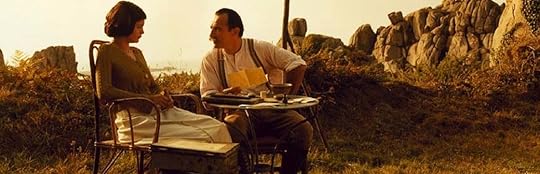
A lovely movie was made from this novel, starring Audrey Tautou - at the time where she seemed to be in every single movie French studios churned out. But as over-saturated as I was by her presence for awhile, I truly loved that film, which was perfectly cast, beautifully acted and shot in a splendid nostalgic style, down the sepia tone of the light and colors.
In this intricately plotted novel, Japrisot tells the story of Mathilde, a wheelchair-bound painter from Cap Breton, who's beloved fiancé Manech is sent to the Great War. All the is told is that he is dead, but she refuses to accept such a simple statement; she needs to know when and how. As she digs for information about her fiancé, she discovers the convoluted tale of a small detachment of soldiers who deliberately mutilated themselves, and as punishment for their act of "cowardice", were pushed into No Man's Land, between the French and German trenches, where it was hoped they would get shot by enemy fire. Was Manech there? Is that how he died?
Mathilde will learn the story of the other four soldiers who were with Manech in that dreadful trench, what their lives were before the War, and she will learn the story of the women they left behind and who also moved Heaven and Earth to get answers and justice for their loves.
This is quite a unique little book. The epistolary format works perfect, as Japrisot created strong individual voices for all his characters, and gives the reader and unusual leading lady that you can't help but root for. Mathilde is grouchy, stubborn, pushy and sometimes unkind and manipulative, but she is very intelligent and is, at the end of the day, motivated by the strength of her love and devotion for Manech. This makes her a lovable and admirable heroine - no wonder people want to help her as much as they can. The other characters are just as scuffed and quirky as she is, very human in their mistakes and regrets.
This book is as much about unraveling the mystery of the trench as it is about showing that the War destroyed much more than soldiers' bodies and minds, that every little aspect of life was impacted by its violent senselessness. And yes, there are moments where its a bit of a tear-jerker, but it's also comforting to read about the stubbornness of hope, and it's refusal to admit defeat.
It can be a confusing read at times, because characters often have multiple nicknames by which people refer to them, and the prose sometimes looses itself it attempts to be pretty (which it absolutely is, but you can take a breath every once in a while, Sébastien!), but its such a affecting tale, such a harrowing description of war without ever falling into the trap of garish details, that I feel bad taking away a single star from my rating. Evocative, moving and devastating.
A lovely movie was made from this novel, starring Audrey Tautou - at the time where she seemed to be in every single movie French studios churned out. But as over-saturated as I was by her presence for awhile, I truly loved that film, which was perfectly cast, beautifully acted and shot in a splendid nostalgic style, down the sepia tone of the light and colors.
March 24, 2026
La I Guerra Mondiale è terminata e ha lasciato dietro di sé sui campi di battaglia e tra le trincee ormai abbandonate una scia infinita di spoglie di giovani soldati mentre molti altri ancora affollano gli ospedali, martoriati da orrende ferite riportate in battaglia che ne hanno minato il fisico e altrettanti ossessionati da disturbi psichici che ne hanno ottenebrato le giovani menti languono negli ospedali psichiatrici tra improbabili miglioramenti e rapide ricadute.
Nella provincia francese la giovane Mathilde, costretta fin dall’infanzia su una sedia a rotelle a seguito di un banale trauma, non si rassegna al mancato ritorno a casa dell’amato fidanzato Jean Etchevery a cui si è promessa e non lascia nulla di intentato per ritrovarlo o per conoscere come, dove e quando è morto.
Romanzo di qualità, quest’opera di Sebastien Japrisot [1931-2003] imprigiona il lettore in una ragnatela di ricordi, scambi epistolari, confessioni, false testimonianze, depistaggi, incontri inattesi, aprendo uno squarcio impietoso sul dramma del primo conflitto mondiale del secolo scorso e racconta la volontà dei più di dimenticare a qualunque costo fino alla negazione non solo le turpitudini ma anche i quotidiani eroismi di una generazione di giovani mandati a morire in un dedalo di trincee.
Nella provincia francese la giovane Mathilde, costretta fin dall’infanzia su una sedia a rotelle a seguito di un banale trauma, non si rassegna al mancato ritorno a casa dell’amato fidanzato Jean Etchevery a cui si è promessa e non lascia nulla di intentato per ritrovarlo o per conoscere come, dove e quando è morto.
Romanzo di qualità, quest’opera di Sebastien Japrisot [1931-2003] imprigiona il lettore in una ragnatela di ricordi, scambi epistolari, confessioni, false testimonianze, depistaggi, incontri inattesi, aprendo uno squarcio impietoso sul dramma del primo conflitto mondiale del secolo scorso e racconta la volontà dei più di dimenticare a qualunque costo fino alla negazione non solo le turpitudini ma anche i quotidiani eroismi di una generazione di giovani mandati a morire in un dedalo di trincee.
April 7, 2026
Ai primi di gennaio del 1917 cinque soldati francesi accusati di autolesionismo - si sono feriti ad una mano per evitare il fronte - vengono condannati a morte. Anziché la fucilazione vengono abbandonati nella terra di nessuno fra le due trincee, con le mani legate dietro la schiena, destinati ad essere uccisi dal fuoco nemico. Per loro sarà una lunga e tragica domenica di passione, dove accadranno cose incredibili come costruire un pupazzo di neve in preda alla follia o abbattere un aereo con una bomba a mano. Il più giovane, Manech, non ha ancora vent'anni: un pescatore bretone fidanzato con Mathilde, costretta causa incidente su una carrozzella dall'età di tre anni; due sognatori che si erano conosciuti da bambini e innamorati crescendo. Mathilde non si rassegna alla morte del fidanzato e per anni indaga nella speranza che sia ancora vivo. Di famiglia benestante con un padre che non le nega nulla, muove mari e monti, ingaggia un avvocato e un investigatore privato, scrive lettere ai familiari degli altri condannati, si fa portare ovunque all'autista factotum - un secondo padre per lei - a intervistare chiunque era presente in quella maledetta domenica. Perché sempre lì si ritorna, alla trincea, alla terra di nessuno e a cinque disperati abbandonati a sé stessi. Stringe amicizie, si raccontano le vite, ordinarie e straordinarie, degli altri condannati, tra vendette e messaggi in codice. Leggendo mi tornava in mente il film dei primi anni duemila, qualche vaga immagine e il finale che è il medesimo ma non da compromettere la lettura. L'autore è stato anche regista cinematografico e sceneggiatore e sa come mantenere l'attenzione del lettore su una storia che altrimenti rischierebbe di impantanarsi. Gli orrori, terribili e stupidi orrori della guerra e la tenacia dell'amore che non vuole vedere interrotto un sogno, che tante cose possono capitare in una lunga domenica di passione. Non saprei come definirla se non semplicemente una bella storia, di quelle da leggere quando viene l'occasione. Quattro stelle.

November 21, 2018
This is a powerful novel which touches on how war can destroy the human psyche. As I read, I thought that each of us has a breaking point. Some reach that point sooner than others, and, if we're lucky, most of us never have to find out for ourselves what triggers it. The five men of the GR description reached their breaking point and chose self-mutilation in order to avoid further time at the front. Each has been court-martialed for that offense and sentenced to death. Instead of facing the firing squad, their sentence was to be sent over the top into No Mans' land to await their discovery by the Germans.
The novel is mostly taken up with the story of one young woman, Mathilde Donnay, who was engaged to the youngest of the five. She, and the families of the other four, were notified of their loved one's death as having been honorable in the line of duty. Mathilde learns such may not have been the case. A determined woman, she tries to learn the truth of what happened that day.
I have read a few books of late where I didn't like any of the characters. This novel is quite the opposite - I liked everyone. Of course, there were some soldiers referred to who were not likeable, but they were not the actual characters in the book, just those spoken about. But while "the five" had reached their breaking point, there were heroes as well. I quite liked Mathilde, who had been in
a wheel chair since the age of three. Sylvain, one of her care givers, was marvelous. There were soldiers who had been there on "that day" who shared their memories - and not necessarily memories of themselves, but of others.
While I have given more plot than I usually do in my reviews, I never felt this was solely a plot-driven novel. Some might think so. The writing fits the story perfectly, and the manner in which the story is told is varied. Mathilde wrote letters, and though the contents of her letters are never included, we get the contents of her responders. I found the characterizations of the main characters to be quite good, and even those of the minor characters was more a good cameo than wooden representations.
I don't know if I would read more by this author or not, as I haven't looked to see anything about other titles or whether they have been translated. I wanted to read this novel in my pursuance of learning/experiencing more about World War One. It served that purpose magnificently, and am more than happy to give it a full 5-stars.
The novel is mostly taken up with the story of one young woman, Mathilde Donnay, who was engaged to the youngest of the five. She, and the families of the other four, were notified of their loved one's death as having been honorable in the line of duty. Mathilde learns such may not have been the case. A determined woman, she tries to learn the truth of what happened that day.
I have read a few books of late where I didn't like any of the characters. This novel is quite the opposite - I liked everyone. Of course, there were some soldiers referred to who were not likeable, but they were not the actual characters in the book, just those spoken about. But while "the five" had reached their breaking point, there were heroes as well. I quite liked Mathilde, who had been in
a wheel chair since the age of three. Sylvain, one of her care givers, was marvelous. There were soldiers who had been there on "that day" who shared their memories - and not necessarily memories of themselves, but of others.
While I have given more plot than I usually do in my reviews, I never felt this was solely a plot-driven novel. Some might think so. The writing fits the story perfectly, and the manner in which the story is told is varied. Mathilde wrote letters, and though the contents of her letters are never included, we get the contents of her responders. I found the characterizations of the main characters to be quite good, and even those of the minor characters was more a good cameo than wooden representations.
I don't know if I would read more by this author or not, as I haven't looked to see anything about other titles or whether they have been translated. I wanted to read this novel in my pursuance of learning/experiencing more about World War One. It served that purpose magnificently, and am more than happy to give it a full 5-stars.

May 3, 2021
‘A Very Long Engagement’ by Sébastien Japrisot is an intriguing mystery wrapped into a slightly obscured (until well into the novel) anti-war novel. I think World War I, which disrupts all of the characters’ lives, qualifies as not only a horrible war which never should have happened, it definitely was as some in my country crudely say, a meat-grinder. Most soldiers induced to fight in it for their various countries were treated as if they were nothing but single-use wipes being utilized by drunken generals.
The action relies heavily on the writing of epistles and flashbacks. I feel if the author had not used these elements the mystery would have been considerably less gripping. Not many recent authors, imho, can do epistolary novels without annoying readers by a sense of flow being disrupted or a feeling that the inclusion of epistles was unnecessary. But Japrisot used letters, telegrams and messages in a manner which increased anxiety and tension admirably! By the middle of the book I couldn’t put it down!
Mathilde Donney, the teenage main character, begins a quest to find out what really happened to her very young fiancé, Maneche, nineteen years old. Her grief on reading a notice that he died in action in 1917 is incredibly wrenching, a grief shared by many in France. But unlike the other characters we meet in the novel, Mathilde is fortunate to be the daughter of a wealthy man. Her father loves and indulges her. This may be because she has been in a wheelchair since she was a child. She fell off of a ladder and has never been able to walk despite a lot of medical care. However, Maneche, who was thirteen when she met him at age ten, has always adored her.
Mathilde begins her search for Maneche when a man who is dying from the Spanish flu in a hospital near her sends her a letter. He tells her that her fiancé was not killed in action but that she and four other families were lied to about the deaths of their loved ones. Maneche was convicted of self-mutilation along with the four other men. The French leaders, the sick man says, had decided to make an example of them because too many men were deserting or shooting themselves in their hands or feet to escape the dreadful carnage. After their convictions, they were sent back to the trenches. With their hands tied behind their backs, they were forced to crawl through the wire into the “no-man’s-land” between French and German trenches. The intention was that they suffer publicly in view of the other soldiers from their fear, and that they die horribly by either gunfire or bombs. The understanding of most of the witnesses is five bodies were removed several days later. But one witness states only four, or maybe three, were found. Maybe one of the missing bodies was Maneche, if there were bodies missing. Is Maneche alive?
Besides Mathilde’s fiancé, there was a farmer called only by the nickname That Man, a trade union Marxist called SixSous, a carpenter called Eskimo, and a pimp called Common Law. Each of them had given the hospitalized man, who had been in the trench where the men had been forced out into the no-man’s land, a letter to deliver to their families. The sick man had copied them before delivering them. He gave these copies to Mathilde. Mathilde decides to find all of recipients of the letters. She hires a lawyer and a private investigator. She puts an ad in local papers. The people she meets are incredibly interesting. Some are broken and some who despite their war losses have hopes Mathilde will solve the mystery of how their relatives really died.
She learns almost no one thinks, or wants to believe, any men were punished by being forced to go to their deaths in this cruel manner by their own country. Most people think the hospitalized man is lying. However, Mathilde slowly pieces together a clue here, a whispered confirmation there, a detail proving something totally off-the-rails happened. It also becomes clear that whatever happened was so reprehensible, it was hushed up.
Seven years later, she has most of the pieces. There are minor discrepancies in the stories and rumors she has uncovered (which is very fascinating and irksome, gentle reader), but everything leads inevitably to the reality that a terrible injustice was done. Still, Mathilde hopes the threads will lead her to Maneche whether it be his burial place or his hiding place.
I highly recommend ‘A Very Long Engagement’. It is a first-class mystery!
The action relies heavily on the writing of epistles and flashbacks. I feel if the author had not used these elements the mystery would have been considerably less gripping. Not many recent authors, imho, can do epistolary novels without annoying readers by a sense of flow being disrupted or a feeling that the inclusion of epistles was unnecessary. But Japrisot used letters, telegrams and messages in a manner which increased anxiety and tension admirably! By the middle of the book I couldn’t put it down!
Mathilde Donney, the teenage main character, begins a quest to find out what really happened to her very young fiancé, Maneche, nineteen years old. Her grief on reading a notice that he died in action in 1917 is incredibly wrenching, a grief shared by many in France. But unlike the other characters we meet in the novel, Mathilde is fortunate to be the daughter of a wealthy man. Her father loves and indulges her. This may be because she has been in a wheelchair since she was a child. She fell off of a ladder and has never been able to walk despite a lot of medical care. However, Maneche, who was thirteen when she met him at age ten, has always adored her.
Mathilde begins her search for Maneche when a man who is dying from the Spanish flu in a hospital near her sends her a letter. He tells her that her fiancé was not killed in action but that she and four other families were lied to about the deaths of their loved ones. Maneche was convicted of self-mutilation along with the four other men. The French leaders, the sick man says, had decided to make an example of them because too many men were deserting or shooting themselves in their hands or feet to escape the dreadful carnage. After their convictions, they were sent back to the trenches. With their hands tied behind their backs, they were forced to crawl through the wire into the “no-man’s-land” between French and German trenches. The intention was that they suffer publicly in view of the other soldiers from their fear, and that they die horribly by either gunfire or bombs. The understanding of most of the witnesses is five bodies were removed several days later. But one witness states only four, or maybe three, were found. Maybe one of the missing bodies was Maneche, if there were bodies missing. Is Maneche alive?
Besides Mathilde’s fiancé, there was a farmer called only by the nickname That Man, a trade union Marxist called SixSous, a carpenter called Eskimo, and a pimp called Common Law. Each of them had given the hospitalized man, who had been in the trench where the men had been forced out into the no-man’s land, a letter to deliver to their families. The sick man had copied them before delivering them. He gave these copies to Mathilde. Mathilde decides to find all of recipients of the letters. She hires a lawyer and a private investigator. She puts an ad in local papers. The people she meets are incredibly interesting. Some are broken and some who despite their war losses have hopes Mathilde will solve the mystery of how their relatives really died.
She learns almost no one thinks, or wants to believe, any men were punished by being forced to go to their deaths in this cruel manner by their own country. Most people think the hospitalized man is lying. However, Mathilde slowly pieces together a clue here, a whispered confirmation there, a detail proving something totally off-the-rails happened. It also becomes clear that whatever happened was so reprehensible, it was hushed up.
Seven years later, she has most of the pieces. There are minor discrepancies in the stories and rumors she has uncovered (which is very fascinating and irksome, gentle reader), but everything leads inevitably to the reality that a terrible injustice was done. Still, Mathilde hopes the threads will lead her to Maneche whether it be his burial place or his hiding place.
I highly recommend ‘A Very Long Engagement’. It is a first-class mystery!

July 3, 2015
Una novela que narra la historia de cinco soldados arrojados a la muerte y la búsqueda de la verdad por Matilde, novia de uno de ellos. Una historia que es como un puzzle y que a través del paso del tiempo podrá armarse.
Largo domingo de noviazgo (Un long dimanche de fiançailles, título original) es una novela escrita por el francés Sébastien Japrisot y publicada el 6 de septiembre de 1991 por primera vez. La novela ganó el Premio "Interallié" ese mismo año.
[El Premio Interallié (Prix Interallié), se concede desde el 3 de diciembre de 1930 a una novela en idioma francés. En esa fecha, un grupo de treinta periodistas que almorzaba en el club Cercle de l'Union interalliée de París, instituyó el premio cuando esperaban que las damas deliberaran en quién sería el ganador del Premio Femina. La ceremonia de entrega se realiza en el restaurante parisino Lasserre durante el mes de Noviembre y no tiene compensación económica].
Contratapa:
En el frío invierno de 1917, cinco soldados franceses, heridos y maniatados, caminan hacia un destino trágico en un desolado rincón del frente. Matilde sabe, en el fondo de su corazón, que su amado Manech sigue vivo, a pesar del telegrama que anunciaba que había caído en combate junto a tantos otros de sus camaradas. Una certeza que se mezcla con el horror y la indignación cuando, una vez acabada la guerra, un sargento moribundo le cuenta la verdad sobre la última vez en que vio a su novio: Manech y otros cuatro soldados, acusados de herirse a sí mismos para escapar del frente, fueron atados y abandonados en tierra de nadie. A partir de ese momento, Matilde emprende la búsqueda de la verdad. A lo largo de los años, armada de un coraje inquebrantable, irá escudriñando las vidas de aquel puñado de hombres entregados a la muerte. Descubrirá historias de amor, de culpa, de abandono, con el trasfondo siempre de la locura colectiva que llevó a los hombres a cometer las peores atrocidades en nombre de la patria. Una conmovedora historia de amor a través del tiempo, envuelta en un apasionante misterio que se va desvelando poco a poco, dejando al descubierto una tupida red de ilusiones, amor y desdicha.
Comentario:
"Erase una vez cinco soldados franceses que hacían la guerra, porque así son las cosas". Es así como inicia esta trágica, misteriosa y conmovedora historia de amor y drama compuesta de 14 capítulos y 373 páginas.
En la noche del sábado 6 de enero de 1917 bajo un crudo invierno cinco soldados franceses, heridos, con las manos atadas a la espalda, exhaustos y casi sin esperanzas de sobrevivir, son víctimas de una de las más crueles decisiones que el ejército francés procedió sobre sus propios soldados: abandonarlos a su suerte al reducido espacio comprendido entre los frentes franceses y alemanes, expuestos a una carnicería latente. Nos encontramos en el contexto histórico de la Primera Guerra Mundial.
Qué pasó exactamente con estos cinco soldados es una incógnita que se vuelve obsesiva para Matilde Donnay quien se pasará la vida buscando por todos los medios que esté a su alcance la verdad sobre el sábado 6 y domingo 7 de enero de ese año. Ella es novia del más joven de los cinco desgraciados.
Cada capítulo conduce a una pista nueva para desentrañar la verdad que busca Matilde. La novela se convierte en una especie de novela epistolar, ya que a través de las cartas que se intercambia Matilde con otros personajes relacionados al asunto poco a poco se irá entretejiendo la historia de aquellos cinco soldados franceses, de esta manera, Matilde intentará armar el puzzle para entender qué fue lo que le pasó a su novio en el frente de la trinchera Bingo Crepúsculo.
A través de dichas cartas Matilde se enterará de la vida de los otro cuatro soldados, vidas llenas de historias de amor, amistad, traición, culpa, celos, soledad, que me han conmovido, haciendo a estos personajes entrañables. Los personajes que más destaco son Matilde Donnay por su pasión y amor inquebrantable al paso del tiempo, Ese Hombre (Benoit Notre-Dame) por su inteligencia y fortaleza para conducirse ante la adversidad, Celestine Poux por su creatividad infinita para salir airoso incluso en el mismísimo infierno que es la guerra, Eskimo (Kleber) y Biscotte por su amistad y Tina Lombardi, por su rabiosa determinación para hacer justicia por sus propios medios pese a arriesgar su propia vida.
La obra expone el romanticismo de Matilde por buscar sin desmayo el paradero y destino de su novio alimentando sus esperanzas de encontrarle gracias al amor que siente por él, pero también la novela revela las consecuencias devastadoras que trajo la guerra para cada una de las almas humanas que la sufrieron directa e indirectamente. La obra, claramente denuncia el sin sentido de la guerra que lo destruye todo, la memoria, los sentimientos más nobles, una vida de dicha, el amor.
Una novela para releerse muchas veces. Recomendable.
Largo domingo de noviazgo (Un long dimanche de fiançailles, título original) es una novela escrita por el francés Sébastien Japrisot y publicada el 6 de septiembre de 1991 por primera vez. La novela ganó el Premio "Interallié" ese mismo año.
[El Premio Interallié (Prix Interallié), se concede desde el 3 de diciembre de 1930 a una novela en idioma francés. En esa fecha, un grupo de treinta periodistas que almorzaba en el club Cercle de l'Union interalliée de París, instituyó el premio cuando esperaban que las damas deliberaran en quién sería el ganador del Premio Femina. La ceremonia de entrega se realiza en el restaurante parisino Lasserre durante el mes de Noviembre y no tiene compensación económica].
Contratapa:
En el frío invierno de 1917, cinco soldados franceses, heridos y maniatados, caminan hacia un destino trágico en un desolado rincón del frente. Matilde sabe, en el fondo de su corazón, que su amado Manech sigue vivo, a pesar del telegrama que anunciaba que había caído en combate junto a tantos otros de sus camaradas. Una certeza que se mezcla con el horror y la indignación cuando, una vez acabada la guerra, un sargento moribundo le cuenta la verdad sobre la última vez en que vio a su novio: Manech y otros cuatro soldados, acusados de herirse a sí mismos para escapar del frente, fueron atados y abandonados en tierra de nadie. A partir de ese momento, Matilde emprende la búsqueda de la verdad. A lo largo de los años, armada de un coraje inquebrantable, irá escudriñando las vidas de aquel puñado de hombres entregados a la muerte. Descubrirá historias de amor, de culpa, de abandono, con el trasfondo siempre de la locura colectiva que llevó a los hombres a cometer las peores atrocidades en nombre de la patria. Una conmovedora historia de amor a través del tiempo, envuelta en un apasionante misterio que se va desvelando poco a poco, dejando al descubierto una tupida red de ilusiones, amor y desdicha.
Comentario:
"Erase una vez cinco soldados franceses que hacían la guerra, porque así son las cosas". Es así como inicia esta trágica, misteriosa y conmovedora historia de amor y drama compuesta de 14 capítulos y 373 páginas.
En la noche del sábado 6 de enero de 1917 bajo un crudo invierno cinco soldados franceses, heridos, con las manos atadas a la espalda, exhaustos y casi sin esperanzas de sobrevivir, son víctimas de una de las más crueles decisiones que el ejército francés procedió sobre sus propios soldados: abandonarlos a su suerte al reducido espacio comprendido entre los frentes franceses y alemanes, expuestos a una carnicería latente. Nos encontramos en el contexto histórico de la Primera Guerra Mundial.
Qué pasó exactamente con estos cinco soldados es una incógnita que se vuelve obsesiva para Matilde Donnay quien se pasará la vida buscando por todos los medios que esté a su alcance la verdad sobre el sábado 6 y domingo 7 de enero de ese año. Ella es novia del más joven de los cinco desgraciados.
Cada capítulo conduce a una pista nueva para desentrañar la verdad que busca Matilde. La novela se convierte en una especie de novela epistolar, ya que a través de las cartas que se intercambia Matilde con otros personajes relacionados al asunto poco a poco se irá entretejiendo la historia de aquellos cinco soldados franceses, de esta manera, Matilde intentará armar el puzzle para entender qué fue lo que le pasó a su novio en el frente de la trinchera Bingo Crepúsculo.
A través de dichas cartas Matilde se enterará de la vida de los otro cuatro soldados, vidas llenas de historias de amor, amistad, traición, culpa, celos, soledad, que me han conmovido, haciendo a estos personajes entrañables. Los personajes que más destaco son Matilde Donnay por su pasión y amor inquebrantable al paso del tiempo, Ese Hombre (Benoit Notre-Dame) por su inteligencia y fortaleza para conducirse ante la adversidad, Celestine Poux por su creatividad infinita para salir airoso incluso en el mismísimo infierno que es la guerra, Eskimo (Kleber) y Biscotte por su amistad y Tina Lombardi, por su rabiosa determinación para hacer justicia por sus propios medios pese a arriesgar su propia vida.
La obra expone el romanticismo de Matilde por buscar sin desmayo el paradero y destino de su novio alimentando sus esperanzas de encontrarle gracias al amor que siente por él, pero también la novela revela las consecuencias devastadoras que trajo la guerra para cada una de las almas humanas que la sufrieron directa e indirectamente. La obra, claramente denuncia el sin sentido de la guerra que lo destruye todo, la memoria, los sentimientos más nobles, una vida de dicha, el amor.
Una novela para releerse muchas veces. Recomendable.

February 18, 2019
Loved it! E un altfel de roman de dragoste, cu o construcție ingenioasă și care devine, treptat, o anchetă polițistă a anchetării dispariției logodnicului pierdut în război. Finalul e oarecum previzibil în sensul că ajungi să înțelegi, de pe undeva de la jumătatea cărții, că naratorul încearcă să te trimită pe o pistă falsă pentru a dezvălui la final cât de tare te-ai înșela - e o rețetă clasică în romanele polițiste. Cu toate astea, nu am putut să o las din mână și am citit-o într-o zi și câteva ore.

August 14, 2018
I recall being profoundly moved by this book, and the turmoil of its characters. I read it many, many years ago (likely around the time of the film release) and enjoyed it so much more than I expected. It's well written and creates a really beautiful story.

November 14, 2018
”Singurul stăpân al lumii este timpul.”

May 11, 2009
I LOVED this book. And I loved the main character, Mathilde, more than just about any character in any book I've ever read. She is strong, sarcastic, always gets what she wants, and has a good sense of humor. Mathilde, despite her sarcasm and pig-headedness seems to inspire devotion in everyone she meets. How could you not admire someone who accomplishes as much as she does despite being in a wheelchair? How can you not admire her devotion to Manech? She would not rest until she got to the bottom of what happened to him. And the mystery of what happened to Manech and four other soldiers who were thrown into No-Man's Land by their own leaders keeps you reading on and on. There are so many different versions of what happened that Mathilde's investigation is constantly taking one step forward and two steps back. But there's a constant feeling of momentum--you know Mathilde will get to the bottom of this. As time goes on she gets closer to solving the mystery by meeting people who are closer to what finally happened to Manech. This is such a wonderful story of love and devotion, but don't worry, it never gets sappy. Mathilde would have hated that!

January 27, 2012
I've been reviewing for over 5 years. In that time, there is only one book that I ever started that I did not finish. Well, now that number is increasing to two.
I won't give a summary as many, many others have given a really detailed summary that is far better than anything I could ever have done justice to. Instead, let me tell you why I stopped at page 113 and why I have no inclination to finish this book.
The first twenty pages are spent introducing five soldiers--their names, their prison numbers, their family, their main characteristics. The next thirty or so pages are spent reintroducing those five soldiers and continuing a few moments ahead in their story. And finally, at page 60, we are introduced, in a large, very exposition-heavy 5 page section, our main character.
I found the writing is terribly confusing. I don't know if it was meant to be that way, or if that is a fault of translating from French, or maybe I am just plain stupid, but sentences sounded weird, the writing was dense, and I had to start skimming in order to make any progress in this book. The book is written in present tense, but that felt more unwieldy and clumsy than some YA books I've read. Sections switched points of view sometimes without a section break, leading from first-person to third-person in just a paragraph. And it seems an omniscient narrator is dictating this...except for a few places where I thought it was Mathilde.
The characters are painfully dull. First of all, I could hardly keep them all straight. They were like a deck of only red cards, which the author flashed at me. I couldn't tell who was a diamond, who was a heart, if that person was a 3 of hearts or perhaps a 6 of diamonds. The characters were so flat, it would be a compliment to call them two-dimensional. About the only one I cared for was the soldier wrongfully accused of self-mutilation...and I have absolutely no idea what his name is or who he is beyond that he didn't self-mutilate and was wrongfully charged. Mathilde was a horrible character, in my opinion. She was stiff, unlikeable (calling random people "sh!t kicker" is NOT a way to endear a character to me), and oddly characterized. I don't mind having a woman proud of her body, but this passage just doesn't sound like any woman I know:
"She has very lovely breasts. She's proud of them: they're heavy, well-rounded, and softer than silk. When she caresses her nipples she soon feels like making love. She makes love all by herself."
Male fantasy? Bad translation? A very, extremely confident woman? I don't have a clue.
Mathilde exchanges letters with various people. These people are startlingly open about their private lives, sometimes going on pages and pages (when they supposedly aren't big on writing) to detail every last detail of that person's life to a complete stranger.
The story is supposed to be about a mystery, but it really didn't kick into gear until the last 20 pages that I read. Even then, I have no drive to figure it out. I predict one of three outcomes: 1) Mathilde finds Manech and reunites (sure, a litfic book is really going to choose the "happily ever after" ending), 2) Mathilde finds Manech and doesn't reunite (most likely), and 3) Mathilde finds Manech dead (too depressing, even for a litfic book). It doesn't really matter what ending will be chosen. Lessons will be Learned; People will Change; Morals will be Passed on.
And this is why I am giving up on this book. There is no way I can force myself to read another page, and with so many other better books out there, I am going to pass on this one.
HOWEVER, just because I didn't like it, doesn't mean it's horrible. I rated it 2 stars because "I didn't like it"; I'm sure lots of people who love mysteries, historicals, and books about World War I will love this. To them, I say, go ahead and give this book a try. I hope you have a much more enjoyable read than I did.
I won't give a summary as many, many others have given a really detailed summary that is far better than anything I could ever have done justice to. Instead, let me tell you why I stopped at page 113 and why I have no inclination to finish this book.
The first twenty pages are spent introducing five soldiers--their names, their prison numbers, their family, their main characteristics. The next thirty or so pages are spent reintroducing those five soldiers and continuing a few moments ahead in their story. And finally, at page 60, we are introduced, in a large, very exposition-heavy 5 page section, our main character.
I found the writing is terribly confusing. I don't know if it was meant to be that way, or if that is a fault of translating from French, or maybe I am just plain stupid, but sentences sounded weird, the writing was dense, and I had to start skimming in order to make any progress in this book. The book is written in present tense, but that felt more unwieldy and clumsy than some YA books I've read. Sections switched points of view sometimes without a section break, leading from first-person to third-person in just a paragraph. And it seems an omniscient narrator is dictating this...except for a few places where I thought it was Mathilde.
The characters are painfully dull. First of all, I could hardly keep them all straight. They were like a deck of only red cards, which the author flashed at me. I couldn't tell who was a diamond, who was a heart, if that person was a 3 of hearts or perhaps a 6 of diamonds. The characters were so flat, it would be a compliment to call them two-dimensional. About the only one I cared for was the soldier wrongfully accused of self-mutilation...and I have absolutely no idea what his name is or who he is beyond that he didn't self-mutilate and was wrongfully charged. Mathilde was a horrible character, in my opinion. She was stiff, unlikeable (calling random people "sh!t kicker" is NOT a way to endear a character to me), and oddly characterized. I don't mind having a woman proud of her body, but this passage just doesn't sound like any woman I know:
"She has very lovely breasts. She's proud of them: they're heavy, well-rounded, and softer than silk. When she caresses her nipples she soon feels like making love. She makes love all by herself."
Male fantasy? Bad translation? A very, extremely confident woman? I don't have a clue.
Mathilde exchanges letters with various people. These people are startlingly open about their private lives, sometimes going on pages and pages (when they supposedly aren't big on writing) to detail every last detail of that person's life to a complete stranger.
The story is supposed to be about a mystery, but it really didn't kick into gear until the last 20 pages that I read. Even then, I have no drive to figure it out. I predict one of three outcomes: 1) Mathilde finds Manech and reunites (sure, a litfic book is really going to choose the "happily ever after" ending), 2) Mathilde finds Manech and doesn't reunite (most likely), and 3) Mathilde finds Manech dead (too depressing, even for a litfic book). It doesn't really matter what ending will be chosen. Lessons will be Learned; People will Change; Morals will be Passed on.
And this is why I am giving up on this book. There is no way I can force myself to read another page, and with so many other better books out there, I am going to pass on this one.
HOWEVER, just because I didn't like it, doesn't mean it's horrible. I rated it 2 stars because "I didn't like it"; I'm sure lots of people who love mysteries, historicals, and books about World War I will love this. To them, I say, go ahead and give this book a try. I hope you have a much more enjoyable read than I did.

April 29, 2021
I'm glad I read this story of the ravages of war before, during and after WWI in France. It revolves around a group of 5 French soldiers who were tried and convicted of wounding themselves in order to be sent home. Their punishment was to be put out into no-man's land to let the enemy do the dirty work of executing them. The youngest of the bunch was engaged to a young woman from his village in Cape Breton, who learns of this and who doesn't believe that her fiancé was actually killed. The book shuttles back and forth from the horrific account of the trenches to the the young woman, Mathilde, searching desperately for evidence that her love, Menach, is still alive.
So why not more than three stars? I liked this book and at times it was thrilling! With that said, I had the hardest time keeping track of the characters - who they were, where they were from and who knew them in their civilian lives. I'm so glad to have had the chance to chat with others who read this to get a variety of perspectives. I can highly recommend the movie of the same name starring Audrey Tatou and much of the cast and crew from her more famous movie, Amelie.
Why I'm reading this: When the Mystery, Crime and Thriller group called for nominations for books set during wartime, I asked a friend who is somewhat of a specialist in WWI books. She recommended this, I nominated it and it got picked for the May group read,
So why not more than three stars? I liked this book and at times it was thrilling! With that said, I had the hardest time keeping track of the characters - who they were, where they were from and who knew them in their civilian lives. I'm so glad to have had the chance to chat with others who read this to get a variety of perspectives. I can highly recommend the movie of the same name starring Audrey Tatou and much of the cast and crew from her more famous movie, Amelie.
Why I'm reading this: When the Mystery, Crime and Thriller group called for nominations for books set during wartime, I asked a friend who is somewhat of a specialist in WWI books. She recommended this, I nominated it and it got picked for the May group read,

August 14, 2008
Perhaps this is better in the original French? It opens promisingly enough: on a dark January night in 1917, five soldiers are hauled up to the bizarrely named Bingo Crépuscule trench and forced into No Man’s Land as punishment for wounding themselves in order to get out of the war. Ostensibly, by the next day all are killed by German fire. However, a letter sent in 1919 to the fiancée of one of the dead soldiers leads her to believe otherwise. She embarks on a search to trace anyone who might know what actually happened, a search made both more difficult and more interesting by her physical limitations (she’s wheelchair bound) and the devastation of post-war France.
Mathilde’s search is certainly intriguing, if a bit circuitous. Also intriguing are the unfolding stories of the five soldiers' lives and war time service. However, some of the characters are a bit coarse. It’s a decent mystery and an interesting look into the nightmare of World War I, but not the most compelling novel I’ve ever read.
Mathilde’s search is certainly intriguing, if a bit circuitous. Also intriguing are the unfolding stories of the five soldiers' lives and war time service. However, some of the characters are a bit coarse. It’s a decent mystery and an interesting look into the nightmare of World War I, but not the most compelling novel I’ve ever read.

September 19, 2020
While there is a cornucopia of novels out there about World War II, stories about The Great War are just a bit harder to find. Told in a deeply atmospheric style, as if remembering a dream, or looking at color photos faded to sepia, this tale “stuck” with me for months after putting it down.
I learned so much from this novel – things that should be taught in World History class, or perhaps were and I just forgot. Wild poppies in France. No Man’s Land. Deserters and self-induced injuries or purposeful recklessness. The called it The War to End All Wars and you certainly feel that when reading.
If you love historical fiction, a novel that transports you to another time, or learning history told through the lense of fiction, then I highly recommend “A Very Long Engagement”.
I learned so much from this novel – things that should be taught in World History class, or perhaps were and I just forgot. Wild poppies in France. No Man’s Land. Deserters and self-induced injuries or purposeful recklessness. The called it The War to End All Wars and you certainly feel that when reading.
If you love historical fiction, a novel that transports you to another time, or learning history told through the lense of fiction, then I highly recommend “A Very Long Engagement”.

January 31, 2023
Ideea in sine mi-a placut, insa cartea este foarte greu de parcurs din cauza numeroaselor personaje, a legăturii dintre ele si a succesiunii ulterioare a evenimentelor.
De multe ori am simtit nevoia sa renunt, insa m-am incapatanat sa o duc pana la capat.
Actiunea debutează in timpul Primului Război Mondial, in anul 1917, in Franta unde 5 soldati, lupta pentru supraviețuire in tranșeele inamicului.
Printre acestia se afla si Mathieu, logodnicul tinerei Mathilde, care dispare fara urma in timpul razboiului si pe care aceasta Incearca neobosita sa il găsească, pe parcursul a mai multi ani, punând cap la cap piesele unui puzzle complicat si întortocheat.
De multe ori am simtit nevoia sa renunt, insa m-am incapatanat sa o duc pana la capat.
Actiunea debutează in timpul Primului Război Mondial, in anul 1917, in Franta unde 5 soldati, lupta pentru supraviețuire in tranșeele inamicului.
Printre acestia se afla si Mathieu, logodnicul tinerei Mathilde, care dispare fara urma in timpul razboiului si pe care aceasta Incearca neobosita sa il găsească, pe parcursul a mai multi ani, punând cap la cap piesele unui puzzle complicat si întortocheat.

February 18, 2020
I halfway through this book had lost much of the enthusiasm that I had at the beginning of the book. The premise was interesting – that five French soldiers in WWI who intentionally shot themselves in the hand so they could get discharged and avoid getting killed in the trenches in the senseless bloody trench warfare got sentences of death imposed on them and rather than execution by firing squad were sent to the front lines with their hands tied behind their back and sent into no-man’s land presumably to get butchered up by bullets from the Germans in the opposite trenches (or by their own countrymen firing at the Germans). But did things turn out that way? Did they all die?
That was what a fiancé, Mathilde, a fiancé of one of the soldiers, Manech, asked, and was not swayed by the evidence that trickled back to her over several years from various sources via letters or visits to others or employing detectives. She was not convinced of his death at least in the manner that was told to her in dribs and drabs. At first the letters and visitors with their reminisces were interesting but then there were just too many of them. It was hard to keep track of them all (letters, visitors) and to put them in some sort of accumulating body of evidence. Clues were surreptitiously thrown in throughout the chapters, but not of enough substance to make things click, and so I was at that stage that I sometimes reach with books: “Screw it. I’ve read this far, and I just want to get this over with.” But then some things were revealed near the end of the book (the chapter, The Sunflowers at the End of the World), and a number of things all of a sudden made sense. And I liked how the book ended. And so the book to me changed from a book I did not like to a book that was OK.
But that is not why I read - to have a mindset through a good deal of the book that I don’t like it and I just want it to end.
I have a suspicion I am in the minority on this one (judging from book reviews I am). I do not think the author should have disclosed something that was important about the letters rather late in the book: that soldiers when writing back to their loved ones would often write in code to avoid their letters getting edits or destroyed by censors. Perhaps then as I read many of the letters in the beginning I could at least be assuaged by the fact that later on in the book the confusing letters would all of a sudden make sense. I don’t know – I don’t even think that would help. Confusing letters are confusing letters. I at best can give this book a tepid like (2 stars).
Why I think I am in the minority is that the summary on the back cover of the book stated that this was a runaway bestseller in France and the winner of the 1991 Prix Interallie, as well as the accolades on the front pages of the book before the actual novel begins. One reviewer says “It has been a battle to avoid writing of Sebastien Japrisot’s novel about World War I as a kind of latter-day ‘War and Peace’. I lost. It is a kind of ‘War and Peace’.” (Richard Eder, LA Times Book Review).
Other reviews: https://www.independent.co.uk/arts-en...
JimZ: This reviewer from The Independent (UK) when waxing poetic about this book had this to say halfway through the review which perhaps will exonerate me and my tepid rating of this book: “Every detail in the patchwork has its relevance, and the reader who fails to give the book full concentration will soon be floundering.” I guess I was one of those inept readers who failed to give this book at the outset and throughout my full and rapt attention. ☹
https://www.nytimes.com/1993/09/21/bo...
This book was also made into a movie (starring Audrey Tautou) that received uniformly good reviews.
That was what a fiancé, Mathilde, a fiancé of one of the soldiers, Manech, asked, and was not swayed by the evidence that trickled back to her over several years from various sources via letters or visits to others or employing detectives. She was not convinced of his death at least in the manner that was told to her in dribs and drabs. At first the letters and visitors with their reminisces were interesting but then there were just too many of them. It was hard to keep track of them all (letters, visitors) and to put them in some sort of accumulating body of evidence. Clues were surreptitiously thrown in throughout the chapters, but not of enough substance to make things click, and so I was at that stage that I sometimes reach with books: “Screw it. I’ve read this far, and I just want to get this over with.” But then some things were revealed near the end of the book (the chapter, The Sunflowers at the End of the World), and a number of things all of a sudden made sense. And I liked how the book ended. And so the book to me changed from a book I did not like to a book that was OK.
But that is not why I read - to have a mindset through a good deal of the book that I don’t like it and I just want it to end.
I have a suspicion I am in the minority on this one (judging from book reviews I am). I do not think the author should have disclosed something that was important about the letters rather late in the book: that soldiers when writing back to their loved ones would often write in code to avoid their letters getting edits or destroyed by censors. Perhaps then as I read many of the letters in the beginning I could at least be assuaged by the fact that later on in the book the confusing letters would all of a sudden make sense. I don’t know – I don’t even think that would help. Confusing letters are confusing letters. I at best can give this book a tepid like (2 stars).
Why I think I am in the minority is that the summary on the back cover of the book stated that this was a runaway bestseller in France and the winner of the 1991 Prix Interallie, as well as the accolades on the front pages of the book before the actual novel begins. One reviewer says “It has been a battle to avoid writing of Sebastien Japrisot’s novel about World War I as a kind of latter-day ‘War and Peace’. I lost. It is a kind of ‘War and Peace’.” (Richard Eder, LA Times Book Review).
Other reviews: https://www.independent.co.uk/arts-en...
JimZ: This reviewer from The Independent (UK) when waxing poetic about this book had this to say halfway through the review which perhaps will exonerate me and my tepid rating of this book: “Every detail in the patchwork has its relevance, and the reader who fails to give the book full concentration will soon be floundering.” I guess I was one of those inept readers who failed to give this book at the outset and throughout my full and rapt attention. ☹
https://www.nytimes.com/1993/09/21/bo...
This book was also made into a movie (starring Audrey Tautou) that received uniformly good reviews.

June 27, 2021
Five men worn out by the carnage of the Somme take the drastic decision to shoot themselves in the hand. Each man is found guilty at court-martial and rather than lined up in front a firing squad are sentenced to be abandoned at night with their hands tied in no-mans-land between the opposing trenches. The five French soldiers are reportedly killed in battle but after the war, a dying solder raises doubts about their demise and suggests that at least one of them may have survived.
Mathilde Donnay, confined to a wheelchair after a childhood accident and the fiancée of the youngest victim, Manech, sets out to discover the truth about what happened that night. The book consequently isn't really a war story (although it is obviously written with that as it's backdrop) but rather one about the determination and resolve of a young woman to uncover the facts.
The novel was initially written in French before being translated into English contains a large cast of characters each adding a fragment to the whole rather like a jigsaw puzzle. As a reader you must either really concentrate or simply go with the flow in the hope that you get the gist of it. Yet despite the complex nature of the plot it ticks along at a decent pace.
The mud and fear that pervaded the trenches in France also pervade this novel. Readers can understand why a few soldiers thought that shooting themselves in the hand might be their ticket out of the madness. As Mathilde traces their stories and meets their families and friends, she shows us that memories that exist after such life changing events are not always totally trustworthy, the so called 'fog of war'. The depictions of the battlefield horrors are pretty graphic as are the psychological effects on the soldiers who were there and the resilience of people who must rebuild their lives in its aftermath. However, each topic is covered sympathetically and are lightened by interludes of subtle humour.
“A glass of wine taken with dinner makes doctor’s purse a little thinner.”
As stated previously there is a large cast of characters some of whom, like Tina and Celestine, are memorable but the weight of the book rests on Mathilde's shoulders and its here that I have a few minor gripes. I just couldn't make my mind up about her. At times I found her plucky and sympathetic but at others demanding and spoilt but I think that everyone can admire is her determination and will root for her as the tale nears its conclusion.
On the whole I found this a thoroughly enjoyable book from and author of whom I previously knew nothing about. Perhaps the over-riding message of this book is that hope and despair are often the flip sides of the same coin both for those who go off to fight but also those who must stay behind.
Mathilde Donnay, confined to a wheelchair after a childhood accident and the fiancée of the youngest victim, Manech, sets out to discover the truth about what happened that night. The book consequently isn't really a war story (although it is obviously written with that as it's backdrop) but rather one about the determination and resolve of a young woman to uncover the facts.
The novel was initially written in French before being translated into English contains a large cast of characters each adding a fragment to the whole rather like a jigsaw puzzle. As a reader you must either really concentrate or simply go with the flow in the hope that you get the gist of it. Yet despite the complex nature of the plot it ticks along at a decent pace.
The mud and fear that pervaded the trenches in France also pervade this novel. Readers can understand why a few soldiers thought that shooting themselves in the hand might be their ticket out of the madness. As Mathilde traces their stories and meets their families and friends, she shows us that memories that exist after such life changing events are not always totally trustworthy, the so called 'fog of war'. The depictions of the battlefield horrors are pretty graphic as are the psychological effects on the soldiers who were there and the resilience of people who must rebuild their lives in its aftermath. However, each topic is covered sympathetically and are lightened by interludes of subtle humour.
“A glass of wine taken with dinner makes doctor’s purse a little thinner.”
As stated previously there is a large cast of characters some of whom, like Tina and Celestine, are memorable but the weight of the book rests on Mathilde's shoulders and its here that I have a few minor gripes. I just couldn't make my mind up about her. At times I found her plucky and sympathetic but at others demanding and spoilt but I think that everyone can admire is her determination and will root for her as the tale nears its conclusion.
On the whole I found this a thoroughly enjoyable book from and author of whom I previously knew nothing about. Perhaps the over-riding message of this book is that hope and despair are often the flip sides of the same coin both for those who go off to fight but also those who must stay behind.

November 14, 2018
Nu prea știu unde să o încadrez exact, undeva între roman polițist și dramă amestecată cu romantism, dar nu un romantism dulce-dulce, ci unul din vremuri apuse, când oamenii foloseau scrisori și credeau în așteptarea omului iubit. Dacă sunteți o fire mai sensibilă și delicată, cred că o să apreciați îndârjirea de care dă dovadă Mathilde și refuzul ei de a renunța la căutări și veți fi impresionați de cum sunt descrise efectele pe care le-a avut un război nedrept asupra celor fără de vină, asupra tuturor, până la urmă. O logodnă foarte lungă este, de fapt, (despre) o căutare foarte lungă, o iubire care transcede timpul, frontul și tot ce îi stă în cale și care se agață de orice ar putea anula pierderea persoanei iubite. Recenzia aici: https://sandradeaconu.blogspot.com/20....
,, Pe deasupra, în război, fiecare are colțișorul lui de griji, mizerii mărunte, mici bucurii, nu vezi decât frânturi din ce se petrece și nu mai departe de sfârșitul corvezii de moment. ''
,, Pe deasupra, în război, fiecare are colțișorul lui de griji, mizerii mărunte, mici bucurii, nu vezi decât frânturi din ce se petrece și nu mai departe de sfârșitul corvezii de moment. ''

October 17, 2011
Amazing Japrisot, such story. It almost didn't fit my small mind. I had to read it, then watch the movie (sublime, by the way - by Jean Pierre Jeunet), and then read it again in order to understand both book and movie. It took me some time until I realize who was who - so many names, so many nicknames to these names - and it finally hit me: how genious this author can be. Amazing the way it all made sense in the end. Educating. Thrilling. I always go back to the last scene of the film, and it makes me shiver every time.

February 5, 2019
Iniziato un po' di tempo fa, ma mollato dopo una quindicina di pagine, quest'anno, forse influenzata dal centenario della fine del primo conflitto mondiale, ho deciso di prenderlo in mano e darle un'altra opportunità. E sono felice di averlo fatto.
Il romanzo inizia con il tipico incipit che ogni fiaba degna di questo nome possiede: “C'erano una volta cinque soldati...”; un inizio fiabesco che in questo caso però è ben lontano dalla realtà che verrà raccontata.
Francia, una domenica di gennaio del 1917, sul fronte della Somme. Cinque soldati per fuggire all'inferno della guerra ed essere rimandati a casa, si feriscono volontariamente alla mano; dopo essere stati scoperti, processati e riconosciuti colpevoli per codardia e mutilazione volontaria, vengono condannati non alla fucilazione come traditori, ma a qualcosa di peggio: l'esecuzione della pena è “lasciata” al nemico, infatti, verranno portati nella terra di nessuno tra le due trincee nemiche e abbandonati lì. Una condanna questa, che i vertici militari ritengono possa servire da esempio per gli altri soldati che avessero in mente fare la stessa cosa.
Due anni dopo, un ufficiale che è stato testimone dei fatti e ha scortato i prigionieri sul luogo stabilito, scrive una lettera a Mathilde (fidanzata di uno dei cinque soldati) chiedendole di incontrarsi. Il reduce, che ormai ha poco da vivere perché gravemente malato di spagnola, le racconta di quel compito ingrato che ha dovuto eseguire; gli consegna le ultime lettere che ognuno di loro ha scritto e che lui stesso ha raccolto per inoltrarle alle famiglie, una fotografia dei cinque condannati, ma soprattutto le dice che molto probabilmente uno dei cinque soldati condannati è sopravvissuto a quell'inferno, anche se non si sa chi possa essere.
Partendo da questa esile traccia, Mathilde, che in cuor suo ha sempre saputo che il suo fidanzato fosse ancora in vita, si mette alla ricerca della verità di cosa accade realmente quella tragica domenica di gennaio del 1917 nella trincea di Bingo Crepuscolo.
Non ricordo bene come questo titolo mi sia entrato in testa e perché abbia desiderato leggerlo; magari ne ho sentito parlare durante l'imminente uscita del film che ne stato tratto; o forse perché è ambientato durante la prima guerra mondiale, periodo che mi appassiona molto e in cui sono stati ambientati altri libri che ho letto precedentemente. Quando l'ho trovato tra gli usati l'ho preso al volo (anche perché ormai è un po' difficile da trovare) ma, nonostante l'entusiasmo iniziale, per un po' di tempo è rimasto tra i libri da leggere perché temevo fosse un po' noioso.
Quanto mi sbagliavo.
Per scrivere questo libro, lo scrittore francese si è documentato per alcuni anni sul primo conflitto mondiale; ha visitato i luoghi dello scontro, ha letto dispacci militari, resoconti, testimonianze, lettere, racconti dei soldati impegnati al fronte.
La domenica del titolo non è altro che la “lunga domenica di fidanzamento” (questo il titolo originale) tra Mathilde e Manech, l'ultima che ha visto in vita il ragazzo sul fronte francese prima che le sue tracce fossero andate perse. Il legame che unisce i due giovani, prossimi alle nozze, è molto forte; ed è proprio questo legame che mette in moto tutta la vicenda. Mathilde, fedele al suo fidanzato, invece di rassegnarsi alla sua morte e andare avanti nella vita, (come le consigliano la maggior parte delle persone) grazie all'informazione ricevuta, inizia nel 1919 una lunga ricerca (che durerà anni) su cosa sia veramente accaduto al suo uomo in quella fredda domenica di gennaio, e soprattutto trovare qualche informazione che le assicuri quel che in cuor suo ha sempre saputo: che Manech è sopravvissuto e lo si deve solo cercare.
Mathilde (detta Matti) è sicuramente uno dei personaggi femminili più incredibili della letteratura mondiale. Nonostante sia molto giovane, costretta su una sedia rotelle sin dall'infanzia a causa di uno sfortunato incidente, non si crogiola nella sua infermità. Di famiglia benestante, è una ragazza molto pratica che detesta la pietà, impedisce agli altri di compatirla, e non considera la sedia a rotelle come un vero e proprio ostacolo. Mathilde è di indole allegra, ama dipingere i fiori e la natura, vive in una bella casa nella campagna francese circondata dai gatti, dai suoi familiari e dalla servitù che per lei sono come un'altra famiglia; è una ragazza determinata, testarda, orgogliosa, che possiede una grande forza di volontà e una tenacia incredibile; non accetta la morte del suo grande amore, lo aspetta, non perde la speranza che possa essere vivo e si mette alla ricerca della verità su cosa sia successo in quella maledetta trincea.
Mathilde, vera protagonista del romanzo, nella sua perenne ricerca della verità ripercorre i fili delle cinque storie per trovare la verità; conosce persone legate agli altri soldati (imbattendosi nella meschinità e ipocrisia di alcuni e nella rispettabilità di altri), mette annunci sui giornali, scrive e riceve lettere, viaggia, riceve ospiti nella casa di campagna dove vive; a poco a poco scava e ricostruisce la vita dei cinque condannati ad una morte insensata per capire cosa sia successo al suo Manech; incontra avvocati, investigatori privati, ex soldati e ufficiali, madri disperate, sorelle sconsolate, vedove scoraggiate, prostitute divenute assassine per amore.
Mathilde, collega gli elementi, elabora nuove teorie e strategie, scova particolari trascurati, coinvolge l'avvocato di famiglia e l'investigatore privato nelle sue intuizioni; nel corso degli anni, anche se le versioni sono contrastanti, non perde la fiducia e lentamente riesce a ricostruire cosa è realmente accaduto quella maledetta domenica dopo che la trincea è stata teatro di un duro scontro tra gli schieramenti opposti. Si convince che sicuramente uno dei cinque è scampato al massacro, e forse non è stato il solo a farlo.
Il lettore è al fianco di Mathilde in questa estenuante ricerca, nei momenti di scoramento, di fiducia, di speranza, quando riannoda o cerca di districare il filo che la lega a Manech.
Manech è un giovane pescatore di Cap Breton, buono e generoso, e quando viene mandato al fronte ha soltanto vent'anni. Soprannominato Bluet (fiordaliso) dagli altri soldati, poiché fa parte dell'ultima “classe” chiamata alle armi composta da giovani che sembrano quasi dei bambini, durante una giornata di combattimento al fronte, dopo lo scoppio di una granata, viene investito dai brandelli di carne e sangue di un compagno colpito; da allora in poi inizia ad avere paura di tutto soprattutto dei rumori forti (oggi questa paura è chiamata sindrome da stress post traumatico, ma in quel periodo questa sindrome non si conosceva ancora); pur di scampare a quella carneficina e tornare subito a casa, Manech prima cerca di avvelenarsi poi di farsi ferire dai tedeschi della trincea di fronte, e infine arriva ad auto – mutilarsi alla mano. Egli in fondo è colpevole solo di aver tentato di scappare da quell'inferno, chiamato guerra (chi lo può biasimare); infatti, quando viene condannato con gli altri quattro e soprattutto durante il cammino verso quella maledetta trincea, qualcosa dentro di lui si spezza inesorabilmente e perde la memoria e la ragione.
Alla storia di Mathilde e Manech si intrecciano le storie degli altri quattro soldati che erano in compagnia di quest'ultimo sul fronte della Somme; le storie dei loro familiari, di altri soldati e ufficiali testimoni, diretti o indiretti, del dramma che ha colpito quei cinque che avevano come unico desiderio quello di scappare immediatamente da quell'orrenda carneficina.
Nel capitolo iniziale conosciamo i cinque condannati solo attraverso il loro numero di matricola, il tipo di ferita che ognuno si è inferto, la loro camminata nel fango; poi, poco per volta, impariamo a conoscerli con il loro soprannome: il generoso falegname Eskimo, il socialista Six Sous, il piccolo criminale Droit Commun, il taciturno Cet Homme, ed infine Manech chiamato Bluet (fiordaliso).
Ogni personaggio minore, dal falegname Bastoche al terrore degli eserciti Célestin Puox, dal tenace investigatore Germain Pire a Tina Lombardi, fidanzata di Droit Commun, meriterebbe un libro tutto suo; quello che si riesce a sapere su di loro, infatti, non riesce a soddisfare pienamente il lettore, (ormai curioso e desideroso di saper di più su di loro) e aumenta solo il rammarico per non poter approfondire le loro vite.
Una lunga domenica di passioni è una intensa storia di coraggio, d'amore, di guerra, d'amicizia, di tragedie personali, di speranza, di follia, il tutto mescolato al “giallo” e al thriller.
Filo conduttore del romanzo, fin dalle prime pagine, è il tema del filo, inteso e scandagliato in molti dei suoi significati e usi: ad esempio il filo del telefono usato per le comunicazioni, il filo inteso come legame che unisce una o più persone a vincoli d'amore o d'amicizia, o il filo che può essere usato anche per mettere fine alla vita di una persona.
Lo scrittore francese Japrisot è una penna dalla scrittura magnetica, che cattura il lettore e lo tiene incollato alla trama dalla prima all'ultima pagina. Un romanzo che parte piano, permettendo al lettore di iniziare a farsi un'idea della storia, poi improvvisamente l'autore cambia registro e il ritmo diviene incalzante e avvincente. Anche il lettore è avvinto, come la protagonista Mathilde, dalla ricerca della verità, dalla soluzione del mistero; ad ogni testimonianza, ad ogni congettura, ad ogni notizia, la trama cambia; quello che si credeva fino a quel momento un attimo dopo è spazzato via, e ricominciano gli interrogativi.
Sébastien Japrisot prende per mano anzi trascina il lettore nel fango delle trincee ed è capace di suscitare in lui i più svariati sentimenti e sensazioni: risate, commozione, tenerezza, speranza, disperazione. Non riuscivo a chiudere il libro, dovevo sapere, scoprire, arrivare alla verità, dovevo risolvere anch'io il mistero sugli accadimenti nella trincea di Bingo Crepuscolo; insomma il libro procede in maniera molto scorrevole e, nonostante fosse incalzante e travolgente, ho centellinato le pagine pur di non finirlo subito.
È stato, inoltre, veramente molto toccante e commovente la parte finale dove Mathilde riesce finalmente, dopo ben sette anni d'attesa, a districare il filo che la tiene legata a Manech e scoprire la verità su quanto è realmente accaduto quella domenica di gennaio del 1917.
Oltre ad essere un mirabile affresco della Francia devastata dalla Grande Guerra, Un long dimanche de fiançailles è un'opera avvincente, appassionante, commovente, imprevedibile, scritta molto bene e con un'ottima ricostruzione storica. Una vicenda originale e straziante che parla, attraverso le storie dei cinque soldati, della disperazione, della paura, dell'inferno di questa devastante e inutile guerra che ha ucciso milioni di persone senza un vero motivo. Un'opera che è una condanna contro la guerra, ai suoi orrori fisici e morali; che pone il lettore di fronte all'inutilità e all'assurdità della guerra, che lo fa pensare a quante milioni di giovani vite sono state spezzate, ai tentativi di sopravvivere a questo grande macello, al dolore dei familiari che aspettano il ritorno a casa dei soldati, alla perdita di identità, alla propaganda inflessibile e implacabile, alla semplificazione della morte, e anche ai reduci che sono riusciti a tornare a casa, feriti e devastati nel corpo e nell'anima, la cui vita non sarà mai più la stessa a causa di tutti gli orrori che hanno visto e vissuto.
Questo romanzo è sicuramente uno di quei libri che devono essere diffusi, pubblicizzati, conosciuti e fatti leggere al maggior numero di persone; un libro che tutti dovrebbero leggere per capire e imparare quanto le guerre siano inutili e devastanti per tutti coloro che ne sono coinvolti, civili o militari che siano.
Restava quel filo, rabberciato con qualunque cosa nei punti in cui si spezzava, che serpeggia lungo tutti i camminamenti, tutti gli inverni, in alto, in basso nella trincea, attraverso tutte le linee fino all'oscuro rifugio di un oscuro capitano per portarvi degli ordini criminali. Mathilde lo ha afferrato. Lo tiene ancora. Esso la guida nel labirinto dal quale Manech non è ritornato. Quando è rotto, lei lo riannoda. Mai si perde d'animo. Più il tempo passa, più la sua fiducia cresce, e la sua attenzione.
“Aspetterò ancora. Aspetterò finché sarà necessario che questa guerra, nel cervello di tutti, sia ciò che è sempre stata, la più immonda, la più crudele, la più inutile di tutte le fesserie.”
Il romanzo inizia con il tipico incipit che ogni fiaba degna di questo nome possiede: “C'erano una volta cinque soldati...”; un inizio fiabesco che in questo caso però è ben lontano dalla realtà che verrà raccontata.
Francia, una domenica di gennaio del 1917, sul fronte della Somme. Cinque soldati per fuggire all'inferno della guerra ed essere rimandati a casa, si feriscono volontariamente alla mano; dopo essere stati scoperti, processati e riconosciuti colpevoli per codardia e mutilazione volontaria, vengono condannati non alla fucilazione come traditori, ma a qualcosa di peggio: l'esecuzione della pena è “lasciata” al nemico, infatti, verranno portati nella terra di nessuno tra le due trincee nemiche e abbandonati lì. Una condanna questa, che i vertici militari ritengono possa servire da esempio per gli altri soldati che avessero in mente fare la stessa cosa.
Due anni dopo, un ufficiale che è stato testimone dei fatti e ha scortato i prigionieri sul luogo stabilito, scrive una lettera a Mathilde (fidanzata di uno dei cinque soldati) chiedendole di incontrarsi. Il reduce, che ormai ha poco da vivere perché gravemente malato di spagnola, le racconta di quel compito ingrato che ha dovuto eseguire; gli consegna le ultime lettere che ognuno di loro ha scritto e che lui stesso ha raccolto per inoltrarle alle famiglie, una fotografia dei cinque condannati, ma soprattutto le dice che molto probabilmente uno dei cinque soldati condannati è sopravvissuto a quell'inferno, anche se non si sa chi possa essere.
Partendo da questa esile traccia, Mathilde, che in cuor suo ha sempre saputo che il suo fidanzato fosse ancora in vita, si mette alla ricerca della verità di cosa accade realmente quella tragica domenica di gennaio del 1917 nella trincea di Bingo Crepuscolo.
Non ricordo bene come questo titolo mi sia entrato in testa e perché abbia desiderato leggerlo; magari ne ho sentito parlare durante l'imminente uscita del film che ne stato tratto; o forse perché è ambientato durante la prima guerra mondiale, periodo che mi appassiona molto e in cui sono stati ambientati altri libri che ho letto precedentemente. Quando l'ho trovato tra gli usati l'ho preso al volo (anche perché ormai è un po' difficile da trovare) ma, nonostante l'entusiasmo iniziale, per un po' di tempo è rimasto tra i libri da leggere perché temevo fosse un po' noioso.
Quanto mi sbagliavo.
Per scrivere questo libro, lo scrittore francese si è documentato per alcuni anni sul primo conflitto mondiale; ha visitato i luoghi dello scontro, ha letto dispacci militari, resoconti, testimonianze, lettere, racconti dei soldati impegnati al fronte.
La domenica del titolo non è altro che la “lunga domenica di fidanzamento” (questo il titolo originale) tra Mathilde e Manech, l'ultima che ha visto in vita il ragazzo sul fronte francese prima che le sue tracce fossero andate perse. Il legame che unisce i due giovani, prossimi alle nozze, è molto forte; ed è proprio questo legame che mette in moto tutta la vicenda. Mathilde, fedele al suo fidanzato, invece di rassegnarsi alla sua morte e andare avanti nella vita, (come le consigliano la maggior parte delle persone) grazie all'informazione ricevuta, inizia nel 1919 una lunga ricerca (che durerà anni) su cosa sia veramente accaduto al suo uomo in quella fredda domenica di gennaio, e soprattutto trovare qualche informazione che le assicuri quel che in cuor suo ha sempre saputo: che Manech è sopravvissuto e lo si deve solo cercare.
Mathilde (detta Matti) è sicuramente uno dei personaggi femminili più incredibili della letteratura mondiale. Nonostante sia molto giovane, costretta su una sedia rotelle sin dall'infanzia a causa di uno sfortunato incidente, non si crogiola nella sua infermità. Di famiglia benestante, è una ragazza molto pratica che detesta la pietà, impedisce agli altri di compatirla, e non considera la sedia a rotelle come un vero e proprio ostacolo. Mathilde è di indole allegra, ama dipingere i fiori e la natura, vive in una bella casa nella campagna francese circondata dai gatti, dai suoi familiari e dalla servitù che per lei sono come un'altra famiglia; è una ragazza determinata, testarda, orgogliosa, che possiede una grande forza di volontà e una tenacia incredibile; non accetta la morte del suo grande amore, lo aspetta, non perde la speranza che possa essere vivo e si mette alla ricerca della verità su cosa sia successo in quella maledetta trincea.
Mathilde, vera protagonista del romanzo, nella sua perenne ricerca della verità ripercorre i fili delle cinque storie per trovare la verità; conosce persone legate agli altri soldati (imbattendosi nella meschinità e ipocrisia di alcuni e nella rispettabilità di altri), mette annunci sui giornali, scrive e riceve lettere, viaggia, riceve ospiti nella casa di campagna dove vive; a poco a poco scava e ricostruisce la vita dei cinque condannati ad una morte insensata per capire cosa sia successo al suo Manech; incontra avvocati, investigatori privati, ex soldati e ufficiali, madri disperate, sorelle sconsolate, vedove scoraggiate, prostitute divenute assassine per amore.
Mathilde, collega gli elementi, elabora nuove teorie e strategie, scova particolari trascurati, coinvolge l'avvocato di famiglia e l'investigatore privato nelle sue intuizioni; nel corso degli anni, anche se le versioni sono contrastanti, non perde la fiducia e lentamente riesce a ricostruire cosa è realmente accaduto quella maledetta domenica dopo che la trincea è stata teatro di un duro scontro tra gli schieramenti opposti. Si convince che sicuramente uno dei cinque è scampato al massacro, e forse non è stato il solo a farlo.
Il lettore è al fianco di Mathilde in questa estenuante ricerca, nei momenti di scoramento, di fiducia, di speranza, quando riannoda o cerca di districare il filo che la lega a Manech.
Manech è un giovane pescatore di Cap Breton, buono e generoso, e quando viene mandato al fronte ha soltanto vent'anni. Soprannominato Bluet (fiordaliso) dagli altri soldati, poiché fa parte dell'ultima “classe” chiamata alle armi composta da giovani che sembrano quasi dei bambini, durante una giornata di combattimento al fronte, dopo lo scoppio di una granata, viene investito dai brandelli di carne e sangue di un compagno colpito; da allora in poi inizia ad avere paura di tutto soprattutto dei rumori forti (oggi questa paura è chiamata sindrome da stress post traumatico, ma in quel periodo questa sindrome non si conosceva ancora); pur di scampare a quella carneficina e tornare subito a casa, Manech prima cerca di avvelenarsi poi di farsi ferire dai tedeschi della trincea di fronte, e infine arriva ad auto – mutilarsi alla mano. Egli in fondo è colpevole solo di aver tentato di scappare da quell'inferno, chiamato guerra (chi lo può biasimare); infatti, quando viene condannato con gli altri quattro e soprattutto durante il cammino verso quella maledetta trincea, qualcosa dentro di lui si spezza inesorabilmente e perde la memoria e la ragione.
Alla storia di Mathilde e Manech si intrecciano le storie degli altri quattro soldati che erano in compagnia di quest'ultimo sul fronte della Somme; le storie dei loro familiari, di altri soldati e ufficiali testimoni, diretti o indiretti, del dramma che ha colpito quei cinque che avevano come unico desiderio quello di scappare immediatamente da quell'orrenda carneficina.
Nel capitolo iniziale conosciamo i cinque condannati solo attraverso il loro numero di matricola, il tipo di ferita che ognuno si è inferto, la loro camminata nel fango; poi, poco per volta, impariamo a conoscerli con il loro soprannome: il generoso falegname Eskimo, il socialista Six Sous, il piccolo criminale Droit Commun, il taciturno Cet Homme, ed infine Manech chiamato Bluet (fiordaliso).
Ogni personaggio minore, dal falegname Bastoche al terrore degli eserciti Célestin Puox, dal tenace investigatore Germain Pire a Tina Lombardi, fidanzata di Droit Commun, meriterebbe un libro tutto suo; quello che si riesce a sapere su di loro, infatti, non riesce a soddisfare pienamente il lettore, (ormai curioso e desideroso di saper di più su di loro) e aumenta solo il rammarico per non poter approfondire le loro vite.
Una lunga domenica di passioni è una intensa storia di coraggio, d'amore, di guerra, d'amicizia, di tragedie personali, di speranza, di follia, il tutto mescolato al “giallo” e al thriller.
Filo conduttore del romanzo, fin dalle prime pagine, è il tema del filo, inteso e scandagliato in molti dei suoi significati e usi: ad esempio il filo del telefono usato per le comunicazioni, il filo inteso come legame che unisce una o più persone a vincoli d'amore o d'amicizia, o il filo che può essere usato anche per mettere fine alla vita di una persona.
Lo scrittore francese Japrisot è una penna dalla scrittura magnetica, che cattura il lettore e lo tiene incollato alla trama dalla prima all'ultima pagina. Un romanzo che parte piano, permettendo al lettore di iniziare a farsi un'idea della storia, poi improvvisamente l'autore cambia registro e il ritmo diviene incalzante e avvincente. Anche il lettore è avvinto, come la protagonista Mathilde, dalla ricerca della verità, dalla soluzione del mistero; ad ogni testimonianza, ad ogni congettura, ad ogni notizia, la trama cambia; quello che si credeva fino a quel momento un attimo dopo è spazzato via, e ricominciano gli interrogativi.
Sébastien Japrisot prende per mano anzi trascina il lettore nel fango delle trincee ed è capace di suscitare in lui i più svariati sentimenti e sensazioni: risate, commozione, tenerezza, speranza, disperazione. Non riuscivo a chiudere il libro, dovevo sapere, scoprire, arrivare alla verità, dovevo risolvere anch'io il mistero sugli accadimenti nella trincea di Bingo Crepuscolo; insomma il libro procede in maniera molto scorrevole e, nonostante fosse incalzante e travolgente, ho centellinato le pagine pur di non finirlo subito.
È stato, inoltre, veramente molto toccante e commovente la parte finale dove Mathilde riesce finalmente, dopo ben sette anni d'attesa, a districare il filo che la tiene legata a Manech e scoprire la verità su quanto è realmente accaduto quella domenica di gennaio del 1917.
Oltre ad essere un mirabile affresco della Francia devastata dalla Grande Guerra, Un long dimanche de fiançailles è un'opera avvincente, appassionante, commovente, imprevedibile, scritta molto bene e con un'ottima ricostruzione storica. Una vicenda originale e straziante che parla, attraverso le storie dei cinque soldati, della disperazione, della paura, dell'inferno di questa devastante e inutile guerra che ha ucciso milioni di persone senza un vero motivo. Un'opera che è una condanna contro la guerra, ai suoi orrori fisici e morali; che pone il lettore di fronte all'inutilità e all'assurdità della guerra, che lo fa pensare a quante milioni di giovani vite sono state spezzate, ai tentativi di sopravvivere a questo grande macello, al dolore dei familiari che aspettano il ritorno a casa dei soldati, alla perdita di identità, alla propaganda inflessibile e implacabile, alla semplificazione della morte, e anche ai reduci che sono riusciti a tornare a casa, feriti e devastati nel corpo e nell'anima, la cui vita non sarà mai più la stessa a causa di tutti gli orrori che hanno visto e vissuto.
Questo romanzo è sicuramente uno di quei libri che devono essere diffusi, pubblicizzati, conosciuti e fatti leggere al maggior numero di persone; un libro che tutti dovrebbero leggere per capire e imparare quanto le guerre siano inutili e devastanti per tutti coloro che ne sono coinvolti, civili o militari che siano.
Restava quel filo, rabberciato con qualunque cosa nei punti in cui si spezzava, che serpeggia lungo tutti i camminamenti, tutti gli inverni, in alto, in basso nella trincea, attraverso tutte le linee fino all'oscuro rifugio di un oscuro capitano per portarvi degli ordini criminali. Mathilde lo ha afferrato. Lo tiene ancora. Esso la guida nel labirinto dal quale Manech non è ritornato. Quando è rotto, lei lo riannoda. Mai si perde d'animo. Più il tempo passa, più la sua fiducia cresce, e la sua attenzione.
“Aspetterò ancora. Aspetterò finché sarà necessario che questa guerra, nel cervello di tutti, sia ciò che è sempre stata, la più immonda, la più crudele, la più inutile di tutte le fesserie.”

February 22, 2016
Opinião publicada em: As Horas... que me preenchem de prazer.
No início do século XX, Mathilde viveu um amor intenso com Jean: em crianças conheceram-se, em jovens amaram-se. Apesar da deficiência de Mathilde, presa a uma cadeira de rodas, Jean viu nela uma mulher de pleno direito, que desejou ternamente. Desde então se juraram amantes e noivos.
Durante a I Guerra Mundial, Jean e quatro companheiros são lançados em terra de ninguém, entre as trincheiras francesa e alemã, por desrepeito aos seus deveres enquanto soldados. Desde então o seu destino é incerto.
Por isso, quando Jean desaparece, Mathilde busca incansavelmente a verdade, recusando-se a abrir mão do seu estatuto de noiva, e é essa a procura que acompanhamos ao longo do livro, em que ela escrutina a vida dos quatro soldados e a tudo o que possa trazer um rasgo de luz às suas incertezas.
O autor consegue alimentar o suspense até à última página, já que a perseverante investigação de Mathilde, desvendando pistas e sofrendo revezes, leva-nos a ansiar com ela, pelo seu tamanho esforço, com o surgimento da peça final do puzzle. Além disso, as personagens com que contacta trazem ao leitor histórias tocantes que revelam os dramas de tão incomensurável guerra.
Foi uma leitura galopante, em nada prejudicada por saber de antemão o final (tinha visionado o filme há alguns anos e voltei a revê-lo após a leitura). A adaptação cinematográfica, da responsabilidade de Jean-Pierre Jeunet, foi das mais fiéis que até hoje vi, sem divergências essenciais em relação à história do livro. Adorei a estética: o tom dourado, envelhecido dos cenários, os guarda-roupas, a banda sonora...
Recomendo ambos, filme e livro, os quais merecerão sem dúvida um revisionamento e uma releitura futuramente.
4,5/5*
No início do século XX, Mathilde viveu um amor intenso com Jean: em crianças conheceram-se, em jovens amaram-se. Apesar da deficiência de Mathilde, presa a uma cadeira de rodas, Jean viu nela uma mulher de pleno direito, que desejou ternamente. Desde então se juraram amantes e noivos.
Durante a I Guerra Mundial, Jean e quatro companheiros são lançados em terra de ninguém, entre as trincheiras francesa e alemã, por desrepeito aos seus deveres enquanto soldados. Desde então o seu destino é incerto.
Por isso, quando Jean desaparece, Mathilde busca incansavelmente a verdade, recusando-se a abrir mão do seu estatuto de noiva, e é essa a procura que acompanhamos ao longo do livro, em que ela escrutina a vida dos quatro soldados e a tudo o que possa trazer um rasgo de luz às suas incertezas.
O autor consegue alimentar o suspense até à última página, já que a perseverante investigação de Mathilde, desvendando pistas e sofrendo revezes, leva-nos a ansiar com ela, pelo seu tamanho esforço, com o surgimento da peça final do puzzle. Além disso, as personagens com que contacta trazem ao leitor histórias tocantes que revelam os dramas de tão incomensurável guerra.
Foi uma leitura galopante, em nada prejudicada por saber de antemão o final (tinha visionado o filme há alguns anos e voltei a revê-lo após a leitura). A adaptação cinematográfica, da responsabilidade de Jean-Pierre Jeunet, foi das mais fiéis que até hoje vi, sem divergências essenciais em relação à história do livro. Adorei a estética: o tom dourado, envelhecido dos cenários, os guarda-roupas, a banda sonora...
Recomendo ambos, filme e livro, os quais merecerão sem dúvida um revisionamento e uma releitura futuramente.
4,5/5*

Want to Read
August 6, 2016the movie was perfect!!!I see how the book plays out!!!
Displaying 1 - 30 of 728 reviews