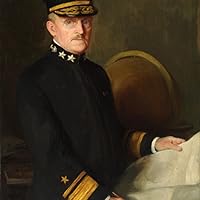
This book examines Napoleon's offensive campaign of 1796, at a time when France was surrounded by overwhelmingly superior forces.
Napoleon's Army of Italy was ragged, ill equipped, and demoralised when he took over command. Within three weeks he was leading it to victory against the numerically and materially superior Austrian forces. In Attack in the West the author shows in a very vivid way how this was done.
Educated at Shrewsbury School, the Royal Military Academy, Woolwich, and King's College, Cambridge, William Jackson was commissioned into the Royal Engineers in 1937. He served with the British Army in Norway during the Second World War, where he was one of the first British officers to engage the enemy. His work in blowing up bridges as the British retreated from Lillehammer earned Jackson his first Military Cross (MC). He also served in North Africa, Sicily and Italy during the war. He was twice injured by a land mine. The one at Bou Arada in Tunisia placed him in bed for four months before he joined Dwight Eisenhower's headquarters, where the invasion of Sicily was being planned. He won a Bar to his MC in 1944 at the Battle of Monte Cassino in recognition of "gallant and distinguished services", and by the end of the war Jackson was in post as an acting major but was only formally promoted captain in August 1945,having been promoted to lieutenant in 1940. He was also mentioned in despatches in 1945 for his services in Italy.
After the war he became a General Staff Officer at Headquarters Allied Land Forces, South East Asia in 1945 before moving on to be an Instructor at the Staff College, Camberley in 1948. Promoted major in 1950, he was an Instructor at the Royal Military Academy, Sandhurst from 1951. He was promoted brevet lieutenant colonel in 1955 and was appointed Assistant Adjutant & Quartermaster General (Plans) at the War Office during the Suez crisis in 1956. Jackson was appointed an Officer of the Order of the British Empire in the 1957 Birthday Honours. In 1958 he was promoted lieutenant colonel and became Commander, Gurkha Engineers in Malaya. In 1960 he was promoted full colonel and in 1961 returned to the Staff College, Camberley as Colonel General Staff at the Minley Division.
He was Deputy Director of Staff Duties at the War Office from 1962 and joined the Imperial Defence College in 1965 being promoted brigadier in March. He went on to be Director of the Chief of Defence Staff's Unison Planning Staff in 1966 in the temporary rank of major general (his rank of major general was confirmed as permanent in July 1966) and Assistant Chief of the General Staff (Operational Requirements) at the Ministry of Defence in 1968.
In 1970 Jackson was promoted to lieutenant general and appointed General Officer Commanding-in-Chief for Northern Command. He was knighted as a Knight Commander of the Order of the Bath in 1971, and In 1973 he became Quartermaster-General to the Forces in the local rank of full general with formal promotion to general coming four months later. Advanced to Knight Grand Cross of the Order of the British Empire in the 1975 Birthday Honours, Jackson retired from active army service in February 1977, taking a post of Military Historian at the Cabinet Office from 1977 to 1978 and then becoming Governor and Commander-in-Chief of Gibraltar, overseeing the colony's transition to a British dependent territory and where he was a stalwart advocate for self-determination in the territory.
Jackson retired from his post in Gibraltar in 1982 (having had his tenure extended by a year) and returned to being historian at the Cabinet Office until 1987. He had held five honorary military appointments: as ADC General to the Queen (1974–1979), Colonel Commandant the Royal Engineers (1971–1981), Colonel the Gurkha Engineers (1971–1976), Colonel Commandant Royal Army Ordnance Corps (1973–1976) and Colonel of the Territorial Army Volunteer Reserve Engineer and Railway Staff Corps.
This book; Attack in the West provides the reader with an easy to read and concise account of Napoleon’s Italian campaign of 1796. The book was first published in 1953 with the view of offering military students a look into the methods used by Napoleon in this campaign to achieve victory against superior forces.
The book is easy to read and has multiple maps throughout the narrative to allow you to follow Napoleon’s movements and strategy. There is also a number of very large pull out maps at the back of the book to give you a perspective of the area that this campaign covered.
I found this book to be a fun and interesting read, to the point and although there is the occasional reference to Russia and the Cold War these do not detract from the story. If you wanted one easy to read book about Napoleon’s first campaign as a commander then this book should suit you.
This is a short account of Napoleon's first campaign in Italy, in 1796. It is a bit dated as it was written in the 1940s by a British general and, interestingly, governor of Gibraltar.
As a detailed account, however, it is superb. There are lots of maps which is probably the best feature of this work, so you can visualize how Napoleon interposed himself between the Austrians in consecutive actions.
The book begins by dispelling some myths, stating that Napoleon was heavily involved with the Army of Italy long before he took command, and that he had drawn up the plans that led to the battles of Dego and Saorgio in 1794.
Jackson's thesis is that the NATO armies could find inspiration from Napoleon's aggressive style, betraying this as an early Cold War work, and he makes some interesting comparisons with near contemporary events such as his analogy between the appeasement at Munich and the failure of the Italian states to oppose Napoleon when they easily might have.
I appreciated that this work went into some detail about Napoleon's vexations in the rest of Italy, describing his dealings with the Papacy, with Naples, with Venice and Genoa, etc. It even mentions an attempt by the Neapolitans to attack the French on the Senio!
Jackson takes a conventional approach to this story, describing how Napoleon conceived of his operational scheme to divide the Austrians and Sardinians via the Cadibona and Montenotte. He describes that he was annoyed by the advance of Cervoni to Voltri but used it to his advantage to deceive Beaulieu into thinking he was marching on Genoa.
This is a fascinating aspect because Napoleon largely based his plan, as is now known, on that of Maillebois in 1793. Having read an account of that I suspected that Napoleon succeeded where Maillebois had failed because Napoleon did not have to cooperate with an allied army (Maillebois had to combine with the Spanish).
In 1743 Maillebois wished to crush Sardinia and open the passes of the Alps to the French farther north, but the Spanish insisted on marching on Milan immediately. This led to their ruin, but apparently due to this experience the Austrians were deceived into thinking the French were going to ignore Sardinia and move on Milan again.
Napoleon had no intention of this, and while Beaulieu was wasting his time around Genoa and the Bochetta, Napoleon was squeezing the life out of Sardinia.
With Sardinia defeated the Army of the Alps was enabled to join Napoleon and he turned to deal with the Austrians. Jackson believes that Napoleon's deception of crossing the Po at Valenza worked and that he caught Beaulieu by surprise after crossing at Piacenza.
He believes also that Napoleon hoped for, and perhaps actually had, a chance to catch a large part of Beaulieu's force at Lodi.
Of course, Beaulieu escaped all the way to the Mincio and the fortress of Mantua, which was to be the pivot around which the rest of the war in Italy raged. After Beaulieu was replaced by Wurmser the latter attempted to relieve Mantua via Lake Garda, where his detachments were defeated in detail on either side of the lack by Napoleon's deft maneuvers at Lonato and Castiglione.
Expecting Napoleon to remain around Mantua, Wurmser moved east from the Tyrol via the Val Sugana and the Brenta, only to have Napoleon follow him, cut him off from Austria, and sweep him into Mantua at Bassano.
Jackson is critical of Napoleon here, saying he might have caught Wurmer's entire command before it reached Mantua but he was not fast enough.
Alvinci then took command of a new army, and Napoleon adroitly whittled down the Austrians' superiority by forcing them to fight in the marshes around Arcole, and repulsing the last attempts at Rivoli in early 1797.
Alvinci's failure here led to the surrender of Wurmer and Mantua, and I appreciated that Jackson gave a few details here. Wurmser surrender to Serurier and was given full military honors.
The book ends the narrative here as the year 1796 ends. Napoleon hoped that the fall of Mantua would be the end of the war but it was not to be, as Jourdan and Moreau were defeated by the Archduke Charles in Germany and the joining of hands at the Brenner failed to materialize.
Napoleon would have to fight the Archduke himself in 1797, but Jackson leaves that for another work.
The highlight of the book is the decision of Napoleon to abandon the siege of Mantua to draw in his formations to concentrate against Wurmser in the campaigns at Lonata and Castiglione. This is really inspiring stuff that took enormous moral fortitude, and makes Napoleon stand out from other captains who would have continued to press the siege at the possible risk of defeat.
Jackson notes that Napoleon had his priorities correct here in that the Austrian Army was the objective and not any position, whereas Wurmser believed that the objective was the relief of Mantua rather than defeating Napoleon.
For decisions in war could have been harder to make, as Napoleon was only days away from success and had to sacrifice all of his siege equipment, and few decisions were more correct.
Another important insight is that Napoleon's position was precarious the whole time, because while he succeeded in achieving tactical superiority at separate points he remained inferior overall, and one major setback would have resulted in Italy rising behind him. In fact Pavia actually did rise against him but Napoleon's moral domination of the Austrians kept Italy in line.
This is easily one of the finest campaigns ever fought by anyone in history, and is an object lesson in winning with inferior numbers that compares with other legendary campaigns like Jackson in the Valley.
All in all this is a fantastic and exciting account of Napoleon's operations from when he began to involve himself with the Army of Italy until the fall of Mantua and the Battle of Rivoli.
This is a fine, if dated, study of Napoleon's first Italian campaign. The workmanlike narrative is complemented by the maps that are on almost every page. There is also a large fold-out map at the back of the book. These maps, while very basic, are incredibly helpful and allow the reader to easily follow the action.
While I realize that it was written in the early 1950s as the Cold War was really starting to gather steam, the author's references to possible Soviet aggression just make the book seem very dated nowadays, and his several attempts to tie Cold War strategy to Napoleon's methods come off as a bit of a stretch. However, those niggling criticisms are more than offset by the fact that Jackson does an excellent job of helping the reader understand the brilliant strategy behind Napoleon's first Italian campaign.
Excellent and easily readable book on the Italian campaign. The narrative is enhanced by the numerous sketch maps of the operational areas and battles which really assist and should be used in more books of this type. Having studied the campaign for several years and played some simulation games covering the era it has really brought home the genius of Napoleon’s first major campaign as a commander.