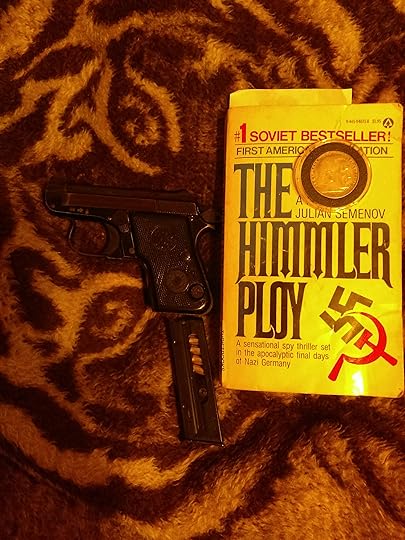
What is truly fascinating about the novel is its humility and unbiased objective portrayal of human beings for what they are - exactly and simply human beings, with all their faults and virtues.
Which is very refreshing in our current day and age where political bias seems to have poisoned everything from pop culture, arts, literature and TV, to adverts, marketing, and even daily interactions between people.
It's funny - and sad - thinking how Goebbels (one of the many characters brilliantly portrayed by Semyonov in his novel), the mastermind behind the Third Reich's propaganda machine, probably would have been both thrilled to see and deeply scared to experience the extent to which systematic propaganda has truly and profoundly affected our society today. Much more than he ever managed to do in Germany in the 40s.
Nowadays, wherever we look, identity politics and culturally marxist symptoms are bound to be present. Passive and active propaganda, mixed with socially engineered and socially (unconsciously) enacted forms of marxism such as censuring freedom of speech masked with social justice bombastic taboo words, make up for a dystopian society not even part of Goebbel's wildest dreams.
Hence - to repeat myself - Seventeen Moments of Spring is indeed a deeply satisfying read and a great reminder of a time when literature wasn't soaked with and damaged by politics, but was rather commenting objectively on society and its building blocks, through the best means possible - honest storytelling.
I admit I expected the book, written during the Cold War, to be leaning heavily towards the Soviet spectrum - which I would have been okay with, to read something non-Allies-centric, for a change. But what I experienced was even better - a well-balanced - for the most part - portrayal of all three major sides of the War: the Allies, the Axis powers and the Soviet Union.
There was no politicised glorification of neither the East, nor the West, but rather both sides were shown with equal amounts of objective commentary, with conclusions left exclusively for the reader, much in the same way that Stierlitz (the main protagonist) was making his own conclusions based on brutal naked facts. No agenda was pushed at any time.
Furthermore, there wasn't any unnecessary demonising of the Nazis too. The highest standing officials were shown as human beings, affected to a different extent by a dangerous ideology, and riding a fast train with no brakes.
The objectiveness and the raw power of the often stripped of emotions bare factual and observational writing was striking, much more than a modern "spy" novel filled with action, dramatic techniques and Hollywood-esque tropes would ever be able to achieve.
The truth is that the fictional reality that Standartenführer Max Otto von Stierlitz is living in is the antithesis of the pop cultural jokes phenomenon from the very recent past - jokes especially popular in the East for those familiar with it (if not, I encourage you to Google it - the jokes are funny).
As with the best writing out there, Seventeen Moments of Spring is an honest and compact piece of strong mature literature.


 Watch here
 From page 246 of The Invention of Russia: From Gorbachev's Freedom to Putin's War:
The film was part of a propaganda campaign launched by Yuri Andropov, who became head of the KGB in the late 1960s. Its aim was to improve the image of the KGB from a dark, secret police - a synomyn of political repression - and to attract young, bright recruits into a 'glamourous' secret service. The novel by Yulian Semyonov, on which the film was based, was commissioned personally by Andropov to glorify Soviet secret agents serving abroard.
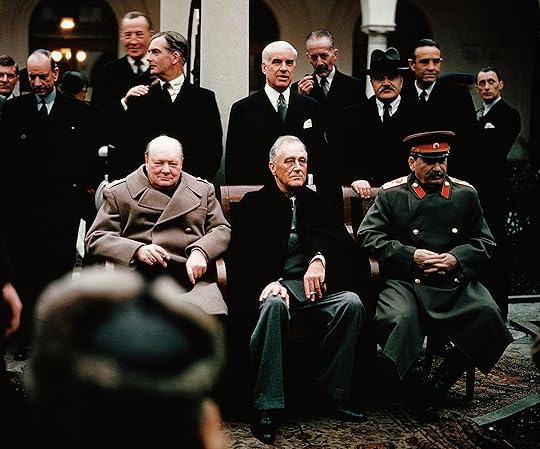
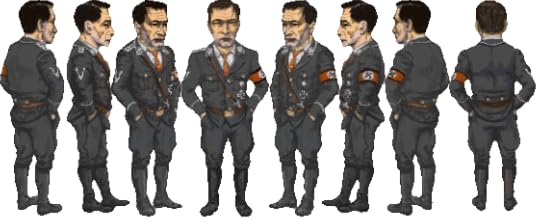 Some Stierlitz jokes:

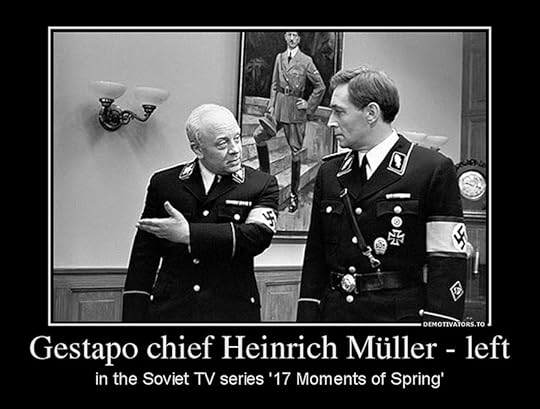
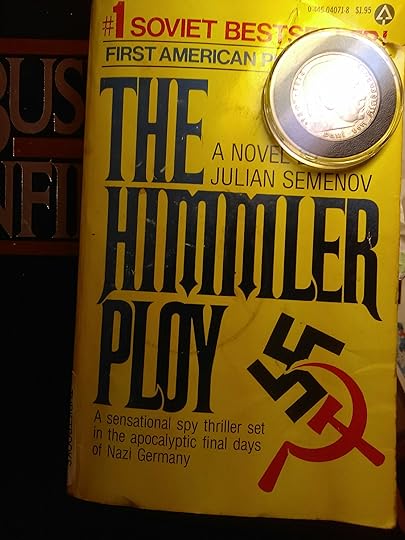 This is classic, textbook, KGB entrapment with Valhalla and Gehenna damnations, Kompromat, properly applied to devastate the enemy. Stirlitz, is closer to the Odysseus protagonist than the thunderbolts and lightening, Achilles, broken mold. Entire book excellent novel research per the Great Patriotic War led into the Cold War of geopolitical chessboards.