

What do you think?

The Storyteller of Marrakesh
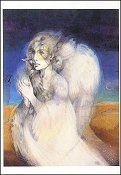
The appearance of the young foreign couple caught the attention of nearly everyone on the Jemaa that night. The woman s beauty and the man s enigmatic behaviour intrigued observers but now no one can seem to agree on the details surrounding their disappearance.
Each year, the storyteller Hassan gathers listeners on Marrakesh s fabled city square to share their recollections of that night in an effort to understand what happened and to absolve his younger brother, Mustafa, who is in jail for the crime. Convinced of his brother s innocence despite his disapproval of Mustafa s sybaritic ways, Hassan determinedly searches for the truth. But as his listeners offer contradicting testimonies, and details transform or dissolve in the haze of memory, the couple takes on an air as enigmatic as their fate, leaving us to wonder whether Hassan is succeeding in his quest or, more disturbingly, is himself part of the mystery.
From the bustling maze of the ancient medina to the expansive desert of love where wind and sand conspire to swallow up roaming strangers, TheStoryteller of Marrakesh upends the conventions of the mystery even as it offers an inspired exploration of the nature of love and our shifting perceptions of reality.
Each year, the storyteller Hassan gathers listeners on Marrakesh s fabled city square to share their recollections of that night in an effort to understand what happened and to absolve his younger brother, Mustafa, who is in jail for the crime. Convinced of his brother s innocence despite his disapproval of Mustafa s sybaritic ways, Hassan determinedly searches for the truth. But as his listeners offer contradicting testimonies, and details transform or dissolve in the haze of memory, the couple takes on an air as enigmatic as their fate, leaving us to wonder whether Hassan is succeeding in his quest or, more disturbingly, is himself part of the mystery.
From the bustling maze of the ancient medina to the expansive desert of love where wind and sand conspire to swallow up roaming strangers, TheStoryteller of Marrakesh upends the conventions of the mystery even as it offers an inspired exploration of the nature of love and our shifting perceptions of reality.
341 pages, Hardcover
First published January 1, 2011
About the author
Joydeep Roy-Bhattacharya
4 books42 followersJoydeep Roy-Bhattacharya was educated in politics and philosophy at Presidency College, Calcutta, and the University of Pennsylvania. His novels The Gabriel Club and The Storyteller of Marrakesh have been published in fourteen languages. He lives in the Hudson Valley in upstate New York.
Ratings & Reviews
Friends & Following
Create a free account to discover what your friends think of this book!
Community Reviews
Displaying 1 - 30 of 161 reviews

April 18, 2013
Super knjiga... Ima i nastavke... Prodala sam je pre nekoliko godina Deretu, trebalo bi da su je već objavili... :)

November 23, 2018
Загадка, изплъзване като дим в пустинята, Маракеш с пъстрия Джама Ал Фна, модерният човек и източната поетична и изкусно подвеждаща приказка. Книгата е за всичко това, и за още много, много неща. Включително за една тайнствена жена.
***
”Може би има причина, поради която вярваме на философа, осъзнал с неподправен ужас, че истината се преобразява в мига, в който бъде разкрита, и се превръща просто в едно от възможните мнения, което може да бъде оспорено, подложено на съмнения, да създаде противоречия, да предизвика неизбежното недоумение.
С други думи, истина няма.”
***
”Може би има причина, поради която вярваме на философа, осъзнал с неподправен ужас, че истината се преобразява в мига, в който бъде разкрита, и се превръща просто в едно от възможните мнения, което може да бъде оспорено, подложено на съмнения, да създаде противоречия, да предизвика неизбежното недоумение.
С други думи, истина няма.”

September 1, 2012
There are two things that make me really anxious about a book - a rainbow of different ratings, and a book about somewhere from someone who has no real connection to the place. I gave in though, basically because of the title, and hoped for the best. And my "bravery" was rewarded.
A few years ago, there was an interview on Swiss television with Syrian-German author Rafik Schami. The original topic was of course Syria's political situation, but the interviewer also delved into the differences between the Western and Middle-Eastern style of writing. Rafik Schami pointed out that whereas Western authors usually are just that, authors, he sees himself as a storyteller because there is a rich history of storytelling in that part of the world. (He then proceeded to tell a ten-minute-story, and it was one of the best interviews I've ever seen).
The difference between writing and storytelling is the immediate reaction from the audience. It has to be entranced and engaged, and a different audience will create a different feel to a story. In doing this with the book itself as well as within the story, Joydeep Roy-Bhattacharya has set himself up for that rainbow of reviews, but if you are ready to engage enough, and if you are willing to create your own story out of your reactions to what is being told, you're in for a great ride.
I'm not sure that billing this book as "mystery" is all that helpful. Sure, the story is about a young couple's disappearance and searches for its cause, but you should not read this book just to find an answer to that story. The real theme is the storytelling - how it can bring people together, how a story can change, how even our own perception can change when we interpret it through the veil of the fiction we've created.
Contrary to my initial fears, Marrakesh is not just a setting, but a living, breathing part of this book. You get to know some of its inhabitants, and you see the influence of its long history on the perception of the people who live there.
I'm not sure I'd recommend this book if you just want to learn something about Morocco. But I would if you're searching for an insight into Middle Eastern culture, and into the nature of stories themselves.
----
Review can also be found at 238 books in 238 days.
A few years ago, there was an interview on Swiss television with Syrian-German author Rafik Schami. The original topic was of course Syria's political situation, but the interviewer also delved into the differences between the Western and Middle-Eastern style of writing. Rafik Schami pointed out that whereas Western authors usually are just that, authors, he sees himself as a storyteller because there is a rich history of storytelling in that part of the world. (He then proceeded to tell a ten-minute-story, and it was one of the best interviews I've ever seen).
The difference between writing and storytelling is the immediate reaction from the audience. It has to be entranced and engaged, and a different audience will create a different feel to a story. In doing this with the book itself as well as within the story, Joydeep Roy-Bhattacharya has set himself up for that rainbow of reviews, but if you are ready to engage enough, and if you are willing to create your own story out of your reactions to what is being told, you're in for a great ride.
I'm not sure that billing this book as "mystery" is all that helpful. Sure, the story is about a young couple's disappearance and searches for its cause, but you should not read this book just to find an answer to that story. The real theme is the storytelling - how it can bring people together, how a story can change, how even our own perception can change when we interpret it through the veil of the fiction we've created.
Contrary to my initial fears, Marrakesh is not just a setting, but a living, breathing part of this book. You get to know some of its inhabitants, and you see the influence of its long history on the perception of the people who live there.
I'm not sure I'd recommend this book if you just want to learn something about Morocco. But I would if you're searching for an insight into Middle Eastern culture, and into the nature of stories themselves.
----
Review can also be found at 238 books in 238 days.

January 20, 2019
Marocco, Marrakech, Piazza Jemaa el-Fna, sera...
M’sa l’khir. Buonasera. Permettete che mi presenti. Mi chiamo Hassan. Sono un cantastorie, sovrano di un regno più vasto di qualunque altro possiate figurarvi: il regno dell’immaginazione. ... Che lingua parlate, stranieri? ... Ditemi, da dove venite? Da lontano? Capisco. ... Sedetevi, vi prego, e unitevi al mio circolo di ascoltatori. ... Una storia è come una danza. Servono almeno due persone perché possa prendere vita: una che racconti, l’altra che ascolti.
Ed io mi sono messa seduta, gambe incrociate, e ho ascoltato...
Ho ascoltato tante storie senza ascoltarne veramente una.
Grande atmosfera, questo sì, e ne sono rimasta mio malgrado incantata.
Hassan è un cantastorie scaltro, abile, un superbo affabulatore, ha (in)volontari complici che a loro volta incatenano con le loro parole, al mistero aggiungono mistero, e insieme vi conducono per sentieri che si intersecano, si confondono, si sovrappongono e si disgiungono, fino a farvi perdere nei meandri di un labirinto di parole e di immagini abilmente edificato, di cui solo lui conosce l’uscita, perché solo lui ne ha la chiave.
Ripeto: molta atmosfera basata su ambientazioni incantevoli, a volte tenere e dolci, colme di magia e poesia, a volte invece dure e amare, quasi violente, ma sempre suggestive, e su sensazioni di profumi ed essenze, colori e sfumature, su tempi, battiti e ritmi evocativi... ma una trama vera e propria non c’è.
E non c’è uscita dal labirinto, non c’è chiave. L’importante - per una sera ancora - è aver incantato e incatenato il pubblico, perché un cantastorie, un superbo cantastorie, crea le sue mitologie, può rendere vera ogni cosa. Può far sembrare vera ogni cosa.
Perché questo, in fondo, è solo un lento, articolato e illusorio racconto che non ha fine, pieno di misteri, di vita e d’amore...
Cos'è la vita, dopo tutto, se non un fugace capriccio?
La luna, il gatto, il poeta, questo circolo di ascoltatori, siamo tutti sulla stessa pagina. Tra il labbro e il talismano, tra la gola e la voce, tra il cuore e la speranza, c'è sempre qualcosa che palpita, qualcosa che vive e muore. È la speranza? O è la pazzia? È forse il mare?
È l'amore.
Guardate: eccolo li, muto, tremante, qualche timida occhiata, un gesto effimero, una poesia sul kif, una sera di delirio, e poi il nulla.
È l'amore. Ha cinque sensi, sette suoni, nove vite, undici illusioni. È cedevole. È un fiore che cresce negli oceani più profondi. È una candela guizzante, un'impronta nella neve, un paese bellissimo, un frassino meridionale. È una chiamata e un'imprecazione e un prolisso incantesimo da ripetere ogni sera. È una fotografia, un lamento, una cronaca, un dipinto. È nel vaso di Pandora, in un parco soleggiato, nell’Albero del Corvo. È esultanza, confusione, solitudine, perdita, sogno.
È l'amore. Il più bello di tutti gli uccelli.
Marrakech: Porta aperta sul deserto...
📖 LdM Paese: Marocco 🇲🇦
🔠 RC 2019 - Alphabet Titoli -> C
📚 RC 2019 - Lo scaffale traboccante
📚 RC 2019 - Abbatti la TBR -> 19
🌍 Africa
M’sa l’khir. Buonasera. Permettete che mi presenti. Mi chiamo Hassan. Sono un cantastorie, sovrano di un regno più vasto di qualunque altro possiate figurarvi: il regno dell’immaginazione. ... Che lingua parlate, stranieri? ... Ditemi, da dove venite? Da lontano? Capisco. ... Sedetevi, vi prego, e unitevi al mio circolo di ascoltatori. ... Una storia è come una danza. Servono almeno due persone perché possa prendere vita: una che racconti, l’altra che ascolti.
Ed io mi sono messa seduta, gambe incrociate, e ho ascoltato...
Ho ascoltato tante storie senza ascoltarne veramente una.
Grande atmosfera, questo sì, e ne sono rimasta mio malgrado incantata.
Hassan è un cantastorie scaltro, abile, un superbo affabulatore, ha (in)volontari complici che a loro volta incatenano con le loro parole, al mistero aggiungono mistero, e insieme vi conducono per sentieri che si intersecano, si confondono, si sovrappongono e si disgiungono, fino a farvi perdere nei meandri di un labirinto di parole e di immagini abilmente edificato, di cui solo lui conosce l’uscita, perché solo lui ne ha la chiave.
Ripeto: molta atmosfera basata su ambientazioni incantevoli, a volte tenere e dolci, colme di magia e poesia, a volte invece dure e amare, quasi violente, ma sempre suggestive, e su sensazioni di profumi ed essenze, colori e sfumature, su tempi, battiti e ritmi evocativi... ma una trama vera e propria non c’è.
E non c’è uscita dal labirinto, non c’è chiave. L’importante - per una sera ancora - è aver incantato e incatenato il pubblico, perché un cantastorie, un superbo cantastorie, crea le sue mitologie, può rendere vera ogni cosa. Può far sembrare vera ogni cosa.
Perché questo, in fondo, è solo un lento, articolato e illusorio racconto che non ha fine, pieno di misteri, di vita e d’amore...
Cos'è la vita, dopo tutto, se non un fugace capriccio?
La luna, il gatto, il poeta, questo circolo di ascoltatori, siamo tutti sulla stessa pagina. Tra il labbro e il talismano, tra la gola e la voce, tra il cuore e la speranza, c'è sempre qualcosa che palpita, qualcosa che vive e muore. È la speranza? O è la pazzia? È forse il mare?
È l'amore.
Guardate: eccolo li, muto, tremante, qualche timida occhiata, un gesto effimero, una poesia sul kif, una sera di delirio, e poi il nulla.
È l'amore. Ha cinque sensi, sette suoni, nove vite, undici illusioni. È cedevole. È un fiore che cresce negli oceani più profondi. È una candela guizzante, un'impronta nella neve, un paese bellissimo, un frassino meridionale. È una chiamata e un'imprecazione e un prolisso incantesimo da ripetere ogni sera. È una fotografia, un lamento, una cronaca, un dipinto. È nel vaso di Pandora, in un parco soleggiato, nell’Albero del Corvo. È esultanza, confusione, solitudine, perdita, sogno.
È l'amore. Il più bello di tutti gli uccelli.
Marrakech: Porta aperta sul deserto...
📖 LdM Paese: Marocco 🇲🇦
🔠 RC 2019 - Alphabet Titoli -> C
📚 RC 2019 - Lo scaffale traboccante
📚 RC 2019 - Abbatti la TBR -> 19
🌍 Africa

April 3, 2015
След силно противоречивите мнения за тази книга останах приятно изненадана - на мен тя много ми хареса. Светоусещането, описано в книгата, ми е много далечно - аз не се заглеждам в "ритъма" на града , докато работя, нито си мърдам пръстите на краката, завихряйки творческото у себе си. И абстрактното понятие за истината ми е много чуждо, и протяжността на живота в пустинята, онзи трепет на жегата и дюните. Но го припознавам като светоусещане на много хора, и ми хареса цялата тази приказност и ориенталска мъдрост....

February 17, 2017
رواية تدور أحداثها عن أختفاء شاب و شابة في سوق مراكش المشهور.
يعمل الكاتب على صياغة المجتمع المغربي في هذه الفكرة على لسان الراوي الذي يتخذ ساحة الجامع مقره لرواية رواياته الأسطورية و بها يبدأ الراوي بشرح طبيعة المجتمع في هذه البقية عن طريق مداخلات من الجمهور للراوي حيث تتخذ الرواية طابع ساسة جريمة في أختطاف الحسناء الجميلة التي يقال انها فرنسية أميركية في نهاية الرواية.
الرواية جميلة إلى حداً ما و لكن تداخل مهمة الكاتب في شرح طبائع البشر في هذا المكان مع الرواية جعلها بعض الشيء مملة لحد ان أكثر من نصف الرواية فقط لتوضيح جمال هذه الشابة
و كعادة الكتاب حيث تجد فلسفته للحياة حاصرة في كل مفاصل الرواية
يعمل الكاتب على صياغة المجتمع المغربي في هذه الفكرة على لسان الراوي الذي يتخذ ساحة الجامع مقره لرواية رواياته الأسطورية و بها يبدأ الراوي بشرح طبيعة المجتمع في هذه البقية عن طريق مداخلات من الجمهور للراوي حيث تتخذ الرواية طابع ساسة جريمة في أختطاف الحسناء الجميلة التي يقال انها فرنسية أميركية في نهاية الرواية.
الرواية جميلة إلى حداً ما و لكن تداخل مهمة الكاتب في شرح طبائع البشر في هذا المكان مع الرواية جعلها بعض الشيء مملة لحد ان أكثر من نصف الرواية فقط لتوضيح جمال هذه الشابة
و كعادة الكتاب حيث تجد فلسفته للحياة حاصرة في كل مفاصل الرواية

September 12, 2022
Много се радвам, че реших да "рискувам" да си купя тази книга, без предварително да чета за нея, защото направи цялото изживяване още по-въздействащо, мистериозно, а и образователно също.
Ако трябва да дам обяснение в няколко думи за сюжета, то ще бъде: мистерията около изчезнала двойка чужденци в розовия град Маракеш и разказвача Хасан, който всяка година разказва за тях на многобройните си слушатели на известния площад "Джама", който оживява по страниците. В миналото това е било място за жестоки масови екзекуции, днес е една от най-големите туристически атракции в Маракеш, където щом слънцето отслабне хората могат да се насладят на най-различни развлекателни изпълнения. И самите жители на Маракеш го виждат като нещо много повече от един площад, и автора с лекота успява да предаде тяхното възхищение. "Джама е символ, пресечна точка на всички народи, които са преминали и продължават да преминават през това място на света. Тя е магребска, сахравска, средиземноморска, арабска, берберска..." "... Тук вековете преливат един в друг, тук си извън времето. Тук различните култури вплитат нишки и човек забравя произхода си," както казва Хадиджа.
Минали са години от мистериозното изчезване на красивите чужденци, но хората продължават да се събират, споделяйки спомени, случки и малки преживявания, които са имали с тях. Продължават да се питат какво наистина се е случило в онази особена нощ на изчезването им. Интересното е, че до последната страница не можеш да си убеден кое е било истина, кое е било плод на въображението или истинска случка, но леко изкривена от изминалото време. Слушателите на Хасан дори си противоречат в описването на външния им вид!
Та за това става дума в сюжета, но според мен в центъра на тези 320 страници е красотата на разказването - а и истината и семейството. Казват, че разказването на истории е самотен занаят, но напротив. Историите сближават хората като никое друго занимание.
Беше ми много интересно след всяка изминала глава да срещам нови и нови жители на Маракеш, привлечени дали просто от увлекателния и спокоен глас на Хасан или от мистерията покрай чужденците, към която искат да добавят нещо. Стилът на Джойдийп Рой-Батачаря е пищен, но по семпъл и ненатрапчив начин. Красив, с усет към детайлите - все пак става дума за разказвачи. В дадени моменти изпада в по-философски разсъждения - предразсъдъци, любов, култура, - но главите са кратки и аз не ги усетих в повече.
Романът не е нещо мащабно или невиждано до сега, но това омайващо усещане, с което ме остави ме кара да дам 5 звезди. Дните, в които я четох имах малко повече ангажименти, заради което прочитах само по две-три глави, когато имах възможност, но това не успя да ме откъсне от мистичния свят, в който автора те потапя още с първите изречения. Историята ме разтоварваше и отпускаше с красотата си. Донесе ми спокойствие, показа ми многобройни културни забележителности и ми припомни защо толкова обичам да чета и да слушам истории. И накрая ме накара да се замисля защо не получава повече внимание? Препоръчвам на фенове на "Любов" на Елиф Шафак и на "Франкенщайн от Багдад" на Ахмед Садауи.
Ако трябва да дам обяснение в няколко думи за сюжета, то ще бъде: мистерията около изчезнала двойка чужденци в розовия град Маракеш и разказвача Хасан, който всяка година разказва за тях на многобройните си слушатели на известния площад "Джама", който оживява по страниците. В миналото това е било място за жестоки масови екзекуции, днес е една от най-големите туристически атракции в Маракеш, където щом слънцето отслабне хората могат да се насладят на най-различни развлекателни изпълнения. И самите жители на Маракеш го виждат като нещо много повече от един площад, и автора с лекота успява да предаде тяхното възхищение. "Джама е символ, пресечна точка на всички народи, които са преминали и продължават да преминават през това място на света. Тя е магребска, сахравска, средиземноморска, арабска, берберска..." "... Тук вековете преливат един в друг, тук си извън времето. Тук различните култури вплитат нишки и човек забравя произхода си," както казва Хадиджа.
Минали са години от мистериозното изчезване на красивите чужденци, но хората продължават да се събират, споделяйки спомени, случки и малки преживявания, които са имали с тях. Продължават да се питат какво наистина се е случило в онази особена нощ на изчезването им. Интересното е, че до последната страница не можеш да си убеден кое е било истина, кое е било плод на въображението или истинска случка, но леко изкривена от изминалото време. Слушателите на Хасан дори си противоречат в описването на външния им вид!
Та за това става дума в сюжета, но според мен в центъра на тези 320 страници е красотата на разказването - а и истината и семейството. Казват, че разказването на истории е самотен занаят, но напротив. Историите сближават хората като никое друго занимание.
Беше ми много интересно след всяка изминала глава да срещам нови и нови жители на Маракеш, привлечени дали просто от увлекателния и спокоен глас на Хасан или от мистерията покрай чужденците, към която искат да добавят нещо. Стилът на Джойдийп Рой-Батачаря е пищен, но по семпъл и ненатрапчив начин. Красив, с усет към детайлите - все пак става дума за разказвачи. В дадени моменти изпада в по-философски разсъждения - предразсъдъци, любов, култура, - но главите са кратки и аз не ги усетих в повече.
Романът не е нещо мащабно или невиждано до сега, но това омайващо усещане, с което ме остави ме кара да дам 5 звезди. Дните, в които я четох имах малко повече ангажименти, заради което прочитах само по две-три глави, когато имах възможност, но това не успя да ме откъсне от мистичния свят, в който автора те потапя още с първите изречения. Историята ме разтоварваше и отпускаше с красотата си. Донесе ми спокойствие, показа ми многобройни културни забележителности и ми припомни защо толкова обичам да чета и да слушам истории. И накрая ме накара да се замисля защо не получава повече внимание? Препоръчвам на фенове на "Любов" на Елиф Шафак и на "Франкенщайн от Багдад" на Ахмед Садауи.
December 19, 2014
Did not find this magical. Frustrating read. Felt that the narrative was trying too hard to be enchanting. I felt anger at the repeated beauty of the woman--of course she was the typical standard of beauty. Why couldn't she be Asian? Or, for that matter, any other ethnic grouping? What I did enjoy was the various types of people that were woven in the tale--the blue skinned man, the Berber, the fortune teller, etc. But, as stated, not one of my favorite reads. Although this is not a normal practice for me, the novel was tossed without a second thought into the paper bin.

August 1, 2011
So I never actually finished this book. I only made it about 100 pages in, but it was that bad. 100 horrible, slow, painful pages and I do not regret NOT finishing this book. I can't wait to sell it back. (Sorry to my fellow book club readers.) This is the literary equivalent of gouging your eyes out with a half-teaspoon.

October 21, 2011
The following extract appears on page 307 of this novel, a mere 20 pages from the end:
"I listened to you with a growing desbelief that soon turned to anger. Your story was not onlu salubrious, it was a thoroughly misbegotten endeavor. There was nothing in it to emulate, no universal values or aspirations, nothing - nothing at all - worth salvaging. If there was any truth in it, it lay in its level of degredation, truly one of a kind."
My sentiments exactly after reading this book!! For someone like myself, who is married to a Moroccan, who truly knows Morocco well and has a relationship with the country itself, its people, its culture. As a person who loves Morocco as her home - this book is a sore disappointment.
This is clearly a tourist's novel. I can't imagine its author having spent more than a holiday there, or spent much time with Moroccan people at all. He is able to describe the locale well, and has done his research into artisana etc. However, his characters, especially in dialogue, brought not one iota of a true Moroccan voice. Every single character in this novel spoke with a highly educated register, using the vocabulary of a well-versed poet - even the poorest, uneducated street-performer! One, unbelievable, two, Moroccans tend to keep things simple and direct. I have many Moroccan friends who tell me stories, and not one of them dances in circles the way the Hassan of this story does. When I read the acknowledgements section of the book, I noticed not one Moroccan name was thanked. Surely if you were writing a story about Moroccan people, you would at least enlist the aid of at least one local in order to create a realistic portrayal. It certainly felt as if he was just making it up!
Regarding Jemaa el Fna. One has to wonder if the author ever visited it after dark. Well into the night it's bustling with foreigners ans Moroccans, yet he makes it sound foreboding and empty save for the most devilish of Morocco's underworld!
Had this novel been written about another country that I wasn't so familiar with, would I have liked it better? Perhaps a little. In terms of plot, it's not a bad mystery story. I'm afraid the inaccuracies in its depiction of Morocco killed it for me though.
"I listened to you with a growing desbelief that soon turned to anger. Your story was not onlu salubrious, it was a thoroughly misbegotten endeavor. There was nothing in it to emulate, no universal values or aspirations, nothing - nothing at all - worth salvaging. If there was any truth in it, it lay in its level of degredation, truly one of a kind."
My sentiments exactly after reading this book!! For someone like myself, who is married to a Moroccan, who truly knows Morocco well and has a relationship with the country itself, its people, its culture. As a person who loves Morocco as her home - this book is a sore disappointment.
This is clearly a tourist's novel. I can't imagine its author having spent more than a holiday there, or spent much time with Moroccan people at all. He is able to describe the locale well, and has done his research into artisana etc. However, his characters, especially in dialogue, brought not one iota of a true Moroccan voice. Every single character in this novel spoke with a highly educated register, using the vocabulary of a well-versed poet - even the poorest, uneducated street-performer! One, unbelievable, two, Moroccans tend to keep things simple and direct. I have many Moroccan friends who tell me stories, and not one of them dances in circles the way the Hassan of this story does. When I read the acknowledgements section of the book, I noticed not one Moroccan name was thanked. Surely if you were writing a story about Moroccan people, you would at least enlist the aid of at least one local in order to create a realistic portrayal. It certainly felt as if he was just making it up!
Regarding Jemaa el Fna. One has to wonder if the author ever visited it after dark. Well into the night it's bustling with foreigners ans Moroccans, yet he makes it sound foreboding and empty save for the most devilish of Morocco's underworld!
Had this novel been written about another country that I wasn't so familiar with, would I have liked it better? Perhaps a little. In terms of plot, it's not a bad mystery story. I'm afraid the inaccuracies in its depiction of Morocco killed it for me though.

July 22, 2012
The book begins with the proposition that there is no truth, and only opinion. This is a fundamental premise of the book and important from the perspective of its narration. Hassan, the primary narrator begins his story at the Jemaa el Fna, surrounded by his listeners, the motive behind the narration supposedly to prove the innocence of his brother Mustafa, who is in jail for a crime he seemingly did not commit. It involves the disappearance of an exceedingly beautiful woman who tantalised all the square's inhabitants and visitors, when she made an appearance along with her male companion.
Though Hassan starts the narration, some of his listeners add their versions of what happened on the night of the event, some contradictory, some corroborative. There are arguments, and debates of what actually happened and truth being an opinion is brought out many a time.
The narrative shifts gears all the while, as speakers delve deep into their pasts for explanations, and Hassan himself highlights events of his past to give the listeners an insight into his and Mustafa's lives and behaviour. The prose is elaborate, and vivid enough to be almost considered poetry as the author describes people, places and events in all their textures and facets. It is by no means a racy read nor is it gripping in narrative. As Hassan himself says, if that's the kind of entertainment you want, you're better off at a cinema. It's not an easy style to get used to, but no harm in giving it a shot!
Though Hassan starts the narration, some of his listeners add their versions of what happened on the night of the event, some contradictory, some corroborative. There are arguments, and debates of what actually happened and truth being an opinion is brought out many a time.
The narrative shifts gears all the while, as speakers delve deep into their pasts for explanations, and Hassan himself highlights events of his past to give the listeners an insight into his and Mustafa's lives and behaviour. The prose is elaborate, and vivid enough to be almost considered poetry as the author describes people, places and events in all their textures and facets. It is by no means a racy read nor is it gripping in narrative. As Hassan himself says, if that's the kind of entertainment you want, you're better off at a cinema. It's not an easy style to get used to, but no harm in giving it a shot!

February 5, 2011
This was an enchanting book in every sense of the word. I was charmed by the weaving of the storyline in and out. I felt as if I was in Marrakesh weaving in and out of the alleyways and souks.
Every year the storyteller comes to Marrakesh to relate a story of a foreign couple who disappeared years before. He comes in search of solving the mystery by relating and engaging the audience in remember their view of that night. Every year it is with a different effect.
This book has an Arabian Night feel to it. I loved it and found it casting and weaving a spell as Hassan draws out his audience to participate in the story. You are left to draw your own conclusions as to the ending. Was the main character truth or beauty, you decide.
Every year the storyteller comes to Marrakesh to relate a story of a foreign couple who disappeared years before. He comes in search of solving the mystery by relating and engaging the audience in remember their view of that night. Every year it is with a different effect.
This book has an Arabian Night feel to it. I loved it and found it casting and weaving a spell as Hassan draws out his audience to participate in the story. You are left to draw your own conclusions as to the ending. Was the main character truth or beauty, you decide.
November 8, 2010
The mystery element and the voices of and collaboration among the storyteller, Hassan, and his listeners make this novel compelling. Will those who find themselves in the Jemaa el Fna be able to solve the puzzle of the disappeared strangers? Will our narrator turn out to be a puppeteer manipulating the evening's events? Or will the novel bear out Hassan's father's advice that "a story must not have a clean resolution"? Suspense and contemplation, philosophy, fiction, and myth mingle as the tale and the night draw to an end.

September 3, 2023
"Our imagination spins dreams; memory hides in them. Memory releases rivers of longing; the imagination waters the rivers with rain. They feed each other. I refused to be provoked"
"When the memory is indistinct, the imagination becomes infinite- and the beautiful illusion is always preferable to the truth, especially if it is ugly."
"what's hardest is not making someone fall for you, but sustaining that love overtime."
"It is certainly safe inside a house, I agreed, but safer
inside a story where everything connects, which is more than can be said of our story, where we cannot even seem to agree upon the most basic elements, such as what the two wanderers looked like."
"True knowledge adds to certainty, and certainty brings peace."
"What we think in life echoes in our dreams, I said.
Is that why dreams are the last things to die in a body?
They are roads only, I answered. Signposts to deciphered."
The writing is so beautiful and meaningful! The plot not so much, you get to know about different characters who show up at the main character Hassan's storytelling in Jemaa. We also get to know about Hassan's family, his two brothers, parents, childhood, etc. But the main mystery of the book captures different perspectives of the mystery behind two foreigners who captured everyone's attention. A female who 99% people fell in love with, she was that beautiful and dreamy, an angel they said and the man who didn't deserve her yet was more sophisticated than any of them could be. The various people gathered recollect their own interaction with the couple and express their opinions.
"When the memory is indistinct, the imagination becomes infinite- and the beautiful illusion is always preferable to the truth, especially if it is ugly."
"what's hardest is not making someone fall for you, but sustaining that love overtime."
"It is certainly safe inside a house, I agreed, but safer
inside a story where everything connects, which is more than can be said of our story, where we cannot even seem to agree upon the most basic elements, such as what the two wanderers looked like."
"True knowledge adds to certainty, and certainty brings peace."
"What we think in life echoes in our dreams, I said.
Is that why dreams are the last things to die in a body?
They are roads only, I answered. Signposts to deciphered."
The writing is so beautiful and meaningful! The plot not so much, you get to know about different characters who show up at the main character Hassan's storytelling in Jemaa. We also get to know about Hassan's family, his two brothers, parents, childhood, etc. But the main mystery of the book captures different perspectives of the mystery behind two foreigners who captured everyone's attention. A female who 99% people fell in love with, she was that beautiful and dreamy, an angel they said and the man who didn't deserve her yet was more sophisticated than any of them could be. The various people gathered recollect their own interaction with the couple and express their opinions.

November 18, 2012
The Storyteller of Marrakesh
By Joydeep Roy-Bhattacharya
4 stars
pp. 341
During a journey to the medina (old city) of Marrakesh in the Jemaa el Fna (the square) one might find a market, snake charmers, beggars, restaurants, jugglers and storytellers and this is where Joydeep Roy-Bhattacharya takes the reader to introduce Hassan, the storyteller.
The reader is given a taste of evenings storytelling. Hassan recounts the tale of to foreigners who visited the Jemaa and vanished. This is a mystery for the patient as Hassan builds the tale slowly, asking for those who remember the day to give their accounts as well. Like any good mystery it builds the clues slowly allowing time for the reader to discover the solution, but unlike most mysteries it is slow almost to the point of pain.
But do not be fooled this is not simply a mystery, but rather an introduction to a culture and a way of life. We are given a picture that is not simply black and white but bursting with the colors and variants which exist in any culture. We are allowed to see how various beliefs and experiences shape our perceptions even among those of the same religion or even family.
Roy-Bhattacharya presents the culture of Morocco beautifully and the reader is faced with many philosophical issues as well as examining the value of a story. Here Hassan relates about a telegram he received from his brother Ahmed who chose not to be a storyteller like his father:
“I would at least like to leave a mark that is permanent, People visit the places where I have Laid zellij (geometric mosaic tile work -glossary definition) and admire my handiwork. I know that it will give pleasure for ages to come. I could never tell stories day after day and watch my words dissipate into thin air. Where is the satisfaction in that? Where is the necessary smell of fire and kiln and clay? Where is the glory of a victorious struggle over matter? Empty air is not an adequate substitute, Nor, for that matter are echoes. it’s the difference between reality and artifice. Your work is a mirage. That is the impossible truth. When a man lives out his entire life telling stories, reality disappears and something else appears in its place: a random collection of details reworked by imagination”
Here a listener objects to the speed at which the story is told:
The blacksmith says
“You are indulging in perfectly unnecessary digressions! he insisted.
I spread my arms in amazement.
Did you expect it to be different? After all I am a storyteller and a very traditional one at that. If you want quick entertainment, go to the nearest movie theatre and enjoy the show to your heart’s content. Patience is not only your duty as a listener, it is your exercise of freedom in the rush of time and the stream of necessities. To listen to a story without raising objects, without even the compulsion to understand but simply to be familiar, should always suffice. A story is a work of contemplation and you must accept responsibility for it inasmuch as your attention contributes to its vitality and its life.”
One of the central issues of the story is the woman, Lucia who disappeared and it was insightful to be given the different perceptions of her. Some thought she was extraordinarily beautiful and kind while others saw her as unreasonably provocative. Roy-Bhattacharya really delved into the various perceptions of women in the Muslim world of Morocco and I appreciated the respect and care he gave in presenting these views.
The Storyteller of Marrakesh is not a usual mystery, but I appreciated being given the feel and the picture of life in the Jemaa of Marrakesh. I was especially thankful that Roy-Bhattacharya was thoughtful enough to include a glossary. I found it most helpful. I think that for those used to the pace of a mystery may find this novel a bit slow, but I loved it for what it was not what it wasn’t.
By Joydeep Roy-Bhattacharya
4 stars
pp. 341
During a journey to the medina (old city) of Marrakesh in the Jemaa el Fna (the square) one might find a market, snake charmers, beggars, restaurants, jugglers and storytellers and this is where Joydeep Roy-Bhattacharya takes the reader to introduce Hassan, the storyteller.
The reader is given a taste of evenings storytelling. Hassan recounts the tale of to foreigners who visited the Jemaa and vanished. This is a mystery for the patient as Hassan builds the tale slowly, asking for those who remember the day to give their accounts as well. Like any good mystery it builds the clues slowly allowing time for the reader to discover the solution, but unlike most mysteries it is slow almost to the point of pain.
But do not be fooled this is not simply a mystery, but rather an introduction to a culture and a way of life. We are given a picture that is not simply black and white but bursting with the colors and variants which exist in any culture. We are allowed to see how various beliefs and experiences shape our perceptions even among those of the same religion or even family.
Roy-Bhattacharya presents the culture of Morocco beautifully and the reader is faced with many philosophical issues as well as examining the value of a story. Here Hassan relates about a telegram he received from his brother Ahmed who chose not to be a storyteller like his father:
“I would at least like to leave a mark that is permanent, People visit the places where I have Laid zellij (geometric mosaic tile work -glossary definition) and admire my handiwork. I know that it will give pleasure for ages to come. I could never tell stories day after day and watch my words dissipate into thin air. Where is the satisfaction in that? Where is the necessary smell of fire and kiln and clay? Where is the glory of a victorious struggle over matter? Empty air is not an adequate substitute, Nor, for that matter are echoes. it’s the difference between reality and artifice. Your work is a mirage. That is the impossible truth. When a man lives out his entire life telling stories, reality disappears and something else appears in its place: a random collection of details reworked by imagination”
Here a listener objects to the speed at which the story is told:
The blacksmith says
“You are indulging in perfectly unnecessary digressions! he insisted.
I spread my arms in amazement.
Did you expect it to be different? After all I am a storyteller and a very traditional one at that. If you want quick entertainment, go to the nearest movie theatre and enjoy the show to your heart’s content. Patience is not only your duty as a listener, it is your exercise of freedom in the rush of time and the stream of necessities. To listen to a story without raising objects, without even the compulsion to understand but simply to be familiar, should always suffice. A story is a work of contemplation and you must accept responsibility for it inasmuch as your attention contributes to its vitality and its life.”
One of the central issues of the story is the woman, Lucia who disappeared and it was insightful to be given the different perceptions of her. Some thought she was extraordinarily beautiful and kind while others saw her as unreasonably provocative. Roy-Bhattacharya really delved into the various perceptions of women in the Muslim world of Morocco and I appreciated the respect and care he gave in presenting these views.
The Storyteller of Marrakesh is not a usual mystery, but I appreciated being given the feel and the picture of life in the Jemaa of Marrakesh. I was especially thankful that Roy-Bhattacharya was thoughtful enough to include a glossary. I found it most helpful. I think that for those used to the pace of a mystery may find this novel a bit slow, but I loved it for what it was not what it wasn’t.

May 25, 2012
I didn't hate this book. Nor did I like it. At first, I was a little worried I didn't understand it, but I don't think that is the case either. The book wants to emulate the living traditions of telling stories out loud with a group of people, investigating all the different aspects, all the different truths of a matter, because everyone has a slightly different perspective. But it's executed pretty poorly.
It suffers from what I thought Les Miserables suffered from when I read that. There are multiple stories here, but I don't need to hear about the entire history of a character before he or she is introduced if he or she is not going to be important. I rolled my eyes when I battled through 70 pages of Waterloo in Les Mis for one sentence of material that moved anything along, and ended up battling through similar slush to try to get at the meat of this story. Except instead of essential characters, it's the background of each person who is going to give approx. five seconds - often overlapping, of the story the storyteller - and the other helpers are engaged in telling.
In the end, this story didn't have a lot of meat. It has a lot of tangents, and it has a good idea - the idea of truth, and how relative that is. But it doesn't end up telling you a story, nor does it really get deep into the idea of relative truth, since there is always someone there disagreeing. It tells a lot of bits of story, and it hints that maybe there is more to it, but by the time it gets into the real meat, the reader's been chewing on gristle so long that they've lost interest. My feeling was more, finally! we've gotten to something, rather than, oh look at what we gotten into now. Not to mention it wasn't enough to fill you up, or even make you want to beg for more. The idea that there might be more to it - STILL! at the end of the book had me annoyed more than intrigued.
The book isn't successful. If this is how storytelling is done in Marrakesh, maybe it doesn't translate well into written word. Maybe the plot was weak. Maybe there were too many tangents. Maybe it was the structure of the story. Maybe it was just bad. I'm not sure if it was an idea that failed, or the story itself that failed, or where it failed, but it wasn't successful. It didn't hold my interest, it didn't make me want more. All I wanted was for someone to get to the point, and that isn't what is wanted when someone is telling a story. They want to draw the reader/listener in, to hook them, to get them emotionally involved. I was only emotionally invested in how many pages I had left.
It suffers from what I thought Les Miserables suffered from when I read that. There are multiple stories here, but I don't need to hear about the entire history of a character before he or she is introduced if he or she is not going to be important. I rolled my eyes when I battled through 70 pages of Waterloo in Les Mis for one sentence of material that moved anything along, and ended up battling through similar slush to try to get at the meat of this story. Except instead of essential characters, it's the background of each person who is going to give approx. five seconds - often overlapping, of the story the storyteller - and the other helpers are engaged in telling.
In the end, this story didn't have a lot of meat. It has a lot of tangents, and it has a good idea - the idea of truth, and how relative that is. But it doesn't end up telling you a story, nor does it really get deep into the idea of relative truth, since there is always someone there disagreeing. It tells a lot of bits of story, and it hints that maybe there is more to it, but by the time it gets into the real meat, the reader's been chewing on gristle so long that they've lost interest. My feeling was more, finally! we've gotten to something, rather than, oh look at what we gotten into now. Not to mention it wasn't enough to fill you up, or even make you want to beg for more. The idea that there might be more to it - STILL! at the end of the book had me annoyed more than intrigued.
The book isn't successful. If this is how storytelling is done in Marrakesh, maybe it doesn't translate well into written word. Maybe the plot was weak. Maybe there were too many tangents. Maybe it was the structure of the story. Maybe it was just bad. I'm not sure if it was an idea that failed, or the story itself that failed, or where it failed, but it wasn't successful. It didn't hold my interest, it didn't make me want more. All I wanted was for someone to get to the point, and that isn't what is wanted when someone is telling a story. They want to draw the reader/listener in, to hook them, to get them emotionally involved. I was only emotionally invested in how many pages I had left.

February 22, 2016
La cosa più bella di questo libro è costituita dalle descrizioni dei mille volti della Jemaa, la piazza di Marrakesh in cui si esibiscono gli artisti di strada e in cui si svolge il mercato. La piazza è circondata da un nugolo di strade che si incrociano proprio al centro di essa, così come la gente si riversa al crepuscolo qui, per sentire canti, tamburi, racconti e emozioni.
L'atmosfera è tutto, in questo romanzo.
Si tratta solo di una serata di narrazione, ma il tempo si dipana nel passato, nel presente e nel futuro. Il cantastorie non vuole narrare una storia, che serve più che altro a incatenare la gente ed il lettore al racconto. Hassan vuole spingere l'ascoltatore nel Sahara, sul mare, tra le dune e tra i suk, tra i cammelli ed i mercanti, sulle ali delle aquile e negli hammam.
L'atmosfera è tutto.
Altra caratteristica molto bella è rappresentata dalle descrizioni degli Stati d'animo e delle emozioni. Le persone sono collegate ai luoghi, che prendono le sensazioni e le trasmettono duplicate. Ciò rende molto affascinante la scoperta di un mondo di cui non si legge spesso. Viene voglia di andare a Marrakesh e vedere e sentire pensieri, azioni, sensazioni, emozioni, profumi, odori, rumori e musiche di quel luogo.
L'atmosfera è tutto, in questo romanzo.
Si tratta solo di una serata di narrazione, ma il tempo si dipana nel passato, nel presente e nel futuro. Il cantastorie non vuole narrare una storia, che serve più che altro a incatenare la gente ed il lettore al racconto. Hassan vuole spingere l'ascoltatore nel Sahara, sul mare, tra le dune e tra i suk, tra i cammelli ed i mercanti, sulle ali delle aquile e negli hammam.
L'atmosfera è tutto.
Altra caratteristica molto bella è rappresentata dalle descrizioni degli Stati d'animo e delle emozioni. Le persone sono collegate ai luoghi, che prendono le sensazioni e le trasmettono duplicate. Ciò rende molto affascinante la scoperta di un mondo di cui non si legge spesso. Viene voglia di andare a Marrakesh e vedere e sentire pensieri, azioni, sensazioni, emozioni, profumi, odori, rumori e musiche di quel luogo.
December 22, 2022
Unusual book! Not sure of the ending. Is it that everything is a story, and that stories never end? That stories are our truth? At the least, since I have recently spent time in the Djemaa, the huge square outside the Marrakesh Medina, I appreciated this story told in its context. The calm by day, the crowds and craziness at night! But I never saw any storytellers. Are they no longer part of the art and activity of the Djemaa?
Update from my Morocco travel book:
“Unfortunately, today the last of the storytellers have gone, and with them, many of the square’s traditional performers.” ☺️
Update from my Morocco travel book:
“Unfortunately, today the last of the storytellers have gone, and with them, many of the square’s traditional performers.” ☺️

June 3, 2012
This book gives the impression that the author had a deep passion for Morocco and wanted to write about it but didn't have the expertise to craft a non-fiction travelogue so he decided to turn his random bits of info into a poorly executed novel. If the author had spent more time developing the characters so I cared about them, it would be possible to overlook the open ending. Alternatively, if he had created an actual plot line I could have overlooked the shallow characters.
May 24, 2022
Какую-то часть этой книги я читала в автобусе. Поездка на дачу должна была длиться около 40 минут, автобус был переполнен, над правым ухом у меня висела огромная сумка, а прямо перед носом чей-то "замечательный филей". И мне катастрофически надо было убежать от этого мира, дабы сохранить свою нервную систему. С этой функцией книга справилась непревзойденно. Роман индийского автора Рой-Бхаттачарайа действительно прекрасно передает атмосферу жаркого Марракеша и его сердца - площади Джемаа Эль Фна. Он уносит читателя в предгорья Атласа, ведет его по пескам Сахары. Вы узнаете много интересных подробностей культуры Марокко и всего Магриба, поймете, в чем состоит профессия настоящего уличного рассказчика. Вас окутает покрывало изысканных метафор и невероятных оборотов, на которые способна, наверное, только арабская культура.
Однако способность передать атмосферу и увести от реального мира - это не все составляющие, которые должны быть в книге. Сюжет в романе "Сказитель из Марракеша" хромает на обе ноги, часто спотыкается и присаживается отдохнуть, так как уверенно идти все четыреста страниц не может. До мистики он не дотягивает, а реализм уже давно остался позади. Очень многое остается без объяснения (ну, или у меня не хватило догадливости, чтобы многое понять в романе). Кроме того, у меня большие подозрения, что и перевод оставляет желать лучшего.
6 / 10
Однако способность передать атмосферу и увести от реального мира - это не все составляющие, которые должны быть в книге. Сюжет в романе "Сказитель из Марракеша" хромает на обе ноги, часто спотыкается и присаживается отдохнуть, так как уверенно идти все четыреста страниц не может. До мистики он не дотягивает, а реализм уже давно остался позади. Очень многое остается без объяснения (ну, или у меня не хватило догадливости, чтобы многое понять в романе). Кроме того, у меня большие подозрения, что и перевод оставляет желать лучшего.
6 / 10

November 21, 2014
“Appearances to the mind are of four kinds. Things either are what they appear to be; or they neither are, nor appear to be; or they are, and do not appear to be; or they are not, and yet appear to be.” – Epictetus
Joydeep Ray-Bhttacharya’s ‘The Storyteller of Marrakesh’ begins with the proposition that there is no truth, only opinions and their diversity. Hassan, the story-teller and the first person in his narrative, states as much when he ploclaims – “Truth is that which inevitably contradicts itself. Perhaps that is what is borne out by my story in the end. That might explain why, instead of the truth, I offer you a greater consolation: a dream.”
This Hassan is more than a mere narrator – he is a guide, a witness, a showman, a chronicler of Moroccan legend and folklore. His stage is the central square of Marrakesh, Djemaa el Fna, where the myriad wonders of this great city surround and inspire him. “All around me the city spreads out its wares — its many narratives — and I survey them as if from a high place.” It is this vantage point of his – this high round, if you will – that allows him to gather and nourish the raw materials integral to his craft: “It is a landscape filled with allegories, where the imagination is law, and storytellers can spend entire days resuscitating mysteries.”
On this night, however, Hassan is concerned with only one mystery: the story of a foreign couple, a beautiful French-American woman and her Indian partner, who vanished from the square one evening a few years earlier. What happened to them, he wonders out aloud. Were they abducted? Were they killed? Were they naïve and reckless, wandering among the kif-smokers and other unruly miscreants of the night? Were they seeking personal escape, the beginning to oblivion? It is not Hassan’s intention to give a one-person view of the crime (if indeed a crime had been committed) – repeatedly yielding the floor to his audience (who range from fortune-tellers to acrobats, body-builders to tribesmen, merchants to musicians), he succeeds in stitching together a pattern of riddles and truth and memory, hearsay and rumour, art and imagination. “Perhaps only a single thread separates us from the truth,” he declares, “or perhaps an entire ream, but we will know for certain only when we look at the whole weave.” As the evening blends into night, the fabric of the story is increasingly frayed by the members of the audience themselves, as their differing accounts circle around and subvert one another.
Roy-Bhattacharya’s use of folk music is commendable, as is made clear when the fate of the woman in Hassan’s story takes a turn for the worse – “Girl of fire / Girl of fire / Made for my arms / Made for my desires / I have waited for you / I have waited so long / Now all is lost / Now all is shattered. // Now you have hurt me / Now you have ruined me / What choice have you left me / But to stab you through the heart?” The pictures he paints with words are also quite appealing - “Deep in the Mellah, in a dark room criss-crossed with silence, a one-eyed poet was putting the finishing touches to a song about sadness. The first line: What is life, after all, but a passing fancy?” Mustafa – Hassan’s imprisoned brother – and his love for the foreign beauty, which subsequently compels him to make a huge sacrifice, is deeply touching.
Much as the stories-within-stories are aimed at resembling an intricate miniaturist design, perhaps the number of interruptions & digressions are too many – as a result, it often tests the reader’s patience. Also, one cannot help but feel that the story has perhaps overstayed its welcome – it could’ve been much more crisp, without having to lose any of its essential plot points. (Having read Omair Ahmad’s ‘The Storyteller’s Tale’, ‘The Storyteller of Marrakesh’ seems but a poor man’s version of the same.)
Joydeep Ray-Bhttacharya’s ‘The Storyteller of Marrakesh’ begins with the proposition that there is no truth, only opinions and their diversity. Hassan, the story-teller and the first person in his narrative, states as much when he ploclaims – “Truth is that which inevitably contradicts itself. Perhaps that is what is borne out by my story in the end. That might explain why, instead of the truth, I offer you a greater consolation: a dream.”
This Hassan is more than a mere narrator – he is a guide, a witness, a showman, a chronicler of Moroccan legend and folklore. His stage is the central square of Marrakesh, Djemaa el Fna, where the myriad wonders of this great city surround and inspire him. “All around me the city spreads out its wares — its many narratives — and I survey them as if from a high place.” It is this vantage point of his – this high round, if you will – that allows him to gather and nourish the raw materials integral to his craft: “It is a landscape filled with allegories, where the imagination is law, and storytellers can spend entire days resuscitating mysteries.”
On this night, however, Hassan is concerned with only one mystery: the story of a foreign couple, a beautiful French-American woman and her Indian partner, who vanished from the square one evening a few years earlier. What happened to them, he wonders out aloud. Were they abducted? Were they killed? Were they naïve and reckless, wandering among the kif-smokers and other unruly miscreants of the night? Were they seeking personal escape, the beginning to oblivion? It is not Hassan’s intention to give a one-person view of the crime (if indeed a crime had been committed) – repeatedly yielding the floor to his audience (who range from fortune-tellers to acrobats, body-builders to tribesmen, merchants to musicians), he succeeds in stitching together a pattern of riddles and truth and memory, hearsay and rumour, art and imagination. “Perhaps only a single thread separates us from the truth,” he declares, “or perhaps an entire ream, but we will know for certain only when we look at the whole weave.” As the evening blends into night, the fabric of the story is increasingly frayed by the members of the audience themselves, as their differing accounts circle around and subvert one another.
Roy-Bhattacharya’s use of folk music is commendable, as is made clear when the fate of the woman in Hassan’s story takes a turn for the worse – “Girl of fire / Girl of fire / Made for my arms / Made for my desires / I have waited for you / I have waited so long / Now all is lost / Now all is shattered. // Now you have hurt me / Now you have ruined me / What choice have you left me / But to stab you through the heart?” The pictures he paints with words are also quite appealing - “Deep in the Mellah, in a dark room criss-crossed with silence, a one-eyed poet was putting the finishing touches to a song about sadness. The first line: What is life, after all, but a passing fancy?” Mustafa – Hassan’s imprisoned brother – and his love for the foreign beauty, which subsequently compels him to make a huge sacrifice, is deeply touching.
Much as the stories-within-stories are aimed at resembling an intricate miniaturist design, perhaps the number of interruptions & digressions are too many – as a result, it often tests the reader’s patience. Also, one cannot help but feel that the story has perhaps overstayed its welcome – it could’ve been much more crisp, without having to lose any of its essential plot points. (Having read Omair Ahmad’s ‘The Storyteller’s Tale’, ‘The Storyteller of Marrakesh’ seems but a poor man’s version of the same.)

April 1, 2012
Each year, the storyteller, Hassan, gathers listeners to the city square to share their recollections of a young, foreign couple who mysteriously disappeared years earlier. As various witnesses describe their encounters with the couple--their tales overlapping, confirming, and contradicting each other--Hassan hopes to light upon details that will explain what happened to them, and to absolve his own brother, who is in prison for their disappearance. As testimonies circle an elusive truth, the couple takes on an air as enigmatic as their fate. But is this annual storytelling ritual a genuine attempt to uncover the truth, or is it intended instead to weave an ambiguous mythology around a crime?
When was the last time you were read a story? I don’t mean the last time you read a book but the last time you shut your eyes and were read to. This book has that feel about it. You don’t feel that you are reading, you feel like you are being told a story and that is quite an achievement. Not all readers loved this book as much as I did. Their explanations are reasonable: the meandering nature of the work got to some, the seemingly constant digressions, its peculiarly eastern take on philosophy, the open-ended conclusion – all valid points. On Goodreads when I checked there were 97 reviews and their star-ratings are across the board; the dozen one-star reviews completely floored me though. I never expected to see that.
This book was, for me, a refreshing read. I delighted in the subject matter and in the author’s approach to it. It was an absolute pleasure to read and all I can say to anyone who buys a copy of this book on my recommendation and doesn’t love it is that they should put the book aside and try it again in maybe ten years; it won’t have dated and maybe by then you’ll be ready for it.
You can read the full review on my blog here.
When was the last time you were read a story? I don’t mean the last time you read a book but the last time you shut your eyes and were read to. This book has that feel about it. You don’t feel that you are reading, you feel like you are being told a story and that is quite an achievement. Not all readers loved this book as much as I did. Their explanations are reasonable: the meandering nature of the work got to some, the seemingly constant digressions, its peculiarly eastern take on philosophy, the open-ended conclusion – all valid points. On Goodreads when I checked there were 97 reviews and their star-ratings are across the board; the dozen one-star reviews completely floored me though. I never expected to see that.
This book was, for me, a refreshing read. I delighted in the subject matter and in the author’s approach to it. It was an absolute pleasure to read and all I can say to anyone who buys a copy of this book on my recommendation and doesn’t love it is that they should put the book aside and try it again in maybe ten years; it won’t have dated and maybe by then you’ll be ready for it.
You can read the full review on my blog here.

November 19, 2011
The book has an interesting premise - the central character, Hassan, is a story teller of Berber descent who has come to the main square in the city of Marrakesh in Morocco to practice his art. The story he has chosen to tell relates to the apparent disappearance of a married couple who were visiting the city as tourists several years before. Throughout the long night of story telling the audience joins in, sharing their individual accounts of the events of that disappearance.
The book explores a number of themes, the most important of which is the exploration of 'reality' as viewed by individuals with different backgrounds, perceptions and agendas. Each version of the story is different in subtle and not so subtle ways. A parallel theme relates the story of Hassan's family with a central focus on his brother Mustafa who sacrifices a great deal for a romantic notion of love that is based more on his mind's idealized creation than a viable relationship.
I notice that other ratings and reviews of this book range across a wide spectrum. I think I understand why. Superficially the book is about the unraveling of a story, the attempt to explore a mysterious disappearance. On a different level, the book also examines how we construct the world and events in our mind. As such, the book ends in an ambiguous manner that befits the context but will likely leave many readers who seek plot resolution unhappy.
I found the book to be interesting for its portrayal of a culture and place that I am unfamiliar with. I also found the ending to be unsatisfactory but realize that it suited the main themes of the book. You may love or hate this book depending on your reading preferences but there is also reward in the rich descriptions of place and individuals and the exploration of how our attitudes shape our views.
The book explores a number of themes, the most important of which is the exploration of 'reality' as viewed by individuals with different backgrounds, perceptions and agendas. Each version of the story is different in subtle and not so subtle ways. A parallel theme relates the story of Hassan's family with a central focus on his brother Mustafa who sacrifices a great deal for a romantic notion of love that is based more on his mind's idealized creation than a viable relationship.
I notice that other ratings and reviews of this book range across a wide spectrum. I think I understand why. Superficially the book is about the unraveling of a story, the attempt to explore a mysterious disappearance. On a different level, the book also examines how we construct the world and events in our mind. As such, the book ends in an ambiguous manner that befits the context but will likely leave many readers who seek plot resolution unhappy.
I found the book to be interesting for its portrayal of a culture and place that I am unfamiliar with. I also found the ending to be unsatisfactory but realize that it suited the main themes of the book. You may love or hate this book depending on your reading preferences but there is also reward in the rich descriptions of place and individuals and the exploration of how our attitudes shape our views.
December 16, 2015
'The Storyteller of Marrakesh' by Jpydeep Roy-Bhattacharya promised a lot but left me a little disappointed. It as an intriguing tale with its underlying theme of What is truth? Hassan is a storyteller who, each year, comes from his mountain home to tell the tale of a Western couple who visited the great square of Jemaa el Fna in Marrakesh years ago and disappeared; his brother had confessed to the murder of the woman though no trace of her or her companion had ever been found. In an attempt to discover the truth, Hassan encourages those who had seen the couple or were there on the fateful night to share their recollections. The story then becomes stories within the story. In addition, the author diverges into other stories of Hassan's childhood and his relationship with his father and brothers. While the stories are entertaining, everyone tells their story from their perspective with contradictory accounts of the couple. The author repeatedly emphasises the compelling, hypnotic beauty of the woman (which is why everyone remembered the couple) but which I found to be annoying, as if he was trying to suggest she was otherworldly or had mystical powers. If the author had stuck to a more conventional description of a Western couple it may have been more convincing. I found the story too slow paced, though the descriptions of the square are evocative, bringing to life the sights, sounds, and smells of this fascinating place. Readers who have visited Morocco will love the references to the various places To me the story is more a beautiful homage to Jemaa el Fna than the mystery itself which seemed rather inconsequential.

May 21, 2014
Hmmm. Two stars "it was ok".
Never reached the levels promised by the quote on the cover "An enigmatic fable in the tradition of The Thousand and One Nights", the New York Times. Never even got close. The Thousand and One Nights (which, yes, I am still only 3/4 of the way through) is brilliant, contains multiple stories and stories within stories. This has a few side stories, but largely just rehashes the telling of a foreign couples single night in the Jemaa (market square) of Marrakesh. These are simply many people recollections of the events and the event leading up to the disappearance of the couple.
As the book alludes to at the very beginning, "there are no truths only opinions". This leads into the various retellings, contradictory, differing in almost all the details.
I read other reviews, some people love this book, consider it magical, like the style, which emulates the oral tradition of storytelling. Others, myself included didn't find it came across as very authentic for is setting in Morocco. I guess this may be because it is an Indian author writing about Morocco, I don't know enough about the author to rule out his experience of Morocco.
Overall, I prefer a story that goes somewhere. For me this just circles round a bit, with some side tangents, comes back to the middle and fades away.
Never reached the levels promised by the quote on the cover "An enigmatic fable in the tradition of The Thousand and One Nights", the New York Times. Never even got close. The Thousand and One Nights (which, yes, I am still only 3/4 of the way through) is brilliant, contains multiple stories and stories within stories. This has a few side stories, but largely just rehashes the telling of a foreign couples single night in the Jemaa (market square) of Marrakesh. These are simply many people recollections of the events and the event leading up to the disappearance of the couple.
As the book alludes to at the very beginning, "there are no truths only opinions". This leads into the various retellings, contradictory, differing in almost all the details.
I read other reviews, some people love this book, consider it magical, like the style, which emulates the oral tradition of storytelling. Others, myself included didn't find it came across as very authentic for is setting in Morocco. I guess this may be because it is an Indian author writing about Morocco, I don't know enough about the author to rule out his experience of Morocco.
Overall, I prefer a story that goes somewhere. For me this just circles round a bit, with some side tangents, comes back to the middle and fades away.

November 11, 2013
It makes sense that Joydeep Roy-Bhattacharya started out as a philosopher. This is a book that is less about characters and more about the idea of truth and beauty. Written with the 1001Nights in mind, it weaves stories within stories within stories, swirling around a central core that disappears like smoke when you try touch it. For all the moments of frustration that the plot "wasn't moving forward," I find myself haunted by this book after finishing it. In that sense, I think Mr. Roy-Bhattacharya succeeded in creating something greater than the sum of its parts. In addition to being philosophical, the book is also amazingly sensual; descriptions of sounds, textures, scents, colors, and flavors gave me the bodily sensation of being there in the Jemaa. This is the first book about Morocco that I've read that has made me want to go there.

June 8, 2014
Начинът на писане на тази книга ми напомни много за приказките на Шехерезада - думите те пренасят в онзи свят, където миризмите на подправки, шумът на пазара, трепетът на океана, пясъците на пустинята, къщите на скромните семейства, звънът на занаятите и всичко останало е живо. Там хората са добри, истински човеци, имат воля, добро възпитание, морал състрадание и човещина, далечни от Западния свят. Хареса ми как разказвачът от Маракеш събира тези хора на Джама - където е събран целият им свят и където, ако нещо го няма, не си заслужава да го имаш. И там започва един своеобразен форум - мнения, съобщения, разкази, гневни подмятания, също като Фейсбук, но на живо.
Самата история, видяна от много гледни точки също беше добра, но за жалост доста объркана на моменти и с излишни претенции на места. И за жалост финалът ми беше твърде неудовлетворителен и доста внезапен.
Самата история, видяна от много гледни точки също беше добра, но за жалост доста объркана на моменти и с излишни претенции на места. И за жалост финалът ми беше твърде неудовлетворителен и доста внезапен.

June 12, 2011
"Smoky" is the word that best describes this book. Although set in the present time, the immediate setting is by a campfire in a Moroccan town square on a winter night where a Berber storyteller tries to discover the truth & meaning in a relatively recent mystery that involves his brother. The author has a way with words, and takes a decidedly philosophical approach to truth and reality. Although the ending is less than satisfying for a book, there are some parallels that we would do well to recognize in our own lives as we struggle with decisions, truth & reality, "...there are no certitudes in life apart from the absolute unimportance of what is known, compared to the greatness of the unknown, which is nevertheless the only thing that matters."

November 20, 2011
For 2/3 of the book, I really enjoyed the multiple story-tellers/eye witnesses and their embellished renditions of the what happened to the "foreigner" couple who mysteriously disappeared from the city square years earlier. But then the narrative turned into a treatise on love and beauty and then an essay on religious intolerance, which I thought diluted the impact of the main story line. It's well written, bordering on poetic at times, but the philosophical meanderings lost me in the final chapters.

January 6, 2011
Won ARC from Firstreads.
I'm not sure if this was a love story, a mystery, or a book about Marakesh, and I'm not sure I care. The descriptions of places, times of day, and people really made the story come alive to me. I felt like I was part of the circle listening to the stories everyone was telling and trying to piece the events of one night together. I will definitely read more by this author and am excited that this is the start of a cycle of books.
I'm not sure if this was a love story, a mystery, or a book about Marakesh, and I'm not sure I care. The descriptions of places, times of day, and people really made the story come alive to me. I felt like I was part of the circle listening to the stories everyone was telling and trying to piece the events of one night together. I will definitely read more by this author and am excited that this is the start of a cycle of books.
Displaying 1 - 30 of 161 reviews