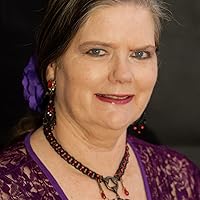
Kerry Packer described her as a 'dedicated and brilliant journalist who has achieved greatness in her industry very early and so quickly' and 'a jewel beyond price'. Cold Chisel wrote a song about her. Rupert Murdoch was so impressed by her talents, he asked her to be the editor-in-chief of both the Daily and Sunday Telegraphs – and in doing so, become the first woman ever to edit a major Australian metropolitan newspaper.
In her extraordinary career, spanning over fifty years, Ita Buttrose has been involved in every aspect of the media, from newspapers and magazines to television and radio and now, electronic publishing. From her creation of a new type of women's magazine in Cleo and then ITA, to her appointment as the youngest-ever editor of The Australian Women's Weekly (a distinction she still holds today), a passionate love of journalism has driven her every step of the way.
Refreshingly candid about the challenges she has faced as a professional woman, not only in her career but also in her love life and as a mother, A Passionate Life describes those ground-breaking years with Ita's trademark clarity, precision and wit.
In this substantially revised and expanded edition, Ita also shares her views on current affairs and the state of the media today, including an insider's perspective on the Murdoch empire. We hear about her significant recent contribution to various health awareness campaigns, particularly Alzheimer's Australia; her coverage of the 2011 royal wedding; her new incarnation as a rap star; the making of Paper Giants and her recent venture into the new territory of electronic publishing
An appealing and lively autobiography by one of Australia's most distinguished journalists. A Passionate Life will strike a chord with working women everywhere.
A Passionate Life – Memoir by Ita Buttrose Ita Buttrose is a renowned Australian journalist and trailblazer, who has worked in radio, newspapers, television, magazines and recently electronic publishing, across her extensive career.
This is an interesting autobiography, where Ita shares many stories of challenges she has faced, particularly as a younger woman in a male-dominated profession; in addition to her involvement in several health campaigns. Its offers insight into many of the changes in Australian society over the decades, as well as her considerable contribution to women in media and pioneering leadership roles.
I read the digital book, alongside listening to the audiobook. The audiobook is narrated by Ita herself, which adds to her distinctive voice and wit.
Format read: Hybrid read - e-book and audiobook via Borrowbox (through my local library)
How I wish I’d known more about Ita when we shared a cab after being featured speakers at a women in education leadership conference! On the other hand, I was impressed with this journalist/activist/leader/thought leader’s session for educators without really understanding her place in Australia. The pages describe the ups and downs of her journalism career as a woman, as well as her leadership of the national committees on AIDS during the 1990’s. Incident after incident shows her stepping up and persevering, often with little hesitation in spite of being a pioneer in the area. A great role model of pursuing what you believe is the right thing to do.
In her way Ita Buttrose is as influential in the media industry in Australia as Oprah Winfrey was in America. The main differences between the two women is that while one began humbly at the age of fifteen as a copywriter for a magazine, the other began her television career after some higher education a few years older. One spent much of her life working within the businesses of others, and dealing with their working conditions on her own as a pioneer for women. The other more readily drew a team around her to create her own brand and business. Theses differences are partly due to timing, but more likely due to the cultural differences of America and Australia. But both women by hard work and a clear idea of their own ambitions to apply themselves to the best of their potential, became much-loved voices sought out by their communities to raise the issues which needed to be heard.
While Ita may not be recognised readily around the world the way Oprah is, she has still had a number of significant roles on the international stage. Where Oprah has gone into African villages and built schools and housing out of her own considerable wealth, Ita has been appointed by the government as a consultant on AIDS and travelled both to gather information and first-hand experience, as well as to disseminate important information back to the Australian public.
To reach such a position of trust and recognition has not been an easy task.
But the main way in which Ita has achieved it is through her personality. Her curiosity, intelligence, warmth, and willingness to ask tough questions and well as report on more mundane subjects, has endeared her to generations of Australians beginning with her work at the Australia Women’s Weekly. Where others seem to have been taken for granted by their continued employment in the one place, Ita made choices which kept her fresh as well as connected. She travelled to London early, and later returned more able to add to a previous employer than she would have by remaining with them. She used every opportunity to learn as much as she could from those around her, and such interest and respect stood her in good stead when she required further advice or mentoring. But also became the base for her deepest friendships.
Meanwhile she also steered an interesting course in a male world where criticism was as likely from other women as challenges by men threatened by a competent woman. Her own integrity and belief in her own values guided her. And this could only be developed through asking her questions one at a time and seeing for herself what answers she could produce.
Like most young girls of her time she believed she would leave work and raise a family once she married. Not only did the circumstances of her early married life make it impractical, her husband was also aware later that she wouldn’t remain home with the children and be fully satisfied within herself. He was the one who encouraged her back to work.
Just as well she had such encouragement, but also such strength within herself. By the time Ita was running, not just the magazine but the whole women’s department for Australian consolidated Press, she was also working as a single parent much of the time.
Ita was not just part of a revolution in women’s lifestyle, but she was at the epicentre of discussion around all the issues which were raised by such change. From actively seeking out the best contacts for stories, she became the go=to person for those who wanted to be part of such discussions. Such a position gave her an immense amount of power – despite still being employed by men.
Then she bravely stepped out and challenged herself again. She set up her own magazine. Like Oprah, it made sense that it should bear her own name, simply Ita.
In many ways by now she was her own brand, and what she stood for was very clear from a number of perspectives. Yet the comfort of others to go with her was challenged by more than the issues she was raising in a society reluctant to face its own changes. There was also a recession.
Surprisingly such a challenge financially to people seems to send them back into more entrenched opinions. Survival mode brings out a rigidity of response. All these years later you would have thought we would have begun to understand that when change is demanded you have to go with it to survive, and indeed to thrive. But we still look for certainties when there can be none.
Some people might consider Ita lucky at this time to have had a silent and extremely supportive backer. But I don’t consider it as luck at all. I consider it an astute businessman who valued what Ita offered to all of us that we were not brave enough in large enough numbers to support ourselves yet. She had earned her credibility and so she was afforded credit for it by someone who could support it.
But I think it is interesting that it was so difficult for Ita to see for herself why things weren’t working better for herself at that time as well. In recent times I have come across a profiling system called Wealth Dynamics (for entrepreneurs) or Talent Dynamics (for corporate teams). It refers Oprah as one of the examples of the profile called ‘Star’. I have no doubt this is Ita’s profile as well. But in running her own business at Capricorn Press I think she attempted to fit more into a Creator role, and this took her out of her own flow.
I am not saying Ita is not creative – far from it. All I am saying is that it is not her strongest alignment. Her team worked best around her when she concentrated on the people relationships, and found others to take care of some of the detailed processes for her. A matter of efficiency for those rising to the top of their field. (for more information about Talent Dynamics email me. I will have more reviews related to Wealth Dynamics and Talent Dynamics coming shortly)
This was my 50th book I read for the Australian Women Writer's Challenge and the final one I will review for the 2012 challenge (Review #38).
I got this book out of the library and ended up with the earlier edition (published in 1998), so I did not get the last decade or so of Ita's life story. However I will still do the review on this edition (and hopefully catch up on the later edition later).
Most Australians will acknowledge that Ita Buttrose is a woman well before her time. A strong, motivated and highly intelligent lady, she has paved the way for later generations of young women who also wish to rise to the top of their profession, despite their gender. It was very interesting to read of Ita's childhood and education and the way she got her start in journalism. As well as her great successes, Ita has also suffered some fairly devastating lows - but through good times and bad she has maintained a wonderful sense of decorum, professionalism and a great sense of humour.
As well as Ita's own story, this book also provided a snapshot of an Australia that has changed very rapidly in the past few decades. It's always fascinating to remember the little things you don't often think about.
Well written, easy to read and very inspirational I really enjoyed Ita's story and look forward to reading the later edition ASAP.
Ita Buttrose: Author. Journalist. Boss lady. Idol. There are so many words I could use to describe Ita Buttrose after reading her novel and passionate is most definitely one of them. I came away from reading her autobiography with profound gratitude, not only for her incredible work as a journalist but also her commitment to her role as a pioneer for females in leadership and in the media industry. Her style of writing was insightful and funny - as if she was sitting beside you telling you her story. I thoroughly enjoyed this book and recommend all young women read it.
This is a beautifully written book as you would expect from Ita. A great insight to Australian society and how it has changed over the decades, and how some changes are still very much needed in order to truly represent women. Ita is a strong woman with many stories and lessons to share and admirably she is not afraid to share the full spectrum of her colourful journey; the wonderful and exhilarating together with the disappointing and heartbreaking. I particularly like her insights into business, education and social issues. How we need more women like Ita, particularly in influential positions within the treacherous landscape that is the Australian media. She is able to be candid and deliver opinion in a respectfully thoughtful and elegant manner. I bought this book because I was particularly interested in Ita's perspective of historical and contemporary Australian social issues and she more than met my expectations. I look forward to reading more of Ita's literature in the future. Furthermore, I also hope to see her take a more public role here in Australia so as to share her invaluable social wisdom as it sorely needed.
In this intimate account of her life, Ita Buttrose sets the scene of the inner workings of the media industry, politics, shifting roles of men and women over the years, value of friendship, changing nature of families, and the lives and personalities of the affluent business associates she worked with including media tycoons Kerry Packer and Rupert Murdoch. This is a fabulous autobiography of one of Australia's most prominent and influential women. A must read for every young aspiring journalist hoping to enter the media industry.
An excellent insight to Australian social and business history via Ms Buttrose's very personal story. Particularly identifies how women were/are obliged to prove themselves worthy of being considered rather than being accepted for their skills and abilities on an equal footing. Shows how to be strong, feminine and capable. An engaging and enjoying read from first to last page.
This is an easy to read and interesting autobiography of Ita’s extraordinary career and more as the story is peppered with references to current affairs modern social issues and candid reflections of her personal life. This is a fascinating story of a fascinating life of hard work and ambition and, thus is of course inspirational to any professional woman in terms of maintaining integrity.
An excellent book - both a detailed look into the well-known Australian but also a wonderful walk through the decades. I relived my youth and was able to immerse myself easily within the pages of this book. It was an easy read although came across more as a very long magazine article than literature. Easy to hope in and out of if I put it down. Learned a few things too.
An inspiring read that shows how the lives of Australian women have changed over the years. It also lead me to viewing 'Paper Giants: The Birth of Cleo' which gives a brilliant perspective of particular sections of this autobiography. Go Ita!!
I read this after being fascinated by Ita Buttrose's creation of Cleo Magazine in the ABC TV series Paper Giants. Fascinating story of a fascinating life.
A should-read for working women, particularly those who juggle work and a family.
I don't tend to read autobiographies, largely due to literary snobbery: I firmly believe that having an interesting life doesn't necessarily make you a good writer. Buttrose was clearly going to be different, given her journalistic pedigree, and A Passionate Life didn't disappoint.
As a Gen-Y feminist who works with young women, this was a very interesting insight into the ways Australia has changed over the past 50 years or so. I've grown up with Ita making frequent appearances on my TV, but I knew very little about her prior to this, and it turns out she's a real badass. Whether you like her or not, she's made big gains for women in Australia, both through the very fact that she continued working in the publishing industry throughout her life, and the kinds of work she did in said industry. She was also instrumental in the AIDS campaigns of the 1980s and has worked extensively as an advocate for medical issues - fun facts I didn't know before.
He writing style is inviting and entertaining, and her autobiography has been updated over the years to include a lot of information about the state of relevant issues in the more modern world. This is a particularly poignant read for Australian women, both young and older.