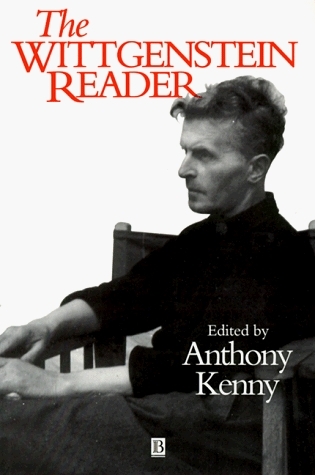
Ludwig Josef Johann Wittgenstein (Ph.D., Trinity College, Cambridge University, 1929) was an Austrian-British philosopher who worked primarily in logic, the philosophy of mathematics, the philosophy of mind, and the philosophy of language.
Described by Bertrand Russell as "the most perfect example I have ever known of genius as traditionally conceived, passionate, profound, intense, and dominating", he helped inspire two of the twentieth century's principal philosophical movements: the Vienna Circle and Oxford ordinary language philosophy. According to an end of the century poll, professional philosophers in Canada and the U.S. rank both his Tractatus Logico-Philosophicus and Philosophical Investigations among the top five most important books in twentieth-century philosophy, the latter standing out as "...the one crossover masterpiece in twentieth-century philosophy, appealing across diverse specializations and philosophical orientations". Wittgenstein's influence has been felt in nearly every field of the humanities and social sciences, yet there are widely diverging interpretations of his thought.
This is a solid, but moderately confusing collection of the writings of Wittgenstein. The book is divided up into chapters which include text written by Wittgenstein, but none of it is explicitly labeled source-wise; i.e. the only texts that are included in full are TLP, and his 1929 Lecture on Ethics; while this is understandable (the rest of his writing is daunting in its length for sure), it becomes misleading to read selections from the middle of the Investigations, Zettel, and the Big Typescript, all out of context (e.g. chapter 14 of this edition). As a writer who can, I think, only be understood in context--and certainly Wittgenstein himself made a rather large fuss about contexts... language-games anyone?--the combining of works in this way is likely to end in some confusion. To the uninitiated, the division of his topics into chapters will be initially helpful, but I urge you, if you really want to understand what is going on, to read the whole of the source material. The soundbites that can be found here may be nice quotable bits, but for real understanding, this anthology sincerely falls short.
A really interesting book. A lot of it seems to be taken from unpublished material and raw notes, so it can be very hard to follow at times. It is not as good of an introduction to Wittgenstein as I thought it would be. The first and last sections are pretty coordinated, but most of the other selections are all over the place, with a lot of free association and unfinished thoughts. If you're already familiar with Wittgenstein, I'm sure it would be really fascinating to get inside his thought process. If you haven't read anything by or about him before, this book is hard to follow.
Why do I have a crush on Wittgenstein? It is because I always imagine him to be neurotically sobbing (or, the repressed equivalent of sobbing, what have you) in the corner of a room about the limitations of human knowledge.
I don't know why I find that so appealing, but I do.
only got around to reading a few short sections before i had to return it to the library, but it was enough to get me excited about Wittgenstein's perspective. "Ethics, Life, and Faith" reverberated particularly strongly with me. I should make a quick note that i was disappointed to find the Tractatus only present in abridged form.