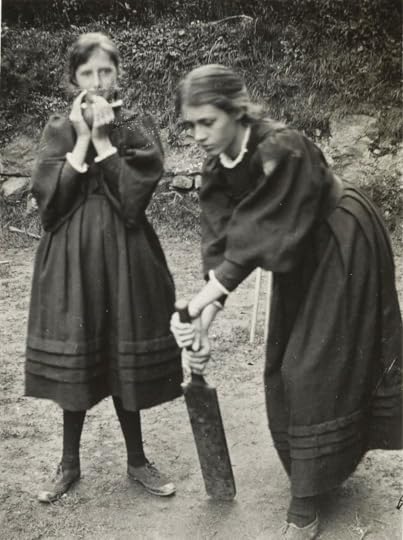
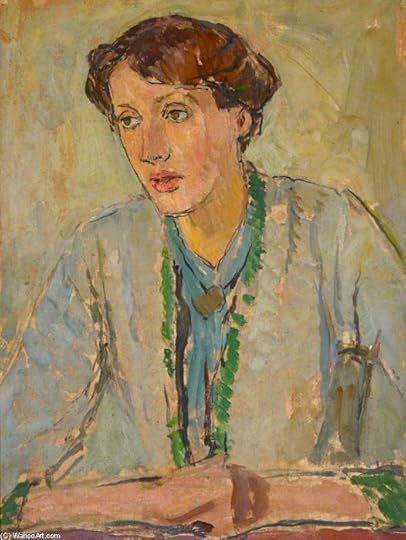
This short biography on writer Virginia Woolf, part of the Overlook Illustrated Lives series, is informative and richly augmented with photographs depicting various aspects of Virginia’s life and connections with others. Despite its condensed format, author Mary Ann Caws does a fine job of capturing pivotal points in Virginia’s life that shaped both her nature and her writing.
Some of those events happened early in Virginia’s life. At age 13, she lost her mother, and her ensuing grief brought to a halt the family newspaper, Hyde Park Gate News, a lighthearted project created as much for mutual teasing of family members as anything else. This may seem trivial, but it threw Virginia into depression and it was a year before she could write anything. As she showed signs of emerging from depression, her step-sister and her father died in quick succession over the next few years, causing her first mental breakdown.
There is little doubt that the Stephens (Virginia’s surname until she married Leonard Woolf in 1912) family lived a privileged life. Virginia and her siblings had fairly unrestricted opportunities to indulge in whatever pastime took their fancy, such as writing and art, and even to follow courses of study. Their lives also afforded many opportunities to travel internationally and to live in multiple, well-appointed homes in England.
After moving to the Bloomsbury area of London, the “Bloomsbury Set” was quickly established, creating a forum for young, forward-thinking people to meet regularly for open discussions on art, literature, and topical issues. The group included Clive Bell (who would later marry Virginia’s sister, Vanessa), John Maynard Keynes, and Lytton Strachey. These men would go on to achieve fame in various disciplines later in life.
Virginia cut her writing teeth on anonymous criticisms and reviews, before transitioning to fiction. She favored writing about whom and what she knew in her life, experimenting with modern styles and the stream-of-consciousness model. A significant event was the launch of the Hogarth Press, a private publishing house. She was married to critic and writer Leonard Woolf by this time, and Hogarth Press published such writers as Katherine Mansfield and T. S. Eliot.
Virginia and Vanessa were promiscuous even by today’s standards. Virginia had a brief sexual relationship with writer Vita Sackville-West, and Vanessa had an affair (and a daughter) with Duncan Grant. Despite a life characterized by depression, breakdowns, and an attempted suicide, from 1915 onwards, Virginia published a novel every year or two during her remaining years, beginning with The Voyage Out and ending with Between the Acts.
Mary Ann Caws has packed a large and interesting life into short biography. The narrative is crisp and minimal. She has thoughtfully also included a comprehensive timeline of Virginia Woolf’s life, and the wide range of photographs makes this a book to return to more than once.