This volume is the result of a careful study by Economica Books of several available versions of Nasser's essay. The translation used is one published by Dar Al-Maaref in Egypt, and given by President Nasser in Cairo to the Editor. Although in spots this translation is stylistically awkward from the standpoint of English readers, its deficiencies do not distort Nasser's meaning. Another version (for example, Nolte's mentioned below) would offer American readers a far smoother English style, but would necessarily lack something of the original - albeit naive - vigor of the more literal translation here printed. Accordingly, the text of the Dar Al-Maaref translation has been preserved excepting for the correction of certain errors in spelling or grammar. It has, however, been abridges by approximately 20 per cent. In this condensation, the omissions are either of repetitive or rambling passages, or of occasional passages on medieval Egyptian history. Nothing controversial has been omitted, nor any remarks bearing on Nasser's attitude toward Israel. The notes are by Richard H. Nolte of The Rockefeller Foundation, whose own annotated translation appeared as an Institute of Current World Affairs Newsletter and as an American Universities Field Staff Report early in 1954. The Introduction by Dr. Badeau is based on the Dar Al-Maaref translation and is prepared especially for Economica Books. We are most fortunate in having persuaded Dr. Badeau to write it on short notice just prior to his departure for Africa. As former president of the American University in Cairo, and now as president of the Near East Foundation, he has has a long and extensive knowledge of Egypt's conditions, on which he is an acknowledges authority. His penetrating introduction to The Philosophy reflects both this broad background and a refreshing absence of bias with regard to a man who is surely one of the most controversial and important persons in the world today. --- from book's back cover
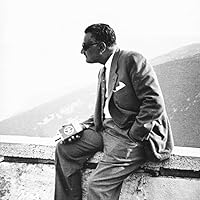
Gamal Abdel Nasser Hussein (Arabic: جمال عبد الناصر حسين) was the 2nd President (1956–1970) and occasional Prime Minister (1954, 1954–1962, 1967–1970) of Egypt after having led the overthrow of the King of Egypt in 1952.
Første bok om Egypt og Gamal Abdel Nasser, som dermed markerer mitt første steg i å lese mer om Afrika i hop med Vest-Asia. Boka er ganske forståelig og svært gøy på en empatisk og interessant måte. Likte den svært godt. Her ser Nasser tilbake på hendelser og situasjonen som landet hans gikk gjennom før 23. Juli 1952 Revolusjonen og etter, samt hans indre tanker om det hele. Han taler til folket, seg selv og sine naboer, og med sin observasjon så konkluderer han i at hvert land i likhet med Egypt går og bør gå gjennom to revolusjoner; En politisk og en sosialt.
Den politiske revolusjonen er en handling mot en despot eller en aggressiv okkuperende enhet, for å deretter skaffe seg selv rettigheten til selvstyre.
Den sosiale revolusjonen er en indre utfordring der samfunnets klasser går til kamp mot seg selv for å deretter hvis mulig oppnå rettferdighet for alle og der forholdene mellom alle har blitt stabile.
Disse to er ikke til å foregå samtidig, i og med at de begge fungerer som et gradvis steg.
Oppsummeringene hans er at folket må tilrettelegge seg et enig mål, kaste bort alle personlige utfordringer som hat, egoisme, korrupsjon, mistanke og forskjell. Når dette har blitt oppnådd gjelder det sist at folket samler seg for en kamp mot inndeling og for alle.
Målet er å frigjøre Egypt fra imperialisme og all uro mens den andre er en indre kamp som fremmer rettferdighet som er tilpasset og forenelig til det samfunnet det befinner seg i.
Nasser mener også at Egypt må tilrettelegge seg til de lokale faktorene som landet befinner seg rundt, som pan-Africanism, pan-Arabism og pan-islamisme. Folket har muligheten til å samle seg som en pga. sin likhet og tilnærming til hverandre selv for all deres diverse identitet. Landet er omgitt av disse tre og det kan man ikke ignorere for en forent front og utvikling.
He was an interesting figure. I really appreciate his views on Nationalism and the binding force that Islam could be for the Muslim world. I know he was beloved during his time, but I definitely need to read more about him before I fully formulate my opinion on him. Glad I discovered this.
If you're reading to figure the philosophy behind the the Free Officers revolution, you will be severely dissapointed. The books is much more a train of Gamal Abdel Nasser's thought than it is an explanation of the philosophy of the revolution. Still makes for an interesting read of a nationalist, pan arabist and socialist individual in the Middle East.
1. Enthusiasm is not enough. Many are enthused about revolutionary ideas but never put them in action. You need to translate your enthusiasm to results
2. Any type of resistance from a pro Palestinian side is self defense not war. Palestine is a homeland not some territory. Any effort to protect it is an effort in self defense. If Palestinians stop fighting, Arabs lose Palestine.
3. Nasser identified, what he called, 3 circles of trends in the region.
Pan Arabism Pan Africanism Pan Islamism
Nasser’s influence is still felt throughout those circles. He feels people in the region can identify with one of those 3 circles due to similarities in culture, language, identity, religion and oppressors.
Nasser also leaned more towards diplomacy than violence when tasked with crafting his vision. Overall Nasser envisioned a free Arab world, a free African world and a free islamic world.
The title here is, as Nasser himself acknowledges right from the beginning, a bit misleading. This is not a revolutionary tract of the kind written by people like Marx or Lenin. It doesn't lay out a theoretical basis for revolutionary activity in the abstract. Instead, Nasser basically makes the case for carrying out two national revolutions: one which liberates Egypt from imperialism, and one which introduces social justice in a way that's compatible with Egyptian society and values. This idea of the two revolutions is essentially at the heart of the book.
However, in order to make his case, Nasser draws on a lot of different threads of thought. He talks about the incidents and aspirations that led to the 1952 Revolution by the Free Officers, and about how he thought the masses of Egyptian people would rise up and take over the Revolution--a hope that was disappointed when the people, the politicians, and the intellectuals became preoccupied with their own interests. Nasser also talks about the problem of imperialism, which had formed much of his early political awareness as an anti-British and anti-colonial nationalist. And he ties this to the larger spheres of pan-Arab consciousness, pan-African consciousness, and pan-Muslim consciousness. He fundamentally asserts that Egypt has a responsibility to all of these groups because of its deep ties to all of them.
In terms of the writing style here, this is a pretty fragmented work, which seems either drawn up relatively at random or to be a collection of statements, thoughts, notes, etc. from other contexts roughly put into an overall frame. Sometimes the writing isn't terribly smooth, but through a kind of impressionistic style, sometimes with almost stream-of-consciousness style transitions, Nasser conveys an overall impression of his approach to the 1952 Revolution and its context. https://youtu.be/QgVpM7nnWsQ
Le plus grand des rajels once said : « Many people come to me and exclaim, “You have angered everybody.” To which explanation I always reply, “ It is not people’s anger that influences the situation. The question should be: “Was what aroused their anger for the good of the country? Or for whose interest was it?” I realise we have upset big landowners; but was it possible not to upset them and still see some of us owning thousands of acres, while others do not own the plot of land wherein they are buried after their death? »
Good, insightful writing from Nasser on what he diagnosed as the main issues facing Egypt at the time of his revolution and how he imagined a brighter future for his people. Anytime I read some of Nasser’s own writing, whether in his articles or speeches, I feel it’s always through the looking glass in which the people are decisive and revolutionary and thus Nasser can be decisive and revolutionary. It’s always tinged with some kind of hopeful appeal to that parallel world.
Not nearly as good as I was hoping, gave excellent insight into Nasser's thoughts at the time, and was filled with lots of romantic revolutionary ideals. But in terms of actual substance, this falls a bit flat. I just wish he would have said more about what actually went on at the time. He basically is writing this for Egyptians at the time who know everything about what just happened, and he is writing to convince them to support the revolution. He is writing so much within this context that I had to consult other books and wikipedia constantly while reading it just to understand what he was saying.
It was incredible to get into the mind of Jamal abdel nasser and read his words through first person in Order to help me formulate my own opi ion of him. The book was also wellstructures that it included 2 different views of nasser at the end. However, i wouldve preferred if the reviews were written by arabs but i understand why they were mot. All in all, an i teresting reas
Surprisingly self-searching and self-analytical for something written by the mastermind of the Egyptian Revolution. Good for understanding the 1950s in Egypt, but does not stand up against the great political manifestos in explaining change and political movements.