Six-time Hugo-Award winner Ben Bova presents Farside.
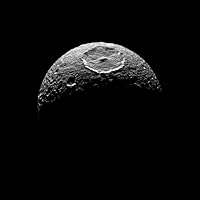
Farside, the side of the Moon that never faces Earth, is the ideal location for an astronomical observatory. It is also the setting for a tangled web of politics, personal ambition, love, jealousy, and murder.
Telescopes on Earth have detected an Earth-sized planet circling a star some thirty light-years away. Now the race is on to get pictures of that distant world, photographs and spectra that will show whether or not the planet is truly like Earth, and if it bears life.
Farside will include the largest optical telescope in the solar system as well as a vast array of radio antennas, the most sensitive radio telescope possible, insulated from the interference of Earth's radio chatter by a thousand kilometers of the Moon's solid body.
Building the Farside observatory is a complex, often dangerous task. On the airless surface of the Moon, under constant bombardment of hard radiation and infalling micrometeoroids, builders must work in cumbersome spacesuits and use robotic machines as much as possible. Breakdowns—mechanical and emotional—are commonplace. Accidents happen, some of them fatal.
What they find stuns everyone, and the human race will never be the same.
"Bova's latest novel is one of his best, and a classic use of the old sf theme of humanity reaching out for immortality among the stars." —Booklist (starred review) on Farside
Ben Bova was born on November 8, 1932 in Philadelphia, Pennsylvania. In 1953, while attending Temple University, he married Rosa Cucinotta, they had a son and a daughter. He would later divorce Rosa in 1974. In that same year he married Barbara Berson Rose.
Bova was an avid fencer and organized Avco Everett's fencing club. He was an environmentalist, but rejected Luddism.
Bova was a technical writer for Project Vanguard and later for Avco Everett in the 1960s when they did research in lasers and fluid dynamics. It was there that he met Arthur R. Kantrowitz later of the Foresight Institute.
In 1971 he became editor of Analog Science Fiction after John W. Campbell's death. After leaving Analog, he went on to edit Omni during 1978-1982.
In 1974 he wrote the screenplay for an episode of the children's science fiction television series Land of the Lost entitled "The Search".
Bova was the science advisor for the failed television series The Starlost, leaving in disgust after the airing of the first episode. His novel The Starcrossed was loosely based on his experiences and featured a thinly veiled characterization of his friend and colleague Harlan Ellison. He dedicated the novel to "Cordwainer Bird", the pen name Harlan Ellison uses when he does not want to be associated with a television or film project.
Bova was the President Emeritus of the National Space Society and a past President of Science-fiction and Fantasy Writers of America (SFWA).
Bova went back to school in the 1980s, earning an M.A. in communications in 1987 and a Ph.D. in 1996.
Bova has drawn on these meetings and experiences to create fact and fiction writings rich with references to spaceflight, lasers, artificial hearts, nanotechnology, environmentalism, fencing and martial arts, photography and artists.
Bova was the author of over a hundred and fifteen books, non-fiction as well as science fiction. In 2000, he was the Author Guest of Honor at the 58th World Science Fiction Convention (Chicon 2000).
Hollywood has started to take an interest in Bova's works once again, in addition to his wealth of knowledge about science and what the future may look like. In 2007, he was hired as a consultant by both Stuber/Parent Productions to provide insight into what the world is to look like in the near future for their upcoming film "Repossession Mambo" (released as "Repo Men") starring Jude Law and Forest Whitaker and by Silver Pictures in which he provided consulting services on the feature adaptation of Richard Morgan's "Altered Carbon".
I do not understand the high marks this book seems to be getting. I had forgotten my Ban on Bova when I put this book on hold at the library. But when faced with two-page chapters and nearly more white space than prose, it all came back to me. Once again, this is a novel that should have been marketed as a novella. Each chapter is at most four pages (and most are around two), which is intensely irritating. The story is a run-of-the-mill moon adventure, and frankly I've read better prose by people self-publishing on Amazon.
But what irritates me almost beyond reason is the characters who seem to come straight out of a 1950s pulp novel. The main female character, an accomplished astronomer, on meeting a fellow traveler to the far side of the moon, has only one thought: "He's an Adonis!" And later, when this man, of course, seduces her because she, of course, has terribly low self-esteem because: girl scientist, and then snubs her at a meeting, she wonders whether she "was hot enough in bed." OH FOR THE LOVE OF GOD. Everyone is first described by their looks: the women of course by chest size and the men by degree of dashingness. This has no place in today's SF.
If I ever decide to read another of this man's books, somebody please kick me.
Ben Bova continues his steak of telling entertaining stories that have a hard-science fiction bent to them. This isn’t near the top of his collection of books, it is still really entertaining.
I’m going to start with a few negatives this time, but please remember that I really enjoyed this book.
First of all, I think that Bova missed an opportunity to put the emphasis on exploring New Earth through the satellite technology. It’s definitely a part of the book, but it really should have been a major part of the book.
This book’s main idea of the nanotechnology is strikingly similar to the nanotechnology Plotline in Leviathans Of Jupiter (which I just happened to have just completed recently). It was so similar that I found myself accurately guessing the twists in the book as they were so similar to Leviathans.
The book also has a character named Grant Simpson, and he is essentially a co-lead in this book. The co-lead of Jupiter was Grant Archer (no relation), and I think Bova should have separated the names to differentiate the characters. A small critique, sure, but one that would have helped the story.
Now to my positives.
The book is such an entertaining story. It really felt like an action thriller, particularly near the end of the book. I just found myself blazing through to see what would happen next.
This book has an interesting focus on Hook-up culture. I’ve seen many detractors of Bova’s writing in reviews say that he wrote men’s view of women horribly, or women’s view of men horribly. I actually think that Bova wrote an excellent indictment of hookup culture, and the way he portrayed the gender’s views of each other is actually a demonstration of the destructive nature of the worldview and ideals that result in hookup culture. Perhaps I’m reading too much into it, but the book made me think about it, which is important.
The descriptions of the technology and descriptions of the moon were perfectly managed. I was always interested in the descriptions, but they never got cumbersome like some Hard Science Fiction writers might.
Overall, I had a blast with this book. It’s not Bova’s best, but it’s a pretty entertaining story nonetheless. 8 out of 10.
I gave this book one more star than I think it ought to deserve, simply due to the interesting scientific concepts presented. The story itself isn't particularly good though. The characters are extremely one dimensional... insultingly so in some cases. As others have pointed out, there are some lazy stereotypes floating around, and the main female character is infantilised to a degree which is completely unbelievable for an astronaut/scientist.
Also, as others have pointed out, early on the book takes a brief foray into the topic of date rape. This was handled with extremely bad taste, wasn't necessary to the story and is never even mentioned again. I share the horror of many reviewers that Ben Bova even thought it was a good idea to include this section.
I did enjoy the book, however, despite its many flaws. Reading speculative fiction about scientific endeavours is always a pleasure, it's just a shame that the human element doesn't live up to this.
I might have liked this, but I quit very early when the female lead recounts a drugged date rape, her first sexual encounter, where afterward she "rolls up the bloody sheet and decides to look on the bright side. At least that's out of the way." (I listened to the audio, so excuse an errant word.) I can't imagine any person - male or female - who would react that way. It's very offensive, and I couldn't read any further.
DOSSIER: The author does some worldbuilding to develop his characters, then is so fantastically lazy he inserts the information in a chapter entitled "DOSSIER".
The sad part is, the Dossiers contain more conflict than the actual story itself. This book has awful writing, with the author reminding us over and over again of the characters' eye colours in a world where everyone is a slim, trim sex object. Usually stories written in this manner get by on the merit of the SF ideas they contain, but this one lacks even that. The details given in the research of the telescope are terrible, demonstrating that Ben Bova knows very little about optics. The ideas are hopelessly out of date -- so much that I thought the publication date was maybe somewhere in the 1970s, when in fact it was published in 2013.
I very rarely skip ahead in books, being doggedly stubborn to try and believe and trust in the author's skilled hand. This is the first book I remember skipping in the last ten or more years, and I'm sad to say I didn't miss anything. The ending is predictable and anticlimactic, with hazel and green-eyed characters you're guaranteed not to care about.
OMG! I just listened to two hours of Farside by Ben Bova. I'm going to lem it and try to return it to Audible. I don't cry "sexist" at most books, but this is the most sexist piece of drivel I've ever read. It seems like it was written in 1953 rather than 2013. Add to the fact that 1/2 of the book so far has a female POV character and it's narrated by Stefan Rudnicki. He's a good narrator, but a very poor choice for this book. He has a very deep voice and can't do women well at all. UGH!
My second read-through. I still really like this book and find it to be one of Bova’s better efforts, although there are elements that are reprehensibly awful.
It’s been a while since I read, never mind reviewed, any of Dr. Bova’s novels. In fact, the last one I reviewed was the Ben Gunn anthology, The Sam Gunn Omnibus (2007) back in, erm… 2007.
So what do we have here, eight years on? For those who don’t know, for over two decades Ben has been creating his own series of novels (The Grand Tour series) which explore different planets (and in this case, satellites) of the Solar System.
Here, in Farside, the spotlight is on the development of a huge radio-telescope array being built on the far side of the Moon, shielded away from any of that annoying radio-wave chatter from the Earth. As this is a solar system built on private enterprise and profit, then part of the novel’s tension is created by the race to completion between the Moon-based Cyclops array at Farside and the IAA creating a just-as-big interferometer out in space. Whichever finishes first and gets data on the recently discovered ‘New Earth’, Sirius C, will get the media attention and glory, not to mention the associated research contracts.
The cast list of this cinematic escapade is appropriately multinational, and as befitting a space opera, each bringing their own personal issues to the plot. We begin the book by meeting Canadian Trudy Yost, the new young assistant-astronomer being sent to the Moon to help with the construction of an optical interferometer on the Farside. On her journey there Trudy meets her object of lust, American Carter McLintock. Carter is the administrative manager for the project leader at Farside, there to help, but also to determine whether his wealthy family should invest into the observatory project.
Trudy and Carter’s arrival at Farside leads us to meet others in our list of characters there. Austrian Dr. Jason Uhlrich is the driven project leader, determined for a last chance at achieving a Nobel Prize for his work at Farside. We also meet Grant Simpson, a South African construction manager on Farside, another character who finds Trudy attractive. Anita Marie Halleck is a character that has been in earlier books in this series, and is the Australian Director of the competing IAA project. Dr. Kristine Cardenas, the world’s leading nano-technologist is a character brought in to assist with solving a mirror problem.
Life on the frontier is tough. The moonbase at Farside, we are repeatedly told, is cramped, oppressively small and uniformly grey, both in colour and design – functional, rather than luxurious. The whole project is developed with the idea of keeping costs to a minimum, with no frills – as was the American frontier towns of the Wild West, something which Ben is keen to point out:
“Space is where the action is, boy,…. ‘It’s the frontier now and the frontier is where new fortunes are made.”
This idea of ‘expanding the frontier’ fits the template I first encountered back in books before The Grand Tour series, with Colony in the 1980’s. What we have here in Farside is the continuation of a number of themes from earlier books and throughout the other Grand Tour books, which creates a consistent background to the series. Climate change has flooded much of Earth, (see The Precipice, 2001) which has led to increased exploration out into the Solar System, often pushed forward through private industrial funding (see The Asteroid Wars series, 2002-2007). However, expenditure is constantly monitored, for the risk of flagrant overspending means the closure of the projects. Science is rather regarded by many with some suspicion as we have the abolition of stem-cell techniques and nanotechnology research on Earth (see Moonwar, (1996) and Moonrise, 1997). The effects of constantly living in this rather dangerous environment are also raised again, with many of these explorers of the new frontier are dependent upon drugs/narcotics/alcohol for their survival (see also The Trikon Deception, 1992)
With such a broad background set-up, in Farside the plot here is all fairly straight-forward. There are no major surprises here. Ben sets an Analog-style mystery (scientists put in jeopardy and have to solve puzzle though investigation and research) and then gets his characters to solve it. Much of the book sets up what will presumably be the next book, for we are constantly reminded that this book is just one element of many and has a background and a foreshadowing of things to come.
Have things changed much in these books in the last eight years? Not really. Farside is a comfort read, rather than something that pushes the genre. The reader knows what they are getting and the story provides it. But then I suspect that that is part of their charm, as Ben interweaves the different characters and plots into his own Solar System series. The chapters are all fairly short – two or three pages – and this allows Ben and the reader to follow the plot without too much effort.
Farside is a book that you can read quite happily without reading the earlier books, and I suspect that if readers have managed so far in this series, then I think they will want to continue, to see where it is going. This creates both a comfort and a limitation. Whilst the sense of credulity is rather stretched at times to fit the convoluted plot, the dialogue at times can be a little creaky and the characterisation is rather slim, it must be said that I found it entertaining. It is stridently solid, and determinedly un-flashy or over-written.
In the end, although I enjoyed Farside a lot, I can see why many more recent converts to SF wouldn’t be impressed with its old-school tone and style.
This is the first book by Ben Bova I picked up. The most charitable thing I can say is that he must have founded his reputation on earlier and better works, because this appeared to me little more than the self-conscious and formulaic writing of an inexperienced teenager. And that is doing inexperienced teenage writers a disservice.
The plot was thin. Wooden characters were introduced, each with their own contrived backstory delivered in chapter-long slabs of infodump as dry as a history lesson. Character actions and motivations were stereotyped and melodramatic in the extreme, and at no point did I feel I was reading about anyone or anything real or even passably credible. In short, no reason to spend time reading past the first quarter or so, and even that was a struggle.
Add to that the scientific gaffes (from someone who is supposed to be a master of "hard" sci-fi) - dust on the moon kicked up by a wheel will not hang suspended in the vacuum - and the whole writing smacks of extreme laziness.
Tedious dialogue, dull description, predictable plot, ridiculous characters... not very good, really.
The characters act like truculent adolescents, throwing tantrums and trying to be Mr Big Guy. Nothing like any scientist or engineer I've ever worked with.
Most of the text is dialog, with many conversations that seem to add nothing to the story. There's very little room given to description of the moon bases, vehicles, or technology in general. The most we hear about is the depressing nature of the corridors!
The villains are pretty obvious early on, and there's no twist. And do we really need a cheesy romance in a sci-fi story?
This hard SF novel about building 100-meter size telescopes on the far side of the Moon caught my attention. I'm an astronomer so I enjoyed the astronomy and the mirror and telescope construction. Bova's thorough research into telescope mirror construction shows. The characters were cardboard, and evaluated everyone as potential sex partners rather than future colleagues. The astronomer heroine was irritatingly passive. But I enjoyed the central mystery of why an engineer asphyxiated in his space suit with a full oxygen tank, and where the answers led.
Sexist and trite. Plot points repeated every chapter in case you missed it the first 10 times. I'm not even exaggerating. I can't believe a company would publish this, let alone Tor. Absolutely horrible.
Farside is another very good science fiction novel by Ben Bova, a six-time Hugo-Award winner. This novel takes place on the Moon, where a huge state-of-the-art optical interferometer telescope is being built on the farside of the Moon, i.e., the side that always faces toward outer space and never toward the Earth. The lack of an atmosphere and the emptiness of the Moon make it an ideal platform for such a telescope. The farside of the Moon is an ideal location for the observatory equipment because the Moon itself serves to block light; radio, television, microwave, and other transmissions; and atmospheric interferences from Earth. Previously, an exciting discovery using a smaller more traditional telescope on “Farside” revealed an Earth-sized planet, named Sirius C, orbiting a star that was less than nine light-years away. Furthermore, Sirius C appears to have an atmosphere, prompting the popular media to refer to it as “New Earth.” This story focuses on the small group of scientists, engineers, technicians and their support personnel who are constructing and using the equipment to study “New Earth.” They live and work under Spartan and harsh conditions on the Moon. In fact, the conditions can be dangerous, life-threatening, and unforgiving. Nanomachines, microscopic entities (machines) that can be programed to construct at the molecular level, prove to be a great help in the construction project. However, they can also be very dangerous if not used properly. The team must work carefully and cooperatively to get the job done without sustaining injuries or deaths. Unfortunately, human nature includes political motives and individual desires and prejudices that can be a hindrance to progress and safety. Like all of Bova’s science-fiction books, this one includes much interesting and credible science. Remarkably, he is able to present it within a very interesting story that is also populated with knowledgeable, intriguing, and very human characters with actions and motives that most readers will understand. He also provides gripping and alarming action, and an appeasing ending. I was not surprised that I liked this book very much. Bova writes terrific science fiction with a focus on the relationships between the science and the people in his stories. I recommend this book to anyone who likes science fiction.
Ben Bova is one of my favourite authors. His stories flow effortlessly and the characters are believable and relatable, so with that taken care of, your only task is to read and enjoy the book. After all isn’t that why we read ?
The far side of the moon represents a golden opportunity for Dr Ulrich and his staff to build three giant mirrors and capture more detailed images of a planet called Sirius C. It’s nickname is New Earth as it appears to be in the goldilocks orbit (not too close, not too far, just right) around it’s sun and may have an atmosphere.
It’s not visible from Earth as the telescopes are not powerful enough to over come the effects of the Earth’s atmosphere. But on the far side of that Moon that is not even a consideration.
The only problem is that another group on Earth are considering building a telescope in space to also try and capture better images of Sirius C.
Dr Ulrich is of the opinion that if he gets the images first there will be a Nobel prize in it for him so he drives his staff relentlessly to win the race to get the first images.
Add in his Operations Manager who is a drug addict, a billionaire as an opponent, a billionaire’s son who monitors every thing Ulrich does, a surprise attack from an enemy banned on Earth, and you have a wildly successful thriller set on the far side of the Moon.
OK, is this the best Bova novel? No. Is it typical Bova? Yes. Keep in mind, this guy is now 81 yrs old. He's not the cutting edge anymore but he still tells a readable, fun story. All the cliche's of his style are still there but now, appear dated and odd. I'm OK with that. This story is part of his Grand Tour series. It could just be a short story fleshed out and probably is. His newest book "New Earth" puts Farside as a prequel. So treat this as a nod to his style set in a timeline of his own creation and enjoy.
Here's a test for Classic Sc--Fi readers (and by classic, you now have to include stuff from the 70's and 80's folks... like it or not). Go to the library or a NEW bookstore and look for those classic authors ( Poul Anderson, Ben Bova, Gregory Benford, Isaac Asimov, etc) and you won't find as many on the shelf. Very sad that this is true in libraries, but they have to make shelf space and getting rid of those authors that checked out as often is the way to go.
pg 114/367: I can read 45 pg/hr in this thing. It's a pretty easy read for a hard sf novel. It's mostly a 'moon drama', almost like a weekly tv show, with short chapters, but with nanotech. At first I though it as YA, since the first POV character was a young woman worried about her looks and the handsome man she was with. But then other characters enter the scene. Is it really just a race of who can see a faraway planet through telescopes first? There doesn't seem to be a lot of buzz about this book. The female characters could be better.
How come B&N doesn't stock it? Did he say Ben Bova liked Amazon in a tweet or something?
This was ok. Kept my ears busy, put pretty pictures of moon bases and telescopes and stuff in my mind's eye. Characters were human. Not much thought went into the idea of living on the moon though, there were all kinds of opportunities for awesome details about the hardships and difficulties of a permanent moon colony, that were conveniently ignored. Having read Red Mars (Kim Stanley Robbinson) this was frustratingly shallow. But it entertained me, and I'll probably read more of Mr Bova's works.
Good book... I've liked all of Ben Bova's books I've read so far. This book has a lot of political intrigue and company espionage as two different companies compete to build their own large telescopes to view a planet in another solar system. Nanobugs are used as a weapon and things start to go crazy...
The far side of the Moon is a strong setting for a story like this because it naturally creates separation—physical, political, and psychological. Everything feels a little more isolated there, a little less stable, and Bova uses that well. The lunar observatory project at the center of the novel gives the story a clear sense of purpose, especially once questions of funding, control, and competing agendas start closing in around it.
The scientific side remains the book’s strongest element. The astronomy, the practical realities of building and maintaining infrastructure on the Moon, and the broader implications of what might be discovered through the observatory all feel grounded in genuine enthusiasm for exploration. Bova has always been good at making scientific ambition feel exciting without turning it into fantasy.
There’s also an interesting tension between idealism and institutional pressure running through the novel. Scientific discovery is constantly being pulled into politics, economics, and personal ambition, which gives the story more weight than it would have had as a straightforward exploration narrative. The Moon may feel distant from Earth geographically, but the same power struggles follow people there anyway.
The setting itself is probably the most memorable part. The harshness of lunar life, the dependence on fragile systems, the claustrophobic habitats, and the sense of being permanently exposed to danger all come through clearly. The far side especially has a kind of eerie remoteness that suits the tone of the story.
At the same time, some aspects of the characterization and gender dynamics feel noticeably dated now. Certain interactions, attitudes, and descriptions carry an older sensibility that can become distracting, particularly in how some female characters are framed within the narrative. It doesn’t ruin the book, but it does make parts of it feel more rooted in the era it was written than the science itself.
The pacing is fairly steady, though there are stretches where the story becomes more procedural than emotionally engaging. Some conflicts feel predictable once the larger political lines are established, and not every character arc lands equally well. Still, the novel works when it focuses on what Bova does best: showing how exploration is never purely scientific. It’s always tied to ego, competition, survival, money, and the stubborn human need to push outward anyway.
Maybe this book works better as part of The Grand Tour or as the prologue to New Earth but on its own, a single-word description of this book would be: boring. If I had another word I would say "lazy".
I still want to start with the positive part. I found some of the science in the book pretty solid, especially life on the moon, travel on the moon, tele-operation etc. This is for me the main redeeming element of the book. However, I think this is far from being enough to sustain a book.
The book is set up as a sort of thriller in space, but there is no twist or anything surprising in the plot. Someone is sabotaging Farside, but who? Assume that one cares (and I don't think one does), withthe very shallow, black-and-white description of the "bad guys" and the "good guys" it is clear from the very beginning who did what, who will end up in what bed, who will die and who will emerge victorious. Surely, the characters themselves also see these obvious patterns, why would they act this way? It seems the author was too lazy and formulaic to think of this.
The The characters are lazily written. They are single dimensional, stereotypical and one-track minded, which makes involvement difficult and, well, boring again. This is not even mentioning the bad taste in the description of many of the characters mostly by their compatibility as sex partners and the forgiving description of date rape in the beginning.
Coming back to the science, while I did find some of it engaging, much else was what I would expect from a book written in the 80s or 90s, and I was a little shocked to see that this was written in 2013. People keep staring at "pocketphones" and "miniscule" screens (I'm not sure why, but this word is repeated over and over till it stuck in my mind), as if this is all technology could offer. Is this the best the author can think of?
The bottom line is that reading this book felt like a chore for me. I wasted too long on what amounted to be a boring, tasteless story. Two stars our of five.
Beaucoup critiquent le caractère stéréotypé des personnages. C’est pas faux. Mais outre que c’est de la science-fiction, pas du roman psychologique, il y a des portraits réussis. Le prof, bon pédagogue, mais médiocre chercheur, qui se retrouve sur un poste dévalorisé qui va finalement s’avéré payant en termes de rendement scientifique, on dirait du Latour. Le fils à papa womanizer est un beau portrait de mouche du coche. L’ingénieur infatigable et ultra-professionnel mais maladroit dans les relations sociales (Mister précise-t-il quand on lui donne du Doctor, dans ce milieu où la possession d’un PhD sépare les have des have not) est le personnage typiquement bovien. Et du côté des personnages féminins, c’est vrai qu’il y a la jeune docteure, un peu nunuche, un peu polarde, il y a la femme franchement vénale, qui se fait un chemin via les hommes qu’elle séduit, qui peuvent énerver, mais il y a aussi Kris Cardenas, qui revient dans plusieurs romans, la spécialiste des nanomachines, qui est une héroïne tout à fait positive. Reste que les vrais personnages en SF, ce sont les innovations techniques, ici les nanomachines, bless or blight, le détecteur de mensonges, les modes de transport lunaires, hoppers et boppers. Tous jouent un rôle au cœur même de l’intrigue. Mais le personnage principal chez Ben Bova c’est peut-être le lieu, qui donne souvent le titre de ses romans, ici Farside, la face cachée de la Lune, surtout explorée au début par les sondes soviétiques au point que les noms des « mers », des cratères, sont tous des noms russes. Et comme toujours avec Bova, Farside, you-are-there, comme si vous y étiez, pas de Terre rassurante en vue comme sur le Near Side, mais le vide noir au-delà du ringwall tout proche de la mer de Moscou, et ces milliards d’étoiles qui ne scintillent pas.
Ben Bova is a fairly prolific science fiction and fact author, and this is my first foray into his catalog. While I thought the concept held a lot of promise and the science behind the fiction was pretty rock solid, I found myself generally underwhelmed by the tale. It’s almost as if he was writing by formula, and a lot of the prose fell flat on the page. New character entering? Spend a paragraph describing them. Important plot point? Have a character repeat it at lease three times so we make sure to get it.
I also found a lot of key character interactions to be flawed. The whole tale is spun as a mystery – when things start going wrong on this remote moon base, it reads as if the author is trying to spin a whodunnit tale of mystery and intrigue. Yet the identity and the cause of all that’s going on can be seen coming a mile away. And despite every character in Farside being a brilliant scientist, they sure are idiots when it comes to human nature. Two competing agencies racing to discover New Earth, with billions of dollars in funding hanging in the balance. Yet the heads of each respective program think nothing of using the same scientist to help them complete their projects. Nor does anyone think of a reason why these rivals might want to sabotage each other.
In fact, the idea that Farside would allow the head of a rival program and a former employee who is now being employed by said program anywhere near their facilities is a giant plot hole. It reduced most of the believability of the plot, and rendered a lot of the characters impotent.
That said, it was still a relatively entertaining read. It moves at a brisk pace, and the threat of discovering New Earth or having the entire base fall prey to destructive influences is enough to keep the pages turning. And Simpson is an excellent character amid a sea of flat personas – his never-say-quit drive and willingness to go to any lengths for the sake of the work amid a group of scientists who seem more concerned with politics makes for a nice tension.
Farside reminded me how thoroughly satisfying classic hard science fiction can be. Ben Bova is one of the few living members of a fraternity that included such greats as Isaac Asimov, Arthur C. Clarke and Robert Heinlein. I am grateful that he is still around to entertain and thrill readers with his great and far reaching talent. Bova’s prose is crisp and precise, moving the story along.
Ben Bova evokes a near future where global warming has dramatically changed the world and a lowly moon base becomes an independent nation named Selene. When earth bound telescopes discover a potentially earth-like planet where it shouldn’t exist the race is on to get the first conclusive evidence that it has a breathable atmosphere along with oxygen producing plants. Into the fray the small and fragile observatory Farside, appropriately named because of its location, begins building a telescope to do just that.
The program is threatened by sabotage, political intrigue and simply due to its location on the edge of the vacuum of space itself. Ben Bova’s Farside isn’t just hard adventure science fiction trading on the cold war era themes of man’s quest for new frontiers, but also works as a detective story and commentary on human veniality.
Bova extrapolates plausible scenarios that seem like they could be happening today. The promise and threat of nano-technology and the politics of outer space are ethical concerns being explored by politicians and philosophers today. Farside is must read for science fiction fans and realists of all walks of life.
It starts off slow but it starts to pick up by the middle. For fans of high-packed action and adventure science fiction like the kind you see in successful block-busters, this isn't the kind of book for you. This doesn't mean it is not well written. Far from it. I am very critical when it comes to this genre, so believe me when I say that this is one of the best books of sci fi I have read in the year. There is a lot of intrigue, plotting and betrayal amongst the colleagues who are eager to be the first to publish and get recognition for their work on the new apparition known a New Earth. It is a great enterprise they are eager to be a part of, but as with every new discovery there are a lot of envies and resentments as some get to have more recognition than others, not to mention that certain someones want to test their new experiments and it gets to one of their colleagues (cough, cough, Grant). I do not want to spoil the whole book, but lovers of robotics, complex and intelligent sci fi will love this book. It is also filled with a lot of details which I like in every book.
Seems like it was written in the 1940s of 1950s, with a few current terms dropped in like tweet. While a practical look at lunar settlements and astrophysics, and therefore on the science side of sci-fi, this novel has almost no character developments and an unfortunately stereotyped way of handling the female characters. Almost everyone here is an engineer or PHD, but you would never guess it with all the melodrama and backstory twists that belong on a telenovela. That said, it was nice to revisit this older style of space-faring sci-fi just for the enthusiasm about the technical possibilities. Other reviewers have said much the same; a klunker for dialogue, characters, plot, etc. I'd have to say either read the early sci-fi directly or at least read Bova's award-winning works and skip this one.
A blind professor has ambitions to build a large telescope on the far side of the moon. This telescope will be able to see a shining planet that might support life as we know it. Someone is willing to commit murder so the project will fail.
It is not a great book but not the worst. I would call this a light read. I call this book a potato chip book; not good for you but enjoyable. You'll figure out who did it pretty quickly. Characters are well written. The plot is ok, good. The best part of the book is the author's description of the moon and the cities and labs--very well done.
This is a good book to read after a really heavy, thought provoking book. Farside requires little thought and effort.