

What do you think?

Those Angry Days: Roosevelt, Lindbergh, and America's Fight Over World War II, 1939-1941
From the author of national bestseller Citizens of London comes a new book-this time set in America-that examines the years 1939 to 1941, as Hitler's troops overwhelmed Europe while the U.S. watched from the sidelines. In Those Angry Days, Lynne Olson describes the vicious internal struggle that tore the country apart as Americans fought over whether or not to join the war.
Lynne Olson's last book, Citizens of London, told the story of three prominent Americans who supported Britain during the dark early years of World War II when Britain alone in Europe held out against Hitler. Those Angry Days views these years of crisis from the American side, as the country divided into interventionist and isolation factions who fought in Washington, in the press, even in the streets to express their vehement convictions. Personifying this bitter struggle were FDR, in support of the British, and Charles Lindbergh, America's most outspoken isolationist. Their high-profile battles add to the drama and poignancy of this crucial two-year period of U.S. history.
Lynne Olson's last book, Citizens of London, told the story of three prominent Americans who supported Britain during the dark early years of World War II when Britain alone in Europe held out against Hitler. Those Angry Days views these years of crisis from the American side, as the country divided into interventionist and isolation factions who fought in Washington, in the press, even in the streets to express their vehement convictions. Personifying this bitter struggle were FDR, in support of the British, and Charles Lindbergh, America's most outspoken isolationist. Their high-profile battles add to the drama and poignancy of this crucial two-year period of U.S. history.
548 pages, Hardcover
First published January 1, 2013
About the author
Lynne Olson
16 books739 followers Lynne Olson is a New York Times bestselling author of ten books of history, most of which focus on World War II. Former U.S. Secretary of State Madeleine Albright has called her "our era's foremost chronicler of World War II politics and diplomacy."
Lynne’s latest book, The Sisterhood of Ravensbruck: How an Intrepid Band of Frenchwomen Resisted the Nazis In Hitler’s All-Female Concentration Camp, was published by Random House on June 3,2025. Three of her previous books — Madame Fourcade's Secret War, Those Angry Days, and Citizens of London were New York Times bestsellers.
Born in Hawaii, Lynne graduated magna cum laude from the University of Arizona. Before becoming a full-time author, she worked as a journalist for ten years, first with the Associated Press as a national feature writer in New York, a foreign correspondent in AP's Moscow bureau, and a political reporter in Washington. She left the AP to join the Washington bureau of the Baltimore Sun, where she covered national politics and eventually the White House.
Lynne lives in Washington, DC with her husband, Stanley Cloud, with whom she co-authored two books. Visit Lynne Olson at http://lynneolson.com.
Lynne’s latest book, The Sisterhood of Ravensbruck: How an Intrepid Band of Frenchwomen Resisted the Nazis In Hitler’s All-Female Concentration Camp, was published by Random House on June 3,2025. Three of her previous books — Madame Fourcade's Secret War, Those Angry Days, and Citizens of London were New York Times bestsellers.
Born in Hawaii, Lynne graduated magna cum laude from the University of Arizona. Before becoming a full-time author, she worked as a journalist for ten years, first with the Associated Press as a national feature writer in New York, a foreign correspondent in AP's Moscow bureau, and a political reporter in Washington. She left the AP to join the Washington bureau of the Baltimore Sun, where she covered national politics and eventually the White House.
Lynne lives in Washington, DC with her husband, Stanley Cloud, with whom she co-authored two books. Visit Lynne Olson at http://lynneolson.com.
Ratings & Reviews
Friends & Following
Create a free account to discover what your friends think of this book!
Community Reviews
Displaying 1 - 30 of 337 reviews

July 28, 2013
”All that noise you hear...is death coming to London. You can hear the bombs falling on the streets and the homes. Don’t tune me out---this is a big story and you’re part of it…. The lights are all out everywhere, except in America. Keep those lights burning….Hang on to your lights, they’re the only lights left in the world.”
Foreign Correspondent Directed by Alfred Hitchcock
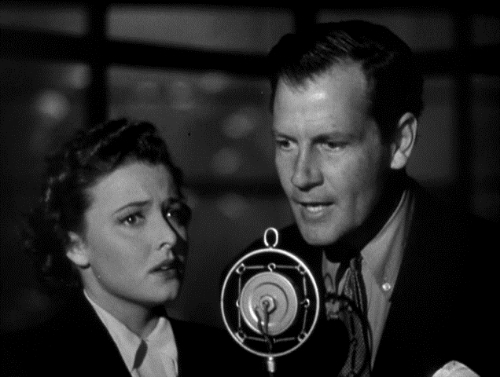
Joel McCrea and Laraine Day in Foreign Correspondent.
It was serendipitous that last week I happened to watch Foreign Correspondent on TCM’s salute to Alfred Hitchcock . I’ve seen the movie before and each time I watch it I like it even more. I didn’t realize until I read this book that this movie has importance beyond just a Hitchcockian thriller. This movie was the first American made movie to encourage America to enter the war. The movie was released in 1940 after the events at Dunkirk when an armada of ships and private boats were sent to the coast of France to bring what was left of the British army away before they were annihilated by advancing German troops. This was after the collapse of the French army. This was after the bombs began to fall on London. If you talk to people who were around during this period of time they will tell you it was, even for Americans, one of the most stressful times in their lives.
The war that we wanted to avoid was not going the way we wanted it to go.
Roosevelt dithered.
He had a split country of interventionists and isolationists and both groups were inflamed with reckless rhetoric. The interventionists were mostly East coast anglophiles led by the Century Club of which FDR was a member. They included artists, writers, and even industrial leaders as part of their membership. They thought of themselves as bohemians, but they did not, for instance, invite Walt Whitman to join because they didn’t think he was “clubbable”.
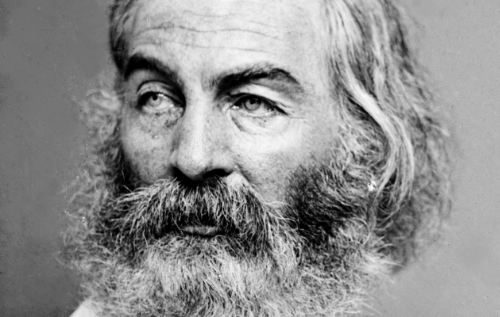
Poor Walt he was too bohemian for the “bohemians”.
The most famous member of the isolationist movement was Charles Lindbergh. He was of course the first person to cross the Atlantic with a plane. He was a hero of the world. He inspired generations of boys to gaze with wonder and with thoughts of daring at the sky. Most of the isolationist movement came from the Midwest and Lindbergh grew up in Minnesota and certainly reflected that geography in his opposition to Roosevelt and any plans the President may have had to bring America into the war. Lindbergh gave several hard hitting speeches that lit a fire in the movement and gave plenty of ammunition to his enemies. His speeches smacked of anti-semitism and certainly reflected his admiration for Hitler and the German people. He insisted for the rest of his life that was not the case, After the war he had three German mistresses and had SEVEN children out of wedlock. He was attempting to build the master race singlehandedly. Including his son Charles, who was tragically kidnapped and killed, he had SIX children with Anne Morrow.

Lindbergh giving one of his speeches supporting isolationism.
I like Charles Lindbergh considerably less after reading this book. I like Franklin Delano Roosevelt less after reading this book. I sympathize with Anne Morrow Lindbergh. I found myself liking Wendell Willkie and as sacrilegious as it is, being a lifelong Democrat, I even had to consider the possibility that Willkie might have made a better president in 1940. I found myself loathing a congress that forced Britain to give up ownership of all their remaining assets in the United States to pay their war debt and then sold those assets to bankers who turned around and resold them at huge profits.
Now even though a majority of Republicans may have been isolationists and the majority of Democrats may have been interventionists it was not that simple. Wendell Willkie was an interventionist which it is still amazing that he won the Republican nomination in 1940. Robert Taft (son of William Howard Taft) and Thomas Dewey both commanded larger followings at the convention. So even though he didn’t believe in the party platform he won the nomination because the men pulling the strings thought he had the best chance to defeat Roosevelt and anyone even a near turncoat was better than having that bastard Roosevelt in for another term.
If Wendell Willkie had won the nomination and he stayed true to his principles America would have been in the war sooner.
Captain America even beat us into the war. He was created by Jack Kirby and Joe Simon.
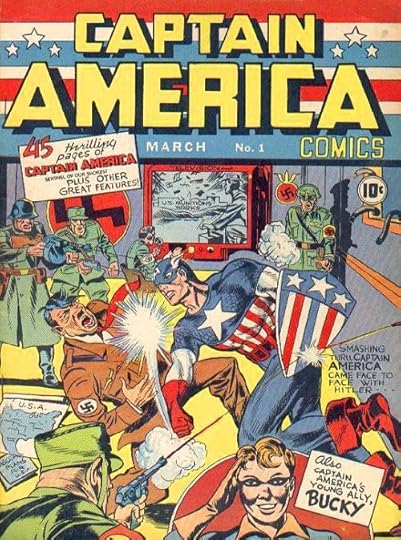
”Captain America Comics #1 — cover-dated March 1941 and on sale December 20, 1940, a year before the attack on Pearl Harbor, but a full year into World War II — showed the protagonist punching Nazi leader Adolf Hitler in the jaw; it sold nearly one million copies. While most readers responded favorably to the comic, some took objection. Simon noted, "When the first issue came out we got a lot of... threatening letters and hate mail.” Wikipedia.
Historically comic books are usually ahead of the general population on social and political issues.
Roosevelt did not take the opportunities that were available to him to help Britain sooner with more than just leaky warships and leftover supplies from WWI. He did not use his political clout and considerable charm to convince a country that we must for the sake of democracy enter the war.
He didn’t.
He could have.
And yet I can’t refute the results. Germany was on the verge of imposing their will on the world. The Yanks turned them back. Those beautiful damn Yanks. The world owes Churchill gratitude beyond anything that can be expressed for keeping the faith, for not suing for peace after Dunkirk, and for giving those inspirational speeches that turned the tide of support in many households all over America.
Fantastic book about the state of mind of the American public, and how events flipped public opinion back and forth as the pendulum of war gripped the national consciousness.
Foreign Correspondent Directed by Alfred Hitchcock

Joel McCrea and Laraine Day in Foreign Correspondent.
It was serendipitous that last week I happened to watch Foreign Correspondent on TCM’s salute to Alfred Hitchcock . I’ve seen the movie before and each time I watch it I like it even more. I didn’t realize until I read this book that this movie has importance beyond just a Hitchcockian thriller. This movie was the first American made movie to encourage America to enter the war. The movie was released in 1940 after the events at Dunkirk when an armada of ships and private boats were sent to the coast of France to bring what was left of the British army away before they were annihilated by advancing German troops. This was after the collapse of the French army. This was after the bombs began to fall on London. If you talk to people who were around during this period of time they will tell you it was, even for Americans, one of the most stressful times in their lives.
The war that we wanted to avoid was not going the way we wanted it to go.
Roosevelt dithered.
He had a split country of interventionists and isolationists and both groups were inflamed with reckless rhetoric. The interventionists were mostly East coast anglophiles led by the Century Club of which FDR was a member. They included artists, writers, and even industrial leaders as part of their membership. They thought of themselves as bohemians, but they did not, for instance, invite Walt Whitman to join because they didn’t think he was “clubbable”.

Poor Walt he was too bohemian for the “bohemians”.
The most famous member of the isolationist movement was Charles Lindbergh. He was of course the first person to cross the Atlantic with a plane. He was a hero of the world. He inspired generations of boys to gaze with wonder and with thoughts of daring at the sky. Most of the isolationist movement came from the Midwest and Lindbergh grew up in Minnesota and certainly reflected that geography in his opposition to Roosevelt and any plans the President may have had to bring America into the war. Lindbergh gave several hard hitting speeches that lit a fire in the movement and gave plenty of ammunition to his enemies. His speeches smacked of anti-semitism and certainly reflected his admiration for Hitler and the German people. He insisted for the rest of his life that was not the case, After the war he had three German mistresses and had SEVEN children out of wedlock. He was attempting to build the master race singlehandedly. Including his son Charles, who was tragically kidnapped and killed, he had SIX children with Anne Morrow.

Lindbergh giving one of his speeches supporting isolationism.
I like Charles Lindbergh considerably less after reading this book. I like Franklin Delano Roosevelt less after reading this book. I sympathize with Anne Morrow Lindbergh. I found myself liking Wendell Willkie and as sacrilegious as it is, being a lifelong Democrat, I even had to consider the possibility that Willkie might have made a better president in 1940. I found myself loathing a congress that forced Britain to give up ownership of all their remaining assets in the United States to pay their war debt and then sold those assets to bankers who turned around and resold them at huge profits.
Now even though a majority of Republicans may have been isolationists and the majority of Democrats may have been interventionists it was not that simple. Wendell Willkie was an interventionist which it is still amazing that he won the Republican nomination in 1940. Robert Taft (son of William Howard Taft) and Thomas Dewey both commanded larger followings at the convention. So even though he didn’t believe in the party platform he won the nomination because the men pulling the strings thought he had the best chance to defeat Roosevelt and anyone even a near turncoat was better than having that bastard Roosevelt in for another term.
If Wendell Willkie had won the nomination and he stayed true to his principles America would have been in the war sooner.
Captain America even beat us into the war. He was created by Jack Kirby and Joe Simon.

”Captain America Comics #1 — cover-dated March 1941 and on sale December 20, 1940, a year before the attack on Pearl Harbor, but a full year into World War II — showed the protagonist punching Nazi leader Adolf Hitler in the jaw; it sold nearly one million copies. While most readers responded favorably to the comic, some took objection. Simon noted, "When the first issue came out we got a lot of... threatening letters and hate mail.” Wikipedia.
Historically comic books are usually ahead of the general population on social and political issues.
Roosevelt did not take the opportunities that were available to him to help Britain sooner with more than just leaky warships and leftover supplies from WWI. He did not use his political clout and considerable charm to convince a country that we must for the sake of democracy enter the war.
He didn’t.
He could have.
And yet I can’t refute the results. Germany was on the verge of imposing their will on the world. The Yanks turned them back. Those beautiful damn Yanks. The world owes Churchill gratitude beyond anything that can be expressed for keeping the faith, for not suing for peace after Dunkirk, and for giving those inspirational speeches that turned the tide of support in many households all over America.
Fantastic book about the state of mind of the American public, and how events flipped public opinion back and forth as the pendulum of war gripped the national consciousness.

July 26, 2018
My fascination with this book began with the first chapter and never let up. Lynne Olson has written a masterpiece about a time when the US was floundering, uncertain, making unfulfilled promises, and unprepared to face a World War which could possibly reach the shores of the Americas. FDR seemed almost confused and was more worried about his political future than the build-up of a military presence representative of a world power. France had fallen liked a house of cards and England was standing alone in their small island against the juggernaut of the Nazi war machine. Churchill was begging for assistance of any kind from the US but the isolationist were refusing to get drawn into the battle.
Organizations sprang up all over the country opposing the war but one in particular, America First, had the greatest effect on the foot dragging of the administration. And one of country's heroes, the "Lone Eagle" Charles Lindbergh was leading the charge. Immensely popular, he toured the country speaking out against the Lend Lease program and the naval convoy protection that the US could provide to England. Lindbergh resigned his commission from the armed forces and that was his first mistake. And then a most unusual man stepped forward to sway the opinion of the country.....Wendell Willkie , who lost his bid for the Presidency against FDR in 1940, but was a man to be reckoned with. His support for intervention against Hitler was a strong and convincing factor in the loss of support for the isolationists. Lindbergh became a pariah and Willkie a leading light. Even though, the administration was still waffling when the unthinkable happened.....Pearl Harbor and Hitler's declaration of war against the US two days later. The question was settled but one wonders what would have happened if Pearl Harbor had not been attacked.
I cannot recommend this book highly enough.......it is a well researched, well written history of a less than honorable time in the early years of WWII.
Organizations sprang up all over the country opposing the war but one in particular, America First, had the greatest effect on the foot dragging of the administration. And one of country's heroes, the "Lone Eagle" Charles Lindbergh was leading the charge. Immensely popular, he toured the country speaking out against the Lend Lease program and the naval convoy protection that the US could provide to England. Lindbergh resigned his commission from the armed forces and that was his first mistake. And then a most unusual man stepped forward to sway the opinion of the country.....Wendell Willkie , who lost his bid for the Presidency against FDR in 1940, but was a man to be reckoned with. His support for intervention against Hitler was a strong and convincing factor in the loss of support for the isolationists. Lindbergh became a pariah and Willkie a leading light. Even though, the administration was still waffling when the unthinkable happened.....Pearl Harbor and Hitler's declaration of war against the US two days later. The question was settled but one wonders what would have happened if Pearl Harbor had not been attacked.
I cannot recommend this book highly enough.......it is a well researched, well written history of a less than honorable time in the early years of WWII.

May 3, 2013
UPDATED 8/7/13
An absolutely fantastic read. Olson writes history with the pace and intensity of a novel. Characters (real characters) are exposed bit by bit through their actions to have their strengths (Wendell Willkie) and weaknesses (FDR and Lindbergh) picked open to view.
... I have always liked FDR but now like him much less.
... I have never liked Lindbergh and now dislike him much more.
... I never knew about Willkie and now think he was a real political hero, the likes of which we have rarely seen.
Things I learned ...
Always extremely tentative, FDR refused to lead, to try to convince the American people and thus Congress. He did invent Lend-Lease, but then did nothing to assure any substantial flow of material to the Brits. Without Pearl Harbor, he would likely have allowed Hitler to conquer Britain and where would we be now if that had happened? Even after Pearl Harbor, we were lucky Hitler made a mistake and declared war on us.
FDR’s inability to make a decision is portrayed in a way I have never read before. It makes you want to give him a swift kick. In addition to being a ditherer, he is shown as a mean nasty man. Such disillusionment.
Lindbergh never learned from his experiences, which were many and varied. He never grew beyond the super-hero status he achieved early in his life. He comes across as a thoroughly immature and unlikable man who thought during the 1930s that Hitler and the Nazis were “not so bad,” and who, even after the Holocaust, never recanted. He seems to have been completely indifferent to the plight of the Jews in Germany.
He did know how to fly an airplane, but apparently nothing else, including an appreciation of his own limits. If he had emotions, they were never seen. He reminds me of some of our over-paid athletes today, celebrities with nothing to offer when off the field.
Wendell Willkie, FDR's opponent in the 1940 Presidential election, agreed with FDR to not make certain information into a campaign issue, due to national security considerations. Later, after he had lost the election, he urged all Americans to support the President's foreign agenda, and later he travelled abroad for FDR during the war to interact with our allies. And he didn't even like Roosevelt! He died too early, in 1944, at the age of 52.
There are many striking parallels between the political events of 1939-41 and our own recent history. The Republican obstructionism then was as bad as it is now. Had it succeeded, the U.S. would have left Hitler to conquer both Britain (likely) and Russia (possible), and maybe even us.
It is clear from Olson’s writing that there was little concern in the U.S. for what Hitler was doing to the Jews, even after Kristallnacht in 1938. Antisemites like Henry Ford, the America First group, and Father Coughlin put out their message of hate virtually unopposed. American Jews were reluctant to push harder than they did, fearing backlash antisemitism here. So Hitler was free to go ahead and murder six million Jews.
In sum, highly recommended. A great pick for our book club opener in December.
An absolutely fantastic read. Olson writes history with the pace and intensity of a novel. Characters (real characters) are exposed bit by bit through their actions to have their strengths (Wendell Willkie) and weaknesses (FDR and Lindbergh) picked open to view.
... I have always liked FDR but now like him much less.
... I have never liked Lindbergh and now dislike him much more.
... I never knew about Willkie and now think he was a real political hero, the likes of which we have rarely seen.
Things I learned ...
Always extremely tentative, FDR refused to lead, to try to convince the American people and thus Congress. He did invent Lend-Lease, but then did nothing to assure any substantial flow of material to the Brits. Without Pearl Harbor, he would likely have allowed Hitler to conquer Britain and where would we be now if that had happened? Even after Pearl Harbor, we were lucky Hitler made a mistake and declared war on us.
FDR’s inability to make a decision is portrayed in a way I have never read before. It makes you want to give him a swift kick. In addition to being a ditherer, he is shown as a mean nasty man. Such disillusionment.
Lindbergh never learned from his experiences, which were many and varied. He never grew beyond the super-hero status he achieved early in his life. He comes across as a thoroughly immature and unlikable man who thought during the 1930s that Hitler and the Nazis were “not so bad,” and who, even after the Holocaust, never recanted. He seems to have been completely indifferent to the plight of the Jews in Germany.
He did know how to fly an airplane, but apparently nothing else, including an appreciation of his own limits. If he had emotions, they were never seen. He reminds me of some of our over-paid athletes today, celebrities with nothing to offer when off the field.
Wendell Willkie, FDR's opponent in the 1940 Presidential election, agreed with FDR to not make certain information into a campaign issue, due to national security considerations. Later, after he had lost the election, he urged all Americans to support the President's foreign agenda, and later he travelled abroad for FDR during the war to interact with our allies. And he didn't even like Roosevelt! He died too early, in 1944, at the age of 52.
There are many striking parallels between the political events of 1939-41 and our own recent history. The Republican obstructionism then was as bad as it is now. Had it succeeded, the U.S. would have left Hitler to conquer both Britain (likely) and Russia (possible), and maybe even us.
It is clear from Olson’s writing that there was little concern in the U.S. for what Hitler was doing to the Jews, even after Kristallnacht in 1938. Antisemites like Henry Ford, the America First group, and Father Coughlin put out their message of hate virtually unopposed. American Jews were reluctant to push harder than they did, fearing backlash antisemitism here. So Hitler was free to go ahead and murder six million Jews.
In sum, highly recommended. A great pick for our book club opener in December.
August 20, 2022
The world is admittedly not what Americans—or anyone else— would like, but it is decidedly better than it would have been if the United States had not helped to defeat German and Japanese militarism. … If any war can be said to be worth fighting and winning, it was World War II. (Page 454)
Those Angry Days is a political history of the conflict between the Interventionists and the Isolationists in the two years prior to the attack on Pearl Harbor. The book implies that this was a conflict between FDR and Charles Lindbergh, but they only represented the faces of the two opposing groups.
The Interventionists wanted to aid Britain in their battle with Nazi Germany. They saw the defeat of Britain by Germany as a threat to the United States. If Germany were to gain control of the British Fleet they might then control the Atlantic. This could lead to a Nazi takeover in South America or Latin America which would then put the security of the United States at risk.
This book presents a different view of FDR than other histories I have read recently. This book shows a dithering president who repeatedly talked tough and then failed to follow that talk with action. It also makes clear the President was not being completely honest with the public with his talk that supplying material to the Allies was going to keep the United States out of the war. His lack of attention to the military’s needs would inhibit any aid or involvement that would eventually occur. George Marshall is quoted saying after the war that FDR’s lack of advocacy for military preparations cost the United States in money and lives when they finally did enter the war; that had the United States been more fully prepared it would have “shortened the war by at least a year” and saved “billions of dollars and 100,000 casualties.” (Page 96-97)
Having lived through the Vietnam War and the subsequent Bush Wars in the Middle East, I can sympathize with the isolationists of this period. They witnessed the tragic loss of lives from World War I, the probable aggravation of the spread of the Spanish Flu Influenza due to the military camps, the loss of civil liberties resulting from Wilson and his Attorney General’s attack on opposition to the war, and the birth of the modern Republican party, and all this with nothing resolved by World War I. That war and the conflict taking place in Europe in 1940 were just another example of the wars that had plagued Europe for centuries. They also saw any aid provided to Britain as diminishing the ability of the United States to defend itself. In addition, now Britain and France were looking again for the United States to help in a situation that was created in part by their insistence on a punitive Treaty of Versailles. The Isolationists wanted to see the United States as “an island of democracy in a totalitarian world.” (Page 128)
Following the attack on Pearl Harbor, both the Isolationists and the Interventionists halted their attacks and supported the war and its aims. With our historical perspective on the horrors resulting from the Nazi Holocaust, and furthermore the evidence that Japan showed in their Rape of Nanking, this was a war that had to be fought and won. There was a sense of unity during the three and a half years of participation in the war. Much of the credit for that unity was the result of the two-year debate over the war. The pros and cons of U.S. involvement were thoroughly discussed by almost everyone. It is called “a robust, if tumultuous, example of democracy in action.” (Page 437).
FDR along with Winston Churchill have been hailed as the saviors of Western Civilization. They might have played it a little too close, but the result was a Good War that was won.

December 13, 2016
America Claims Its Future
Although many books consider the history of the United States' entry into WW II, relatively few works focus on the tense, divisive history that proceeded Pearl Harbor. Philip Roth's "The Plot Against America" offers an imaginative novelist's look at this period which pales against this factual thoughtful, new history, "Those Angry Days: Roosevelt, Lindbergh, and America's Fight over World War II, 1939 -- 1941" (2013) by Lynne Olson. The book takes its title from a quotation from Arthur Schlesinger, Jr.: "though historians have dealt with the policy issues, justice has not been done to the soaring personal impact of those angry days."
Olson's book captures the tumultuous early years of WW II after the Nazis overran Europe and appeared poised to invade Great Britain. Americans fought and argued passionately about whether and how to become involved. A large isolationist group that crossed party lines believed the United States should not become involved and that staying neutral in the conflict would spare the lives of Americans. The interventionists, their opponents, advocated a variety of approaches from providing assistance to Great Britain in its struggle to becoming a belligerent in the war.
Olson focuses on the respective roles of Charles Lindbergh and President Franklin Roosevelt. She finds the two alike in many ways as "strong-willed stubborn men who believed deeply in their own superiority and had a sense of being endowed with a special purpose." Lindbergh, an aviation hero and a reserved loner, had spent three years in Britain and Germany and became convinced that Britain could not match its enemy's military might and should negotiate a peace. He became the most famous spokesman for isolationism, but he tended to go his own way separately from the broader movement.
Roosevelt, in Olson's history, does not win strong marks for effective leadership. She argues that Roosevelt led effectively during the early days of his presidency and following Pearl Harbor. The years 1939-- 1941, however, revealed an indecisive president, who had suffered public defeats in his court-packing scheme and in his attempts to purge his party from its more conservative elements. As a result, Olson argues, Roosevelt vacillated in his presidency, partly from fear of losing politically to the isolationists and partly because he simply did not know what to do.
Olson shows the rise of isolationist sentiment with Lindbergh, politicians in Congress, and a broad-based movement called "America First". The movement attracted many Americans, including highly intelligent, serious people but it also became a haven for Anti-Semites and those on the far right. There were many in the military establishment and in the Administration who also opposed to varying degrees America's involvement in the war.
There were also strong, well-organized groups supporting intervention, and Olson shows the role they played in moving the Administration along. Olson describes each of the well-known steps leading to American intervention, from the destroyer transfer to Lend-Lease, and the Selective Service law to show that Roosevelt frequently was a lagging, reluctant participant. The President during this time, she argues, was more of a follower than a maker of public opinion. Olson contends that public opinion was prepared to respond to strong decisive leadership that, unfortunately, was not forthcoming from the White House.
The book offers a picture of American life in the late 1930's as Americans, Olson argues, were more concerned with new automobiles and economic well-being than with events across the ocean. She also shows some of the darker sides of the administration, with constant surveillance and spying on supporters of isolationism with attendant risks to civil liberties. Olson portrays the "mothers in black", (conservative women who marched for peace garbed in black dresses), the Anti-Semitism of Father Coughlin and his followers, the Congressional investigation of Hollywood for its alleged role in promoting intervention, the intervention cartoons and activities of a young Theodore Geisel, ("Dr. Seuss) and much more of the period.
In the summer of 1941, Lindbergh delivered a speech in Des Moines, Iowa widely perceived as Anti-
Semitic which turned the tide against the America First movement. Lindbergh's wife Anna strongly counseled him against the speech, but Lindbergh as usual went his own way. The increasingly difficult Lindbergh marriage, and Anna's own activities receive substantial attention throughout this study. Still, only with the attack on Pearl Harbor did Americans finally unite to prosecute the war.
The book is lengthy but lively. It holds the reader's attention. I thought Olson's assessments of both Lindbergh and Roosevelt were reasonable and nuanced. I was surprised that the book says relatively little about the role of Harry Hopkins, Roosevelt's most trusted advisor. Besides the two major protagonists, the book shows two people that Olson greatly admires. The first is the British Ambassador to the United States, Lord Lothian, who worked tirelessly to convince Americans of the need to become involved in the war. The second is Wendell Willkie, who ran unsuccessfully for president against Roosevelt in 1940. Olson describes Willkie as "the man who more than any other private citizen helped unite the country behind the idea of aiding Britain and opposing Germany." With some lapses in the latter part of the campaign, Willkie supported each of the interventionist initiatives. Following his defeat, he worked with Roosevelt to promote American unity. "Wherever he went", Olson writes, "he talked about the importance of a united, democratic world, free from the taints of totalitarianism, imperialism, and colonialism." Too little remembered today, Willkie, rather than Lindbergh or Roosevelt, comes close to being the hero of Olson's story.
Olson offers a readable, insightful account of a pivotal moment in American life and of the difficulties and virtues of the democratic process. With the entry into the war, the country was able to unite, prosecute the war effort and, in Olson's words, "claim its future".
Robin Friedman
Although many books consider the history of the United States' entry into WW II, relatively few works focus on the tense, divisive history that proceeded Pearl Harbor. Philip Roth's "The Plot Against America" offers an imaginative novelist's look at this period which pales against this factual thoughtful, new history, "Those Angry Days: Roosevelt, Lindbergh, and America's Fight over World War II, 1939 -- 1941" (2013) by Lynne Olson. The book takes its title from a quotation from Arthur Schlesinger, Jr.: "though historians have dealt with the policy issues, justice has not been done to the soaring personal impact of those angry days."
Olson's book captures the tumultuous early years of WW II after the Nazis overran Europe and appeared poised to invade Great Britain. Americans fought and argued passionately about whether and how to become involved. A large isolationist group that crossed party lines believed the United States should not become involved and that staying neutral in the conflict would spare the lives of Americans. The interventionists, their opponents, advocated a variety of approaches from providing assistance to Great Britain in its struggle to becoming a belligerent in the war.
Olson focuses on the respective roles of Charles Lindbergh and President Franklin Roosevelt. She finds the two alike in many ways as "strong-willed stubborn men who believed deeply in their own superiority and had a sense of being endowed with a special purpose." Lindbergh, an aviation hero and a reserved loner, had spent three years in Britain and Germany and became convinced that Britain could not match its enemy's military might and should negotiate a peace. He became the most famous spokesman for isolationism, but he tended to go his own way separately from the broader movement.
Roosevelt, in Olson's history, does not win strong marks for effective leadership. She argues that Roosevelt led effectively during the early days of his presidency and following Pearl Harbor. The years 1939-- 1941, however, revealed an indecisive president, who had suffered public defeats in his court-packing scheme and in his attempts to purge his party from its more conservative elements. As a result, Olson argues, Roosevelt vacillated in his presidency, partly from fear of losing politically to the isolationists and partly because he simply did not know what to do.
Olson shows the rise of isolationist sentiment with Lindbergh, politicians in Congress, and a broad-based movement called "America First". The movement attracted many Americans, including highly intelligent, serious people but it also became a haven for Anti-Semites and those on the far right. There were many in the military establishment and in the Administration who also opposed to varying degrees America's involvement in the war.
There were also strong, well-organized groups supporting intervention, and Olson shows the role they played in moving the Administration along. Olson describes each of the well-known steps leading to American intervention, from the destroyer transfer to Lend-Lease, and the Selective Service law to show that Roosevelt frequently was a lagging, reluctant participant. The President during this time, she argues, was more of a follower than a maker of public opinion. Olson contends that public opinion was prepared to respond to strong decisive leadership that, unfortunately, was not forthcoming from the White House.
The book offers a picture of American life in the late 1930's as Americans, Olson argues, were more concerned with new automobiles and economic well-being than with events across the ocean. She also shows some of the darker sides of the administration, with constant surveillance and spying on supporters of isolationism with attendant risks to civil liberties. Olson portrays the "mothers in black", (conservative women who marched for peace garbed in black dresses), the Anti-Semitism of Father Coughlin and his followers, the Congressional investigation of Hollywood for its alleged role in promoting intervention, the intervention cartoons and activities of a young Theodore Geisel, ("Dr. Seuss) and much more of the period.
In the summer of 1941, Lindbergh delivered a speech in Des Moines, Iowa widely perceived as Anti-
Semitic which turned the tide against the America First movement. Lindbergh's wife Anna strongly counseled him against the speech, but Lindbergh as usual went his own way. The increasingly difficult Lindbergh marriage, and Anna's own activities receive substantial attention throughout this study. Still, only with the attack on Pearl Harbor did Americans finally unite to prosecute the war.
The book is lengthy but lively. It holds the reader's attention. I thought Olson's assessments of both Lindbergh and Roosevelt were reasonable and nuanced. I was surprised that the book says relatively little about the role of Harry Hopkins, Roosevelt's most trusted advisor. Besides the two major protagonists, the book shows two people that Olson greatly admires. The first is the British Ambassador to the United States, Lord Lothian, who worked tirelessly to convince Americans of the need to become involved in the war. The second is Wendell Willkie, who ran unsuccessfully for president against Roosevelt in 1940. Olson describes Willkie as "the man who more than any other private citizen helped unite the country behind the idea of aiding Britain and opposing Germany." With some lapses in the latter part of the campaign, Willkie supported each of the interventionist initiatives. Following his defeat, he worked with Roosevelt to promote American unity. "Wherever he went", Olson writes, "he talked about the importance of a united, democratic world, free from the taints of totalitarianism, imperialism, and colonialism." Too little remembered today, Willkie, rather than Lindbergh or Roosevelt, comes close to being the hero of Olson's story.
Olson offers a readable, insightful account of a pivotal moment in American life and of the difficulties and virtues of the democratic process. With the entry into the war, the country was able to unite, prosecute the war effort and, in Olson's words, "claim its future".
Robin Friedman

June 14, 2022
In some ways, this story of the 1939-41 years, as America debated whether to involve itself in the War, is very familiar. The arguments each side makes follows the same rhythms we’ve seen with other conflicts. But while the arguments are similar, the evidence supporting those arguments are different every time. Also, the different factions, i.e. the isolationists vs the interventionists (or pro-war vs anti-war, depending on which rhetorical framing you prefer) have different leaders and different demographic compositions (for example, back then it was Midwestern Republicans who were the most solid isolationist/anti-war block). Lynne Olson’s book painted a vivid picture about what the debate was like in those years. I really enjoyed it.
The isolationists found their voice in Charles Lindbergh, but he was an unlikely fit for this role. He was a very private person who did not want power or attention. He was not very political by nature either. He just found himself in a position where he felt the war was unwinnable and he had a duty to speak out. He seems to have come by his beliefs honestly and spoke what he truly thought (of course, his true beliefs involved an anti-Semitic belief that Jews cannot be loyal Americans). Unlike his fellow isolationist Father Coughlin, Lindbergh spoke calmly and with attempts at logical arguments, which appealed to Midwestern Republicans who just wanted America to stay away from all that ugliness in Europe and not get embroiled in another devastating War.
After Pearl Harbor, Lindbergh instantly stopped speaking out against the War, though he always defended his pre-war beliefs and actions. He decided that since the War is happening, America needs to do what is necessary to win. He even flew in some combat missions and worked as a consultant to support the War. Whatever you think of his actions, he did seem to have a moral code he stuck by.
Or did he? I was fascinated to learn about how he secretly fathered 7 children, with 3 different women, while married to his wife. Despite being extremely demanding that his family follow traditional values, Lindbergh was leading a secret life. So, I don’t really know what to make of Charles Lindbergh.
The book also shares the story of Lindbergh’s wife Anne, who was an accomplished author. She had complex views about the War during this time, generally supporting her husband, but intellectually tying herself in knots trying to reconcile isolationism with the horrors of Nazi Germany (Charles, by contrast, found it a lot easier to make excuses for the Nazis). Anne also had thinner skin than her husband, and struggled with the criticism she received, which was often from people she greatly respected. Further complicating matters, Anne’s family were all fervent and outspoken interventionists.
Olson describes various individuals and groups which argued for stronger action to support Britain, but what was most interesting to me was the description of Franklin Roosevelt during this time. He comes across as indecisive and reluctant to take strong action to support the Allies. Going into this book, I had an image of FDR as doing what he could, given the political circumstances, to provide aid and supplies to Britain, educate Americans about the importance of the Allies winning, and prepare for the day America would enter the War. However, Olson describes FDR as doing very little of this. He was afraid to get out in front of public opinion, even though many of his aids told him that Americans would follow him if he would be a strong leader. She does walk through all the things you might think of that would argue against this, such as Cash-and-Carry, authorization of the first peacetime draft, and Lend-Lease. But Olson argues that these actions were mainly symbolic as FDR didn’t follow through. The aid Britain was receiving was still a trickle until after Pearl Harbor.
Reading about Wendell Wilkie and the 1940 election was another highlight for me. Wilkie is described as a principled interventionist who was willing to stand up to his party. At least, that’s how he was until October 1940, and how he was after November 1940. But during the last month of the election, he abandoned his principles and decided to portray FDR as a warmonger, telling voters that the only thing that would prevent America from going to War was electing himself as President. It was quite disconcerting to see someone who generally acted honorably have such a huge black mark on their record.
The isolationists found their voice in Charles Lindbergh, but he was an unlikely fit for this role. He was a very private person who did not want power or attention. He was not very political by nature either. He just found himself in a position where he felt the war was unwinnable and he had a duty to speak out. He seems to have come by his beliefs honestly and spoke what he truly thought (of course, his true beliefs involved an anti-Semitic belief that Jews cannot be loyal Americans). Unlike his fellow isolationist Father Coughlin, Lindbergh spoke calmly and with attempts at logical arguments, which appealed to Midwestern Republicans who just wanted America to stay away from all that ugliness in Europe and not get embroiled in another devastating War.
After Pearl Harbor, Lindbergh instantly stopped speaking out against the War, though he always defended his pre-war beliefs and actions. He decided that since the War is happening, America needs to do what is necessary to win. He even flew in some combat missions and worked as a consultant to support the War. Whatever you think of his actions, he did seem to have a moral code he stuck by.
Or did he? I was fascinated to learn about how he secretly fathered 7 children, with 3 different women, while married to his wife. Despite being extremely demanding that his family follow traditional values, Lindbergh was leading a secret life. So, I don’t really know what to make of Charles Lindbergh.
The book also shares the story of Lindbergh’s wife Anne, who was an accomplished author. She had complex views about the War during this time, generally supporting her husband, but intellectually tying herself in knots trying to reconcile isolationism with the horrors of Nazi Germany (Charles, by contrast, found it a lot easier to make excuses for the Nazis). Anne also had thinner skin than her husband, and struggled with the criticism she received, which was often from people she greatly respected. Further complicating matters, Anne’s family were all fervent and outspoken interventionists.
Olson describes various individuals and groups which argued for stronger action to support Britain, but what was most interesting to me was the description of Franklin Roosevelt during this time. He comes across as indecisive and reluctant to take strong action to support the Allies. Going into this book, I had an image of FDR as doing what he could, given the political circumstances, to provide aid and supplies to Britain, educate Americans about the importance of the Allies winning, and prepare for the day America would enter the War. However, Olson describes FDR as doing very little of this. He was afraid to get out in front of public opinion, even though many of his aids told him that Americans would follow him if he would be a strong leader. She does walk through all the things you might think of that would argue against this, such as Cash-and-Carry, authorization of the first peacetime draft, and Lend-Lease. But Olson argues that these actions were mainly symbolic as FDR didn’t follow through. The aid Britain was receiving was still a trickle until after Pearl Harbor.
Reading about Wendell Wilkie and the 1940 election was another highlight for me. Wilkie is described as a principled interventionist who was willing to stand up to his party. At least, that’s how he was until October 1940, and how he was after November 1940. But during the last month of the election, he abandoned his principles and decided to portray FDR as a warmonger, telling voters that the only thing that would prevent America from going to War was electing himself as President. It was quite disconcerting to see someone who generally acted honorably have such a huge black mark on their record.

February 10, 2023
WARNING: If you are a fan of President Franklin D. Roosevelt you might not want to read this magnificent book?
*If you are someone who is a Charles Lindbergh fan you might not want to read this book?
*If you think the politicians of today are obsessed with poll numbers, you might seriously want to read this book and see how obsessed President Roosevelt was with poll numbers, and how this obsession almost left half the world under the control of Hitler.
*If you don't know who Wendell Willkie is you should read this book. He was the Republican candidate who ran against President Roosevelt in 1940, and going against his party's wishes, called for the United States to get behind Great Britain and prepare itself for the inevitable entrance of the U.S. into the the war.
*If you think that anti-Semitism is at a fever pitch in America today, you should read this book and find out how bad it was before the war?
*If you are a fan of democracy you need to read this book because, outside of the Vietnam area, I don't think democracy has shined any brighter than the pre- World War 2 years in America.
*And finally if you are a fan of history and the pre- World War 2 era this is a book for you. One of the best I have ever read.
*If you are someone who is a Charles Lindbergh fan you might not want to read this book?
*If you think the politicians of today are obsessed with poll numbers, you might seriously want to read this book and see how obsessed President Roosevelt was with poll numbers, and how this obsession almost left half the world under the control of Hitler.
*If you don't know who Wendell Willkie is you should read this book. He was the Republican candidate who ran against President Roosevelt in 1940, and going against his party's wishes, called for the United States to get behind Great Britain and prepare itself for the inevitable entrance of the U.S. into the the war.
*If you think that anti-Semitism is at a fever pitch in America today, you should read this book and find out how bad it was before the war?
*If you are a fan of democracy you need to read this book because, outside of the Vietnam area, I don't think democracy has shined any brighter than the pre- World War 2 years in America.
*And finally if you are a fan of history and the pre- World War 2 era this is a book for you. One of the best I have ever read.

March 3, 2016
Olson takes us back to a time more uncertain and more contentious than our own. She profiles a strident Charles Lindbergh and a cautious Franklin Roosevelt engaging in the heated debate between the isolationists and interventionists as WWII unfolds. As the two sides unleash their vitriol on each other, American policy is shaped as much by personal animosities and loyalties as principles. Olson’s focused portrayal of this great political divide reveals the character of the participants in ways we might miss in more general histories. We see the American public and their leaders overwhelmed by the rapidity with which ominous events unfolded. The stakes were very high, no one knew what was coming next and everyone showed it. For those interested in how America faced the prospect of war in the two years before Pearl Harbor, this is an invaluable read.
In 1939, the isolationists, led largely by older men who grew up in a world without cars and planes, felt the United States was secure just because of geography. Aiding their effort to ignore Nazi expansion in Europe was a hero well aware of the reach of airpower, Charles Lindbergh. Lindbergh, who lived in England from 1935-38, had visited Germany frequently. In 1936 Goering invited him to review the Luftwaffe. Lindbergh, impressed by German precision and military prowess, wrote glowing reports. In 1938 just weeks after Munich, Goering awarded Lindbergh the Service Cross of the German Eagle. Lindbergh did not expect the award, but it along with his public statements created the image of a Nazi supporter. Lindbergh held that Britain, France and the US’s unfair treatment of Germany was the cause of WWII. He expressed the inherent racism of the time saying it was important whites not fight whites, but “defend the white race against foreign invasion.” On September 15, 1939, adding his voice to the isolationist cause, he gave a major speech carried by all three national radio networks laying out his positions. He was appealing to the widespread sentiment against war from people who saw the failure of WWI to bring a lasting peace. Many believed Europe was unsalvageable and best left to its fate.
FDR, liberals and internationalists saw the world falling apart and Hitler ready to take over, but they were stymied politically. The Senate was controlled by powerful men born in the years following the Civil War. FDR was still reeling from overwhelming opposition to his plan to expand the Supreme Court. But, a master politician, he bounced back. He enlisted many prominent figures to support replacement of prior Neutrality Acts with a new one that would permit Britain and France to buy arms from the US on a “cash and carry” basis. In November 1939 Congress passed FDR’s legislation. To make his case FDR had taken to the national airwaves himself to rebut Lindbergh. FDR wrote Treasury Secretary Henry Morgenthau that he was “absolutely convinced that Lindbergh is a Nazi.” Thus all the stops were pulled out to discredit Lindbergh and the isolationists including empowering J. Edgar Hoover to track them. After the German Blitzkrieg in the spring of 1940, public attitudes began changing. Many Americans became hysterical fearing a German invasion. Many patriotic vigilantes targeted German sympathizers. The country was deeply divided.
With the fall of Paris the war became ever more real to the average American. The interventionists started winning the battle for the people’s mind. The major issue became arming the British. Even families were divided. Lindbergh’s mother-in law gave a radio speech supporting helping the British and implicitly denouncing the activities of her son-in law. Anne Morrow Lindbergh was torn not only between husband and mother but her sister Constance, to whom she was very close. Constance married an Englishman charged by his government with winning America’s support. The British had several groups working for them. Their ambassador Lord Lothian effectively used the American press. Canadian William Stephenson led the British Security Coordination (BSC), a secret New York based organization. The BSC employed mostly Canadians since they blended in better with Americans. The BSC, helped by the FBI and the administration, gathered intelligence and planted propaganda in America. Ian Fleming based James Bond in part on the debonair Stephenson including his “Booth’s Gin, high and dry, easy on the vermouth, shaken not stirred” martini recipe.
Also working on Britain’s behalf interceding with FDR and others was the New York based Century Group comprised of powerful prominent Americans. The US had surplus WWI destroyers which Britain desperately needed. Century Group members, led by newspaper editor Herbert Agar, went to the White House to push for giving the British the destroyers. FDR told them that if they could get General Pershing to come out for the deal he would get behind it. They convinced the revered 79 year old Pershing to give a radio address supporting the deal. In return FDR asked for and got US bases on British Caribbean territories. He touted the deal as a hard-nosed bargain with the US coming out on top. Fearing the isolationists in his upcoming bid for an unprecedented third term, FDR did not want his action characterized as a gift to the British. FDR knew there was broad support for this “trade.” FDR would follow public opinion rather than lead it.
Century Group members, Wall Street lawyer Grenville Clark and his friend Supreme Court Justice Felix Frankfurter, persuaded FDR to name staunch interventionist Henry Stimson as Secretary of War. Along with the 72 year old Stimson who had been President Taft’s Secretary of War, they persuaded FDR to appoint interventionist Frank Knox Secretary of the Navy. Grenville Clark also led perhaps the Century Group’s most important crusade. Clark was the main architect of draft legislation introduced in Congress in June 1940. Army Chief of Staff George Marshall had almost thrown Clark out of his office a month earlier when Clark brought up the necessity for a draft. But the fall of France and his new boss, Stimson, convinced Marshall to change his mind. With public and even Republican presidential nominee Wendell Willkie’s support for the draft, FDR’s interventionist advisors were able to get FDR behind it. FDR had been afraid to bring it up. The draft bill passed in September 1940. The media helped shift public opinion. After France capitulated, the public grew increasingly nervous and anti-German. The Century Group launched a publicity campaign in support of the draft. The New York Times came out for the draft. When the German’s began bombing London in September 1940, Edward R. Murrow’s radio addresses and Henry Luce’s Life magazine’s pictures of hospitalized children and widespread destruction further galvanized public support of Britain.
On the isolationist side, besides Lindbergh, was the America First Committee led by Sears Roebuck executive, Robert Wood, which became the most prominent isolationist organization. Chicago based where German and Irish communities proliferated, the organization’s anti-elitist anti-British attitude represented Midwestern values. But extremists joined the organization including ruffians allegiant to Father Coughlin. Coughlin was the vitriolic friend of fellow anti-Semite Henry Ford who Hitler had praised in Mein Kampf. America was polarized. Anne and Charles Lindbergh found themselves ostracized by all their old school friends.
The fall of 1940 brought the bombing of London and the American presidential election. But fortunately for FDR and the interventionists, Republican nominee Wendell Willkie supported Britain. Although in the last days of his losing campaign he would attack FDR for leading America into war, after the election he came out in support of FDR, much to the chagrin of powerful Republican isolationists. In November of 1940 British ambassador Lord Lothian had blurted it out that Britain was broke. They needed American money. Lend Lease was FDR’s ingenious way to help, by ostensibly loaning Britain the war material it needed. American public opinion had turned in support of Britain but the bill’s passage in February of 1941 was still a pitched battle. Willkie’s congressional testimony in support of lend lease was important to its passage. Lindbergh testified for the isolationists.
Unfortunately, FDR did little to implement the new program despite the rousing speech he had given in one of his fireside chats in December 1940. His health was poor and may have been responsible in part for his lethargy. But this pattern of talking tough then waiting to see what everyone thought persisted. Despite a public that largely favored going all out to support Britain he was never sure. He always overestimated the political risk. The press was on his case about his lack of leadership as were interventionist advisors such as Stimson, Knox, Naval Operations Chief Admiral Stark and Henry Morgenthau. On the other side, Marshall did not want to share America’s war production with Britain. He embodied the Gibraltar America defense strategy. He selected intelligence chiefs that thought Britain’s failure was imminent, hated Churchill and were Anglophobic. Marshall’s intelligence chief Embick was close to Lindbergh and his Germany expert Truman Smith was close to Germany’s Washington military attaché General Friedrich von Boetticher. Giving in to the press, public opinion and interventionist advisors, FDR on May 27, 1941 gave another passionate fireside chat declaring a state of emergency and saying he would help Britain in every way possible, but gave no specifics. So tough was the speech, most listeners thought for sure US convoying of supply ships to Britain was imminent and some even thought a declaration of war would follow, but FDR did nothing. Meanwhile, Britain was desperate as Germany sank its merchant ships at rates so high Britain could not even import sufficient food to feed its population.
While FDR’s friends failed to bring FDR to action, his political enemies, the isolationists, did. In April 1941 FDR went on a public offensive denouncing the isolationists as unpatriotic singling out Lindbergh for the worst criticism essentially calling him a traitor. Lindbergh answered back just as vehemently accusing FDR of a “government of subterfuge” where “democracy doesn’t exist today.” Lindbergh denied spreading hate, but he attracted extremists and rallies he led erupted into “Hang Roosevelt.” FDR employed J. Edgar Hoover to track his opponents. Lindbergh among others was wire tapped.
In June 1941 a German submarine sank an American freighter leaving the crew to their fate in lifeboats with little food or water. Hitler had ordered his navy not to attack American shipping. He would soon invade Russia and wanted to vanquish the Soviet Union before taking on America. He need not have worried. FDR’s tepid response was to position 4000 American soldiers in Iceland relieving the British troops there. There was a silver lining. Admiral Stark organized British ships leaving Canada for England into convoys with American vessels supplying Iceland thus guarding them for half their journey. Next FDR faced the ending of the one year term of conscription for the fledgling American army. The soldiers were disenchanted, ill equipped and ill trained. They didn’t know why they were in the army. They were not at war and all around them civilians were enjoying a new prosperity. This came from the added spending to produce war goods which resulted in even more consumer goods being produced. In fact Lend Lease had spent only 2% of its appropriation delivering little more than some basic food items since its inception. There was no sense of urgency and the so called war preparation effort was disorganized. FDR had declared a state of emergency in May 1941 but Americans could see no action consistent with that declaration. By one vote in the House the conscription extension bill passed only due to the skillful leadership of House Speaker Sam Raeburn. If it had failed, the army would have largely been dismantled four months before Pearl Harbor.
In September of 1941 isolationists in Congress opened hearings into the movie industry which had made films that were anti-Nazi and pro-British. Thanks to a well-orchestrated defense by their lawyer, none other than Wendell Willkie, the hearings turned into a disaster for the isolationists and were shortly shut down. The next salvo was from the administration. Interior Secretary Harold Ickes viciously attacked Lindbergh. Lindbergh’s next move was a major speech in Des Moines on 9/11/1941 calling out FDR, the British and the Jews for trying to get America into the war. As his wife Anne predicted after failing to dissuade him from giving the speech there was a huge backlash to his characterization of the Jews. It resulted in isolationist organizations such as America First being labeled anti-Semitic and attracted radical anti-Semites to them furthering the image. Lindbergh claimed he was not anti-Semitic but he clearly singled the Jews out as “the other” not really American. Anti-Semitism played a role in the congressional attacks on the movie industry as well. Anti-Semitism was commonplace in the 1930’s and 40’s. The early years of the century saw a large influx of Eastern European Jews into America and they had become easy scapegoats for the depression.
Also in September 1941 FDR formally announced the US would escort British convoys to Iceland and he instituted a shoot on sight policy for German warships. This was the result of torpedoes fired by a German sub at the destroyer USS Greer. FDR presented this incident as unprovoked but likely the sub thought the US destroyer had dropped depth charges on it when in fact they came from a British plane. The US ship was tracking the sub for the British. On October 16 the US destroyer Kearney was torpedoed and eleven US sailors were killed. Outside of pushing for revisions to the Neutrality Act that provided for arming US merchant ships and allowing them to go to Britain, FDR did nothing. Then the destroyer Reuben James was sunk and 115 US sailors died. In essence, the US Navy was already at war. FDR after issuing the usual tough sounding statement still was not ready to declare war or even repeal the neutrality act despite widespread public support. He would continue to monitor and follow his interpretation of public opinion which he always thought was against him.
The day after the Japanese attack on Pearl Harbor on December 7, 1941 FDR declared war on Japan but still would not declare war on Germany. If not for Hitler’s stupid decision to declare war on the US on December 11, the US might have focused all its efforts on Japan depriving Britain and Russia of the supplies they needed to hold out against the Germans. But fortunately for the country following the subsequent declaration of war with Germany FDR returned to the leadership form he had showed during the hundred days. Japanese bombs had united the country and revitalized its leader.
In 1939, the isolationists, led largely by older men who grew up in a world without cars and planes, felt the United States was secure just because of geography. Aiding their effort to ignore Nazi expansion in Europe was a hero well aware of the reach of airpower, Charles Lindbergh. Lindbergh, who lived in England from 1935-38, had visited Germany frequently. In 1936 Goering invited him to review the Luftwaffe. Lindbergh, impressed by German precision and military prowess, wrote glowing reports. In 1938 just weeks after Munich, Goering awarded Lindbergh the Service Cross of the German Eagle. Lindbergh did not expect the award, but it along with his public statements created the image of a Nazi supporter. Lindbergh held that Britain, France and the US’s unfair treatment of Germany was the cause of WWII. He expressed the inherent racism of the time saying it was important whites not fight whites, but “defend the white race against foreign invasion.” On September 15, 1939, adding his voice to the isolationist cause, he gave a major speech carried by all three national radio networks laying out his positions. He was appealing to the widespread sentiment against war from people who saw the failure of WWI to bring a lasting peace. Many believed Europe was unsalvageable and best left to its fate.
FDR, liberals and internationalists saw the world falling apart and Hitler ready to take over, but they were stymied politically. The Senate was controlled by powerful men born in the years following the Civil War. FDR was still reeling from overwhelming opposition to his plan to expand the Supreme Court. But, a master politician, he bounced back. He enlisted many prominent figures to support replacement of prior Neutrality Acts with a new one that would permit Britain and France to buy arms from the US on a “cash and carry” basis. In November 1939 Congress passed FDR’s legislation. To make his case FDR had taken to the national airwaves himself to rebut Lindbergh. FDR wrote Treasury Secretary Henry Morgenthau that he was “absolutely convinced that Lindbergh is a Nazi.” Thus all the stops were pulled out to discredit Lindbergh and the isolationists including empowering J. Edgar Hoover to track them. After the German Blitzkrieg in the spring of 1940, public attitudes began changing. Many Americans became hysterical fearing a German invasion. Many patriotic vigilantes targeted German sympathizers. The country was deeply divided.
With the fall of Paris the war became ever more real to the average American. The interventionists started winning the battle for the people’s mind. The major issue became arming the British. Even families were divided. Lindbergh’s mother-in law gave a radio speech supporting helping the British and implicitly denouncing the activities of her son-in law. Anne Morrow Lindbergh was torn not only between husband and mother but her sister Constance, to whom she was very close. Constance married an Englishman charged by his government with winning America’s support. The British had several groups working for them. Their ambassador Lord Lothian effectively used the American press. Canadian William Stephenson led the British Security Coordination (BSC), a secret New York based organization. The BSC employed mostly Canadians since they blended in better with Americans. The BSC, helped by the FBI and the administration, gathered intelligence and planted propaganda in America. Ian Fleming based James Bond in part on the debonair Stephenson including his “Booth’s Gin, high and dry, easy on the vermouth, shaken not stirred” martini recipe.
Also working on Britain’s behalf interceding with FDR and others was the New York based Century Group comprised of powerful prominent Americans. The US had surplus WWI destroyers which Britain desperately needed. Century Group members, led by newspaper editor Herbert Agar, went to the White House to push for giving the British the destroyers. FDR told them that if they could get General Pershing to come out for the deal he would get behind it. They convinced the revered 79 year old Pershing to give a radio address supporting the deal. In return FDR asked for and got US bases on British Caribbean territories. He touted the deal as a hard-nosed bargain with the US coming out on top. Fearing the isolationists in his upcoming bid for an unprecedented third term, FDR did not want his action characterized as a gift to the British. FDR knew there was broad support for this “trade.” FDR would follow public opinion rather than lead it.
Century Group members, Wall Street lawyer Grenville Clark and his friend Supreme Court Justice Felix Frankfurter, persuaded FDR to name staunch interventionist Henry Stimson as Secretary of War. Along with the 72 year old Stimson who had been President Taft’s Secretary of War, they persuaded FDR to appoint interventionist Frank Knox Secretary of the Navy. Grenville Clark also led perhaps the Century Group’s most important crusade. Clark was the main architect of draft legislation introduced in Congress in June 1940. Army Chief of Staff George Marshall had almost thrown Clark out of his office a month earlier when Clark brought up the necessity for a draft. But the fall of France and his new boss, Stimson, convinced Marshall to change his mind. With public and even Republican presidential nominee Wendell Willkie’s support for the draft, FDR’s interventionist advisors were able to get FDR behind it. FDR had been afraid to bring it up. The draft bill passed in September 1940. The media helped shift public opinion. After France capitulated, the public grew increasingly nervous and anti-German. The Century Group launched a publicity campaign in support of the draft. The New York Times came out for the draft. When the German’s began bombing London in September 1940, Edward R. Murrow’s radio addresses and Henry Luce’s Life magazine’s pictures of hospitalized children and widespread destruction further galvanized public support of Britain.
On the isolationist side, besides Lindbergh, was the America First Committee led by Sears Roebuck executive, Robert Wood, which became the most prominent isolationist organization. Chicago based where German and Irish communities proliferated, the organization’s anti-elitist anti-British attitude represented Midwestern values. But extremists joined the organization including ruffians allegiant to Father Coughlin. Coughlin was the vitriolic friend of fellow anti-Semite Henry Ford who Hitler had praised in Mein Kampf. America was polarized. Anne and Charles Lindbergh found themselves ostracized by all their old school friends.
The fall of 1940 brought the bombing of London and the American presidential election. But fortunately for FDR and the interventionists, Republican nominee Wendell Willkie supported Britain. Although in the last days of his losing campaign he would attack FDR for leading America into war, after the election he came out in support of FDR, much to the chagrin of powerful Republican isolationists. In November of 1940 British ambassador Lord Lothian had blurted it out that Britain was broke. They needed American money. Lend Lease was FDR’s ingenious way to help, by ostensibly loaning Britain the war material it needed. American public opinion had turned in support of Britain but the bill’s passage in February of 1941 was still a pitched battle. Willkie’s congressional testimony in support of lend lease was important to its passage. Lindbergh testified for the isolationists.
Unfortunately, FDR did little to implement the new program despite the rousing speech he had given in one of his fireside chats in December 1940. His health was poor and may have been responsible in part for his lethargy. But this pattern of talking tough then waiting to see what everyone thought persisted. Despite a public that largely favored going all out to support Britain he was never sure. He always overestimated the political risk. The press was on his case about his lack of leadership as were interventionist advisors such as Stimson, Knox, Naval Operations Chief Admiral Stark and Henry Morgenthau. On the other side, Marshall did not want to share America’s war production with Britain. He embodied the Gibraltar America defense strategy. He selected intelligence chiefs that thought Britain’s failure was imminent, hated Churchill and were Anglophobic. Marshall’s intelligence chief Embick was close to Lindbergh and his Germany expert Truman Smith was close to Germany’s Washington military attaché General Friedrich von Boetticher. Giving in to the press, public opinion and interventionist advisors, FDR on May 27, 1941 gave another passionate fireside chat declaring a state of emergency and saying he would help Britain in every way possible, but gave no specifics. So tough was the speech, most listeners thought for sure US convoying of supply ships to Britain was imminent and some even thought a declaration of war would follow, but FDR did nothing. Meanwhile, Britain was desperate as Germany sank its merchant ships at rates so high Britain could not even import sufficient food to feed its population.
While FDR’s friends failed to bring FDR to action, his political enemies, the isolationists, did. In April 1941 FDR went on a public offensive denouncing the isolationists as unpatriotic singling out Lindbergh for the worst criticism essentially calling him a traitor. Lindbergh answered back just as vehemently accusing FDR of a “government of subterfuge” where “democracy doesn’t exist today.” Lindbergh denied spreading hate, but he attracted extremists and rallies he led erupted into “Hang Roosevelt.” FDR employed J. Edgar Hoover to track his opponents. Lindbergh among others was wire tapped.
In June 1941 a German submarine sank an American freighter leaving the crew to their fate in lifeboats with little food or water. Hitler had ordered his navy not to attack American shipping. He would soon invade Russia and wanted to vanquish the Soviet Union before taking on America. He need not have worried. FDR’s tepid response was to position 4000 American soldiers in Iceland relieving the British troops there. There was a silver lining. Admiral Stark organized British ships leaving Canada for England into convoys with American vessels supplying Iceland thus guarding them for half their journey. Next FDR faced the ending of the one year term of conscription for the fledgling American army. The soldiers were disenchanted, ill equipped and ill trained. They didn’t know why they were in the army. They were not at war and all around them civilians were enjoying a new prosperity. This came from the added spending to produce war goods which resulted in even more consumer goods being produced. In fact Lend Lease had spent only 2% of its appropriation delivering little more than some basic food items since its inception. There was no sense of urgency and the so called war preparation effort was disorganized. FDR had declared a state of emergency in May 1941 but Americans could see no action consistent with that declaration. By one vote in the House the conscription extension bill passed only due to the skillful leadership of House Speaker Sam Raeburn. If it had failed, the army would have largely been dismantled four months before Pearl Harbor.
In September of 1941 isolationists in Congress opened hearings into the movie industry which had made films that were anti-Nazi and pro-British. Thanks to a well-orchestrated defense by their lawyer, none other than Wendell Willkie, the hearings turned into a disaster for the isolationists and were shortly shut down. The next salvo was from the administration. Interior Secretary Harold Ickes viciously attacked Lindbergh. Lindbergh’s next move was a major speech in Des Moines on 9/11/1941 calling out FDR, the British and the Jews for trying to get America into the war. As his wife Anne predicted after failing to dissuade him from giving the speech there was a huge backlash to his characterization of the Jews. It resulted in isolationist organizations such as America First being labeled anti-Semitic and attracted radical anti-Semites to them furthering the image. Lindbergh claimed he was not anti-Semitic but he clearly singled the Jews out as “the other” not really American. Anti-Semitism played a role in the congressional attacks on the movie industry as well. Anti-Semitism was commonplace in the 1930’s and 40’s. The early years of the century saw a large influx of Eastern European Jews into America and they had become easy scapegoats for the depression.
Also in September 1941 FDR formally announced the US would escort British convoys to Iceland and he instituted a shoot on sight policy for German warships. This was the result of torpedoes fired by a German sub at the destroyer USS Greer. FDR presented this incident as unprovoked but likely the sub thought the US destroyer had dropped depth charges on it when in fact they came from a British plane. The US ship was tracking the sub for the British. On October 16 the US destroyer Kearney was torpedoed and eleven US sailors were killed. Outside of pushing for revisions to the Neutrality Act that provided for arming US merchant ships and allowing them to go to Britain, FDR did nothing. Then the destroyer Reuben James was sunk and 115 US sailors died. In essence, the US Navy was already at war. FDR after issuing the usual tough sounding statement still was not ready to declare war or even repeal the neutrality act despite widespread public support. He would continue to monitor and follow his interpretation of public opinion which he always thought was against him.
The day after the Japanese attack on Pearl Harbor on December 7, 1941 FDR declared war on Japan but still would not declare war on Germany. If not for Hitler’s stupid decision to declare war on the US on December 11, the US might have focused all its efforts on Japan depriving Britain and Russia of the supplies they needed to hold out against the Germans. But fortunately for the country following the subsequent declaration of war with Germany FDR returned to the leadership form he had showed during the hundred days. Japanese bombs had united the country and revitalized its leader.

September 17, 2013
You can always count on America to do the right thing---after they've tried everything else. Winston Churchill
Yes, yes, yes, I'm always proud of myself when I can pull myself away from James Lee Burke, Michael Connelly, Ellroy, Block et al to read an "other" genre. And I'm always happier when I finish.
At 464 pages, I didn't consider this a long book but it certainly seemed long and I've found as I grow older, my attention span isn't what it used to be.
The book made me reminiscent of politics in the recent past when the nation was (is) clearly divided down the middle, 50-50. During the period 1939-1941, the division in America was between the isolationists and interventionists right about at a 50-50 division.
Groups from both factions, the "movers and shakers" of the nation, were created and were active in their attempt to sway the country to their way of thinking.
Charles Lindbergh, America's sweetheart after he was the first person to fly solo non-stop from New York to Paris, was early on an isolationist. He felt it his obligation to "move" the nation toward that end.
Also, I was surprised at the high number of military who were also isolationist although they were not as publicly vocal as Lindbergh.
In the other camp of the interventionists were a multitude of high profile men and women who felt just as strongly that if England fell to Germany, the U. S. was next. Therefore it was in our best interest to support England early on, beginning in the late 1930's when Hitler occupied all of Europe except England.
Surprising to me, in Olson's book, Franklin Roosevelt followed the polls of public opinion rather than lead the nation down the path which he felt they should follow. This was pointed out numerous times during that two-year period of 'flip-flop' governing.
And while FDR was deciding whether to lead the American people to support Britain, London was being blown to bits.
Here's an excellent map showing the bombs dropped by the Nazi's (EXPLORE THE LONDON BLITZ during 7th October 1940 to 6th June 1941) London Blitz
When thinking of FDR I've always thought of his leadership through the depression, The New Deal, the CCC, all programs to get the nation from the depths of the depression.
It's been my perception was that he was decisive and firm on making decisions which impacted every man, woman and child in America. According to Olson, this was not so. FDR after presenting all the facts from his advisers, continued to evade on giving a definitive path. And there were times when he did make a decision, that he reversed that decision the next day or so.
According to Olson, this lapse of decision making on his part was shown in poll after poll. America was ready to follow if the president was ready to lead. This came as a complete surprise to me thinking that FDR was a leader in the free world.
Wendell Willkie, Republican who ran against FDR in 1940 and lost, ended up playing a critical part in moving the nation towards accepting intervention in the war against Germany. In my mind Willkie was only an asterisk in American politics during the 1930-40's. What a pleasant surprise to learn more about him and how he put the nation above the party helping FDR sway the American public toward intervening and providing ships and equipment to Britain.
In the last chapter, Aftermath, Olson points out that Lindbergh had a secret life. He traveled around the world for years after WWII not giving his wife, author Ann Morrow, the benefit of where he was and leaving her for extended periods of time to raise their four children.
It was discovered in 2003 that Lindbergh had three mistresses in Germany and Switzerland. Those three woman (two of which were sisters) had seven children by Charles. Added to his six children from Ann(including his first born Charles Jr. who was kidnapped and killed) another seven children which totaled 13 children he fathered.
Yes, I'm so glad I read this book, and yes, I'm so glad I'm finished with it. Don't let my wa-wa-ing stop you from reading it; please don't deprive yourself of this excellent book.
The education I received from reading the book, far exceeded the complaining I did to myself about how long it took me to read! Sorry about that, folks. Do read it, though.
************
I get the dunce hat (or spanked) since I should have pointed to Jeff Keeten's review, the reason I read this book. As we know, Jeff hits them out of the park with his spot-on reviews.
Here's the link to Jeff's take on this great read:
Those Angry Days
Yes, yes, yes, I'm always proud of myself when I can pull myself away from James Lee Burke, Michael Connelly, Ellroy, Block et al to read an "other" genre. And I'm always happier when I finish.
At 464 pages, I didn't consider this a long book but it certainly seemed long and I've found as I grow older, my attention span isn't what it used to be.
The book made me reminiscent of politics in the recent past when the nation was (is) clearly divided down the middle, 50-50. During the period 1939-1941, the division in America was between the isolationists and interventionists right about at a 50-50 division.
Groups from both factions, the "movers and shakers" of the nation, were created and were active in their attempt to sway the country to their way of thinking.
Charles Lindbergh, America's sweetheart after he was the first person to fly solo non-stop from New York to Paris, was early on an isolationist. He felt it his obligation to "move" the nation toward that end.
Also, I was surprised at the high number of military who were also isolationist although they were not as publicly vocal as Lindbergh.
In the other camp of the interventionists were a multitude of high profile men and women who felt just as strongly that if England fell to Germany, the U. S. was next. Therefore it was in our best interest to support England early on, beginning in the late 1930's when Hitler occupied all of Europe except England.
Surprising to me, in Olson's book, Franklin Roosevelt followed the polls of public opinion rather than lead the nation down the path which he felt they should follow. This was pointed out numerous times during that two-year period of 'flip-flop' governing.
And while FDR was deciding whether to lead the American people to support Britain, London was being blown to bits.
Here's an excellent map showing the bombs dropped by the Nazi's (EXPLORE THE LONDON BLITZ during 7th October 1940 to 6th June 1941) London Blitz
When thinking of FDR I've always thought of his leadership through the depression, The New Deal, the CCC, all programs to get the nation from the depths of the depression.
It's been my perception was that he was decisive and firm on making decisions which impacted every man, woman and child in America. According to Olson, this was not so. FDR after presenting all the facts from his advisers, continued to evade on giving a definitive path. And there were times when he did make a decision, that he reversed that decision the next day or so.
According to Olson, this lapse of decision making on his part was shown in poll after poll. America was ready to follow if the president was ready to lead. This came as a complete surprise to me thinking that FDR was a leader in the free world.
Wendell Willkie, Republican who ran against FDR in 1940 and lost, ended up playing a critical part in moving the nation towards accepting intervention in the war against Germany. In my mind Willkie was only an asterisk in American politics during the 1930-40's. What a pleasant surprise to learn more about him and how he put the nation above the party helping FDR sway the American public toward intervening and providing ships and equipment to Britain.
In the last chapter, Aftermath, Olson points out that Lindbergh had a secret life. He traveled around the world for years after WWII not giving his wife, author Ann Morrow, the benefit of where he was and leaving her for extended periods of time to raise their four children.
It was discovered in 2003 that Lindbergh had three mistresses in Germany and Switzerland. Those three woman (two of which were sisters) had seven children by Charles. Added to his six children from Ann(including his first born Charles Jr. who was kidnapped and killed) another seven children which totaled 13 children he fathered.
Yes, I'm so glad I read this book, and yes, I'm so glad I'm finished with it. Don't let my wa-wa-ing stop you from reading it; please don't deprive yourself of this excellent book.
The education I received from reading the book, far exceeded the complaining I did to myself about how long it took me to read! Sorry about that, folks. Do read it, though.
************
I get the dunce hat (or spanked) since I should have pointed to Jeff Keeten's review, the reason I read this book. As we know, Jeff hits them out of the park with his spot-on reviews.
Here's the link to Jeff's take on this great read:
Those Angry Days

February 10, 2018
Lynn Olson's Those Angry Days charts the clash between American interventionists and isolationists during the early years of World War II. Olson's book recounts the oft-forgotten rancor of that era: debates over intervention inspire political feuds, bitter press wars, angry speeches, protests and even riots in the streets, death threats against prominent citizens and a palpable climate of fear, anguish and mutual distrust that's distressingly familiar. Against this backdrop, Olson portrays interventionists like the Century Group, an organization of well-heeled New Yorkers pushing for a stand against fascism, British diplomats and propagandists, Hollywood producers, writers Dorothy Parker and Robert Sherwood, and politicians from Roosevelt and Henry Wallace to liberal Republicans Wendell Willkie and Frank Knox. Among the interventionists there were degrees and dissensions (Olson argues, not always persuasively, that Roosevelt often lagged behind public opinion on the necessity of war) in whether to advocate all-out war or incremental intervention. And, of course, how to sell it to the public, whether emphasizing German atrocities, appealing to democratic principles and national defense or proto-McCarthyite accusations of treachery. More interesting still is Olson's portrayal of the isolationists, spanning from progressives like Burton Wheeler and Gerald Nye to conservative Republicans and college students, to fringe figures like Father Coughlin and Gerald L.K. Smith. Coalescing as America First, the isolationists proved unable to check extremists in their ranks: anti-Roosevelt conservatives and the fringe Right hijacked the group, making it difficult to oppose war without seconding fascism. Most welcome of all, Olson provides a probing, layered portrait of Lindbergh. While the aviator's racism and admiration for Nazi Germany are indefensible, he does seem more like a fool out of his depth than a genuinely evil man. And the chapters outlining his bitterness over his father's ill-treatment for opposing WWI and his disillusionment following his son's murder humanize Lindbergh without condoning him. Still, Olson's highlighting Anne Morrow Lindbergh's torment over her husband's activism, his flagrant white supremacy, his secret families of illegitimate children and his willingness to ally with the Far Right undercuts our sympathy. In any case, if the interventionists were often strident and insulting, their opponents ranged from misguided to odious to openly pro-Nazi - and history soon vindicated the former. A brilliantly-written, compellingly-argued work of popular history.

October 5, 2023
With Roosevelt and Lindbergh setting the tone, the debate over American’s involvement in the war grew ever more poisonous. “Individuals on both sides found it increasingly difficult to see their opponents as honest people who happened to hold different opinions,” the historian Wayne Cole observed. “Attacks on both sides became more personal, vicious, and destructive. It became easier to see one’s adversaries not just as mistaken but as evil, and possibly motivated by selfish, antidemocratic, or even subversive considerations.” (p. 329)
We’ve been here before. The contemptuous disdain for opposing political views which started on talk radio and Fox News, oozed into Congress and the conservative electorate, and then spread to progressives as a mirror image response, is not something unique to our own times. The good news is that history shows it can be overcome; the bad news is that it took an existential threat to bring people together again. Absent that, the country faces an uncertain future.
This book addresses a period in American history that few people know much about. Some are aware that famed aviator Charles Lindbergh opposed U.S. efforts to provide aid to Britain when it stood alone against Germany after the fall of France, but most history books rush straight from the Great Depression to the attack on Pearl Harbor. Throughout the late 1930s arguments for and against involvement in Britain’s defense polarized the country into hostile camps, each claiming to represent the nation’s real best interests.
At the heart of the conflict were Lindburgh, the arch-isolationist, and President Franklin Roosevelt, who believed that even though the U.S. was itself militarily weak, it must support Britain because if it fell Germany would control all of Europe and the the vital sea lanes needed for American imports and exports, and the way would be open invasion via landings in South America that pushed north through Mexico and into the U.S.
Initially, most Americans were staunch isolationists who wanted nothing to do with Europe. During the First World War British propaganda had free reign to write anything, no matter how outrageous, that would increase Americans’ willingness to join the war and fight. As a result the U.S. was flooded with stories of crucified nuns, bayoneted babies, and all manner of gruesomely outlandish tales presented as completely true. Afterwards it was found to have been lies, and Americans resented being manipulated and misled. When it became clear from the peace negotiations that it had not been the War to End All Wars, and that things would go back to business as usual, people started asking who had benefited from the loss of one hundred thousand American lives, and decided it was the Wall Street bankers and the arms merchants who, given the chance, would do it all over again in the next war. A 1937 Gallup poll found that 70 percent of Americans thought it had been a mistake to enter World War I.
Another consequence of First World War propaganda was that people stopped believing reports of atrocities. First-hand accounts of Jews being imprisoned, tortured, and murdered in German concentration camps were dismissed with a ‘here we go again’ shrug, as were stories out of the Soviet Union of millions dead of starvation in Ukraine, and millions more arrested and sent to the Gulag.
The peace treaty had required Germany to accept full responsibility for starting the war, so it was in their interest to present themselves as having been just another player in the Game of Nations, like France, Britain, and Russia, who had miscalculated and blundered into the conflict. If all the major combatants were equally responsible, Germany could present itself as the victim of the peace negotiations, forced to accept unduly harsh terms by vengeful France and Britain. This argument was accepted by many Americans who were already wary of their former allies, and reinforced their belief that the next war was none of their business.
Charles Lindbergh was honorable and incorruptible, but inflexible and incapable of changing his opinions once they had been formed. His wife, the poet and novelist Anne Lindbergh, wrote that there were two ways to do anything, the Lindbergh way, and the wrong way. He made inspection tours in Europe and came to the conclusion that Germany was so far ahead of France and Britain militarily that it would be foolish for them to even attempt another war, and that the United States should by no means take part.
He spoke what he considered the truth courageously and despite any and all opposition, and his fame from his 1927 solo crossing of the Atlantic made him the only person in the country whose popularity could match that of the President. Even when that popularity was shredded as isolationism faded and he was beset by accusations of treason and complicity he never wavered in his positions. He always claimed to be neutral, but the only combatant nation he ever criticized was Britain, never Germany. After the war, when the full extent of Nazi atrocities became clear, he never explained his position or apologized for his support of Hitler’s regime.
Roosevelt comes across poorly in this account. He had been an energetic leader early in his presidency, pushing through the New Deal and showing dynamism and creativity in finding solutions. By the late 30s, however, he had suffered two stinging legislative defeats: his attempt to increase the size of the Supreme Court so that he could appoint judges who would swing the balance of court decisions in his favor, and a disastrous effort to get politicians hostile to his programs voted out, only to find almost all of them returned to office and even more implacable in their hostility to him.
He seemed tired and depressed, refusing to campaign for the nomination for a third term, and then refusing to do any campaigning in the general election until the last month when his opponent had pulled even with him in the polls. The opponent was Republican Wendell Wilkie, hated by his party’s Old Guard and nominated only because of a grass roots revolution at the convention. Wilkie was intelligent, articulate, and like Roosevelt in favor of intervention to support Britain. FDR eventually won the general election because many Americans thought that his experience in international affairs would be crucial in the coming years, but until Pearl Harbor he was so vacillating and ineffectual that Wilkie probably would have been better for the country.
Roosevelt’s lack of action frustrated and angered his advisors. After pushing through the Destroyers-for-Bases agreement and later Lend-Lease, he did nothing. He would not lead, and waited for public opinion polls to tell him which way to lean. Britain, meanwhile, was close to collapse as German U-boats strangled the economy and food rationing was down to almost starvation levels.
It would take a long time for the U.S. to produce enough war material to have measurable effects on the conflict, but in the meantime the civilian economy was booming, and since war production had no special call on resources, even when manufacturers wanted to help many of them could not get enough raw materials. One thing which would have helped immediately, however, would have been for the U.S. Navy to provide escorts for British convoys all the way across the Atlantic. Roosevelt rejected this, however, because inevitably it would have led to combat with German submarines, which would push the country one step closer to war. His advisors reminded him that with Lend-Lease the U.S. was already firmly committed to Britain, and might as well be openly at war, so there was no point in hanging back, but he refused to listen, instead asking for only minor changes to the Neutrality Act, such as allowing merchant ships to arm themselves.
It did not help that most of the top echelon of the U.S. military was firmly in the Isolationist camp. They did not think that Britain was going to survive, so sending tanks, planes, and ships only meant they would be captured by the Germans. To make matters worse they accepted Germany’s wildly inflated estimates of British planes shot down, factories destroyed, and ships sunk, which made them even more pessimistic about providing aid which might soon be needed for the defense of the United States.
The only hero in this odd tale is Henry Stimson, the Secretary of War. Seventy-three years old in 1940, utterly fearless, and by far the most respected member of Roosevelt’s cabinet. He clearly understood the larger issues and articulated the arguments for intervention, and told the President exactly what needed to be done, but even he could not force action from someone determined not to act.
Roosevelt believed that most Americans still wanted to keep out of the war, and he was determined to stay safely within the bounds of opinion polls. He had promised Churchill that he would take decisive action if the German U-boats attacked U.S. Navy ships, but then the USS Kearney was torpedoed with the loss of eleven American seaman, and the USS Reuben James was sunk with one hundred officers and men. Roosevelt did nothing but condemn the attacks.
The book raises two fascinating what-might-have-been scenarios, which would have greatly changed the course of World War II. First, what if the Japanese had not not attacked Pearl Harbor, but instead had gone after British, French, and Dutch possessions? Given Roosevelt’s inaction, the United States would almost certainly have remained neutral, leaving Britain to fight an impossible two-front war.
Second, German, Italy, and Japan had entered into a military alliance, but it only required the other members to act if one of them was attacked. Japan was the attacker at Pearl Harbor, so the other members were not required to join in, and yet Hitler immediately declared war on the United States, bringing it fully into the conflict. By that time Hitler had lost the Battle of Britain and was preparing to invade Russia, but if he had not declared war the Americans almost certainly have decided they must defeat Japan before turning their attention to Europe, and by then the Russian juggernaut may have pushed so far west that the Iron Curtain dropped not on the Elbe, but on the Rhine, possibly at Calais, and all of continental Europe would have fallen under communist domination.
Once war was declared isolationist sentiment dissolved immediately, and the country united in an all-out push for victory. Lindbergh, who had resigned his reserve commission after criticism by Roosevelt, asked to have it reinstated but was refused. He instead worked as a consultant for Henry Ford, who was powerful enough not to care what the President thought, and was quietly allowed to go the Pacific theater. He made some good suggestions for improving the range and performance of American planes, and secretly flew fifty combat missions in Army, Navy, and Marine fighters, shooting down one Japanese Zero.
There is also a strange coda to Lindbergh’s life. After the war he spent most of his time traveling, but when home he ruled the household with iron discipline, and instilled in his children the idea that they must always, always, behave decently and ethically. Lindbergh himself, however, secretly fathered seven additional children by three women in Europe, so the rules he thought were important to others apparently didn’t apply to him.
This is an excellent history book. Although it revolves around Roosevelt and Lindbergh, it takes the time to introduce all the key figures and discuss the events which set public opinion in motion one way or the other. The reader gains an understanding of the zeitgeist of the times, and the viewpoints of both Isolationists and Interventionists are given balanced treatment. The country practically tore itself apart during those angry days, a cautionary tale for America today, and a history that is worth remembering.
We’ve been here before. The contemptuous disdain for opposing political views which started on talk radio and Fox News, oozed into Congress and the conservative electorate, and then spread to progressives as a mirror image response, is not something unique to our own times. The good news is that history shows it can be overcome; the bad news is that it took an existential threat to bring people together again. Absent that, the country faces an uncertain future.
This book addresses a period in American history that few people know much about. Some are aware that famed aviator Charles Lindbergh opposed U.S. efforts to provide aid to Britain when it stood alone against Germany after the fall of France, but most history books rush straight from the Great Depression to the attack on Pearl Harbor. Throughout the late 1930s arguments for and against involvement in Britain’s defense polarized the country into hostile camps, each claiming to represent the nation’s real best interests.
At the heart of the conflict were Lindburgh, the arch-isolationist, and President Franklin Roosevelt, who believed that even though the U.S. was itself militarily weak, it must support Britain because if it fell Germany would control all of Europe and the the vital sea lanes needed for American imports and exports, and the way would be open invasion via landings in South America that pushed north through Mexico and into the U.S.
Initially, most Americans were staunch isolationists who wanted nothing to do with Europe. During the First World War British propaganda had free reign to write anything, no matter how outrageous, that would increase Americans’ willingness to join the war and fight. As a result the U.S. was flooded with stories of crucified nuns, bayoneted babies, and all manner of gruesomely outlandish tales presented as completely true. Afterwards it was found to have been lies, and Americans resented being manipulated and misled. When it became clear from the peace negotiations that it had not been the War to End All Wars, and that things would go back to business as usual, people started asking who had benefited from the loss of one hundred thousand American lives, and decided it was the Wall Street bankers and the arms merchants who, given the chance, would do it all over again in the next war. A 1937 Gallup poll found that 70 percent of Americans thought it had been a mistake to enter World War I.
Another consequence of First World War propaganda was that people stopped believing reports of atrocities. First-hand accounts of Jews being imprisoned, tortured, and murdered in German concentration camps were dismissed with a ‘here we go again’ shrug, as were stories out of the Soviet Union of millions dead of starvation in Ukraine, and millions more arrested and sent to the Gulag.
The peace treaty had required Germany to accept full responsibility for starting the war, so it was in their interest to present themselves as having been just another player in the Game of Nations, like France, Britain, and Russia, who had miscalculated and blundered into the conflict. If all the major combatants were equally responsible, Germany could present itself as the victim of the peace negotiations, forced to accept unduly harsh terms by vengeful France and Britain. This argument was accepted by many Americans who were already wary of their former allies, and reinforced their belief that the next war was none of their business.
Charles Lindbergh was honorable and incorruptible, but inflexible and incapable of changing his opinions once they had been formed. His wife, the poet and novelist Anne Lindbergh, wrote that there were two ways to do anything, the Lindbergh way, and the wrong way. He made inspection tours in Europe and came to the conclusion that Germany was so far ahead of France and Britain militarily that it would be foolish for them to even attempt another war, and that the United States should by no means take part.
He spoke what he considered the truth courageously and despite any and all opposition, and his fame from his 1927 solo crossing of the Atlantic made him the only person in the country whose popularity could match that of the President. Even when that popularity was shredded as isolationism faded and he was beset by accusations of treason and complicity he never wavered in his positions. He always claimed to be neutral, but the only combatant nation he ever criticized was Britain, never Germany. After the war, when the full extent of Nazi atrocities became clear, he never explained his position or apologized for his support of Hitler’s regime.
Roosevelt comes across poorly in this account. He had been an energetic leader early in his presidency, pushing through the New Deal and showing dynamism and creativity in finding solutions. By the late 30s, however, he had suffered two stinging legislative defeats: his attempt to increase the size of the Supreme Court so that he could appoint judges who would swing the balance of court decisions in his favor, and a disastrous effort to get politicians hostile to his programs voted out, only to find almost all of them returned to office and even more implacable in their hostility to him.
He seemed tired and depressed, refusing to campaign for the nomination for a third term, and then refusing to do any campaigning in the general election until the last month when his opponent had pulled even with him in the polls. The opponent was Republican Wendell Wilkie, hated by his party’s Old Guard and nominated only because of a grass roots revolution at the convention. Wilkie was intelligent, articulate, and like Roosevelt in favor of intervention to support Britain. FDR eventually won the general election because many Americans thought that his experience in international affairs would be crucial in the coming years, but until Pearl Harbor he was so vacillating and ineffectual that Wilkie probably would have been better for the country.
Roosevelt’s lack of action frustrated and angered his advisors. After pushing through the Destroyers-for-Bases agreement and later Lend-Lease, he did nothing. He would not lead, and waited for public opinion polls to tell him which way to lean. Britain, meanwhile, was close to collapse as German U-boats strangled the economy and food rationing was down to almost starvation levels.
It would take a long time for the U.S. to produce enough war material to have measurable effects on the conflict, but in the meantime the civilian economy was booming, and since war production had no special call on resources, even when manufacturers wanted to help many of them could not get enough raw materials. One thing which would have helped immediately, however, would have been for the U.S. Navy to provide escorts for British convoys all the way across the Atlantic. Roosevelt rejected this, however, because inevitably it would have led to combat with German submarines, which would push the country one step closer to war. His advisors reminded him that with Lend-Lease the U.S. was already firmly committed to Britain, and might as well be openly at war, so there was no point in hanging back, but he refused to listen, instead asking for only minor changes to the Neutrality Act, such as allowing merchant ships to arm themselves.
It did not help that most of the top echelon of the U.S. military was firmly in the Isolationist camp. They did not think that Britain was going to survive, so sending tanks, planes, and ships only meant they would be captured by the Germans. To make matters worse they accepted Germany’s wildly inflated estimates of British planes shot down, factories destroyed, and ships sunk, which made them even more pessimistic about providing aid which might soon be needed for the defense of the United States.
The only hero in this odd tale is Henry Stimson, the Secretary of War. Seventy-three years old in 1940, utterly fearless, and by far the most respected member of Roosevelt’s cabinet. He clearly understood the larger issues and articulated the arguments for intervention, and told the President exactly what needed to be done, but even he could not force action from someone determined not to act.
Roosevelt believed that most Americans still wanted to keep out of the war, and he was determined to stay safely within the bounds of opinion polls. He had promised Churchill that he would take decisive action if the German U-boats attacked U.S. Navy ships, but then the USS Kearney was torpedoed with the loss of eleven American seaman, and the USS Reuben James was sunk with one hundred officers and men. Roosevelt did nothing but condemn the attacks.
The book raises two fascinating what-might-have-been scenarios, which would have greatly changed the course of World War II. First, what if the Japanese had not not attacked Pearl Harbor, but instead had gone after British, French, and Dutch possessions? Given Roosevelt’s inaction, the United States would almost certainly have remained neutral, leaving Britain to fight an impossible two-front war.
Second, German, Italy, and Japan had entered into a military alliance, but it only required the other members to act if one of them was attacked. Japan was the attacker at Pearl Harbor, so the other members were not required to join in, and yet Hitler immediately declared war on the United States, bringing it fully into the conflict. By that time Hitler had lost the Battle of Britain and was preparing to invade Russia, but if he had not declared war the Americans almost certainly have decided they must defeat Japan before turning their attention to Europe, and by then the Russian juggernaut may have pushed so far west that the Iron Curtain dropped not on the Elbe, but on the Rhine, possibly at Calais, and all of continental Europe would have fallen under communist domination.
Once war was declared isolationist sentiment dissolved immediately, and the country united in an all-out push for victory. Lindbergh, who had resigned his reserve commission after criticism by Roosevelt, asked to have it reinstated but was refused. He instead worked as a consultant for Henry Ford, who was powerful enough not to care what the President thought, and was quietly allowed to go the Pacific theater. He made some good suggestions for improving the range and performance of American planes, and secretly flew fifty combat missions in Army, Navy, and Marine fighters, shooting down one Japanese Zero.
There is also a strange coda to Lindbergh’s life. After the war he spent most of his time traveling, but when home he ruled the household with iron discipline, and instilled in his children the idea that they must always, always, behave decently and ethically. Lindbergh himself, however, secretly fathered seven additional children by three women in Europe, so the rules he thought were important to others apparently didn’t apply to him.
This is an excellent history book. Although it revolves around Roosevelt and Lindbergh, it takes the time to introduce all the key figures and discuss the events which set public opinion in motion one way or the other. The reader gains an understanding of the zeitgeist of the times, and the viewpoints of both Isolationists and Interventionists are given balanced treatment. The country practically tore itself apart during those angry days, a cautionary tale for America today, and a history that is worth remembering.

January 22, 2020
Lynne Olson has written an informative and well researched work examining the question of intervention or isolationism in the years leading up to America's entry into World War Two. She examines the major figures in this battle and also brings in some the minor players which I had previously not known.
The principle figures for Olson are Franklin Roosevelt and Charles Lindbergh and she is equally critical of both men. She sees many flaws in their actions and even though there is still some attempt for positive reflection she comes off as not somebody as a fan of either man. Especially in the latter portion of the book Lindbergh is painted quite darkly.
Two individuals that are portrayed in admirably are Anne Morrow Lindbergh, the wife of Charles and Wendell Wilkie, Franklin Roosevelt's opponent in 1940. Mrs. Lindbergh especially comes off well with a conflicted mind over her husband's actions. Others that get profiled include Robert Sherwood, the playwright and Roosevelt speech writer, Hap Arnold the head of the U.S. Air Forces, and Burton Wheeler the isolationist Senator from Montana.
Even though the subtitle of the book includes the years 1939-1941 this rather long work goes back in time to discuss fully the lives of the men and women examined and also an afterward takes the story of the main individuals many decades after the war.
My kindle version did not have an index which was certainly strike against the work, and also I was mystified why the Atlantic Conference of 1941 was barely mentioned. Overall I can recommend this work to readers interested in World War Two and the influencers who fought for the minds of the people of the United States just before the conflict.
4 Stars.
The principle figures for Olson are Franklin Roosevelt and Charles Lindbergh and she is equally critical of both men. She sees many flaws in their actions and even though there is still some attempt for positive reflection she comes off as not somebody as a fan of either man. Especially in the latter portion of the book Lindbergh is painted quite darkly.
Two individuals that are portrayed in admirably are Anne Morrow Lindbergh, the wife of Charles and Wendell Wilkie, Franklin Roosevelt's opponent in 1940. Mrs. Lindbergh especially comes off well with a conflicted mind over her husband's actions. Others that get profiled include Robert Sherwood, the playwright and Roosevelt speech writer, Hap Arnold the head of the U.S. Air Forces, and Burton Wheeler the isolationist Senator from Montana.
Even though the subtitle of the book includes the years 1939-1941 this rather long work goes back in time to discuss fully the lives of the men and women examined and also an afterward takes the story of the main individuals many decades after the war.
My kindle version did not have an index which was certainly strike against the work, and also I was mystified why the Atlantic Conference of 1941 was barely mentioned. Overall I can recommend this work to readers interested in World War Two and the influencers who fought for the minds of the people of the United States just before the conflict.
4 Stars.

July 26, 2018
Great book. It is hard to appreciate, at this late date, how dead set against involvement in World War II the American people were until December 7th, 1941. Polls consistently showed the US public > 80% against getting involved in the "war in Europe", and Roosevelt was not willing to go against that sentiment in other than mostly symbolic ways, such as giving Britain obsolete destroyers under lend-lease. Truly, Roosevelt seemed to struggle to understand the situation in Europe, and he rarely got ahead of public opinion, but it is Lindbergh who comes off as the real villain in this story. My mother, who lived through WWII as a teenager in Washington, DC, was more than a little shocked by what she learned about Lindbergh in reading Those Angry Days.
I have heard so many stories about this period from my father, now dead, and from my mother; this book brings back so many memories of those accounts from people who lived it that it made the book more immediate to me. Despite Roosevelt's vacillation over helping Britain, in some ways it is hard to see how he could have done more, or how he could have gotten more from Congress. After all, the draft law that was passed in 1940 to build up the Army and Navy was continued by Congress by only a one-vote margin - that's how divided American sentiment on preparedness was.
This book is an excellent preparation to read Olson's other wonderful book, Citizens of London, and her even better Last Hope Island, but even on it's own it is a really outstanding history of America just prior to WWII.
I have heard so many stories about this period from my father, now dead, and from my mother; this book brings back so many memories of those accounts from people who lived it that it made the book more immediate to me. Despite Roosevelt's vacillation over helping Britain, in some ways it is hard to see how he could have done more, or how he could have gotten more from Congress. After all, the draft law that was passed in 1940 to build up the Army and Navy was continued by Congress by only a one-vote margin - that's how divided American sentiment on preparedness was.
This book is an excellent preparation to read Olson's other wonderful book, Citizens of London, and her even better Last Hope Island, but even on it's own it is a really outstanding history of America just prior to WWII.

July 28, 2013
Recently I visited the World War II tunnels under the White Cliffs of Dover. As a retired historian this fostered further interest on my part in examining the events surrounding Dunkirk and the German aerial blitz over England in 1940. Coincidentally, Lynne Olson, the author of a number of books dealing with the United Kingdom and the war, published her most recent effort, THOSE ANGRY DAYS: ROOSEVELT, LINDBERGH AND THE FIGHT OVER WORLD WAR II, 1939-1941, a survey of American policy toward events in Europe in the 1930s culminating with its entrance into the war following the Japanese bombing of Pearl Harbor. Olson as she has done in all her previous books presents a cogent and well written narrative that explores the role of those who sought to prepare for what they perceived to be the coming war with Germany and provide the British with the necessary assistance once war broke out following the German invasion of Poland in September, 1939. Further, Olson examines the role of the isolationist movement during the period, a group that sought to keep the United States out of the war at seemingly all costs. In her narrative Olson incorporates all of the main characters in this, at times, nasty debate ranging from Franklin D. Roosevelt to Charles Lindbergh. Other than a few minute details there is not much that is new here, but the book is an excellent synthesis of available primary and secondary materials and the author has prepared a smooth narrative that captivates the reader.
A number of important subjects and themes are explored. The discussion of the evolution of American public opinion toward the war in Europe is interesting, particularly how the British under the leadership of William Stephenson and his network sought to influence decision making in Washington. The role of Charles Lindbergh as he evolves from a national hero to a political partisan involved with isolationists at home and manipulated by Hitler’s government abroad is fascinating. The election of 1940 is accurately described and the fear felt by FDR for the candidacy of Wendell Willkie takes the reader inside both presidential campaigns. Wilkie is treated as a principled man. Despite his feelings about the New Deal, he supported the interventionist movement and he was an essential component politically as the Roosevelt administration sought to gain the passage of important legislation, i.e., the Destroyer Base Deal, Lend-Lease, and conscription in Congress.
Olson correctly points to Roosevelt’s attempt to alter the make-up of the Supreme Court in 1937 as his worst domestic political error that heavily impacted his ability to prepare the United States for the approaching conflict and provide assistance to the British after 1939. This defeat lessened FDR’s confidence in his own decision-making, reduced his influence on Congress, and saw his own popularity with the American people decline. This hamstrung attempts to alter the Neutrality legislation of the mid to late 1930s and was a boon to the political opposition led by the likes of Senators Burton K. Wheeler and William Borah, Robert Woods, the head of Sears Roebuck, Henry Ford, and Charles Lindbergh.
The passage of HR 1776, better known as Lend Lease is vividly presented in exacting detail. Olson’s description of the vituperative politics of the period through the eyes of the main characters is enlightening. The actions taken by Wendell Willkie and Lord Lothian, the British Ambassador to the United States, who died shortly after the bill was passed is detailed and reflects an author in total control of their material. Olson observes correctly that the passage of the bill was FDR’s most important prewar political victory and her choice of quotes is wonderful, i.e., Eric Sevareid, the CBS correspondent’s description of opponents of Lend Lease as “tobacco-chewing, gravy stained, overstuffed gila monsters, who nestled in their bed of chins, would doze through other speeches, then haul up their torpid bodies and mouth the old, evil shibboleths about King George III, the war debts, Uncle Sap, and decadent France (were) very dangerous men,” is also illustrative of the negativity, nastiness, and partisanship of the period.
Over the years some have argued that FDR sought to involve the United States in a war against Germany well before December, 1941. Olson’s argument to the contrary is right on as she states that FDR plodded along and took baby steps toward preparing the United States for what he was convinced would be a war to defeat Nazi Germany. FDR read the polls assiduously and was always afraid no matter what the political polls may have reflected that he was too far out in front of what the American people would support. Olson’s examination of the politics behind expanding the undeclared naval war in the North Atlantic highlighted by decisions of how much area the United States would defend in convoying merchant shipping is illustrative of FDR’s fears, as was his approach to the conversion of the US economy from domestic to military production.
There are numerous other areas that Olson explores ranging from the role of Hollywood in the propaganda war against Germany, the influence of anti-Semitism on American politics, the infighting within the American military establishment, and intimate portraits of the most important historical characters. Olson’s examination of events and the attendant research contribute to a well thought out and deeply interesting portrait of the United States and England as both faced the coming war and its final outbreak in 1939 and 1941. As a side note if anyone is interested in reading a counter factual historical novel dealing with this topic they should read THE PLOT AGAINST AMERICA by Philip Roth who conjectures of what might have happened if Lindbergh had sought the presidency in 1940 and defeated Roosevelt, just food for thought.
A number of important subjects and themes are explored. The discussion of the evolution of American public opinion toward the war in Europe is interesting, particularly how the British under the leadership of William Stephenson and his network sought to influence decision making in Washington. The role of Charles Lindbergh as he evolves from a national hero to a political partisan involved with isolationists at home and manipulated by Hitler’s government abroad is fascinating. The election of 1940 is accurately described and the fear felt by FDR for the candidacy of Wendell Willkie takes the reader inside both presidential campaigns. Wilkie is treated as a principled man. Despite his feelings about the New Deal, he supported the interventionist movement and he was an essential component politically as the Roosevelt administration sought to gain the passage of important legislation, i.e., the Destroyer Base Deal, Lend-Lease, and conscription in Congress.
Olson correctly points to Roosevelt’s attempt to alter the make-up of the Supreme Court in 1937 as his worst domestic political error that heavily impacted his ability to prepare the United States for the approaching conflict and provide assistance to the British after 1939. This defeat lessened FDR’s confidence in his own decision-making, reduced his influence on Congress, and saw his own popularity with the American people decline. This hamstrung attempts to alter the Neutrality legislation of the mid to late 1930s and was a boon to the political opposition led by the likes of Senators Burton K. Wheeler and William Borah, Robert Woods, the head of Sears Roebuck, Henry Ford, and Charles Lindbergh.
The passage of HR 1776, better known as Lend Lease is vividly presented in exacting detail. Olson’s description of the vituperative politics of the period through the eyes of the main characters is enlightening. The actions taken by Wendell Willkie and Lord Lothian, the British Ambassador to the United States, who died shortly after the bill was passed is detailed and reflects an author in total control of their material. Olson observes correctly that the passage of the bill was FDR’s most important prewar political victory and her choice of quotes is wonderful, i.e., Eric Sevareid, the CBS correspondent’s description of opponents of Lend Lease as “tobacco-chewing, gravy stained, overstuffed gila monsters, who nestled in their bed of chins, would doze through other speeches, then haul up their torpid bodies and mouth the old, evil shibboleths about King George III, the war debts, Uncle Sap, and decadent France (were) very dangerous men,” is also illustrative of the negativity, nastiness, and partisanship of the period.
Over the years some have argued that FDR sought to involve the United States in a war against Germany well before December, 1941. Olson’s argument to the contrary is right on as she states that FDR plodded along and took baby steps toward preparing the United States for what he was convinced would be a war to defeat Nazi Germany. FDR read the polls assiduously and was always afraid no matter what the political polls may have reflected that he was too far out in front of what the American people would support. Olson’s examination of the politics behind expanding the undeclared naval war in the North Atlantic highlighted by decisions of how much area the United States would defend in convoying merchant shipping is illustrative of FDR’s fears, as was his approach to the conversion of the US economy from domestic to military production.
There are numerous other areas that Olson explores ranging from the role of Hollywood in the propaganda war against Germany, the influence of anti-Semitism on American politics, the infighting within the American military establishment, and intimate portraits of the most important historical characters. Olson’s examination of events and the attendant research contribute to a well thought out and deeply interesting portrait of the United States and England as both faced the coming war and its final outbreak in 1939 and 1941. As a side note if anyone is interested in reading a counter factual historical novel dealing with this topic they should read THE PLOT AGAINST AMERICA by Philip Roth who conjectures of what might have happened if Lindbergh had sought the presidency in 1940 and defeated Roosevelt, just food for thought.

September 26, 2015
While the book does focus on the relationship between FDR and Lindbergh it doesn't ignore others in the turbulent days of the late thirties leaning up to the US entry into the War. Some of the names that pop up as isolationist are unsurprising and in some cases a no brainier. Others are more interesting. Growing up in the time period I did, it is somewhat of an eye opener to read that individuals like Gerald Ford, Sargent Shriver and John F. Kennedy were isolationists for a time. The author also brings up an interesting point as to why FDR was so hesitant to lead in regards to giving aid to Britain during this crucial phase of the war. When FDR started his Presidency he was strong willed and confident, leading the New Deal, but there was a change between the start of his leading the nation and the time when Britain needed help due to standing alone against Germany. In that time frame FDR had suffered more than one defeat, but perhaps the attempt he made to stack the Supreme Court which cost him so much and hurt his confidence badly. After that the author points out that FDR would follow the people, not lead them. Something that drove a number of his advisers half crazy.
Another interesting comment by the author is just how much the Military was divided on the issue of intervention. Some of the more common complaints are tossed about in many places like the dissatisfaction with giving new weapons to the British instead of keeping them at home to build up defense. One General going so far as to release top secret plans to the public to try and stop the transfer of arms, the fact that Pearl Harbor happened three days later most likely saved his career.
An amazingly good book.
Another interesting comment by the author is just how much the Military was divided on the issue of intervention. Some of the more common complaints are tossed about in many places like the dissatisfaction with giving new weapons to the British instead of keeping them at home to build up defense. One General going so far as to release top secret plans to the public to try and stop the transfer of arms, the fact that Pearl Harbor happened three days later most likely saved his career.
An amazingly good book.

February 3, 2023
An awesome book, an awesome history, and a gripping story of how fraught the entry into WWII really was. Ms. Olson tells the story through a gripping narrative, a wonderful cast of characters, and a wonderful account of history that makes this a fun and informative read. Despite knowing the key ideas of this fight, Ms. Olson adds some new characters and details into the mix to make this a worth-while read. Great book on a fantastic topic.

March 29, 2018
Lynne Olson, in her introduction to Those Angry Days, asserts that much of the pre-war history regarding American involvement in foreign wars has been largely forgotten. As a reader of numerous books on World War 2, I would have to agree with her. The internal pre-war debates and battles, in my reading experience, are usually reduced to a few paragraphs or chapters. Olson, in a much needed corrective, has devoted an entire (and fairly long) book to that history.
And it's a very good book. Olson, like all good history writers, does an outstanding job recreating a pivotal time. She successfully brings to life numerous people who lived through those times. The obvious ones, such as FDR, Lindbergh, Marshall, Churchill, Wendell Wilkie (who is arguably the star of the book) have their time on stage. But it's the less obvious ones (and virtually unknown to me) that will really catch your attention. Anne Lindbergh, the wife of Charles Lindbergh, largely through diary entries, comes across as a sensitive, caring, and largely supportive soul, hamstrung by her isolationist husband who seems nearly autistic in his interactions with others; Senator Burton Wheeler, who was evidently the model for Frank Capra's Mr. Smith Goes to Washington, would be a major leader of the isolationists as well as a major thorn in FDR's side; and, alarmingly, German sympathetic military officials such as Truman Smith and General Wedemeyer (who would, ironically, create the American war plan), are just a few of the personages that Olson brings to life. Interestingly, in this rich history, it is FDR who perhaps suffers the most. He comes across as tentative, even timid at times, in the face of strong German provocations, such as the 1941 torpedoings of the Kearney and Reuben James. By this time the American people as a whole (as Olson strongly suggests) were probably ready for war. Americans were not looking for war, but world events, despite the ongoing internal battles between interventionists and isolationists, had by late 1941 made it clear that it would be necessary. FDR continued to think he needed something else, an event, that would make that choice for him. He would get that event on December 7. Highly recommended. (Note that at Olson has written several books on this time period, each with a different focus. I plan on reading them. She's a terrific writer.)
And it's a very good book. Olson, like all good history writers, does an outstanding job recreating a pivotal time. She successfully brings to life numerous people who lived through those times. The obvious ones, such as FDR, Lindbergh, Marshall, Churchill, Wendell Wilkie (who is arguably the star of the book) have their time on stage. But it's the less obvious ones (and virtually unknown to me) that will really catch your attention. Anne Lindbergh, the wife of Charles Lindbergh, largely through diary entries, comes across as a sensitive, caring, and largely supportive soul, hamstrung by her isolationist husband who seems nearly autistic in his interactions with others; Senator Burton Wheeler, who was evidently the model for Frank Capra's Mr. Smith Goes to Washington, would be a major leader of the isolationists as well as a major thorn in FDR's side; and, alarmingly, German sympathetic military officials such as Truman Smith and General Wedemeyer (who would, ironically, create the American war plan), are just a few of the personages that Olson brings to life. Interestingly, in this rich history, it is FDR who perhaps suffers the most. He comes across as tentative, even timid at times, in the face of strong German provocations, such as the 1941 torpedoings of the Kearney and Reuben James. By this time the American people as a whole (as Olson strongly suggests) were probably ready for war. Americans were not looking for war, but world events, despite the ongoing internal battles between interventionists and isolationists, had by late 1941 made it clear that it would be necessary. FDR continued to think he needed something else, an event, that would make that choice for him. He would get that event on December 7. Highly recommended. (Note that at Olson has written several books on this time period, each with a different focus. I plan on reading them. She's a terrific writer.)

March 31, 2013
One of the most frustrating points that is made about our current social and political climate is that it's never been this bad. When we talk about our elected officials, regardless of party affiliation, we bemoan the state of our government, their lack of empathy and shared sacrifice, their detachment and utter inability to accomplish anything substantial or beneficial. We demand civility and compromise, we demand clear ideas, and above all else we demand "conversation" over arguments and deadlocks--we want those in positions of power to discuss, share, and come away more informed. And then, to validate this belief, we turn to organizations and institutions that promote just the opposite: cable news channels that feed into our own ideologies so we're imbued with a sense of self-righteousness, a belief that our side is right and the other side is wrong, and it's on these cable-news shows that we see those very same politicians--the men and women we claim to abhor--lecturing The Other Side about proper behavior and the need to personify those very virtues they themselves refuse to embrace. It's a strange, maddening, and almost Orwellian cycle that feeds itself like a creature devouring its own offspring.
But it's not new.
When people say our current situation is worse than any other time in our nation's history, even the not-so-distant past of our fathers and grandfathers, they're presenting themselves as ignorant and foolishly idealistic. Anyone with an understanding of American history that goes beyond their high-school textbooks recognizes how prevalent and enduring these themes are throughout our centuries-long history. There has always been legislative inaction, conflict, arguments, and a lack of leadership when it comes to making our country a better, safer, stronger place; there have always been rotten and corrupt politicians wielding ridiculous amounts of power, talking heads espousing vitriol against those whose ideologies--or ethnicities--differ from their own, and the masses--unsure, angry, afraid--who are bribed and manipulated to pick one side or the other.
Case in point: the lead-up to World War II. Even today, we recognize the complexities and difficulties inherent in how we as a nation approached a war that, for many citizens, was not ours to wage until Pearl Harbor. We understood the evils of Hitler and the Nazis, even before we knew the full extent of his genocide, and in doing so we also understood the commitment it would take--in time, in money, in bodies--to defeat him. He waged his war in part because of the Versailles Treaty's retributive inequities, of which we shared the blame, but we could also step back and claim innocence; after all, we were not his neighbor, and he was not antagonizing us. We understood that much of his power was derived through scapegoating and fear, primarily of those minorities within Germany borders who did not have the numbers or influence to defend themselves, while also knowing many of our citizens--an unhealthy swathe of our own population, we must admit--held some of those very same repugnant views.
It's this division as a nation and a people that lies at the heart of Lynne Olson's Those Angry Days, which chronicles the build-up to America's involvement in World War II. Ostensibly an account of the conflict between Franklin Roosevelt and aviator-turned-isolationist Charles Lindbergh, as the subtitle describes, Olson's book is actually the story of our divisions as a nation--a look at how our country was split on what to do about a war we didn't want any part of. And while Olson casts the wildly popular (and deeply communicative) Roosevelt and the wildly popular (but deeply reserved) Lindbergh as representatives of the two sides, both men are little more than supporting players who only meet once, and to no effect. Roosevelt is portrayed as little more than a sabre-rattler whose words do not translate to action, and Lindbergh is far from an isolationist leader, spending much of the story--set in the late 1930s and early 1940s--with his wife and children away from the public eye. When he does engage in politics, which occurs more and more in the book's second half, it's to give anti-war speeches that are increasingly anti-Semitic in nature. But even with his widespread fame, Lindbergh does more to damage the isolationist movement than further its ultimately fruitless agenda.
A more appropriate subject would have been the relationship between Roosevelt and Senator Burton Wheeler, who was Congress' most ardent and vocal isolationists...and a much greater (and more powerful) foe to Roosevelt than Lindbergh was, as he could actually propose--or, in most cases, stall--legislation related to the war. Or perhaps a better focus would have been the relationship between Lindbergh and Interior Secretary Harold Ickes, a progressive whose dogged pursuit of the aviator borders on obsession by the book's closing chapter; it was Ickes who led the White House's attacks on Lindbergh, not Roosevelt. Or even between Roosevelt's Republican opponent in 1940, Wendell Willkie, and the Republican Party itself, which threatened to implode over their own divisions--those who supported isolation against those who supported intervention--and ultimately fought this fight in Willkie's candidacy. By the end of the book, Willkie is one of the few public figures, other than Secretary of War Henry Stimson, who comes out of the entire pre-war debacle looking better than he did going in. (Willkie becomes one of those party-bucking, country-before-career politicians people today desperately yearn for, even though he himself gives in to election-year pressures and would not have even survived his own first term had he been elected.)
I'm willing to forgive Olson--or her publisher, or both--for framing the nearly 500 pages of this book as a fight between two men, one a president and the other an aviator, even if the men are more stand-ins than actually page-to-page adversaries; after all, it's the subtitle's promise that actually lured me in in the first place, and I'm far from disappointed in the book. And Olson actually does good by her subjects, including Lindbergh, whose repellent speeches are put into context when related to the man and his inability to process or predict the feelings of those around him; no one leaves this book a boogeyman, and all public figures, including those who are only given a brief mention here or there, are given some depth. (Ickes and Wheeler, undoubtedly the book's two most dichotomous figures, are also its most interesting and, surprisingly, the most fun to read about.) But there's so much to write about here, and so much more to learn, that even if Olson had doubled the size of this book and devoted novel-length portions to all of the divisions and conflicts mentioned within--big and small, national and parochial, enduring and passing--it still would still not have been as satisfying as promised by the subject matter. We know, living as we are now through an era of immense disagreement and change, that conflicts can tell us more about ourselves and our country than anything else, and that great conflicts and great history are often intertwined. And it's that quest--to know more about ourselves and where we came from, who we were then and are now, and how this can make us better people--that is the heart of American history, even when it's the sides of our past we'd rather excuse or forget.
This review was originally published at There Will Be Books Galore.
But it's not new.
When people say our current situation is worse than any other time in our nation's history, even the not-so-distant past of our fathers and grandfathers, they're presenting themselves as ignorant and foolishly idealistic. Anyone with an understanding of American history that goes beyond their high-school textbooks recognizes how prevalent and enduring these themes are throughout our centuries-long history. There has always been legislative inaction, conflict, arguments, and a lack of leadership when it comes to making our country a better, safer, stronger place; there have always been rotten and corrupt politicians wielding ridiculous amounts of power, talking heads espousing vitriol against those whose ideologies--or ethnicities--differ from their own, and the masses--unsure, angry, afraid--who are bribed and manipulated to pick one side or the other.
Case in point: the lead-up to World War II. Even today, we recognize the complexities and difficulties inherent in how we as a nation approached a war that, for many citizens, was not ours to wage until Pearl Harbor. We understood the evils of Hitler and the Nazis, even before we knew the full extent of his genocide, and in doing so we also understood the commitment it would take--in time, in money, in bodies--to defeat him. He waged his war in part because of the Versailles Treaty's retributive inequities, of which we shared the blame, but we could also step back and claim innocence; after all, we were not his neighbor, and he was not antagonizing us. We understood that much of his power was derived through scapegoating and fear, primarily of those minorities within Germany borders who did not have the numbers or influence to defend themselves, while also knowing many of our citizens--an unhealthy swathe of our own population, we must admit--held some of those very same repugnant views.
It's this division as a nation and a people that lies at the heart of Lynne Olson's Those Angry Days, which chronicles the build-up to America's involvement in World War II. Ostensibly an account of the conflict between Franklin Roosevelt and aviator-turned-isolationist Charles Lindbergh, as the subtitle describes, Olson's book is actually the story of our divisions as a nation--a look at how our country was split on what to do about a war we didn't want any part of. And while Olson casts the wildly popular (and deeply communicative) Roosevelt and the wildly popular (but deeply reserved) Lindbergh as representatives of the two sides, both men are little more than supporting players who only meet once, and to no effect. Roosevelt is portrayed as little more than a sabre-rattler whose words do not translate to action, and Lindbergh is far from an isolationist leader, spending much of the story--set in the late 1930s and early 1940s--with his wife and children away from the public eye. When he does engage in politics, which occurs more and more in the book's second half, it's to give anti-war speeches that are increasingly anti-Semitic in nature. But even with his widespread fame, Lindbergh does more to damage the isolationist movement than further its ultimately fruitless agenda.
A more appropriate subject would have been the relationship between Roosevelt and Senator Burton Wheeler, who was Congress' most ardent and vocal isolationists...and a much greater (and more powerful) foe to Roosevelt than Lindbergh was, as he could actually propose--or, in most cases, stall--legislation related to the war. Or perhaps a better focus would have been the relationship between Lindbergh and Interior Secretary Harold Ickes, a progressive whose dogged pursuit of the aviator borders on obsession by the book's closing chapter; it was Ickes who led the White House's attacks on Lindbergh, not Roosevelt. Or even between Roosevelt's Republican opponent in 1940, Wendell Willkie, and the Republican Party itself, which threatened to implode over their own divisions--those who supported isolation against those who supported intervention--and ultimately fought this fight in Willkie's candidacy. By the end of the book, Willkie is one of the few public figures, other than Secretary of War Henry Stimson, who comes out of the entire pre-war debacle looking better than he did going in. (Willkie becomes one of those party-bucking, country-before-career politicians people today desperately yearn for, even though he himself gives in to election-year pressures and would not have even survived his own first term had he been elected.)
I'm willing to forgive Olson--or her publisher, or both--for framing the nearly 500 pages of this book as a fight between two men, one a president and the other an aviator, even if the men are more stand-ins than actually page-to-page adversaries; after all, it's the subtitle's promise that actually lured me in in the first place, and I'm far from disappointed in the book. And Olson actually does good by her subjects, including Lindbergh, whose repellent speeches are put into context when related to the man and his inability to process or predict the feelings of those around him; no one leaves this book a boogeyman, and all public figures, including those who are only given a brief mention here or there, are given some depth. (Ickes and Wheeler, undoubtedly the book's two most dichotomous figures, are also its most interesting and, surprisingly, the most fun to read about.) But there's so much to write about here, and so much more to learn, that even if Olson had doubled the size of this book and devoted novel-length portions to all of the divisions and conflicts mentioned within--big and small, national and parochial, enduring and passing--it still would still not have been as satisfying as promised by the subject matter. We know, living as we are now through an era of immense disagreement and change, that conflicts can tell us more about ourselves and our country than anything else, and that great conflicts and great history are often intertwined. And it's that quest--to know more about ourselves and where we came from, who we were then and are now, and how this can make us better people--that is the heart of American history, even when it's the sides of our past we'd rather excuse or forget.
This review was originally published at There Will Be Books Galore.

October 25, 2024
Read the eBook along with the audio.

March 3, 2013
I love Lynne Olson's work. Well-researched data presented in an engaging narrative style. i learn so many things from every one of her books I read that I cannot possibly count them here. I hate to see them come to an end, and often reread passages over time. For those of us who were brought up with a black and white view of history, it is fascinating to see the little gray shadows brought to light. Lynne Olson makes historical figures come to life as true human beings. She doesn't "expose", but enlightens historic detail. This is a most rewarding read, and particularly relevant in these times when Congress is as obstructionist as it was in the days before World War II. You see the same "tricks of the trade" being played, and know that nothing in politics is really new at all. You can draw parallels between the America-First faction and the modern Tea Party fringe group in their tactics and rhetoric. It is reassuring to see that our current crop of politicians are no more wicked than their predecessors. They are certainly no more enlightened, more is the pity.
I found Olson's portrayal of Anne Morrow Lindbergh particularly compelling. Olson is emerging as a major voice in 20th century history, and I will be watching anxiously for all future books!
I found Olson's portrayal of Anne Morrow Lindbergh particularly compelling. Olson is emerging as a major voice in 20th century history, and I will be watching anxiously for all future books!

December 5, 2012
Lynne Olson is going to be acknowledged as a great writer and historian after producing this book, and also Citizens of London and Troublesome Young Men. She makes history come alive and meaningful, clearly explaining complex issues, the motivations, the emotions, the players. Again I became aware of how much the so called obvious facts distilled with the passage of time appeared quite muddled in those days. America's entry into the second world war took a very sinuous road and the author sheds light on a lot of forgotten events that influenced the path to war.

April 5, 2015
This is a marvelous historical book which is a also a page turner.
Olson meticulously fills us in about the battle between the isolationists and the interventionists in newsprint pages and in speeches. She shows the inner workings of Roosevelt, his cabinet and followers and also the strange journey of Lindbergh from hero to oddity and beyond.
Olson meticulously fills us in about the battle between the isolationists and the interventionists in newsprint pages and in speeches. She shows the inner workings of Roosevelt, his cabinet and followers and also the strange journey of Lindbergh from hero to oddity and beyond.

March 21, 2024
This is an absorbing account of the pre-war period (1939-41) when FDR and Lindbergh clashed over providing support to England. The author has written a history book that is an engaging thorough account of this period. It reads like a page turning novel with a large cast of characters and twists and turns.
The debate between the isolationists and the interventionists is reminiscent of our current clash between those who want to continue supporting Ukraine and those who seek to do less. At least at this time, the difference in opinions is not as vitriolic as the pre-war debate was even though both then and now are full of discord and alternate facts. This reader did not know that the pre-war debate lead to violence on the floor of congress.
Also a surprise for this reader was FDR’s behavior during this period. FDR’s reputation is that of a strong, decisive leader, so it was a bit of a jolt to read that during this period he was frequently criticized for his lack of leadership, and this criticism came from both his political opponents and his supporters.
The debate between the isolationists and the interventionists is reminiscent of our current clash between those who want to continue supporting Ukraine and those who seek to do less. At least at this time, the difference in opinions is not as vitriolic as the pre-war debate was even though both then and now are full of discord and alternate facts. This reader did not know that the pre-war debate lead to violence on the floor of congress.
Also a surprise for this reader was FDR’s behavior during this period. FDR’s reputation is that of a strong, decisive leader, so it was a bit of a jolt to read that during this period he was frequently criticized for his lack of leadership, and this criticism came from both his political opponents and his supporters.

May 27, 2015
Parts of this book were slow-going, but as it moved toward 1941, it picked up. I learned much about the isolationist leanings of men such as Hap Arnold who was later given 5 stars, and even George C. Marshall who backed some of the isolationist who worked in the military. Best known of the isolationists was Charles Lindbergh who used his name and popularity to speak out against intervention. Fortunately, that backfired when he made some strategic mistakes in his actions and speeches. Seventy years after the end of WWII,we can be grateful for men like Wendell Willie who chose to champion what was right for this country rather than their own personal agendas.

November 22, 2016
We think our country is divided now? It's nothing like it was in the years leading up to WWII. A senator is hung in effigy in front of the capitol building by a group of angry moms. Congressman punch each other!
FDR and Lindbergh are billed as the two main players; neither turn out to be very heroic. We could have entered the war sooner and many, many lives could have been saved but FDR was hampered by 1) constant indecision and 2) being politically weakened from the failure of his court-packing scheme.
As it turns out, the real hero of 1939-1941 was Wendell Willkie! His story alone was worth the price of the book.
FDR and Lindbergh are billed as the two main players; neither turn out to be very heroic. We could have entered the war sooner and many, many lives could have been saved but FDR was hampered by 1) constant indecision and 2) being politically weakened from the failure of his court-packing scheme.
As it turns out, the real hero of 1939-1941 was Wendell Willkie! His story alone was worth the price of the book.

May 30, 2022
Outstanding,like all of her books.

January 5, 2014
Sometimes, if you’re lucky, you’ll read a book that makes you sit up straight, eyes open wide, and find you have to rethink information that you’ve known for decades. THOSE ANGRY DAYS is one of those books.
Born in 1940, I didn’t learn much about World War II in school; it was so recent that we never reached that period when we studied history. What I did know I picked up mostly from hearsay and, later on, from the print media and books about the Holocaust. I knew, for example, that Franklin D. Roosevelt was a popular, decisive leader whose actions led the US into entering the war to help save Europe from Nazi domination. I knew he did not take action that could have saved the lives of some of the six million Jews and of the millions of others who died in concentration camps.
I knew Americans, called The Greatest Generation, eagerly joined the military to fight the good war to save the world from the Nazi menace. I knew there were a few people, like Henry Ford and Charles Lindbergh who supported the Hitler but they were in the minority and changed their minds later on.
In THOSE ANGRY DAYS, Lynne Olson explains how wrong I was.
THOSE ANGRY DAYS is primarily the story, told in chronological order, of the two years before the US entered the war after the Japanese bombing of Pearl harbor in December 1941. Focusing mainly on the situation in England, it elaborates the mood of the US, what FDR did and didn’t do, what the Americans thought about what was going on, and the reasons for the actions or inactions. It uses FDR to represent the interventionists and Lindbergh representing the isolationists. The feud between FDR and Lindbergh became personal after FDR cancelled contracts with major US airlines to deliver airmail because of fraud and bribery. Lindbergh, an advisor to one of the airlines, publically chastised FDR and was later proven correct.
They were the two most popular men in the country. Both were “strong-willed, stubborn men who believed deeply in their own superiority and had a sense of being endowed with a special purpose. They were determined to do things their own way, were slow to acknowledge mistakes, and did not take well to criticism. Self-absorbed and emotionally detached, they insisted on being in control at all times.”
The country was divided into two groups: The isolationists, partially represented by the American First movement, strongly felt the US should not get involved in the battle even as Europe was lost and England was facing severe problems. Following the blitzkrieg, British people had severe rationing: People limited to one ounce of cheese, a minimal amount of meat;, and eight ounces of jam and margarine a week. Fruit, vegetables, and eggs were unavailable in stores as were clothing and consumer goods. On one single night in April 1940, German submarines sank almost half of the twenty two ships in a British convoy.
The isolationist reasons included World War I was supposed to be the war to end all wars, too many Americans died in that war, the Europeans, particularly the French and the English, had passed up opportunities to stop the Nazis and failed to do so, and they thought that Germany was going to win. More than 500,000 college undergraduates pledged to not serve in the military if there was a war. Especially after the draft was reinstated, they included nearly half the undergraduate students at Yale and other schools, Harvard students such as Potter Stewart, Sargent Shriver and Gerald Ford. Harvard senior John F. Kennedy sent them a $100 donation. (When the US entered the battle, all of these men served, some with distinction.)
Former military and political leaders believed England was trying to take advantage of the US and we had neither the troops or supplies necessary for battle. Many high ranking officers strongly opposed FDR and his proposals to help the British. Some actually went so far as to try to sabotage him and leaked top-secret information to the isolationists. “Just before Pearl Harbor, Hap Arnold, the Air Corps chief of staff, was implicated in the lead of one of the administrations’s most closely guarded military secrets–a contingency plan for all-out war against Germany.” Arnold tried to stop the US from sending modern aircraft to the struggling allies because he believed the US needed them more. General Stanley Embick, former deputy chief of staff and ex-head of Army War Plans Division thought America was unready and shouldn’t provoke the Germans. They were more worried about the communists than the Nazis.
The titular leader of this group was Charles Lindbergh. He preached the racial superiority of the white race. He claimed Britain and France were responsible for the war because they didn’t help Germany after WWI. Avery Brundage, president of the U.S. Olympic Committee, not only refused to boycott the 1936 Olympics in Berlin, he also acquiesced to Hitler’s demand to replace the two Jewish athletes on the team. After the Olympics were over, he was rewarded by getting a lucrative contract to build a new German embassy in Washington. Doing his part to preserve the Aryan race, Charles Lindbergh went on to have seven children by three German women, two of them sisters, after 1957.
The interventionists saw things differently and were concerned that if Germany conquered all of Europe, he would go after the US, probably via South America. Even when FDR received the support of the country for some interventionist actions, he did not follow through. The draft was reinstated but the men wasted their time in camps without receiving adequate training or supplies. But FDR still didn’t act. “Each time the president had proposed a bold move, such as Lend-Lease or destroyers-base deal, large majority of Americans had supported him.” “Best way to influence public opinion was to have FDR speak about it. The more favorable the poll results were for FDR and his policies, the less he seemed to believe them. He was clearly more influenced by his own more pessimistic assessment of public opinion, which he saw reflected in the words and actions of the diminished but still potent isolationist bloc in Congress.”
Laws were passed that are still relevant today. The Smith Act created an atmosphere leading to witch hunts against people deemed to be dangerous to the US as well as curtaining speaking about overthrowing the government or belonging to an organization that did so.
FBI felt it could do investigate anyone or any group it thought was threatening. Wiretapping was outlawed in 1934 but FBI continued doing it to gather information. FBI under Hoover tapped the phones of more than 100 individuals and organizations and wanted FCC to monitor all long distance calls between US and Axis countries.
On October 21, 1941, the aging U.S. destroyer Reuben James was sunk off the west coast of Iceland, the first U.S. naval ship lost in World War II. One hundred fifteen crew members died. The U.S. did not respond. The event was memorialized in a song by Woody Guthrie and recorded with Pete Seeger. (The names of the crew members are listed at http://www.uboat.net/allies/merchants...
One can only wonder what the US and the world would be like if Japan had not bombed Pearl Harbor and Germany declared war on the US.
Born in 1940, I didn’t learn much about World War II in school; it was so recent that we never reached that period when we studied history. What I did know I picked up mostly from hearsay and, later on, from the print media and books about the Holocaust. I knew, for example, that Franklin D. Roosevelt was a popular, decisive leader whose actions led the US into entering the war to help save Europe from Nazi domination. I knew he did not take action that could have saved the lives of some of the six million Jews and of the millions of others who died in concentration camps.
I knew Americans, called The Greatest Generation, eagerly joined the military to fight the good war to save the world from the Nazi menace. I knew there were a few people, like Henry Ford and Charles Lindbergh who supported the Hitler but they were in the minority and changed their minds later on.
In THOSE ANGRY DAYS, Lynne Olson explains how wrong I was.
THOSE ANGRY DAYS is primarily the story, told in chronological order, of the two years before the US entered the war after the Japanese bombing of Pearl harbor in December 1941. Focusing mainly on the situation in England, it elaborates the mood of the US, what FDR did and didn’t do, what the Americans thought about what was going on, and the reasons for the actions or inactions. It uses FDR to represent the interventionists and Lindbergh representing the isolationists. The feud between FDR and Lindbergh became personal after FDR cancelled contracts with major US airlines to deliver airmail because of fraud and bribery. Lindbergh, an advisor to one of the airlines, publically chastised FDR and was later proven correct.
They were the two most popular men in the country. Both were “strong-willed, stubborn men who believed deeply in their own superiority and had a sense of being endowed with a special purpose. They were determined to do things their own way, were slow to acknowledge mistakes, and did not take well to criticism. Self-absorbed and emotionally detached, they insisted on being in control at all times.”
The country was divided into two groups: The isolationists, partially represented by the American First movement, strongly felt the US should not get involved in the battle even as Europe was lost and England was facing severe problems. Following the blitzkrieg, British people had severe rationing: People limited to one ounce of cheese, a minimal amount of meat;, and eight ounces of jam and margarine a week. Fruit, vegetables, and eggs were unavailable in stores as were clothing and consumer goods. On one single night in April 1940, German submarines sank almost half of the twenty two ships in a British convoy.
The isolationist reasons included World War I was supposed to be the war to end all wars, too many Americans died in that war, the Europeans, particularly the French and the English, had passed up opportunities to stop the Nazis and failed to do so, and they thought that Germany was going to win. More than 500,000 college undergraduates pledged to not serve in the military if there was a war. Especially after the draft was reinstated, they included nearly half the undergraduate students at Yale and other schools, Harvard students such as Potter Stewart, Sargent Shriver and Gerald Ford. Harvard senior John F. Kennedy sent them a $100 donation. (When the US entered the battle, all of these men served, some with distinction.)
Former military and political leaders believed England was trying to take advantage of the US and we had neither the troops or supplies necessary for battle. Many high ranking officers strongly opposed FDR and his proposals to help the British. Some actually went so far as to try to sabotage him and leaked top-secret information to the isolationists. “Just before Pearl Harbor, Hap Arnold, the Air Corps chief of staff, was implicated in the lead of one of the administrations’s most closely guarded military secrets–a contingency plan for all-out war against Germany.” Arnold tried to stop the US from sending modern aircraft to the struggling allies because he believed the US needed them more. General Stanley Embick, former deputy chief of staff and ex-head of Army War Plans Division thought America was unready and shouldn’t provoke the Germans. They were more worried about the communists than the Nazis.
The titular leader of this group was Charles Lindbergh. He preached the racial superiority of the white race. He claimed Britain and France were responsible for the war because they didn’t help Germany after WWI. Avery Brundage, president of the U.S. Olympic Committee, not only refused to boycott the 1936 Olympics in Berlin, he also acquiesced to Hitler’s demand to replace the two Jewish athletes on the team. After the Olympics were over, he was rewarded by getting a lucrative contract to build a new German embassy in Washington. Doing his part to preserve the Aryan race, Charles Lindbergh went on to have seven children by three German women, two of them sisters, after 1957.
The interventionists saw things differently and were concerned that if Germany conquered all of Europe, he would go after the US, probably via South America. Even when FDR received the support of the country for some interventionist actions, he did not follow through. The draft was reinstated but the men wasted their time in camps without receiving adequate training or supplies. But FDR still didn’t act. “Each time the president had proposed a bold move, such as Lend-Lease or destroyers-base deal, large majority of Americans had supported him.” “Best way to influence public opinion was to have FDR speak about it. The more favorable the poll results were for FDR and his policies, the less he seemed to believe them. He was clearly more influenced by his own more pessimistic assessment of public opinion, which he saw reflected in the words and actions of the diminished but still potent isolationist bloc in Congress.”
Laws were passed that are still relevant today. The Smith Act created an atmosphere leading to witch hunts against people deemed to be dangerous to the US as well as curtaining speaking about overthrowing the government or belonging to an organization that did so.
FBI felt it could do investigate anyone or any group it thought was threatening. Wiretapping was outlawed in 1934 but FBI continued doing it to gather information. FBI under Hoover tapped the phones of more than 100 individuals and organizations and wanted FCC to monitor all long distance calls between US and Axis countries.
On October 21, 1941, the aging U.S. destroyer Reuben James was sunk off the west coast of Iceland, the first U.S. naval ship lost in World War II. One hundred fifteen crew members died. The U.S. did not respond. The event was memorialized in a song by Woody Guthrie and recorded with Pete Seeger. (The names of the crew members are listed at http://www.uboat.net/allies/merchants...
One can only wonder what the US and the world would be like if Japan had not bombed Pearl Harbor and Germany declared war on the US.

December 11, 2018
Fascinating history of America's entry into WWII.

March 27, 2013
Solid, well-researched, and well-written. Charles Lindbergh is always asshole-colored, at least in everything I've read about him, and this book doesn't do anything to change that leopard's spots. His piggish dickheaded-ness is always front and center. The family dynamics between he and his wife's family were quite interesting, and added a personal touch to this story.
It's very easy to romanticize this time period, and Olson succeeds in staying away from a the mythologized caricature of the late 1930s and the Greatest Generation.
It's very easy to romanticize this time period, and Olson succeeds in staying away from a the mythologized caricature of the late 1930s and the Greatest Generation.

April 10, 2014
Those Angry Days
By Lynne Olson
Reviewed by Greg Cusack
April 10, 2014
It is quite rare to come across an historical work that reads like the best of fiction: enthralling and a page-turner. Yet that is what Ms. Olson has pulled off in this remarkable book about a usually forgotten, quickly passed-over period of American history.
Her focus is on the events preceding America’s entry into World War II in the brief period of 1939-41, when those who saw the rising threat of Hitler’s Nazism as one which America would eventually have to confront were opposed by equally convinced citizens who believed that it was imperative for America’s survival to stay out of this conflict. Some 70 years after Pearl Harbor, it is easy to simply categorize the war-resisters – called isolationists primarily by their detractors – as wrong, obviously stunted in their vision. But, as in all condensed “judgments” of others or of historical events, this is far too simplistic.
Through her extensive use of primary sources – speeches, letters, diaries, personal recollections of conversations – Ms. Olson gives us a “you are there” perspective which allows us to see the issues and personalities afresh, and to make us wonder exactly how we might have felt had we suddenly found ourselves back in that time with knowledge of the future denied us.
There were two primary reasons behind the reasoning of those resisting any American “drift” toward war:
1) Most fundamentally, it was the widespread belief that America’s entry into World War I had been a great mistake and, moreover, was the combined result of British propaganda and the nefarious plotting of “arms merchants” who profited from the war. It was essential, therefore, that America not succumb to similar pressures in the 1930s either to become involved directly, or indirectly through our siding with the British (who, after the Nazi blitzkrieg that inundated all of Western Europe by mid-1941, were the only force left denying Hitler total control of the West).
2) Especially after the surprisingly quick fall of France, many argued that England’s defeat was inevitable, no matter what the U.S. did. Given the sorry state of America’s own defense forces at the time, what was essential was to purchase sufficient time in order to create a “fortress America” which Hitler would be unlikely to try – or unable – to subdue.
To illustrate the opposing points of view, Ms. Olson follows several figures quite closely through this time, especially President Franklin Roosevelt and Charles and Anne Lindbergh.
I was surprised to learn how vacillating and lacking in conviction FDR was during those days. The reason Ms. Olson offers – supported by other historical accounts – is that FDR’s audacious and ill-orchestrated attempt to “pack the Supreme Court) in 1937, followed by his disastrously unsuccessful attempt to campaign in 1938 against those who opposed his court-packing effort, dealt him dual body-blows from which he did not fully recover until after the Japanese attack at Pearl Harbor. He swung from the overconfidence which led him to try the court gambit to a lack of confidence in his ability to sway the American people. Therefore, time after time he indicated or proclaimed a strong policy affirming American support for Great Britain only to see long periods of inaction result by his failure to follow through. During these crucial two years he consistently overrated the strength of his opponents in Congress and underrated his ability to influence the American people.
On the other side, Ms. Olson shows the war-resisters as an interesting mix of overwhelmingly – at least, at first – noble and idealistic people. I found it interesting to learn that notables such as Kingston Brewster, Adlai Stevenson, Gerald Ford, Sargent Shriver, and John F. Kennedy were either outright supporters of the “isolationists” or expressed themselves as being in strong sympathy with them. In fact, college campuses were for a while the core of war resistance efforts, much as they were to be during the Viet Nam war of the ‘60s and ‘70s. This is understandable as those attending colleges then were precisely the young men whose lives would be put at risk in any future conflict. The Fist World War had ended only 20 years before, and the common wisdom of the day was that it had been a wasted conflict. While that war had been proclaimed by the U.S. as the “war to end all wars,” it had ended in the disastrous and imbalanced “peace” imposed at Versailles and, despite wasting that generation of young men throughout Europe, did nothing to alleviate the cause of wars but, in fact, sowed the seeds of inevitable future conflict. These young people were determined not to sacrifice themselves yet again upon the altars created by the “corrupt old men of Europe.”
Charles Lindbergh emerges from Ms. Olson’s pages as a man both idealistic and rigid, both a form of hard-eyed realist and yet one who missed much of the puzzle before him. Lindbergh was the hero of the young people of the time because of his still stellar flight across the Atlantic in 1927. (In the early ‘60s, in fact, Jack Kennedy had Charles and Anne as special guests at a dinner in their honor in the White House, so smitten had he remained with the man as legend.) He was clearly a good man, but one whose vision was both restricted and overly rigid. His motivation was to keep America out of another war at all costs, lest all of the consequences of the First World War again sunder our nation. He was also an admirer of the Germans, felt that the peace of Versailles was deeply at fault in its unjust treatment of the German people, admired German ingenuity – especially as they demonstrated their prowess in the air – and genuinely feared the specter of Communist Russia as the greatest threat to Western civilization.
For all of these reasons, he was an early and outspoken opponent of any and all who advocated first for aid to Great Britain, and second for involvement in the war. His loyal wife Anne – a much more inter-dimensional and sympathetic character – did her best to dissuade him from his more extreme, black-white positions, including vain efforts to tone down his speeches, but to no avail. Lindbergh was rigid, self-righteous, and convinced in the rightness of his moral crusade. He was sincere to a fault.
Because of the high stakes involved, and the belief on both sides that the “right” was with them, debate quickly disintegrated into vicious personal attacks. Those who already hated Roosevelt – the conservative “business-class” – eagerly joined in the attacks against FDR, while Roosevelt loyalist eagerly branded Lindbergh – and all isolationist groups – as “aiding Hitler” by being surrogates in disseminating Nazi propaganda. Inevitably, perhaps, the key isolationist groups – such as America First – increasingly drew fanatics to their membership, including genuine fascists and anti-Semites.
With the Japanese surprise attack at Pearl Harbor (and I remain amazed that we were so caught “with our pants down” then), all such disagreement abruptly stopped. While not “liking that we are finally in war,” almost all war-resisters joined Lindbergh in publicly renouncing any further resistance efforts and, instead, pledging to support whole-heartedly the country’s war resolve.
I am thankful to Ms. Olson for this fascinating narrative and for this very useful reminder of how fragile democracy and civilization really are. The genuine deep involvement of so many regular Americans in the debate of those days stands in sharp contrast to our own time, where our rapid descent into oligarchy continues with most of us even bothering to yawn.
It is not just war that threatens the survival of democracy!
At the conclusion of the Constitutional Congress, Benjamin Franklin was asked what “kind” of government the delegates had bequeathed to their fellow citizens. “A Republic,” Franklin answered, “if you can keep it.”
By Lynne Olson
Reviewed by Greg Cusack
April 10, 2014
It is quite rare to come across an historical work that reads like the best of fiction: enthralling and a page-turner. Yet that is what Ms. Olson has pulled off in this remarkable book about a usually forgotten, quickly passed-over period of American history.
Her focus is on the events preceding America’s entry into World War II in the brief period of 1939-41, when those who saw the rising threat of Hitler’s Nazism as one which America would eventually have to confront were opposed by equally convinced citizens who believed that it was imperative for America’s survival to stay out of this conflict. Some 70 years after Pearl Harbor, it is easy to simply categorize the war-resisters – called isolationists primarily by their detractors – as wrong, obviously stunted in their vision. But, as in all condensed “judgments” of others or of historical events, this is far too simplistic.
Through her extensive use of primary sources – speeches, letters, diaries, personal recollections of conversations – Ms. Olson gives us a “you are there” perspective which allows us to see the issues and personalities afresh, and to make us wonder exactly how we might have felt had we suddenly found ourselves back in that time with knowledge of the future denied us.
There were two primary reasons behind the reasoning of those resisting any American “drift” toward war:
1) Most fundamentally, it was the widespread belief that America’s entry into World War I had been a great mistake and, moreover, was the combined result of British propaganda and the nefarious plotting of “arms merchants” who profited from the war. It was essential, therefore, that America not succumb to similar pressures in the 1930s either to become involved directly, or indirectly through our siding with the British (who, after the Nazi blitzkrieg that inundated all of Western Europe by mid-1941, were the only force left denying Hitler total control of the West).
2) Especially after the surprisingly quick fall of France, many argued that England’s defeat was inevitable, no matter what the U.S. did. Given the sorry state of America’s own defense forces at the time, what was essential was to purchase sufficient time in order to create a “fortress America” which Hitler would be unlikely to try – or unable – to subdue.
To illustrate the opposing points of view, Ms. Olson follows several figures quite closely through this time, especially President Franklin Roosevelt and Charles and Anne Lindbergh.
I was surprised to learn how vacillating and lacking in conviction FDR was during those days. The reason Ms. Olson offers – supported by other historical accounts – is that FDR’s audacious and ill-orchestrated attempt to “pack the Supreme Court) in 1937, followed by his disastrously unsuccessful attempt to campaign in 1938 against those who opposed his court-packing effort, dealt him dual body-blows from which he did not fully recover until after the Japanese attack at Pearl Harbor. He swung from the overconfidence which led him to try the court gambit to a lack of confidence in his ability to sway the American people. Therefore, time after time he indicated or proclaimed a strong policy affirming American support for Great Britain only to see long periods of inaction result by his failure to follow through. During these crucial two years he consistently overrated the strength of his opponents in Congress and underrated his ability to influence the American people.
On the other side, Ms. Olson shows the war-resisters as an interesting mix of overwhelmingly – at least, at first – noble and idealistic people. I found it interesting to learn that notables such as Kingston Brewster, Adlai Stevenson, Gerald Ford, Sargent Shriver, and John F. Kennedy were either outright supporters of the “isolationists” or expressed themselves as being in strong sympathy with them. In fact, college campuses were for a while the core of war resistance efforts, much as they were to be during the Viet Nam war of the ‘60s and ‘70s. This is understandable as those attending colleges then were precisely the young men whose lives would be put at risk in any future conflict. The Fist World War had ended only 20 years before, and the common wisdom of the day was that it had been a wasted conflict. While that war had been proclaimed by the U.S. as the “war to end all wars,” it had ended in the disastrous and imbalanced “peace” imposed at Versailles and, despite wasting that generation of young men throughout Europe, did nothing to alleviate the cause of wars but, in fact, sowed the seeds of inevitable future conflict. These young people were determined not to sacrifice themselves yet again upon the altars created by the “corrupt old men of Europe.”
Charles Lindbergh emerges from Ms. Olson’s pages as a man both idealistic and rigid, both a form of hard-eyed realist and yet one who missed much of the puzzle before him. Lindbergh was the hero of the young people of the time because of his still stellar flight across the Atlantic in 1927. (In the early ‘60s, in fact, Jack Kennedy had Charles and Anne as special guests at a dinner in their honor in the White House, so smitten had he remained with the man as legend.) He was clearly a good man, but one whose vision was both restricted and overly rigid. His motivation was to keep America out of another war at all costs, lest all of the consequences of the First World War again sunder our nation. He was also an admirer of the Germans, felt that the peace of Versailles was deeply at fault in its unjust treatment of the German people, admired German ingenuity – especially as they demonstrated their prowess in the air – and genuinely feared the specter of Communist Russia as the greatest threat to Western civilization.
For all of these reasons, he was an early and outspoken opponent of any and all who advocated first for aid to Great Britain, and second for involvement in the war. His loyal wife Anne – a much more inter-dimensional and sympathetic character – did her best to dissuade him from his more extreme, black-white positions, including vain efforts to tone down his speeches, but to no avail. Lindbergh was rigid, self-righteous, and convinced in the rightness of his moral crusade. He was sincere to a fault.
Because of the high stakes involved, and the belief on both sides that the “right” was with them, debate quickly disintegrated into vicious personal attacks. Those who already hated Roosevelt – the conservative “business-class” – eagerly joined in the attacks against FDR, while Roosevelt loyalist eagerly branded Lindbergh – and all isolationist groups – as “aiding Hitler” by being surrogates in disseminating Nazi propaganda. Inevitably, perhaps, the key isolationist groups – such as America First – increasingly drew fanatics to their membership, including genuine fascists and anti-Semites.
With the Japanese surprise attack at Pearl Harbor (and I remain amazed that we were so caught “with our pants down” then), all such disagreement abruptly stopped. While not “liking that we are finally in war,” almost all war-resisters joined Lindbergh in publicly renouncing any further resistance efforts and, instead, pledging to support whole-heartedly the country’s war resolve.
I am thankful to Ms. Olson for this fascinating narrative and for this very useful reminder of how fragile democracy and civilization really are. The genuine deep involvement of so many regular Americans in the debate of those days stands in sharp contrast to our own time, where our rapid descent into oligarchy continues with most of us even bothering to yawn.
It is not just war that threatens the survival of democracy!
At the conclusion of the Constitutional Congress, Benjamin Franklin was asked what “kind” of government the delegates had bequeathed to their fellow citizens. “A Republic,” Franklin answered, “if you can keep it.”
Displaying 1 - 30 of 337 reviews