

What do you think?

The Essential Dogen: Writings of the Great Zen Master
Eihei Dogen (1200–1253), founder of the Soto School of Zen Buddhism, is one of the greatest religious, philosophical, and literary geniuses of Japan. His writings have been studied by Zen students for centuries, particularly his masterwork, Shobo Genzo or Treasury of the True Dharma Eye. This is the first book to offer the great master’s incisive wisdom in short selections taken from the whole range of his voluminous works. The pithy and powerful readings, arranged according to theme, provide a perfect introduction to Dogen—and inspire spiritual practice in people of all traditions.
272 pages, Paperback
First published April 9, 2013
About the author
Dōgen
149 books257 followersDōgen Zenji (道元禅師; also Dōgen Kigen 道元希玄, or Eihei Dōgen 永平道元, or Koso Joyo Daishi) was a Zen Buddhist teacher and the founder of the Sōtō Zen school of Buddhism in Japan.
Ratings & Reviews
Friends & Following
Create a free account to discover what your friends think of this book!
Community Reviews
Displaying 1 - 30 of 89 reviews

November 29, 2016
Firstly, I listened to the audiobook and I have to say the narrator was top notch. It is great that they got someone who could pronounce both the Chinese and Japanese words properly. I really appreciate the attention to detail.
The first third of this book is great, but then it starts to get too abstract. And with no real commentary from the authors, it went over this novice's head completely. I could see how this book would be great in a study group, but as a lone person with no teacher, and only a simple understanding of Zen, I found it too challenging.
The first third of this book is great, but then it starts to get too abstract. And with no real commentary from the authors, it went over this novice's head completely. I could see how this book would be great in a study group, but as a lone person with no teacher, and only a simple understanding of Zen, I found it too challenging.

January 31, 2023
There's something profound about seeing someone from nearly a millennia ago espousing the same theories of space-time, process reality, and phenomenal experience that Einstein, Whitehead, and Merleau-Ponty would make in the 20th century.
However, I find both Buddhism and Nietzsche awfully self-absorbed and politically neglectful at times. Both enlightenment and amor fati present radical acceptance of the present moment as an affirmation of all worldly phenomena, across space and time. By fully affirming the present one cuts through the delusions (reified knowledges, maladapted coping mechanisms) of past and future and sees the conditions (relations, genealogies) that constitute the self. While there's nothing wrong with such a perspective, I think it's a cop out to stop there. Okay, cool, you've affirmed everything in the world. Now what? Because there's clearly an ethical injunction to enlightenment, yet Buddhism is constantly pulling back on expressing that injunction. This pulling back, ironically, shrinks the agency of the practitioner to focusing solely on themselves.
There's a passage where Dogen says that when faced with another person's delusional views, you should neither correct them nor concede to them. Okay, how am I meant to respond to anti-vaxxers, terfs, and fascists who are literally trying to kill my friends? Non-violence, to the point of just sliding along life with some kind of stoic peace, seems antithetical to survival in our violent world. There's plenty in Buddhism to like, such as its deconstruction of dualisms (hierarchies) and delusions (traumas), but Buddhism pathologises the self, rather than the world that constitutes the self.
After deconstructing the self, how do we deconstruct the world? Where is the dialectical movement from radical acceptance to radical transformation?
I find later Buddhists from the school of Engaged Buddhism, much more relevant to collective struggles for emancipation.
However, I find both Buddhism and Nietzsche awfully self-absorbed and politically neglectful at times. Both enlightenment and amor fati present radical acceptance of the present moment as an affirmation of all worldly phenomena, across space and time. By fully affirming the present one cuts through the delusions (reified knowledges, maladapted coping mechanisms) of past and future and sees the conditions (relations, genealogies) that constitute the self. While there's nothing wrong with such a perspective, I think it's a cop out to stop there. Okay, cool, you've affirmed everything in the world. Now what? Because there's clearly an ethical injunction to enlightenment, yet Buddhism is constantly pulling back on expressing that injunction. This pulling back, ironically, shrinks the agency of the practitioner to focusing solely on themselves.
There's a passage where Dogen says that when faced with another person's delusional views, you should neither correct them nor concede to them. Okay, how am I meant to respond to anti-vaxxers, terfs, and fascists who are literally trying to kill my friends? Non-violence, to the point of just sliding along life with some kind of stoic peace, seems antithetical to survival in our violent world. There's plenty in Buddhism to like, such as its deconstruction of dualisms (hierarchies) and delusions (traumas), but Buddhism pathologises the self, rather than the world that constitutes the self.
After deconstructing the self, how do we deconstruct the world? Where is the dialectical movement from radical acceptance to radical transformation?
I find later Buddhists from the school of Engaged Buddhism, much more relevant to collective struggles for emancipation.

May 15, 2026
Нако, увод је најлошији део где неки лик пореди и цени Догена са Гинзберговом поезијом.
Писање Догена је фрагментисано и недовољно објашњено.
Писање Догена је фрагментисано и недовољно објашњено.

May 23, 2026
The Essential Dōgen, edited by Kazuaki Tanahashi, is a selection of writings by the Zen master Eihei Dōgen (1200-1253), founder of the Sōtō Zen school in Japan.
Dōgen was a very special type of teacher.
Very poetic and creative.
This translation seems to capture some of that spirit.
Dōgen taught that practice and enlightenment are not separate. Sitting meditation (Zazen), daily activity, body, mind, time, birth, death, and ordinary experience are all expressions of awakening when seen directly.
Major themes include:
Zazen as realization — meditation is not a method to get enlightenment later; it is the living expression of enlightenment now.
Being-time — existence and time are inseparable; each moment is complete and fully alive.
Nonduality — self and world, practice and realization, delusion and awakening are deeply interwoven.
Everyday practice — cooking, washing, eating, walking, and serving others are all forms of the Buddha way.
In sum: Dōgen teaches that awakening is not elsewhere.
It is always already present.
In this body, this moment, and this activity.
Great book.
Great introduction to Dōgen (it was for me anyway).
5/5 ⭐️
Dōgen was a very special type of teacher.
Very poetic and creative.
This translation seems to capture some of that spirit.
Dōgen taught that practice and enlightenment are not separate. Sitting meditation (Zazen), daily activity, body, mind, time, birth, death, and ordinary experience are all expressions of awakening when seen directly.
Major themes include:
Zazen as realization — meditation is not a method to get enlightenment later; it is the living expression of enlightenment now.
Being-time — existence and time are inseparable; each moment is complete and fully alive.
Nonduality — self and world, practice and realization, delusion and awakening are deeply interwoven.
Everyday practice — cooking, washing, eating, walking, and serving others are all forms of the Buddha way.
In sum: Dōgen teaches that awakening is not elsewhere.
It is always already present.
In this body, this moment, and this activity.
Great book.
Great introduction to Dōgen (it was for me anyway).
5/5 ⭐️

December 27, 2022
A great primer to Dōgen's writings and thoughts. "Becoming a Buddha, becoming an ancestor, is also empty" and "Intimacy penetrates intimacy" were two quotes from The Essential Dōgen: Writings of the Great Zen Master that I found to resonate with me in the moment.

September 5, 2017
( … )
Under the burden
of solitude,
under the burden
of dissatisfaction
the weight,
the weight we carry
is love
( … )
Allen Ginsberg (3 June 1926 – 5 April 1997 / Newark, New Jersey)
The village I finally reach
Eihei Dogen (1200 – 1253) (also Dōgen Zenji or Dōgen Kigen or Koso Joyo Daishi) is one of the great teachers of Zen Buddhism and an inspiring poet and writer.
Dogen ordained as a monk at the age of fourteen and started studying Zen at eighteen. He went to China at the age of twenty-four to complete his study. He established his first training centre ‘Kosho Monastery’ when he was thirty-four and started building a full-scale monastery in a remote province of Echizen at the age of forty-four. He died at the age of fifty-four. So far the statistics of his life.
Next to his formal writings – alto the difference is not too big – Dogen also wrote poetry in a Chinese style of thirty-one syllables, five, seven, five, seven and seven sentences.
Following his sincere aspiration to realise ‘wholeness’ Dogen studied in China at Tiantong Monastery there the abbot immediately acknowledged him ‘The dharma gate of face-to-face transmission from buddha to buddha, ancestor to ancestor, is actualized now’ Alto it took Dogen two more years to ‘drop away body and mind’ and come to the great realisation of wholeness.
Then he understood fully in body and mind that from the very beginning wholeness is the fundamental reality for all beings. That in fact every form of life is an all-inclusive manifestation of ‘original wholeness’ it’s only our dualistic thinking that prevents us from knowing our complete and original self.
As a result Dogen spent the rest of his lifetime teaching and writing so that others might also clarify the great matter of birth and death.
In this volume the translators allow us to walk with Dogen as one of lives great teachers and allow us to discover Dogen as a true companion.
the village I finally reach
deeper than the deep mountains
indeed
the capital
where I used to live
Eihei Dogen (1200 – 1253)
( … )
We shall not cease from exploration
And the end of all our exploring
Will be to arrive where we started
And know the place for the first time
( … )
The Little Gidding is the last of T. S. Eliot's Four Quartets

October 28, 2018
As the title suggests, this is a compilation of teachings from Eihei Dogen, the man who introduced Japan to Zen Buddhism. They are separated into chapters with names like Samadhi, Life and Death, Zazen, and so forth, and each consists of short passages written by Dogen which touches the subject. It feels like we get only fragments of teachings, but that is to be expected by an essential-compilation.
This is my first contact with the words of Dogen. They are often koan-like in that they don’t lend themselves to neat logical understanding. Maybe it is my lacklustre knowledge of zen terminology or maybe something has been lost in the translation or in the passage of 800 years since he was alive. I tend to believe it is some combination of all three.
Because of that, I didn’t get as much out of Dogen’s words as I had hoped. It could have been that I raced through the book too quickly, and I might have had a better experience at a more leisurely pace, stopping to reflect on his bon mots. More commentary or explanation might have made it easier, but then again I think Dogen’s technique was to not let you make nice easy conceptual conclusions but to instead shake up your attempts at logical thinking and tie the conceptual mind into knots trying to solve the riddles of his words, to move beyond the mind’s feeble attempts to grasp the ungraspable.
Here's a taste:
“Firewood becomes ash, and it does not become firewood again. Yet do not suppose that the ash is after and the firewood before. Understand that firewood abides as in its condition as firewood, which fully includes before and after, while it is independent of before and after. Ash abides in its condition as ash, which fully includes before and after. Just as firewood does not become firewood again after it is ash, you do not return to birth after death.”
“Wherever the eye reaches is a fist crushing the empty sky, dripping blood.
Wherever the fist reaches is an eye seeing through its surroundings – its muscle is long.”
This is my first contact with the words of Dogen. They are often koan-like in that they don’t lend themselves to neat logical understanding. Maybe it is my lacklustre knowledge of zen terminology or maybe something has been lost in the translation or in the passage of 800 years since he was alive. I tend to believe it is some combination of all three.
Because of that, I didn’t get as much out of Dogen’s words as I had hoped. It could have been that I raced through the book too quickly, and I might have had a better experience at a more leisurely pace, stopping to reflect on his bon mots. More commentary or explanation might have made it easier, but then again I think Dogen’s technique was to not let you make nice easy conceptual conclusions but to instead shake up your attempts at logical thinking and tie the conceptual mind into knots trying to solve the riddles of his words, to move beyond the mind’s feeble attempts to grasp the ungraspable.
Here's a taste:
“Firewood becomes ash, and it does not become firewood again. Yet do not suppose that the ash is after and the firewood before. Understand that firewood abides as in its condition as firewood, which fully includes before and after, while it is independent of before and after. Ash abides in its condition as ash, which fully includes before and after. Just as firewood does not become firewood again after it is ash, you do not return to birth after death.”
“Wherever the eye reaches is a fist crushing the empty sky, dripping blood.
Wherever the fist reaches is an eye seeing through its surroundings – its muscle is long.”

August 18, 2021
It never hurts to absorb a little Zen teaching, to be reminded that things are and are not at the same time, that Zen meditation is both a path to enlightenment and entirely unnecessary and irrelevant to enlightenment, that enlightenment already exists in all of us and that while you may seek it, your seeking may be nearly irrelvant and even get in the way of your finding it. Dogen was very good at this. He was a master teacher. Sometimes when the book veered off into discussing dharma bodies and generational transmission of Zen teaching, it did get a little obscure for me, but there is probably some deep learning to be had in those parts too, if only you can manage to let it come to you and be open to appreciating its beauty and depth.
I sometimes dream of spending a month in Japan at a Zen monastery meditating, but I know I will never really do it. I can take comfort in the idea that there are many paths to enlightment and that I might even be more likely to find one if I didn't look but found the right way to let it find me. Or not.
I sometimes dream of spending a month in Japan at a Zen monastery meditating, but I know I will never really do it. I can take comfort in the idea that there are many paths to enlightment and that I might even be more likely to find one if I didn't look but found the right way to let it find me. Or not.

April 25, 2023
Best understood alongside daily Zen practice and with an open and clear mind - this collection of Dogen's writing is incredibly insightful for such an abridged volume and terrific for those new to the philosophy of Zen.
Dogen's writing encourages thinking for oneself and awakening to this very moment of reality as it is happening.
Dogen's philosophies cannot be grasped and enlightenment is not the goal of this practice. His writing is best approached with a clear and empty mind - the same mind that his writing leaves one with.
Dogen's writing encourages thinking for oneself and awakening to this very moment of reality as it is happening.
Dogen's philosophies cannot be grasped and enlightenment is not the goal of this practice. His writing is best approached with a clear and empty mind - the same mind that his writing leaves one with.

April 20, 2021
Interesting reading, for the most part... although I admit that my eyes tend to glaze at multiple koans in succession.
The contextual notes about Dogen and his studies in Song Dynasty China prior to establishing a Zen monastery in Japan were particularly helpful to my understanding around how Buddhist traditions developed in concert and then branched.
Not suitable for beginners, I think. There's a lot of assumed context around Buddhism & Hinduism within India prior to the spread to China, as well as Confucian ideas.
The contextual notes about Dogen and his studies in Song Dynasty China prior to establishing a Zen monastery in Japan were particularly helpful to my understanding around how Buddhist traditions developed in concert and then branched.
Not suitable for beginners, I think. There's a lot of assumed context around Buddhism & Hinduism within India prior to the spread to China, as well as Confucian ideas.

June 9, 2025
Догена треба читати як читають класиків античної філософії: його досвід дуже вписаний у історичний контекст, у відповідне середовище, у модні тренди тогочасся Японії (і Китаю).
Він поетичний і філософський, а ще він практик медитації, що фактично є рідкістю для традиційних шкіл, які перейшли переважно у площину ритуалістики.
Не певен чи він був би у наш час активістом прав людини, тварин та екології, але мабуть був би цікавим коментатором глобальних подій. Мати на полиці варто. Спробувати жити як він радить - не певен.
Він поетичний і філософський, а ще він практик медитації, що фактично є рідкістю для традиційних шкіл, які перейшли переважно у площину ритуалістики.
Не певен чи він був би у наш час активістом прав людини, тварин та екології, але мабуть був би цікавим коментатором глобальних подій. Мати на полиці варто. Спробувати жити як він радить - не певен.

June 7, 2021
The kind of book that needs perpetual reading over the course of many years, though I may point to something like the Shobogenzo as a better candidate for such a task.

June 30, 2024
Useful introduction to Dōgen as an important Zen master. Though, without more context or commentary, the selections of Dōgen’s writings can be rather opaque, even for one versed in other currents of Buddhism.

September 11, 2024
Well, not what I was hoping, bit of a disappointment; for some excellent alternatives on Zen buddhism; The Heart of the Buddha's Teaching: Transforming Suffering into Peace, Joy, and Liberation, In the Buddha's Words: An Anthology of Discourses from the Pali Canon.

August 19, 2018
The Essential Dogen: Writings of the Great Zen Master. Edited by K. Tanahashi & P. Levitt. Shambhala Publications 2013.
Dogen was born in Japan in 1200. He is best known for his establishment of the Soto sect of Zen Buddhism on his return from China after gaining enlightenment. He wrote prolifically and his 'Treasury of the True Dharma Eye' is widely regarded as his masterpiece.
Tanahashi and Levitt's selection from Dogen's work provide an easy-to-read and enjoyable introduction to Dogen's view on how practice (sitting/zazen) leads in to enlightenment.. Their selection is divided into sections; for example, Practical Instruction, History, Gates of Dharma, Philosophical View, Dharma Transmission and so on.
Reading this ebook also helped to dispel one or two mistaken views I had held for quite some time. I had thought that Buddha wanted to help others escape the suffering inherent in the karmic cycle of birth, death and rebirth. However, this idea, as well as many others, were attributed to him long after his death by those who were more involved in the creation and promotion of the institution of Buddhism as a religion than its practice. According to this work, the unique contribution of Buddha was Dharma transmission - the notion that the liberating view (from suffering/delusions, etc.) could be passed on by those who had achieved it to those who strove for it.
Also, somewhere there's mention (if I remember rightly) how 'zabuton Zen' was abbreviated by locals living around the Zen temple to 'zazen'. 'Zabuton' means 'cushion'. Zen monks sit cross-legged (knees touching the floor) with a cushion to make sure their back is straight. The cushion is not used in yoga - the practice of which also shares the same ultimate aim. Possible reasons for this are: i) yoga practice makes the legs supple enough to sit, for example, in the lotus position in which the back is straight and the use of a cushion would be detrimental and ii) Northern China and Japan are a lot colder than India and the use of cushions may have offered protection from cold floors.
When I began writing this review, I noticed that Tanahashi and Levitt described themselves as editors. Momentarily, I was puzzled. I thought they were translators. I think the answer is that this work is an offshoot of translations they have done in the past for Shambhala Publications.
Dogen was born in Japan in 1200. He is best known for his establishment of the Soto sect of Zen Buddhism on his return from China after gaining enlightenment. He wrote prolifically and his 'Treasury of the True Dharma Eye' is widely regarded as his masterpiece.
Tanahashi and Levitt's selection from Dogen's work provide an easy-to-read and enjoyable introduction to Dogen's view on how practice (sitting/zazen) leads in to enlightenment.. Their selection is divided into sections; for example, Practical Instruction, History, Gates of Dharma, Philosophical View, Dharma Transmission and so on.
Reading this ebook also helped to dispel one or two mistaken views I had held for quite some time. I had thought that Buddha wanted to help others escape the suffering inherent in the karmic cycle of birth, death and rebirth. However, this idea, as well as many others, were attributed to him long after his death by those who were more involved in the creation and promotion of the institution of Buddhism as a religion than its practice. According to this work, the unique contribution of Buddha was Dharma transmission - the notion that the liberating view (from suffering/delusions, etc.) could be passed on by those who had achieved it to those who strove for it.
Also, somewhere there's mention (if I remember rightly) how 'zabuton Zen' was abbreviated by locals living around the Zen temple to 'zazen'. 'Zabuton' means 'cushion'. Zen monks sit cross-legged (knees touching the floor) with a cushion to make sure their back is straight. The cushion is not used in yoga - the practice of which also shares the same ultimate aim. Possible reasons for this are: i) yoga practice makes the legs supple enough to sit, for example, in the lotus position in which the back is straight and the use of a cushion would be detrimental and ii) Northern China and Japan are a lot colder than India and the use of cushions may have offered protection from cold floors.
When I began writing this review, I noticed that Tanahashi and Levitt described themselves as editors. Momentarily, I was puzzled. I thought they were translators. I think the answer is that this work is an offshoot of translations they have done in the past for Shambhala Publications.
April 2, 2026
The Delphic maxim "Know Thyself" was a threshold—carved at the temple entrance as a prerequisite to receiving truth from Apollo's priestess. Self-examination gates access to divine knowledge. Epistemology precedes action: first examine who is asking, then the oracle becomes legible.
Socrates transformed the threshold into a pursuit. He took a piety requirement and made it philosophy itself—the examined life as the whole edifice. Western thought accepted the gate and built its house inside along with its consequent shadows (i.e. Platonic Forms).
"Enough! or Too much."
Master Dogen [1/directly]: "To study the Buddha Way is to study the self. To study the self is to forget the self. To forget the self is to be verified by all things. To be verified by all things is to let the body and mind of the self and the body and mind of others drop off."
"There is no [practice.realisation] which is not a painted rice cake." (Notation added)
Who would you rather? and what question asked to elicit Socrates' appropriated maxim? i.e. the question you could pose to an/the oracle to receive this response - as an answer they could get away with - if, by chance, it wasn't plastered on their front wall.
"Wherever authority is still part of accepted usage and one does not 'from above' give reasons but commands, the dialectician is a kind of buffoon: he is laughed at, he is not taken seriously. – Socrates was the buffoon who got himself taken seriously: what was really happening when that happened?" - Sri Friedrich (as always only valuable as The Destroyer).
"Oh Oracle - I beseech thine Knowledge: Who is the wisest of men?"
Note on Book: Slightly disrespectful and biased to omit Master Dogen's honorific and then include it after the colon. I am not sure what a "great" Zen master is or indicates as an adjective. The commentaries are mainly aesthetic. My suggestion would be not to read this book but to read any commentary by the Great Zen Master David Loy.
Socrates transformed the threshold into a pursuit. He took a piety requirement and made it philosophy itself—the examined life as the whole edifice. Western thought accepted the gate and built its house inside along with its consequent shadows (i.e. Platonic Forms).
"Enough! or Too much."
Master Dogen [1/directly]: "To study the Buddha Way is to study the self. To study the self is to forget the self. To forget the self is to be verified by all things. To be verified by all things is to let the body and mind of the self and the body and mind of others drop off."
"There is no [practice.realisation] which is not a painted rice cake." (Notation added)
Who would you rather? and what question asked to elicit Socrates' appropriated maxim? i.e. the question you could pose to an/the oracle to receive this response - as an answer they could get away with - if, by chance, it wasn't plastered on their front wall.
"Wherever authority is still part of accepted usage and one does not 'from above' give reasons but commands, the dialectician is a kind of buffoon: he is laughed at, he is not taken seriously. – Socrates was the buffoon who got himself taken seriously: what was really happening when that happened?" - Sri Friedrich (as always only valuable as The Destroyer).
"Oh Oracle - I beseech thine Knowledge: Who is the wisest of men?"
Note on Book: Slightly disrespectful and biased to omit Master Dogen's honorific and then include it after the colon. I am not sure what a "great" Zen master is or indicates as an adjective. The commentaries are mainly aesthetic. My suggestion would be not to read this book but to read any commentary by the Great Zen Master David Loy.

June 11, 2015
Me lo gané por andar leyendo mamadas.
Entiendo que este libro es para conocer la filosofía budista, y que logres agarrarle el pedo a la meditación Zen. Pero pues lejos de "calmarme" me pinche desespero a la verga. Sus "definiciones" todas abstractas y vaciladoras.
Iluminación: "Esto se define como cuando alguien se ilumina."

Y todo el libro está repleto de eso. Otra cosa que me desespero son los mantras, supongo que sirve para repetir varias cosas y llegar a la meditación, pero me desesperaba de sobre manera.
¿¡NO PUEDES DECIR QUE TODAS LAS CRIATURAS MARINAS SON EL CUERPO DE BUDA Y SEGUIR CON EL CHINGADO LIBRO!?
Definitivamente eso de conocer religiones no es lo mío. Tengo muy poca paciencia. Todo el tiempo que lo leía no podía dejar de pensar en Kurt Vonnegut y su Cat's cradle.
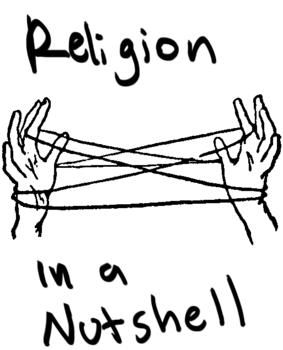
Mejor wa solo seguir leyendo de samurais y wa dejar budismo y lo zen lejos.
Y ahora un gif de un panda:

Entiendo que este libro es para conocer la filosofía budista, y que logres agarrarle el pedo a la meditación Zen. Pero pues lejos de "calmarme" me pinche desespero a la verga. Sus "definiciones" todas abstractas y vaciladoras.
Iluminación: "Esto se define como cuando alguien se ilumina."
Y todo el libro está repleto de eso. Otra cosa que me desespero son los mantras, supongo que sirve para repetir varias cosas y llegar a la meditación, pero me desesperaba de sobre manera.
Los peces espada, son el cuerpo de buda.
Los tiburones martillo, son el cuerpo de buda.
Los salmones, son el cuerpo de buda.
Los huachinangos, son el cuerpo de buda.
Las ballenas, son el cuerpo de buda.
¿¡NO PUEDES DECIR QUE TODAS LAS CRIATURAS MARINAS SON EL CUERPO DE BUDA Y SEGUIR CON EL CHINGADO LIBRO!?
Definitivamente eso de conocer religiones no es lo mío. Tengo muy poca paciencia. Todo el tiempo que lo leía no podía dejar de pensar en Kurt Vonnegut y su Cat's cradle.
Mejor wa solo seguir leyendo de samurais y wa dejar budismo y lo zen lejos.
Y ahora un gif de un panda:

August 8, 2022
The rating is based on a critique of the book (concept) itself, and of Dogen.
The best thing about this book is that it shows key themes from Dogen's work. Dogen is also a great Zen Master, having inspired many others. Some of the snippets are real gems.
However, I do not think this is how Dogen should be read at all. First, Dogen writes in an incredibly difficult way. I don't think most people have any chance of understanding what he is trying to say without a good commentary. So reading potentially unrelated passages that are just linked by one idea all in one go, without any explanation from a teacher, will almost certainly not lead to any understanding whatsoever.
Second, the confusing way in which Dogen writes is also - kind of the point. Instead of being confused by one paragraph, why not read a Shobogenzo chapter and be confused for 10-20 pages? Dogen wants you to go beyond your linear, language-based, rational mind. He does this by employing paradox and puns (many of which only make sense in Japanese or Chinese). Depriving the reader of this fundamentally frustrating, and therefore enlightening, experience means that they won't come close to what it's all about.
So all in all, a flawed book that I wouldn't really recommend.
The best thing about this book is that it shows key themes from Dogen's work. Dogen is also a great Zen Master, having inspired many others. Some of the snippets are real gems.
However, I do not think this is how Dogen should be read at all. First, Dogen writes in an incredibly difficult way. I don't think most people have any chance of understanding what he is trying to say without a good commentary. So reading potentially unrelated passages that are just linked by one idea all in one go, without any explanation from a teacher, will almost certainly not lead to any understanding whatsoever.
Second, the confusing way in which Dogen writes is also - kind of the point. Instead of being confused by one paragraph, why not read a Shobogenzo chapter and be confused for 10-20 pages? Dogen wants you to go beyond your linear, language-based, rational mind. He does this by employing paradox and puns (many of which only make sense in Japanese or Chinese). Depriving the reader of this fundamentally frustrating, and therefore enlightening, experience means that they won't come close to what it's all about.
So all in all, a flawed book that I wouldn't really recommend.

April 12, 2021
'To study the way of enlightenment is to study the self. To study the self is to forget the self. To forget the self is to be actualized by myriad things. When actualized by myriad things, your body and mind as well as the bodies and minds of others drop away. No trace of enlightenment remains, and this no-trace continues endlessly.'
This is the best of the two books I've read of the writings of Dogen. The eventual founder of the Soto Zen school, Eihei Dogen, was born in 13th century Kyoto. Ordained as a monk in the Tendai School in Kyoto, he became disaffected by its teaching of 'original enlightenment' - this states that since we are inherently enlightened, it is misguided to have a spiritual practice. He understandably ruminated over why it was that so many of the great masters of the past would continue their spiritual practice, if this 'original enlightenment' doctrine was true. In an effort to solve this spiritual puzzle, he traveled from Japan to China in search of better teachers (reminiscent of the Buddha, who set off on a similar quest in Northern India around 1700 years before). He specifically sought 'the body of wholeness' and 'a return to reality', which had eluded him in Japan. After two years of study in China, he is pointed in the direction of Tiantong Rujing, the thirteenth patriarch of the Caodong Buddhist school. Dogen, at 26, must have felt so fortunate to find Rujing, who even before meeting the young man, committed to helping him. He prefaced their meeting with the promise, 'Yes, you can come informally to ask any questions any time, day or night, from now on. Do not worry about formality; we can be like father and son.' Rujing himself had previously set out his own 'Rules for Zazen', in which he endeavours that his students 'engage yourself in zazen as though saving your head from fire.' Following his subsequent two years of studying with Rujing, who confirms his enlightenment, Dogen is named his successor and returns to Japan to distribute what he had learned, in an aim to save sentient beings.
What were Dogen's main teachings? Much like Rujing and the Caodong school, he considered that zazen (sitting meditation) was 'the authentic gate to free yourself'. Free yourself from what, one might ask? Much like Koun Yamada's excellent book 'Zen: The Authentic Gate' describes, it is to free oneself from duality and return to wholeness. In the Introduction, Peter Levitt writes:
'And so, having come to great realization under Rujing’s guidance, Dogen understood fully in body and mind that from the very beginning, wholeness is the fundamental reality for all beings; that, in fact, every form of life is an all-inclusive manifestation of what might be called “original wholeness,” though we suffer from the ingrained pattern of dualistic thinking that prevents us from knowing our complete and original self.'
Dogen's signature ability was using language in novel ways to induce understanding. This results in his teachings being an eclectic mixture of logic, metaphors and traditional Buddhist teachings reinterpreted. Principally, he is attempting to use inherently linearly coated language to capture his non-dual understanding. Despite this talent, he cautions in 'On the Endeavor of the Way':
'Sit zazen wholeheartedly, conform to the buddha form, and let go of all things. Then, leaping beyond the boundary of delusion and enlightenment, free from the paths of ordinary and sacred, unconstrained by ordinary thinking, immediately wander at ease, enriched with great enlightenment. When you practice in this way, how can those who are concerned with the traps and snares of words and letters be compared to you?'
A critical distinction, that I hadn't heard as well put before, was Dogen's conjoining of practice and enlightenment. We often think that the purpose of meditation is to reach enlightenment, but Dogen shatters this misinterpretation. From his experience, Dogen knows that we are always whole and therefore sitting is an expression of enlightenment. The Japanese word 'shushu', which Dogen employs, characterises this, and translates to 'practice-enlightenment'. Dogen tells us:
'Know that fundamentally you do not lack unsurpassed enlightenment; you are replete with it continuously. But you may not realize it and may be in the habit of arousing discriminatory views and regarding them as real.'
But then why, if all of this is true, do we need to practice? Because it is in zazen that we unbind from misapprehending our experience. Zazen cultivates the conditions necessary to embody the experience of the teachings of Dogen and the other masters.
Despite my love of Dogen's main teachings, I couldn't rate this book higher. I'm not sure the editors, Kazuaki Tanahashi and Peter Levitt, fulfilled their aim 'to make his readings accessible to readers, including those who are not familiar with Zen or Buddhism in general'. Levitt, a Zen teacher and Tanahashi, the translator, did a wonderful job with the translation, but Dogen, without commentary is often mystifying. Dogen's way of teaching is, for me, a barrier to what he is trying to say. It is like reading a text which incites the same confusion of koans, interspersed with minimal clarifications. This might work well under the guidance of a teacher, but from afar, it leaves the reader a little disoriented. My rating hovers around 3.75 stars because the Introduction is wonderful, and Dogen's teaching of 'practice-realisation' and the prominence he gives zazen is contagious. This book is certainly more illuminating than 'Beyond Thinking: A Guide to Zen Meditation', in large part due to Levitt and Tanahashi's editing. I would recommend this for someone attracted to a koan way of thinking, and also for someone wanting to deeply acknowledge the importance of meditation in Buddhism and its relationship to realisation.
This is the best of the two books I've read of the writings of Dogen. The eventual founder of the Soto Zen school, Eihei Dogen, was born in 13th century Kyoto. Ordained as a monk in the Tendai School in Kyoto, he became disaffected by its teaching of 'original enlightenment' - this states that since we are inherently enlightened, it is misguided to have a spiritual practice. He understandably ruminated over why it was that so many of the great masters of the past would continue their spiritual practice, if this 'original enlightenment' doctrine was true. In an effort to solve this spiritual puzzle, he traveled from Japan to China in search of better teachers (reminiscent of the Buddha, who set off on a similar quest in Northern India around 1700 years before). He specifically sought 'the body of wholeness' and 'a return to reality', which had eluded him in Japan. After two years of study in China, he is pointed in the direction of Tiantong Rujing, the thirteenth patriarch of the Caodong Buddhist school. Dogen, at 26, must have felt so fortunate to find Rujing, who even before meeting the young man, committed to helping him. He prefaced their meeting with the promise, 'Yes, you can come informally to ask any questions any time, day or night, from now on. Do not worry about formality; we can be like father and son.' Rujing himself had previously set out his own 'Rules for Zazen', in which he endeavours that his students 'engage yourself in zazen as though saving your head from fire.' Following his subsequent two years of studying with Rujing, who confirms his enlightenment, Dogen is named his successor and returns to Japan to distribute what he had learned, in an aim to save sentient beings.
What were Dogen's main teachings? Much like Rujing and the Caodong school, he considered that zazen (sitting meditation) was 'the authentic gate to free yourself'. Free yourself from what, one might ask? Much like Koun Yamada's excellent book 'Zen: The Authentic Gate' describes, it is to free oneself from duality and return to wholeness. In the Introduction, Peter Levitt writes:
'And so, having come to great realization under Rujing’s guidance, Dogen understood fully in body and mind that from the very beginning, wholeness is the fundamental reality for all beings; that, in fact, every form of life is an all-inclusive manifestation of what might be called “original wholeness,” though we suffer from the ingrained pattern of dualistic thinking that prevents us from knowing our complete and original self.'
Dogen's signature ability was using language in novel ways to induce understanding. This results in his teachings being an eclectic mixture of logic, metaphors and traditional Buddhist teachings reinterpreted. Principally, he is attempting to use inherently linearly coated language to capture his non-dual understanding. Despite this talent, he cautions in 'On the Endeavor of the Way':
'Sit zazen wholeheartedly, conform to the buddha form, and let go of all things. Then, leaping beyond the boundary of delusion and enlightenment, free from the paths of ordinary and sacred, unconstrained by ordinary thinking, immediately wander at ease, enriched with great enlightenment. When you practice in this way, how can those who are concerned with the traps and snares of words and letters be compared to you?'
A critical distinction, that I hadn't heard as well put before, was Dogen's conjoining of practice and enlightenment. We often think that the purpose of meditation is to reach enlightenment, but Dogen shatters this misinterpretation. From his experience, Dogen knows that we are always whole and therefore sitting is an expression of enlightenment. The Japanese word 'shushu', which Dogen employs, characterises this, and translates to 'practice-enlightenment'. Dogen tells us:
'Know that fundamentally you do not lack unsurpassed enlightenment; you are replete with it continuously. But you may not realize it and may be in the habit of arousing discriminatory views and regarding them as real.'
But then why, if all of this is true, do we need to practice? Because it is in zazen that we unbind from misapprehending our experience. Zazen cultivates the conditions necessary to embody the experience of the teachings of Dogen and the other masters.
Despite my love of Dogen's main teachings, I couldn't rate this book higher. I'm not sure the editors, Kazuaki Tanahashi and Peter Levitt, fulfilled their aim 'to make his readings accessible to readers, including those who are not familiar with Zen or Buddhism in general'. Levitt, a Zen teacher and Tanahashi, the translator, did a wonderful job with the translation, but Dogen, without commentary is often mystifying. Dogen's way of teaching is, for me, a barrier to what he is trying to say. It is like reading a text which incites the same confusion of koans, interspersed with minimal clarifications. This might work well under the guidance of a teacher, but from afar, it leaves the reader a little disoriented. My rating hovers around 3.75 stars because the Introduction is wonderful, and Dogen's teaching of 'practice-realisation' and the prominence he gives zazen is contagious. This book is certainly more illuminating than 'Beyond Thinking: A Guide to Zen Meditation', in large part due to Levitt and Tanahashi's editing. I would recommend this for someone attracted to a koan way of thinking, and also for someone wanting to deeply acknowledge the importance of meditation in Buddhism and its relationship to realisation.

January 20, 2021
This is the first book I have read that I was able to grasp and understand concepts presented in ways that aid my personal growth. I was looking for a beginner's understanding and I feel like I found it. I thoroughly enjoyed reading these short shares. I loved the section on Dharma transmission - the passing down of teachings and enlightenment concepts from teacher to student. However, as is the poetic nature of zen writing - I could read this book ten more times and still have questions.

January 19, 2021
This is a terrific collection of Dogen’s writings organized by subject. The editor pulls from sources composed over his life and comments on how Dogen’s views changed and adds context from his world or the state of Buddhism at a given time. The chapters and passages contained therein are generally fairly short. This book is a great accompaniment to daily meditation.

April 17, 2026
When you need peace and serenity, when you have to think about your walking your sitting your steps your thoughts the wind blowing so think back to a person who has been the first to express these things …all written down all complied…, what must the village think of the boy growing up or the man who thinks as such. Was Dogen the first ADHD of the time or the area? Perhaps he brought back the ideas from his HS graduation trip to India. Then when he got back he was talking about everything with him
Mom. “Mom don’t hit me for not cleaning up the breadcrumbs, can’t you see the ants have to eat too, instead let’s watch them together. You’re always busy how about just sitting down with me for a minute I missed you and want to talk to you about something that happened to me. Mom see how the ants eat the bread and soon they will eat our decomposing bodies, see mom we are the food for the ants! Hahahaha
Because he wrote all the words down detailed step after detailed step then started a school to teach this Zen way of life to a Japanese Samari civilization, well I don’t know details, of course I can go look it up BUT just thinking about it after reading the book and imagining him finding his way back home from abroad without GPS, planes or cars and teaching his family and neighbors and who was it that said *”surely I tell you a prophet is not welcome in his hometown’ and as the book info date shows 1200s try to imagine what tea did they give him to slow his ADHD brain down or how many wacks in the head did his mother give him before he cleaned up the bread crumbs hahaha
Lee you know your son is not right, we should not let him go with those strange people, I told you we should not have let him go…a blow to the head maybe” That’s why he came back so soon, he didn’t get the job, you can see something has happened! He used to play with his sister and brother now he just sits alone under that old tree.
Another opportunity will come along, there are other jobs out there. It’s because he had his hopes up and went so far only to be sent back, he’s just embarrassed. Lee you have to have a talk with him sweetheart why don’t you take him to work with you! He’s depressed and sitting around all day will just make it worse. He’s even Lazier now, I told you they wouldn’t hire him. But you said let him go it would be good for him and now look! What are we going to do with this, this I’m just going to say it…another LAZY mouth to feed. Don’t get yourself all work up over nothing he just got back give the boy a chance. We can always carry him down to the town square, someone will hire him. Do you think it was the new sword teacher? You see how he wears the sash high up around his waist? The other parents say some of the boys say he watches them in the creek.” They say he was teaching Dogen how to Float, Float! I wanted grandkids Lee now look what we have! I’m being serious he sits around all day doing nothing, just sitting there. I haven’t even seen him get up to use the toilet. Come on sweetheart leave the boy alone he's just tired. No Lee, he has had those Yellow shorts on for a week now, I think he peed himself and was just to Lazy to get up and clean himself, he was hiding his pants. I told him I see that Yellow puddle under you Mr now stop being lazy your going to grow roots now get up, get yourself cleaned up, what are you doing in those pants! Now He’s floating around in a puddle of piss, he doesn’t fool me. I want grandbabies not a lazy boy who ruins his new clothes, because he is too lazy to get up. I know he has ruined that new pair of shorts. Oh come on now you have gone too far they are just dirty from that old tree you know the flowers and bark are Yellow. Come on it’s from the clay under that tree, it’s just dirt. Just leave the boy alone. No, no I asked him other day what is it you think your doing just sitting there and you know what he said ‘Come on mom can’t you see “I’m “Thinking” okay I went and I finished the whole bag of potatoes and went back into the room and he was still just sitting there, I lost it and grabbed him and started to shake him what do you think I your doing now and he says “I’m Breathing” I told him “get out into that field right now Mr and get some rice for dinner, you can “THINK” and “BREATHE” in the field, See how far that “thinking and breathing” will get you on an EMPTY STOMACH! Lee, all the sudden his eyes lite up! I tell you sweetheart its scared me, something has happened to our boy. I got worried thinking I was shaking him to hard, Lee, I want a grandbaby!!!
LMAO
Facts verses my mind taking liberties with your ignorance and enjoying writing this review.
Note:*
Yes I know who said it and where to find it and it was well before 1200.
No it was not India probably China - Buddhism and probably a very wealthy family to travel aboard and study I do not see him as a peasant slave learning advanced concepts then knowing and making enough to start a school so probably a very wealthy family who sent their boys away to be men (see Joseph Campbell) then coming back well supported in starting a new ‘thinking way of life’ and the school was probably very expensive.
Mom. “Mom don’t hit me for not cleaning up the breadcrumbs, can’t you see the ants have to eat too, instead let’s watch them together. You’re always busy how about just sitting down with me for a minute I missed you and want to talk to you about something that happened to me. Mom see how the ants eat the bread and soon they will eat our decomposing bodies, see mom we are the food for the ants! Hahahaha
Because he wrote all the words down detailed step after detailed step then started a school to teach this Zen way of life to a Japanese Samari civilization, well I don’t know details, of course I can go look it up BUT just thinking about it after reading the book and imagining him finding his way back home from abroad without GPS, planes or cars and teaching his family and neighbors and who was it that said *”surely I tell you a prophet is not welcome in his hometown’ and as the book info date shows 1200s try to imagine what tea did they give him to slow his ADHD brain down or how many wacks in the head did his mother give him before he cleaned up the bread crumbs hahaha
Lee you know your son is not right, we should not let him go with those strange people, I told you we should not have let him go…a blow to the head maybe” That’s why he came back so soon, he didn’t get the job, you can see something has happened! He used to play with his sister and brother now he just sits alone under that old tree.
Another opportunity will come along, there are other jobs out there. It’s because he had his hopes up and went so far only to be sent back, he’s just embarrassed. Lee you have to have a talk with him sweetheart why don’t you take him to work with you! He’s depressed and sitting around all day will just make it worse. He’s even Lazier now, I told you they wouldn’t hire him. But you said let him go it would be good for him and now look! What are we going to do with this, this I’m just going to say it…another LAZY mouth to feed. Don’t get yourself all work up over nothing he just got back give the boy a chance. We can always carry him down to the town square, someone will hire him. Do you think it was the new sword teacher? You see how he wears the sash high up around his waist? The other parents say some of the boys say he watches them in the creek.” They say he was teaching Dogen how to Float, Float! I wanted grandkids Lee now look what we have! I’m being serious he sits around all day doing nothing, just sitting there. I haven’t even seen him get up to use the toilet. Come on sweetheart leave the boy alone he's just tired. No Lee, he has had those Yellow shorts on for a week now, I think he peed himself and was just to Lazy to get up and clean himself, he was hiding his pants. I told him I see that Yellow puddle under you Mr now stop being lazy your going to grow roots now get up, get yourself cleaned up, what are you doing in those pants! Now He’s floating around in a puddle of piss, he doesn’t fool me. I want grandbabies not a lazy boy who ruins his new clothes, because he is too lazy to get up. I know he has ruined that new pair of shorts. Oh come on now you have gone too far they are just dirty from that old tree you know the flowers and bark are Yellow. Come on it’s from the clay under that tree, it’s just dirt. Just leave the boy alone. No, no I asked him other day what is it you think your doing just sitting there and you know what he said ‘Come on mom can’t you see “I’m “Thinking” okay I went and I finished the whole bag of potatoes and went back into the room and he was still just sitting there, I lost it and grabbed him and started to shake him what do you think I your doing now and he says “I’m Breathing” I told him “get out into that field right now Mr and get some rice for dinner, you can “THINK” and “BREATHE” in the field, See how far that “thinking and breathing” will get you on an EMPTY STOMACH! Lee, all the sudden his eyes lite up! I tell you sweetheart its scared me, something has happened to our boy. I got worried thinking I was shaking him to hard, Lee, I want a grandbaby!!!
LMAO
Facts verses my mind taking liberties with your ignorance and enjoying writing this review.
Note:*
Yes I know who said it and where to find it and it was well before 1200.
No it was not India probably China - Buddhism and probably a very wealthy family to travel aboard and study I do not see him as a peasant slave learning advanced concepts then knowing and making enough to start a school so probably a very wealthy family who sent their boys away to be men (see Joseph Campbell) then coming back well supported in starting a new ‘thinking way of life’ and the school was probably very expensive.

December 3, 2015
The first time I read this, I gave it two stars. This read was definitely more of a four-star affair. Make of that what you will.

July 25, 2017
One I will go back to repeatedly as I continue to practice.

March 21, 2018
A tough slog but worth it.
February 1, 2024
Dogen was a 13th Century Zen master. He started the Soto school of Zen. Unusually for his time he believed men and women were equally capable of reaching enlightenment. Buddhism has been in my life since my childhood. My father was interested in Zen and introduced me to the work of D. T. Suzuki and Alan Watts. He learned about Zen from John Cage who gave a lecture at Black Mountain College about an early Zen text called The Huang-Po Doctrine of Universal Mind. My father said that he was the only one left when the lecture was finished and that Cage gave him a copy of the book. My father showed me the book when I as a child and read me the first lines. In my memory the first line is: That which is before you is Universal mind, begin to reason about it and immediately you fall into error. This is the actual beginning:
The Master said to me: All the Buddhas and all sentient
beings are nothing but the One Mind, beside which
nothing exists. This Mind, which is without beginning,
is unborn and indestructible. It is not green nor yellow,
and has neither form nor appearance. It does not belong
to the categories of things which exist or do not exist, nor
can it be thought of in terms of new or old. It is neither
long nor short, big nor small, for it transcends all limits,
measures, names, traces and comparisons. It is that which
you see before you — begin to reason about it and you at
once fall into error.
Both John Cage and my father were interested in Zen as a set of ideas rather than as a spiritual path. Neither of them had a regular meditation practice which Dogen says is the essence of Zen. When I was 13 I decided that as soon as I was 18 I would go to Japan and enter a Zen monastery. That was clearly a crazy plan, but it helped get me through high school. Although I was a terrible student and a social misfit, I felt that there was something unique about me. I had a special fate. Luckily I did not end up going to Japan. That would have been a disaster. I could barley survive in this country.
I when I was 18 I meditated for a while at the Providence Zen Center in Providence, Rhode Island. One day I stayed for lunch, which was a very formal meal, eaten in silence . You were expected to eat every bit of food in your bowl. At the end of the meal everyone rinsed off their bowl and drank the water with any food scraps that were left. I was very hungry that day and feeling greedy. I motioned for a lot of the spaghetti they were serving. I did not realize it was spaghetti with peanut sauce. I hated peanut butter in any form. I almost gagged when I tried to eat it. Some of the other students couldn’t help laughing. Finally they had mercy on me and let me give back the spaghetti.

July 3, 2023
üks neist, mis ajaga aina paremaks läheb. seda raamatut võrdleks ma muusikapalaga. väga kogemuslik (jälestan sõna empiiriline) raamat oli ses osas, et raamatut lugedes mõtlesin hoopis teistele asjadele hahaha. ei mõelnud, pigem kujutasin ette, tundsin või nägin. aga asjakohaseid raamatust inspireerituid kujutlusi, tundeid või nähtusi. hakkasin mõtlema sellele, et mis on taevas. ma ütlen taevas (mitte-religioosses kontekstis) ja kõik saavad aru, mida ma mõtlen aga. aga kui ma küsiks, et mis on taevas? :s praegu vaatasin, mis sõnaveeb arvab: "nähtav maailmaruumi osa, kus asuvad pilved, Päike, Kuu ja tähed". okei, osa kosmosest, mis on nähtav. dvx, poolitan juuksekarva praegu.
minuni jõudis lähemale mõistmine, et kõik ongi Maa ja kõik on kõik jajaa, Maa on ka vaid osaliselt nähtav "maailmaruumi osa" ning kõik on siis taevas ja maailmaruum ja mis iganes veel. kõik on Suur Pauk. pole nüüd mingi suur avastus, aga tore oli seda jälle endale meelde tuletada ning lähemalt tajuda. enesele omasemaks mõtestada. mõtteid, mida ma Dōgenilt sain, oli rohkem kui need paar. ta rääkis päris paljudest asjadest. kõigest ma kahjuks aru ei saanud. ma pole oma zen teadmisega sinnamaale veel jõudnud. kuhugi pole tegelikult nendega jõudnud hahah. noh, natuke kuhugi sugugi puhuli siruli kõhuli olen küll, aga siht on vist lihtsalt edasi sõuda. mu tädi kinkis mulle lõpetamiseks puidust tahvli, kuhu on kirjutatud "tasa sõuad, kuhugi ei jõua". sealt siis vist. sealt siis vist see sõudmine.
minuni jõudis lähemale mõistmine, et kõik ongi Maa ja kõik on kõik jajaa, Maa on ka vaid osaliselt nähtav "maailmaruumi osa" ning kõik on siis taevas ja maailmaruum ja mis iganes veel. kõik on Suur Pauk. pole nüüd mingi suur avastus, aga tore oli seda jälle endale meelde tuletada ning lähemalt tajuda. enesele omasemaks mõtestada. mõtteid, mida ma Dōgenilt sain, oli rohkem kui need paar. ta rääkis päris paljudest asjadest. kõigest ma kahjuks aru ei saanud. ma pole oma zen teadmisega sinnamaale veel jõudnud. kuhugi pole tegelikult nendega jõudnud hahah. noh, natuke kuhugi sugugi puhuli siruli kõhuli olen küll, aga siht on vist lihtsalt edasi sõuda. mu tädi kinkis mulle lõpetamiseks puidust tahvli, kuhu on kirjutatud "tasa sõuad, kuhugi ei jõua". sealt siis vist. sealt siis vist see sõudmine.
February 10, 2025
"The Essential Dogen" edited by Kazuaki Tanahashi and Peter Levitt is a selection of different thematically arranged tidbits from the Eihei Dogen's Shobogenzo. Eihei Dogen (1200-1253) stands as the foundational figure of Soto Zen Buddhism in Japan, his writings therefore are essential for the understanding of the Japanese approach to Zen Buddhism. One issue stands in that Dogen wrote extensively and often his writing reflected his speech, rich with anecdote, metaphor, and story telling appropriate to his time and place. To a modern reader the unabridged Shobogenzo can come across as titanic and esoteric. This is where I have found writers and scholar practitioners like Kazuaki Tanahashi to be useful, Tanahashi parses down Dogen's writing thematically into six broad categories which are later subdivided again. For example, the category title "history" contains writings on "Bodhidharma" and "the Schools of Zen."
As a Zen practitioner and Buddhist chaplain I have had my copy of "The Essential Dogen" since seminary. I have found it a useful reference tool in arranging dharma talks and teaching Buddhism. I would highly recommend it to other Zen students and those who are generally curious about Zen Buddhism and its Japanese ancestor.
As a Zen practitioner and Buddhist chaplain I have had my copy of "The Essential Dogen" since seminary. I have found it a useful reference tool in arranging dharma talks and teaching Buddhism. I would highly recommend it to other Zen students and those who are generally curious about Zen Buddhism and its Japanese ancestor.

September 22, 2024
The editors of this volume aimed to produce a text that would make Dogen's challenging corpus accessible to beginners. By this standard, I am not convinced that they succeeded. Dogen is an exceptionally difficult writer who works by paradox and the subversion of expectations. This book is a selection of comments of his, taken from a wide range of existing translations, that the editors regard as more accessible. These selections, mostly paragraph length, are grouped thematically with an introductory paragraph by the editors. Although the selections may seem unusually clear for the accomplished editors, for a beginner, I do not think that this method provides enough context for Dogen's often very cryptic remarks to be understood. If one is going to struggle to understand a supposedly "introductory" text like this, one would be better served to struggle through the master's works in their more authoritative arrangement. That said, the introductory essay is probably a good starting point for a learner, and the text could prove useful as a source of illustrative quotations in a class led by a competent teacher.

May 5, 2021
The poetry is beautiful, the philosophy is thoughtful, redundant, complex and confounding, exactly as one would expect from a Zen Master.
My favorite takeaways were how amazingly progressive Dogen was in regard to respect for women, and the wonderful history lessons.
Many Westerners are unable to separate tropes of Zen Buddhism from portrayals of Bushido and the early feudal Japanese culture. Dogen spends a lot of time discussing Dharma Heritage and the transmission of the Buddha Dharma through the 36 generations of Indian and 8 generations of Chinese Buddha before the establishment of the Za-Zen finally in Japan.
A thoughtful and ultimately very accessible book with deep Eastern thought.
My favorite takeaways were how amazingly progressive Dogen was in regard to respect for women, and the wonderful history lessons.
Many Westerners are unable to separate tropes of Zen Buddhism from portrayals of Bushido and the early feudal Japanese culture. Dogen spends a lot of time discussing Dharma Heritage and the transmission of the Buddha Dharma through the 36 generations of Indian and 8 generations of Chinese Buddha before the establishment of the Za-Zen finally in Japan.
A thoughtful and ultimately very accessible book with deep Eastern thought.
Displaying 1 - 30 of 89 reviews