

What do you think?

Dirt Work: An Education in the Woods
A lively and lyrical account of one woman’s unlikely apprenticeship on a national-park trail crew and what she discovers about nature, gender, and the value of hard work
Christine Byl first encountered the national parks the way most of us on vacation. But after she graduated from college, broke and ready for a new challenge, she joined a Glacier National Park trail crew as a seasonal “traildog” maintaining mountain trails for the millions of visitors Glacier draws every year. Byl first thought of the job as a paycheck, a summer diversion, a welcome break from “the real world” before going on to graduate school. She came to find out that work in the woods on a trail crew was more demanding, more rewarding—more real —than she ever imagined.
During her first season, Byl embraces the backbreaking difficulty of the work, learning how to clear trees, move boulders, and build stairs in the backcountry. Her first mentors are the colorful characters with whom she works—the packers, sawyers, and traildogs from all walks of life—along with the tools in her axe, shovel, chainsaw, rock bar. As she invests herself deeply in new work, the mountains, rivers, animals, and weather become teachers as well. While Byl expected that her tenure at the parks would be temporary, she ends up turning this summer gig into a decades-long job, moving from Montana to Alaska, breaking expectations—including her own—that she would follow a “professional” career path.
Returning season after season, she eventually leads her own crews, mentoring other trail dogs along the way. In Dirt Work , Byl probes common assumptions about the division between mental and physical labor, “women’s work” and “men’s work,” white collars and blue collars. The supposedly simple work of digging holes, dropping trees, and blasting snowdrifts in fact offers her an education of the hands and the head, as well as membership in an utterly unique subculture. Dirt Work is a contemplative but unsentimental look at the pleasures of labor, the challenges of apprenticeship, and the way a place becomes a home.
Christine Byl first encountered the national parks the way most of us on vacation. But after she graduated from college, broke and ready for a new challenge, she joined a Glacier National Park trail crew as a seasonal “traildog” maintaining mountain trails for the millions of visitors Glacier draws every year. Byl first thought of the job as a paycheck, a summer diversion, a welcome break from “the real world” before going on to graduate school. She came to find out that work in the woods on a trail crew was more demanding, more rewarding—more real —than she ever imagined.
During her first season, Byl embraces the backbreaking difficulty of the work, learning how to clear trees, move boulders, and build stairs in the backcountry. Her first mentors are the colorful characters with whom she works—the packers, sawyers, and traildogs from all walks of life—along with the tools in her axe, shovel, chainsaw, rock bar. As she invests herself deeply in new work, the mountains, rivers, animals, and weather become teachers as well. While Byl expected that her tenure at the parks would be temporary, she ends up turning this summer gig into a decades-long job, moving from Montana to Alaska, breaking expectations—including her own—that she would follow a “professional” career path.
Returning season after season, she eventually leads her own crews, mentoring other trail dogs along the way. In Dirt Work , Byl probes common assumptions about the division between mental and physical labor, “women’s work” and “men’s work,” white collars and blue collars. The supposedly simple work of digging holes, dropping trees, and blasting snowdrifts in fact offers her an education of the hands and the head, as well as membership in an utterly unique subculture. Dirt Work is a contemplative but unsentimental look at the pleasures of labor, the challenges of apprenticeship, and the way a place becomes a home.
256 pages, Hardcover
First published January 1, 2013
Ratings & Reviews
Friends & Following
Create a free account to discover what your friends think of this book!
Community Reviews
Displaying 1 - 30 of 149 reviews
November 25, 2013
Contemplative and funny, bawdy and smart, lyrical and lovely, this book is one of a kind! As a traildog myself, I can honestly say I never imagined I would read a book about my particular subculture, especially not one that gets it so exactly right! From backcountry anecdotes from the collective canon to riffs on food, boots, weather, wildlife, and, of course, tools, it is all here. Byl captures perfectly the camaraderie, drudgery, and delight of life working in the wild mountains, on a crew, doing trailwork.
The unusual and original structure of this fantastic book might feel foreign to some expecting a continuous linear narrative, but I find it perfectly captures the experience of learning to know and love a place, as well as balancing two (or more) worlds as part of a seasonal workforce.
As entertaining as Byl’s storytelling is, this is no casual traipse through the lilies of the field. Dirt Work gets at the heart of what it takes to live an authentic life. Byl’s narrative is ripe with hard questions, real seeking, and refreshingly honest, clear-eyed thinking-- instead of tired platitudes-- about gender, labor, apprenticeship, self-sufficiency, wilderness, spiritual practice, and community. I loved it!
The unusual and original structure of this fantastic book might feel foreign to some expecting a continuous linear narrative, but I find it perfectly captures the experience of learning to know and love a place, as well as balancing two (or more) worlds as part of a seasonal workforce.
As entertaining as Byl’s storytelling is, this is no casual traipse through the lilies of the field. Dirt Work gets at the heart of what it takes to live an authentic life. Byl’s narrative is ripe with hard questions, real seeking, and refreshingly honest, clear-eyed thinking-- instead of tired platitudes-- about gender, labor, apprenticeship, self-sufficiency, wilderness, spiritual practice, and community. I loved it!

September 8, 2018
Being in the woods with Christine and learning how those trails that I love so much, are made and maintained was very interesting. I loved to read how she got along with her mostly male coworkers and how life as a seasonal worker in general is.
What I did not like was the writing style. It made it very hard for me to read for an extended period of time and not trying to skip a few paragraphs here and there (a thing that I normally not even consider).
What I did not like was the writing style. It made it very hard for me to read for an extended period of time and not trying to skip a few paragraphs here and there (a thing that I normally not even consider).

May 21, 2023
Stellenweise interessant, aber selbst für dieses insgesamt oft menschenfeindliche Genre ungewöhnlich voll mit expliziter Beschimpfung von allen, die kein Nationalparkpersonal sind, insbesondere Tourist*innen. Außerdem viele lahme Anekdoten von der "man müsste dabei gewesen sein"-Sorte.

March 25, 2013
I've often wondered how people end up choosing a life that embraces the outdoors. I grew up loving the outdoors then slowly became more of an indoor person as my education and career kept me locked up inside. It never would have entered my mind to look for a job in a state park. Now, twenty years later as I face trying to finally figure out what I want to do with the rest of my life, I wish I had.
Christine Byl and her eventual husband, Gabe, took jobs with the National Park Service in Glacier National Park. The job is a tough one - and one I didn't even know existed - as it involves clearing and maintaining the trails that millions of visitors use every year. Building steps into the terrain? They do that. Fixing natural bridges? They do that.
Many will think that this is a woman in a man's world. Men still dominate the profession, but more and more women are choosing to take on these seasonal jobs. The schedule is 8 days on, 6 days off. I would LOVE that! I wouldn't mind having my hiney handed to me for 8 days, knowing that I would soon have 6 off to recuperate and enjoy my surroundings.
In time, Christine matriculates to the University of Alaska-Anchorage and takes an outdoors job up there as well.
I loved how the book was organized and how she described each tool used in her job. It made it so accessible to those of us who don't know the difference between a bulldozer and a Bobcat. The machine kind of Bobcat. I know what the animal one is.
Completely enjoyable. Highly recommend.
Christine Byl and her eventual husband, Gabe, took jobs with the National Park Service in Glacier National Park. The job is a tough one - and one I didn't even know existed - as it involves clearing and maintaining the trails that millions of visitors use every year. Building steps into the terrain? They do that. Fixing natural bridges? They do that.
Many will think that this is a woman in a man's world. Men still dominate the profession, but more and more women are choosing to take on these seasonal jobs. The schedule is 8 days on, 6 days off. I would LOVE that! I wouldn't mind having my hiney handed to me for 8 days, knowing that I would soon have 6 off to recuperate and enjoy my surroundings.
In time, Christine matriculates to the University of Alaska-Anchorage and takes an outdoors job up there as well.
I loved how the book was organized and how she described each tool used in her job. It made it so accessible to those of us who don't know the difference between a bulldozer and a Bobcat. The machine kind of Bobcat. I know what the animal one is.
Completely enjoyable. Highly recommend.

July 29, 2013
Ah, I really thought I would like this book -- sounded great. And then I read the intro -- the writing was terrific. I liked how Byl turned a phrase, told a story, talked about her work.
So, who wrote the intro versus who wrote the remainder of the book? Will the real Christine Byl please stand up?
The story itself is a disjointed mishmash of events, phrases, and quotes. You're reading about some event and then there is a quote that has nothing to do with anything. You get back into her week in the woods on a job and suddenly she's talking about something completely unrelated.
In short, a disappointment. Glad I borrowed it from the e-library and didn't pay kindle fees.
So, who wrote the intro versus who wrote the remainder of the book? Will the real Christine Byl please stand up?
The story itself is a disjointed mishmash of events, phrases, and quotes. You're reading about some event and then there is a quote that has nothing to do with anything. You get back into her week in the woods on a job and suddenly she's talking about something completely unrelated.
In short, a disappointment. Glad I borrowed it from the e-library and didn't pay kindle fees.

May 14, 2015
As a hiking addict, I really appreciate the work that goes into maintaining trails. i really do. I have been stopped in my tracks and lost the trail many times in the spring when downed trees and remnants of snowpack remain. The author describes the allure and highs of doing this work and there is a lot of detail of how to use a saw or axe or shovel. A lot. She also provides a wonderful inside look at the parks she works in. But.
I think the main problem is that the book had no heart, as well as being confusing, and jumping around wildly in stories. I imagined the heart would be in the relationships between co-workers. Not really: she portrayed most of the men badly, one dimensional, with nothing interesting to say. I think it belittled them. Or maybe the heart would be in the transformation of people who live within the wilderness and tangibly experience it. She was going to be a philosophy professor. Again, no. It was all about the body and the ego, can I survive with damp clothes, blisters, sore shoulders, etc. Okay, maybe there would be some great stories of hikers she meets or fire rescues. In fact I think she called them all tourists and was incredibly scornful of every last one of them. She claims she was harassed verbally over and over by tourists and I just don't buy it. I mean, she actually made fun of the Asian pronunciation of Denali. It was an example of the crude, stupid jokes all traildogs excel at, according to her at least, and that kind of racism is inexcusable. My last hope was that the heart would be in her adrenaline junkie adventures, descriptions of where they hiked and climbed and skied. She barely mentions them. l might be missing the point, (how rewarding physical labor is) but I think the book was misrepresented. Instead of "beauty and crudeness" as one reviewer wrote, it was belittling, smallminded, and one dimensional.
I think the main problem is that the book had no heart, as well as being confusing, and jumping around wildly in stories. I imagined the heart would be in the relationships between co-workers. Not really: she portrayed most of the men badly, one dimensional, with nothing interesting to say. I think it belittled them. Or maybe the heart would be in the transformation of people who live within the wilderness and tangibly experience it. She was going to be a philosophy professor. Again, no. It was all about the body and the ego, can I survive with damp clothes, blisters, sore shoulders, etc. Okay, maybe there would be some great stories of hikers she meets or fire rescues. In fact I think she called them all tourists and was incredibly scornful of every last one of them. She claims she was harassed verbally over and over by tourists and I just don't buy it. I mean, she actually made fun of the Asian pronunciation of Denali. It was an example of the crude, stupid jokes all traildogs excel at, according to her at least, and that kind of racism is inexcusable. My last hope was that the heart would be in her adrenaline junkie adventures, descriptions of where they hiked and climbed and skied. She barely mentions them. l might be missing the point, (how rewarding physical labor is) but I think the book was misrepresented. Instead of "beauty and crudeness" as one reviewer wrote, it was belittling, smallminded, and one dimensional.

March 6, 2014
For anyone, like myself, who has worked in the woods, you'll love being reminded of the life of the traildog. It's a great chance to venture back into the woods, to eat those huge meals, to remember the satisfaction of a hard day's work.
Byl also moves us from place to place, taking us on a variety of regions.
A unique organization. This book is broken up into those regions (Glacier, Cordova, and Denali) with many vignettes, rather than chapters, within each region. Once settled into the vignette style, the book flowed beautifully. It was an ambitious and effective style that allowed the writer to take the writer to many, many spots and ideas and people within trail work rather than merely following the traditional chapter sequence.
A really beautiful book. I'm ready to swing a Pulaski again!
Byl also moves us from place to place, taking us on a variety of regions.
A unique organization. This book is broken up into those regions (Glacier, Cordova, and Denali) with many vignettes, rather than chapters, within each region. Once settled into the vignette style, the book flowed beautifully. It was an ambitious and effective style that allowed the writer to take the writer to many, many spots and ideas and people within trail work rather than merely following the traditional chapter sequence.
A really beautiful book. I'm ready to swing a Pulaski again!
September 7, 2013
I had a hard time thinking at all while I was reading. It was like my brain went numb.The Intro was well writen and interesting enough but then, the rest. I couldnt take it. I had to just stop trying to finish it after 1/3 of the way through. It explains mostly details of the job but does not tell a good story. It jumps all around. Some parts interesting then others sooo boring. Actually started to dread picking it up to read, like it was work. I have only not finished one other book in my time.I guess I was expecting more after reading the jacket and intro.

November 4, 2013
Such a lovely book. Byl is the real deal, make no mistake about it. She worked trail for 16 seasons, some of it interspersed with getting her Masters. She's a helluva writer, by turns lyrical and profane. At the beginning, I thought how much I'd love to do this sort of work. By the end, I'd acknowledged that I'm too old to start, but I can admire from a distance. Wildlife, clueless tourists, clueless government, hard damn work and interesting people- it's all here, plus the aurora. Highly recommended.

April 10, 2014
She thought she was going to become a philosophy professor. Instead, she made a life out of really, really hard physical labor and wrote about it I got to live vicariously through it because let's be honest I am just not that tough.
I liked her meditations on the act of physical labor, the tools she uses, and what it's like to be a woman doing a so-called "man's" job.
It did not make Alaska sound appealing (sorry!) but I did want to check out Glacier, for sure. Someday...
I liked her meditations on the act of physical labor, the tools she uses, and what it's like to be a woman doing a so-called "man's" job.
It did not make Alaska sound appealing (sorry!) but I did want to check out Glacier, for sure. Someday...

May 3, 2017
OK, I get it. All tourists are redneck assholes or ignorant Asian people getting in the way of the trail workers oneness with the backcountry. The author is clearly better and above the people that wear the wrong shoes, tote the wrong gear and are unable to give up their lives for a real and meaningful job with the park service. Imagine us regular folk visiting the park and trying to reconnect with nature! We are fakes! Such a condescending narrative..I didn't even finish it.

May 30, 2013
I was so disappointed in this book. I thought it was going to be similar to Wild (a great book everyone should read) but it really felt like a job description and some key terms for a test and not like a story or memoir.
September 21, 2018
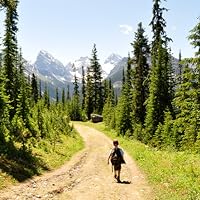
It is too bad, I should have loved this book. It is about all the places I love. But her style of writing and her dismissive attitude toward anyone who wasn't ... well her ... just turned me off. Once she left Glacier, I could barely stand to finish this book.
February 23, 2019
Byl captured the in-between of blunt, honest vernacular and sentimental prose where trail work lives. Her words mirror her seemingly dichotomous life, only to show that they overlap far more than expected, that contradictions coexist, and that maybe (echoing Byl's words) they can be the same thing. A great read for anyone who smiles at the dirt under their fingernails. For any woman who aspires to be what she creates, especially through uncertainty.
January 13, 2025
Through humor, openness, and eloquence Byl surmises what it means to be a woman doing trail work. As a woman doing trail work for NPS, I found kinship with this author immediately. So many instances throughout this book were very relatable to experiences I’ve had as well. Trail work can be such a niche topic and this was the first book I’ve read that made me feel seen, from the hardships of seasonal life to the beauty found in the mundane trail tasks, Byl captures it all.

August 13, 2025
I read this book for my public library’s summer reading bingo: read a book by an author who shares your name (first or last).

May 25, 2013
I was eager to read this book since I worked as a seasonal fire lookout, field ecologist and forest fire fighter during college and grad school. I wanted to see if it was presented the way I remember seasonal work, and it seemed true to life. I like the way the author started chapters by describing various tools. The differences between the Park Service and Forest Service were very interesting. I wondered how the author would portray the reality that is often left out of such romantic recollections. For the folks who embrace life as seasonal workers, the stark reality includes four months of hard work and a life of poverty. There is no health insurance, eight or nine months a year of unemployment benefits and food stamps, high rates of alcoholism, and other difficulties. She mentioned the appeal of a job with health insurance and the cost of two hernia surgeries. Perhaps the surgeries were covered by workman's comp. I never saw seasonal work as a way of life because of the grim reality of poverty. I felt especially sorry for those seasonal workers who had kids. Some of the appeal of this book was it provided insight into a different point of view. I enjoyed it.

March 22, 2013
I am tempted to run through a thread of adjectives describing how much I enjoyed this book, but I'll settle for "wonderful". Reading it was a wonderful experience.
As a fan and frequent visitor to many National Parks ( including Glacier, which is featured here ) it was a real joy to read about the "behind the scenes" life of a TrailDog. A true slice of life.
Obviously written by a woman who has lived and experienced the true outdoor life, a woman who has found love and appreciation among the trees and logging roads - this book grabbed me from the introduction and never let go.
Any book that can describe the beauty of our National Parks back-country and the poetry in swinging an axe is an instant classic for me - and this book does just that.
I strongly recommend this book - my only complaint was that I wish it were longer, I wish I could keep reading and enjoying the cadence and words of this author.
If you have any kind of affinity for the outdoors, for our National Parks, then you won't regret a single second spent reading this title.
As a fan and frequent visitor to many National Parks ( including Glacier, which is featured here ) it was a real joy to read about the "behind the scenes" life of a TrailDog. A true slice of life.
Obviously written by a woman who has lived and experienced the true outdoor life, a woman who has found love and appreciation among the trees and logging roads - this book grabbed me from the introduction and never let go.
Any book that can describe the beauty of our National Parks back-country and the poetry in swinging an axe is an instant classic for me - and this book does just that.
I strongly recommend this book - my only complaint was that I wish it were longer, I wish I could keep reading and enjoying the cadence and words of this author.
If you have any kind of affinity for the outdoors, for our National Parks, then you won't regret a single second spent reading this title.

September 20, 2013
Fresh out of college, Byl signs up for a summer on a Glacier National Park trail crew, imagining an outdoorsy jaunt before grad school. She falls in love with trail construction and spends the next 16 years on seasonal parks work in Glacier and Denali. The book is a riveting balance of stories and meditations on a life of physical work, which she finds no less rewarding, educating, or elevating than the academic life she had planned. It's unsettling, because it makes me want to follow her out for a job in the wilderness. It's also affirming, a testament that an attentive life can be lived anywhere. Funny, profound, piercing.

May 1, 2013
An intriguing, raw, and lyrically poetic book of Christine's life as a seasonal trail laborer in our National parks honoring our human journey of discovery and "dirt work" of the laborer.
Publisher's Weekly says it better,"(It) blends beauty and crudeness, grit and grace… With language that is lyrical despite the earthiness of its subject, Byl turns the words of work into found poetry (“brake on, choke on, pull, pull, fire”), offering a bridge for readers to those “who would not speak like this themselves”—a beautiful memoir of muscle and metal.”
One of my best reads in recent years!
Publisher's Weekly says it better,"(It) blends beauty and crudeness, grit and grace… With language that is lyrical despite the earthiness of its subject, Byl turns the words of work into found poetry (“brake on, choke on, pull, pull, fire”), offering a bridge for readers to those “who would not speak like this themselves”—a beautiful memoir of muscle and metal.”
One of my best reads in recent years!

June 23, 2014
Good book. As the parent of someone who has become a traildog over the last several years, I had to read this book when I saw it. We hear a lot of stories from my daughter about life on the trail, but I'm sure we don't hear it all - I know she spares us some of the more dangerous or wilder stories so we don't worry. This book gave a glimpse of the "other side" that we don't hear about, as well as the daily grind. In addition, the author, Christine Byl, was a philosophy major, and you can see her reflective bent somewhat in these pages. An enjoyable read.

June 18, 2016
I appreciated the topic in general, but I wearied quickly of the author's insufferable attitudes. Bully for her that she is so much better than everyone else. Her writing style was entertaining if a bit dense at times. just glad to be done with the book.

March 19, 2022
I enjoy reading this book in the winter when I am missing days on the trail.
Honestly not sure how I would feel about it if I didnt have a personal connection to Glacier and trailwork, though.
Honestly not sure how I would feel about it if I didnt have a personal connection to Glacier and trailwork, though.

March 11, 2022
I put off reading this for a while because I was worried it would convince me to quit my current life and get a job in the woods and never look back, lol. I will admit that I did look into applications for the National Parks Service after reading this!
If you like books about women in the great outdoors (ex. The Word for Woman is Wilderness by Abi Andrews), or you like nature writing and memoirs in general, then you would probably like this! Christine is a very tough lady who has spent most of her adult life outdoors, whether for fun (skiing, hiking, etc.) or for work, doing manual labor building and maintaining trails for National Parks in Montana and Alaska.
I really liked her descriptions of how she came to need this work, and she wrote about the joy of seeing a trail take shape, learning to use a tool, and seeing the growing strength in her body, while not romanticizing it. She also wrote about how hard it was to work in the freezing rain, be covered in dirt and bugs for a week, or how much your body can hurt after ten hours moving rocks, and how unstable seasonal work can be for your personal life.
I also really liked how detailed she was in describing the tools she used, how she learned to use them, and what exactly she created or destroyed with them. With a father who works in construction, it was fun for me to see how little I actually knew about the tools I was around most of my childhood. It made me appreciate how complex and difficult this work is.
The people she meets through her jobs in Montana and Alaska are quite a cast of characters and surprisingly came from all walks of life. There were also way more women than I expected doing this type of work, and that included older women, "girly" women, and everything else.
My one complaint with this book was related to the way the author handled the situation of her often being the only woman in the group. I'm not judging too much because I have never been there, but some things just irked me for how much she seemed unbothered by it. The way she tells it, it seems more like she tried to just join in with the misogynistic comments or dirty jokes in an attempt to fit in, and the fact that she succeeded in that doesn't make it seem more welcoming to me- it makes it seem significantly less so. She mentions often that if you are the kind of person who "can't take a joke" then you aren't cut out for this work, and that just makes me sad that you have to accept that culture to be a part of it. I wish there had been more of an effort, or at least a wish, to change that.
If you like books about women in the great outdoors (ex. The Word for Woman is Wilderness by Abi Andrews), or you like nature writing and memoirs in general, then you would probably like this! Christine is a very tough lady who has spent most of her adult life outdoors, whether for fun (skiing, hiking, etc.) or for work, doing manual labor building and maintaining trails for National Parks in Montana and Alaska.
I really liked her descriptions of how she came to need this work, and she wrote about the joy of seeing a trail take shape, learning to use a tool, and seeing the growing strength in her body, while not romanticizing it. She also wrote about how hard it was to work in the freezing rain, be covered in dirt and bugs for a week, or how much your body can hurt after ten hours moving rocks, and how unstable seasonal work can be for your personal life.
I also really liked how detailed she was in describing the tools she used, how she learned to use them, and what exactly she created or destroyed with them. With a father who works in construction, it was fun for me to see how little I actually knew about the tools I was around most of my childhood. It made me appreciate how complex and difficult this work is.
The people she meets through her jobs in Montana and Alaska are quite a cast of characters and surprisingly came from all walks of life. There were also way more women than I expected doing this type of work, and that included older women, "girly" women, and everything else.
My one complaint with this book was related to the way the author handled the situation of her often being the only woman in the group. I'm not judging too much because I have never been there, but some things just irked me for how much she seemed unbothered by it. The way she tells it, it seems more like she tried to just join in with the misogynistic comments or dirty jokes in an attempt to fit in, and the fact that she succeeded in that doesn't make it seem more welcoming to me- it makes it seem significantly less so. She mentions often that if you are the kind of person who "can't take a joke" then you aren't cut out for this work, and that just makes me sad that you have to accept that culture to be a part of it. I wish there had been more of an effort, or at least a wish, to change that.
February 25, 2019
I picked this book up a couple of years ago after an author traveling through town mentioned it to me. Several years ago I did a summer stent as a Teacher/Ranger/Teacher with the National Park Service and wrote about the experience each week for a local paper. In one of my articles I talked about all the people that most visitors don't see, the behind the scenes laborers; weed abatement crews, trash collectors, archeologist and paleontologist doing studies, and the trail builders. Told with humor and insight, this book gives a great inside view of what these unsung heroes do.
Christine Byl recounts her 16 seasons of work building trails, her appreciation of the people she worked with, the work she did, and the tools she did it with. For now on, every time I go to dig in my garden I will have a new appreciation for that simple yet sublime tool, the shovel. I loved meeting and following the antics of her fellow "traildogs."
Throughout the book, she discusses views on nature and its importance. As an aging hiker that had dreams of hiking in far away lands and more miles underfoot than I have had, the following passage hit home with me: "Bounty can be paralyzing, the awful clench of how to choose and I'll never get it all. The Tao Te Ching says, "There is no calamity like not knowing what is enough," and so I'm slowly learning to note what I need, to be satisfied with what there is time for, not cowed by what I miss."
I read an article about traildogs in a National Park magazine once and I dreamed of joining their secret society. After reading Dirt Work: An Education in the Woods, even though there was humor, camaraderie and satisfaction of not only learned skills but of job completion, I don't know if I ever could have joined this club-It was just too much HARD work! But I'm thankful to Christine Byl for doing it and sharing her experience with me.
Christine Byl recounts her 16 seasons of work building trails, her appreciation of the people she worked with, the work she did, and the tools she did it with. For now on, every time I go to dig in my garden I will have a new appreciation for that simple yet sublime tool, the shovel. I loved meeting and following the antics of her fellow "traildogs."
Throughout the book, she discusses views on nature and its importance. As an aging hiker that had dreams of hiking in far away lands and more miles underfoot than I have had, the following passage hit home with me: "Bounty can be paralyzing, the awful clench of how to choose and I'll never get it all. The Tao Te Ching says, "There is no calamity like not knowing what is enough," and so I'm slowly learning to note what I need, to be satisfied with what there is time for, not cowed by what I miss."
I read an article about traildogs in a National Park magazine once and I dreamed of joining their secret society. After reading Dirt Work: An Education in the Woods, even though there was humor, camaraderie and satisfaction of not only learned skills but of job completion, I don't know if I ever could have joined this club-It was just too much HARD work! But I'm thankful to Christine Byl for doing it and sharing her experience with me.

October 17, 2018
A unique memoir of a woman who fell into the role of "traildog" as a summer job to do before finding what others would coin as a real job, Byl relays nearly two decades working with her hands in the great outdoors. It is at times an empowering testament for other women but it does not sugar coat the sweat, the pain, and the arduousness of the actual labor involved for such a career. Byl writes of years of indoctrination within Glacier National Park and then relays a move to Alaska, initially for graduate level studies during the scholastic year and more dirt work in the summer. Alaska has subsequently been her home with her husband ever since. As one who enjoys the outdoors as well, I thought her lyrical prose regarding nature and its wildness to be both beautiful yet respectful. There is an appreciation for using one's hands but also for admiring the surrounding view. However I have never performed any of the work she describes other than ordinary yard chores growing up so I appreciated the depictions of tools used and what some of an actual traildog career would entail. Byl's background in philosophy shines through in this work but it never feels forced and I enjoyed how she occasionally interwove smatterings of poetry and other authors' work. All in all, quite an enjoyable vicarious romp through nature.
PS I absolutely loved the quote she attributed to a co-worker: "Duct tape can get you through times without money a lot better than money can get you through times without duct tape". True that.
PS I absolutely loved the quote she attributed to a co-worker: "Duct tape can get you through times without money a lot better than money can get you through times without duct tape". True that.
November 23, 2019
This book is very poetic, sometimes beautifully written. There are lots of little breaks within the chapters which made it flow nicely and feel quick.
I can tell she has a philosophy degree. Descriptions of the tools start each chapter but sometimes feel a little clunky. I do like how she weaves the tool into the following chapter.
She also does a lot of listing, mainly of places. Since she doesn't really follow a storyline - there is a very loose plot - the places she lists are meaningless to me. I skipped over those because they aren't relevant or meaningful to the story unless a reader is already familiar with the region.
I wish there was more of a storyline where I could get to know her and the other people she meets. It feels like I'm watching from a distance - I lacked connection.
Also - the whole point of their work is to build trails for visitors - tourists- without tourism she wouldn't have a job. So to sit there and mock tourists who are just there to love and appreciate nature (albeit maybe some are a little dim) is completely against the work she loves doing. Stop trying to be so damn tough and rugged (men and women) trust me, no one gives a sh*t.
Overall, decent book. I would recommend it to someone who enjoys poetry or our philosophical ties to nature.
I can tell she has a philosophy degree. Descriptions of the tools start each chapter but sometimes feel a little clunky. I do like how she weaves the tool into the following chapter.
She also does a lot of listing, mainly of places. Since she doesn't really follow a storyline - there is a very loose plot - the places she lists are meaningless to me. I skipped over those because they aren't relevant or meaningful to the story unless a reader is already familiar with the region.
I wish there was more of a storyline where I could get to know her and the other people she meets. It feels like I'm watching from a distance - I lacked connection.
Also - the whole point of their work is to build trails for visitors - tourists- without tourism she wouldn't have a job. So to sit there and mock tourists who are just there to love and appreciate nature (albeit maybe some are a little dim) is completely against the work she loves doing. Stop trying to be so damn tough and rugged (men and women) trust me, no one gives a sh*t.
Overall, decent book. I would recommend it to someone who enjoys poetry or our philosophical ties to nature.
May 4, 2024
Perfectly captures the life of a seasonal. But more than that, it gets at the heart of the questions I find myself asking. The root of being a seasonal is this impermanence, moving with the seasons. It is lauded within the seasonal community. The work, the places we work, and the life we live is unusual and worth the hardship that brings. But the key theme of this book is the dichotomy of living.
Most notable to me is the dichotomy of seasonal and full time. That struggle between stability and exploration. I know they aren’t mutually exclusive, but I ain’t got the way with words to express the true nuance. (Read the book if you want to understand that tidbit of wisdom)
But then there’s the underlying fact of conservation work in specific, and human existence in general.
Our living and working and visiting on this earth is detrimental to the ecosystems that do exist. How does one rectify that?
With a PBR and some hard labor
Most notable to me is the dichotomy of seasonal and full time. That struggle between stability and exploration. I know they aren’t mutually exclusive, but I ain’t got the way with words to express the true nuance. (Read the book if you want to understand that tidbit of wisdom)
But then there’s the underlying fact of conservation work in specific, and human existence in general.
Our living and working and visiting on this earth is detrimental to the ecosystems that do exist. How does one rectify that?
With a PBR and some hard labor
June 18, 2022
Dirt Work by Christine Byl was one of the best
books I've read in 2022. Christine uses her
experiences as a traildog, maintaining mountain
trails in national parks to discuss breaking down
stereotypes that we have around work. It really
got me thinking about eliminating biases in my
own mind about manual labor and reinforced my
belief that there is no such thing as "man's work"
or "woman's work." Christine also gives a lot of
very practical examples of how she modeled
servant leadership once she reached a
supervisory role on her work crews. Beyond the
great lessons of this book, her storytelling had me
laughing in stiches at times and dreaming of my
next national park visit other times.
books I've read in 2022. Christine uses her
experiences as a traildog, maintaining mountain
trails in national parks to discuss breaking down
stereotypes that we have around work. It really
got me thinking about eliminating biases in my
own mind about manual labor and reinforced my
belief that there is no such thing as "man's work"
or "woman's work." Christine also gives a lot of
very practical examples of how she modeled
servant leadership once she reached a
supervisory role on her work crews. Beyond the
great lessons of this book, her storytelling had me
laughing in stiches at times and dreaming of my
next national park visit other times.

February 27, 2018
Byl reveals her world to the reader without completely exposing it - there is a spoken barrier between layperson (you) and dirt worker (her). The invitation to cross that threshold is unspoken but present: she seems to write, if this calls to you, come find out the rest for yourself.
At some point, Byl speaks of the interplay between MFA-taught verbiage and rougher backcountry slang. To me, this was evident in her writing choices, shifting from direct and rudimentary jabs to broadly stroked, artistic passages. Where other readers found fault with these intermittent non-sequitur blocks, I found them enriching to Byl's story and wouldn't have had the book without them.
At some point, Byl speaks of the interplay between MFA-taught verbiage and rougher backcountry slang. To me, this was evident in her writing choices, shifting from direct and rudimentary jabs to broadly stroked, artistic passages. Where other readers found fault with these intermittent non-sequitur blocks, I found them enriching to Byl's story and wouldn't have had the book without them.
Displaying 1 - 30 of 149 reviews