
What do you think?
Rate this book


639 pages, Hardcover
First published April 1, 2013




He'd been told that Xinan, the capital of glorious dynasties, had held two million people once, and that only a hundred thousand or so lived there now, scattered among rubble.Well, so much for the glory of the Ninth Dynasty we saw in Under Heaven. Turns out civil war will do that to a society. River of Stars picks up Under Heaven's world several hundred years later. It isn't so much a direct sequel, given that all of the characters from Under Heaven are long dead by the time River of Stars begins, but it makes a fair amount of references back to Under Heaven's characters and events. One of them plays a very crucial role in the development of the plot.
It would be entirely possible... to begin to hate the Ninth Dynasty if you spent time here [Xian, former capital]. There is something oppressive, humiliating about how glorious it once was.
There were people about, but nothing like in Hanjin [the current Kitai capital]… Those he saw seemed scattered, like pieces on a game board at the end of a game.Living in the ruins of a once mighty empire can ruin anyone's self-esteem.
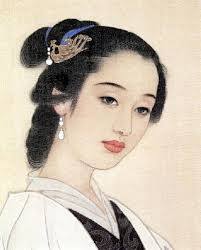
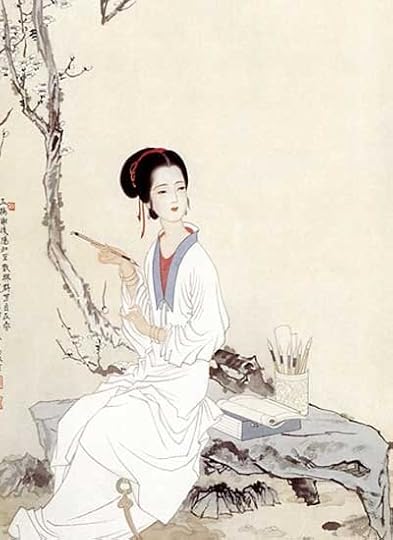
"There will be no entirely correct answers… We are mortals, trapped on one side of the river of stars, with the Weaver Maid on the other, divided form us. And how shall we hope to cross to her?"Lin Shan is a very unusual woman. Given an education by her father and extremely talented in musical arts, she is everything a proper Kitain woman should not be (more on that later). She is outspoken, clever, and willing to push propriety if need be .
When the world changes greatly this can occur because of a single dramatic event, or because many small elements, each inconsequential in itself, fit together – like the pieces of a wooden puzzle box, of the sort sold in any village marketplace for a few copper coins.Much like Under Heaven, River of Stars can best be described as a mosaic with small pieces, signifying little on their own, coming together to create an immense, detailed picture. What happened to one piece impacts its surrounding pieces, rippling out to the entire picture.
"Time's river flowed east, never to return... But there were so many ruins along the bank."Military leaders became much less trusted in an environment where there was already a massive fear of generals overthrowing the government, resulting in generations of poor leadership and army quality culminating in the loss of the fourteen prefectures. Instead of leading political men cultivating military abilities and physical activities, such activities were disdained in the twelfth dynasty to the point where high government officials were carried around everywhere and grew really long pinky nails to showoff their disdain for physical labor.
"I have been a small man carrying a small torch, looking back, and further back." He had tried to light the road along which they had come. It was not, he thought, a bad way to have lived.So it is with all historians, preserving the past so that the present might be brighter for their toils, as quite and unobtrusive as they are, beautifully distilled into a few lines.
They understood each other. It was possible to do that, with the right man, without forcing words into dangerous existence. It was sometimes necessary to do that...And while some books would just end a section of their book as they would a chapter, Kay utilizes some very simple, but evocative imagery to build anticipation of the coming events:
Everything to this point, this night, felt to him to have become a prelude, like notes played on a pipa to tune it, ensure it was ready for the song yet to come.What the story came down to, in my mind, was the the limits of human agency:
There were consequences, almost always, for what you did or failed to do in life. He believed that. Fate could play a role, and chance, but your choices and decisions mattered.Just how much freedom do we really have? Your actions have consequences on other people but their actions have consequences on you. A character's choices in life are naturally constrained by circumstances that came before them but at the same time they can take action and, in their limited way, impact their world. We are mutually dependent and impacted by those around us. They both constrain and enable us to live our lives. Societal norms, established generations ago and impressed upon us since the cradle can be just as compelling as a sword to the throat.


