

What do you think?

East of the Sun, West of the Moon
From the moment she saw him, she knew the bear had come for her. How many times had she dreamt of the bear…. Now, here he was, as if spelled from her dreams.
“I will come with you, Bear,” she said.
It is the beginning of an extraordinary journey for the girl. First to the bear’s secret palace in faraway mountains, where she is treated so courteously, but where she experiences the bear’s unfathomable sadness, and a deep mystery…
As the bear’s secret unravels, another journey unfolds… a long and desperate journey, that takes the girl to the homes of the four Winds and beyond, to the castle east of the sun, west of the moon.
This beautiful, mysterious story of love, loyalty and above all, freedom, is inspired by fairy tale, and is magically told and illustrated by Jackie Morris.
“I will come with you, Bear,” she said.
It is the beginning of an extraordinary journey for the girl. First to the bear’s secret palace in faraway mountains, where she is treated so courteously, but where she experiences the bear’s unfathomable sadness, and a deep mystery…
As the bear’s secret unravels, another journey unfolds… a long and desperate journey, that takes the girl to the homes of the four Winds and beyond, to the castle east of the sun, west of the moon.
This beautiful, mysterious story of love, loyalty and above all, freedom, is inspired by fairy tale, and is magically told and illustrated by Jackie Morris.
168 pages, Hardcover
First published February 26, 2013
About the author
Jackie Morris
126 books478 followersJackie Morris lives in a small house on the Welsh coast. She wanted to be an artist from the earliest she could remember. After studying art at Hereford and Bath Academy she went on to illustrate for magazines and newspapers. She began her first book for children the week after her first child, Thomas was born and has gone on to illustrate and write many books.
Ratings & Reviews
Friends & Following
Create a free account to discover what your friends think of this book!
Community Reviews
Displaying 1 - 30 of 131 reviews

January 17, 2023
A gorgeous and unusual adaptation of my favorite fairy tale, putting it in a modern, but still very fairy tale-esque, setting. The pictures are glorious, of course, but the words are just as beautiful. My sister gave this to me for Christmas, because she loves me.
June 7, 2017
Ok, I totally get the concept of changing endings, and having wonderful twists and turns and unexpectedy bits in fairytale retellings - but you do not mess with the ending of this story and expect me to like it if it isn't damn perfect.
This ending was, in fact, not even slightly damn perfect and as such I did not like it.
The drawings were lovely though.
This ending was, in fact, not even slightly damn perfect and as such I did not like it.
The drawings were lovely though.

February 24, 2013
I bought this book for the quality of the illustrations, for the magic that's in them, and then picked it up to read the first page, and found that, an hour or two later, I was still sitting by the fire and had come to the end, with tears in my eyes.
East of the Sun, West of the Moon is an old fairy tale given new life and relevance and magic by Jackie Morris. She takes the indigenous peasant setting and brings it bang up to date by having her 'journeying girl' be the daughter of an asylum seeker, living in near-poverty, in constant fear of the authorities, and with the memories of the state police back home who assaulted her journalist father. When the great white bear comes from her dreams into her home, and promises that all will be well for her family if she will only go with him, she goes. (she doesn't do it just for them, she goes because it's right). There follows a passionate, inspiring journey of a young girl's coming of age as she goes first to the castle of the Bear and then, when he is banished, she goes out into the world (a mediaeval, fairy world,not a modern industrial one) to rescue him from the Troll Queen. In doing so, she meets the North Wind, who loves her and so at the end, she has a choice to make, for her own heart and power. The twist at the end is as perfect as it is unexpected.
What really stood out for me, was the poetry of the prose; liquid gold, poured across the pages that complements perfectly the magic of the illustrations.
It's the kind of thing you could read to your young kids, leave for the older ones to find for themselves, and read yourself, whatever age you are, and be enthralled... I loved it.
East of the Sun, West of the Moon is an old fairy tale given new life and relevance and magic by Jackie Morris. She takes the indigenous peasant setting and brings it bang up to date by having her 'journeying girl' be the daughter of an asylum seeker, living in near-poverty, in constant fear of the authorities, and with the memories of the state police back home who assaulted her journalist father. When the great white bear comes from her dreams into her home, and promises that all will be well for her family if she will only go with him, she goes. (she doesn't do it just for them, she goes because it's right). There follows a passionate, inspiring journey of a young girl's coming of age as she goes first to the castle of the Bear and then, when he is banished, she goes out into the world (a mediaeval, fairy world,not a modern industrial one) to rescue him from the Troll Queen. In doing so, she meets the North Wind, who loves her and so at the end, she has a choice to make, for her own heart and power. The twist at the end is as perfect as it is unexpected.
What really stood out for me, was the poetry of the prose; liquid gold, poured across the pages that complements perfectly the magic of the illustrations.
It's the kind of thing you could read to your young kids, leave for the older ones to find for themselves, and read yourself, whatever age you are, and be enthralled... I loved it.

July 3, 2019
A young girl, the daughter of refugees, is taken away by a mysterious and magical polar bear in this novelized retelling of the classic Norwegian tale of East of the Sun, West of the Moon. Eventually reconciled to her life in his enchanted palace, where she comes to love the bear, the girl is permitted to return home for a visit. Here, despite the bear's warnings, the girl allows herself to spend some time alone with her mother, who gives her something that will allow her to see the shadowy figure who, when darkness falls, sleeps beside her in the bear's palace. When a prince is revealed, the truth comes out: a thousand years ago he had been cursed by the Troll Queen, because he refused to marry her daughter. Only the love of a young woman, who willingly lived with him for a year and a day, and who only ever saw him in bear form, would set him free. Now bound to the Troll Princess, the girl's love disappears, leaving her to travel the world, seeking him in the castle which stands east of the sun and west of the moon...
I absolutely love Jackie Morris' artwork, which always has a fairy-tale feeling for me, so when I learned that the British author/illustrator had tried her hand at a novel-length retelling of one of my favorite stories - East of the Sun, West of the Moon - I was eager to track it down. Unfortunately, although I found the writing here poetic and poignant, and the illustrations simply beautiful, the ending of this retelling of East of the Sun, West of the Moon felt so off to me, that it ruined my pleasure in the book. In this retelling, the girl, whose name is revealed only toward the end of the story, , and although she rescues the imprisoned prince, in the end she elects choosing the "freedom" of . The book closes as she is transformed into . Now, while I have no problem per se with the idea of changing the endings of fairy and folk tales, this conclusion somehow felt completely tone deaf to me. It puts love and freedom into opposing camps, which, although perhaps true - love does bind one, in both physical and emotional ways - rather misses the point. There is no love, without some sacrifice of freedom, because love connects and binds us to the object of our love. Interestingly, so does hatred. To my way of thinking, the only way to be completely free, is to be alone. But this outcome, and Morris' ending, seems a betrayal of the entire point of this story, in which a woman heroically traverses the world, to reconnect with her love. The object of her quest is not to be alone and free, but to love and be loved - to be connected.
The ending here was a real disappointment, made all the more intense by my enjoyment of everything about this book, right up until the very end. If half stars were available, I'd give this 2.5, rather than 2, with the extra half star for the beauty of the language and of the artwork. Despite my feelings about this one, I still plan to read Morris' retelling of another of my favorites - Hans Christian Andersen's The Wild Swans - hoping that I enjoy that ending more than this. With the caveat that they be aware that this has a dramatically different ending, from the traditional one, I would recommend this to fans of fairy-tale fiction, as well as to admirers of Jackie Morris' artwork.
I absolutely love Jackie Morris' artwork, which always has a fairy-tale feeling for me, so when I learned that the British author/illustrator had tried her hand at a novel-length retelling of one of my favorite stories - East of the Sun, West of the Moon - I was eager to track it down. Unfortunately, although I found the writing here poetic and poignant, and the illustrations simply beautiful, the ending of this retelling of East of the Sun, West of the Moon felt so off to me, that it ruined my pleasure in the book. In this retelling, the girl, whose name is revealed only toward the end of the story, , and although she rescues the imprisoned prince, in the end she elects choosing the "freedom" of . The book closes as she is transformed into . Now, while I have no problem per se with the idea of changing the endings of fairy and folk tales, this conclusion somehow felt completely tone deaf to me. It puts love and freedom into opposing camps, which, although perhaps true - love does bind one, in both physical and emotional ways - rather misses the point. There is no love, without some sacrifice of freedom, because love connects and binds us to the object of our love. Interestingly, so does hatred. To my way of thinking, the only way to be completely free, is to be alone. But this outcome, and Morris' ending, seems a betrayal of the entire point of this story, in which a woman heroically traverses the world, to reconnect with her love. The object of her quest is not to be alone and free, but to love and be loved - to be connected.
The ending here was a real disappointment, made all the more intense by my enjoyment of everything about this book, right up until the very end. If half stars were available, I'd give this 2.5, rather than 2, with the extra half star for the beauty of the language and of the artwork. Despite my feelings about this one, I still plan to read Morris' retelling of another of my favorites - Hans Christian Andersen's The Wild Swans - hoping that I enjoy that ending more than this. With the caveat that they be aware that this has a dramatically different ending, from the traditional one, I would recommend this to fans of fairy-tale fiction, as well as to admirers of Jackie Morris' artwork.

November 19, 2022
One of my favourite reads of the year. An incredible imagining of this classic story.

June 5, 2013
I kind of feel terrible giving this two stars, but...in the end I guess it just wasn't what I was expecting or hoping for. I was excited about giving it a try because I always thought this was a really interesting fairy tale, and it's not one that has been totally overdone like Cinderella and Snow White and a number of others have been. And while I really liked both East and Sun and Moon, Ice and Snow, they both left me wanting a little something more, and I hoped I'd find that here.
On the plus side, the presentation of this book is gorgeous--really beautiful watercolor illustrations, smooth, heavy paper, and a nice, crisp font. And the ending was...different and somewhat unexpected, although I'm still not totally sure how I feel about it.
But to me, this just feels like an expanded version of the original fairy tale and not much like a retelling at all, other than how it ends. There's little to no character development, and the language is very traditional, and while I can certainly appreciate fairy tales in their original forms, it's just not what I was looking for here, I guess.
I think it'll work really well for fairy tale lovers who don't already know the story though. Although there's that ending...
I don't know. Most people so far seem to love it, so, once again, I might just have bad taste! :)
On the plus side, the presentation of this book is gorgeous--really beautiful watercolor illustrations, smooth, heavy paper, and a nice, crisp font. And the ending was...different and somewhat unexpected, although I'm still not totally sure how I feel about it.
But to me, this just feels like an expanded version of the original fairy tale and not much like a retelling at all, other than how it ends. There's little to no character development, and the language is very traditional, and while I can certainly appreciate fairy tales in their original forms, it's just not what I was looking for here, I guess.
I think it'll work really well for fairy tale lovers who don't already know the story though. Although there's that ending...
I don't know. Most people so far seem to love it, so, once again, I might just have bad taste! :)

August 12, 2017
The illustrated hardcover is gorgeous.
February 10, 2013
I absolutely loved the book. The story and illustrations weaved an enchanting tale with enthralling mystical and spiritual elements from many traditions across the world. The exquisite illustrations expressed the emotions of the characters so beautifully; they also incorporated so many facets that reveal themselves each time the picture is studied. The narrative touched every emotion; I could hardly bear to turn the page if I suspected something terrible was about to happen, then I read faster and faster caught up in the excitement and exhilaration. However, it is the nature of love in all it’s forms that was, for me, the most exceptional the most complex aspect of the book. Ultimately, for me, the ending concerns the liberty love bestows – to remain in a relationship, or to bestow freedom.

February 1, 2013
I was not sure what to expect when I won this book from a Goodreads giveaway. The premise sounded interesting, but the book being aimed at young people, I was not sure I would enjoy it. I was delighted to be wrong. Jackie Morris has created a mystical fairy tale that flows smoothly and would be an enchanting read for children and adults alike. The illustrations are beautiful. The book even feels pleasant with a pleasant tactile design that is a pleasure to hold. This is the kind of story that stays with children and becomes a beautiful memory in adulthood.

July 31, 2013
A pretty traditional retelling of the old fairy tale, EXCEPT FOR THE ENDING! Total curve ball ending. I still don't know how I feel about it, it felt like a very modern way to have a "happily ever after" ending. True love is very much called into question, a little too much for my liking.

February 26, 2023
More like 1.5 stars because it was interesting learning about the Scandinavian-Siberian roots of Beauty and the Beast, but everyone was like a stalker. This was a brave and scary first attempt by Jackie Morris to write a book and not just paint it. Read if you like the Brothers Grimm and Twilight.

April 24, 2023
Such a beautiful poetic retelling with gorgeous pictures 🥰🥰 the ending was very weird and surprising though. 😮 why??

February 18, 2015
Gorgeous, but strange, and takes the end in a totally different direction from the original fairy tale. Not sure how I feel about Morris' ending, but I'd definitely read it again, and buy it for my shelf.
*Update October 2016*
Upping my review one star because, over a year later, I can't get this out of my head; the more I think about it, the more the twist ending feels right. I need to read it again.
*Update October 2016*
Upping my review one star because, over a year later, I can't get this out of my head; the more I think about it, the more the twist ending feels right. I need to read it again.

January 11, 2013
I normally love the story with the girl and the girl and the polar bear (The polar bear king, East and ect) but this book was not good at all. The writing style was horrible and was repetitive. The girl tries so hard to be with the polar bear, and then ends up with someone else!

June 1, 2013
One Sentence Review: Remarkably good and a very clever take on the old fairy tale, though the 10=year-old inside of me (who is not the world's most reliable reviewer) wished the ending could have been a little different.

March 30, 2014
I discovered ‘East of the Sun, West of the Moon’ by Jackie Morris, through a friend's review of it. A fairy tale set in the cold northern lands, featuring a young girl and a polar bear – how can one resist it? I couldn’t wait to get it and read it and I finished reading it yesterday. Here is what I think.
‘East of the Sun, West of the Moon’ is Jackie Morris’ retelling of the classic fairytale with the same name. There are two parts to the story. The first is a simple fairytale which reminds one of ‘The Beauty and the Beast’. The second reminds one of the story of Psyche and Cupid. In the first part, a polar bear one day enters a city and knocks at the door of a refugee family. When the father opens the door, the bear tells him in his native language that he has come to visit them. He later tells the family that he has come to invite the eldest daughter of the family, our heroine, to come and live with him. In return the bear will make all their problems go away. The family is reluctant to accept this idea, but the girl agrees and goes to live with the bear. The bear takes care of her and she is happy. But there is a secret (and here comes the Psyche and Cupid part). After the girl has fallen asleep in the night, the door quietly opens and someone enters the room and lies next to her. When the girl tries to light a lamp to find out who it is, the matches and the lamp don’t work. The girl keeps quiet about this and doesn’t mention it to the bear the next day. But this scene keeps recurring every night. One day the girl is homesick and asks the bear whether she can visit her family for a short while. The bear agrees and takes her home and tells her that he will be back after a month and a day to take her back. The girl discovers that her family has been well provided for and her parents and siblings are happy. When she tells her mother about the strange person who visits her room during the night, her mother gives her a box and tells her to use it when it happens the next time. A month and a day later, the bear comes back and takes her back to its home. That night, the bedroom door opens and someone comes in and lies next to our heroine. After this person has gone to sleep, our heroine opens the box her mother has given and finds a candle and some matches. She lights the candle and it works. She shows the light on the person lying next to her and discovers that he is a handsome young man. But this handsome young man wakes up and then there is sorrow in his eyes and he says that everything is lost. When the girl, who loves the bear by now, and who realizes that this handsome young man might be the person who appears as the bear during the day, asks him what was wrong, this young man tells his story. He tells her that he is a prince who has waited for her for a thousand years. He was supposed to marry the Troll queen’s daughter, unless he found a woman who loved him willingly when he was in the form of a bear and came to live with him and lived in his place for a year and a day. And he was not supposed to reveal his human form to her. But now that our heroine has lighted the candle and seen the prince’s original form before the year and a day period was over, he has to leave the next day to the castle which was at the east of the sun and the west of the moon and marry the troll queen’s daughter. The prince and our heroine spend the night in each other’s arms, mourning what they had lost. Our heroine tells him that she will come and find him wherever he is and get him back. The next day morning when the girl wakes up, there is no castle, there is no bear and there is no young man. She is lying in the forest with her bundle. She decides to go in search of her sweetheart and she is ready to go to the ends of the earth to get him back.
Is she able to do succeed in her quest? The answer to that is the rest of the story.
So, what do I think of ‘East of the Sun, West of the Moon’? I loved it. Mostly. Let me explain that more. I loved the story. The way the fairytale of the Beauty and the Beast merged seamlessly with the story of Psyche and Cupid, and the way it is set in today’s world in which the heroine of the fairytale is a girl who is a refugee from her homecountry and how that blended seamlessly with the rest of the fairytale – this was all beautifully done. I loved the heroine and the polar bear, the three women who help the heroine, the four winds. I liked even the troll’s daughter for the way she passionately loved the prince.
The watercolour paintings of Jackie Morris are stunning. I am not exaggerating here or praising Morris just for the heck of it. The paintings are really and literally stunning. The book can be read just for the artwork alone. And then there is Jackie Morris’ prose. Purple is one way to describe it. It is probably the very definition of purple. There are beautiful sentences in every page and I enjoyed reading those sentences again and again. Each of those sentences was sculpted by a fine hand and a sensitive mind. It was as if Jackie Morris was born to write and illustrate fairytales. To give you a feel for the flavour of Morris’ purple prose, I will include a few of those gorgeous sentences and passages here.
There was this :
A flower of orange flame blossomed so bright and a petal caught to the candle wick.
And this :
…golden leaves of autumn played a beautiful tune with the breeze, and the light painted dappled gold pennies on the rich earth beneath horse’s hooves.
And this :
…the hot wind of the desert stroked her cheek like a kiss, and she turned to see, far out on the horizon, the sand moving like water, wave after wave rolling towards them, sand made liquid by the force of the wind.
And this :
All through the desert the wind teased her, tangling his fingers through her hair and winding it into tresses so that no matter how she tied it, before long ti would weave around her head like snakes. He stroked her cheeks, blew cooler air when the heat became too much. He played with her. He drew shapes in the sand with tumbling weed for her He swept up waves of sand and shaped them to run behind her like wild wind horses, a great herd, keeping pace with her horse. He caught snatches of music and carried them to her ears, at night, gentle lullabies, in the morning, birdsong. He blew a flower over the desert and placed it in her hand.
Did you like them?
So, we have a beautiful story blending fairytale and mythology, lovable characters, stunning artwork, purple prose. That should be enough to fall in love with a book for life, isn’t it? Yes, normally, it should. The book had one thing, though. It was the ending. In the original fairytale the prince marries our heroine and they live happily everafter. That is not how it works out in Jackie Morris’ retelling. I am in two minds now. Should I write more about this or not? If I do, it will be a spoiler. If I don’t, I will be avoiding discussion on an important aspect of the book. I think I will tell you what I think about the ending. But I am marking it as a spoiler and so please ignore it if you are planning to read the book.
*Beginning of spoiler*
The first thing about the ending was that it was a surprise. It is not that I didn’t see it coming. Morris leaves clues for the reader and we half expect it. Still, it is surprising. A fairytale which doesn’t end with the prince and the princess marrying and living happily everafter, has a surprise ending. I wouldn’t say that I didn’t like the ending (or to use a stronger word – I wouldn’t say that I disliked the ending). The ending was good, though surprising, and in some ways it was geared to our modern way of thinking and was perfect in its own way. But there was a dissonance there when we related it to the rest of the story. Without telling you what the actual ending is, I will use the example of another fairytale. Let us take ‘Rapunzel’. After Rapunzel is thrown out of the tower by the witch and the prince goes blind, towards the end of the story, the blind prince hears Rapunzel’s voice singing in the wilderness and he finds her and they are united and Rapunzel’s tears of joy cures the prince of his blindness. The traditional fairytale ends after this with Rapunzel and the prince living happily everafter. Let us say that this story is retold and the reteller changes the ending and the new ending goes like this – after the prince is cured of his blindness, Rapunzel thanks him for saving her from the witch and also says that she is happy that the prince’s blindness is cured. But then she adds that now that both of them are free, they should be able to do what they want and the prince doesn’t need to feel obligated to marry her and neither should Rapunzel feel that way. Each of them can live their lives the way they want, fall in love with whomever they want, get married or not, travel the world etc. and enjoy their freedom. Well, it is not a bad ending, but it takes away the magic of the fairytale. Something like this happened at the end of Jackie Morris’ retelling. I didn’t dislike it, but I was disappointed with it.
*End of spoiler*
So, would I recommend ‘East of the Sun, West of the Moon’? Yes, with all my heart. It is a stunningly produced book and the artwork and purple prose alone are good enough reasons to read the book. And don’t worry about the ending. Maybe you will like it more.
Have you read Jackie Morris’ ‘East of the Sun, West of the Moon’? What do you think about it?
‘East of the Sun, West of the Moon’ is Jackie Morris’ retelling of the classic fairytale with the same name. There are two parts to the story. The first is a simple fairytale which reminds one of ‘The Beauty and the Beast’. The second reminds one of the story of Psyche and Cupid. In the first part, a polar bear one day enters a city and knocks at the door of a refugee family. When the father opens the door, the bear tells him in his native language that he has come to visit them. He later tells the family that he has come to invite the eldest daughter of the family, our heroine, to come and live with him. In return the bear will make all their problems go away. The family is reluctant to accept this idea, but the girl agrees and goes to live with the bear. The bear takes care of her and she is happy. But there is a secret (and here comes the Psyche and Cupid part). After the girl has fallen asleep in the night, the door quietly opens and someone enters the room and lies next to her. When the girl tries to light a lamp to find out who it is, the matches and the lamp don’t work. The girl keeps quiet about this and doesn’t mention it to the bear the next day. But this scene keeps recurring every night. One day the girl is homesick and asks the bear whether she can visit her family for a short while. The bear agrees and takes her home and tells her that he will be back after a month and a day to take her back. The girl discovers that her family has been well provided for and her parents and siblings are happy. When she tells her mother about the strange person who visits her room during the night, her mother gives her a box and tells her to use it when it happens the next time. A month and a day later, the bear comes back and takes her back to its home. That night, the bedroom door opens and someone comes in and lies next to our heroine. After this person has gone to sleep, our heroine opens the box her mother has given and finds a candle and some matches. She lights the candle and it works. She shows the light on the person lying next to her and discovers that he is a handsome young man. But this handsome young man wakes up and then there is sorrow in his eyes and he says that everything is lost. When the girl, who loves the bear by now, and who realizes that this handsome young man might be the person who appears as the bear during the day, asks him what was wrong, this young man tells his story. He tells her that he is a prince who has waited for her for a thousand years. He was supposed to marry the Troll queen’s daughter, unless he found a woman who loved him willingly when he was in the form of a bear and came to live with him and lived in his place for a year and a day. And he was not supposed to reveal his human form to her. But now that our heroine has lighted the candle and seen the prince’s original form before the year and a day period was over, he has to leave the next day to the castle which was at the east of the sun and the west of the moon and marry the troll queen’s daughter. The prince and our heroine spend the night in each other’s arms, mourning what they had lost. Our heroine tells him that she will come and find him wherever he is and get him back. The next day morning when the girl wakes up, there is no castle, there is no bear and there is no young man. She is lying in the forest with her bundle. She decides to go in search of her sweetheart and she is ready to go to the ends of the earth to get him back.
Is she able to do succeed in her quest? The answer to that is the rest of the story.
So, what do I think of ‘East of the Sun, West of the Moon’? I loved it. Mostly. Let me explain that more. I loved the story. The way the fairytale of the Beauty and the Beast merged seamlessly with the story of Psyche and Cupid, and the way it is set in today’s world in which the heroine of the fairytale is a girl who is a refugee from her homecountry and how that blended seamlessly with the rest of the fairytale – this was all beautifully done. I loved the heroine and the polar bear, the three women who help the heroine, the four winds. I liked even the troll’s daughter for the way she passionately loved the prince.
The watercolour paintings of Jackie Morris are stunning. I am not exaggerating here or praising Morris just for the heck of it. The paintings are really and literally stunning. The book can be read just for the artwork alone. And then there is Jackie Morris’ prose. Purple is one way to describe it. It is probably the very definition of purple. There are beautiful sentences in every page and I enjoyed reading those sentences again and again. Each of those sentences was sculpted by a fine hand and a sensitive mind. It was as if Jackie Morris was born to write and illustrate fairytales. To give you a feel for the flavour of Morris’ purple prose, I will include a few of those gorgeous sentences and passages here.
There was this :
A flower of orange flame blossomed so bright and a petal caught to the candle wick.
And this :
…golden leaves of autumn played a beautiful tune with the breeze, and the light painted dappled gold pennies on the rich earth beneath horse’s hooves.
And this :
…the hot wind of the desert stroked her cheek like a kiss, and she turned to see, far out on the horizon, the sand moving like water, wave after wave rolling towards them, sand made liquid by the force of the wind.
And this :
All through the desert the wind teased her, tangling his fingers through her hair and winding it into tresses so that no matter how she tied it, before long ti would weave around her head like snakes. He stroked her cheeks, blew cooler air when the heat became too much. He played with her. He drew shapes in the sand with tumbling weed for her He swept up waves of sand and shaped them to run behind her like wild wind horses, a great herd, keeping pace with her horse. He caught snatches of music and carried them to her ears, at night, gentle lullabies, in the morning, birdsong. He blew a flower over the desert and placed it in her hand.
Did you like them?
So, we have a beautiful story blending fairytale and mythology, lovable characters, stunning artwork, purple prose. That should be enough to fall in love with a book for life, isn’t it? Yes, normally, it should. The book had one thing, though. It was the ending. In the original fairytale the prince marries our heroine and they live happily everafter. That is not how it works out in Jackie Morris’ retelling. I am in two minds now. Should I write more about this or not? If I do, it will be a spoiler. If I don’t, I will be avoiding discussion on an important aspect of the book. I think I will tell you what I think about the ending. But I am marking it as a spoiler and so please ignore it if you are planning to read the book.
*Beginning of spoiler*
The first thing about the ending was that it was a surprise. It is not that I didn’t see it coming. Morris leaves clues for the reader and we half expect it. Still, it is surprising. A fairytale which doesn’t end with the prince and the princess marrying and living happily everafter, has a surprise ending. I wouldn’t say that I didn’t like the ending (or to use a stronger word – I wouldn’t say that I disliked the ending). The ending was good, though surprising, and in some ways it was geared to our modern way of thinking and was perfect in its own way. But there was a dissonance there when we related it to the rest of the story. Without telling you what the actual ending is, I will use the example of another fairytale. Let us take ‘Rapunzel’. After Rapunzel is thrown out of the tower by the witch and the prince goes blind, towards the end of the story, the blind prince hears Rapunzel’s voice singing in the wilderness and he finds her and they are united and Rapunzel’s tears of joy cures the prince of his blindness. The traditional fairytale ends after this with Rapunzel and the prince living happily everafter. Let us say that this story is retold and the reteller changes the ending and the new ending goes like this – after the prince is cured of his blindness, Rapunzel thanks him for saving her from the witch and also says that she is happy that the prince’s blindness is cured. But then she adds that now that both of them are free, they should be able to do what they want and the prince doesn’t need to feel obligated to marry her and neither should Rapunzel feel that way. Each of them can live their lives the way they want, fall in love with whomever they want, get married or not, travel the world etc. and enjoy their freedom. Well, it is not a bad ending, but it takes away the magic of the fairytale. Something like this happened at the end of Jackie Morris’ retelling. I didn’t dislike it, but I was disappointed with it.
*End of spoiler*
So, would I recommend ‘East of the Sun, West of the Moon’? Yes, with all my heart. It is a stunningly produced book and the artwork and purple prose alone are good enough reasons to read the book. And don’t worry about the ending. Maybe you will like it more.
Have you read Jackie Morris’ ‘East of the Sun, West of the Moon’? What do you think about it?

January 29, 2025
I thought I loved this book, but it turns out I actually hate it. I was going to give it two stars only because the pictures are so lovely, but I don't want to encourage people to read it or buy it.
I don't think it can be considered a fairy tale retelling because it turns the story into something quite different from a fairy tale and ruins the point of it. Very disappointing.
Note that I am NOT complaining about the fact that the real-world part of the story is set in the 21st century, nor that the heroine and her family are political refugees. That part surprised me, but I liked it very much. It's the ending that ruins it. I'm not just talking unhappy, I'm talking bad decisions and breaking faith.
I finished it at bedtime and had to stay up a little later and start a murder mystery to calm down so I could sleep.
Strongly unrecommended.
I don't think it can be considered a fairy tale retelling because it turns the story into something quite different from a fairy tale and ruins the point of it. Very disappointing.
Note that I am NOT complaining about the fact that the real-world part of the story is set in the 21st century, nor that the heroine and her family are political refugees. That part surprised me, but I liked it very much. It's the ending that ruins it. I'm not just talking unhappy, I'm talking bad decisions and breaking faith.
I finished it at bedtime and had to stay up a little later and start a murder mystery to calm down so I could sleep.
Strongly unrecommended.

January 13, 2024
jackie morris' reimagining of this norwegian fairytale is breathtaking. her writing is that of an original fairytale which makes it such a cosy book to read aloud, and her illustrations are so beautiful they're practically tangible: you can almost feel the chill from the snow, the bear's fur beneath your fingertips and the weightiness of the girl's crimson wool cloak. also interesting to note both the girl and the bear share a lot of similarities with those from the unwinding, which was another utterly gorgeous work from jackie morris - she has been cemented as one of my favourite authors and illustrators for a while now and with every new piece i read from her i'm proved right again and again. i hope she knows how much comfort and happiness her works bring me and countless others
November 12, 2025
Borrowed from a friend as this is one of her fav fairytale retellings, which is an *excellent* genre.
This version is quite whimsical and magical and somehow written like the feeling of being curled up cozy around a campfire, which I loved.
While the prose and illustrations were gorgeous I have a bone to book with changing the ending of the original tale. I guess I’m just tired of “modernized” retellings deciding that happily ever after with a prince isn’t feminist enough. Like a gal can be a feminist AND have a hot boi in her life? Hello? The take that a strong independent woman can’t have a romantic ending is cold as ice.
This version is quite whimsical and magical and somehow written like the feeling of being curled up cozy around a campfire, which I loved.
While the prose and illustrations were gorgeous I have a bone to book with changing the ending of the original tale. I guess I’m just tired of “modernized” retellings deciding that happily ever after with a prince isn’t feminist enough. Like a gal can be a feminist AND have a hot boi in her life? Hello? The take that a strong independent woman can’t have a romantic ending is cold as ice.

August 12, 2018
Review to come :)
December 16, 2022
This little book is a perfect read for a wintry night. It is an amazing retelling of the classic story and the illustrations are gorgeous.

November 8, 2023
4.5 stars. A little twist of beauty and the beast with enchanting images and whimsical words to follow the journey of a young girl and the love for herself, the bear, and the wind.

August 28, 2024
A lovely fairytale with beautiful illustrations.

April 5, 2023
Delightful! A well-retold "fairy tale" with a surprising ending ... illustrated with Jackie's marvelous paintings.

April 8, 2016
A fairly straightforward re-telling of East of the Sun, West of the Moon, apart from the ending. The writer spends a bit too much time on description and not enough time developing characters and plot points, so it feels too slow sometimes, and rushed and uneven at others. It's difficult to relate to the main character when we get so little from her - she's archetypal, barely sketched-in. Which is fine if you're writing a fairytale, less fine if you're trying to expand on a fairytale, or invert one. The ending especially feels like it comes out of nowhere. If a bit more time had been spent on developing the character of , then it would be easier to share in the liberation and joy we're told the main character feels at the end. As it is the ending is a disappointing conclusion to an otherwise enjoyable novel.

August 14, 2015
This book infuriates me, it has me captured at first, with the prospects of being a great story. Keeps me captivated for the most of it, then it just goes downhill. it starts to fill rushed, as if the author just wanted to get the story over and done with. I read on hoping that the ending will redeem the downfall, but to no avail, the ending makes me annoyed. How can she decide to choose the wind, go against all the warnings just because she has now 'grown up'? I personally feel that the ending could have been much better, but apart from that, the book was quite good. The illustrations beautiful and all round charming, though there could have been a few more.


Read
December 28, 2021I genuinely don’t know how to rate this book…
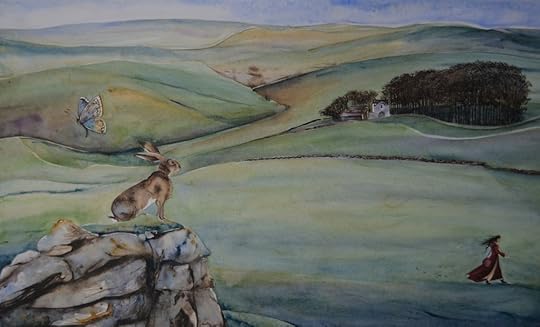
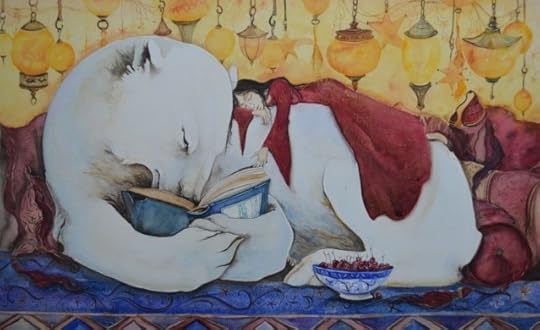
I LOVED every second of the first half, and all of the illustrations were phenomenal, but the ending????? I was ready to give it 5 stars and make it my entire personality until that gods forsaken ending😩
I LOVED every second of the first half, and all of the illustrations were phenomenal, but the ending????? I was ready to give it 5 stars and make it my entire personality until that gods forsaken ending😩

February 28, 2013
This is a beautifully rendered retelling of the old tale with an ending worthy of the 21st century.
Displaying 1 - 30 of 131 reviews