Jump to ratings and reviews
Rate this book

Pain, Parties, Work: Sylvia Plath in New York, Summer 1953

Rate this book
Pain, Parties, Work by Elizabeth Winder is a compelling look at a young Sylvia Plath and the life-changing month that would lay the groundwork for her seminal novel, The Bell Jar.

In May of 1953, a twenty-one-year-old Plath arrived in New York City, the guest editor of Mademoiselle’s annual College Issue. She lived at the Barbizon Hotel, attended the ballet, went to a Yankee game, and danced at the West Side Tennis Club. She was supposed to be having the time of her life. But what would follow was, in Plath’s words, twenty-six days of pain, parties, and work, that ultimately changed the course of her life.

Thoughtful and illuminating, featuring line drawings and black-and-white photographs, Pain, Parties, Work: Sylvia Plath in New York, Summer 1953 offers well-researched insights as it introduces us to Sylvia Plath—before she became one of the greatest and most influential poets of the twentieth century.

288 pages, Hardcover

First published January 29, 2013

198 people are currently reading
5897 people want to read

About the author

Elizabeth Winder

5 books75 followers
Elizabeth Winder is also the author of a poetry collection. Her work has appeared in the Chicago Review, the Antioch Review, American Letters, and other publications. She is a graduate of the College of William and Mary and earned an MFA in creative writing from George Mason University.

Ratings & Reviews

What do you think?
Rate this book

Friends & Following

Create a free account to discover what your friends think of this book!

Community Reviews

5 stars
604 (23%)
4 stars
924 (35%)
3 stars
776 (29%)
2 stars
232 (8%)
1 star
58 (2%)
Displaying 1 - 30 of 366 reviews
Profile Image for Julie Ehlers.
1,117 reviews1,603 followers
February 18, 2017
This is a great idea for a book—the whole Mademoiselle college board thing, and Sylvia Plath’s place in it, was fascinating to me, and it was so interesting to hear what the other guest editors had to say about the experience. Plus, I’d never given much thought to the smart, literary, career-minded (admittedly privileged) college girls of the 1950s (i.e., before the women’s movement), and how difficult it must have been for them to realize that all of their aspirations were pretty much going to narrow down to housewife/kids within a few years. A lot of these women seem highly conflicted, and it’s easy to see why. (I guess this sort of thing is likely covered in The Feminine Mystique, so I should probably read that one of these days.) This book was also a fairly breezy read, definitely entertaining, particularly if you wanted to know what shade of lipstick Sylvia Plath wore and that sort of thing--and it turns out that was in fact something I wanted to know. Sylvia Plath and me: We care about poetry and lipstick! We’re complex like that.

However, Winder’s depiction of that “complexity” was also my biggest problem with this book. In an author’s note, she explains that most works about Plath have tended to focus on her writing (the horror!) and her troubled marriage/depression/suicide, and ignored that fact that she was a really fun girl who liked fashion and whatnot. Winder finds these portraits of Plath “reductive,” and this book is her attempt to correct the record. Fair enough, but Winder really goes too far in the other direction, and this book becomes equally reductive, in my opinion. There’s so much stuff in here about how Sylvia loves red lipstick, and loves shoes, and loves to be tan, etc., etc., that if you didn’t already know it, you wouldn’t really believe she had any hidden depths at all. Plus all the chapters about how irresistible men found her were problematic, given the context. Here was a group of intelligent, ambitious young women trying to break out of restrictive gender roles, and Winder thinks it’s appropriate to emphasize Plath’s attractiveness to men as if it’s one of her defining qualities. It just didn’t work for me.

This book draws very heavily on published volumes of Plath’s letters and journals, and ultimately it made me want to read those books and draw my own conclusions, rather than simply accept the glossy, narrow portrait offered here.
208 reviews11 followers
September 15, 2013
Owl You Need Is a Good Read Review:
The best way to describe this book is: The Bell Jar, but non-fiction. Pain, Parties, Work tells the story of Sylvia Plath during the month of June, 1953 and her internship at Mademoiselle magazine in New York City. That month in NYC was exciting, but with a manic foreboding.

This book bugged me, its set-up was extremely tangential. We’d randomly be talking about someone Plath dated once or twice, then jump backward to her feelings about her mother, then forward again to someone vaguely famous that walked by Plath and the other girls once on the street. It didn’t make any sense. Windner also couldn’t seem to decide what format to go with. For example, there was a “Dictionary of Adolescence” chapter that just listed everyday things and throughout the book, there were boxes of asides relating to crew cuts, or oysters, or the fact that Sylvia got nylons for Christmas one time. Why do we care?! Windner didn’t seem to actually know much about Plath, but was trying to piece together a book that would sell. Chapters were full of information about things that Plath loved, but without any credibility. In the afterward, she did include the names of people she had interviewed, but didn’t cite anything within the text of the book. I would have liked some footnotes.

The one thing that I truly did love about this book was that it gave personal insights into Plath’s life. In most ways, she was just a regular girl and in a way I think that adds something to her. She could be anyone, which is why The Bell Jar resonates with so many young girls: they can identify with Esther and thus Plath herself. All in all, this book was a let-down; don’t waste your time – just go read The Bell Jar again.

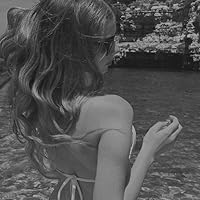
P.S. Why that cover image? It’s lovely, I’ll admit, but a biography (especially a biography of someone who loved being photographed) should have an image of the subject on the cover, not some random woman.
Profile Image for Lindsey.
Author 1 book63 followers
December 21, 2014
"She simply loved food the way she loved so much of the material world: cashmere, caviar, beer--all of it. She loved the colors, wrote in her diary of yellow corn chowder, tuna salad laden with mayonnaise, the dazzling yellow of an egg yolk, the glint of peacock blue inside a raw oyster."

A delicious, beautiful book of vignettes detailing twenty-year-old Sylvia Plath's month in New York working as a guest editor for Mademoiselle magazine, a time she later fictionalized in The Bell Jar. I re-read The Bell Jar last spring, and was surprised at how affected I was by it at age 29 (after reading it as a pre-teen and loving it - but obviously not relating to it fully). Then, I wrote: How do you separate the giant looming cult shadow from the writer herself?

This book is the answer, or at least a big part of it, for me. The vignettes bring to life a girl who was hungry - literally and metaphorically - for life, for New York, for whole bowls of caviar and beautiful plays and silver strapless dresses and pre-dinner champagne cocktails. A girl who said yes to any date as "an opportunity to practice the Foxtrot and drink Fanta." A preternaturally skilled writer and independent worker who hoisted an enormous amount of pressure on her shoulders and who, it must be said again, was utterly failed by the mental health treatments of her time (electroconvulsive and insulin shock "therapy"). A girl who was disgusted by the misogynistic double standards of her (and still our!) time and tried to resolve the "endless conflict" of "the push and pull of needing solitude and experience" as a woman. A girl who drank Tom Collinses at night in her room "and enjoy(ed) the small luxury of drinking alone in her old gray sweater." In short, a girl who has much in common with me, and with many of the girls I know, and who is portrayed with so much vigor and detail in this book (along with the particular zeitgeist of NYC in the early fifties!) that I practically felt her leaning against my arm as I read. Beautiful, beautiful.
Profile Image for Leesa.
Author 12 books2,758 followers
January 12, 2015
Recommended to me by my trusted BFF Lindsey Gates-Markel and Gates-Markel didn't lie to me. All truth, this is one of the most beautiful books I've ever had the pleasure to read. "(Tonight I lost my red bandeau with all the redness in my red little heart), red linen ballet flats in Paris, and lots of lipstick, always red." I love reading abt Sylvia's red lipsticks and dresses and the cocktails and boys and parties. "They shop wearing camel coats, filling their carts with Campbell's soup, orange juice, chickens to roast, and pineapples." "She loved the cold beer and the way her lipstick left bloomy marks on the cans. The damp air had made her voice husky and low, and she was beaming and sitting there crammed between Roger and Weasel while they openly discussed her: 'This girl is the coolest thing I've seen yet...'" The most beautiful book, every word: delicious. "Pretty words you could eat." I forever love Sylvia. I forever love this. I also love the gentle pink and grey of the book design and the lists of boyfriends and different kinds of lipstick reds. Riotously feminine, as am I. Yes yes yes please.
Profile Image for Anaïs.
110 reviews34 followers
August 10, 2013
"That if you stand still for a moment the world keeps moving, that sometimes no head will turn despite shiny hair and freshly applied lipstick. That many of your peers will want less than you, and that you will envy them for that."

This book follows in greatly detailed short chapters/vignettes June 1953, the month Sylvia Plath lived in New York City and was one of twenty guest editors chosen to work on the college issue of Mademoiselle. It follows social interactions, dates, outfits, shopping trips, lunches, meetings, assignments, food poisoning, conversations, everything that happened in that exact time period. It also tells us about Plath's childhood and adolescence, the months that followed her time in New York including her suicide attempt a bit about her later marriage and eventual suicide but mainly we get to know 20-year-old Sylvia, ambitious and anxious and pressured Sylvia, confused about her future Sylvia who methodically plans out her outfits and enjoys fashion and beauty but who is drawn to more serious literary pursuits, pegged there by her own already very apparent talents; we see one girl and so many girls then, all at once.

The book jumps around and does not read only in a chronological order, giving us just the necessary facts and quotations to give us a story, no, we get the feeling of what it's like to be Sylvia, what it's like to be a fastidious and disciplined but also occasionally wild girl, a girl who told her mother upon hearing of her father's death that she would never speak to God again, who instead became one with the sea, the ocean, the sun, who was not nearly as distant or pristine as her then reputation or history's Smith girl portrait of her seems to tell: she was all senses and thus, an all new poet. We get lists of her boyfriends, her favorite shampoo brands, lipstick, phobias, all the things from her journal, all the things from a real life lived. She was a genius but what really makes her work seem even more important, more huge, is that she was just like any other girl, a fact often repeated by her fellow guest editors at Mademoiselle.

It's weird to think that I have felt like Plath before. I haven't wanted to crawl under my house and take a bottle of sleeping pills but I have felt the pressure to be perfect, to be successful, to do everything right and get what you want only to feel like an impostor, as if you don't deserve the things you have worked for. I have felt things so deeply, in such a powerful way that I can't imagine how I'll survive the next instant. I have felt so depressed that nothing seems real. This is mental illness, this is anxiety, this is societal pressure, this is pressure from loved ones, from ourselves. It's a lot of things that go into being who you are, especially being a woman, and although not entirely to that extent, something felt by most of the women in the Mademoiselle program, especially in 1953. Figuring out a way to find out who you are, to become whoever it is you are, was difficult and if you want to be all things, a wife, mother, a person with a career, well, it was damn near impossible then, especially when not all of those choices were considered the right one. We can have it all, or attempt to now, but it's still so fucking hard.

This book is beautiful belongs to the earth with its descriptions of food and clothes and smells and bodies and lipstick. It has a substance you can taste, creating the kinds of memories you still have from teenage summers. Sylvia isn't a victim or hero or symbol, she's just a girl and this is a rush of memory, of senses, of time, of life floating right over you and through you. It's feminine in the way the coppery taste of licking a paper cut is: pungent, metallic, shimmering.
Profile Image for Eric Byrd.
622 reviews1,162 followers
July 20, 2025
Though a poet herself, Winder doesn’t show a grasp of Plath’s literary culture or context. Evaluating the vocational claims Plath made in her application letter for one of Mademoiselle’s Guest Editor/intern/”mascot” spots, she writes:
Villanelle writer. (Anything this fussy, formal, and French? True!)
I think an aspiring poet studying English at Smith in the early 1950s is precisely the person to write a passable villanelle.

Otherwise, this book is alright. I love the 90s supermodels and their chroniclers - Peter Lindbergh especially - but the late 40s-early 50s is my favorite fashion era: Dorian Leigh and Jean Patchett in Dior and Balenciaga, shot by Parkinson and Penn; Balmain, Dovima, Avedon; Dahl-Wolfe by the sea. I’m very interested in fashion magazines, their histories and the desires of their readers, but I don’t know much about Mademoiselle. Apparently it was more literary in the 50s than Vogue and Harper’s Bazaar, and I’m now curious to examine the old issues. Plath’s fellow interns are an interesting sociological sample, a transitional generation - “After the War, Before the Pill” - and Winder quotes their reminiscences to rich effect. I also liked Winder’s coverage of the sartorial language of the time, and its various dialects: collegiate, bohemian, urban haute bourgeois, working girl, grande dame, leisured male. I’m also reminded to learn more about cosmetics, or least about Helena Rubinstein, a monstre sacré with some great lines:

All the American women had purple noses and gray lips and their faces were chalk white from terrible powder. I recognized that the United States could be my life's work.

[On rival Elizabeth Arden] With her packaging and my product we could have ruled the world.
Profile Image for Ed.
Author 68 books2,712 followers
April 22, 2023
Fairly interesting account of Sylvia Plath's memorable month-long stay in New York City when she was one of 20 young ladies selected to "guest-edit" at Madamoiselle Magazine. We learn about what she did, what she wore, and where she went during her off-hours from her job. One thing we learn is how hot it was that summer, which didn't help her fragile mental health. It sounds like she had some fun with her girl pals and boyfriends. It's also kind of sad since we know what hell was soon to befall her. Lots of quotes from those folks who worked with Sylvia.
Profile Image for Jason.
Author 4 books914 followers
April 30, 2013
A fascinating glimpse into one summer of Sylvia Plath's life, remembering her as the vivacious and bright young woman she was. The story of Sylvia Plath's work at the magazine Mademoiselle - which provided inspiration for The Bell Jar - this biography is told through memories of other guest editors, her mother, as well as source material from her journals.
An illuminating and inspiring, yet of course sad, view into a life of someone immensely talented, who wanted to truly see life.
Profile Image for Aleksandra.
129 reviews23 followers
July 28, 2019
Wspaniała, bardzo ciekawa książka, fantastycznie napisana, tętniąca rytmem lat 50 ubiegłego wieku, skrząca się nowojorskim słońcem, pachnąca potem, winem, ostrygami i świeżym, sierpniowym numerem Mademosielle. Z nieco trywialnych rzeczy jak opisy fatałaszków, kolorów szminek i czółenek, a także kolejnych chłopaków Sylvii wyłania nam się jej obraz- realny, niełatwy, eklektyczny, ale z pewnością prawdziwy i na wskroś smutny. Polecam, ale z pewnością warto wcześniej przeczytać Szklany Klosz, by zobaczyć, jak wiele jest w nim prawdy- nie spodziewałam się, że aż tak dużo!
Profile Image for Paris.
14 reviews6 followers
August 5, 2013
After reading the first ten pages of this book, I wanted to marry it and proudly birth silver lame cocktail dresses and green gabardine overcoats together. I felt sure that it would be a five-starrer. By page 35, I was contemplating a legal separation (taking at least 50 percent of the wardrobe memories with me, of course). After that, I would have nothing less than a quickie divorce.

The problems with maintaining our union after vows that promised endless pages of visionary mid-century couture delights, you ask?

1. Winder's insistence on referring to young women in their twenties as "girls." It's okay if it happens once or twice and is definitely understandable if it's part of a quote from some unenlightened twentieth-century soul. But she used it (along with "exotic" as a descriptor--gag) a THOUSAND times to describe women working as guest editors of one of the most powerful magazines of the twentieth century. FAIL.

2. Her tendency to drift off into vague yarns about Some Guy Plath dated once in her freshman year or a friend of a friend of a MLLE that no one cares about. It seemed like obvious attempts to create filler (as if the numerous completely blank pages scattered throughout the book didn't tip us off).

3. Her tendency to make Plath herself BORING AS HELL. The book essentially rehashes The Bell Jar and offers little else of interest (other than HAUTE descriptions of '50s fashions--but, damn it, no pictures). By the end of it, I was dying to read more about Janet Wagner's or Neva Nelson's stories (two of her co-guest-editors). Even the little I learned about them in Winder's off-topic vignettes were infinitely more interesting than the padded account of Plath's 26 days in New York (of which the author obviously knew next to nothing about).

4. Since Winder decided to write a book about a topic whose resultant research so obviously yielded perhaps enough to fill a Post-It but nothing more, she had to find something to fill those 253 pages. Enter annoying "revelations" like Sylvia receiving nylons for Christmas one year or Beat poets gaining popularity during the 1950s or the phosphorescence of some starfish--all in fancy little bordered boxes that signify the particular importance of this information.

5. The numerous contradictions. All of the co-editors LURVED Sylvia. That is, when they weren't hating on her. Winder features bits and pieces of interviews with the other women Sylvia worked and played with, and they pretty much all dislike her, recalling how she was haughty and an embarrassing pig at fancy brunches and a backstabber and a people-hater--but oh, how they really love her now that she's dead! They all--super-intuitive ladies that they are--had always been able to discern her shining genius (and, of course, unparalleled beauty) from day one...blah blah blah (cue every single other word that has already been written about Plath).

6. The fact that every man (and probably women too, when they weren't busy being jealous of her) was in love with her and could barely control themselves from sexually assaulting her or writing her letters every day begging her to sleep with them. Really, Winder, we got the point after the third or fourth mention of her "long, bronzed legs" and ruby, pouty lips or whatever. Oh, and she was not a prude, either! (I'm still not sure why Winder was so anxious to make this point.) Definitely NOT A PRUDE. Got it.

...all of which set off my admittedly numerous pet peeves. I would have loved this book if Winder had admitted she didn't know anything of interest about Plath and just stuck to describing those lovely, lovely 1950s fashions and mid-century New York culture.
Profile Image for Joe.
525 reviews1,144 followers
August 30, 2015
This biography of poet Sylvia Plath focuses on the events depicted in roughly one half of her novel The Bell Jar (published posthumously in the U.S. in 1971). I picked it up as supplemental reading only and would recommend it to those who are fans of the novel or interested in learning as much as they can about Plath's life. In retrospect, I felt that most of what Plath needed the casual reader to know is covered quite well in The Bell Jar.

Winder's research reveals there was good reason for Ted Hughes, Plath's ex-husband and executor of her estate, to promise Aurelia Plath he would not seek to publish The Bell Jar in the U.S. during Mrs Plath's lifetime. He may have felt he was protecting Plath's boyfriends and girlfriends as well. All are cut open and dissected as clinically as Plath's mother is in the novel and do not escape Plath's study.

Personally, I was less interested in which characters or conversations in the novel were fact or fiction based. What I appreciated was the remarkable job Winder did providing historical context to which The Bell Jar takes place.

Single women were flocking to New York City throughout the 1950s. There were mixed reactions to this. Either way, it was a real cultural phenomenon--the idea of girls living in the city with no family or husband was a point of curiosity, even voyeurism. In 1954, Life magazine photographer Lisa Larsen documented the lives of six girls living in a two-bedroom Greenwich Village apartment: There are makeshift desks piled with raspberry jam, toast, teacups, leaf-shaped ashtrays and packs of Chesterfield cigarettes. Black Bakelite telephones, hatboxes, and corkboards pinned with glamour shots and modeling cards. Rusty radiators, guitar propped by the window, Bermuda shorts, shiny loafers without socks. They eat off real china then roll up their sleeves to wash the dishes ...

— “We were the first generation after the war and the last generation before the Pill. On my eighteenth birthday, I married my high school English teacher. I sometimes think I got married to protect my virginity.” Gloria Kirschner

At Smith, Sylvia majored in English—but secretly preferred history. She adored European history and excelled in her religion seminar. Sylvia was more interested in fact than fiction—the color of an oyster shell, an article on the hydrogen bomb, a document on the first printing press in Germany. She might have inherited this from her late father. Sylvia saw glamour in facts.

She hated how New York turned her complexion to a sickly pallor. And for Sylvia, writing and tanning were linked: “I need to be tan, all-over brown, and then my skin clears and I am all right.”

“Sylvia and I thought we could do whatever a man could do. But we liked men—that was the problem!” Laurie Glazer

Those studying Plath's life or her era might enjoy picking through details like these -- appetizers ordered, shoes worn or names of the men in Plath's life before they were changed for The Bell Jar -- but I wouldn't recommend the book as a general read.

The woman depicted on the lovely book cover is not Plath, but a fashion model shot by photographer Norman Parkinson. The book includes photos, magazine covers and sketches pertaining to the content.
Profile Image for Sian Lile-Pastore.
1,453 reviews178 followers
January 13, 2016
I love reading on trains. I read the whole of this book on a train journey from Cardiff to Leeds and I think reading a book in one go kinda changes how you feel about it - it makes the whole experience more intense and involving. Anyway, I really enjoyed this, and it only drops a star because it repeated itself on occasion. This tells the story of Sylvia Plath during the month she spent working for mademoiselle in New York when she was 21 - the period that she writes about in The Bell Jar - the time just before she attempts suicide for the first time.

The author has interviewed all the women that worked with her at this time, and it's fascinating in how it gives these women a voice, but also how it captures a snapshot of time in early 1950s New York. It is all tinged with sadness of course, but it also has this lovely joyfullness to it - how Sylvia loved clothes and red, red lipstick and handsome men, how she loved life and meeting new people and how much she loved to write. A wonderful read if you are into Plath, but also fun and almost frothy if you just want to read about 50s New York.
152 reviews5 followers
July 5, 2013
Someone else reviewing this wrote that they were unclear who this book was meant for, a sentiment with which I wholeheartedly agree. I've read a lot of Plath's poetry, The Bell Jar, and her journals, have seen Sylvia and read Janet Malcolm's The Silent Woman, so I came to this book with a fairly decent idea of the facts of Sylvia Plath's life, experiences, and character. Winder writes at the start of the book that she is trying to dispel the notion of Plath as Depressive Poetess, but what person who is interested enough in Plath to seek out such a specific look at her life would still have such a limited idea of her? Plath's vitality and sensuality beam out of even the bleakest of her poems, that's what makes her so scary and exciting and fascinating to me. If you're interested in Plath, definitely read her journals (this book made me want to read her correspondence, too) and read the gorgeous, brilliant The Silent Woman. Skip this.
Profile Image for Barbara A..
168 reviews24 followers
March 3, 2013
Intoxicating. Made me want to find and re-read my dog eared copIes of Ariel and The Bell Jar. Not to mention Mary McCarthy's The Group. Kaleidoscopic views of NYC fashion and literary scenes. A side benefit...immersing myself in the clothes and cosmetics and scents of the 50's and 60's. Where's my tube of Cherries in The Snow? My short white kid gloves? My kitten heels?
Profile Image for Diana.
41 reviews12 followers
August 13, 2015
I liked the snapshot view of Sylvia and her fellow magazine editors lives in 1953 NYC however the format of the book felt disjointed, random, and contradictory at times ie. Sylvia's view on sex...she go from prude to blasé about it?
Profile Image for Ellis.
1,216 reviews167 followers
November 19, 2014
The Bell Jar, non-fic. This is certainly an interesting concept for a writer to attempt; a recreation of the month that Sylvia Plath worked for Mademoiselle in New York, a month that she later turned into a novel. I’d guess that it’s just plain difficult to make one month in anyone’s life book-length, and there’s a lot here that feels like padding.

There’s a chapter called “A Dictionary of Adolescence” that’s comprised of an alphabet wherein letters correspond with something Plath-related, however tangentially.
“Vanity. ‘How awful to be anyone but I . . . I love my flesh, my face, and my limbs with overwhelming devotion. I know that I am too tall and have a fat nose, and yet I pose and prink before the mirror” (as an aside, good for you, Sylvia!) This one seems worthy of inclusion, but then there’s “Apron. She once sewed three buttons on the wrong side of an apron.” It feels like filler. There’s all these funny text boxes about subjects like loneliness, pageboy haircuts, & merry widow corsets, which make the book itself feel like a ladies magazine. It seems like Winder is taking liberties with certain of her characterizations of what Sylvia was thinking or seeing or feeling at a given time, even though if you read her bibliography & notes at the end, all the information is coming from some credible source. I just like footnotes, I suppose.

The writing is very heady, almost textural. Winder is a poet and it shows. She introduced me to the term ‘demimondaine.’ The word ‘winterberry’ is used here at least twice.

“She loved words – she loved them the way she loved milk and fruit in the summer, dishes of blueberries with cream poured over them. . . Chunks of sunlight like fresh cold pieces of butter. Ginger ale was ‘tawny.’ A silky taupe sundress was ‘apple-scented.’ Her clean little bathroom smelled like warm skin, fluoride, and chromium. Her attachment to language was earthy, physical, and immediate. Pretty words you could eat.” And how! I'm willing to cut this book some slack simply because it reminds me of how much I love The Bell Jar. One of my absolute faves, that one. It may be some sad high school girl cliché, but I read it first when I was fourteen & I love it just as much now as I did then. Off to read it for the 40th time.

Profile Image for Amanda Kay.
466 reviews3 followers
April 14, 2013
Full disclosure: I won this one in a GoodReads First Reads Giveaway.

As a whole, this is a very insightful read. When most of us think of Sylvia Plath, we think of head in an oven, recluse, dark, and suicidal. Therefore, it's very off putting to read a book that centers on Plath when she was happy - or somewhere close to happy. Contrary to popular belief, Plath was not some emo child in her teens, she was your average 50s young lady, excited for dates and dances, but with a desire to leave her mark on the world.

"Pain, Parties, Work" tells the story of the month Sylvia spent as a guest editor for Mademoiselle magazine (similar to Glamour and Elle of today), essentially an internship position. Sylvia spent a month working with the magazine, complete with evening and weekend events as one of the faces of Mlle. In this month Plath developed in ways that only some experiences can change us, she became disheartened by the world she had found so glamorous, perhaps stung by the limits of her gender.

Winder does a fantastic job of keeping chapters concise and telling Plath's story in a way that mirrors fiction - very linear and structured. However, there are chapters that feel like Winder's field notes (the alphabet chapter) and an odd use of offset text boxes.

Overall the book is interesting and a new look at Plath's life, but I wouldn't call it essential nonfiction. With that said, it can definitely open up windows for conversation about The Bell Jar and its legacy. 3.25 stars.
Profile Image for Olivia Loving.
314 reviews14 followers
April 2, 2022
Finished this in two sittings. It was on my list of remaining Plath books to read, and such a (well-written, clever) welcome after the disappointment/disaster of Red Comet, which I read 100 pages of and put down. (Everything I was reading I knew already, and it was studded with the biographer's really awful metaphors...)

Anyway! Back to Pain, Parties, Work. Which I loved. SP's NYC summer was so central to who she was and became, and fits into the duality that governed her poetry, fiction, college thesis (on Dostoevsky's The Double), and life itself.

It was written so beautifully that it became hard to distinguish between what was Plath and what was Elizabeth Winder.

I also happened to read the entire book on a very Plath-like day of mine in New York. The book was in my bag when I emerged from the subway into the New York Life Insurance building on 26th and Park. There's an old Art Deco subway (SVBWAY) sign marking the stairs. And everything was oddly still. I was the only one walking up the marble steps, and I thought, 'This was Sylvia Plath's New York.' It was April Fool's Day, and finally visibly spring, and I thought of summer ahead, and then inevitably of Sylvia's own hot, soul-crushing NYC summer. In the travertine-walled lobby, there's a memorial to life insurance brokers who died in the Korean War, which ended the month after Sylvia left New York, in July 1953. And so it all felt very fitting.
Profile Image for Rachel Stienberg.
522 reviews58 followers
November 28, 2018
This was a phenomenal biography. As someone who was already a massive fan of Sylvia Plath, I was admittedly biased going into this book, but I honestly hadn't gotten my hands on a biography nearly as grand as Shirley Jackson: A Rather Haunted Life in months. I adore biographies and this one was incredibly original due to the extra information Winder. Because she added subsections to this biography, she was really able to help establish personal history as well as extra historical information along with general sidebar details. It was a fantastic way to help make this biography stand out amongst others and also really helped to establish a magazine layout, which was considerably fantastic due to the fact that the summer of 1953 was the month Plath spent working at a magazine.

Winder placed intense time and thought into this book. Interviews were held, gathering quotes from a variety of sources. She also dug throughout Plath's journals (which I am so excited to finally dive into) and pulled direct thoughts from the woman. Her writing took real fact and historical setting and helped make a compelling narrative. After having taken a course on creative non fiction, this was such a great example at how to add vivid detail to help strengthen quotes. I thoroughly enjoyed how Winder wove detail into her passages.

My only complaints with this biography is that I had expected it to end point blank at the end of 1953. Instead, it crept onwards, briefly skimming over one of her suicide attempts with sleeping pills and her time in treatment. I did enjoy learning about insulin treatment, though, and what exactly that did to the body. However, this book stopped in 1954, well beyond that chaotic summer. It also failed to make any extraordinary comparisons to The Bell Jar in this extended timeline.

I also found it odd that Winder failed to mention the ninth chapter of The Bell Jar, where Esther is assaulted and ends up flinging her entire wardrobe off of the building she was staying at. I find few biographies consider the assault she depicts in her book but do connect that it was fact that she did throw her wardrobe off of the building. This is more of a personal issue because that passage has always stood out to me and rarely does anyone mention in articles on her experiences in New York. It was most likely fictionalized but historical comparisons could be connected to rise in violence committed against women in New York during the 1950s or general speculation could be noted. I will admit that this is more of a personal question and less of a flaw of the author.

My only other area of complaint is that this book showed a single illustration by Plath and hinted at others that she had completed. I think showcasing other pieces by her would have highlighted what a diverse artist that she was and also credit her studies in art. While she would later favour writing over art, art did have a massive influence on her life and influences.

This, despite my few complaints, was a fantastic look into Plath's downward spiral. Winder presented such a keen look into the magazine and lifestyle that Plath was faced with, as well as the influences on 1950s women (and later connections to the second wave of feminism) and also highlighted when Plath began to breakdown. She also demonstrated a creative element to the traditional biography, making the layout so much more interesting. This was simply a marvelous book and something I would highly recommend to any fan of Plath.
Profile Image for Bert.
773 reviews18 followers
June 2, 2017
"Sylvia Plath was not the incarnation of the mad, obsessed poetess. Sylvia was a golden girl who knew more about living than most."

What a joy this book was to read! Everything that I've read about Sylvia Plath has been focused on either her poetry or her later life as a depressed, suicidal, mad woman, so reading this book which is all about her time as a carefree, fun and frivolous college girl was really quite a treat. Anyone who has read The Bell Jar (my all time favourite novel and one that has never once been out of print) knows that the story is semi-autobiographical and in this book we see the story that eventually led to Miss Plath writing that story. During the summer of 1953, Sylvia Plath and 18 other young college ladies trek to New York, stay at the Barbizon Hotel for Women and intern for Mademoiselle Magazine, something that Sylvia recalled as being 4 weeks of Pain, Parties and Work. It's during these 4 weeks that we get to know a very different Sylvia to what we generally hear about, she was a young woman who was so excited for the future and was thrilled to be working for one of the biggest magazines of the time.

Not only is this a really great book about Sylvia Plath, it's also a fantastic look at young professional women of the 1950s, so often women would go to college, get a great education and then get married, have kids and not use that college degree. The women portrayed in this book though are something else entirely, they wanted more out of life and they went out and found it which was something that I found really refreshing. All the talk of fashion shows, makeup, cocktail lunches and nights at the ballet had me dreaming of a time when women were ladies and men were gentlemen, glorious.

As an avid reader of The Bell Jar I found so many similarities with the first half of Esther's story and that of Plath during her time at Mademoiselle, this book is a really nice companion piece to The Bell Jar and essential for all fellow fans. It's a very easily read, meticulously researched, beautifully written and just all round lovely look at the happy side of Sylvia Plath. Absolutely loved it!
Profile Image for Freesiab BookishReview.
1,115 reviews54 followers
August 4, 2017
PAIN, PARTIES, WORK Is about the summer Sylvia Plath lived and worked in NYC in 1953. The end culminating in her suicide attempt and writing THE BELL JAR. If you're looking to read a deep look into depression, this is not that book. This book is about the Sylvia that loved fashion and wanted to be a fashion magazine editor. What her social life was like. It uses her writings and interviews from the women she lived with. It's done quite beautifully and a lovely new look at Plath. It may not be the most literary book but if found it insightful and original.
Profile Image for Clare Dowd.
41 reviews1 follower
September 28, 2024
An interesting biography on Sylvia Plath that I found in a used bookstore. It was kind of repetitive and featured a lot of unnecessary details in my opinion. I think it probably only needed to be half the length. However, as someone who knows next to nothing about Plath, I found it fairly informative and a good introduction to her life. I also liked the time period of the end of the 50s as women were starting to gain more rights in the U.S. and able to be more independent.
Profile Image for Christina.
57 reviews23 followers
January 27, 2018
Things that make me like Sylvia Plath a little less:
if she reincarnated, she would like to be a seagull.
Profile Image for Wendelle.
2,048 reviews66 followers
Read
June 13, 2022
heartbreak, delirium, workaholism-- Sylvia Plath knew the routine we women face
Profile Image for Feuerrede.
37 reviews7 followers
August 31, 2022
PIĘKNE.
To wszystko, co mogę napisać.
Nie 5/5 a 10/10
Profile Image for Adrianna.
76 reviews11 followers
Read
July 14, 2021
Świetne uzupełnienie "szklanego klosza", przeczytałam jednym tchem...
Profile Image for olucha.
37 reviews
June 21, 2024
czuć nowy jork lat sześćdziesiątych, upał, ciasnotę pokojów w barbizonie, ważne spotkania, lunche i klimat redakcji czasopisma dla kobiet. niesamowicie dobrze oddana atmosfera tych czasów, czytając wchłania się to całą sobą. miło jest zajrzeć jeszcze bardziej do świata sylvii, obserwować ją, jak chodzi na randki z chłopcami, zajada się kawiorem i pisze teksty do kolejnego wydania gazety. sylvia żyje w tej książce, nie jest sekwencją liter, które układają się na imię, a niesamowicie energiczną, pełną radości i nastawioną na korzystanie z życia młodą dziewczyną, choć już wtedy niezrozumianą. świetna książka!

„rozumieć sylvię to zrozumieć samą siebie”
Profile Image for Bloodorange.
848 reviews209 followers
June 27, 2018
Po przeczytaniu książki o Marilyn Monroe tej samej autorki sięgnęłam po książkę o Plath, opartą na podobnym koncepcie - bierzemy sławną kobietę, wybieramy kluczowy wycinek z jej życia, piszemy monografię. Tym razem i materiału było znacznie mniej, i redaktor chyba gorszy, bo prócz rozdmuchania mało istotnymi detalami, książka jest fragmentaryczna i skacząca z miejsca w miejsce. Na pewno przydatna, jeśli ktoś zamierza omawiać "Szklany klosz" (ale już chyba mało kto to robi).
Displaying 1 - 30 of 366 reviews

Can't find what you're looking for?

Get help and learn more about the design.