

What do you think?

I Dreamed I Was a Very Clean Tramp
The sharp, lyrical, and no-holds-barred autobiography of the iconoclastic writer and musician Richard Hell, charting the childhood, coming of age, and misadventures of an artist in an indelible era of rock and roll...
From an early age, Richard Hell dreamed of running away. His father died when he was seven, and at seventeen he left his mother and sister behind and headed for New York City, place of limitless possibilities. He arrived penniless with the idea of becoming a poet; ten years later he was a pivotal voice of the age of punk, starting such seminal bands as Television, the Heartbreakers, and Richard Hell and the Voidoids—whose song "Blank Generation" remains the defining anthem of the era. Hell was significantly responsible for creating CBGB as punk ground zero; his Voidoids toured notoriously with the Clash, and Malcolm McLaren would credit Hell as inspiration for the Sex Pistols. There were kinetic nights in New York's club demi-monde, descent into drug addiction, and an ever-present yearning for redemption through poetry, music, and art.
"We lived in the suburbs in America in the fifties," Hell writes. "My roots are shallow. I'm a little jealous of people with strong ethnic and cultural roots. Lucky Martin Scorsese or Art Spiegelman or Dave Chappelle. I came from Hopalong Cassidy and Bugs Bunny and first grade at ordinary Maxwell Elementary." How this legendary downtown artist went from a prosaic childhood in the idyllic Kentucky foothills to igniting a movement that would take over New York's and London's restless youth cultures—and spawn the careers of not only Hell himself, but a cohort of friends such as Tom Verlaine, Patti Smith, the Ramones, and Debbie Harry—is just part of the fascinating story Hell tells. With stunning powers of observation, he delves into the details of both the world that shaped him and the world he shaped.
An acutely rendered, unforgettable coming-of-age story, I Dreamed I Was a Very Clean Tramp evokes with feeling, clarity, and piercing intelligence that classic journey: the life of one who comes from the hinterlands into the city in search of art and passion.
From an early age, Richard Hell dreamed of running away. His father died when he was seven, and at seventeen he left his mother and sister behind and headed for New York City, place of limitless possibilities. He arrived penniless with the idea of becoming a poet; ten years later he was a pivotal voice of the age of punk, starting such seminal bands as Television, the Heartbreakers, and Richard Hell and the Voidoids—whose song "Blank Generation" remains the defining anthem of the era. Hell was significantly responsible for creating CBGB as punk ground zero; his Voidoids toured notoriously with the Clash, and Malcolm McLaren would credit Hell as inspiration for the Sex Pistols. There were kinetic nights in New York's club demi-monde, descent into drug addiction, and an ever-present yearning for redemption through poetry, music, and art.
"We lived in the suburbs in America in the fifties," Hell writes. "My roots are shallow. I'm a little jealous of people with strong ethnic and cultural roots. Lucky Martin Scorsese or Art Spiegelman or Dave Chappelle. I came from Hopalong Cassidy and Bugs Bunny and first grade at ordinary Maxwell Elementary." How this legendary downtown artist went from a prosaic childhood in the idyllic Kentucky foothills to igniting a movement that would take over New York's and London's restless youth cultures—and spawn the careers of not only Hell himself, but a cohort of friends such as Tom Verlaine, Patti Smith, the Ramones, and Debbie Harry—is just part of the fascinating story Hell tells. With stunning powers of observation, he delves into the details of both the world that shaped him and the world he shaped.
An acutely rendered, unforgettable coming-of-age story, I Dreamed I Was a Very Clean Tramp evokes with feeling, clarity, and piercing intelligence that classic journey: the life of one who comes from the hinterlands into the city in search of art and passion.
248 pages, Kindle Edition
First published March 12, 2013
About the author
Richard Hell
37 books156 followersBorn in 1949, Richard Meyers was shipped off to a private school for troublesome kids in Delaware, which is where he met Tom (Verlaine) Miller. Together they ran away, trying to hitchhike to Florida, but only made it as far as Alabama before being picked up by the authorities. Meyers persuaded his mother to allow him to go to New York, where he worked in a secondhand bookshop (the Strand; later he was employed at Cinemabilia along with Patti Smith) and tried to become a writer.
He arrived in the Big Apple at the tail end of the hippie scene. He took acid (and later heroin), but sought to develop a different sensibility in the manner of what he later referred to as 'twisted French aestheticism', i.e. more Arthur Rimbaud than Rolling Stones. He printed a poetry magazine (Genesis: Grasp) and when Miller dropped out of college and joined him in New York, they developed a joint alter ego whom they named Teresa Stern. Under this name they published a book of poems entitled Wanna Go Out?. This slim volume went almost unnoticed. It was at this point that Meyers and Miller decided to form a band. They changed their names to Hell and Verlaine, and called the band The Neon Boys.
During this hiatus, Hell wrote The Voidoid (1973), a rambling confessional. He wrote it in a 16 dollar-a-week room, fuelled by cheap wine and cough syrup that contained codeine. He then played in various successful bands: Television, Richard Hell and The Voidoids.
Hell recently returned to fiction with his 1996 novel Go Now.
He arrived in the Big Apple at the tail end of the hippie scene. He took acid (and later heroin), but sought to develop a different sensibility in the manner of what he later referred to as 'twisted French aestheticism', i.e. more Arthur Rimbaud than Rolling Stones. He printed a poetry magazine (Genesis: Grasp) and when Miller dropped out of college and joined him in New York, they developed a joint alter ego whom they named Teresa Stern. Under this name they published a book of poems entitled Wanna Go Out?. This slim volume went almost unnoticed. It was at this point that Meyers and Miller decided to form a band. They changed their names to Hell and Verlaine, and called the band The Neon Boys.
During this hiatus, Hell wrote The Voidoid (1973), a rambling confessional. He wrote it in a 16 dollar-a-week room, fuelled by cheap wine and cough syrup that contained codeine. He then played in various successful bands: Television, Richard Hell and The Voidoids.
Hell recently returned to fiction with his 1996 novel Go Now.
Ratings & Reviews
Friends & Following
Create a free account to discover what your friends think of this book!
Community Reviews
Displaying 1 - 30 of 301 reviews
March 19, 2013
If you are interested in lengthy descriptions of the floor plan of every New York City apartment Richard Hell ever lived in, then this is the book for you.

July 11, 2021
This book had been sitting on my shelf about five years--the Bronze Age in relation to some of my other neglected books whose provenance could place them in Precambrian times.
I'm fascinated by people like Hell. He grew up Richard Meyers in Lexington, Kentucky and Norfolk, Virginia for the last couple years of high school. I've been to Lexington and Norfolk and it's hard for me to imagine someone originating from these places dropping out of high school, as Hell did, and riding the Greyhound to New York and in a couple of years developing a rarefied sensibility that included an appreciation of works like Lautreamont's "Maldoror" and Rimbaud and other French Symbolist poets.
Hell seemed to meld into the New York Boho life in much the manner of a Bob Dylan, also a rustic from Hibbing, Minnesota who moved to New York and became a legend, absorbing life and literature at an alarming rate. Other than his effete sensibilities, Hell makes for an unlikely future rock star. He owns a crappy guitar he never plays and hangs out, shoots heroin and smokes weed and seems not much different from other disaffected youth who flocked to New York in the late 60's , living in the Village working shit jobs while cultivating their exquisite sensibilities.
In most rock bios and memoirs I've read, the subject or narrator is a driven creature. Sure, he may enjoy the ladies and the drugs but his main ambition is becoming a rock star, and he devotes a hell of a lot of time practicing guitar and hustling for gigs and busking on the streets for pocket change. This description of the driven artist is a much more in line with the life of Tom Miller--Hell's friend from school who has moved to NYC to take his own bite out of The Big Apple. Miller practices his guitar all the time and is heavily into the music scene. Hell works in bookstores and record shops and seems more interested in buying music than making it.
I would have liked this book better had Hell given a richer account of how he transformed from country bumpkin to lover of Lautreamont in a year or so. There had to be lots of influences,
but perhaps Hell felt that moving to NYC spoke for itself in effecting the sea changes in his life?
During this formative period, Hell also began publishing literary magazines--the sort that are read by about fifty like-minded aesthetes, twenty-five of whom have published something in the issues they peruse.
Three years down the road, Hell and Tom Miller have formed a band called The Neon Boys. Hell sings, writes songs and plays bass (badly), also changing his name from Richard Meyers to the more euphonious Richard Hell. Tom Miller became Tom Verlaine. They spend a few years playing low-paying and no-paying gigs until the band morphs into a group called Television, arguably one of the seminal punk bands on the New York scene.
What is interesting to me is that Hell speaks very little about Television in his book. He takes some swipes at Tom Verlaine, portraying him as a selfish martinet, but mentions very little about the music they made. This is significant because Television was probably the best band Hell was in.
Hell and Verlaine have what apparently is an acrimonious parting and Hell forms another band called the Heartbreakers, a short-lived endeavor. Other sources say the split between Hell and Television occurred because Hell was of the school that music played badly was okay because it was a true expression of the punk ethos. Over time, Verlaine and the other two members of Television had honed their musicianship and resented Hell's spurious justification for playing sloppy bass guitar.
The last band Hell formed, Richard Hell and the Voidoids produced a classic punk album called, "Blank Generation." Hell spends more time talking about this band than any other. As with Television, part of the band's success consisted in Hell writing the songs and having musicians of talent backing him. Hell had originally divided songwriting in Television with Tom Verlaine, and wrote "Blank Generation" while still a member of that band. Hell ends his memoir in the mid-1980s when the Voidoids broke up.
Overall, this is a mildly interesting read and will be appreciated most by fans of Hell and folks interested in the New York punk scene of the early to mid-1970s.
I'm fascinated by people like Hell. He grew up Richard Meyers in Lexington, Kentucky and Norfolk, Virginia for the last couple years of high school. I've been to Lexington and Norfolk and it's hard for me to imagine someone originating from these places dropping out of high school, as Hell did, and riding the Greyhound to New York and in a couple of years developing a rarefied sensibility that included an appreciation of works like Lautreamont's "Maldoror" and Rimbaud and other French Symbolist poets.
Hell seemed to meld into the New York Boho life in much the manner of a Bob Dylan, also a rustic from Hibbing, Minnesota who moved to New York and became a legend, absorbing life and literature at an alarming rate. Other than his effete sensibilities, Hell makes for an unlikely future rock star. He owns a crappy guitar he never plays and hangs out, shoots heroin and smokes weed and seems not much different from other disaffected youth who flocked to New York in the late 60's , living in the Village working shit jobs while cultivating their exquisite sensibilities.
In most rock bios and memoirs I've read, the subject or narrator is a driven creature. Sure, he may enjoy the ladies and the drugs but his main ambition is becoming a rock star, and he devotes a hell of a lot of time practicing guitar and hustling for gigs and busking on the streets for pocket change. This description of the driven artist is a much more in line with the life of Tom Miller--Hell's friend from school who has moved to NYC to take his own bite out of The Big Apple. Miller practices his guitar all the time and is heavily into the music scene. Hell works in bookstores and record shops and seems more interested in buying music than making it.
I would have liked this book better had Hell given a richer account of how he transformed from country bumpkin to lover of Lautreamont in a year or so. There had to be lots of influences,
but perhaps Hell felt that moving to NYC spoke for itself in effecting the sea changes in his life?
During this formative period, Hell also began publishing literary magazines--the sort that are read by about fifty like-minded aesthetes, twenty-five of whom have published something in the issues they peruse.
Three years down the road, Hell and Tom Miller have formed a band called The Neon Boys. Hell sings, writes songs and plays bass (badly), also changing his name from Richard Meyers to the more euphonious Richard Hell. Tom Miller became Tom Verlaine. They spend a few years playing low-paying and no-paying gigs until the band morphs into a group called Television, arguably one of the seminal punk bands on the New York scene.
What is interesting to me is that Hell speaks very little about Television in his book. He takes some swipes at Tom Verlaine, portraying him as a selfish martinet, but mentions very little about the music they made. This is significant because Television was probably the best band Hell was in.
Hell and Verlaine have what apparently is an acrimonious parting and Hell forms another band called the Heartbreakers, a short-lived endeavor. Other sources say the split between Hell and Television occurred because Hell was of the school that music played badly was okay because it was a true expression of the punk ethos. Over time, Verlaine and the other two members of Television had honed their musicianship and resented Hell's spurious justification for playing sloppy bass guitar.
The last band Hell formed, Richard Hell and the Voidoids produced a classic punk album called, "Blank Generation." Hell spends more time talking about this band than any other. As with Television, part of the band's success consisted in Hell writing the songs and having musicians of talent backing him. Hell had originally divided songwriting in Television with Tom Verlaine, and wrote "Blank Generation" while still a member of that band. Hell ends his memoir in the mid-1980s when the Voidoids broke up.
Overall, this is a mildly interesting read and will be appreciated most by fans of Hell and folks interested in the New York punk scene of the early to mid-1970s.

August 11, 2016
Although Richard Hell was heavily involved in the punk movement, starting several influential bands and appearing regularly in the glory days of CBGB's, he never managed to achieve the same level of fame as other punk icons like Johnny Rotten, the Clash, or the Ramones. But when you look at the history of punk rock, Richard Hell's fingerprints are all over it. He wasn't the founder, by any means, but he was definitely one of the early pioneers of the entire punk movement. I Dreamed I Was a Very Clean Tramp is Hell's story of those early days, and his experiences within that culture.
For a memoir, this book is pretty slim, both literally and metaphorically. Hell spends way too much time telling you about his childhood, and the only real information of interest in this section is the fact that Hell grew up in the perfect cliche of a happy 1950's household. Parents wanting to save their children from a life of drugs and rock n' roll, beware - Keith Richards was a boy scout, Mick Jagger was a choir boy, and Richard Hell was raised in a lovely safe suburb in the Midwest.
The book finally gets good once Hell gets to New York with Tom Verlaine and they start getting into music, and I liked this section for two reasons. First, because of the clear-eyed and unsentimental descriptions of the punk music scene in New York, when it was just a bunch of hungry struggling kids trying to make a statement about something, anything. The honesty and the clarity of Hell's writing makes up for the fact that we are also subjected to a laundry list of women he slept with during this period and why it didn't work out, but frankly I was just happy that he didn't sneer at them and refer to all the women as "chicks" like Keith Richards did in his memoir.
I also liked the fact that Hell presents his music career with honesty and a lack of pretension. He doesn't claim to be called to music, or give us boring lectures on chord progressions. He got into music because it seemed fun, and a good way to get girls, and couldn't even be bothered to practice all that much (to the frequent annoyance of everyone who tried to form a band with him, it turns out that Richard Hell didn't really enjoy being in a band). This frankness was refreshing, but sometimes it feels like self-depreciation, like this excerpt where Hell, one of the coolest people on the planet, tries to claim that he's really super lame:
"All my career I've been described as quintessentially 'cool' or 'hip.' I suppose I've fostered this, on levels, in order to seem desirable to girls and to avoid standard hypocrisy and routine consumer life, but I am not cool. I'm cranky under pressure, I'm a mediocre athlete, I get obsessed with women, I usually want to be liked, and I'm not especially street-smart."
Seriously, that excerpt reads like an actress on the red carpet insisting that no, she looks just terrible and she ate a cheeseburger in the limo and honestly, she's just gross. *pose*
Hell spends a lot of time discussing his long periods of drug addiction, and honestly, if you've read any other rock n' roll memoir, there's not really anything new here. At least Hell's writing makes up for the fact that this is, essentially, just a remix of the same song you hear in every single music memoir:
"Addiction is lonely. ...Once the drug use has replaced everything else, life becomes purely a lie, since in order to keep any self-respect, the junkie has to delude himself that use is by choice. That's the worst loneliness - the isolation, even from oneself, in that lie. In the meantime the original physical pleasure becomes merely dull relief from the threat of withdrawal, from the horror of real life. The user will add any other drugs available, especially stimulants, like methedrine or cocaine, to try to make it interesting again. Eventually, I happened to survive long enough to reach a place where I couldn't kid myself anymore that it was all on purpose, and the despair and physical torment of my failed attempts to stop became my entire reality. I found a way to quit, with help. It was luck that I lived that long."
The book really started to lose me, though, once I became aware of an undercurrent of bitterness running through the entire memoir. Whenever Hell is discussing bands like the Ramones or Johnny Rotten, he's always either hinting or full-out stating that they sold out once they became famous, and you get the impression that Hell believes that his lack of real fame makes him the only true surviving punk. He's also weirdly fixated on Patti Smith, and she appears in the narrative frequently (in her introduction, Hell makes sure to inform the reader that she had amazing boobs. Rock n' roll dudes are and always will be the worst). I don't know if Hell is just angry because Smith never slept with him, but it sure reads that way. The funniest part of all of this is that I read Just Kids by Patti Smith, and I'm not sure she mentioned Richard Hell even once. Clearly, one of them had a much greater effect than the other.
By the end, there isn't really any clear point to this book. Richard Hell grows up, starts playing music, battles an addiction, and...that's pretty much it. There's no central idea or point at the center of this memoir, no goal that Hell's writing is working towards. It's just a sort of linear description of a period in his life, nothing more.
This is a detailed, clear-eyed description of the early days of a music movement, with cameos by famous and not-so-famous figures from the era, so the memoir is worth it for anyone wanting an insider perspective on that time period. But ultimately, Richard Hell doesn't actually have much to say.
For a memoir, this book is pretty slim, both literally and metaphorically. Hell spends way too much time telling you about his childhood, and the only real information of interest in this section is the fact that Hell grew up in the perfect cliche of a happy 1950's household. Parents wanting to save their children from a life of drugs and rock n' roll, beware - Keith Richards was a boy scout, Mick Jagger was a choir boy, and Richard Hell was raised in a lovely safe suburb in the Midwest.
The book finally gets good once Hell gets to New York with Tom Verlaine and they start getting into music, and I liked this section for two reasons. First, because of the clear-eyed and unsentimental descriptions of the punk music scene in New York, when it was just a bunch of hungry struggling kids trying to make a statement about something, anything. The honesty and the clarity of Hell's writing makes up for the fact that we are also subjected to a laundry list of women he slept with during this period and why it didn't work out, but frankly I was just happy that he didn't sneer at them and refer to all the women as "chicks" like Keith Richards did in his memoir.
I also liked the fact that Hell presents his music career with honesty and a lack of pretension. He doesn't claim to be called to music, or give us boring lectures on chord progressions. He got into music because it seemed fun, and a good way to get girls, and couldn't even be bothered to practice all that much (to the frequent annoyance of everyone who tried to form a band with him, it turns out that Richard Hell didn't really enjoy being in a band). This frankness was refreshing, but sometimes it feels like self-depreciation, like this excerpt where Hell, one of the coolest people on the planet, tries to claim that he's really super lame:
"All my career I've been described as quintessentially 'cool' or 'hip.' I suppose I've fostered this, on levels, in order to seem desirable to girls and to avoid standard hypocrisy and routine consumer life, but I am not cool. I'm cranky under pressure, I'm a mediocre athlete, I get obsessed with women, I usually want to be liked, and I'm not especially street-smart."
Seriously, that excerpt reads like an actress on the red carpet insisting that no, she looks just terrible and she ate a cheeseburger in the limo and honestly, she's just gross. *pose*
Hell spends a lot of time discussing his long periods of drug addiction, and honestly, if you've read any other rock n' roll memoir, there's not really anything new here. At least Hell's writing makes up for the fact that this is, essentially, just a remix of the same song you hear in every single music memoir:
"Addiction is lonely. ...Once the drug use has replaced everything else, life becomes purely a lie, since in order to keep any self-respect, the junkie has to delude himself that use is by choice. That's the worst loneliness - the isolation, even from oneself, in that lie. In the meantime the original physical pleasure becomes merely dull relief from the threat of withdrawal, from the horror of real life. The user will add any other drugs available, especially stimulants, like methedrine or cocaine, to try to make it interesting again. Eventually, I happened to survive long enough to reach a place where I couldn't kid myself anymore that it was all on purpose, and the despair and physical torment of my failed attempts to stop became my entire reality. I found a way to quit, with help. It was luck that I lived that long."
The book really started to lose me, though, once I became aware of an undercurrent of bitterness running through the entire memoir. Whenever Hell is discussing bands like the Ramones or Johnny Rotten, he's always either hinting or full-out stating that they sold out once they became famous, and you get the impression that Hell believes that his lack of real fame makes him the only true surviving punk. He's also weirdly fixated on Patti Smith, and she appears in the narrative frequently (in her introduction, Hell makes sure to inform the reader that she had amazing boobs. Rock n' roll dudes are and always will be the worst). I don't know if Hell is just angry because Smith never slept with him, but it sure reads that way. The funniest part of all of this is that I read Just Kids by Patti Smith, and I'm not sure she mentioned Richard Hell even once. Clearly, one of them had a much greater effect than the other.
By the end, there isn't really any clear point to this book. Richard Hell grows up, starts playing music, battles an addiction, and...that's pretty much it. There's no central idea or point at the center of this memoir, no goal that Hell's writing is working towards. It's just a sort of linear description of a period in his life, nothing more.
This is a detailed, clear-eyed description of the early days of a music movement, with cameos by famous and not-so-famous figures from the era, so the memoir is worth it for anyone wanting an insider perspective on that time period. But ultimately, Richard Hell doesn't actually have much to say.

September 22, 2016
This is quite a difficult review to write. On the one hand, Hell is a great writer, and his life has certainly been interesting enough to keep you glued to the page, so on that level it’s great. But on the other hand there seems to be this underlying resentment directed at all those from the same scene who have profited more then himself. Whenever he throws a compliment someones way he’s very quick to shut it down with multiple jabs in the next sentence. His bitterness seeps through every page.
While Hell owns up to being narcissistic and self involved in his youth, the way most 20 somethings are, I could find no trace of that ego shrinking with age. He also seems unable to discuss any woman in his life without giving full description of what their breasts were like.
Those into punk history will certainly find this a worthwhile read, but, just as I did, they will also find Richard to be one hell of an asshole.
While Hell owns up to being narcissistic and self involved in his youth, the way most 20 somethings are, I could find no trace of that ego shrinking with age. He also seems unable to discuss any woman in his life without giving full description of what their breasts were like.
Those into punk history will certainly find this a worthwhile read, but, just as I did, they will also find Richard to be one hell of an asshole.

April 13, 2013
Richard Hell's autobiography makes 1970s New York sound like an artist's playground, and I got the same warm tingly yet detached feeling as I got from Patti Smith's Just Kids--though while Smith's antics were centered around the Chelsea, Hell seemed to bounce all over town, hopping across bright and dull constellations alike flecked with girls, music and drugs. One of my favorite lines:
"I probably peaked as a human in the sixth grade."
He knows this is not true, and it should definitely be said that Hell's self-congratulatory egoism does a lot of the talking. Not that he himself wouldn't sheepishly acknowledge just that--he does. There's a bit less name-dropping than in Just Kids or any more generalized literature about New York punk, for better or worse... we feel a little shock of joy after realizing Hell's buddy Tom is, in fact, THE Tom Verlaine, and his depictions of Patti Smith's early performances are lush and electric. But for the most part, the book is tightly focused on Richard Hell, first as poet, then as musician, as an actor, and finally back to his roots as a poet. There is little we can glean from his portrayal of Blondie, for example, other than the obvious fact that she was stunning. I always suspected Verlaine was an asshole, which Hell confirms; it's funny, though, how much he later comes to affect all the traits he once claimed to hate about the Television frontman with his own project, the Voidoids. This is an autobiography first and foremost--don't expect a ton of insight into [insert favorite punk musician here]'s [drug habit/asshattery/personality/mythology]. (Though you will learn plenty about their groupies.) This one is for Richard Hell fans only.
We learn how with his first band Television, and later the Heartbreakers and the Voidoids, he carefully crafted the effect he wanted to have on post-hippie New York. Hell makes CBGB's sound like your neighborhood dive bar in his casual, dismissive comfort with the place. I do think that this book is integral to even possibly grasping the 70s punk movement and should be read by anyone interested in that fantastic yet brief era, but admittedly, it's a little like knowing too much and spoiling the wonder... the manufacturing of the punk aesthetic and sound is no secret, but sometimes I like to pretend it was as raw and explosive as Johnny Rotten suddenly bursting through a Union Jack flag covered in blood, shouting about anarchy or something. Which it was, in some ways; the attitude certainly wasn't any less authentic than it seemed, but Hell exposes the frequent banality of its enigmas in the process of documenting his own creative peak and his steady decline into inevitable, mundane, miserable, apathetic addiction and general jadedness. His arc matches that of punk itself.
That being said, Richard Hell is second only to William Burroughs in his description of the melancholic reality of heroin addiction. Really. I was particularly touched by those passages, and found myself seeing exactly how that world must have looked through a dope-addled brain. One can say, maybe pretentiously, that it is necessary to describe heroin with prose and poetry; it's too beautiful for normal words at times... and more often, it's too awful for normal words. But he explains it so honestly, to great, meaningful effect.
Hell is first and foremost a poet, a musician second, as he repeatedly reminds us. Paragraphs unconsciously veer into prose, and poetry leaks into the cracks and holds everything together... I always liked that about the Voidoids. Their lyrics stood out; their swagger seemed cooler. And if the book is a little too self-conscious at times, you can't say it isn't charming. You won't find a comprehensive look into the punk scene as a whole, but you will see it all from one man's thoughtful, unparalleled point of view.
Just for good measure, cause I fucking love this song:
https://www.youtube.com/watch?v=Uo_88...
Fuck, I guess this one needs to be here too.
https://www.youtube.com/watch?v=TP3x-...
Edit: And some Heartbreakers, goddamnit, because it just doesn't get much cooler than Johnny Thunders.
https://www.youtube.com/watch?v=-txRP...
"Triangles were fallin' at the window as the doctor cursed
He was a cartoon long forsaken by the public eye
The nurse adjusted her garters as I breathed my first
The doctor grabbed my throat and yelled, 'God's consolation prize!'
To hold the TV to my lips, the air so packed with cash
then carry it up flights of stairs and drop it in the vacant lot
To lose my train of thought and fall into your arms' tracks
and watch beneath the eyelids every passing dot"
... pure poetry.
"I probably peaked as a human in the sixth grade."
He knows this is not true, and it should definitely be said that Hell's self-congratulatory egoism does a lot of the talking. Not that he himself wouldn't sheepishly acknowledge just that--he does. There's a bit less name-dropping than in Just Kids or any more generalized literature about New York punk, for better or worse... we feel a little shock of joy after realizing Hell's buddy Tom is, in fact, THE Tom Verlaine, and his depictions of Patti Smith's early performances are lush and electric. But for the most part, the book is tightly focused on Richard Hell, first as poet, then as musician, as an actor, and finally back to his roots as a poet. There is little we can glean from his portrayal of Blondie, for example, other than the obvious fact that she was stunning. I always suspected Verlaine was an asshole, which Hell confirms; it's funny, though, how much he later comes to affect all the traits he once claimed to hate about the Television frontman with his own project, the Voidoids. This is an autobiography first and foremost--don't expect a ton of insight into [insert favorite punk musician here]'s [drug habit/asshattery/personality/mythology]. (Though you will learn plenty about their groupies.) This one is for Richard Hell fans only.
We learn how with his first band Television, and later the Heartbreakers and the Voidoids, he carefully crafted the effect he wanted to have on post-hippie New York. Hell makes CBGB's sound like your neighborhood dive bar in his casual, dismissive comfort with the place. I do think that this book is integral to even possibly grasping the 70s punk movement and should be read by anyone interested in that fantastic yet brief era, but admittedly, it's a little like knowing too much and spoiling the wonder... the manufacturing of the punk aesthetic and sound is no secret, but sometimes I like to pretend it was as raw and explosive as Johnny Rotten suddenly bursting through a Union Jack flag covered in blood, shouting about anarchy or something. Which it was, in some ways; the attitude certainly wasn't any less authentic than it seemed, but Hell exposes the frequent banality of its enigmas in the process of documenting his own creative peak and his steady decline into inevitable, mundane, miserable, apathetic addiction and general jadedness. His arc matches that of punk itself.
That being said, Richard Hell is second only to William Burroughs in his description of the melancholic reality of heroin addiction. Really. I was particularly touched by those passages, and found myself seeing exactly how that world must have looked through a dope-addled brain. One can say, maybe pretentiously, that it is necessary to describe heroin with prose and poetry; it's too beautiful for normal words at times... and more often, it's too awful for normal words. But he explains it so honestly, to great, meaningful effect.
Hell is first and foremost a poet, a musician second, as he repeatedly reminds us. Paragraphs unconsciously veer into prose, and poetry leaks into the cracks and holds everything together... I always liked that about the Voidoids. Their lyrics stood out; their swagger seemed cooler. And if the book is a little too self-conscious at times, you can't say it isn't charming. You won't find a comprehensive look into the punk scene as a whole, but you will see it all from one man's thoughtful, unparalleled point of view.
Just for good measure, cause I fucking love this song:
https://www.youtube.com/watch?v=Uo_88...
Fuck, I guess this one needs to be here too.
https://www.youtube.com/watch?v=TP3x-...
Edit: And some Heartbreakers, goddamnit, because it just doesn't get much cooler than Johnny Thunders.
https://www.youtube.com/watch?v=-txRP...
"Triangles were fallin' at the window as the doctor cursed
He was a cartoon long forsaken by the public eye
The nurse adjusted her garters as I breathed my first
The doctor grabbed my throat and yelled, 'God's consolation prize!'
To hold the TV to my lips, the air so packed with cash
then carry it up flights of stairs and drop it in the vacant lot
To lose my train of thought and fall into your arms' tracks
and watch beneath the eyelids every passing dot"
... pure poetry.

April 4, 2013
There are a lot of really wonderful things about this book, in particular its direct ugliness and Hell's willingness to confront those parts of himself that are shameful, vile, and ridiculous. He's an engaging and very entertaining writer--often damned funny--and a salacious dirt-disher as well. I know the mythology of the New York scene very well and yet still felt I learned nearly as much from this book as I did years ago from Please Kill Me-- though I'm sure it's about as untrustworthy. From the first time that I heard Blank Generation, 20 years ago this summer, I've remained a fan of his, and artistically this book has only made me appreciate him that much more.
My only significant complaint about the book is the way he talks about women. He seems to have some consciousness about the value of women's contributions to music, culture, and thought, but most of the way they're presented (over and over and over) throughout this book is they're people he fucked or wanted to fuck or describes fucking in extremely vivid detail. Not that there's anything wrong with that in principle, but it's the way he describes it that walks a fine line between deliberately seedy and just straight-up disrespectful in a lot of cases, as though to him these women had a great deal less value than he did, even in retrospect. Now that's a fine line, since he's so open about so much of his ugliness, but he doesn't cop to that level of sleaze-- rather, it remains unspoken. He's not saying, "I was a shitty misogynist, it was ugly, and this is what it looked like." Rather, he's just being a shitty misogynist.
All that said, the parts of this book about the creative process, about the very act of more or less envisioning what would become known as punk, was gripping and fascinating. He doesn't try to take total credit for "inventing" punk as people have suggested he did, but rather paints the scene from which what emerged from him as punk must have happened, and could not have been avoided. His powers of description are strong, his grudges deep, and his willingness to take risks thrilling. Despite my being grossed out by a lot of the way he talked about women, I nonetheless--in spite of that--found this to be a very satisfying read.
My only significant complaint about the book is the way he talks about women. He seems to have some consciousness about the value of women's contributions to music, culture, and thought, but most of the way they're presented (over and over and over) throughout this book is they're people he fucked or wanted to fuck or describes fucking in extremely vivid detail. Not that there's anything wrong with that in principle, but it's the way he describes it that walks a fine line between deliberately seedy and just straight-up disrespectful in a lot of cases, as though to him these women had a great deal less value than he did, even in retrospect. Now that's a fine line, since he's so open about so much of his ugliness, but he doesn't cop to that level of sleaze-- rather, it remains unspoken. He's not saying, "I was a shitty misogynist, it was ugly, and this is what it looked like." Rather, he's just being a shitty misogynist.
All that said, the parts of this book about the creative process, about the very act of more or less envisioning what would become known as punk, was gripping and fascinating. He doesn't try to take total credit for "inventing" punk as people have suggested he did, but rather paints the scene from which what emerged from him as punk must have happened, and could not have been avoided. His powers of description are strong, his grudges deep, and his willingness to take risks thrilling. Despite my being grossed out by a lot of the way he talked about women, I nonetheless--in spite of that--found this to be a very satisfying read.

May 10, 2013
I Dreamed I Was A Very Clean Tramp disappointed me. Mr. Hell, this shit may fly at a party where people give a shit about your "scene" or whatever, but your memoir feels carping and whiny. You either attack or praise then belittle just about everyone you've ever met. Dude, did you have to point out how fat Richard Lloyd's grown? What an asshole move. Honestly, you're only a minor figure in the punk canon, at least outside of Manhattan, and your story isn't that interesting. And you sound like a little kid when you claim the Sex Pistols based their look on you. I mean, seriously, even if it's true, what kind of asshole blurts that shit out? And all the famous artists with whom you had lunch, and the laundry-list of the women you fucked? You sound insecure. And don't get me started on your NA redemption. Who tacked that shit on the end? Your editor? Your editor deserves a prize for raking through the pile of shit I imagine the original manuscript to be and giving form to an ok book. So I guess I Dreamed I Was A Very Clean Tramp wasn't horrible, but there wasn't much here of interest, and the reader must filter through Hell's blowhard bellowing to find the interesting bits. Barely two stars.

August 25, 2013
Like another reviewer, I read I Dreamed I Was a Very Clean Tramp on the heels of Just Kids by Patti Smith. There are parallels between the two works, to be sure. Smith and Richard Hell were contemporaries, living in New York at the same time, working at the same bookstores, performing in the same scene. Both are considered punk rock pioneers. Hell and Smith considered themselves poets and artists above all else. For both, the music grew out of a need to express themselves in the most immediate and authentic way. For me, though, this is where the similarity between I Dreamed I Was a Very Clean Tramp and Just Kids, as well as the similarity between Richard Hell and Patti Smith, ends.
I began reading this book on several occasions, only to be bogged down by the recitation of places and names on the very first page. Halfway through the book, I realize that Hell’s father and mother, their respective families and where they came from really are not important at all. In fact, he never mentions them again. Why, then, devote the first two pages to them? It would have been far more effective to throw us into scene on the first page (perhaps with one of his “running away” attempts), thereby ensuring that the reader would be drawn in, instead of turned off. If I picked up this book at the library, I would have given up. But, since I invested in the hardback, I really wanted to keep reading.
Hell's writing isn't bad, but to say that he’s not a likable or sympathetic narrator is an understatement. In fact, he comes across as an arrogant and childish misogynist and this only increases as the story progresses.
Hell's unfavorable descriptions of women and his sexual conquests dominate the narrative. These descriptions become increasingly frequent, predictable and adolescent (Imagine Terry Gross’s Fresh Air interview with Gene Simmons on continuous repeat). While I appreciate Hell’s honesty about his motivations, it is his denigration and objectification of females that became old very quickly.
Hell seems incapable of describing any woman in purely positive terms and repeatedly seems compelled to qualify any positive observations with a criticism or anatomical assessment. Susan Sontag is the only female that escapes Hell’s superficial criticism, perhaps because even he can’t delude himself into believing that he is superior to her.
Hell deserves respect for overcoming his heroin addiction. However, I was hoping for some self-reflection, growth and insight to come from this, particularly since the scene lost so many of its members to drugs and alcohol, suicide and other violent and early deaths.
The punk scene of the seventies and eighties railed against the meaninglessness of the straight lifestyle and the middle class, but, in some ways, their lives were just as predictable, dull and void of meaning. Wearing a beat-up leather jacket before the Ramones did (as Hell childishly claims that he did) or spiking your hair in a post-military fashion does not make you a hero. And if you believe yourself to be a pioneer, okay…but to what end?
Even when Hell is trying to be humble, he comes off as insincere. In the Epilogue, when Hell encounters former friend and bandmate Tom Verlaine in the street, he feels the need to insult his appearance and convince himself that he is ageing better. He identifies his feelings for Verlaine as love. But his love reads a lot like insecurity and immaturity.
One might expect some introspection and humility from someone who has seen and been through so much. But, instead, Hell remains an adolescent in a sixty-three year-old body. A successful memoir is about being honest. And while Hell shares every sexual encounter and drug exploit in great detail, this is not honesty. Honesty is about taking a real look at oneself. Hell, despite his tell-all memoir, does not go to any of the hard places. It’s easy to talk about sex, drugs and rock and roll. That’s rewarded in our culture. But, after beginning the book with his family, he never returns there. Not once. He’s all about the what, but never examines the why. Maybe Richard Hell’s growth happens after the abrupt, unsatisfying ending. But, I doubt it. If so, this is not the memoir he would have written.
I began reading this book on several occasions, only to be bogged down by the recitation of places and names on the very first page. Halfway through the book, I realize that Hell’s father and mother, their respective families and where they came from really are not important at all. In fact, he never mentions them again. Why, then, devote the first two pages to them? It would have been far more effective to throw us into scene on the first page (perhaps with one of his “running away” attempts), thereby ensuring that the reader would be drawn in, instead of turned off. If I picked up this book at the library, I would have given up. But, since I invested in the hardback, I really wanted to keep reading.
Hell's writing isn't bad, but to say that he’s not a likable or sympathetic narrator is an understatement. In fact, he comes across as an arrogant and childish misogynist and this only increases as the story progresses.
Hell's unfavorable descriptions of women and his sexual conquests dominate the narrative. These descriptions become increasingly frequent, predictable and adolescent (Imagine Terry Gross’s Fresh Air interview with Gene Simmons on continuous repeat). While I appreciate Hell’s honesty about his motivations, it is his denigration and objectification of females that became old very quickly.
Hell seems incapable of describing any woman in purely positive terms and repeatedly seems compelled to qualify any positive observations with a criticism or anatomical assessment. Susan Sontag is the only female that escapes Hell’s superficial criticism, perhaps because even he can’t delude himself into believing that he is superior to her.
Hell deserves respect for overcoming his heroin addiction. However, I was hoping for some self-reflection, growth and insight to come from this, particularly since the scene lost so many of its members to drugs and alcohol, suicide and other violent and early deaths.
The punk scene of the seventies and eighties railed against the meaninglessness of the straight lifestyle and the middle class, but, in some ways, their lives were just as predictable, dull and void of meaning. Wearing a beat-up leather jacket before the Ramones did (as Hell childishly claims that he did) or spiking your hair in a post-military fashion does not make you a hero. And if you believe yourself to be a pioneer, okay…but to what end?
Even when Hell is trying to be humble, he comes off as insincere. In the Epilogue, when Hell encounters former friend and bandmate Tom Verlaine in the street, he feels the need to insult his appearance and convince himself that he is ageing better. He identifies his feelings for Verlaine as love. But his love reads a lot like insecurity and immaturity.
One might expect some introspection and humility from someone who has seen and been through so much. But, instead, Hell remains an adolescent in a sixty-three year-old body. A successful memoir is about being honest. And while Hell shares every sexual encounter and drug exploit in great detail, this is not honesty. Honesty is about taking a real look at oneself. Hell, despite his tell-all memoir, does not go to any of the hard places. It’s easy to talk about sex, drugs and rock and roll. That’s rewarded in our culture. But, after beginning the book with his family, he never returns there. Not once. He’s all about the what, but never examines the why. Maybe Richard Hell’s growth happens after the abrupt, unsatisfying ending. But, I doubt it. If so, this is not the memoir he would have written.

January 24, 2016
I can't remember the last time I deliberately abandoned a book, I will almost always stick it out to the finish, but this is GARBAGE. Jesus, Richard Hell is an embarrassment. I'm boggled by how many people describe this book as "self-effacing" - are y'all won over by humble bragging in real life too?
A) Richard Hell is too boring and narcissistic to have any insight into his remarkable life. He sounds like a spoiled 12 year old nursing decades of insecurity and petty jealousy without realizing it. It's so obvious to any casual reader that he feels passed over. How dare people prefer Tom Verlaine! Patti Smith made it big? Well she's boring and an ugly sellout! (Oh but let me describe her breasts to you in the most dehumanizing fashion.) How can you set out to write a memoir without committing yourself to even a shred of self-reflection? He is an arrogant ass, not in a defiant, deliberate punk way but in a mewling childish way.
B) I know a lot of reviewers have already commented on his misogyny but it really can't be stated enough. Every single woman who gets any mention in this book is reduced to an object to fuck or hate because she doesn't want to fuck you. He's a lech. He's a creep. The way he writes about Patti Smith, devoting more words to the shape and size of her breasts than the art she was making. The way he casually brushes aside even the possibility that a woman could have any kind of contribution to make to the art or music or literary scene. He talks sneeringly about every woman he ever slept with, reducing them to anonymous glory holes or printing their name and then talking about what rubbish they were in bed for not enjoying sex with him - gee whiz, Richard, can't imagine why not. To be clear, this isn't young snotty early-twenties Richard Hell speaking. This is modern-day, bitter, embarrassing Richard Hell speaking. The fact that he doesn't recognize how vile his attitudes towards women is should be a sign that you're not going to get a lot of introspection or personal growth in the pages to follow.
It's hilarious how obviously jealous and insecure he is about Patti Smith. Can he really not see what a classic case he is? She isn't more famous than you because of her manager, or her breasts, or who she dated. She's not more famous than you because her audience is dumber than yours. (But God, could you come up with more perfectly chauvinistic assumptions?) She's more famous than you because she's smarter than you, more sensitive and creative than you, a better writer and songwriter than you, a more talented musician than you, and she's altogether much more interesting than you. Even now, Richard Hell's memoir and Patti Smith's memoirs were released around the same time. Patti Smith's memoir won the National Book Award. Richard Hell's will end up in a remainder bin. Where it belongs.
A) Richard Hell is too boring and narcissistic to have any insight into his remarkable life. He sounds like a spoiled 12 year old nursing decades of insecurity and petty jealousy without realizing it. It's so obvious to any casual reader that he feels passed over. How dare people prefer Tom Verlaine! Patti Smith made it big? Well she's boring and an ugly sellout! (Oh but let me describe her breasts to you in the most dehumanizing fashion.) How can you set out to write a memoir without committing yourself to even a shred of self-reflection? He is an arrogant ass, not in a defiant, deliberate punk way but in a mewling childish way.
B) I know a lot of reviewers have already commented on his misogyny but it really can't be stated enough. Every single woman who gets any mention in this book is reduced to an object to fuck or hate because she doesn't want to fuck you. He's a lech. He's a creep. The way he writes about Patti Smith, devoting more words to the shape and size of her breasts than the art she was making. The way he casually brushes aside even the possibility that a woman could have any kind of contribution to make to the art or music or literary scene. He talks sneeringly about every woman he ever slept with, reducing them to anonymous glory holes or printing their name and then talking about what rubbish they were in bed for not enjoying sex with him - gee whiz, Richard, can't imagine why not. To be clear, this isn't young snotty early-twenties Richard Hell speaking. This is modern-day, bitter, embarrassing Richard Hell speaking. The fact that he doesn't recognize how vile his attitudes towards women is should be a sign that you're not going to get a lot of introspection or personal growth in the pages to follow.
It's hilarious how obviously jealous and insecure he is about Patti Smith. Can he really not see what a classic case he is? She isn't more famous than you because of her manager, or her breasts, or who she dated. She's not more famous than you because her audience is dumber than yours. (But God, could you come up with more perfectly chauvinistic assumptions?) She's more famous than you because she's smarter than you, more sensitive and creative than you, a better writer and songwriter than you, a more talented musician than you, and she's altogether much more interesting than you. Even now, Richard Hell's memoir and Patti Smith's memoirs were released around the same time. Patti Smith's memoir won the National Book Award. Richard Hell's will end up in a remainder bin. Where it belongs.

May 29, 2013
Q: Why did the punk rocker cross the road?
A: He was pinned to a chicken.
I know. Bad joke. It could have been worse. I could have asked you why Jesus crossed the road.
But this is a book review, so...
I'm not exactly sure if Richard Hell is an household name. He was at the start of the punk rock movement in the seventies. He is often given credit for the punk rock look of torn clothes and safety pins, which explains the chicken joke. Malcolm McLaren gives Richard Hell credit for the visual look, if not the musical style, of the Sex Pistols. Before he started his own group he created the early punk groups, Television and The Heartbreakers (which has nothing to do with Tom Petty and...)If you have heard one Richard Hell and The Voidoids song it is probably "The Blank Generation" which is sometimes called the Punk Rock anthem.
But the interesting thing in this book is how little Hell says directly about his music.While he writes prodigiously about the Punk Rock scene he is more interested in the lifestyle than the music. He thinks of himself as a poet and a writer first and left music in 1988 to devote himself to his writing full-time. He's a pretty good writer. In fact, His writing talent is much better than his musical talent which he admits is on the minimal side. I like Richard Hell but it is the kind of "like" coming from watching a kid put heart and soul into an endeavor where his emotions overshadow his abilities. This autobiography, from someone who can only be called an unreliable narrator, describes the punk rock 70s, especially the New York scene, very well. Richard Hell comes across as over-confident, insecure and defensive all at the same time and it gives a nice tension. He may not be someone that is easy to like but is definitely interesting. The only drawback to this book, and it is a big one,is Hell's constant misogyny. He chooses to tell us every sexual encounter in detail and in usually negative terms to his partner. As I said, he is not easy to like.
Richard Hell is my age. But I felt at some times I was reading a memoir by a perennial adolescent. It can be argued that Hell never really grew up. It is what makes this book so involving at times. Hell recalls the times and its emotions and tensions vividly. I think it is because he never really wanted to leave it. Even if he no longer plays music in the rock scene, Richard Hell may be the Peter Pan of Punk Rock Neverland.
A: He was pinned to a chicken.
I know. Bad joke. It could have been worse. I could have asked you why Jesus crossed the road.
But this is a book review, so...
I'm not exactly sure if Richard Hell is an household name. He was at the start of the punk rock movement in the seventies. He is often given credit for the punk rock look of torn clothes and safety pins, which explains the chicken joke. Malcolm McLaren gives Richard Hell credit for the visual look, if not the musical style, of the Sex Pistols. Before he started his own group he created the early punk groups, Television and The Heartbreakers (which has nothing to do with Tom Petty and...)If you have heard one Richard Hell and The Voidoids song it is probably "The Blank Generation" which is sometimes called the Punk Rock anthem.
But the interesting thing in this book is how little Hell says directly about his music.While he writes prodigiously about the Punk Rock scene he is more interested in the lifestyle than the music. He thinks of himself as a poet and a writer first and left music in 1988 to devote himself to his writing full-time. He's a pretty good writer. In fact, His writing talent is much better than his musical talent which he admits is on the minimal side. I like Richard Hell but it is the kind of "like" coming from watching a kid put heart and soul into an endeavor where his emotions overshadow his abilities. This autobiography, from someone who can only be called an unreliable narrator, describes the punk rock 70s, especially the New York scene, very well. Richard Hell comes across as over-confident, insecure and defensive all at the same time and it gives a nice tension. He may not be someone that is easy to like but is definitely interesting. The only drawback to this book, and it is a big one,is Hell's constant misogyny. He chooses to tell us every sexual encounter in detail and in usually negative terms to his partner. As I said, he is not easy to like.
Richard Hell is my age. But I felt at some times I was reading a memoir by a perennial adolescent. It can be argued that Hell never really grew up. It is what makes this book so involving at times. Hell recalls the times and its emotions and tensions vividly. I think it is because he never really wanted to leave it. Even if he no longer plays music in the rock scene, Richard Hell may be the Peter Pan of Punk Rock Neverland.

February 20, 2013
The casual flow of this memoir belies the offhanded stylishness of Richard Hell's prose. He's constructed a compelling story of childhood tramp dreams, burning down Florida cornfields with truant Tom Verlaine, dating famous painter's ex-wives, the boredom of early '70s NYC, starting a lit mag and rejecting solicited poems from Allen Ginsberg, and - most crucially - realizing how the apparatus of a rock band could express a new sound, style, and cultural attitude. Hell settles some scores here, but he's right to claim his status as the originator of much that came out of punk. As a bonus, this book also makes an excellent companion to Patti Smith's "Just Kids."

April 9, 2013
The beauty of the memoir is not only the writer's life, but also the placement of the story. For me Richard Hell's great book “I Dreamed I Was A Very Clean Tramp” is not only about Hell's life, but also a great New York City narrative. With out the actual city New York, there would be no N.Y. Punk Rock. Even though Richard Hell met Tom Verlaine somewhere else, they needed Manhattan to do what they had to do. And the same goes for the NY Dolls, Patti Smith, The Velvet Underground and for god's sake The Lovin' Spoonful!
Many years ago, via the pages of Andy Warhol's Interview Magazine there was an image by Christopher Makos of Tom Verlaine and Richard Hell sitting close together on a couch, who were in a band called Television. The image of the two and what they were wearing really caught my imagination. From that image I became a fan of the band, without hearing one note. I had imagined what Television sounded like by the various reviews in the underground and hip presses at the time. I knew it was guitar music and I presumed the tunes were wild yet restrained like their clothing. Some years later I finally heard the first Television album and the sound was even more remarkable than my imagination. Around that time (maybe later..) I heard Hell's single that came out on Ork Records and I thought “Oh my god this is great as well.”
Ever since those series of moments, Hell has never failed me. At the time I thought of Hell as the male version of Patti Smith. Both were in poetry and books and they captured that poetic rock n' roll look. But all of that is just the surface. After reading Patti's “Just Kids” and Hell's book, the city of New York is the same, but the personalities are different. But both of course are extremely over-the-top talents.
What makes Hell so unique is his love for the written word, and I think that is what kicked him to do music. “Blank Generation,” Love Comes in Spurts” and so forth are classic texts set to music. A combination of jazz jive with a Beat's love of the moment. His memoir goes into his songs, but also the faces and names that surrounded him and his creative work. To this very day, Richard Hell is a remarkable looker, and he knows by instinct the power of the visual and how it would affect his medium. Which is rock and rock is visual as well as poetic.
The stuff I loved about this book is how he maps out Manhattan with bookstores as pin-drops in various areas of the island. It is a world that is totally closed in, but with great bookstores serving the imagination and the fuel that lighted the music. I visited that city and went to CBGB's in the late 70's. Richard Hell was on the stage, David Johansen was near the entrance talking to someone sounding like a Dead End Kid, and then walks in Johnny Rotten. How perfect was that for a visitor from Los Angeles who is a Punk Rock fan! This memoir serves the same hunger and excitement for me.
One thing that stays in my mind is how little one knows Tom Verlaine. Hell writes about him with great love and horror disappointment at the same time. A love/hate, but I never get a clear picture of what makes this guitar god click. And it is not only in this book, but in all books about this period and series of characters. Verlaine seems to be a ghost in every narrative. Will there be a day when he will write his own memoir? Now that can be interesting?
“I Dreamed I Was A Very Clean Tramp” is Hell still keeping the high standards of his other books, which by the way are excellent. The memoir is very focused on the punk rock years, which I think will please the fan out there, but hopefully there will be a second part of this memoir. Hell is very much of the 20th Century Dandy, and his outlook in life is basically to find pleasure, and his taste in women are excellent. For those who read and loved “Please Kill Me” this book is an essential part of the big story.
“I Dreamed I Was...” is the flip side of Patti Smith's memoir, and its a perfect companion piece to that book. Both books to me are a love letter to what was New York, and how that city played in both artist's world and inspiration. So yeah I love Richard Hell and I love his memoir.
Many years ago, via the pages of Andy Warhol's Interview Magazine there was an image by Christopher Makos of Tom Verlaine and Richard Hell sitting close together on a couch, who were in a band called Television. The image of the two and what they were wearing really caught my imagination. From that image I became a fan of the band, without hearing one note. I had imagined what Television sounded like by the various reviews in the underground and hip presses at the time. I knew it was guitar music and I presumed the tunes were wild yet restrained like their clothing. Some years later I finally heard the first Television album and the sound was even more remarkable than my imagination. Around that time (maybe later..) I heard Hell's single that came out on Ork Records and I thought “Oh my god this is great as well.”
Ever since those series of moments, Hell has never failed me. At the time I thought of Hell as the male version of Patti Smith. Both were in poetry and books and they captured that poetic rock n' roll look. But all of that is just the surface. After reading Patti's “Just Kids” and Hell's book, the city of New York is the same, but the personalities are different. But both of course are extremely over-the-top talents.
What makes Hell so unique is his love for the written word, and I think that is what kicked him to do music. “Blank Generation,” Love Comes in Spurts” and so forth are classic texts set to music. A combination of jazz jive with a Beat's love of the moment. His memoir goes into his songs, but also the faces and names that surrounded him and his creative work. To this very day, Richard Hell is a remarkable looker, and he knows by instinct the power of the visual and how it would affect his medium. Which is rock and rock is visual as well as poetic.
The stuff I loved about this book is how he maps out Manhattan with bookstores as pin-drops in various areas of the island. It is a world that is totally closed in, but with great bookstores serving the imagination and the fuel that lighted the music. I visited that city and went to CBGB's in the late 70's. Richard Hell was on the stage, David Johansen was near the entrance talking to someone sounding like a Dead End Kid, and then walks in Johnny Rotten. How perfect was that for a visitor from Los Angeles who is a Punk Rock fan! This memoir serves the same hunger and excitement for me.
One thing that stays in my mind is how little one knows Tom Verlaine. Hell writes about him with great love and horror disappointment at the same time. A love/hate, but I never get a clear picture of what makes this guitar god click. And it is not only in this book, but in all books about this period and series of characters. Verlaine seems to be a ghost in every narrative. Will there be a day when he will write his own memoir? Now that can be interesting?
“I Dreamed I Was A Very Clean Tramp” is Hell still keeping the high standards of his other books, which by the way are excellent. The memoir is very focused on the punk rock years, which I think will please the fan out there, but hopefully there will be a second part of this memoir. Hell is very much of the 20th Century Dandy, and his outlook in life is basically to find pleasure, and his taste in women are excellent. For those who read and loved “Please Kill Me” this book is an essential part of the big story.
“I Dreamed I Was...” is the flip side of Patti Smith's memoir, and its a perfect companion piece to that book. Both books to me are a love letter to what was New York, and how that city played in both artist's world and inspiration. So yeah I love Richard Hell and I love his memoir.

March 7, 2013
As a rock-book aficionado, I couldn’t help reading Richard Hell’s book without imagining him in a cage match with Patti Smith, the singer/poet/muse who authored “Just Kids.” Hell probably thinks his book is different from Smith’s since Smith focuses on her relationship with Robert Mapplethorpe and Hell covers his life from the beginning until he quit music, but there are so many similarities that I couldn’t ignore it. To review Hell’s book, I have to compare it to Smith’s point by point:
Writing Style: When Hell recounts his life, his tone seems surprisingly distant, or he tries to play off moments with humor. Smith is much more passionate. Sometimes, I wanted to shout at Hell, “Dude, your life was exciting, so get excited about it!” This may be a matter of taste, but I liked Smith’s emotion, so the winner is … Smith.
Gossip: Patti Smith had some dirt, but she is way more about her passion for making art. Hell enjoys throwing out a barb or two, especially when it comes to his former bandmates in Television. Oh, and Richard Hell was a regular Don Juan of the Bowery. He had so many notches in his gunbelt that his pants fell down, which is mighty convenient for him. So the winner is … Hell.
Capturing the Punk Scene: Much of the culture we see today consists of bands trying to recapture the spirit of New York City in the 1970s. (Yoo-hoo, Strokes!) I can see why it is tough because, while NYC was inspiring during that time, it was also a crime-ridden fleabag dump. Hell is methodical about describing where he lived, where he worked, what he wore and what he ate. I appreciate the detail, but Smith convinced me that underneath all that urban squalor was a magic city. The winner is … Smith.
The End: Smith’s book is better, probably because its style was a little more ambitious, but Hell’s book is hardly a waste of time. Any punk aficionado will enjoy it.
Writing Style: When Hell recounts his life, his tone seems surprisingly distant, or he tries to play off moments with humor. Smith is much more passionate. Sometimes, I wanted to shout at Hell, “Dude, your life was exciting, so get excited about it!” This may be a matter of taste, but I liked Smith’s emotion, so the winner is … Smith.
Gossip: Patti Smith had some dirt, but she is way more about her passion for making art. Hell enjoys throwing out a barb or two, especially when it comes to his former bandmates in Television. Oh, and Richard Hell was a regular Don Juan of the Bowery. He had so many notches in his gunbelt that his pants fell down, which is mighty convenient for him. So the winner is … Hell.
Capturing the Punk Scene: Much of the culture we see today consists of bands trying to recapture the spirit of New York City in the 1970s. (Yoo-hoo, Strokes!) I can see why it is tough because, while NYC was inspiring during that time, it was also a crime-ridden fleabag dump. Hell is methodical about describing where he lived, where he worked, what he wore and what he ate. I appreciate the detail, but Smith convinced me that underneath all that urban squalor was a magic city. The winner is … Smith.
The End: Smith’s book is better, probably because its style was a little more ambitious, but Hell’s book is hardly a waste of time. Any punk aficionado will enjoy it.

March 18, 2013
Who the hell is Richard Hell? If you have to ask that question, you haven’t been paying attention.
In the 70′s and early 80′s, Hell (real name Richard Meyers) was the cofounder of three bands: Television, the Heartbreakers, and Richard Hell and the Voidoids. He quit both Television and the Heartbreakers due to conflicts with other band members, and then went on to form the Voidoids, where he could actually drive the bus for a change.
While saying that all three outfits were incredibly influential is simply stating the truth, that’s like saying that Beethoven was a great composer, or Shakespeare wrote some pretty nifty plays. It can be argued that, had there been no Richard Hell to help mold and form the early influences of the music that came out of New York City in the mid to late 70′s, the resulting punk explosion simply would not have happened the way that it did, or with as much ferocity, or the same style and esthetics.
Which means tha, if you were slamdancing at hardcore shows in the 80′s, had Sex Pistols or Clash posters up on your walls in high school or college, and still sneer at “punk rock” acts that play large stadiums and charge an arm and a leg for tickets, then you have Richard Hell to thank.
And if you close your eyes and make believe, you might just imagine he’s sneering right alongside you — safety-pinned shirt and all.
Richard retired from music in 1984, after the Voidoids broke up. Since then, he’s been concentrating on writing, producing novels and a wealth of commentary and criticism. I Dreamed I Was a Very Clean Tramp is his long-awaited autobiography.
And saying that it’s phenomenal is, again, like saying that that Beethoven guy was really something.
When it comes to an autobiography, you have to understand that you’re being told a story. A biography is an exercise in provable facts (so as to avoid very angry editors and highly-litigious estates) because you’re telling someone else’s story, and you really need to get it right. But an autobiography is like sidling up to a stranger at a bar, and buying them a drink in exchange for them telling you about their childhood, or their first job, or the first in a long string of lovers who did them wrong.
If you pass them enough drinks they might just pass out, but hopefully not before you get to the real meat of their life and work, and maybe a revelation or two. If you’re lucky they’re really good at telling stories.
As anyone who’s listened to his lyrics or read his poems or novels can tell you, Richard Hell is really damn good at telling stories. Tramp sings the song of his life up until 1984, when he quit music, and it’s told in what appears to be naked honesty — quite literal, in many spots — complete with his triumphs and failures, slights and revenges, and a philosophy that may bend but not quite break. There are lines in here worthy of song, and for all we know they may have already been performed, somewhere along the way.
By the time you’re done with it, you feel like you were there, laughing and loving and crying along with him, and feeling like maybe you missed something by not cohabiting his sphere of existence. Whether it’s entirely true or not is a matter for others to parse out and argue over; this book was meant to be a rich and filling feast — who cares what went into the sausage?
But one thing this autobiography isn’t — for which I call it phenomenal, as opposed to just darn good — is a story with a purpose.
Far too many autobiographies are written for a reason other than just telling the story of a life: the reporter who wants to say why she got fired from the major newspaper; the possible or failed presidential candidate; the outed spy or the crapped-upon victim; the man who cut his hand off to escape a hungry rock. All these stories are presented to us in order to give their side of “the story,” or get some kind of revenge or justice by way of the court of the public eye, or else justify their having lived instead of died.
Tramp hasn’t been written to denigrate Hell’s cohorts, excoriate his exes, or prove how valuable he was to the time where he had the most input. Like the perfect song, it exists simply for its own sake, and can be enjoyed without worrying about devious subtexts, or having to watch out for the bill of goods it might stick you with.
In the 70′s and early 80′s, Hell (real name Richard Meyers) was the cofounder of three bands: Television, the Heartbreakers, and Richard Hell and the Voidoids. He quit both Television and the Heartbreakers due to conflicts with other band members, and then went on to form the Voidoids, where he could actually drive the bus for a change.
While saying that all three outfits were incredibly influential is simply stating the truth, that’s like saying that Beethoven was a great composer, or Shakespeare wrote some pretty nifty plays. It can be argued that, had there been no Richard Hell to help mold and form the early influences of the music that came out of New York City in the mid to late 70′s, the resulting punk explosion simply would not have happened the way that it did, or with as much ferocity, or the same style and esthetics.
Which means tha, if you were slamdancing at hardcore shows in the 80′s, had Sex Pistols or Clash posters up on your walls in high school or college, and still sneer at “punk rock” acts that play large stadiums and charge an arm and a leg for tickets, then you have Richard Hell to thank.
And if you close your eyes and make believe, you might just imagine he’s sneering right alongside you — safety-pinned shirt and all.
Richard retired from music in 1984, after the Voidoids broke up. Since then, he’s been concentrating on writing, producing novels and a wealth of commentary and criticism. I Dreamed I Was a Very Clean Tramp is his long-awaited autobiography.
And saying that it’s phenomenal is, again, like saying that that Beethoven guy was really something.
When it comes to an autobiography, you have to understand that you’re being told a story. A biography is an exercise in provable facts (so as to avoid very angry editors and highly-litigious estates) because you’re telling someone else’s story, and you really need to get it right. But an autobiography is like sidling up to a stranger at a bar, and buying them a drink in exchange for them telling you about their childhood, or their first job, or the first in a long string of lovers who did them wrong.
If you pass them enough drinks they might just pass out, but hopefully not before you get to the real meat of their life and work, and maybe a revelation or two. If you’re lucky they’re really good at telling stories.
As anyone who’s listened to his lyrics or read his poems or novels can tell you, Richard Hell is really damn good at telling stories. Tramp sings the song of his life up until 1984, when he quit music, and it’s told in what appears to be naked honesty — quite literal, in many spots — complete with his triumphs and failures, slights and revenges, and a philosophy that may bend but not quite break. There are lines in here worthy of song, and for all we know they may have already been performed, somewhere along the way.
By the time you’re done with it, you feel like you were there, laughing and loving and crying along with him, and feeling like maybe you missed something by not cohabiting his sphere of existence. Whether it’s entirely true or not is a matter for others to parse out and argue over; this book was meant to be a rich and filling feast — who cares what went into the sausage?
But one thing this autobiography isn’t — for which I call it phenomenal, as opposed to just darn good — is a story with a purpose.
Far too many autobiographies are written for a reason other than just telling the story of a life: the reporter who wants to say why she got fired from the major newspaper; the possible or failed presidential candidate; the outed spy or the crapped-upon victim; the man who cut his hand off to escape a hungry rock. All these stories are presented to us in order to give their side of “the story,” or get some kind of revenge or justice by way of the court of the public eye, or else justify their having lived instead of died.
Tramp hasn’t been written to denigrate Hell’s cohorts, excoriate his exes, or prove how valuable he was to the time where he had the most input. Like the perfect song, it exists simply for its own sake, and can be enjoyed without worrying about devious subtexts, or having to watch out for the bill of goods it might stick you with.

May 26, 2013
Yeah, so, I hated Richard Hell when I was younger and a bass player. I hated him because he was a terrible bass player, because he couldn't really sing, because his songs were weird, because he seemed to think that punk was more about hair and fashion and some intangible personal edge than it was about music. Now that I'm much older, I can see that Richard Hell is a very smart man and an accomplished writer who had a much better sense of what the CBGB scene was about than I could imagine. I still don't like the guy. But contrary to many of the other reviews I've glanced at here, I think this book just gets better as it goes along. For the first 150 pp, all I could think about was how much I really didn't like him. Then I began to see that he never gave a fuck about whether people like me liked him. He was doing something else. He was doing that edge thing, that scary real edge thing that I never wanted to get too close to. You know...junkie...narcissistic...impossible to work with...unwilling to practice or work hard...beautiful...insane. This book is more honest than Just Kids. Not that honesty trumps all other values in a book. But the ending, the last 50 pp or so, is great. And many way way many of the sentences are just about perfect. Just as many are overwritten. And plenty are just there. As some other reviewer put it, there is a bit more attention to the detail of breasts and vaginas than there should be -- especially given that he was high most of the time and probably does not really remember them. It's an autobiography that revels in its own braggadocio, even when detailing his failures and his fuck-ups. It's pretty real that way.

August 25, 2013
Hell's unsentimental memoir, which ends in 1984--the year he quits drugs and retires from music--can really be considered a parallel companion book to Patti Smith's super soulful Just Kids. Born in '49, Hell and Smith take separate paths to a frayed NYC, scraping by as young and hungry teens, both bent on pursuing lives as poets and writers--only coming into their respective rock careers later. Both narratives are largely set in downtown NY and the Lower East Side--especially Hell's--where both artists hustle for jobs (both work in bookstores), both are propositioned by Allen Ginsberg (who mistakes Patti for a boy), and both live hand to mouth until they get famous. While the heart of Patti's book resides in her Mapplethorpe devotion, Hell's narrative is propelled by endless, often self-aggrandizing sexcapades, drug taking, tedious band politics and Euro debauchery. Doesn't make for a bad story, especially for an insider's view of CBGB in its heyday. And anyone wanting a non-academic intro to poetry--particularly the New York School--should read this book. The drug hustle gets a tad tedious after awhile. And why does Hell hate Patti so much?

April 19, 2013
After readings this one I can't even recall why I ever thought Richard hell was a bright guy. Maybe from reading 'Please Kill Me' by legs McNeil? I remember liking his book 'Go Now' but I probably read it in high school. This book is pretty solipsistic, after a point it seemed. Ike a lot of banal observations about nothing much and weirdly he tries to take credit for a bunch of punk innoventions. He implies that his look inspired the uk sex clothing store run by Malcolm mclaren and Vivian Westwood, and that his dry humour was aped by all, and that the British press all reacted against his bookish intellectualism which he seems to think is emblematic of being an American. He also has to comment on the breasts of every woman in his life story. Depressing.
It occurred to me halfway through that he probably just read this mess into a recorder and some editor transcribed it. Some of the phrasing is just dreadful.
I will say that I didn't know he was close to cookie mueller and I love her so it was nice to read about his affection for her.
It occurred to me halfway through that he probably just read this mess into a recorder and some editor transcribed it. Some of the phrasing is just dreadful.
I will say that I didn't know he was close to cookie mueller and I love her so it was nice to read about his affection for her.

October 15, 2016
Ultimately, not only are we all the same, but what happens is out of our control. (...) All there is is the entertainments, pastimes, of love and work, the hope of keeping interested.
Sex and drugs and rock and roll. In roughly that order (and a bit of poetry). Richard Hell's autobiography of his early life and brief punk stardom before deciding to quit the whole circus before the inevitable overdose has all the usual trappings of a rocker memoir, with two exceptions: One, that Hell never really seems into the music as such as much as what it offers in terms of expression and lifestyle (well, he IS a bass player), and two, that Hell actually knows how to sling a pen even if his writing, much like his musical output, tends to come in brief outbursts of genius surrounded by stretches of rather workmanlike time-passing.
It was like having magic powers. The ability to create action at a distance. The sounds that came from the amplifiers were absurdly moving and strange, the variety of them so wide in view of the fact that they came from flicks of our fingers and from our vocal noises, and the way that it was a single thing, an entity, that was produced by the simultaneous reactive interplay of the four band members combining various of their faculties. We were turned into a sound a flow of sound. I remember having a weird moment of weird revelation once, that each moment of a phonograph record being played, each millimeter of information conveyed via the needle to the amplifier to the speaker to the ear, is one sound. A whole orchestra is one sound, altering moment by moment, no matter how many instruments go into producing it. And, as our band rehearsed, on each moment we made the sound spray out in arrays we could instantly alter, emanating from inside us and out interplay and our inner beings combined, playing. And the sound included words.
While the book largely overlaps Patti Smith's Just Kids it's also quite different, largely of course because Hell himself is a very different person; with more distance to in his own myth for good and bad, capable of describing his younger self and the people he knew back then with an honesty that borders on cruelty, but also as befits the writer of "Blank Generation", that distance seems to have been there already; rather than submerge himself in the music and lifestyle he comes across as the kid (not that he was that young) who stands over in the corner making sarcastic comments, always with a girl of five nearby (he is literally unable to mention a woman without reviewing her breasts) and some good dope, but never really liking it much except in small doses. There's an intellectual detachment to I Dreamed I Was A Very Clean Tramp that is understandable and often quite entertaining, but a little too often fails to take it above the level of a good life story into something greater. But I should probably take a look at his novels.
Rock and roll is the only art form at which teenagers are not only capable of excelling but that actually requires that one be a teenager, more or less, to practice it at all. This is the way that “punk” uniquely embodies rock and roll. It explicitly asserts and demonstrates that the music is not about virtuosity. Rock and roll is about natural grace, about style and instinct. Also the inherent physical beauty of youth. You don't have to play guitar well or, by any conventional standard, sing well to make great rock and roll; you just have to have it, have be able to recognize it, have to get it. And half of that is about simply being young, meaning full of crazed sex drive and sensitivity to the object of romantic and sexual desire, and full of anger about being condescended to by adults, and disgust and anger about all the lies you're being fed, and all the control you've been subjected to, by those complacent adults. And a deep desire for some fun. And though rock and roll is about being cool, you don’t have to be cool to make real rock and roll—sometimes the most innocuous and pathetic fumblers only become graced by the way they shine in songs. And this is half of what makes the music the art of adolescence—that it doesn’t require any verifiable skill. It’s all essence, and it’s available to those who, to all appearances, have nothing.
Sex and drugs and rock and roll. In roughly that order (and a bit of poetry). Richard Hell's autobiography of his early life and brief punk stardom before deciding to quit the whole circus before the inevitable overdose has all the usual trappings of a rocker memoir, with two exceptions: One, that Hell never really seems into the music as such as much as what it offers in terms of expression and lifestyle (well, he IS a bass player), and two, that Hell actually knows how to sling a pen even if his writing, much like his musical output, tends to come in brief outbursts of genius surrounded by stretches of rather workmanlike time-passing.
It was like having magic powers. The ability to create action at a distance. The sounds that came from the amplifiers were absurdly moving and strange, the variety of them so wide in view of the fact that they came from flicks of our fingers and from our vocal noises, and the way that it was a single thing, an entity, that was produced by the simultaneous reactive interplay of the four band members combining various of their faculties. We were turned into a sound a flow of sound. I remember having a weird moment of weird revelation once, that each moment of a phonograph record being played, each millimeter of information conveyed via the needle to the amplifier to the speaker to the ear, is one sound. A whole orchestra is one sound, altering moment by moment, no matter how many instruments go into producing it. And, as our band rehearsed, on each moment we made the sound spray out in arrays we could instantly alter, emanating from inside us and out interplay and our inner beings combined, playing. And the sound included words.
While the book largely overlaps Patti Smith's Just Kids it's also quite different, largely of course because Hell himself is a very different person; with more distance to in his own myth for good and bad, capable of describing his younger self and the people he knew back then with an honesty that borders on cruelty, but also as befits the writer of "Blank Generation", that distance seems to have been there already; rather than submerge himself in the music and lifestyle he comes across as the kid (not that he was that young) who stands over in the corner making sarcastic comments, always with a girl of five nearby (he is literally unable to mention a woman without reviewing her breasts) and some good dope, but never really liking it much except in small doses. There's an intellectual detachment to I Dreamed I Was A Very Clean Tramp that is understandable and often quite entertaining, but a little too often fails to take it above the level of a good life story into something greater. But I should probably take a look at his novels.
Rock and roll is the only art form at which teenagers are not only capable of excelling but that actually requires that one be a teenager, more or less, to practice it at all. This is the way that “punk” uniquely embodies rock and roll. It explicitly asserts and demonstrates that the music is not about virtuosity. Rock and roll is about natural grace, about style and instinct. Also the inherent physical beauty of youth. You don't have to play guitar well or, by any conventional standard, sing well to make great rock and roll; you just have to have it, have be able to recognize it, have to get it. And half of that is about simply being young, meaning full of crazed sex drive and sensitivity to the object of romantic and sexual desire, and full of anger about being condescended to by adults, and disgust and anger about all the lies you're being fed, and all the control you've been subjected to, by those complacent adults. And a deep desire for some fun. And though rock and roll is about being cool, you don’t have to be cool to make real rock and roll—sometimes the most innocuous and pathetic fumblers only become graced by the way they shine in songs. And this is half of what makes the music the art of adolescence—that it doesn’t require any verifiable skill. It’s all essence, and it’s available to those who, to all appearances, have nothing.

March 31, 2013
I had a real Jekyll & Hyde reaction with this book. Some parts I loved and felt very sympathetic to him and other times - oh.my.lord - other times he was such an insufferable twat. The pretentiousness - make it stop! I think it's because he was a high school dropout and was surrounded by famous intellectuals and artists so he overcompensated by being a bit of a megalomaniac. He did have some good reasons to think highly of himself (when he wasn't beating himself up) - he was sexy, charismatic, innovative. Most teen dropouts who moved to NYC with no money and no connections don't end up hanging out with Andy Warhol and Susan Sontag and Larry Rivers etc. It reminded me of the Elinor Glynn novel from the early twentieth century called IT. (Clara Bow played the IT girl in a famous silent movie based on the book). Some people just have IT and apparently Richard Hell is one of those people.
The parts of the book I liked best were the gossipy parts. I'm sure he wants readers to be drawn to the sections were he pontificates about poetry and the meaning of life. I must admit those parts grated on my nerves, I guess I am just a shallow person for being more drawn to the sex, drugs & rocknroll aspects of the book. I think he did a good job talking about addiction and what it's like. And the sex parts - wow, he was quite the lothario of the lower east side. I get it - I had a big crush on him for a while in the early 80s. I see why women were drawn to him.
He was such an asshole to so many of them, though. It made me hate him at times. One story that really rubbed me the wrong way was when he wrote about rock groupies and how he thought Nancy Spungen was irritating because she had ambition. Unlike a good groupie like Sabel Starr who just lived to give the best blowjob ever. UGH. Ok, granted, Nancy Spungen was a full blown sociopath(I read her mom's book about her) but RH seemed to dislike her for wanting to be more than just an easy lay to musicians. It bugged me. Another scene that bugged me was when he was writing about one of the many, many strippers/escorts he "dated". She was out turning tricks while he lounged around her apartment, waiting for her to bring him money she had earned so he could buy dope. She came home, straddled him on the bed - wearing her sexy hooker outfit - and showered hime with dollar bills. Gee, that's so pimp-ish of you, Richard. How so not attractive. I found it telling that the women he considered his soulmate was a French artist who spoke almost no English. Hmmm. He's got a lot of weird issues surrounding women.
The parts about Tom Verlaine were interesting. RH is still pretty pissed off. He tells his side of the story but honestly, I think TV has a better reason to be angry at RH. None of RH's reasons for his animosity towards TV seem strong enough. TV, however, has several strong reasons. RH was a junkie, had only played a musical instrument for 6 months and was way more charming and sexy than TV. I wouldn't want to be in a band with him either.
I kept comparing this memoir to Patti Smith's memoir I read last year. I need to go flip through her book again. They cover a lot of the same ground but in a different way. Patti seems more innocent to me, yet more focused too. I dunno. I adored her book and I have reservations about this one. I still recommend reading this book though, if you are at all interested in the NYC 70's scene or punk rock. Hell's memoir is an important piece of the puzzle.
The parts of the book I liked best were the gossipy parts. I'm sure he wants readers to be drawn to the sections were he pontificates about poetry and the meaning of life. I must admit those parts grated on my nerves, I guess I am just a shallow person for being more drawn to the sex, drugs & rocknroll aspects of the book. I think he did a good job talking about addiction and what it's like. And the sex parts - wow, he was quite the lothario of the lower east side. I get it - I had a big crush on him for a while in the early 80s. I see why women were drawn to him.
He was such an asshole to so many of them, though. It made me hate him at times. One story that really rubbed me the wrong way was when he wrote about rock groupies and how he thought Nancy Spungen was irritating because she had ambition. Unlike a good groupie like Sabel Starr who just lived to give the best blowjob ever. UGH. Ok, granted, Nancy Spungen was a full blown sociopath(I read her mom's book about her) but RH seemed to dislike her for wanting to be more than just an easy lay to musicians. It bugged me. Another scene that bugged me was when he was writing about one of the many, many strippers/escorts he "dated". She was out turning tricks while he lounged around her apartment, waiting for her to bring him money she had earned so he could buy dope. She came home, straddled him on the bed - wearing her sexy hooker outfit - and showered hime with dollar bills. Gee, that's so pimp-ish of you, Richard. How so not attractive. I found it telling that the women he considered his soulmate was a French artist who spoke almost no English. Hmmm. He's got a lot of weird issues surrounding women.
The parts about Tom Verlaine were interesting. RH is still pretty pissed off. He tells his side of the story but honestly, I think TV has a better reason to be angry at RH. None of RH's reasons for his animosity towards TV seem strong enough. TV, however, has several strong reasons. RH was a junkie, had only played a musical instrument for 6 months and was way more charming and sexy than TV. I wouldn't want to be in a band with him either.
I kept comparing this memoir to Patti Smith's memoir I read last year. I need to go flip through her book again. They cover a lot of the same ground but in a different way. Patti seems more innocent to me, yet more focused too. I dunno. I adored her book and I have reservations about this one. I still recommend reading this book though, if you are at all interested in the NYC 70's scene or punk rock. Hell's memoir is an important piece of the puzzle.

September 5, 2013
First things first. This is an extremely disturbing, unsettling book. On the basis of this memoir, Richard Hell is incapable of forming any type of long-lasting, meaningful relationship. Not with a woman, not with a friend, not with a family member, a bandmate, or even a pet. Well, he does travel from NYC apartment to apartment with a dead turtle he keeps in a box. There is almost zero discussion of any family members, even the death of his father when Richard was 8 is dismissed as an annoyance. Regarding bands, he was in the seminal CBGB band Television for about 12 months, he was in The Heartbreakers for about a year and even his own band Richard Hell and the Voidoids effectively lasted only about 12 months. His relations with multitudes and multitudes of women appear rather crude to the extreme. Hell at least gives a valuable insight and a sense of self awareness when he states most of his relations were with groupies or strippers because they had come from bad family situations and kind of welcomed, or at least expected, the abuse and the absences. He also had a horrible heroin addiction.
On the positive side, the book is extremely humorous. One of the best anecdotes is actually from an interview Hell did of DeeDee Ramone. DeeDee relates how the Ramones first songs were all negative: There was "I Don't Wanna Walk Around With You," I Don't Wanna Get Involved With You" and "I Don't Wanna Go Down To The Basement." Our songs were all I don't wanna do this. I don't wanna do that. Then we finally wrote our first positive song: "Now, I Want To Sniff Some Glue."
In a book that almost completely omits any discussion of family mmembers or normal human emotions, Hell goes on at length regarding describing the succession of NYC apartments he lived in. It is reassuring to know he cares about something.
Don't get me wrong. I love Television and The Voidoids and Blank Generation is one of my favorite punk records. And I loved this book. It was amazing and funny but Hell is sort of a strange lonely guy. At least until 1984 when the memoir ends as he (wisely) gives up his music career to help solve his heroin addiction.
Hell does discuss very positively an interview session he had with Susan Sontag. There is a photo in the book from the session where he and Sontag are smiling and sort of playing with each other and looking extremely happy. It is one of the rare moments in the book where Hell displays actual human emotion.
On the positive side, the book is extremely humorous. One of the best anecdotes is actually from an interview Hell did of DeeDee Ramone. DeeDee relates how the Ramones first songs were all negative: There was "I Don't Wanna Walk Around With You," I Don't Wanna Get Involved With You" and "I Don't Wanna Go Down To The Basement." Our songs were all I don't wanna do this. I don't wanna do that. Then we finally wrote our first positive song: "Now, I Want To Sniff Some Glue."
In a book that almost completely omits any discussion of family mmembers or normal human emotions, Hell goes on at length regarding describing the succession of NYC apartments he lived in. It is reassuring to know he cares about something.
Don't get me wrong. I love Television and The Voidoids and Blank Generation is one of my favorite punk records. And I loved this book. It was amazing and funny but Hell is sort of a strange lonely guy. At least until 1984 when the memoir ends as he (wisely) gives up his music career to help solve his heroin addiction.
Hell does discuss very positively an interview session he had with Susan Sontag. There is a photo in the book from the session where he and Sontag are smiling and sort of playing with each other and looking extremely happy. It is one of the rare moments in the book where Hell displays actual human emotion.

May 18, 2013
What's more entertaining than watching something you hate? For me, few things, though that thing must be on TV, maybe a movie, but never, ever a book. Watching is passive, but reading I'm invested in (and I'm a slow reader), so that book, those hundreds of densely packed pages better do more than give me the self-satisfaction of mocking. That's why I approached Richard Hell's autobiography with caution. Of course I love the period, the place and the people he is writing about, but every time I'd read an interview with the author he came across, to me, as human Ipecac.
That's not fair. I love books with unpleasant characters. Some of my best friends are unpleasant characters. I had to shut up and read, so I did, and I found myself devouring the book. It's a fun read. I'd probably not like the author in real life, but on the page he was an entertaining guide. He gets a bit self-grandiose, but has the good manners to balance that with self-criticism. Still, the man comes across, despite all his intellectual pursuits, his love of art and literature, his poetry and other thoughtful processes, as only a preening surface. He started the fashion, he had style, but that's window dressing to get you in the store. Again, for me, and I know this is subjective, but once inside there was little merchandise and few things worth buying.
The book starts strong (especially before NYC and punk), but by it's final third there's something tarnishing the glow of nostalgia. That's drugs. It becomes clear that lost potential is one of the many bags a junkie has to saddle. Hell admits he's lazy, too lazy even to indulge his taste for sexually dominating women (that, and his whole relationship with women and their body parts is another one of many ugly parts that make up this fragmentary Frankenstein monster of a book), but the trajectory of his career follows the loadstar of hedonism to the crossroads where the book ends. He chooses to get clean, then stops his story. Writers' lives, he writes, are uneventful. Maybe so, but everybody has a story that nobody wants to read.
That's not fair. I love books with unpleasant characters. Some of my best friends are unpleasant characters. I had to shut up and read, so I did, and I found myself devouring the book. It's a fun read. I'd probably not like the author in real life, but on the page he was an entertaining guide. He gets a bit self-grandiose, but has the good manners to balance that with self-criticism. Still, the man comes across, despite all his intellectual pursuits, his love of art and literature, his poetry and other thoughtful processes, as only a preening surface. He started the fashion, he had style, but that's window dressing to get you in the store. Again, for me, and I know this is subjective, but once inside there was little merchandise and few things worth buying.
The book starts strong (especially before NYC and punk), but by it's final third there's something tarnishing the glow of nostalgia. That's drugs. It becomes clear that lost potential is one of the many bags a junkie has to saddle. Hell admits he's lazy, too lazy even to indulge his taste for sexually dominating women (that, and his whole relationship with women and their body parts is another one of many ugly parts that make up this fragmentary Frankenstein monster of a book), but the trajectory of his career follows the loadstar of hedonism to the crossroads where the book ends. He chooses to get clean, then stops his story. Writers' lives, he writes, are uneventful. Maybe so, but everybody has a story that nobody wants to read.

December 16, 2014
This is the book people have been waiting for Richard Hell to write. Few people were on the inside of the whole New York CBGB’s punk scene as much as Hell and he has something to say about great legends like Patti Smith, Johnny Thunders, and Dee Dee Ramone. Equally of great import are his memoirs of teenage pal Tom Verlaine and The Neon Boys, later Television.
There’s a lot of dope about his band The Voidoids, especially Robert Quine, and even more dope about celebrity girlfriends like Sable Starr, Lizzy Mercier-Descloux and 1,000 more vestal virgins. I also enjoyed his tales of starring in film-trash classics Smithereens and The Blank Generation.
For all his vanity and egomania he’s a hard man to hate because the last five pages completely dcemolishes whatever egocentricity he’s unleashed for the past 200 pages, but you’re going to have to read it to discover it for yourself. All I can say is this is one of the best of the punk books around, and even Anthony Bourdain agrees.
There’s a lot of dope about his band The Voidoids, especially Robert Quine, and even more dope about celebrity girlfriends like Sable Starr, Lizzy Mercier-Descloux and 1,000 more vestal virgins. I also enjoyed his tales of starring in film-trash classics Smithereens and The Blank Generation.
For all his vanity and egomania he’s a hard man to hate because the last five pages completely dcemolishes whatever egocentricity he’s unleashed for the past 200 pages, but you’re going to have to read it to discover it for yourself. All I can say is this is one of the best of the punk books around, and even Anthony Bourdain agrees.

March 25, 2013
I don't believe this was poorly written nor do I think it was a complete waste of my time. I just wish it wasn't seeping with arrogance. Humility is not a word Richard Hell seems to be familiar with. I enjoyed certain aspects of his story but overall, it seemed just to be a recollection of his cavalier views on specific individuals and his various encounters with pussy. I found it incredibly hard to finish this book. What I did appreciate were the few recollections concerning his interviews. I found his answers amusing and wished there was more of that in the book.

March 11, 2013
If you don't have anything good to say, come sit by me...Richard H's journey into the punk void is engaging, if often depressing. He can write well, for a musician, as they say, and the gossip is good even if the life lived seems needlessly harrowing...

August 23, 2013
Subtitle: "The girls I screwed and the floor plans of the apartments where it happened." I only finished it because Hell occasionally mentions the Ramones.

March 26, 2018
Sporting my favourite book title ever, I would have given this memoir a 5 star rating even if the pages were blank. I like the way Hell writes. Lines like "It tasted like cold God" send shivers down the literary spine.
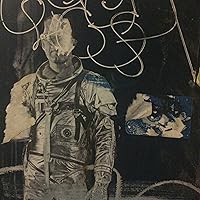
August 15, 2018
what an asshole

January 29, 2026
horny horny man,,, he must be studied!!

November 16, 2022
2.5 stars. Enjoyed the parts when he was at CBGB and meeting up with loads of the other people in the punk scene but wasn’t really interested in the rest. I don’t think his writing was that great either but the middle section about Television I did find really interesting.

October 9, 2015
I was glad to make it to Hell's book talk when he came to Chicago. He seemed a little bored (he shared that this was one of the last of many talks he'd already done on a long tour). The audience may have been starstruck, and everyone asked uninteresting questions that elicited factual answers. Despite him being one of my favorite artists, I couldn't come up with anything more interesting to ask either.
The obvious things to be said about this book have been repeated several thousand times in other reviews: mainly, (1) besides being the best punk lyricist, he is also a fine writer of prose and (2) the misogynistic passages of the book are incongruous with his other ones.
One of my favorite parts of the book recounts a dinner at Susan Sontag at her home during a snowstorm:
"I'd long admired Sontag, as did most halfway literate people...She set the standard for aesthetic and moral values, and for subtlety of perception...it was a magical few hours, tucked cozily laughing and murmuring, in that little apartment perched five or six stories up into the whole nighttime city outside hung in glittering white curves, the street surfaces lit in blurry stains by the streetlights and signals and signs, the only sound the clicking of the trraffic-light mechanisms, no people anywhere to be seen. There was one thing that she said that I didn't understand at all until many years later. She said that she 'hated opinions,' that she'd rather not have them...that lately she'd been thinking that she wrote the essays to get rid of them, to make 'space for other things...Over the years I've finally come to realize that once arrived at, opinions dry up and die, and you have to sweep them away, as she said" (246).
I like that spirit of restless intellect. It makes me wonder what intellectual restlessness Hell has had recently. Despite writing this book, we don't learn much about what he is up to lately. At the book talk, when asked about his favorite new music, he admitted not listening to much music these days, something I found personally to be disappointing. It's exciting that Patti Smith has just put out a second book. I hope Hell does too.
He signed my book: "Doing odd jobs for Adam." I like that.
The obvious things to be said about this book have been repeated several thousand times in other reviews: mainly, (1) besides being the best punk lyricist, he is also a fine writer of prose and (2) the misogynistic passages of the book are incongruous with his other ones.
One of my favorite parts of the book recounts a dinner at Susan Sontag at her home during a snowstorm:
"I'd long admired Sontag, as did most halfway literate people...She set the standard for aesthetic and moral values, and for subtlety of perception...it was a magical few hours, tucked cozily laughing and murmuring, in that little apartment perched five or six stories up into the whole nighttime city outside hung in glittering white curves, the street surfaces lit in blurry stains by the streetlights and signals and signs, the only sound the clicking of the trraffic-light mechanisms, no people anywhere to be seen. There was one thing that she said that I didn't understand at all until many years later. She said that she 'hated opinions,' that she'd rather not have them...that lately she'd been thinking that she wrote the essays to get rid of them, to make 'space for other things...Over the years I've finally come to realize that once arrived at, opinions dry up and die, and you have to sweep them away, as she said" (246).
I like that spirit of restless intellect. It makes me wonder what intellectual restlessness Hell has had recently. Despite writing this book, we don't learn much about what he is up to lately. At the book talk, when asked about his favorite new music, he admitted not listening to much music these days, something I found personally to be disappointing. It's exciting that Patti Smith has just put out a second book. I hope Hell does too.
He signed my book: "Doing odd jobs for Adam." I like that.
Displaying 1 - 30 of 301 reviews