Jump to ratings and reviews
Rate this book

Espartaco, la rebelión de los gladiadores

Rate this book
Dejando que el lector establezca su popio juicio, Koestler muestra uno de los capítulos más silenciados de la historia de la antigua Roma.

269 pages, Paperback

First published October 1, 1939

24 people are currently reading
631 people want to read

About the author

Arthur Koestler

152 books944 followers
Darkness at Noon (1940), novel of Hungarian-born British writer Arthur Koestler, portrays his disillusionment with Communism; his nonfiction works include The Sleepwalkers (1959) and The Ghost in the Machine (1967).


Arthur Koestler CBE [*Kösztler Artúr] was a prolific writer of essays, novels and autobiographies.

He was born into a Hungarian Jewish family in Budapest but, apart from his early school years, was educated in Austria. His early career was in journalism. In 1931 he joined the Communist Party of Germany but, disillusioned, he resigned from it in 1938 and in 1940 published a devastating anti-Communist novel, Darkness at Noon, which propelled him to instant international fame.

Over the next forty-three years he espoused many causes, wrote novels and biographies, and numerous essays. In 1968 he was awarded the prestigious and valuable Sonning Prize "For outstanding contribution to European culture", and in 1972 he was made a "Commander of the British Empire" (CBE).

In 1976 he was diagnosed with Parkinson's disease and three years later with leukaemia in its terminal stages. He committed suicide in 1983 in London.

Ratings & Reviews

What do you think?
Rate this book

Friends & Following

Create a free account to discover what your friends think of this book!

Community Reviews

5 stars
122 (28%)
4 stars
162 (38%)
3 stars
101 (23%)
2 stars
31 (7%)
1 star
7 (1%)
Displaying 1 - 30 of 40 reviews
Profile Image for Sarah (Presto agitato).
124 reviews179 followers
September 9, 2012
I've been on an ancient Roman kick lately, and I liked Darkness at Noon, so how could I resist reading Arthur Koestler's The Gladiators? Especially when I found a used copy of it with this incredible cover. There are scantily clad dancing girls in the background and half (mostly?) naked men going at each other with swords and tridents. Plus an oddly Old Western font for the title.

gladiators

Unfortunately, the book does not live up to the promising cover art. Koestler's tale covers the slave rebellions of 73-71 BC, led by Spartacus, a gladiator. The historical events were sensational enough in their own right. The army of slaves, eventually growing to more than 100,000, survived events such as a siege inside Mount Vesuvius to defeat Roman legions and capture several towns. Rome did not take the uprising seriously at first, but eventually was forced to send out armies led by Crassus and Pompey to crush it. If it hadn’t been for some double-crossing pirates, Spartacus may have escaped, but he was eventually killed in battle. Thousands of survivors of the slave army were crucified for 200 miles along the Appian Way.

spartacus-kubrick

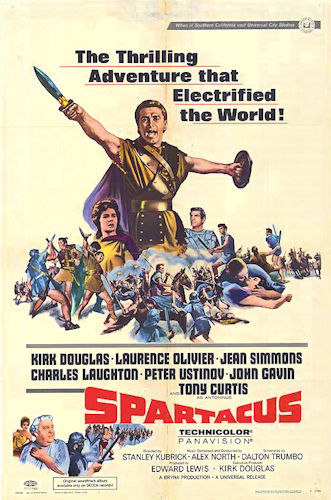
Stanley Kubrick's Spartacus, better clothed than Koestler's

It’s a compelling story, and certainly fits with Koestler’s theme of failed revolution. He uses this theme to tie together a trilogy that includes The Gladiators (published in 1939), Darkness at Noon (1940), and Arrival and Departure (1943), three books on different topics, but all about aspects of revolutions gone wrong.

It’s in the philosophizing, though, where Koestler goes awry. He frequently interrupts the action for the characters to engage in long conversations about economics, unemployment, and government. These conversations seem more appropriate to a 1930s Parisian coffee house than a tent on the eve of a famous battle of antiquity, especially when sprinkled with terms like “proletariat.” There are oblique references to Christian themes like resurrection that are not really explored. These allusions end up seeming anachronistic. The characters’ motivations remain obscure, and it’s hard to sympathize with the oppressive Romans or the raping and plundering slave army. The Gladiators is part history, part fiction, and part allegory, but doesn’t really succeed at any of these.
Profile Image for B0nnie.
136 reviews49 followers
books
September 14, 2012
From Orwell's As I Please 28 July 1944:

I have just been reading Arthur Koestler’s novel The Gladiators, which describes the slave rebellion under Spartacus, about 70 B.C. It is not one of his best books, and, in any case, any novel describing a slave rebellion in antiquity suffers by having to stand comparison with Salammbô, Flaubert’s great novel about the revolt of the Carthaginian mercenaries. But it reminded me of how tiny is the number of slaves of whom anything whatever is known. I myself know the names of just three slaves—Spartacus himself, the fabulous Aesop, who is supposed to have been a slave, and the philosopher Epictetus, who was one of those learned slaves whom the Roman plutocrats liked to have among their retinue. All the others are not even names. We don’t, for instance—or at least I don’t—know the name of a single one of the myriads of human beings who built the pyramids. Spartacus, I suppose, is much the most widely known slave there ever was. For five thousand years or more civilization rested upon slavery. Yet when even so much as the name of a slave survives, it is because he did not obey the injunction ‘resist not evil’, but raised violent rebellion. I think there is a moral in this for pacifists.
Profile Image for Olethros.
2,724 reviews534 followers
November 26, 2014
-Con los romanos como excusa, repaso a ciertas tendencias de los “ismos” en nuestra historia.-

Género. Novela histórica (pero bastante especial, sigan leyendo).

Lo que nos cuenta. El galo Crixus y el tracio Espartaco lideran al grupo de gladiadores que se han levantado en armas contra el dominio de Roma, uniendo a su causa a otros esclavos según avanzan por la Campania, aunque no todos los siervos se unen a ellos. El senado de Roma resuelve enviar tropas para sofocar la rebelión que, en ese momento, no es demasiado grande. Libro también conocido como “Los gladiadores”.

¿Quiere saber más de este libro, sin spoilers? Visite:

http://librosdeolethros.blogspot.com/...
Profile Image for Paco Serrano.
219 reviews70 followers
May 25, 2024
"Todos querían algo diferente y hablaban, discutían o guardaban silencio sobre sus deseos, pero cada uno de ellos estaba convencido de que el hombre de la piel, aquel que no tenía nada de especial, quería exactamente lo mismo que él, de que Espartaco no era más que el común denominador de todas las esperanzas y deseos contradictorios. Tal vez fuera aquello lo que tenía de especial".

Sobre Espartaco no hay más de cuatro mil palabras testimoniales de la época. La república romana trató de borrar de su historia la rebelión de esclavos que en su pináculo llegó a tener cien mil adeptos. De ahí que la construcción del mito y la leyenda de este tracio sea una obra de gran complejidad. Gran novela histórica.
Profile Image for Erwin Maack.
451 reviews17 followers
February 26, 2018

“Apronius dá de ombros, aprendeu a lição e sabe que a política não é nada mais que uma conspiração sinistra de forças invisíveis com o objetivo de roubar o homem comum transformar sua vida numa miséria.

A razão foi uma bússola tão defeituosa que ao guiá-los por um caminho tortuoso e cheio de meandros, o próprio objetivo acabou desaparecendo no meio da névoa.”

Profile Image for Lysergius.
3,160 reviews
June 18, 2019
This is a deeply disturbing novel about the failure of mass revolutionary movements. It contrasts the conscious self-interest of privileged elites with the self-interest of the masses and observes that there is one fundamental 'law' that operates beneath the surface of the facades of 'order' and 'patriotism', namely the fatalistic assertion of the leader of the fierce and melancholic Celts, the gladiator Crixus, that the law is simply, "Eat, or be eaten"!

Every ideal of human progress is punctured in this often underrated novel, yet, as asserted in the chapter in which 'the man with the bullet-head', an Israelite Essene, inspires the Thracian gladiator Spartacus with a vision of universal justice from the latter Jewish prophets, the tattered nobility of this defeat is reminiscent of the Christian version of a death on a cross that was also to lead to some final victory over brute nature. And Spartacus, at the end of the book, walks post-mortem, like a resurrected Jesus, among the devastated; his vision they refuse to let die.

Based upon the historic revolt of 73-71 BC this event was one of the great revolutions of ancient history, a slave revolt that threatened the power of the Roman empire; a revolt that if it had succeeded would have mirrored the triumph of the Bolshevik revolution in Russia in 1917-20. Lenin's favorite character in history is said to have been precisely the gladiator of the school in Capua, Spartacus, who emerged as the primary commander of the slave forces; however, the real leader, in Koestler's novel, is the gladiator without ambition or ideals, 'the man with the seal's head', Crixus.

Crixus is the expression of vengeance as justice and indulgence as the compensation for privation and exploitation, understanding that the rich and the powerful always win in the end so the only sensible response is to take everything you can while you can. It is an ignoble, even ignorant, attitude, but the cynicism of the fat, equally self-indulgent (and also deeply unhappy) Roman banker-become-general, Marcus Crassus, quite reflects Crixus' own. (In a scene of a pre-'last battle' interview between Crassus and Spartacus, the latter actually notes even the physical resemblance between the rich man and the proletarian slave-gladiator which of course is a recognition of kindred motivation, the union of 'eaters' from 'above' and 'below', so to speak.)

There is plenty of mayhem in this book but essentially it is for those who are willing to ask questions about base human nature and live with the results. The characterizations are finely drawn, complex and varied, and the novelized history is fascinating.
Profile Image for Rafa Sánchez.
462 reviews108 followers
November 17, 2015
Una novela histórica interesante por muchos motivos, te traslada a 21 siglos atrás y tiene la virtud (como tantas que reviven el mundo romano) de demostrar que el elemento humano de la historia no ha cambiado prácticamente nada; los mismos sentimientos, anhelos, envidias, conspiraciones y dudas... Lamentablemente, desde el punto de vista técnico, la novela sufre parones y algunas pérdidas de rumbo, como si el escritor dudara de cómo seguir la trama porque, en mi opinión, solo a partir de la segunda mitad la obra coge ritmo y consigue engancharte hasta el final. Según confiesa el propio Koestler, tardó en escribirla 4 años y... vaya 4 años: desencanto con la "religión" comunista, guerra civil en España, condena a muerte en Sevilla evitada in extremis, repudio del comunismo y ostracismo intelectual... Con tantas peripecias vitales no me extraña que la novela parezca escrita por distintas personas.
Profile Image for Torresdale Branch.
10 reviews3 followers
May 14, 2020
"I’m Spartacus." "No, I’m Spartacus."
This is not the Spartacus that Kubrick and Douglas prepared you for.

Published in 1930, The Gladiators is the first of a trilogy by Hungarian author and journalist, Arthur Koestler, that deals with the ethics of revolution. Using Spartacus’s revolt against the Roman Republic around 65BC, this novel explores idealism through the lens of 20th Century Europe - just as it is about to collapse into another World War. Democracy and Communism. Capitalism and Marxism. Status Quo and Revolution. Koestler was less interested in portraying an accurate historical account than he was at using this moment in history to explore modern times.

Koestler was a man at odds with himself and he demonstrates this in his storytelling. At the time of this novel, the author was still a member of the Communist Party. A typical proletarian novel would praise the revolution and raise the masses to heroic levels as a type of self-serving embrace of the movement. Yet, Koestler opts to use Spartacus as a foil for the failure of that mass movement. His Sun State was meant to be a brotherhood – a utopian paradise. It is an orderly world where needs are met and work for all exists, but eventually dissenters force Spartacus to begin ruling with a harsher hand. As an idealist, Spartacus struggled with trying to maintain his vision of a Sun States versus allowing people to determine their own destinies - regardless if the results were self-destructive. In the end, he allowed those around him to make the decisions that would lead to internecine among his followers and their executions at the hands of the Romans.

Koestler was at a crossroads. He still embraced Marxism as a philosophy but struggled with how the system would attain universal appeal. At its core, this novel explores his disappointment with revolutionary failure. Koestler debated whether the actual loss of life could be justified by an abstract ideal. A Lenin or a Stalin would not find an issue in this debate, but Koestler’s Spartacus certainly did. By 1938, Koestler left the Communist Party. Sure enough, it was because Stalin had finally disillusioned him and gave flesh to his greatest fears. Koestler could never embrace Totalitarianism as a “means to an end” – even if that end was a utopian brotherhood.

The Gladiators is less a story about historical Spartacus than it is about Koestler himself. And, this couldn't be more apropos. In a life more dramatic than fiction, Koestler’s War Years would keep him busy - denounced by former Communist colleagues, chased around Europe by Nazis, joining the French Foreign Legion, deserting when he arrived in Northern Africa, jailed in England for arriving without a permit, and eventually working with the British Ministry of Information writing propaganda. During this tumultuous time, he even found time to write the next two novels in the trilogy as he continued to struggle with the values of idealism. Clearly, this review is less about Spartacus and more about Koestler, because he is the actual context of the story.

Highly recommended for students of 20th century political philosophy - maybe less so for those wanting a historical fiction novel about ancient Rome.
Profile Image for Derek.
1,382 reviews8 followers
January 31, 2024
Not my cup of tea, honestly. The magnificent Graphic Giant edition does the usual pulpy bait-and-switch cover and hyperbolic back cover text indicating that the Saturday Review ("FULL OF MEAT!") had perused an entirely different book.

This book slides into similar space to _The Once and Future King_ with a quasihistorical novel hiding ruminations about the nature of society and particularly how a mob born of revolutionary anger and violence can create a civil society. And particularly the collision of ideals against the realpolitik of survival and individual self-interest.
Profile Image for Jo.
10 reviews3 followers
January 30, 2008
Tells the story of the Spartacus rebellion in Koestler's dry yet gripping style. Philosophical / sociological / dare one say dialectical considerations are well spun out in dialogue between main charcaters. Koestler's vision on the doomed-to-fail nature of armed rebellion, no matter how just the cause as well as the chronicle of the demise of the idealism that fuelled it are classic. Far more enjoyable a read than Darkness at noon.
Profile Image for Otto.
750 reviews49 followers
March 24, 2023
Erst jetzt ist die deutsche Urfassung des Romanes aus dem Jahr 1939 erschienen, sie war viele Jahre in Moskauer Archiven verschollen. Koestler ließ ursprünglich eine englische Übersetzung (die gestraffter sein dürfte) unter dem vom Herausgeber gewählten, von Koestler nicht geliebten Titel „The Gladiators“ erscheinen, die 1948 ins Deutsche rückübersetzt wurde. Jetzt also die „Langfassung“
Thema ist der sogenannte Spartacusaufstand. Was Koestler in seinem Roman zeigt, ist der Aufstieg und Untergang einer – ich würde es bezeichnen als linken – Revolution. Im Mittelpunkt steht für mich weniger der Sieg der Römer über das egalitär aufgezogene Projekt, als der Untergang des Projektes an den inneren Spannungen, dem Umschwung innerhalb der von Spartacus angeregten Bewegung der Unterdrückten zu einer Tyrannei, bei der Abweichler grausam bestraft werden unter dem Vorwand – oder der Notwendigkeit – das utopische Ideal dadurch zu retten. Koestler wandte sich ja ebenfalls von einem zuerst von ihm hoffnungsfroh erwarteten utopischen Experiment ab (russische Revolution, Kommunismus), als er die Tyrannei des Stalinismus erkannte.
Das, was Koestler in diesem Roman am philosophischem Hintergrund seine Protagonisten erzählen lässt, wie er sie handeln lässt, wie er die Winkelzüge der römischen Kapitalisten (ja ich weiß, das ist anachronistisch) beschreibt, hat wohl auch heute an Aktualität nichts verloren.
Im Perlentaucher kann man dann noch einige Hintergrundinformationen aus den Rezensionen dieser Neuausgabe nachlesen.
Profile Image for Astartiée.
103 reviews5 followers
May 9, 2017
- éditions Calmann-Lévy, collection pourpre, 1945 -

Ah bon sang, mais quelle déception ! Je m'attendais à du grandiose, du pathos, des combats, de nobles sentiments, des paysages bucoliques ! Et bein non, c'était juste plat. Crixus est sans fond. Spartacus est très loin d'avoir les traits d'un héros ou d'un leaser. L'écriture est morne, dans une vague tentative d'imitation du style antique pour certains passage. Et que dire du traitement des femmes ! Je sais que cet ouvrage a été écrit dans la première partie du XXème siècle. Mais enfin ! Elles sont sans noms, sans âmes, sans réelle existence et utilité à l'exception de remplir les couches des chefs de guerre quand l'envie leur prend. L'une d'entre elle est presque évoquée dans les dernières pages, en tant que sorcière ou prophétesse.
J'ai eu tellement de mal à finir ce bouquin. J'avais l'impression d'être engluée, que rien n'avançait.
Une bonne grosse déception, pourtant Le sujet était prometteur.
Mais peut-être me suis-je trop attachée à la série, très romancée il est vrai, mais beaucoup mieux fournie en termes d'actions et de héros.
Profile Image for Lupo.
562 reviews25 followers
February 5, 2018
Bel libro politico, scritto alla fine degli anni trenta da un comunista antistaliniano. Ed è della rivoluzione, che scrive Koestler, più che di Spartaco e dei suoi gladiatori in se, del quale in fondo non sa che quel poco che è scritto nei libri di storia antichi. Scrive di rivoluzione e, soprattutto, di rivoluzione impossibile senza tradirla. Scrive di libertà e fratellanza, di egoismo e settarismo. Questi due ultimi vengono da Koestler considerati insiti nella natura umana e quindi nucleo dell'impossibilità di una rivoluzione di libertà. Pessimismo senza margini: anche alla religione, nel libro ritratta attraverso il simpatico vecchio esseno con la testa a pallottola, Koestler non fa sconti.
Non cercate quindi in questo libro l'epica del film di Kubrick, la figura di Spartaco non è quella del campione della libertà, quanto quella molto più tragica del fallimento della ricerca della stessa.
Un chicca a parte è costituita dalle pagine in cui Licinio Crasso compie una lucida (Koestler la chiama cinica) analisi marxiana dell'economia romana nel 75 a.C.: grandiosa nella sua semplicità.
Profile Image for Anna.
328 reviews
October 19, 2021
read for *uni* for cl4668 - classics and the left
arthur koestler writes clearly of his disillusioned communism, using spartacus' failed servile war as a mechanism in which to do so. the story is good, the point that it makes is good, but the writing is often too clunky. just like howard fast, sometimes koestler sacrifices readability in favour of ramming ideology down people's throats, which isn't always the best for fiction.
i /did/ like the sneaky self-insert essene, though.
the presentation of spartacus' wife (or, here, 'the dark-haired girl' who slept with everyone, but mostly spartacus) is... questionable. looking forward to re-reading an article on her differing presentations in grassic gibbon's spartacus and fast's spartacus of the same name.
Profile Image for B.
287 reviews11 followers
December 20, 2022
The book relates the story of a slave uprising led by a gladiator, Spartacus – arguably the first known “communist” in history, along with his friend Cricsus. It appears that Spartacus’ military feats on the battlefield have been negated due his political incompetence, and a few unfortunate moments during the uprising, ultimately dooming his revolution of “sun city.”

I found author’s writing style a bit simplistic, though I did enjoy it mostly due to its historical content.

A few excerpts:
“Strange, you’re free, yet you’re still working. So you are slaves of your own will. I haven’t withnessed anything like this.” – Spartacus
“A splendid thing to be free, no? Not much difference if you ask me if one must toil anyway. Man can only be free, if he doesn’t have to work.”

Profile Image for Muhsin Dogan.
85 reviews9 followers
January 9, 2018
Koestler'in süper anlatımıyla yazılmış bir kitap. Tarihsel araştırması iyi yapılmış ve güncel dizilerle pek alakası yok. Eğer Spartacus dizisini izlediyseniz bu kitaptaki olaylar, kişiler ve mekanlar size değişik gelebilir. Fakat Bu konuda farklı kaynaklar okumuş biri olarak Koestler'in eseri epey derinlikli ve gerçeğe daha uygun bir şekilde kaleme alınmış. Koestler'in daha önce "Geliş ve Gidiş" isimli kitabını okuyan biri olarak, Spartacus destanını onun satırlarından okumak epey iyi geldi.

Azınlığın çoğunluğa savaştığı, imkansız olanın mümkün kılındığı bir hikaye okumak isteyen herkese naçizane tavsiyemdir.
Profile Image for Luc Dantes.
385 reviews5 followers
April 26, 2023
I give this book 5 stars because I think it is very well written (and I like historical fiction), however, I do not think it is everyone’s cup of tea. It is not particularly exciting, in fact it is rather tragic. That being said, I have a deep appreciation for it. The elegance, realism and somewhat philosophical writing of the author is what has found a place for this book in my heart.

I have mentioned in other reviews that I wish there were tiers to these stars because the 5 stars that I give this book are not the same 5 stars I give to Tolkien or Martin. While they are let’s say diamond tier, I’d give Koestler’s The Gladiators, 5 silver stars 😅.
Profile Image for Stephen Rowland.
1,362 reviews71 followers
September 12, 2019
Although often awkward and pedantic, you can tell this novel was a labor of love for Koestler. It is not as visceral or focused as "Darkness at Noon" but really, few novels are. I'll admit I found it annoying for the first 50 pages or so, but Koestler's unique way of telling the story finally won my admiration.
Profile Image for Dave Morris.
Author 207 books155 followers
September 4, 2019
"Some grinned at him with the murderous superiority of the stupid..."

Ring any bells? It'd be interesting if the movie had been based on this, not Howard Fast's novel. Koestler looks at the Slave Revolt through the lens of 20th century populism and observes how revolutions are corrupted, or rather how rebels never really want to achieve the ideals of their leaders.
Profile Image for Patrick Dewind.
184 reviews1 follower
April 23, 2020
I love Koestler's work, especially when viewed as a whole. Less a book about Spartacus and more about idealism and revolution, I felt it was well crafted and poignant. Viewing the revolutions of old through the lens of the author's period is quite telling about human endeavor and what comes of the best intentions.
Profile Image for Kubra .
78 reviews1 follower
May 19, 2020
Güneş Devleti karşı konulamaz güzel bir ütopya ama bir o kadar ulaşılamaz. Güzel bir tarihi kurgu romanıydı. Günümüz dizileri ve filmlerindeki Spartacus'ten farklıydı ama oldukça beğendim. Yazarın yorumuyla güzel bir dönem eleştirisi kitabı olmuş.
Profile Image for Julio Garay.
19 reviews
April 3, 2019
. ''Muchas cosas nos son concedidas en esta vida por motivos erróneos, lo que hacemos con esas bendiciones son el verdadero examen de un hombre.''

Un clásico #Espartaco
Profile Image for Casey.
925 reviews54 followers
May 4, 2019
Though I like Koestler's "Darkness at Noon" better, this was still an interesting read about Roman history, Spartacus, and the slave rebellion. Even with 3 stars, it's worth reading.
Profile Image for Owen Hatherley.
Author 43 books551 followers
March 7, 2022
Like Koestler's books generally, interesting rather than good.
46 reviews
July 4, 2024
Spartacus revolt, failure of revolutions. Not nearly as good as darkness at noon
Profile Image for Oğuz.
26 reviews1 follower
December 13, 2024
Is it ok to find your favorite author after you are 30?
Profile Image for Juan Escobar.
176 reviews14 followers
December 26, 2015
Espartaco es el Che Guevara de un siglo antes de Cristo.

Imagina que alguien te dé una lanza a ti y otra a mi y luego nos diga que tenemos que espetarnos mutuamente para divertir a la gente.


Este libro es la ampliación de la aventura de 50 gladiadores que se fugaron de su circo, en la Italia dominada por la República Romana. Los historiadores minimizaron al máximo las letras para contar la historia de Espartaco, y el autor, Arthur Koestler le tocá inventa (después de estudiar mucho) los nombres, toda la hazaña, e interpretar y darle sentido a una revolución que durante dos años tuvo en jaque a lo que iba a ser una súper potencia.

Llegaban labradores, pastores, jornaleros, esclavos y hombres libres por igual. Vaqueros de los Hirpinios, mendigos y bandidos de Samnio, esclavos de origen griego, asiático, tracio o galo, prisioneros de guerra y hombres nacidos para servir. Llegaban del campo y la ciudad; artesanos, holgazanes, andrajosos doctrinarios


Espartaco y su gente (100 mil esclavos, locos y ladrones) es lo que hoy llamamos "tribu de zombies", protagonizan una historia que a pesar de lo histórica es ficción y sirve para hacerle unas preguntas a las revoluciones y a las democracias. Es una manera de imaginarse a Espartaco y compararlo con los locos revolucionarios de hoy. Es una radiografía de por qué fallan los intentos de derrocar la injusticia y las violaciones de derechs humanos en masa.

Espartaco no era más que el común denominador de todas las esperanzas y deseos contradictorios.


No es espoiler, porque todas sabemos que la revolución de los gladiadores, muy violenta y a veces sin sentido, no funcionó, pero demostró que Roma, republicana o imperial, era vencible... o bueno, por lo menos herible. Logró incluso que "Los ricos asustan a los niños desobedientes con la amenaza de que Espartaco vendrá a llevárselos".

La política no es mas que una conspiración de fuerzas invisibles con el único propósito de robar al ciudadano común y fastidiarle la vida.
Profile Image for Rêbwar Kurd.
1,028 reviews88 followers
June 2, 2025
رمان اسپارتاکوس آرتور کوستلر، تمثیلی‌ست از انسانِ عصیانگر، اما نه آن عصیانگری که از دل اسطوره آمده باشد، بلکه انسانی گرسنه، دربند، و محکوم به انتخابی ناگزیر. کوستلر در این رمان از اسپارتاکوس یک قهرمان بی‌مرز نساخته؛ بلکه او را در جایگاه انسانی قرار داده که در میان مرگ و بند، راه سوم را می‌جوید: فریاد.

رمان در فضای آخرین نفس‌های امپراتوری روم می‌گذرد، جایی که نظم اجتماعی بر ستون‌هایی از بردگی، امپریالیسم و ایدئولوژی بنا شده. اما کوستلر زیر این تاریخ رسمی می‌زند؛ از خلال نثری سنگین، فلسفی، و گاه سرد، حقیقتی را بیرون می‌کشد که نه در موزه‌هاست، نه در کتاب‌های درسی: حقیقت تلخ اراده‌ای که می‌خواهد آزاد شود، اما زنجیرهای زمانه، دوست، دشمن و حتی ایده‌آل‌های خودش او را می‌بلعند.

اسپارتاکوس در این روایت، بیشتر از آن‌که یک رهبر شورش باشد، یک تجربه‌ی تاریخی ناکام است؛ صدایی که می‌خواست تبدیل به طوفان شود، اما در هیاهوی خشونت و خیانت گم شد. کوستلر نه از اسپارتاکوس تمجید افراطی می‌کند، نه او را مصلوبِ اخلاقیات انتزاعی می‌سازد. بلکه نشان می‌دهد چگونه یک آرمان، وقتی به میدان سیاست و جنگ کشیده شود، خصلت پاک‌باخته‌اش را از دست می‌دهد و بدل می‌شود به همان چیزی که می‌خواست نابودش کند.

رمان همچنین نگاهی تلخ به ذات انقلاب دارد. اسپارتاکوس و همراهانش می‌خواهند بردگی را نابود کنند، اما خود، در میانه‌ی راه به بازتولید همان خشونتی بدل می‌شوند که علیه‌اش برخاسته‌اند. آزادی در این کتاب نه‌یک مقصد روشن، بلکه سایه‌ای‌ست دوردست که در برابر نور واقعیت، محو می‌شود.

فیلمی که استنلی کوبریک در سال ۱۹۶۰ از همین شخصیت ساخت، با بازی کرک داگلاس، بازنمایی پرشکوه‌تری از این شورش تاریخی‌ست؛ اما برخلاف روایت تیره‌وتار کوستلر، فیلم کوبریک، اسپارتاکوس را به نماد جاودان فداکاری و آزادی بدل می‌کند. آنجا که کوستلر می‌پرسد «آیا ارزش داشت؟»، فیلم کوبریک با صحنه‌ی به صلیب کشیده شدن اسپارتاکوس، پاسخ می‌دهد: «حتی اگر شکست خورد، اما پیروزی از آنِ او بود.»

کوستلر با نگاهی فلسفی و گاه نیهیلیستی، مسئله‌ی اراده‌ی انسانی، سرنوشت جمعی، و ضعف ذاتی آرمان‌ها را در قالب رمانی تاریخی تصویر می‌کند؛ رمانی که نه برای شوراندن خواننده، بلکه برای شک‌افکندن در او نوشته شده است. اسپارتاکوس در پایان، بیشتر شبیه انسانی تنهاست تا قهرمانی جهانی؛ انسانی که شکست خورد، چون بیش از حد به نجات ایمان داشت.
Displaying 1 - 30 of 40 reviews

Can't find what you're looking for?

Get help and learn more about the design.