When World War III strikes, Dr. Craig Emilson is sent to take out a powerful artificial intelligence. Unexpectedly, he becomes the greatest hope for humanity. He must choose between saving mankind or saving himself as he faces impossible odds and an army of super soldiers on a mission to destroy him. "Sub-Human" is the first book in a new series of page turners that will keep you guessing until the very end. A mix between action thriller and science fiction, this novel will have you on the edge of your seat from beginning to end. First in a new series!
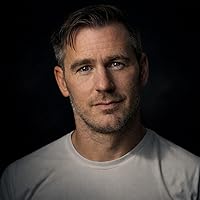
Futurist/Feature Film Director/Bestselling and Award-Winning Author/Film Composer/Actor/TEDX Speaker/Advisor for the United Nations Industrial Development Organization (UNIDO),— just some of David Simpson's professional passions. His TEDX presentation, "Our Post-Human Future," has over 1.7 Million views on Youtube and his debut feature film, a psychological thriller titled, Dangerous to Know, had its World Premiere in London, England in October, 2020 where it became the first 3 hour film ever selected for the prestigious Frightfest, Film Festival, (the largest genre film festival in the English-speaking world) where David's debut film was compared favourably by critics to such film luminaries as David Fincher and Stanley Kubrick.
Meanwhile, the Sixth book in the Post-Human series, Superhuman, was released in late, 2020, and, equal in length to Stephen King's epic, The Stand, Superhuman has taken its place as one of the longest science fiction novels ever written.
1. The author holds people of faith in contempt. I don't have any personal animus against atheist authors in general. I've read almost all of Asimov's fiction, for example. But this book makes a point of ridiculing and demonizing people of faith.
2. Bad Research - Military: The main character is a US Air Force Captain, by virtue of being a medical doctor. Early in the book, just prior to beginning a mission, he meets the mission leader, who has the rank of Commander. The Commander salutes first, but the Captain quickly reassures the Commander that he is only there in his medical capacity, and he fully expects the Commander to lead the mission. Well, Commander is a US Navy rank, which is equivalent to a US Air Force Lt. Colonel, two ranks above Captain. So, yeah, the Commander would lead the mission. And the Captain should have saluted the Commander, as well as the Lt. Commander who is also portrayed as junior to the Captain, when, in fact, he also outranks the Captain.
3. Bad Research - Medical: The technology to place people in suspended animation through use of hydrogen sulfide is presented. While this works on mice, all attempts to use it on larger non-human mammals (sheep and pigs) have failed, and clinical trials on humans have been cancelled.
4. Bad Research - Technology: The AI in the story is more mentally capable in most ways than most humans. Yet, in the epilogue, set 62 years in the future, we are introduced to a character who we are told in some ways exceeds the abilities of the current AI. As 62 years is 31 cycles of Moore's law, we would expect that the current AI would be over 2 billion times more capable than the original. And yet, we are supposed to believe that this new character, the lead for the sequel is more capable still?
5. Bad Characters - Actually, the story doesn't really have characters, just caricatures. And not one of them is particularly likeable.
I won't be reading the sequels, and hope this review can save some people the time and money they'd have to spend reading this one.
Sub-Human Post-Human Series, Book 1 By: David Simpson Narrated by: Ray Chase This is the prequel to the Post-Human series. I enjoyed the majority of the book but the bouncing between times/worlds was not of my liking. It was good to set the background for the series.
I found this book on Amaazon as a free download and didn't really expect much, it was free after all and I've had mostly poor experiences with free books. However, after reading this book cover to cover it was an absolute nugget picked out of a field of dirt.
The story is set in the far future during a battle between humans and AI. The main character followed throughout the story is Craig, a soldier fighting against the AI. I won't go into much more detail as to the plot and story but it's fair to say that there are many twists, turns and subplots. The one thing that I found very interesting is that even at the end of the book I was still not entirely sure who the good guys were.
The quality of the writing is outstanding, on par with any current best sellers. Simpson's imagery and level of imaginative writing are excellent.
My comparison here is part Old Man's War (Scalzi), part I-Robot, and part Terminator. I would gladly place this work in the same class as the works of Scalzi and other young stars in the Sci-Fi genre.
What a promising start, too bad it ended up being a dud. The beginning is the only reason I'm giving it two instead of one stars.
I thought the first 3rd of the book was fantastic: excellent start, beginning of good character development, great plot twists. In short, a very original novel. But, soon as the next third of the book rolled around, the author only provided cliche after cliche. Really nothing original about the story.
Oh, and the pandering. I don't want to give anything away but let's just say that the author used a creative device that would have given him a lot of freedom to develop the story, but he chose to spend it trying to pander to the masses.
For a science fiction book, the science seemed about right: obviously not possible now but may be possible in the future.
Also, the author is a good writer, in terms of style, and he had a great editor. None of those annoying self-published issues that usually crop up in these books.
I was going to read the trilogy but now I'll have to pass. I might check out his writing in the future, once he builds up some confidence and realizes that, for the most part, science fiction is meant for a niche reader, it does not have to appeal to everybody.
The book cover is very, very good. Part One of the work is the section I enjoyed the most, the rest read like a farce. Ironic I read this during the Wuhan pandemic and the anniversary of the sinking of the H.M.S. Titanic.
This book is remarkable. I have never cursed so much in my life. I can't think of any book that has effected me so strongly, that I wanted to hurl my tablet at the wall, and then set it on fire with petroleum, to cleanses it from the taint of this book. Sub-Human kept me awake all night with the fear that in this life time or in the next I might cross paths with another book like Sub-Human. No words can really quite describe how terrible this book is. David Simpson is really one of a kind author, because he can root an entire crowd with hatred over his writings. Even though I read this book quite awhile ago, it still effects me the same way as it did before-----Pure contempt. Sub-Human challenged my beliefs in God and humanity in whole. How can there be a God if he allowed this book to exist,and humanity that they published this book.
Truly if I knew how to give Sub-Human a half star--- Or even better! No stars, but just my review. If I could do that, I would do it in a heartbeat.
On the one hand, Simpson's writing is reminiscent of Golden Age Science Fiction: the characters sometimes lack real depth, the plot can be somewhat simplistic, and the action may be predictable.
On the other hand, that's all largely not true. Sure, the characters may be a bit caricaturish or simplistic (like Golden Age): they go from not-surprisingly-suppressed passion/love to explosive passionate love (not erotic, just overwhelming/overblown). On the other hand, Simpson does a creditable job of creating some depth to the characters and their challenges.
Overall, I'm enjoying the whole series a lot, in spite of some of the challenges I find in Simpson's overall style. The books are well worth reading, being both engaging and easy to read.
Meh. I enjoyed the first two as somewhat original story lines. I'm not sure this one is really the same author. While the first two aren't great writing they aren't written as badly as this one. It's almost like this book is a farce. Sending a Special Ops trained doctor back to major tragedies in our history (Titanic, 9/11) and having him act like an overacting soap opera character is ridiculous.
The first two books presented an interesting, if not completely well articulated, "what-if" story. A prequel had lots of interesting possibilities but none of them are realized. The characters are soap opera at best, not even rising to the level of pulp science fiction. The concept of AI and humanity's struggle with it is sort of presented but never really explored. And that's supposedly the basis for the story.
Overall pretty disappointing. If I read this book first I would never read Post-Human or Trans-Human but they are better reads. Unfortunately the author took a step back with this prequel.
A real page-turner of a book. I could not put it down. It has a good plot that flows well. It explores the area of evolution and how humans evolve. with or without outside help. I can not wait to read the other 2 books in this series.
Very well written, highly imaginative yarn. The author is doing some brilliant marketing by building a reader base with free downloads of very marketable material! I am truly looking forward to the next book in the series!
I wanted to like this book, as AI is a topic that is interesting to me. This book was really not very good in any way. The "strong" AI, was dumb, basically spending the entire book telling the protagonist "I'm not sure about this", rarely taking any sort of initiative, and generally being unable to plan or think about more than one thing at a time. The protagonist himself, a medical doctor no less, is also dumb, acting in ways that are unbelievably naive and impulsive. The science and terminology (to the extent that I recognized, not being a physicist myself) was wrong ("solid state central processing and memory unit" is both redundant and ridiculous). The descriptions were cursory and uninteresting. The setting was wasted by an almost total lack of detail or background. The POV was a very sloppy third-person universal, with very unclear transitions when following multiple people. The villain was one-dimensional and lacked any sort of coherent motivation. In fact, all the characters lack coherent beliefs; one minute they'll be rigidly holding to their principles and the next they'll be abandoning those principles and taking the opposite ones without any internal turmoil or discomfort. This is particularly jarring when a very educated man abruptly decides he's no longer a pacifist and that he wants to kill all his enemies using the justification "some people just don't deserve to live." Forgive me for thinking that there might be a little more internal dialog and inner conflict to justify such a rapid about-face, particularly from a PhD.
There's more I could say, but I'll end this review by saying that I read this book as part of a free Kindle book which contained all four of Simpson's Post-Human books. After reading this first one and seeing from GoodReads that the others are similarly rated, I will be ignoring the other three free books that are part of this collection, as this first one has completely turned me off from reading anything else this author has to offer.
This is the novel I've chosen to read first in this series.
I was impressed with the quick snap of the action, while still allowing time for relationships to blossom and for the reader to learn to care for the cast. The chapters are short, making the book seem to read faster. It made it easy to grab "just one more chapter" (ok, so maybe it was 5) before doing work.
At first I was slightly confused as to which side of the war wanted what, in hindsight I feel this was the intention. In a couple of places the author was also slow to clarify characters, especially when there was potential for more than one of the same person.
I would have liked a few more slow moments to really meet the cast, and for the author to have more care when it came to dialogue.
This was a very good book, I thoroughly enjoyed it and look forward to the rest of the series. It came close to getting 5 stars
I really enjoyed Sub-Human. The plot moves very quickly for a novel that relies on some wild ideas and Simpson explains the science very deftly without slowing the action. I had already read the other two in the series and had found them a tad fanciful, but this one doesn't exceed believability. Now that the beginning of the tale has been written, I think readers will enjoy the next book, Post-Human a lot more. Editing was superb as I only saw a couple typos. I breezed through this novel in two sittings (would have been one if I hadn't been so tired) which says a lot for me because I tend to fall asleep. I rarely give 5-stars, but this novel is top notch and definately gives momentum to the trilogy. Kudos to David Simpson! Looking forward to more of his work!
This book was ok scifi but I'd say that the author could have done better. He should have put more time into developing the characters, tech, and science instead of trying to just hit every hot idea possible in a short book. You really can't jump from action scene to action scene without developing the point or offering some insight into what all the new scientific/technology developments actually mean to the protagonist or humanity at large.
Awesome prequel to the Post-Human series. This trilogy is so well written that you really get to know the characters, while getting a sense of immersion into the story. With our current evolution of technology, one has to wonder what will humans become in the not so distant future.
Entertaining Hollywood blockbuster action movie type story, but hot damn if this doesn't have some of the most glaring character and plot issues I have ever seen.
I suspected something was off when the author's intro points me to a "proof of concept" web video attempting to turn this series into a movie. While there's no problem with books that read like movies (most action novels necessarily do so)...this felt forced.
We're in the near future where the newly elected President is a fundamentalist Luddite of sorts who promises to stop the development of Chinese A.I. for the threat it poses to America (we will ignore the fact that nanotechnology that enables fast healing exists in this world). So he sends in a special forces group in power armor that includes navy Doctor Craig Emilson to try to destroy the A.I. before it propagates.
But first the U.S. NUKES CHINA and the entire mission, unsurprisingly, goes to pot and everybody dies. The nanotech keeps Emilson alive but in a coma for 14 years. A not great, but not terrible first third of the novel.
When he awakes, however, things go off the rails. It's only 14 years later but somehow humanity has now achieved time-travel, age-regression, AND the ability to travel between alternate universes. What follows is a really strange series of time-traveler vignettes where Emilson travels back to both the Titanic AND 9/11 in an attempt to stop both from happening (because reasons).
He also ends up back at the place of his "death" 14 years prior in an attempt to stop THAT tragedy. Overall, it's a mess of a novel that's salvaged only by the first third which had promise.
Apparently it's a prequel so that may have affected my view (but the reviews for the main series echo the same complaints).
I found this book by happenstance, it was mentioned on a site I visit and I followed up. The synopsis looked interesting so I purchased it and started to read, unfortunately the book just wasn't up to my liking. Unlike some other reviewers I'm not going to tear the author apart it takes a lot of work and effort to write and publish something. Instead I'm just going to provide feedback.
My first issue is with the one dimensional nature of the characters. Starting with the main antagonist Colonel Paine. He embodies the identity of a zealot. Not only is he unreasonable in the face of logic he's blindly faithful to his beliefs to the point of unbelievability. Nothing about the character defines where this zealotry comes from apparently he was just "born" that way.
The main "protagonist" (I use this term loosely), Craig is also nothing more than a cliché caricature of the budding football jock. Except for some reason we're to believe he's also a highly educated individual. His nature flaps like a flag in the wind between sociopath and fledging hero. I sarcastically highlighted protagonist because there are almost no redeeming qualities in the character.
Craig's wife is a zealot at the opposite end of the spectrum. She is barely a likable character because she shows brief moments of having more than one single dimension to her personality and of course she's the character least seen in the book.
I think the book overall suffers from very narrow characters and because of that none of them are likable. You as the reader can't latch on to a character and follow the story, the close you get is an A.I. and even then its personality is that of a high functioning savant. In the end I tried, I really tried to get into the book but I couldn't.
A suggestion for the author? I feel like you haven't lived enough. Too many of your characters are black and white without any gray.
I've been meaning to dive into this book for quite some time now, as it's been sitting in my Audible TBR (to-be-read) list for a while. I also have a copy of it on my Kindle, waiting for the day I finally get around to reading it. Although that moment may still be a bit further down the road, I can’t help but feel a wave of excitement as I contemplate starting this journey. The initial glimpses I've had into this world have really piqued my interest, offering a captivating mix of political maneuvering, scientific advancements, and a compelling sense of intrigue that promises to make it a worthwhile read.
So far, I’ve already developed a fondness for some of the characters introduced in the early chapters. Their dynamics and backgrounds seem rich with potential, and I genuinely hope they play significant roles in the larger narrative as I progress through the series.
One character that stands out is Oldtimer, who, before adopting that moniker, was known as Craig Emilson. His backstory as a young doctor thrust into military service at the onset of World War III adds a profound layer to the narrative. The combination of medical expertise and the harsh realities of war sets the stage for a fascinating exploration of his character and the choices he must navigate in these tumultuous times. Overall, I can’t wait to immerse myself further into the intricacies of this story.
Nice quick single-sitting read. It utilizes the concepts of AI and nanobots well and has a fair amount of well-written action. Some wobbly bits but overall good pacing. Some characterization was a bit heavy-handed, but not extravagantly so. Will be starting the next one now.
Some of the other reviews have some fairly ridiculous complaints. Religious extremism exists, Luddites exist, demonizing the opposition CERTAINLY exists, misuse of technology and over-extension of the same exist. I think he mixes these various threads quite well and for the most part uses them to subtly color the characters and their personalities.
Lastly, as is always important with ebooks, there was some obvious time put into edits and producing a polished product.
I really liked this book. The characters were great, the action was pretty much non-stop and the plot was great. I haven't read any of the other books, so I don't know anything about the characters yet other than what was in this book, so I am excited to read the next books in the series. I really liked Craig as a character, although he seemed a little unemotional in parts where he should've been freaking out. The time travel aspect was interesting, I am not a big fan of time travel, but this was simple and worked for the most part. I hope that the next book is as good as this one.
A good science fiction adventure that excels at equally portraying both sides in the conflict of human evolution. No character is truly good or evil, though most are antagonistic towards the main character. There's a small bit involving time travel and alternate universes that was kind of pointless, but I'm not a huge fan of time travel stories apart from BTTF. I am intrigued to see how it factors into the following two books which I believe were written prior to it.
I thoroughly enjoyed Sub-Human. The story was engrossing and I liked most of the characters. I liked the "Planck" idea, but I didn't like the "events" portions. It made the overall story melodramatic. I'm looking forward to the next book.