

What do you think?
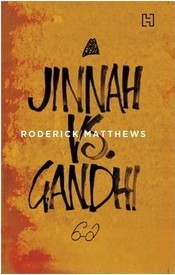
Jinnah vs. Gandhi
The modern history of South Asia is shaped by the personalities of its two most prominent politicians and ideologues – Mohammad Ali Jinnah and Mahatma Gandhi.
Jinnah shaped the final settlement by consistently demanding Pakistan, and Gandhi defined the largely non-violent nature of the campaign. Each made their contribution by taking over and refashioning a national political party, which they came to personify. Theirs would seem, therefore, to be a story of success, yet for each of them, the story ended in a kind of failure.
How did two educated barristers who saw themselves as heralds of a newly independent country come to find themselves on opposite ends of the political spectrum? How did Jinnah, who started out a secular liberal, end up a Muslim nationalist? How did a God-fearing moralist and social reformer like Gandhi become a national political leader? And how did their fundamental divergences lead to the birth of two new countries that have shaped the political history of the subcontinent?
This book skilfully chronicles the incredible similarities and ultimate differences between the two leaders, as their admirers and detractors would have it and as they actually were.
Jinnah shaped the final settlement by consistently demanding Pakistan, and Gandhi defined the largely non-violent nature of the campaign. Each made their contribution by taking over and refashioning a national political party, which they came to personify. Theirs would seem, therefore, to be a story of success, yet for each of them, the story ended in a kind of failure.
How did two educated barristers who saw themselves as heralds of a newly independent country come to find themselves on opposite ends of the political spectrum? How did Jinnah, who started out a secular liberal, end up a Muslim nationalist? How did a God-fearing moralist and social reformer like Gandhi become a national political leader? And how did their fundamental divergences lead to the birth of two new countries that have shaped the political history of the subcontinent?
This book skilfully chronicles the incredible similarities and ultimate differences between the two leaders, as their admirers and detractors would have it and as they actually were.
- GenresNonfictionHistoryIndia
336 pages, Hardcover
First published January 1, 2012
About the author
Roderick Matthews
33 books10 followersRoderick Matthews is a freelance writer specializing in Indian history. He lives in London with his wife and two children. Born in 1956, he studied Modern History at Balliol College, Oxford, and has written for a number of British and Indian publications, including the Observer, the Literary Review, and the Times of India.
Ratings & Reviews
Friends & Following
Create a free account to discover what your friends think of this book!
Community Reviews
Displaying 1 - 21 of 21 reviews

May 21, 2013
The author gives his conclusion and his stand on the Gandhi vs Jinnah debate on the very first page making further reading futile and burdensome. He pleads that Gandhi left a lot about his life in his writings while Jinnah was a closeted man who rarely shared his personal life. At one point this plea becomes boring and tiresome. Moreover writing about two public figures basing oneself on their own writings is refracted and subjective. As the author clarifies his position on the debate in the beginning one may skip the book and go for any history textbook for facts.

Read
April 25, 2015A very well researched and thought out book. Not only is it informative, like any book on history would be, but it makes you question both the leaders and their intentions. It investigates them at par and if Gandhi comes out to be better, it's only because he was fighting for a bigger cause which is universally accepted. Matthews' well researched book mentions why and where some other prominent books on these leaders folly, it makes you realise why this was the best one to pick. Impartial, rational, considerate and enlightening. It is all. You end up questioning your previously held notions about these leaders justly and definitely understand them much better by the end.
"Fate was kind to the Mahatma. He never achieved his dream, and so, unlike Jinnah's, it has remained unsullied by failure."
This book is filled with Roderick Matthews' brilliance.
"Fate was kind to the Mahatma. He never achieved his dream, and so, unlike Jinnah's, it has remained unsullied by failure."
This book is filled with Roderick Matthews' brilliance.
November 9, 2013
I am puzzled where this author is getting his mis-information? Partition was never about Gandhi and Jinnah it certainly was never about Gandhi Vs. Jinnah. To begin with it was a bad idea that was horribly implemented by an incompetent viceroy in cahouts with Nehru. Even when Jinnah was informed that the demand for a separate nation was accepted he and the majority of the Muslim leaguers were surprised. Gandhi was a social reformer and a British loyalist but one who was astute enough to recognize that non violence would be the best weapon against a militant empire. The idea of non-violence and the Sathyagraha was not original and one he borrowed from amongst many people Tolstoy. Jinnah was one on whom leadership was thrust upon and bungled his way through a fait accompli the real architects were the bankrupt empire, a vengeful Churchill, the incompetent viceroy Mountbatten, his wife and wily Nehru her bed warmer.
March 17, 2019
Unlike my normal wont, after the book on Gandhi by Guha I continued in the same genre and picked up “Jinnah Vs Gandhi” by the British author Roderick Mathews. I had picked up this book in order to skim through to figure out those qualities that differentiated these two tall leaders of Indian Independence and Partition. But ended up reading it word by word and line by line for the sheer depth of analysis that the author provides and also for the lucidity of his writing style. The title of the book itself is a dead giveaway for the usage of Vs instead of And on the title. The adversarial relationship between these two is only too well known to put it any other way. Be that as it may, the author takes enormous pains and endless pages analysing the leadership styles of these two men of mettle.
The fundamental differences between these two are so deep and profound that it would be a travesty of the first order if they are glossed over in terms of the then prevailing political landscape of the times they lived in. The way they were, they would have differed in any sphere any where like chalk and cheese. “Gandhi worked forwards and upwards from the microscopic personal level whereas Jinnah worked backwards and downwards from grand notions with little concern with the personal realm”. For Gandhi the individual was the universe and for his bête noire that individual was but a part of the whole. The author though makes the point about Jinnah being haughty and arrogant does not blame all his ills on those two much talked about personality traits. He also makes no bones about Gandhi’s weakness of being a poor negotiator and his lack of attention to details that may have cost India dear at crunch times. Jinnah however comes across as a constant quibbler forcing Clement Atlee, the then PM of Britain to quip ‘Jinnah is a man who has a problem for every solution’. As for Gandhi the author’s impression is that he was so righteous that he might not have felt the necessity of being a democrat himself!
Now let me stick my neck out to make a statement that may sound politically incorrect. Jinnah was not a communalist by conviction. He chose to become one out of convenience. I am acutely aware of the controversial trip undertaken by L K Advani to Jinnah’s mausoleum at Karachi when he described Jinnah as a secular leader that effectively sealed the former’s political career. Jaswant Singh, an Advani camp follower who wrote a book on Jinnah also met with a similar fate when came out with his book on Jinnah painting him in less sinister tones. Sometimes you are forced to wonder when you read more on Gandhi if he had any traces of megalomania. What else can justify his decision to go alone and represent the Congress at the Second Round Table Conference at London in 1931 with so much at stake for India and Indians? Normally you associate such acts with Jinnah, for he was the self-appointed leader of a new nation in the making put together by him.
There are some eerie, yet fateful historical similarities between the two. Both Jinnah and Gandhi had become disappointed and disillusioned souls by the time they finally achieved their lives’ mission. Jinnah was unhappy that he got a “moth eaten” Pakistan, for he was convinced that he would walk away with a new nation with the Provinces of Punjab and Bengal intact. Gandhi on the other hand had to accept the inevitable reality of a dismembered India. In the final days if Jinnah’s health failed him when his nation needed him the most, Gandhi had become politically irrelevant post-Independence elevated as he was to the exalted status of a saint out of touch with modern-day realities of an emerging nation. Just in case you thought the only similarities between these two were that they both spoke Gujarathi and hailed from Kathiawar!
The stories of Jinnah and Gandhi in a way justifies the famous saying of Enoch Powell, the British Parliamentarian who said famously “All political careers end in failure”. Recently David Cameron, the former Prime Minister of Britain made it more famous when he ruefully repeated this when he lost the EU Referendum leading to the now infamous Brexit.
The author’s take on the influence of Jinnah and Gandhi in the subcontinent makes interesting reading. “India was fortunate to inherit the best of Gandhi. Pakistan has had to make do with the worst of Jinnah.” My verdict on the book. The author comes across as fairly impartial and balanced in his assessment of these two men. This book is a brilliantly written and incisively analysed work on two of the greatest men from Asia, one we love and the other we love to hate.
The fundamental differences between these two are so deep and profound that it would be a travesty of the first order if they are glossed over in terms of the then prevailing political landscape of the times they lived in. The way they were, they would have differed in any sphere any where like chalk and cheese. “Gandhi worked forwards and upwards from the microscopic personal level whereas Jinnah worked backwards and downwards from grand notions with little concern with the personal realm”. For Gandhi the individual was the universe and for his bête noire that individual was but a part of the whole. The author though makes the point about Jinnah being haughty and arrogant does not blame all his ills on those two much talked about personality traits. He also makes no bones about Gandhi’s weakness of being a poor negotiator and his lack of attention to details that may have cost India dear at crunch times. Jinnah however comes across as a constant quibbler forcing Clement Atlee, the then PM of Britain to quip ‘Jinnah is a man who has a problem for every solution’. As for Gandhi the author’s impression is that he was so righteous that he might not have felt the necessity of being a democrat himself!
Now let me stick my neck out to make a statement that may sound politically incorrect. Jinnah was not a communalist by conviction. He chose to become one out of convenience. I am acutely aware of the controversial trip undertaken by L K Advani to Jinnah’s mausoleum at Karachi when he described Jinnah as a secular leader that effectively sealed the former’s political career. Jaswant Singh, an Advani camp follower who wrote a book on Jinnah also met with a similar fate when came out with his book on Jinnah painting him in less sinister tones. Sometimes you are forced to wonder when you read more on Gandhi if he had any traces of megalomania. What else can justify his decision to go alone and represent the Congress at the Second Round Table Conference at London in 1931 with so much at stake for India and Indians? Normally you associate such acts with Jinnah, for he was the self-appointed leader of a new nation in the making put together by him.
There are some eerie, yet fateful historical similarities between the two. Both Jinnah and Gandhi had become disappointed and disillusioned souls by the time they finally achieved their lives’ mission. Jinnah was unhappy that he got a “moth eaten” Pakistan, for he was convinced that he would walk away with a new nation with the Provinces of Punjab and Bengal intact. Gandhi on the other hand had to accept the inevitable reality of a dismembered India. In the final days if Jinnah’s health failed him when his nation needed him the most, Gandhi had become politically irrelevant post-Independence elevated as he was to the exalted status of a saint out of touch with modern-day realities of an emerging nation. Just in case you thought the only similarities between these two were that they both spoke Gujarathi and hailed from Kathiawar!
The stories of Jinnah and Gandhi in a way justifies the famous saying of Enoch Powell, the British Parliamentarian who said famously “All political careers end in failure”. Recently David Cameron, the former Prime Minister of Britain made it more famous when he ruefully repeated this when he lost the EU Referendum leading to the now infamous Brexit.
The author’s take on the influence of Jinnah and Gandhi in the subcontinent makes interesting reading. “India was fortunate to inherit the best of Gandhi. Pakistan has had to make do with the worst of Jinnah.” My verdict on the book. The author comes across as fairly impartial and balanced in his assessment of these two men. This book is a brilliantly written and incisively analysed work on two of the greatest men from Asia, one we love and the other we love to hate.
December 23, 2025
Interesting book, which argues that Gandhi was not a saint and Jinnah a villain as they are made to be, and that there are layers of nuances to their characters and approaches. The book traces their role in the freedom
movement and the circumstances leading to the tragedy of partition, from the perspective of a supposedly neutral perspective, without valorising or villainising anyone. That was a refreshing perspective; it might require a deeper research to say how far the book’s view is corroborated by other materials. Yet, it was an interesting view. Worth a read and ponder about.
movement and the circumstances leading to the tragedy of partition, from the perspective of a supposedly neutral perspective, without valorising or villainising anyone. That was a refreshing perspective; it might require a deeper research to say how far the book’s view is corroborated by other materials. Yet, it was an interesting view. Worth a read and ponder about.

June 8, 2020
Amazing book. Presented different perspective towards two great leaders,their strengths & weaknesses, their choices, their thoughts, their life....worth investing time.

December 25, 2022
Review later.
January 3, 2023
Gave an insight onto the otherwise unknown aspects of partition.

January 7, 2016
All of us in India have been brought up on the belief that Gandhi was The Mahatma...and Jinnah... the cigarette smoking, whisky drinking evil lawyer who split India...well, the Villain...made more famous to us by Attenborough's epic movie GANDHI where Alyque Padamsee essayed it like a sophisticated version of Ajit's / K N Singh's roles in countless Bollywood movies. Unfortunately I have never come across a book on Jinnah ever...he did not spawn an industry like Gandhiji did. Any Indian books on the Independence or Gandhiji..Mostly portrayed Jinnah in an extremely unfavorable light.. Roderick Mathews, based in UK is a freelance historian who specializes on Indian history. He recreates Indian independence history for us and takes us thru the role of Jinnah and Gandhiji in it...dispassionately written without the usual hagiography associated with books on Gandhiji.
Very well written...also gives us a refresher on the Indian independence story... At the end of the book, we still end up falling in love with Gandhiji (at a rational level as a saintly philosopher and freedom fighter with his own failings and not as Mr. Perfect) and his idiosyncrasies...and continue to regard him as the Mahatma....and poor Jinnah...we become a little more sympathetic...as we try to understand his motives and mechanisms. He had his own beliefs and agenda and was not such a vile character as India makes him out to be. Possibly if we had good relations with Pakistan, Jinnah would not be seen as the nasty guy he is made out to be.
An interesting point that the author drives is that a large part of Gandhiji's greatness hinged on the superb and also diverse followers that he had (Nehru, Sardar Patel, Azad et al) whom he held together and who could continue his mission of building an united India...and it is here that Jinnah comes across poorly...no great followers...Well, this also sums up why we have Gandhian thought, Gandhigiri, Gandhism today which is understood and respected universally and no Jinnaism!
Very well written...also gives us a refresher on the Indian independence story... At the end of the book, we still end up falling in love with Gandhiji (at a rational level as a saintly philosopher and freedom fighter with his own failings and not as Mr. Perfect) and his idiosyncrasies...and continue to regard him as the Mahatma....and poor Jinnah...we become a little more sympathetic...as we try to understand his motives and mechanisms. He had his own beliefs and agenda and was not such a vile character as India makes him out to be. Possibly if we had good relations with Pakistan, Jinnah would not be seen as the nasty guy he is made out to be.
An interesting point that the author drives is that a large part of Gandhiji's greatness hinged on the superb and also diverse followers that he had (Nehru, Sardar Patel, Azad et al) whom he held together and who could continue his mission of building an united India...and it is here that Jinnah comes across poorly...no great followers...Well, this also sums up why we have Gandhian thought, Gandhigiri, Gandhism today which is understood and respected universally and no Jinnaism!

October 11, 2013
This has to be the most ill-researched and poorly written book on Indian History that I have ever come across.
The author's premises are absurd, and his conclusions on the motives of Jinnah and Gandhi are preposterous. It makes no sense whatsoever to judge people by their writing styles alone, and no objective/anecdotal data.
I strongly suggest giving this book the miss and saving your time and money.
The author's premises are absurd, and his conclusions on the motives of Jinnah and Gandhi are preposterous. It makes no sense whatsoever to judge people by their writing styles alone, and no objective/anecdotal data.
I strongly suggest giving this book the miss and saving your time and money.

November 9, 2015
A well researched chronological sequence of events is what I'd sum this book as. A lot of facts thrown all over and the reader is expected to connect the dots. The author does play it safe by not sharing too many opinions or adding color over the facts to the different styles that these two men followed to the path of Independence. Was a tough read.
September 12, 2012
A fantastic analytical piece. Roderick Matthews lays out facts and argues like, may I daresay like Jinnah himself would have. The book demystifies the 2 most prominent characters of the sub-continent. A must read for any history student of the Indian sub-continent's freedom movement.

May 26, 2013
Was good... Considering my not so good knowledge of History this book was an eye opener reg the traits of Gandhi and Jinnah...Though I felt this was slightly biased towards Gandhi vis-a-vis Jinnah ...
May 29, 2013
An extremely disappointing read, the writers opinions are highly skewed and ooze throughout the text and to top it all off he gets some facts wrong too. I honestly don't want to waste any more time going into details.
October 22, 2019
The first few pages clearly state that the writer is biased towards Gandhi. Also there are some sentences which would have 5-6 high vocab words followed by some simple sentences. And again back to having sentences which are full of high vocab words. Not that understandable.
Want to Read
October 17, 2012Have to start reading.


January 4, 2013
Gives insight of both the individuals but capturing two lives in these many pages restricts so many incidents .
January 22, 2013
Stark contrasts between two people regarded as the father of the respective nations. This book shows how a dhoti wearing Gandhi differed from a suit clad Jinnah!!

June 22, 2013
Probably the most ill informed book yet

April 19, 2014
I have just two words for this book...LOOPS and DRAG!! End of review.
Displaying 1 - 21 of 21 reviews