
What do you think?
Rate this book


624 pages, Paperback
First published January 1, 1985


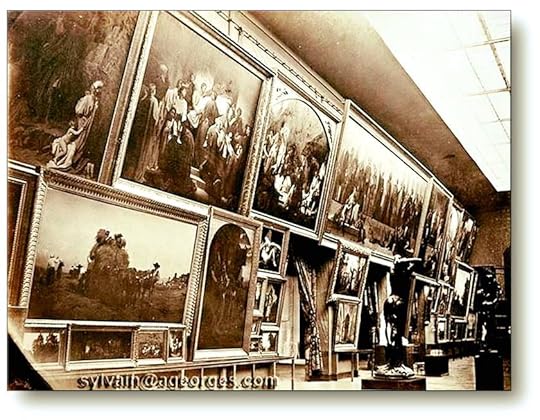
PARIS, 1855, Les Exposition Universelle
"Camille stood transfixed before the enormous cordoned-off hall of paintings, the vast blaze of color dominating the senses. Immediately in front of him were the exhibits {…} landscapes, portraits, still lifes, seascapes side by side, floor to high ceiling. 'How many paintings are hung here?' 'Over five thousand."
 Jacob Abraham Camille Pissarro was a Danish-French Jew, born on the 10th of July, 1830, and from the day he arrived in Paris in 1855 to be near for a dying sister, he never considered any life other than that of being a painter. It was a dedication that would see him in constant debt, disowned by his parents, creatively undermined by critics, dependent upon the charity of friends, forced to flee from the Franco-Prussian War, victimized by anti-Semitism, become broken hearted with the death of his cherished nine-year old daughter, and begin suffering the discomforts from a failing eye.
“The artist was an isolated character, outré, exaggerated, and outside the mainstream of French life … generally lived in their own arrondissment , district, gathering at the local café, where they drank a café au lait, coffee with milk, a biére , beer, or vin ordinarie, an anonymous table wine. The café became their club … and made good sightseeing for the rest of the customers.”
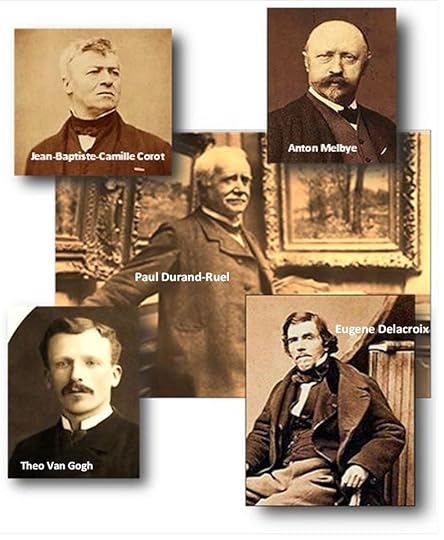
Never lose sight of that first impression by which you were moved. The only way to get prepared is to begin.Upon arrival in Paris, Camille had declared his intentions to devote all his time to painting, which was not welcome news for parents who had other plans for him. He was seen as being impractical. Yet despite his mother’s distress and a father who, while sympathetic to his son’s desire, was unwilling to go against his wife, Camille struggled from the beginning. With little financial or emotional support, also adding to the conflict was his falling in love and impregnating the family maid, Julie Vellay. However, his parents refused to approve any marriage. And so Camille calmly continued, finding his place and making his pictures, and heeding advice and direction from respected artists of that day. Soon he discovered the joys of painting outdoors; how it would eventually lead him to new discoveries about nature and people, and ultimately have him become the father of the Impressionist movement.
— Jean-Baptiste-Camille Corot
 Together with his longtime friend from Venezuela, Danish painter Fritz Melbye, along with newly acquainted artists David Jacobsen and Antoine Guillemet, Camille set out to earn a place among the Parisian artists, with a goal to show in the official Salon.
 " Known as the "Guerbois group", after the café where they met, then the "Batignolles", after the district where they lived, then the "Société Anonyme" as they debuted their first exhibit. Their detractors ridiculed them and called them something else. Pissarro replied "Corot, the first time I was taken to his studio told me … I was to paint my impression of what I saw as reflected though my feelings. We’re all Impressionists? Good. Let us wear the name as a badge of honor It has meaning."The circle of independents soon expanded, with the Paul Cezanne, Oscar-Claude Monet, Frédéric Bazille, August Renoir, Charles-François Daubigny, Édouard Manet, Berthe Morisot, Edgar Degas, and Mary Cassatt. In time he embraced Neo-Impressionism, and Pointillism with Gustave Caillebotte, Paul Gauguin, and Georges Seurat, ultimately spending time with the Van Gogh brothers; tutoring and encouraging Vincent in the fields and countrysides, and utilizing the savy dealing and marketing skills of the younger Theo.
 The Banks of the Marne in Winter (1866) Oil on canvas
" It was a year of ecstasy in which he felt he was striding seven feet above the earth, when he and nature, his palette, canvas, brushes and colors became one ... Exhausted but exultant, he felt that this one canvas alone justified all his years of disappointment and struggle."Depths of Glory , originally published in 1985, is meticulous in its research, graceful in its narrative, heart rending it its tragedies, and inspiring as an example of a mans dedication to fulfilling a dream. Camille Pissarro's dream, was unlike most of his contemporaries. He did not drive himself through the rigors of poverty and hunger, watch his family struggle, rise up with the occasional recognition be able to pay off his loans, only to then sink again. The repetition of this existence was endured as he held on for his one hope for fulfillment. His dream was for no financial reward other than to simply get by, nor was it for making an impact or changing the trajectory of modern art. His dream was a simple one: to have an "artist family." He raised and taught sons who were talented in their own right, and his source of inspiration and pride. And with the arrival of a granddaughter, he became overjoyed, endeared with her first picture, announcing that his artist family had now become generational.
 Camille Pissarro married Julie Vellay, and of their 8 children, 1 died at birth and 1 daughter died aged 9. However, the surviving children all painted, sons Lucien, Georges, Félix, Ludovic-Rodolphe, Paul Emile, and 2nd daughter Jeanne.
" ... he cried with each painting 'This is it! This is what I wanted to say.' He did not believe in inspiration, a meaningless mystical word denoting some power beyond ones functioning faculties. Yet if there were such a thing as total creativity he felt he had achieved it (in this canvas) ..."The "starving artist" of the late 19th century Paris provided a feast for future generations, be they artists, writers, or simply individuals struggling every day to just survive. For in their work, one finds not only the beauty of light, the shadows of despair, and the heights of a dream, but also in the life of Camille Pissarro, the Depths of Glory .

"… he felt it was a leap forward in transcribing what was considered to be ordinary, meaningless, into scenes of pictorial grandeur and loveliness, celebrating man’s accomplishments in the creating of cities; the courageous souls walking its boulevards in the heat, rain, snow, sleet, somehow going about the business of being alive."
Being alive.


