

What do you think?

The Last Man in Russia: The Struggle to Save a Dying Nation
Russia is dying from within. Oligarchs and oil barons may still dominate international news coverage, but their prosperity masks a deep-rooted demographic tragedy. Faced with staggering population decline—and near-certain economic collapse—driven by toxic levels of alcohol abuse, Russia is also battling a deeper a spiritual one, born out of the country’s long totalitarian experiment.
In The Last Man in Russia , award-winning journalist Oliver Bullough uses the tale of a lone priest to give life to this national crisis. Father Dmitry Dudko, a dissident Orthodox Christian, was thrown into a Stalinist labor camp for writing poetry. Undaunted, on his release in the mid-1950s he began to preach to congregations across Russia with little concern for his own safety. At a time when the Soviet government denied its subjects the prospect of advancement, and turned friend against friend and brother against brother, Dudko urged his followers to cling to hope. He maintained a circle of sacred trust at the heart of one of history’s most deceitful systems. But as Bullough reveals, this courageous group of believers was eventually shattered by a terrible act of betrayal—one that exposes the full extent of the Communist tragedy. Still, Dudko’s dream endures. Although most Russians have forgotten the man himself, the embers of hope that survived the darkness are once more beginning to burn.
Leading readers from a churchyard in Moscow to the snow-blanketed ghost towns of rural Russia, and from the forgotten graves of Stalin’s victims to a rock festival in an old gulag camp, The Last Man in Russia is at once a travelogue, a sociological study, a biography, and a cri de coeur for a dying nation—one that, Bullough shows, might yet be saved.
In The Last Man in Russia , award-winning journalist Oliver Bullough uses the tale of a lone priest to give life to this national crisis. Father Dmitry Dudko, a dissident Orthodox Christian, was thrown into a Stalinist labor camp for writing poetry. Undaunted, on his release in the mid-1950s he began to preach to congregations across Russia with little concern for his own safety. At a time when the Soviet government denied its subjects the prospect of advancement, and turned friend against friend and brother against brother, Dudko urged his followers to cling to hope. He maintained a circle of sacred trust at the heart of one of history’s most deceitful systems. But as Bullough reveals, this courageous group of believers was eventually shattered by a terrible act of betrayal—one that exposes the full extent of the Communist tragedy. Still, Dudko’s dream endures. Although most Russians have forgotten the man himself, the embers of hope that survived the darkness are once more beginning to burn.
Leading readers from a churchyard in Moscow to the snow-blanketed ghost towns of rural Russia, and from the forgotten graves of Stalin’s victims to a rock festival in an old gulag camp, The Last Man in Russia is at once a travelogue, a sociological study, a biography, and a cri de coeur for a dying nation—one that, Bullough shows, might yet be saved.
296 pages, Hardcover
First published January 1, 2013
About the author
Oliver Bullough
17 books407 followersI moved to Russia in 1999, after growing up in mid-Wales and studying at Oxford University. I had no particular plan, beyond a desire to learn Russian, but got a job at a local magazine and realised I liked finding things out and writing about them.
The next year I moved to Bishkek, Kyrgyzstan, then joined Reuters news agency, which sent me to Moscow. The first major story I reported on was the Moscow theatre siege of 2002, when a group of Chechens seized a theatre in the capital.
It both horrified and fascinated me, and I resolved to find out as much as I could about Chechnya and the North Caucasus, to try to understand the roots of the conflict that had burst so unexpectedly into my life. I travelled extensively in the mountains that form Russia’s southern border, falling in love with the scenery, the food and above all the warm and welcoming people.
When I left Russia in 2006, I was exhausted by it, however. I had seen too much misery and never wanted to write about Chechnya again. But I had promised to give a talk to a society in London. After the talk, I was asked if I would ever write a book about what I had seen. I wrote down a few thoughts, took them to a friend who knew about books, and she introduced me to a publisher.
I travelled in a dozen countries to meet all the people I needed for the stories I wanted to tell, and wrote them down in Let Our Fame Be Great. Penguin published it in the UK in 2010. It won the Oxfam Emerging Writer Prize and was short-listed for the Orwell Prize, with prize judge James Naughtie calling it “an extraordinary book... a wonderful part-travelogue, part-history”. Basic Books published it in the United States, where the Overseas Press Club awarded it the Cornelius Ryan Award for “best nonfiction book on international affairs”.
After it came out, though, a number of Russian friends objected that I had made the Russians into the villains. I don’t think I did, but their complaints chewed away at me a little. Perhaps some readers had been left feeling all Russians were complicit in the crimes of their leaders. The Russians after all suffered as much as anyone at the hands of the government in Moscow.
That provoked me into writing my second book, The Last Man in Russia, which describes the struggle of a Russian to live in freedom and the efforts of Soviet officials to stop him. The life story of Father Dmitry, the Orthodox priest I chose as my central figure, seems to me to mirror the life of his whole nation, which is beset by depression and alcoholism.
Travelling to meet the people I wanted to talk to and to see the places I wanted to describe took me to the far north of Russia, to rotting gulag towns; to the west of Russia, to half-abandoned villages; and to the Ural Mountains, where the communists locked up their doughtiest opponents; and to Moscow itself, that great fat spider in the centre of its web.
I would like to write more books one day but, at the moment, I’m concentrating on my day job as Caucasus Editor for the Institute of War and Peace Reporting. I also write freelance articles and worry about the Welsh rugby team.
http://www.oliverbullough.com/biograp...
The next year I moved to Bishkek, Kyrgyzstan, then joined Reuters news agency, which sent me to Moscow. The first major story I reported on was the Moscow theatre siege of 2002, when a group of Chechens seized a theatre in the capital.
It both horrified and fascinated me, and I resolved to find out as much as I could about Chechnya and the North Caucasus, to try to understand the roots of the conflict that had burst so unexpectedly into my life. I travelled extensively in the mountains that form Russia’s southern border, falling in love with the scenery, the food and above all the warm and welcoming people.
When I left Russia in 2006, I was exhausted by it, however. I had seen too much misery and never wanted to write about Chechnya again. But I had promised to give a talk to a society in London. After the talk, I was asked if I would ever write a book about what I had seen. I wrote down a few thoughts, took them to a friend who knew about books, and she introduced me to a publisher.
I travelled in a dozen countries to meet all the people I needed for the stories I wanted to tell, and wrote them down in Let Our Fame Be Great. Penguin published it in the UK in 2010. It won the Oxfam Emerging Writer Prize and was short-listed for the Orwell Prize, with prize judge James Naughtie calling it “an extraordinary book... a wonderful part-travelogue, part-history”. Basic Books published it in the United States, where the Overseas Press Club awarded it the Cornelius Ryan Award for “best nonfiction book on international affairs”.
After it came out, though, a number of Russian friends objected that I had made the Russians into the villains. I don’t think I did, but their complaints chewed away at me a little. Perhaps some readers had been left feeling all Russians were complicit in the crimes of their leaders. The Russians after all suffered as much as anyone at the hands of the government in Moscow.
That provoked me into writing my second book, The Last Man in Russia, which describes the struggle of a Russian to live in freedom and the efforts of Soviet officials to stop him. The life story of Father Dmitry, the Orthodox priest I chose as my central figure, seems to me to mirror the life of his whole nation, which is beset by depression and alcoholism.
Travelling to meet the people I wanted to talk to and to see the places I wanted to describe took me to the far north of Russia, to rotting gulag towns; to the west of Russia, to half-abandoned villages; and to the Ural Mountains, where the communists locked up their doughtiest opponents; and to Moscow itself, that great fat spider in the centre of its web.
I would like to write more books one day but, at the moment, I’m concentrating on my day job as Caucasus Editor for the Institute of War and Peace Reporting. I also write freelance articles and worry about the Welsh rugby team.
http://www.oliverbullough.com/biograp...
Ratings & Reviews
Friends & Following
Create a free account to discover what your friends think of this book!
Community Reviews
Displaying 1 - 30 of 67 reviews

November 19, 2014
Loving travelogues as they are one of my top 3 categories to read, this particular juxtaposition of oral history and present day Russians' opinions paired within the locations of their lives' realities- it is just a superlative read. I could hardly put it down.
In the last 9 years I have had close association with Russian and Lithuanian immigrants through my work and also in my personal life of caring for my elderly and multi-stroke disabled father. One from the Ukraine has become a good and lifelong friend. She waited 11 years to get her visas and left with her husband and 2 sons who were 12 and 13 at the time. She just this last week celebrated her 25 year citizen anniversary, so this book melded into her story telling of memory, just PERFECTLY. My Dad's caretakers were all Lithuanian and had little English, but could all speak and write perfect Russian, besides their own languages. When they went to school they couldn't speak Lithuanian in the building.
So this book is chocked full of stories that I have heard in audio from them, just in a slightly different way. I've heard the mosquito tales numerous times. And the potato meals, and nothing else besides, not even bread, for up to 2 weeks. And this far after the days of Father D.'s main gulag and aftermath experiences.
But I'm not as hopeful as this author. The pessimism is well placed when entire districts will be taken by China for lack of current dwellers, populations fall 25% every few decades, and there are 4 times as many abortions as live births.
Russia is still a dichotomy of radical perceptions in 2 or 3 different spheres, and until the exact kind of "Stalinistic amnesia" that he begins to define here becomes acknowledged, I see little progress to inspiration or production.
Overall, just as excellent a case of journalist reporting that I've read since 2000. His form of nebulous intersection around Father D. fits Russian life as a sublime metaphor.
In the last 9 years I have had close association with Russian and Lithuanian immigrants through my work and also in my personal life of caring for my elderly and multi-stroke disabled father. One from the Ukraine has become a good and lifelong friend. She waited 11 years to get her visas and left with her husband and 2 sons who were 12 and 13 at the time. She just this last week celebrated her 25 year citizen anniversary, so this book melded into her story telling of memory, just PERFECTLY. My Dad's caretakers were all Lithuanian and had little English, but could all speak and write perfect Russian, besides their own languages. When they went to school they couldn't speak Lithuanian in the building.
So this book is chocked full of stories that I have heard in audio from them, just in a slightly different way. I've heard the mosquito tales numerous times. And the potato meals, and nothing else besides, not even bread, for up to 2 weeks. And this far after the days of Father D.'s main gulag and aftermath experiences.
But I'm not as hopeful as this author. The pessimism is well placed when entire districts will be taken by China for lack of current dwellers, populations fall 25% every few decades, and there are 4 times as many abortions as live births.
Russia is still a dichotomy of radical perceptions in 2 or 3 different spheres, and until the exact kind of "Stalinistic amnesia" that he begins to define here becomes acknowledged, I see little progress to inspiration or production.
Overall, just as excellent a case of journalist reporting that I've read since 2000. His form of nebulous intersection around Father D. fits Russian life as a sublime metaphor.

March 22, 2014
Description: Russia is dying from within. Oligarchs and oil barons may still dominate international news coverage, but their prosperity masks a deep-rooted demographic tragedy. Faced with staggering population decline and near-certain economic collapse driven by toxic levels of alcohol abuse, Russia is also battling a deeper sickness: a spiritual one, born out of the country's long totalitarian experiment.
In The Last Man in Russia, award-winning journalist Oliver Bullough uses the tale of a lone priest to give life to this national crisis. Father Dmitry Dudko, a dissident Orthodox Christian, was thrown into a Stalinist labor camp for writing poetry. Undaunted, on his release in the mid-1950s he began to preach to congregations across Russia with little concern for his own safety. At a time when the Soviet government denied its subjects the prospect of advancement, and turned friend against friend and brother against brother, Dudko urged his followers to cling to hope. He maintained a circle of sacred trust at the heart of one of history's most deceitful systems. But as Bullough reveals, this courageous group of believers was eventually shattered by a terrible act of betrayal, one that exposes the full extent of the Communist tragedy. Still, Dudko's dream endures. Although most Russians have forgotten the man himself, the embers of hope that survived the darkness are once more beginning to burn.
Leading readers from a churchyard in Moscow to the snow-blanketed ghost towns of rural Russia, and from the forgotten graves of Stalin's victims to a rock festival in an old gulag camp, The Last Man in Russia is at once a travelogue, a sociological study, a biography, and a cri de coeur for a dying nation, one that, Bullough shows, might yet be saved.
 Although this was only published in 2013 it already feels dated. Bullough arrived in Russia in 1999[*], the year which Putin became Prime Minister for the first time, and started his Dudko biography/journalistic observations at that point. Because of the biography aspect, we are looking back, for a good percentage of the book, into the last knockings of the Soviet years, with its KGB methods.
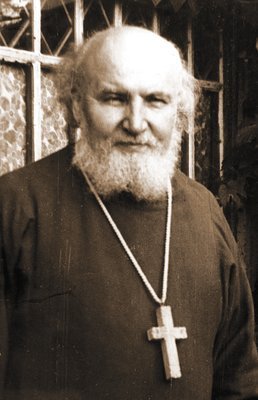 Fr. D Dudko
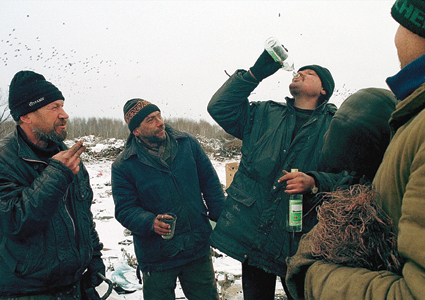 Drinking themselves to death: Russia's alcoholism is a long-term consequence of collectivisation, the Gulag and the KGB.
SEE ALSO:
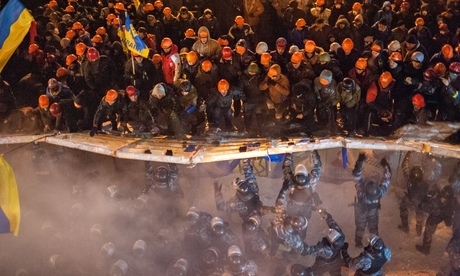
Ukraine Diaries: Dispatches from Kiev review – an invaluable guide to the present crisis.
17 Aug 2014: Andrey Kurkov, the author of Death and the Penguin, is ideally placed to guide us through the Ukrainian revolution as it unfolds, writes Oliver Bullough
AND:
"“Fast power became hasty power,” Nyberg said. “The possible loss of Ukraine was seen by Russia as an existential threat. It wasn’t really. But it challenged Moscow like nothing else. It was projected as a Nato-US-international conspiracy.” Read more
In The Last Man in Russia, award-winning journalist Oliver Bullough uses the tale of a lone priest to give life to this national crisis. Father Dmitry Dudko, a dissident Orthodox Christian, was thrown into a Stalinist labor camp for writing poetry. Undaunted, on his release in the mid-1950s he began to preach to congregations across Russia with little concern for his own safety. At a time when the Soviet government denied its subjects the prospect of advancement, and turned friend against friend and brother against brother, Dudko urged his followers to cling to hope. He maintained a circle of sacred trust at the heart of one of history's most deceitful systems. But as Bullough reveals, this courageous group of believers was eventually shattered by a terrible act of betrayal, one that exposes the full extent of the Communist tragedy. Still, Dudko's dream endures. Although most Russians have forgotten the man himself, the embers of hope that survived the darkness are once more beginning to burn.
Leading readers from a churchyard in Moscow to the snow-blanketed ghost towns of rural Russia, and from the forgotten graves of Stalin's victims to a rock festival in an old gulag camp, The Last Man in Russia is at once a travelogue, a sociological study, a biography, and a cri de coeur for a dying nation, one that, Bullough shows, might yet be saved.
Although this was only published in 2013 it already feels dated. Bullough arrived in Russia in 1999[*], the year which Putin became Prime Minister for the first time, and started his Dudko biography/journalistic observations at that point. Because of the biography aspect, we are looking back, for a good percentage of the book, into the last knockings of the Soviet years, with its KGB methods.*Vladimir Vladimirovich Putin (Russian: Влади́мир Влади́мирович Пу́тин; IPA: [vɫɐˈdʲimʲɪr vɫɐˈdʲimʲɪrəvʲɪt͡ɕ ˈputʲɪn], born 7 October 1952) has been the President of Russia since 7 May 2012. Putin previously served as President from 2000 to 2008, and as Prime Minister of Russia from 1999 to 2000 and again from 2008 to 2012. During his last term as Prime Minister, he was also the Chairman of United Russia, the ruling party. wiki sourced
Fr. D Dudko Drinking themselves to death: Russia's alcoholism is a long-term consequence of collectivisation, the Gulag and the KGB.SEE ALSO:
Ukraine Diaries: Dispatches from Kiev review – an invaluable guide to the present crisis.
17 Aug 2014: Andrey Kurkov, the author of Death and the Penguin, is ideally placed to guide us through the Ukrainian revolution as it unfolds, writes Oliver Bullough
AND:
"“Fast power became hasty power,” Nyberg said. “The possible loss of Ukraine was seen by Russia as an existential threat. It wasn’t really. But it challenged Moscow like nothing else. It was projected as a Nato-US-international conspiracy.” Read more

January 3, 2015
An interesting assessment of the effect of Soviet oppression on current Russian society. Bullough cites multi-fold increases in alcoholism (which is an inadequate term for the Russian version), corruption, lack of work ethic, and demographic decline.
The alcoholism is truly staggering. Bullough also cites statistics on the decline in life expectancy, rising death rates and declining birth rates. However, these are shaky in some cases, where rising local death rates in decaying regions are not adjusted for the rise in average age (as young people abandon the countryside and births decline). Overall the statistics left me uneasy, unsure whether USSR stats had been corrected for the smaller size of Russia now, when Bullough compares the past state of the economy and health to current statistics.
Bullough follows a structure that has spelled failure for other non-fiction efforts: he chooses a subject and doggedly follows his plan of analysis even when it becomes tedious. In his case he selects a dissident priest (Father Dmitry Dudko) and then tracks down the churches and Gulag prison camps, the friends and former friends, of the man (who died in 2004). The story is instructive, since Father Dmitri was an internationally recognized resistance figure in the sixties and seventies, who finally caved in to prison interrogation and became a KGB apologist and anti-Semite. Bullough meets many people who were originally inspired by the priest, and who could not forgive him for his weakness under pressure. As part of his research Bullough travels to many remote and dying villages in the former Gulag, where he finds rampant alcoholism and unemployment, alongside efforts of liberal individuals to preserve the former Gulag camps to educate younger Russians and those who stayed silent about what happened. But the effort to portray how bleak these places are leaves the writing itself lifeless in many chapters.
The last chapter describes the resistance to Putin’s campaign for the presidency in 2012, so it ends on a somewhat hopeful note. Yet as the book repeatedly describes, small windows of relaxation in Russia are inevitably followed by another round of repression. One doesn’t hear much about such resistance now. Bullough makes no effort to relate the power structure and police-state of twentieth century to the long history of such government in Russia, which would help illuminate just how deep-rooted this problem is, and how difficult a solution will be.
Through the twentieth century, the government in Moscow taught the Russian shat hope and tust are dangerous, inimical and treacherous. That is the root of the social breakdown that has caused hte epidemic of alcoholism, the collapsing bith rate, the crime and the misery.
The alcoholism is truly staggering. Bullough also cites statistics on the decline in life expectancy, rising death rates and declining birth rates. However, these are shaky in some cases, where rising local death rates in decaying regions are not adjusted for the rise in average age (as young people abandon the countryside and births decline). Overall the statistics left me uneasy, unsure whether USSR stats had been corrected for the smaller size of Russia now, when Bullough compares the past state of the economy and health to current statistics.
Bullough follows a structure that has spelled failure for other non-fiction efforts: he chooses a subject and doggedly follows his plan of analysis even when it becomes tedious. In his case he selects a dissident priest (Father Dmitry Dudko) and then tracks down the churches and Gulag prison camps, the friends and former friends, of the man (who died in 2004). The story is instructive, since Father Dmitri was an internationally recognized resistance figure in the sixties and seventies, who finally caved in to prison interrogation and became a KGB apologist and anti-Semite. Bullough meets many people who were originally inspired by the priest, and who could not forgive him for his weakness under pressure. As part of his research Bullough travels to many remote and dying villages in the former Gulag, where he finds rampant alcoholism and unemployment, alongside efforts of liberal individuals to preserve the former Gulag camps to educate younger Russians and those who stayed silent about what happened. But the effort to portray how bleak these places are leaves the writing itself lifeless in many chapters.
The last chapter describes the resistance to Putin’s campaign for the presidency in 2012, so it ends on a somewhat hopeful note. Yet as the book repeatedly describes, small windows of relaxation in Russia are inevitably followed by another round of repression. One doesn’t hear much about such resistance now. Bullough makes no effort to relate the power structure and police-state of twentieth century to the long history of such government in Russia, which would help illuminate just how deep-rooted this problem is, and how difficult a solution will be.
September 5, 2013
A Welsh journalist active in Russia for over a decade, Oliver Bullough became very concerned with the country's demographic crisis, where a low birthrate and high mortality rates from alcoholism is laying much of the country to waste. While many think that this hopelessness dates only from the post-Soviet era, Bullough was intrigued by the story of Dmitri Dudko, a dissident priest who revealed the same problems in Soviet society in the 1970s. The Last Man in Russia traces the life of Fr. Dudko and describes the present state of many of the places that he passed through.
As a linguist working with minority languages of Russia, I have traveled often to the country as it really is outside of Moscow, St. Petersburg and a few other major cities, and I can confirm Bullough's dismal view of the country's villages and small towns (except that I would add heroin addiction alongside alcoholism as a major problem).
Dudko represents an interesting nexus for Russia's suffering of the 20th century and beyond as he was born shortly after the revolution, spent over a decade in a gulag, and began to build a network of fellow dissidents after the Krushchev thaw. Bullough makes two visits to Dudko's part of the "gulag archipelago", describing in detail what he and other prisoners had to suffered in winter (freezing temperatures) and summer (savage mosquitos) alike. After his release, he began to hold group discussions on religious and social issues, defying the Soviet authorities who demanded that priests only perform liturgical tasks but not build any kind of fellowship among parishioners. It is at these talks that he bemoaned the rise in alcoholism and abortion in the Soviet Union, something that was a problem even then, but kept hidden by the Soviet society.
Bullough interviews a number of people who met Dudko in the 1970s and were astounded by his openness and call for solidarity. Some of these people became prominent dissidents themselves.
Sadly, Dudko was broken by the KGB after an arrest in 1980. While other dissident priests refused to compromise and accepted long prison sentences, Dudko made a television appearance where he readily admitted his “guilt”. Abandoned by the dissident community that had developed around him, he spent his remaining years praising the KGB and blaming Jews and foreigners for all of Russia's ills. Unfortunately, Bullough chooses to end his survey of Dudko's life here, after making a few supposedly representative quotations from his late far-right writings. We jump from the 1980s to a mention of his 2004 death with no mention of his final years or the organizations and activities he was associated with then.
Some readers may complain that the link between Bullough's major themes (Dudko, gulags, dissidents and Russia's present state) is not solid enough to justify the book. However, Russia's history since the October Revolution (and even before) is a great big tapestry, an often tragic one, and Bullough deserves praise for representing some of that to readers abroad. At the very least, this is a quick reader that will drive readers to read more from a certain online encyclopedia about the 1970s dissidents and the KGB's infiltration of the Russian Orthodox Church.
As a linguist working with minority languages of Russia, I have traveled often to the country as it really is outside of Moscow, St. Petersburg and a few other major cities, and I can confirm Bullough's dismal view of the country's villages and small towns (except that I would add heroin addiction alongside alcoholism as a major problem).
Dudko represents an interesting nexus for Russia's suffering of the 20th century and beyond as he was born shortly after the revolution, spent over a decade in a gulag, and began to build a network of fellow dissidents after the Krushchev thaw. Bullough makes two visits to Dudko's part of the "gulag archipelago", describing in detail what he and other prisoners had to suffered in winter (freezing temperatures) and summer (savage mosquitos) alike. After his release, he began to hold group discussions on religious and social issues, defying the Soviet authorities who demanded that priests only perform liturgical tasks but not build any kind of fellowship among parishioners. It is at these talks that he bemoaned the rise in alcoholism and abortion in the Soviet Union, something that was a problem even then, but kept hidden by the Soviet society.
Bullough interviews a number of people who met Dudko in the 1970s and were astounded by his openness and call for solidarity. Some of these people became prominent dissidents themselves.
Sadly, Dudko was broken by the KGB after an arrest in 1980. While other dissident priests refused to compromise and accepted long prison sentences, Dudko made a television appearance where he readily admitted his “guilt”. Abandoned by the dissident community that had developed around him, he spent his remaining years praising the KGB and blaming Jews and foreigners for all of Russia's ills. Unfortunately, Bullough chooses to end his survey of Dudko's life here, after making a few supposedly representative quotations from his late far-right writings. We jump from the 1980s to a mention of his 2004 death with no mention of his final years or the organizations and activities he was associated with then.
Some readers may complain that the link between Bullough's major themes (Dudko, gulags, dissidents and Russia's present state) is not solid enough to justify the book. However, Russia's history since the October Revolution (and even before) is a great big tapestry, an often tragic one, and Bullough deserves praise for representing some of that to readers abroad. At the very least, this is a quick reader that will drive readers to read more from a certain online encyclopedia about the 1970s dissidents and the KGB's infiltration of the Russian Orthodox Church.

June 11, 2013
I could not put this book down - it was so tragic to take this journey through the dying regions of modern Russia, abandoned villages, imploding populations and confront the ravages of vodka and a nation drinking itself into oblivion. Bullough uses his own quest to understand a story of great courage and resitance to the Soviet system by a Russian dissident priest followed by the total destruction of him as a person by the KGB and his betrayal of his friends, followers and beliefs to explore modern Russia. The moment when the priest has his "Room 101" experience was terrifying. He truly comes to love Big Brother! This book explores the nature of resistance to state tyranny and its human consequences in a thoughful way. I thoroughly enjoyed it.

October 7, 2014
If you want to know why Putin is invading Ukraine then read this book.
Bullough has a fine eye for detail and the recounting of the tragedy of Father Dmitri Dudko is heartbreaking while the misery of the Russian people outside of Moscow and St. Petersburg will haunt you.
Bullough has a fine eye for detail and the recounting of the tragedy of Father Dmitri Dudko is heartbreaking while the misery of the Russian people outside of Moscow and St. Petersburg will haunt you.
June 23, 2013
There are two narratives in this book - Bullough's theory that drinking is destroying Russia, and a biography of Father Dmitry. Although both are interesting and book-worthy, Bullough's fails to join the book's premise (alcohol-abuse) with its content (Father Dmitry). I picked up this book because it was advertised as a study of Russia's self-destruction, which I found really interesting. And Bullough's chapters on this topic are just that, interesting, supported by facts and interesting figures (the Russian government's income relied more heavily on income from vodka than oil) without letting it slip into mere anecdotes. However the story of Father Dmitry, equally interesting and equally worthwhile, seems to have absolutely nothing to do with Bullough's alcohol theory. Yes, the dissident priest preached sobriety, but more than that he preached togetherness and to link him to solely to being anti-alcohol would be to understate his significance. Fortunately Bullough's DOESN'T do this and appreciates Father Dmitry's significance without limiting him, however in doing so he fails to link the story he is telling with the thesis he has presented. I would strongly recommend this book to someone interested in contemporary Russia, someone interested in life under Stalin, or fans of Grossman or solzhenitsyn. The reason I didn't give the book more stars is this jarring effect created by trying to fit together these two topics, a book split into two would have worked better (I feel) rather than forcing the story of Russia's alcoholism with the gripping story of a dissident priest.
May 4, 2014
Fascinating book.if the Uthor is to be believed we have nothing to fear from the current crisis that Putin created in Ukraine.

October 17, 2013
This book chronicles the story of Father Dmitry in the Russian Orthodox Church and his struggle and eventual capitulation to the repressive Soviet policies toward the Church from the 50's to the 80's, as a microcosm for the country as a whole. What was interesting to me was the collaboration of the Church and the KGB in ferreting out uncooperative priests, and their banishment to the Siberian prison gulag. Conditions there were impossible and guaranteed either a physical death or total spiritual destruction of the individual. The spiritual despair of the general Soviet society in this period was a major theme of the book, and the author's assertions are backed by careful research. Widespread alcoholism, depression and low birth rates were documented. Now the Church is experiencing a revival with large infusions of cash from the Russian government and by renewed memberships and interest by the public. Separation of Church and state however as Americans understand it, is not the case today in Russia. The author maintains that the same forces at work in Soviet times, those that sapped the spirit of the people, are at work today in modern Russia, and contribute a sense of nihilism and hopelessness, contributing again to high rates of alcoholism, drug addiction, and low birth rate.

April 6, 2018
Rosyjskie wadzenie się z historią rzeczywiście przypominać zaczyna cytat z Jewtuszenki "Jeśli zapominamy, jesteśmy bydłem. Jeśli pamiętamy, jesteśmy narodem." Bullough przemierza bezkres rosyjskich bezdroży, miast i wiosek, o których nikt już nie pamięta, może poza chwilą gdy te kilka głosów ma zostać oddanych, razem z biografią wyjątkowego człowieka. Duchownego rosyjskiej cerkwi prawosławnej, zesłańca, kaznodziei, dysydenta. Szuka przez jego historię to czym jest Rosja, jak pokręcone i nieszczęśliwe są koleje życia jej mieszkańców.
Zaskakująco dobrze napisane, głównie dlatego, że autor świetnie znał rosyjski i rosyjskie realia. Bez poczucia wyższości, a to bardzo rzadkie. Czy ojciec Dmitrij Dudko jest kimś kto pomaga nam rozumieć, czy jeszcze bardziej gmatwa to wszystko? Niestety jedno i drugie.
Zaskakująco dobrze napisane, głównie dlatego, że autor świetnie znał rosyjski i rosyjskie realia. Bez poczucia wyższości, a to bardzo rzadkie. Czy ojciec Dmitrij Dudko jest kimś kto pomaga nam rozumieć, czy jeszcze bardziej gmatwa to wszystko? Niestety jedno i drugie.
June 19, 2014
A captivating mix of USSR history (mostly 1960-80s), picture of modern Russia, and Father Dmitry Dudko's own story. The author is writing in a simple language, yet capturing just enough details to create almost cinematic effect. I felt like I was taking journey with him.
Also, being Ukrainian who lived some time in Russia, I can confirm: this book is absolutely objective (and times surprisingly deep) image of modern Russia, its atmosphere, and common people. I would recommend this book to everyone not only interesting in history and/or Russia's problems, but also to those who are willing to feel the spirit of Russia's everyday life.
Also, being Ukrainian who lived some time in Russia, I can confirm: this book is absolutely objective (and times surprisingly deep) image of modern Russia, its atmosphere, and common people. I would recommend this book to everyone not only interesting in history and/or Russia's problems, but also to those who are willing to feel the spirit of Russia's everyday life.

August 6, 2015
Too fragmented, I had a hard time following the main story line.

March 6, 2021
I've read a decent amount of Russian based nonfiction (Svetlana Alexievich, Anna Politkovskaya) but this book did not live up to my expectations. The subject matter is interesting: a writer goes in search of the history of a charismatic orthodox priest who stood against the KGB in the 1970s, was broken by them in the 1980s, then spent the rest of his life a pariah to both sides. By tracing this one man's undoing, the writer also traces the history of the fall of communism. It also has some startling facts about Russia's population, industry, and alcohol problems.
The problem is I just didn't like the way it's written. It's kind of all over the place. And what's up with the author frequently being late to his scheduled interviews with the subjects in the book, and making that part of the story? You're writing a book about the fall of Russia, make it to the fucking train station on time.
The problem is I just didn't like the way it's written. It's kind of all over the place. And what's up with the author frequently being late to his scheduled interviews with the subjects in the book, and making that part of the story? You're writing a book about the fall of Russia, make it to the fucking train station on time.
This entire review has been hidden because of spoilers.

March 23, 2023
We've all heard about Russia's drinking problem. For me, it was only a funny stereotype until I dwelled into this book and became fearful of the country's situation. Bullough explained the slavic mischief through his investigations on the life of Dmitry Dudko and the Soviet Union. Traveling through Russia, he encounters the day to day and the ordinary people who told him more about life in the largest country on Earth. A great find at Oxfam.

March 15, 2026
Not usually one for a travelogue, I found this a fascinating journey through the malaise of Russia - both in Father Dmitry's day and in the present. Father Dmitry's story is fascinating and Bullough does a good job of illustrating his rise and very public fall at the hands of the KGB. It is at once a good insight into the operations of the Soviet state against dissidents and a commentary on an interesting moment in modern Russia: before 2014.
July 24, 2025
Extremely bleak and difficult to finish.

January 6, 2017
Oliver Bullough's intimate portrait of a languorous, alcoholic Russia weaves seamlessly between the historical tale of one dissident priest (Father Dmitry Dudko), who built a community based on trust despite the suspicion bred by the authoritarian Soviet regime, and the testimony of the people he meets while tracing the lingering influence of that same individual.
This is a beautiful read thanks to Bullough's prose, which is consistently elegant without losing sight of real dirt, real snow, real corruption and real life. But it is also vital to understand the reverberating impact of authoritarianism and how it undermines communities and individuals alike.
Given the events of 2016, understanding Russia and its history is more important than ever and I highly recommend this as a place to start.
This is a beautiful read thanks to Bullough's prose, which is consistently elegant without losing sight of real dirt, real snow, real corruption and real life. But it is also vital to understand the reverberating impact of authoritarianism and how it undermines communities and individuals alike.
Given the events of 2016, understanding Russia and its history is more important than ever and I highly recommend this as a place to start.

July 29, 2013
Someone will give this book a glowing recommendation. That someone is not me. i found the author went on tangents that felt like he was filling pages to meet a page requirement. If he was going to write atravel log then pictures would have been good, actually pictures would have been good for this one at least one of Father Dudko. Anyway the book is in excess of two hundred fifty pages and the main point was made in the postscript. I despise someone writing me a long letter and then having to write an unreasonably long PS in order to really say what they feel.
Please don't take my view as gospel, if you have an interest in this book read for yourself and if you are lucky you can borrow a copy from your local library.
Please don't take my view as gospel, if you have an interest in this book read for yourself and if you are lucky you can borrow a copy from your local library.
November 25, 2019
Oliver Bullough's writing is, as always, literate and wonderfully descriptive but I didn't completely buy into the premise that Russia's drinking problem is a result of absolute despair. There are other countries where life must seem just as hopeless, for example Somalia, but the underlying culture is such that excessive drinking is not an option. None the less, this is a very good book full of insights into the mid-Soviet period and definitely worth the read. The statistics around the falling population in most regions and in the country as a whole are both interesting and concerning. (Purchased at Dom King, Moscow.)
January 8, 2021
The information is eye opening. The story usually well told, usually enough that I suggest reading through the occasional place that drags. It is particularly timely as I am reading it while the debacle of an American president who doesn't want to admit he lost his job in the last election, and is fighting actually insurrecting against his ouster. This book is a story of loss any country can endure when individuals and elements of governance in that country live by us vs. them divisiveness; live by hate; live by fear.
March 31, 2018
I never give a star for a rating unless a book is really rubbish, and this book certainly is. the author is only too willing to jump on the bandwagon to criticize the Soviet Union that he chooses a non-topic: the half-hearted persecution of a priest who ends up betraying his friends. The chapter when he goes on holiday to northern Russia to experience what a Gulag must have felt like, takes the prize as one of the most preposterous chapters I have ever read in my life.

August 7, 2013
This took a unique approach to looking at Russia's issues from the Soviet Union, transition from Soviet Union, and into modern times by following the experiences of one person. It is insightful and intriguing.

December 21, 2013
Fantastic book about the demographic decline of Russia, its alcoholism, and how the life of a dissident priest mirrors the life of the Soviet Union/Russia in the 20th century. As good a piece of journalism as I've read in years.

November 10, 2014
Brilliant first hand, first person account by an outsider of modern day Russia. Smooth easy reading style. While the author lived and worked in Russia for 7 years, he remains very much detached in point of view and criticisms.

July 11, 2013
Well written and fascinating. The author chose an interesting device (Father Dimitry) to illustrate the impact Russia's last decade has on the current people.

June 15, 2022
“Russian stories never have happy endings.”
August 12, 2026
Oliver Bullough’s The Last Man in Russia is an ambitious blend of biography and sociological travelogue that diagnoses the spiritual crisis of modern Russia through the life of dissident Orthodox priest Father Dmitry Dudko.
The book struggles slightly to find its footing early on. The initial section, which recounts Father Dmitry’s early biographical details, feels rather trivial. While necessary for context, it lacks the narrative momentum the book later achieves.
The story becomes genuinely exciting in its second act. Bullough masterfully uses Dudko’s mid-century ministry as a map to explore the social and demographic realities of present-day Russia. By following in the priest's footsteps, Bullough vividly links Dudko's historical struggle against despair with the modern crises of mass alcoholism and abandoned rural towns. This synthesis of past and present offers a gripping, boots-on-the-ground look at a fractured society.
The final part of the book is undeniably its strongest and most captivating section. It focuses on the inevitable collision between Father Dmitry’s message of hope and the ruthless machinery of the KGB. Without giving away the exact details of how this confrontation unfolds, watching the state systematically target his life's work is profoundly heartbreaking. It serves as a devastating testament to how totalitarian regimes seek to crush not just individuals, but the very capacity for trust.
The Last Man in Russia is a heavy, often bleak read, but a thoroughly rewarding one. It requires a bit of patience in its early chapters, but rewards the reader with a terrifying, deeply insightful portrait of how totalitarianism can break even the strongest of souls, and ultimately, an entire nation. Highly recommended for anyone interested in Russian history or the resilience of the human spirit.
The book struggles slightly to find its footing early on. The initial section, which recounts Father Dmitry’s early biographical details, feels rather trivial. While necessary for context, it lacks the narrative momentum the book later achieves.
The story becomes genuinely exciting in its second act. Bullough masterfully uses Dudko’s mid-century ministry as a map to explore the social and demographic realities of present-day Russia. By following in the priest's footsteps, Bullough vividly links Dudko's historical struggle against despair with the modern crises of mass alcoholism and abandoned rural towns. This synthesis of past and present offers a gripping, boots-on-the-ground look at a fractured society.
The final part of the book is undeniably its strongest and most captivating section. It focuses on the inevitable collision between Father Dmitry’s message of hope and the ruthless machinery of the KGB. Without giving away the exact details of how this confrontation unfolds, watching the state systematically target his life's work is profoundly heartbreaking. It serves as a devastating testament to how totalitarian regimes seek to crush not just individuals, but the very capacity for trust.
The Last Man in Russia is a heavy, often bleak read, but a thoroughly rewarding one. It requires a bit of patience in its early chapters, but rewards the reader with a terrifying, deeply insightful portrait of how totalitarianism can break even the strongest of souls, and ultimately, an entire nation. Highly recommended for anyone interested in Russian history or the resilience of the human spirit.
This entire review has been hidden because of spoilers.
May 17, 2021
I struggled between 2 and 3 stars. The premise and the first 100 pages were very interesting. Over time the book started to read less like a tragic account of a fallen priest and more like a self indulgent travel memoir sprinkled heavily with Russophobia. Like “Eat, Pray, Love” combined with a foreign policy speech at the Democratic National Convention.
At one point the author spends several pages documenting his search for a house that he doesn’t find but does make sure to include his generous tip to his cab driver. Sprinkled in was every Russian stereotype under the sun: KGB, vodka, alleged Russian racism, and of course positing Putin as Sauron ruling over Mordor, only *more* evil.
This book was on the cutting edge of the modern Western Liberal establishment’s Neo Cold War they are intent on igniting. I’m glad this book was written when it was because had it been written post the 2016 election it would have been unreadable.
The saving graces of the book were the several interesting backstories and tales from the oppressive Soviet regime.
At one point the author spends several pages documenting his search for a house that he doesn’t find but does make sure to include his generous tip to his cab driver. Sprinkled in was every Russian stereotype under the sun: KGB, vodka, alleged Russian racism, and of course positing Putin as Sauron ruling over Mordor, only *more* evil.
This book was on the cutting edge of the modern Western Liberal establishment’s Neo Cold War they are intent on igniting. I’m glad this book was written when it was because had it been written post the 2016 election it would have been unreadable.
The saving graces of the book were the several interesting backstories and tales from the oppressive Soviet regime.

August 18, 2022
This is a curiously moving book. The author describes his journey through Russia as he re-traces the life of Father Dmitry Dudko, an ordinary man who was extra ordinarily courageous in caring for his perishioners as a priest of the Russian Orthodox Church during the 1970s and early 1980s. He did not trim his message to suit the authorities and he suffered the consequences. And how.
The author describes the bleakness, the coldness and the drunkenness that he encounters everywhere and he is inspired by Dudko's faith. So am I.
Eventually Dudko was broken by the KGB, let down his friends and disowned his past, becoming the KGB's puppet. I don't imagine that I would have been able to withstand for one moment the pressures that were brought to bear on Dudko and I think the author is harsh in his judgment of him. True it is that Dmitry Dudko does not measure up to the giant stature of Solzhynitsyn and Gleb Yakunin but he made not claim to such greatness and how many of us do? Dmitry Dudko's later failure does not undo his earlier courage and faithfulness. He remains an inspiration notwithstanding the damage that his 'defection' undoubtedly did.
I was not convinced that the author's attempt to give his narrative a wider application in the book's final chapters but Russia's recent history comes alive in this book and I am very glad I read it.
The author describes the bleakness, the coldness and the drunkenness that he encounters everywhere and he is inspired by Dudko's faith. So am I.
Eventually Dudko was broken by the KGB, let down his friends and disowned his past, becoming the KGB's puppet. I don't imagine that I would have been able to withstand for one moment the pressures that were brought to bear on Dudko and I think the author is harsh in his judgment of him. True it is that Dmitry Dudko does not measure up to the giant stature of Solzhynitsyn and Gleb Yakunin but he made not claim to such greatness and how many of us do? Dmitry Dudko's later failure does not undo his earlier courage and faithfulness. He remains an inspiration notwithstanding the damage that his 'defection' undoubtedly did.
I was not convinced that the author's attempt to give his narrative a wider application in the book's final chapters but Russia's recent history comes alive in this book and I am very glad I read it.

May 23, 2022
The argument of a tool, amusing in its way. Now can you imagine the hordes of 9 million Swedes ready to invade and dominate the 145 million Russian minority? How about the 10 million Greeks? Certainly, they are a bit far, but most of Siberian lands at minus 20 degrees will come in handy to a population used with plus 40 degrees (Celsius). The Greeks will cultivate oranges on the newly acquired lands. How about the shifty people of San Marino? They don't have colonies, so they will probably overtake the Asian part of Russia even if they will have to increase the national population ten fold only to be able to maintain a weak administration over those lands.
And the next thing you know, there won't be any Russians left.
And the next thing you know, there won't be any Russians left.
Displaying 1 - 30 of 67 reviews