Jump to ratings and reviews
Rate this book

Music & Silence

Rate this book
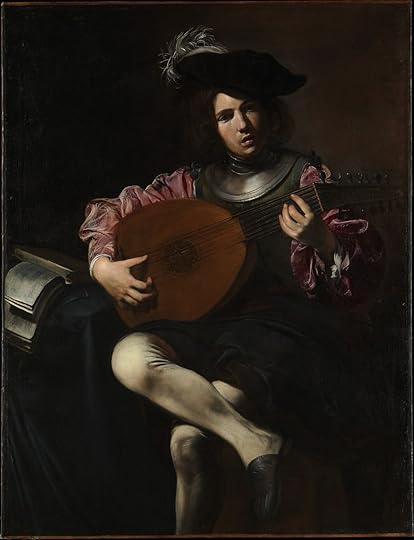
It is 1629, a young English lutenist named Peter Claire arrives at the Danish Court to join King Christian IV's Royal Orchestra. From the moment he realizes that the musicians perform in a freezing cellar underneath the royal apartments, Peter understands that he's come to a place where the opposing states of light and dark, good and evil, are waging war to the death.

Audio Cassette

First published January 1, 1999

128 people are currently reading
3926 people want to read

About the author

Rose Tremain

77 books1,101 followers
Dame Rose Tremain is an acclaimed English novelist and short story writer, celebrated for her distinctive approach to historical fiction and her focus on characters who exist on the margins of society. Educated at the Sorbonne and the University of East Anglia, where she later taught creative writing and served as Chancellor, Tremain has produced a rich body of work spanning novels, short stories, plays, and memoir. Influenced by writers such as William Golding and Gabriel García Márquez, her narratives often blend psychological depth with lyrical prose.
Among her many honors, she has received the Whitbread Award for Music and Silence, the Orange Prize for The Road Home, and the National Jewish Book Award for The Gustav Sonata. She was shortlisted for the Booker Prize for Restoration and has been recognized multiple times by the Walter Scott Prize for Historical Fiction. In 2020, she was appointed Dame Commander of the Order of the British Empire for her services to literature. Tremain lives in Norfolk and continues to write, with her recent novel Absolutely and Forever shortlisted for the 2024 Walter Scott Prize.

Ratings & Reviews

What do you think?
Rate this book

Friends & Following

Create a free account to discover what your friends think of this book!

Community Reviews

5 stars
1,549 (31%)
4 stars
1,981 (40%)
3 stars
996 (20%)
2 stars
269 (5%)
1 star
80 (1%)
Displaying 1 - 30 of 411 reviews
Profile Image for Dolors.
605 reviews2,812 followers
January 29, 2015
To choose music as the restoring element of order, beauty and harmony and silence to weave the nuanced voices of a dozen characters tossed by the turbulent currents of History is not an easy task per-se, particularly if the reality of place and time includes shifting narratives, past and present tenses and a historical frame that happens tangentially to the plots and subplots of the story.
The endeavor becomes even more ambitious when the setting is the Denmark of the 17th Century, an isolated place surrounded by water and murky clouds, and the reality of the Danish court is carved with the uneven chiselers of disparate narrations by historical and fabricated figures, mostly tormented individuals who grope in the darkness of their disillusionments and whose elusive chronicles hum with undertones more redolent of fairy tales than the expected polyphonic visions of high quality historical fiction.

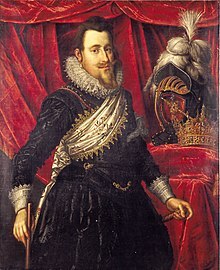
King Christian IV, a renaissance prince, who vouches for intellectual freedom and the abolition of serfdom, is manipulated by his adulterous wife Queen Kirsten and his mother old Queen Sofie, whose basement brims over with gold ingots that replenish her greediness. The Irish Earl O’Fingal is in a frenzy to capture the elusive notes of the epitome of musical beauty that arrested him in dreams while his wife leads a double life with the young and virtuous lutenist Peter Claire, who in turn joins the royal orchestra and finds in innocent Emilia, maid to lascivious Queen Kirsten, his ideal companion.
An entangled gossamer of improbable coincidences and contradictory versions of the facts that mould history gives shape to a world in constant self-conflict that is both tangible and remote, gloomy and fantastic, accidental and bizarre. The characters lack chromatic expression and they rest in conventional stalls made of either pure good or dark evil. The story lacks the recurrent motif that binds independent movements to the thematic unity of the symphony, presenting instead a dissonant assortment of little facts and fanciful perspectives that fails to draw the bigger picture.

The echo of a distant music can be discerned coming from the freezing dungeons of the Danish palace, where the oil lamp dribbles onto slippery floors and a blue flame flickers hesitantly on the dark walls of time and memory, but when the last note has been played, a deafening silence wipes out the faltering melody of these souls who in the end speak only with forgettable, vacant words.

“And if Memory be faulty – as I do think mine must certainly be – then we shall remain all of our lives Indifferent to Music.”
Profile Image for Jan-Maat.
1,684 reviews2,491 followers
Read
August 11, 2018
Due to my unreasonable irritability the author's reversal of the historical relationship between Christian IV and his mother over money and the bizarre invention of having the Danes ask the Russians for mining experts to help them develop silver mines in Norway but who are eaten by wolves on their way there, (the Russians had no expertise in silver mining in the 17th century
If you are not prone to the same character faults as myself you could well enjoy the slightly dreamlike atmosphere of the flashbacks in the Kings mind to the battle of Breitenfeld in which his hopes for dominion over northern Germany were crushed (which I did enjoy, not the crushing of Christian IV's political ambitions but Tremain's writing), the tragic relationship of the King and his friend and the way that the King frames that relationship to himself and the end of the relationship between the King and Kirsten Munk.

All of which is at a tangent to other story in the book of the English musician, like some fictional John Dowland, sent to Denmark to play at his court, but who, owing to a singular encounter with a beetle, suffers from a disabling case of deafness.

There is the same richness of description as in the author's Restoration but also the same preference for atmosphere over historical accuracy. I think there's an argument that you are best off considering these books as fantasias on historical themes and go with the flow of them. My desire for historical accuracy no doubt is just pedantic. Ah, actually I'd best confess, I have a soft spot for Christian IV. He was one of those people in history who tried hard and saw their best efforts come to naught. He rushed about founding new towns to enhance Danish commerce, slowly built up his political reach, patiently built up cash reserves, but in life planting seeds doesn't ensure a thriving plant. I'll endeavour not to grind my teeth over it.

Anyway, recommended for those hard and unsentimental readers indifferent to Christian IV's fate, yet easy going on questions of accuracy and precision.
Profile Image for Philip Allan.
Author 18 books408 followers
April 15, 2020
The structure of this book is like a rope, with different strands wound together to create a whole. At its core is the strange court of the 17th century King Christian IV of Denmark. This is a world in flux, where the old certainties of the past are being challenged by the advance of science and the new Protestant religion. Another strand is the love affair between a young English lute player and a maid. Then there is the lonely king, brooding on his past, with its battles lost and vanished friends. His unsupportive, unfaithful queen, with her affairs. Strangest of all is the tale of the heroine’s family, dominated by the mesmerising character of her stepmother, Magdalena, as she captivates them with a mixture of culinary skill and sexual power.

This is a book that uses all of the reader’s senses to capture the past. The music and silence of the title, of course, but also heat and clinging cold, light and dark - as in the opening passage where we follow a lamp guttering through the dark palace. The brilliant orchestra, condemned to play in a damp cellar. Tremain adds further complexity with her writing style, shifting from first to third person narration, and moving through time.

I thoroughly enjoyed Rose Tremain’s Music and Silence. This a novel full of memorable characters, bizarre situations which succeeds in opening up the past, not through layers of authentic detail, but in the best way, through interesting characters and intriguing plots.
Profile Image for Nadine in California.
1,186 reviews133 followers
July 2, 2024
I almost never re-read, but I'm so glad I did. I read it for the 'I'll Have What You're Reading" readalong, in memory of book podcaster and human being extraordinaire, Jenny Colvin. The title of the readalong was her tagline for her podcast, Reading Envy. The episodes are still online and I highly recommend people check it out and have the Jenny experience. This book is on her Goodreads TBR list, and I am sure she would have loved it.

It's been 15 years since my first reading, and I didn't remember a single thing about the novel, despite the fact that my minimal review shows I was impressed. So this time around I thought I'd do more justice to the book - but now I'm so overwhelmed with all there is to say that I'm exhausted before I start. So I'm just going to flit among my impressions.

I'll start by stating the obvious - the book reads like a symphony. A large cast of fascinating characters act in point and counterpoint to each other; past and present tenses interweave seamlessly; numerous themes rise and fall throughout the story. All this makes the book sound dense and cerebral but it's not, it's engrossing and propulsive and has a little bit of everything plot-wise, from mystery to romance (which I normally hate!) to murder. I don't know much about fairy tales, but it's obvious that some of the characters, their temperaments and situations, evoke fairy tale tropes even though they are firmly grounded in their time and place.

While music is, of course, a driving element of the book, Tremain mercifully never does anything as ham-handed as trying to describe it in words - the power and beauty is there in the thoughts and reactions of the characters. The same goes for silence:
"As they part, both men reflect upon all that might have been said in this recent conversation and yet was not said; and this knowledge of what so often exists in the silences between words both haunts them and makes them marvel at the teasing complexity of all human discourse."

Tremain's writing is understated but not simple - a perfect vehicle for her characters and story. An example is her description of Charles I of England, a character who is present for only a few pages. For me, she captures his essence obliquely but fully and with great sensitivity:
"He did not master the art of walking until the age of seven. Though now, at thirty, he holds himself graciously, there is in his walk some memory of those labours and humiliations of his childhood, a kind of hesitancy that is not quite a limp but more a visible disinclination to put one foot in front of the other.

At the window, he does not move and he does not speak. The palace courtiers know better than to interrupt him when his back is so resolutely turned upon the room. They know that this condition of stillness and silence is consoling to his spirit. For just as walking remains uncomfortable to him, so expressing himself in plain words is very hard for him. It isn't that he does not know, in his head, what he wishes to say; it is simply that what he wishes to say is not what he is able to utter. He can talk to himself with absolute clarity and eloquence. And as with himself, so with God, whom he imagines as a near relation, privy to all the quirks and habits of his mind. But to express himself to his subjects - this is arduous. Sometimes, he will even stammer."
----------------------------------
(Original review, 2009)
Beautiful, subtle historical novel. The period is evoked through character and plot, not description. The kind of novel that gets better and better the more I think about it.
Profile Image for Kalliope.
738 reviews22 followers
June 8, 2022


There are so many books at home, stuck in corners, piled up here and there, over any table, even beneath the bed that I decided to make a pile of books which eventually I will discard. There are a few I have not read yet, but most of them are books I would like to read again before I say goodbye to them. This is one such.

In this process of rereading, I am also enjoying observing how my impression has changed with time. With historical novels I now pay a great deal more attention to the created setting, to the events narrated, to the characters portrayed. The novel feels as an excuse to explore the historical episode in which the fiction has been planted. In my last read this novel got four stars; it now has lost one – precisely because of its faulty plausibility.

Music and Silence is set during a couple of years in Denmark in the early 17th Century (1629-1630), Tremain presents an assortment of personalities, and interrelated plots, around king Christian IV (1577-1648). There is his second wife, Kirsten Munk (1598 -1658), his mother Sophie Mecklenburg-Schwein (1557-1631), and a few completely fictional characters. Of these, the English lutist Peter Claire emerges as the motor that moves the plot. Unsurprisingly the musician and composer John Dowland, who had worked for the music-lover Christian for a few years, is evoked a few times, although he had died in 1626, just a few years before this book begins.

I know very little of this period, but I had an overall sense that Christian was, at least, a king who wanted to do things right. Tremain portrays him, while he is a youth, as a promising lad. But then, as an adult and husband to his nymphomaniac Kirsten, he comes across as a nitwit. His visionary enterprises (silver mine in Norway; new fleet…) all flop and he certainly lacks a managerial ability with Denmark’s rapidly deteriorating finances. I wonder how much of this was more or less accurate.

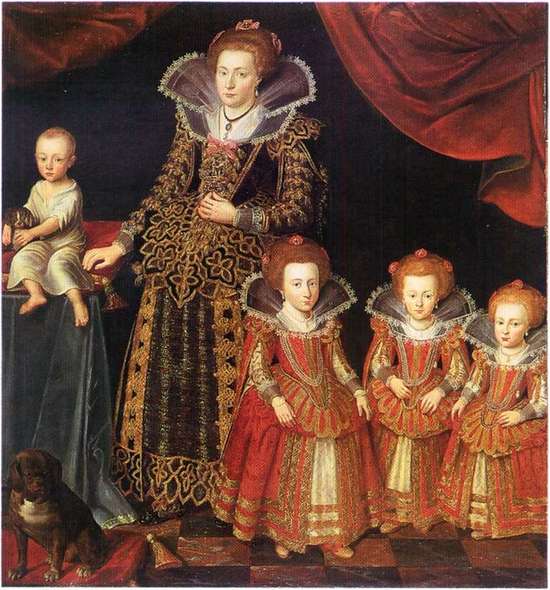
Tremain is quite good in the way she handles the various plots, interweaving them through short episodes, but at times I felt some of the supplementary stories did not add enough and the book dragged. Her writing is elegant and flowing. There is a love story that ends well, and in this it comes across as a concession from the author to the happy reader. For me the best was the portrayal of the terrible Kirsten. With her Tremain was able to match convincingly the speech to the personality, which greatly added to her appeal. Kirsten has a lurid tongue suited to a paired mind – very entertaining. Not what one would imagine from this courtly portrait.

Profile Image for Lynn.
44 reviews16 followers
March 31, 2008
I am a late convert to Rose Tremain's writing - and what beautiful writing it is. Having suffered through some appalling novels of late, it was wonderful to have this novel remind me that there are still some very talented authors out there!

It took me a little while to get used to the episodic nature of this novel - more pronounced than in 'Restoration'- but I found myself engaged by the characters and their stories (even the appalling Kirsten!) and intrigued by the narrative. At times the novel seemed to move a little slowly, but I simply reminded myself to be lulled along by the quiet beauty of Tremain's writing rather than expect a 'high action' drama.
Profile Image for Kathleen.
Author 1 book264 followers
November 7, 2022
“A man can travel too far from his point of departure and become lost and never find his way back. All that remains to him then is to keep moving forward and pray that hope does not desert him too.”

Rose Tremain has imagined a story of King Christian IV of Denmark, giving some background about his childhood, but primarily telling of the events and people surrounding him in 1629, following the arrival of an English lutenist he has hired to play in his Royal Orchestra.

It is a fanciful novel, so I don’t expect Tremain necessarily stuck to the facts, but I really liked her portrayal of King Christian. I knew nothing about him going in, so read a little after finishing the book, and these facts fit the fiction:
He was an ambitious reformer
He involved his country in many disastrous wars
He was particularly good at hiring musicians and artists
He focused on details, often missing the big picture

Tremain makes him such a likable guy: a dreamer, an idealist.
description
In childhood, he was taught by his father the king to spot any hint of “shoddiness,” so developed a love of quality. One of the strongest parts of the novel to me was the story of a remarkable childhood friendship with a boy named Bror, who had difficulty writing his name. (After reading The Gustav Sonata, I think Tremain may have a special gift for telling stories about young boys.)

This is not a terribly complex novel, but is long and full of detail. Tremain approaches the story from multiple viewpoints. We have the King, the lutenist, the king’s mother the Dowager Queen Sophie, his second wife Kirsten, Kirsten’s special servant Emilia, Emilia’s peculiar family members … the list goes on.

Kirsten, the second wife, is a fun character. She doesn’t care a whit for the king or her children, but only for her Swedish lover Otto. You can kind of see the lack of interest on her face in this painting:
description

My second favorite storyline was the one surrounding the servant Emilia’s very special brother Marcus. He has some interesting troubles and gifts that make him a sort of fairy child. Marcus will be staying on my mind for a while.

Tremain weaves all of these storylines together into a narrative primarily about happiness and fulfillment. I was disappointed that there wasn’t more about music, but this was a fun and engaging read.

“There’s the trick: to find the way--whether forwards or back--to what we long to be.”
Profile Image for Anna.
268 reviews90 followers
September 18, 2022
In the Danish court of king Christian IV and his glamorous but quite deplorable wife Kirsten, a young lutenist Peter Clare meets Emilia, one of Kirsten’s mades. Something special happens when they set eyes on each other. They seem to share some kind of understanding, but the prospects for their union don’t look too good. He is bound by a promise to the king who considers him his “guardian angel”, and she is the queen's favorite and not likely to be released from her service anytime soon.

Around this perhaps trivial event, Rose Tremain weaves her rich and complex fabric of plots, characters, relationships and ambitions, nicely complemented by a historical setting of 17th century Denmark tormented by financial difficulties.

In contrast to many other novels with multiple characters and plots, Rose Treiman does not seem to have a limit on how much attention she can give to her characters. It doesn’t matter that there are many. They are all fully developed and interesting, so much so that, in the end, surprisingly, even the relationship between Peter Clare and Emilia doesn’t seem that important.

I want to repeat after one of her fans “Can Rose Tremain even write a bad book?” I personally don’t think so. She kept me mesmerized for the entirety of the five hundred pages in ‘Music & Silence’ and I believe she will probably do it again with her other books.
Profile Image for r.
128 reviews81 followers
August 5, 2015
کتاب در کپنهاک 1629آغاز میشود .زمانی که پیتر کلر جوان وزیبا با عودش وارد دربار شاه کریستیان چهارم پادشاه دانمارک میشود پیتر کلر شاه را به یاد دوست دوران کودکیش میاندازد وقصه ادامه می یابد نویسنده کم کم شخصیت های مستقلی را وارد قصه میکند که هر کدام قصه ای جدا گانه دارند ولی رمان را منسجم میکنند .مانند کریستین مونک همسر پادشاه ودیگر افراد . شیوه نگارش جالب است .مهمترین چیز روح وحس وموسیقی است که از سکوت درون ادمها برمیخیزد واین موسیقی برخواسته از سکوت در هر شخصیت به نحوی خاص بروز میکند .در یکی با مهربانی //در دیگری با شهوت //در یکی با حیله گری ونیرنگ ودر شخصیت دیگری به صورت جنون واصوات ماورایی ..ترجمه استاد یونسی هم مثل همیشهه زیبا وبی نقص وعالی است ..
Profile Image for Newtqueen.
6 reviews3 followers
October 1, 2008
I read a review in this week's New Yorker on a new Tremaine book that praised her older work, so I went to the library and got Music & Silence, which has a Whitbread Award. It concerns a lute player and his misadventures in 17th C Denmark. Sadly for me, it's written in that faux archaic style which some authors think emulates the time they are writing about, and I find it cloying. How does she know people talked like that? To add to my chagrin, the characters seem to be either saints or depraved evil people. I'm having trouble understanding the Whitbread for this book.
Profile Image for Berengaria.
957 reviews193 followers
December 16, 2020
If there was ever a novel I wanted to crawl inside and live there forever, in that setting and with those people, then it's this one. I do not expect anyone else to feel this way, but Music & Silence is a quality read in any case.
Profile Image for Jon.
166 reviews35 followers
January 4, 2009
Loved it..couldnt put it down. I love the way its written from different perspectives and jumps back in time so you gradually learn more about the characters backrounds and connections. Im not a massive fan of alot of Historical fiction, preferring to read the real thing. For example - Alison Weirs or Antonia Frasers biographies of European Royals are as gripping as any fiction with plots counter-plots intrigue and sumptous detail, why would you need a weak inaccurate story built around the same period. Perhaps not knowing anything at all about the historical characters in 'Music and Silence' helped me overcome this, I enjoyed knowing they were real, but i was able to enjoy it for beatifully written story telling.
Profile Image for Patricia Bracewell.
Author 8 books521 followers
August 8, 2012
Set in 17th century Denmark at the court of Christian the 4th, this book reminds me of a fairy tale by Hans Andersen, for it is full of magic and wonder. The writing is lovely, except for the sections in which certain characters revel in some rather sordid sexual antics. The writing, though, fits the characters and events. There are several witches, a king, the good girl, the hero -- even a boy who works wonders. They are all larger than life -- another element that adds to the feeling of fairytale. There are palaces and buried treasure. This was a theme driven book rather than plot driven, with elements of light and dark, music and silence, fidelity and betrayal. It's a book I would read again, just to savor it even more than I did the first time.
Profile Image for Nikki Bezdel.
36 reviews3 followers
June 25, 2012


A difficult book to lose yourself in. The skill of the author in creating exquisite prose is undeniable, but I have to confess to losing interest in the story on more than a couple of occasions. The switching back and forth between numerous points of view leaves one somewhat adrift and the story does tend to meander off the point quite regularly. All in all, if you enjoy a literary work of considerable skill, you will enjoy the magic woven with words here. However, I found the plot leaden and could not summon up much empathy for any of the characters. For the poetry of the narrative I could give 5 stars, but for overall enjoyment, sadly only 3.
Profile Image for Annette.
956 reviews610 followers
October 2, 2019
Based on the first 100 pages: the characters are being introduced and it sounds as plot is going somewhere and maybe it gets somewhere, but I lost interest with presentation of characters and no sense of plot.

Some reviewers already described the style of writing very well as archaic.
Profile Image for Shaghayegh.l3.
420 reviews57 followers
February 6, 2019
پیچش داستان و گره‌خوردن سرنوشت‌های شخصیت‌ها توی این کتاب بسیار زیبا بود، و این شخصیت‌های عجیب و دوست‌داشتنی و روون بودن داستان، کتاب رو به خاطره‌ی خوبی تبدیل کرد.
Profile Image for Christine.
7,223 reviews569 followers
December 3, 2008
Music & Silence is beautifully written. Though the plot is relatively simple, it becomes suspenseful towards the end. There is a feeling of disconnect from the characters, perhaps due to the prose style itself or the historical era. The other character that the reader seems to fully get to know is Kirsten. The character of Christian IV is kept at a distance, almost King Arthur like. This is not wholly surprising considering the historical background for the story and who the actual people really were. I did find myself wishing that she would have used Danish place names and not the English versions of said names.
Profile Image for Leo.
4,984 reviews627 followers
May 11, 2021
Set in 1629 in the court of Danish King Kristian IV and his queen Kirsten. We follow young Peter a young music player as he enters the court. This was a reread, originally read it in 2019 and gave it 3 stars. This time I gave it 3 stars. Bummer. I had hoped I would enjoy it more as I've seen a raveing review on it and I had hoped I felt the same but sadly I did not. It was alright but wasn't my kind of music.
Profile Image for Annie.
88 reviews3 followers
March 2, 2016
Ambitious, engaging, flawed

Tremain synthesizes an array of narrators, points of view, writing styles, tenses in this historical novel which, mysteriously, contains little in the way of actual history.

Let it be said at the outset that I have little experience of historical novels, so I’m no judge of this as an example of the genre.

The main arc follows an English lutenist, Peter Claire, as he travels to Denmark in 1629 to join King Christian IV’s orchestra, and is the portrayal of a love story. There is, in addition, the story of Christian and the ruling of his kingdom through a period of great hardship. He is harangued by his second wife, Kirsten, a character of almost infinite selfishness and vindictiveness. Christian himself garners sympathy, however, in his humanity, his vulnerability, and his suffering. The supporting cast includes Christian’s mother, Kirsten’s mother, Emilia’s family, including a sexually predatory wicked stepmother and a strange odd-bod of a young brother who can hear nature speaking and has the ability to charm insects (in one of the most bizarre scenes!). Among many others.

So, the Peter and Emilia love story weaves though many other arcs in a highly episodic fashion. Most chapters are very short, making for swift changes in point of view character / narrator. By page 50 the we’ve had

third person present tense following Peter arriving in Denmark;
Kirsten’s (very!) personal diary;
third person narrative following Queen Sophie, as she gives birth to Christian;
back to Peter;
an episode from Christian’s childhood;
more of Kirsten’s ramblings;
Peter;
the first of several ‘laments’ from the point of view of Peter’s ex employer and lover in windswept Ireland, the Italian Countess O’Fingal;
Emilia’s background;
another of the Countess’ Laments;
a story from Christian’s schooldays.

And the novel goes on for another 400 pages! (Not quite as long as this review! Sorry!)

In part, this is confusing, but the threads intertwine. In part it is jarring, as the transitions are so swift. The main problem is that not enough time is given to any of them to fully explore and develop the characters. Having said this, it still does sort of work! I still care about at least some of the characters, such as Peter, Christian, strange little Marcus, the homely servant Vibeke who undergoes something of a transformation of fortunes (no spoilers here!).

The absence of history is a problem for me. There is very little structure to hang the narratives on, so in many ways it may as well be set at any time. A few historical events happen ‘off-stage’, the main one coming towards the end of the novel where Christian climactically recounts a deeply traumatic event concerning a cherished childhood friend (again, no spoilers!). The trouble is, with the narrative not in the habit of anchoring the actions of the characters in historical events, this story requires such a large dollop of historical information that the emotional impact is lost underneath it. Which is a shame.

The geographical locations are handled well, with effective scene setting, such as the huge forests and the many islands defined by the misty sea which surrounds them. I would very much have liked maps. Maps are always good. I spent time googling them when it would have been far nicer to have had two or three printed in the book itself. The locations play a significant part in the stories.

Tremain’s descriptive powers are considerable, with many of the scenes brought to life with an eye for detail. One particular example of this is the description of the underground chamber that houses the musicians and the convoluted contraption whereby the music is syphoned, via tubes and a grille in the floor, to the King’s Winter Room. No one can see the musicians, but the music can be heard. Almost Gormenghastian!

The writing styles vary with the changes in episodes, but it is very accomplished, although, with leanings towards the literary I would have preferred Tremain to cut out much of the over-explaining that she gives. I find it unnecessary and diluting. For example, the otherwise very effective sentence, ‘Queen Sophie holds her head in her hands, feeling the bones of her skull. The keys to her treasure house are hard and cold against the puckered skin of her breasts...’, which should have ended there, goes on to add, ‘...as cold and hard as her unyielding purpose.’ Just in case you missed it. Such redundancies are common, and, to my mind, weaken otherwise very strong writing.

The theme of music and silence plays out in many scenes and on many levels. What these symbols may represent is open to interpretation. There is something here that equates music with order, a Harmony of the Spheres sort of concept - very much the psychology of Christian who is mentally assailed by things out of order, or unpleasing, or ‘shoddy’. I also detect a correspondence between music and hope. The scene where Peter’s gathering deafness is addressed towards the end of the novel powerfully underscores this interpretation. Interestingly, Kirsten cannot abide music.

The very end of the novel leaves me dissatisfied. I wish it had ended one episode earlier. Instead, it gives the final words to the self-centred Kirsten.

All in all, a very enjoyable read. One that would definitely warrant a repeat reading at some point.
Profile Image for Corrie.
1,688 reviews4 followers
October 13, 2020
Music & Silence was my first Rose Tremain experience and I have to say I’m completely smitten. I listened to the audiobook available on Scribd with the brilliant narration of Michael Praed (you might remember him from the British 80s tv series Robin of Sherwood), Clare Wille and Alison Dowling.

The story is set in the court of Christian IV of Denmark during the 17th century. You have real historical figures like King Christian IV of Denmark (1588-1648), his 2nd wife and consort Kirsten Munk (1598-1658) who gave him 12 children, Kirsten’s German lover Rhinegrave Otto Ludwig, Kirsten’s Maid of the Torso Vibeke Kruse to name a few, and fictional ones. The author transported me in such a way, they all became real to me.

The narration was splendid. Michael Praed was such a pleasant surprise and a perfect choice. But the absolute star for me was Clare Wille, who did the voice of lusty Kirsten Munk, she who is perpetually vexed. What a character! I bought the book so I can read it as well at some point. But do yourself a favor and listen to it on Scribd.

I want to read more Rose Tremain and I want to listen to more Clare Wille!

This is what the professionals had to say about it:

‘A superb novel … a wonderful, joyously noisy book’ - Guardian

‘The best thing from Denmark since Hamlet’ - John Julius Norwich

‘With Music & Silence Rose Tremain returns to the historical novel, for which, as Restoration proved, she has a genius. This is evident not just in the richly imagined sense of period and place, but in the humanity of her characters, historical and fictitious; the way she gets under their skin and into their hearts … Tremain has a masterly grip of the intricacies of structure; Music & Silence is narrated through a variety of perspectives, which intersect and illuminate each other, providing both breadth and intimacy … Tremain seems unable to put a foot wrong. Over and over in this novel one is pulled up short by the truth of a sentence or observation, by the lightness and precision of its expression … This is quite simply a wonderful novel – wise, humane and moving’ - Kate Hubbard, Literary Review


m/f

5 Stars
Profile Image for Karin.
1,824 reviews33 followers
March 24, 2017

Historical fiction based on real people’s lives, interwoven with fable and magical realism, this is a tale told from multiple points of view and is set in 1629-1630. It starts with the arrival of fictional lutenist (lute player) coming to take the place of Dowland a former lutenist there who is a historical person, in the court of Christian IV of Denmark. Perhaps Peter is the central character, perhaps not; there is certainly plenty space devoted to other people and events; you’ll have to read it to see if you agree with that assertion. While there are a few characters to root for, there are a few you love to hate, as well. During this year Peter Claire works in challenging conditions with his fellow musicians, falls in love with Emilia, who has taken this job to escape her egregious step-mother to work for the equally egregious Kirsten Munk, adulterous wife of King, who is vain, manipulative, unloving and cruel. King Christian, who has loved Kirsten blindly since they have met ignores so many obvious signs, is struggling with abysmal finances and trying to keep his kingdom sound, haunted by things in his past, and a bit loonie, although he isn’t alone in this. Emilia’s family is caught in deep dysfunction at the hands of Magdalena, her stepmother, and Emilia’s youngest brother is pining for her. Peter and Emilia share one trait; they are both able to help soothe and comfort their overseers, the king and the queen consort respectively.

On the one hand, the writing is quite good. This book works better in longer reading stints, and not so well in stolen five to fifteen minute reading breaks. The characters are well drawn for the most part, and yet many times it’s easy to remain somewhat detached from some of the characters you are actually rooting for. I’m not one for interweaving superstition and magical realism into historical fiction, and there is at least one thing that happens that people back then thought happened that has been proven not so.
Profile Image for David Lowther.
Author 12 books29 followers
August 28, 2018
Music and Silence is the third of Rose Tremain's novels I've read following on from The Way I found Her (excellent) and The Gustav Sonata (masterpiece). It most certainly won't be the last.

The story is set in 1629 and 1630 in Denmark while the Thirty Years War rages in the background. Moving from one location to another (part of the novel is set in Ireland and part in England), this is essentially a complex love story and a tale of coming to terms with one's own weaknesses and willingness to make final amends.

The characters are fascinating. There are two women villains who make Melissa Leo seem kind. The men are never quite sure which way to turn and often act indecisively causing distress to themselves and others. The result is an absorbing novel, brilliantly researched,which builds to a thrilling, and in many ways, unexpected climax.

David Lowther. Author of The Blue Pencil, Liberating Belsen, Two Families at War and The Summer of '39, all published by Sacristy Press.
Profile Image for H.E. Bulstrode.
Author 40 books31 followers
September 28, 2017
Beautiful, but flawed
Some books are beautifully written, some are skilfully and intriguingly plotted, whilst others still possess a pace that compels the reader to turn the page and devour the book leaving them wanting more; few manage to combine all three elements. ‘Music and Silence’ is one of those novels that excels in one of these categories – for its prose is undeniably alluring – and yet fails in the other two. It is written prettily enough, but it lacks pace, and the plot meanders hither and thither, the perspectives constantly toing and froing from one character to another, none of whom I found to be particularly sympathetic.

The lutenist, Peter Claire, his fingers frozen by a Danish winter, pining for a love denied; the Danish Queen Kirsten, despising of her doting husband, scheming and prone to sadomasochistic horseplay with the German Count Otto, or having herself pleasured by black slave boys; the benevolent King Christian IV, touching his elflock for comfort, forever disappointed by all that is ‘shoddy’, including his marriage to his contemptuous and contemptible second wife, his schemes for bringing wealth and happiness to his people seemingly doomed to failure: these are three of the primary protagonists around whom the ‘plot’ revolves. There are many others, but they fail to move me to mention them.

Before coming to this book, I had read another of Tremain’s novels – ‘Restoration’ – which I found to be highly engaging and well paced, so when a friend recommended ‘Music and Silence’ to me as her ‘favourite book’, I had high hopes for it. At the same time, however, I also possessed certain nagging misgivings, for when someone commends a book so highly, the fear creeps in that I will find in it some significant flaw, and so, in this case, it proved to be. Perhaps my failure to find any great satisfaction in the book derives from the fact that it is aimed, predominantly, at a female readership, or then again, perhaps not. It was its lack of pace that made the reading of it so laborious and turgid, for it lay partially read on my bedside table for some seven months or so before I compelled myself to complete it, wolfing down the prose with as much pleasure as if it had been unsalted raw cabbage. Thankfully, unlike the cabbage, it did not leave me with wind afterwards, but neither did it leave me with a desire to read anything else by Tremain, which was a pity.

The 17th century is a fascinating period in which to set a novel, as it was a time of such intellectual, political and social ferment, but, alas, ‘Music and Silence’ somehow manages to render it less interesting than it was. In contrast, ‘An Instance of the Fingerpost’ written by Iain Pears, set in Restoration Oxford and employing four separate perspectives in the narration of the same set of events, is utterly compelling and convincing; it is beautifully written, skilfully and intriguingly plotted, and leaves the reader wanting more at its end.
Profile Image for Bettie.
9,977 reviews5 followers
Want to read
February 11, 2015
Description: In the year 1629, a young English lutenist named Peter Claire arrives at the Danish Court to join King Christian IV's Royal Orchestra. From the moment when he realizes that the musicians perform in a freezing cellar underneath the royal apartments, Peter Claire understands that he's come to a place where the opposing states of light and dark, good and evil are waging war to the death. Designated the King's 'Angel' because of his good looks, he finds himself falling in love with the young woman who is the companion of the King's adulterous and estranged wife, Kirsten. With his loyalties fatally divided between duty and passion, how can Peter Claire find the path that will realize his hopes and save his soul?
For my daughter,
Eleanor
Love always
Opening: Copenhagen, 1629: A lamp is lit.
Until this moment, when the flame of the lamp flares blue, then settles to steady yellow inside its ornate globe, the young man had been impressed by the profound darkness which, upon his late-night arrival at the Palace of Rosenborg, he had suddenly stepped.


TR Music & Silence
4* The Road Home
4* Restoration
4* Trespass
1* Merivel
3* The American Lover
3* Collected Short Stories
Profile Image for Ieren Modabberi.
83 reviews22 followers
December 22, 2014
"نوميدي جايي است همين نزديكي ها.من فكر ميكنم نوميدي يك روستا است،آنجا مهمانسرايي است و يك مشت خانه،با پيرمردي كه چاقو تيز ميكند."

رمان زيبا،با قلمي جذاب و خاص،هرفصل از رمان از زبان افراد مختلف و با طرزفكر و بيان مختلف نوشته شده بود كه اوايل عجيب،در اواسط هيجان انگيز و در فصل هاي آخر...كسل كننده بود.نقطه اوج رمان تقاطع شخصيتها بود.اواسط كتاب آنقدر گيرا بود كه انتظار پايان خيلي بهتري داشتم با اين وجود بين رمانهاي كلاسيك يك انتخاب خوب و متفاوت بود...
وبخش مورد علاقه ام از كتاب :
"اميد متاع غريبي ست.
مخدري ست.
قسم ميخوريم كه ديگر گردش نگرديم اما ميبيني روزي مي آيد كه ناگهان باز گرفتار و پايبند ميشويم."

"پذيرش،سخت ترين درسي است كه زندگي به ما ميدهد و مهم ترين درسي كه بايد آموخت."
Profile Image for Hoora.
175 reviews26 followers
June 9, 2019
داستان این کتاب که در دانمارک و انگلستان سالهای 1629 و 1630 اتفاق می افتد، حول محور زندگی شاه کریستیان چهارم پادشاه دانمارک می گذرد : علاقه اش به موسیقی و تشکیل گروهی از بهترین نوازندگان، امور مربوط به کشور و تلاشش برای ترقی دانمارک، یادآوری گذشته و برخی از اتفاقات تلخش و... 

موسیقی و سکوت داستانی جذاب درباره عشق و نفرت و خیانت است، در حالت های مختلف؛ از عشق خالص یک نوازنده به دختری جوان تا محبت خواهر برادری و دوستی کودکانه ای که می توانست در بزرگی هم ادامه یابد و... 

داستان به گونه ای پیش می رود که تقریباً هر کدام از شخصیت ها روایت خودشان را از اتفاقات، با تفاوت در لحن بیان و شیوه نگارش بیان می کنند.
Profile Image for Em.
409 reviews70 followers
September 8, 2014
Music and Silence is a beautifully written, lyrical novel which explores music, silence and much, much more.

Set in 17th Century Denmark, the stories of multiple characters intertwine and the tale of each is equally captivating. The description and sense of place is superb, the changing scenery was vivid in my mind.

I especially loved the way in which Rose Tremain blended the historical and magical and that there is nothing predictable in the story or it ending.
Profile Image for Kris McCracken.
1,886 reviews62 followers
March 9, 2024
"Music & Silence" by Rose Tremain attempts to weave a complex tapestry of narratives set in 17th-century Denmark. However, the execution leaves much to be desired.

The narrative thread needs to be more cohesive. It jumps between characters and timelines with a disorienting lack of cohesion. The shifts in tone are jarring, disrupting the flow of the story and leaving the reader unanchored.

While Tremain's prose is undeniably elegant, and her characters are vividly drawn, the story often feels disjointed as it jumps between different perspectives and periods without clear transitions. This lack of cohesion disoriented and detracted me from enjoying the novel. Moreover, the abrupt changes in tone - from moments of whimsy to scenes of darkness and despair - made it difficult to immerse myself in the story fully.

Tremain's ambitious attempt to create a self-enclosed world disconnected from the present makes the setting feel unconvincing. While the novel has moments of brilliance, particularly in exploring music and its power to transcend boundaries, its flaws prevent it from reaching its full potential, and the lack of attention to the "little facts" that ground historical fiction, in reality, makes the setting feel unconvincing.

In conclusion, "Music & Silence" is a novel that promises much but delivers little. The fragmented narrative and inconsistent tone make for a frustrating read. It requires patience and a willingness to navigate its narrative maze.

⭐ ⭐ 1/2
Displaying 1 - 30 of 411 reviews

Can't find what you're looking for?

Get help and learn more about the design.