

What do you think?

Dickinson: Selected Poems and Commentaries
Seamus Heaney, Denis Donoghue, William Pritchard, Marilyn Butler, Harold Bloom, and many others have praised Helen Vendler as one of the most attentive readers of poetry. Here, Vendler turns her illuminating skills as a critic to 150 selected poems of Emily Dickinson. As she did in The Art of Shakespeare’s Sonnets , she serves as an incomparable guide, considering both stylistic and imaginative features of the poems.
In selecting these poems for commentary Vendler chooses to exhibit many aspects of Dickinson’s work as a poet, “from her first-person poems to the poems of grand abstraction, from her ecstatic verses to her unparalleled depictions of emotional numbness, from her comic anecdotes to her painful poems of aftermath.” Included here are many expected favorites as well as more complex and less often anthologized poems. Taken together, Vendler’s selection reveals Emily Dickinson’s development as a poet, her astonishing range, and her revelation of what Wordsworth called “the history and science of feeling.”
In accompanying commentaries Vendler offers a deeper acquaintance with Dickinson the writer, “the inventive conceiver and linguistic shaper of her perennial themes.” All of Dickinson’s preoccupations―death, religion, love, the natural world, the nature of thought―are explored here in detail, but Vendler always takes care to emphasize the poet’s startling imagination and the ingenuity of her linguistic invention. Whether exploring less familiar poems or favorites we thought we knew, Vendler reveals Dickinson as “a master” of a revolutionary verse-language of immediacy and power. Selected Poems and Commentaries will be an indispensable reference work for students of Dickinson and readers of lyric poetry.
In selecting these poems for commentary Vendler chooses to exhibit many aspects of Dickinson’s work as a poet, “from her first-person poems to the poems of grand abstraction, from her ecstatic verses to her unparalleled depictions of emotional numbness, from her comic anecdotes to her painful poems of aftermath.” Included here are many expected favorites as well as more complex and less often anthologized poems. Taken together, Vendler’s selection reveals Emily Dickinson’s development as a poet, her astonishing range, and her revelation of what Wordsworth called “the history and science of feeling.”
In accompanying commentaries Vendler offers a deeper acquaintance with Dickinson the writer, “the inventive conceiver and linguistic shaper of her perennial themes.” All of Dickinson’s preoccupations―death, religion, love, the natural world, the nature of thought―are explored here in detail, but Vendler always takes care to emphasize the poet’s startling imagination and the ingenuity of her linguistic invention. Whether exploring less familiar poems or favorites we thought we knew, Vendler reveals Dickinson as “a master” of a revolutionary verse-language of immediacy and power. Selected Poems and Commentaries will be an indispensable reference work for students of Dickinson and readers of lyric poetry.
560 pages, Paperback
First published September 7, 2010
About the author
Helen Vendler
71 books95 followersHelen Vendler is the A. Kingsley Porter University Professor at Harvard University, where she received her PhD in English and American Literature in 1960. Before joining the Harvard faculty, Vendler taught at Cornell, Swarthmore, Haverford, Smith, and Boston University.
Vendler has written books on Yeats, Herbert, Keats, Stevens, Shakespeare, Whitman, and Heaney, and, most recently, Our Secret Discipline: Yeats and Lyric Form (2007), Last Looks, Last Books: Stevens, Plath, Lowell, Bishop, Merrill (2010); Dickinson: Selected Poems and Commentaries’ (2010); and The Ocean, the Bird, and the Scholar: Essays on Poets and Poetry (2015). She also reviews contemporary poetry for the New Republic, London Review of Books, and other journals. She has held fellowships from, among others, the John S. Guggenheim Memorial Foundation, Woodrow Wilson Center, and National Endowment for the Humanities, and is a member of the American Philosophical Society, American Academy of Arts and Letters, American Academy of Arts and Sciences, Swedish Academy of Arts and Sciences, and Modern Language Association, of which she was president in 1980.
Vendler has written books on Yeats, Herbert, Keats, Stevens, Shakespeare, Whitman, and Heaney, and, most recently, Our Secret Discipline: Yeats and Lyric Form (2007), Last Looks, Last Books: Stevens, Plath, Lowell, Bishop, Merrill (2010); Dickinson: Selected Poems and Commentaries’ (2010); and The Ocean, the Bird, and the Scholar: Essays on Poets and Poetry (2015). She also reviews contemporary poetry for the New Republic, London Review of Books, and other journals. She has held fellowships from, among others, the John S. Guggenheim Memorial Foundation, Woodrow Wilson Center, and National Endowment for the Humanities, and is a member of the American Philosophical Society, American Academy of Arts and Letters, American Academy of Arts and Sciences, Swedish Academy of Arts and Sciences, and Modern Language Association, of which she was president in 1980.
Ratings & Reviews
Friends & Following
Create a free account to discover what your friends think of this book!
Community Reviews
Displaying 1 - 30 of 60 reviews

December 20, 2015
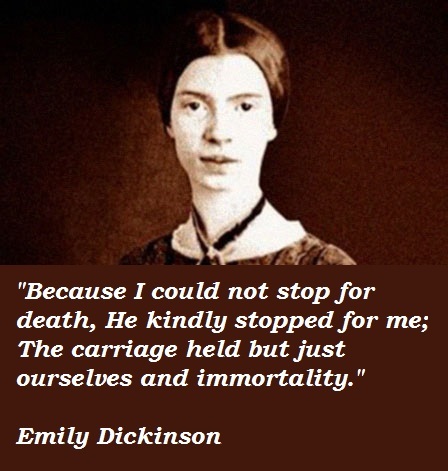
Dickenson is my idea of the perfect poet. She is a religious sceptic, but she is not dismissive of a possible truth in religion. Her poetry dances between opposing ideas and it doesn’t suggest truth in either of them; thus, it is open to interpretation and debate. It can be read in different ways and through this it is profound, powerful and utterly beautiful. I love her unique style, and this book helped me to see other themes within her work. The commentaries are short and superb. My only complaint is that the author didn’t do one for each and every one of Dickenson’s poems. There’s a lot in here, but more would have been even better!
I’m so glad I chose to write one of my university essays on her!
I’m so glad I chose to write one of my university essays on her!

December 19, 2014
I read this book like a devotional: a poem or two plus attendant commentary, every day, for months. It was the perfect way to start a day. Tea plus Emily Dickinson plus a thoughtful scholar's commentary.
I felt like Vendler kind of taught me how to read Dickinson over the course of the book. At first I simply read the poem then went straight to the commentary & ingested it. But eventually I was pausing over each poem for several minutes thinking about it, trying to figure something out about it & my reaction to it, before going to the commentary. In part I was doing this because I found myself disagreeing with Vendler now & then and wanted the mental space to have my own thoughts. And I wondered how Vendler would react to my own readings & reactions to her -- there's something a big dogmatic about her "take" on things. I found most interesting Vendler's comments on the histories of the poems -- their publication history or, even more interesting, the composition history -- where Dickinson changed words or lines over time. I found that window into Dickinson's thinking & artistic evolution fascinating.
I would love to read more in this vein: poem + commentary.
I felt like Vendler kind of taught me how to read Dickinson over the course of the book. At first I simply read the poem then went straight to the commentary & ingested it. But eventually I was pausing over each poem for several minutes thinking about it, trying to figure something out about it & my reaction to it, before going to the commentary. In part I was doing this because I found myself disagreeing with Vendler now & then and wanted the mental space to have my own thoughts. And I wondered how Vendler would react to my own readings & reactions to her -- there's something a big dogmatic about her "take" on things. I found most interesting Vendler's comments on the histories of the poems -- their publication history or, even more interesting, the composition history -- where Dickinson changed words or lines over time. I found that window into Dickinson's thinking & artistic evolution fascinating.
I would love to read more in this vein: poem + commentary.
May 30, 2026
I ended up with only mild interest in the thorough analysis of the poems. But did pick out more Dickinson faves!
On a bleh, gloomy day, this one resonated:
1121
The Sky is low - the Clouds are mean.
A Travelling Flake of Snow
Across a Barn or through a Rut
Debates if it will go -
A Narrow Wind complains all Day
How some one treated him
Nature, like Us is sometimes caught
Without her Diadem -
On a bleh, gloomy day, this one resonated:
1121
The Sky is low - the Clouds are mean.
A Travelling Flake of Snow
Across a Barn or through a Rut
Debates if it will go -
A Narrow Wind complains all Day
How some one treated him
Nature, like Us is sometimes caught
Without her Diadem -

July 27, 2011
In a form familiar to readers of such explicatory texts as Paglia's Break Blow Burn, Helen Vendler presents 150 Emily Dickinson poems with short, tight, analytical essays on each. Unravelling the uniqueness and complexity of Dickinson's earlier works and exploring the intricacies of the more anthologized poems, Vendler makes a case for Dickinson as a supreme and sometimes shocking iconoclast rivaled at times among her poetic contemporaries by Whitman but in her society, rivaled by none. Vendler provides much needed social and religious context to illuminate this poet often thought of as elliptical, abstract or difficult. The result is no less than a master class in poetry, technique and the culture of Dickinson's Amherst. Brilliant.

November 30, 2018
It took me almost a year to finish this book, meanwhile I kept reading other fictions and poetry works also. I have apparently been living with Emily Dickinson since quite some time and have laid my hands on almost everything that associates itself with Emily Dickinson. This book was referred to me by one of my very good friends and I am glad I paid heed to his advise. People who have read Dickinson, know that she takes you on a journey of multitude of emotions where nothing counts as important as the voice of your own heart. But, this particular book gives you a technical insight of her poems and helps you to understand them in a better manner. Writer refrains from using any poetic jargon even when it comes to allusions, Christian allegories and old English archaic. The moment you finish these 150 poems, you feel like a life worth living.
February 16, 2020
Dickinson’s poems rarely exceed a page, but an infinite wealth of experiences are packed into her terse, sometimes enigmatic lines (as suggested by her poem “Ashes denote that Fire was”). This is where Vendler comes in: her extensive knowledge and careful analysis expands Dickinson’s compressed wordplay and provides context to her sometimes obscure biblical or 19th century references. Vendler allows us to reconstruct the burning fires behind Dickinson’s writing. Her existentialist thoughts, her agnostic attitude towards Christianity, the search for truth, her frustration at the many confines that came with being a woman, her love of nature and her intensely emotional mental states from despair to desire and delight — the continued relevance of all these topics today showcase a writer ahead of her time.

August 2, 2019
Sharp, quick readings with equal attention to content and form.

October 7, 2010
I think this might be important criticism. I think it's terrific. One has to admire Helen Vendler's scholarship in discussing what is probably the essential poems of Dickinson's oeuvre. In selecting 150 of them and discussing them in depth, she's provided a work that accumulatively has lots to say about what she wrote, how she wrote it, and the currents of her thought. Each poem is printed in what has come to be the accepted form as Dickinson probably intended it. Following each poem is Vendler's intelligent analysis. Knowing Diokinson's work thoroughly and seeming to understand her is Vendler's strength. She apparently had access to the drafts of the poems and so can sort of read her mind as she developed each of them, guessing her intent as she chose and changed words and phrases here and there. This familiarity with each poem and how Dickinson composed informs Vendler's perceptive glosses. The detail is impressive. Multiple connotations of words and phrases as Dickinson understood them and used them receive extensive investigation. Meaning, metaphor, social and religious and philosophic contexts are made clear. Each brief analysis is a microscope peering into the intricate world of each poem, pointing out life and form. No stone, as far as I can tell, is left unturned. Vendler's voluminous knowledge of modern poetry also means she can tell us how Dickinson influenced later poets, as her loss of religious belief impacted Wallace Stevens's, for instance, or how the meter of a particular line was adopted by Hart Crane. By the time the reader finishes the book, he'll know a little bit about how Dickinson thought and wrote these poems, too. In recent years I'd been reading Diokinson using the Reading Edition of her poems compiled by Ralph W Franklin in 1999. I suspect in the future I'll consider the poem selection and glosses provided by Vendler to be inclusive enough to satisfy my occasional craving to touch base with her.

May 26, 2011
Though sometimes Professor Vendler's readings can feel a little reductive (but is it even possible to try and "analyze" Dickinson into prose without reducing her scope and depth?), she makes an effort to balance general insight, considerations of meter and form, and also biographical and comparative notes to make this selection feel as truly definitive an introduction to Dickinson as one could desire.
Those reading her for the first time will have a very erudite and trustworthy guide to help bring out some of the more literal substance, shades, angles, contours of the shapes of thought sometimes contained within the beautiful tapestry (or perhaps mist?) of verse, but longtime Dickinson adorers will definitely be shown insights and readings they might not have considered before. The selection is ample enough that one doesn't feel like one is being robbed of any of Dickinson's truly great poems, though of course there are always going to be a few favorites that weren't included.
A lovely and fitting dust jacket to boot. This is a must-have book for anyone's poetry collection.
Those reading her for the first time will have a very erudite and trustworthy guide to help bring out some of the more literal substance, shades, angles, contours of the shapes of thought sometimes contained within the beautiful tapestry (or perhaps mist?) of verse, but longtime Dickinson adorers will definitely be shown insights and readings they might not have considered before. The selection is ample enough that one doesn't feel like one is being robbed of any of Dickinson's truly great poems, though of course there are always going to be a few favorites that weren't included.
A lovely and fitting dust jacket to boot. This is a must-have book for anyone's poetry collection.

February 20, 2016
Emily Dicksinson's poetry was unlike just about everything being written at the time by her more famous mostly male contemporaries. She distilled complexities of experience and emotion into language that truly told it slant. Her verse is like Shakespeare's sonnets which are are at their most difficult because they contain deep and sometimes contradictory emotion.
Helen Vendler proves again to be a great companion for the reader, unpacking and guiding. The best way to read this selection is to read each poem, Vendler's commentary, and then reread that poem once or twice more. Windows open. I cannot say I always agree with Vendler's interpretations, but they are always illuminating.
Helen Vendler proves again to be a great companion for the reader, unpacking and guiding. The best way to read this selection is to read each poem, Vendler's commentary, and then reread that poem once or twice more. Windows open. I cannot say I always agree with Vendler's interpretations, but they are always illuminating.

December 12, 2010
For my money Helen Vendler explains poems better than any other critic. She writes sensibly without any critical jargon. She seems to get inside the poet's head so you see the poem for the first time. I've enjoyed her explanations of Shakespeare's sonnets and Wallace Stevens and now she has just published this beautifully produced Belknap book of commentaries on 150 of Emily Dickinson poems and it's just as good as I hoped it would be. If there continue to be poems by ED you're puzzled by--and how can there not be--you'll treasure this.

September 12, 2011
This book was a challenge to get through. I love Emily Dickinson and while Vendler had some really interesting contextual insights, she also had a lot of random allusions to Wallace Stevens. And took a bunch of logical leaps about religious subjects especially I'm not sure were justified by the text. But I do feel like it is real accomplishment that I read the whole thing.

August 26, 2013
What's the point of an analysis of Dickinson's poems that makes me appreciate them less rather than more?

May 17, 2024
Great poetry meets great reader of poetry.
Emily Dickinson was a poet I already admired, but Helen Vendler’s commentaries deepened my appreciation. In addition, they teach by demonstration how we can become better readers of poetry through emulating her careful attention to rhyme, meter, word choice, and syntax. The insights that Vendler’s reading yields not only opened poems that had been opaque to me; even in Dickinson’s relatively accessible poems, I saw much I had missed.
Vendler’s approach to Dickinson’s work is not limited to the poems themselves. She delves into the vast array of literature that Dickinson had read and internalized, including Shakespeare, the King James Bible, Keats, Wordsworth, and much more. Vendler even consulted the same edition of Webster’s Dictionary (1844) that Dickinson used, adding another layer of depth to her analysis.
Dickinson was not only a student of great writing; she keenly enjoyed nature and its seasons. She was also an astute observer of human behavior — both in those around her and in her own incandescent spirit. As Vendler writes, the result was to make her “the inventive reconciever and linguistic shaper of her perennial themes: nature, death, religion, love, and the workings of the mind and thought.”
Although Vendler suggests dipping into this book wherever one’s interest may lead, I read it consecutively. Some days, I read as many as twenty poems with commentary; other days, only one or two. Since a rough chronological order for most of her poems has been established, this gave me a feel for Dickinson’s development.
Astonishingly, this generous selection covers less than ten percent of Dickinson’s oeuvre. With the tools Vendler has shared with us, there is much to discover.
Emily Dickinson was a poet I already admired, but Helen Vendler’s commentaries deepened my appreciation. In addition, they teach by demonstration how we can become better readers of poetry through emulating her careful attention to rhyme, meter, word choice, and syntax. The insights that Vendler’s reading yields not only opened poems that had been opaque to me; even in Dickinson’s relatively accessible poems, I saw much I had missed.
Vendler’s approach to Dickinson’s work is not limited to the poems themselves. She delves into the vast array of literature that Dickinson had read and internalized, including Shakespeare, the King James Bible, Keats, Wordsworth, and much more. Vendler even consulted the same edition of Webster’s Dictionary (1844) that Dickinson used, adding another layer of depth to her analysis.
Dickinson was not only a student of great writing; she keenly enjoyed nature and its seasons. She was also an astute observer of human behavior — both in those around her and in her own incandescent spirit. As Vendler writes, the result was to make her “the inventive reconciever and linguistic shaper of her perennial themes: nature, death, religion, love, and the workings of the mind and thought.”
Although Vendler suggests dipping into this book wherever one’s interest may lead, I read it consecutively. Some days, I read as many as twenty poems with commentary; other days, only one or two. Since a rough chronological order for most of her poems has been established, this gave me a feel for Dickinson’s development.
Astonishingly, this generous selection covers less than ten percent of Dickinson’s oeuvre. With the tools Vendler has shared with us, there is much to discover.

September 23, 2018
I would give this 4.5 stars, if I could.
This is a collection of commentaries on 150 of Emily Dickinson's poems. I spent almost nine months reading it. I planned to read a poem a day, but I wasn't able to do it every day. I started on January 1, 2018, and I finished today, September 23rd.
Each poem is analyzed in extraordinary detail. I have been reading Dickinson for three decades, and I learned quite a lot. What I learned more than anything else, perhaps, is to very carefully watch Emily's diction and meter; more especially, the rhyme scheme and which words she chooses to rhyme, and any changes in rhyme scheme or meter: these often tie together, or break apart, the significant ideas in the poem.
I fault the book in one or two little respects (they may be different aspects of the same issue.) First, I think the author reads too many of her own ideas into Emily's poems, though I suppose that might be true of any reader of any writer. Second, I think this is exemplified by some "stretches" in her analysis. I will mention some.
For poem 1332, "Abraham to kill him", Vendler thinks Emily's use of a mastiff as a metaphor for God involves "a sub-surface pun" because "dog" is "God" spelled backwards. I think that's a silly stretch.
For poem 1581, "Those - dying then", Vendler thinks it may be significant to the poem that the words "illume" and "illusory" resemble one another: too much of a stretch, I think.
But such are insignificant blots in an otherwise excellent book. Highly recommended to fans of Emily's poetry.
This is a collection of commentaries on 150 of Emily Dickinson's poems. I spent almost nine months reading it. I planned to read a poem a day, but I wasn't able to do it every day. I started on January 1, 2018, and I finished today, September 23rd.
Each poem is analyzed in extraordinary detail. I have been reading Dickinson for three decades, and I learned quite a lot. What I learned more than anything else, perhaps, is to very carefully watch Emily's diction and meter; more especially, the rhyme scheme and which words she chooses to rhyme, and any changes in rhyme scheme or meter: these often tie together, or break apart, the significant ideas in the poem.
I fault the book in one or two little respects (they may be different aspects of the same issue.) First, I think the author reads too many of her own ideas into Emily's poems, though I suppose that might be true of any reader of any writer. Second, I think this is exemplified by some "stretches" in her analysis. I will mention some.
For poem 1332, "Abraham to kill him", Vendler thinks Emily's use of a mastiff as a metaphor for God involves "a sub-surface pun" because "dog" is "God" spelled backwards. I think that's a silly stretch.
For poem 1581, "Those - dying then", Vendler thinks it may be significant to the poem that the words "illume" and "illusory" resemble one another: too much of a stretch, I think.
But such are insignificant blots in an otherwise excellent book. Highly recommended to fans of Emily's poetry.

February 6, 2024
I often claim to hate poetry, but the truth is that I just find most of it very poorly written.
I bought a pocket book of Dickinson’s poetry at Louise Erdrich’s bookstore in Minneapolis a few years back. At the start of the pandemic, I began reading it, but felt frustrated after most, so I ended up ordering a book of literary commentary written by a professor at Harvard who’d written analysis of 150 individual poems, and determined I’d read one a day. I skipped a few months in there, but I did make it through finally.
She spends a few pages on each, analyzing what Dickinson is known to have said and thought via the letters she wrote, knowing what literature she had access to, and local events about which she’d have read.
I’d glibly say that the twenty or so I marked as favorites are “all the ones about depression,” but there are a few other topics in there, too. Her meditations on death can be comforting, despite her skepticism about religion. Particular favorites included, “they say that ‘time assuages’ -
/ time never did assuage - “;
“I felt a Funeral, in my Brain;”
“I measure every Grief I meet / With narrow, probing, eyes - “;
“I never hear that one is dead
Without the chance of Life
Afresh annihilating me
That mightiest Belief
Too mighty for the Daily mind”;
I bought a pocket book of Dickinson’s poetry at Louise Erdrich’s bookstore in Minneapolis a few years back. At the start of the pandemic, I began reading it, but felt frustrated after most, so I ended up ordering a book of literary commentary written by a professor at Harvard who’d written analysis of 150 individual poems, and determined I’d read one a day. I skipped a few months in there, but I did make it through finally.
She spends a few pages on each, analyzing what Dickinson is known to have said and thought via the letters she wrote, knowing what literature she had access to, and local events about which she’d have read.
I’d glibly say that the twenty or so I marked as favorites are “all the ones about depression,” but there are a few other topics in there, too. Her meditations on death can be comforting, despite her skepticism about religion. Particular favorites included, “they say that ‘time assuages’ -
/ time never did assuage - “;
“I felt a Funeral, in my Brain;”
“I measure every Grief I meet / With narrow, probing, eyes - “;
“I never hear that one is dead
Without the chance of Life
Afresh annihilating me
That mightiest Belief
Too mighty for the Daily mind”;

January 27, 2020
My stars only reflect my connection to Emily Dickinson's poetry, and not the commentaries by Helen Vendler. I had not read a book of Dickinson poetry before, and now I know it's not my style; there were only a handful that I really liked out of this entire book. I read Vendler's introductory information, and skimmed the commentaries for each poem if I was confused--as I often was--about the meaning of the poem. I disagreed near the end in which she interpreted a poem as Freudian whereas I thought it had to do with trying to avoid something unpleasant and thereby feeding your feelings of fear so that you end up with a larger problem later. Otherwise, as far as I know, the interpretations and explanations were good. I am definitely not someone who has studied English enough to understand a lot of the details in the commentaries.
November 10, 2022
I loved this book. Helen Vendler helped me to really appreciate the genius of Emily Dickinson. She has chosen 150 of Dickinson's poems and spends a few pages on each one, showing how the poet constructed the poem, comparing various versions and discussing how other poets, writers, and thinkers may have influenced her as she wrote the poem. Vendler helps the reader understand the rhyme scheme, the choice of words and the sounds they convey and in the process, you become a closer reader of the poems. Most of all she made me more appreciative of Dickinson's incredible skill. Vendler explains how Dickinson thought of her poems: "she saw them as the cryptic residue of her incandescent emotional and intellectual fires...they are an intense reduction of life to the embers of verse..." Each of Vendler's comments on a poem contain many gems that resonated with me. Now that I have read the entire book (this is not a book to be read straight through, but to be savored, one or two poems at a time), I am ready to begin again.

May 28, 2024
This is a work of staggering genius about another genius. I'd always struggled to understand most of Dickinson's poems .. but this book really nails it. Vendler's erudition and insight, and ability to relate Dickinson's works to those of other poets that Dickinson sometimes draws upon, is astounding. Conceivably, if Dickinson could come back to read Vendler's analyses, she might occasionally say - 'Wow, not sure I had that in mind, at least consciously.' But, I suspect she'd be pleased with most of the analyses. What is nice about this book is that no particular order is required to read the critiques of the poems (and there are many) selected by Vendler for review. I'd known that Dickinson was a genius, but until now, had no idea of how much so. Just took this book out, so will be a long while before it is finished.
October 12, 2019
Didn't enjoy this as much as some of Vendler's other works, though it had its high points. Many of the explications felt banal and didn't unlock the poem for me in any significant manner. But there were a few that did so, and I think if I came back to some others with a slower and more attentive gaze they could also work. At her best Vendler does a great job of revealing the structural brilliance of poetic composition and stylistic choices through careful unraveling. I think the brevity of these commentaries is part of what hurts her, as it feels like she skims the surface rather than undresses the poem the way she does in the Keats book.
October 17, 2020
This is a great book about Emily Dickinson for the common reader, students, or anyone who wants to know about/understand such a difficult writer. Vendler is clear and distinct in distilling her ideas about Dickinson, and does a great job of pointing out the common themes pervading her work. Helen Vendler is considered a jewel in academia for her insights into poets of many periods. So significant and diverse are her interests, but she is always on-point with a full-scale understanding of both the work and the life of the writers she studies.
Truly great for its concision, and a thorough look at a complex writer and thinker.
Truly great for its concision, and a thorough look at a complex writer and thinker.
April 20, 2023
I have always been put off by Dickinson's poetry, but after visiting her home in Amherst I decided to take another chance with a deep dive. This book is a selection of 150 poems with brief commentary on each by Helen Vendler, an imposing emerita professor at Harvard. It was not unusual for me to not be able to find any way into a given poem, and often the commentary was equally deterring. It is really important to me that the language of a poem be beautiful, and most of the Dickinson poems I have read don't really meet that bar. I guess she isn't my poet.

July 4, 2020
I was always intimidated by Dickinson’s poetry. Too many archaic allusions to fully appreciate her work. This book helped me fall in love with Emily Dickinson. The commentaries may at times be too esoteric for someone who doesn’t know much about the form and structure of poetry. However, Vendler’s analysis and interpretation of themes is where this book really shines. This is a book I will never give away. It will always be on my nightstand.
May 31, 2020
This may be the most wonderful book I’ve ever read. A master class in poetry with Emily Dickinson as the subject. 150 poems, each with a short essay. Each little essay is a gem: The utterly obscure poems have their compressed significance unpacked, and poems that seemed superficially comprehensible reveal new levels. And the cumulative effect is overwhelming.

August 5, 2021
What an amazing read--the genius of Dickinson and the genius of Vendler's commentaries on Dickinson. This is a book best approached in small bites--it's dense and constantly insightful--and I savored every poem in it and every nugget of wisdom Vendler offered. I cannot recommend this book highly enough!
June 15, 2023
4/5. The poems were fantastic. Dickinsons has a beautiful writing style and combines playful levity with existential dread so well. Vendler’s commentary generally closes conversations instead of posing open questions, and the historical context and edition history were useful for understanding each poem for its time.
October 1, 2020
I marked this as finished but that's impossible. It's not that kind of book. It's incredibly dense and will sit on my nightstand to be picked up and quietly relished in very small doses over the next year and probably more. It's brilliant.
January 25, 2021
An excellent collection of Emily Dickinson's poetry with illuminating commentary. Dickinson's poems so well earn the time to read and think about them. This is a book I will keep close as I read and/or reread her poems.

May 17, 2022
I was unimpressed with Vendler’s commentaries. They felt dull and hostile. Vendler does not allow the poems to speak for themselves, rather, she imposes a rather bleak outlook onto them. She also often states the ridiculously obvious. I would much rather read Dickinson herself than Vendler.

May 10, 2023
There is no doubting Vendler's genius which is display on every page of her exposition of Dickinson's poetry. But it is also hard to deny Vendler's interest, sometimes myopic interest, in emphasizing (overemphasizing and distorting?) Dickinson's religious skepticism.
Displaying 1 - 30 of 60 reviews