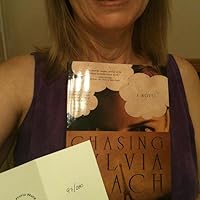
Lily Heller's affaire de coeur with Paris has existed almost as long as her love for books. Smitten with the city's literary Golden Age of the twenties, the young bookstore clerk from Denver dreams of a life like that of bold expatriate Sylvia Beach, who founded the famed Shakespeare and Company bookshop and became her own literary legend.
An impromptu trip to the City of Light carries Lily further than her imagination ever took her. Arriving unexpectedly in 1937 Paris-penniless, friendless, and clueless-Lily must rely on her wobbly French and her wits. But a mysterious invitation offers her entrée into the glittering inner circle of Sylvia Beach herself. This clue leads her further into the complex and dangerous Paris on the brink of war-and it's not the friendly literary community she had imagined.
Lily becomes a character inside the world that she had fantasized about-but with chilling consequences. In her quest to return home, Lily finds herself enmeshed in an undercover league of time-traveling bibliophiles.
Charged with a daunting task, along the way Lily falls for a gallant young Frenchman, discusses the art of writing with Ernest Hemingway and Gertrude Stein, and runs afoul of a dashing Nazi agent. In order to escape unscathed, Lily must make choices that force her to reconcile her past and that may revise literary history forever. A celebration of a timeless city's allure, an engaging romantic fantasy, and a valentine to book lovers in every era, Chasing Sylvia Beach is a novel to savor and be spellbound by.
Cynthia Morris is obsessed with books. She's either at the library, the local bookstore, or in reading position. If she's not reading, she's writing books and coaching others to write their world-changing books.
Cynthia is an illustrator and certified coach, and she can't stop making things. She’s published nine books, created and sold artwork, and leads transformational experiences for teams and creatives alike.
Her latest novel, Her Lisbon Colors, explores midlife reinvention in Portugal.
Through her company, Original Impulse, Cynthia helps people trust their creative instincts and bring their bold ideas to life.
She's the author of The Busy Woman's Guide to Writing a World-Changing Book, Create Your Writer’s Life: A Guide to Writing with Joy and Ease, Visit Paris Like An Artist, and the novels Her Lisbon Colors and Chasing Sylvia Beach.
Cynthia is grateful for Goodreads, a place where bookish people no longer feel alone with their books, but instead are connected via a fondness and commitment to the written word.
I wanted something light to read and found this novel lurking on my Kindle. When and why I downloaded it I no longer remember. However, it was probably because of the title and it's possible that I saw the paperback edition in Shakespeare and Company when I was in Paris a couple of years ago. Anyway, I'm a huge Sylvia Beach fan, so it's not surprising that the book attracted my attention.
I got what I wanted in terms of the book being a light read. However, otherwise it was a disappointment. One of the negative aspect os the novel is the fairly ordinary prose. Another is that it's a time travel story with no attempt to articulate even the vaguest theory of how the time travel bit of it works. The central character is on a plane in 2010, next thing she's in Paris in 1937. When later in the novel she asks another character how the time travel worked, the answer was something along the lines of "if I told you, I'd have to kill you". Or maybe it was "don't you worry your little head about that". Frankly, I don't remember. In any event, it was something annoyingly uninformative which suggested that the author's imagination didn't extend to working out the central premise of the work. Sure, I don't expect a time travel novel to be particularly believable because, well, time travel, but building a world in which such a thing can occur doesn't go astray. That was sadly lacking here. Yet another disappointment was the heroine. While I share her and her creator's love of Paris and Sylvia Beach, I found her both unsypathetic and one-dimensional. An unsypathetic heroine is not a deal breaker for me, but if I'm not going to like a character very much, I prefer a bit of complexity.
However, in spite of the negatives, I still read through to the end, albeit with a fair bit of eye-rolling. Why? I think it was largely because of Sylvia Beath and because of Paris. As I read, I could see the Shakespeare and Company shopfront at 12 rue de l'Odéon. I could see the the Théâtre de l'Odéon at the end of the street. I could see Sylvia Beach working on her accounts and worrying about her finances. I could follow the heroine as she crossed the Seine, as she walked up the Boulevard St Michel, as she met a friend at the Sorbonne, as she went to visit Gertrude Stein in her apartment at 27 rue de Fleurus.
Another positive aspect of the work is its connection to books. It was clearly written by someone who loves books, bookshops and those who work in them. That made me feel sympathetic towards the author, even if I don't much like her heroine. I also felt rather jealous of the author, given that she spent time going through Sylvia Beach's archives at Princeton. For a Sylvia Beach fan, that would be an amazing experience.
So overall, a disappointment although not a total washout. Only recommended to readers obsessed with Lost Generation and 1930s Paris and Sylvia Beach. Others can quite safely give it a miss.
But I've read books by friends that I don't enjoy. And I really enjoyed this! It was perfect to read on my summer vacation. I loved running in to all of the personalities and seeing them through Lily's eyes.
I have since shared the book with two other people who also really liked it. I can't wait to get it back so I can share it with more people.
The only bummer is that now I'm ready for the sequel. Waiting . . . waiting.
Loves this book!!! Five stars and a must read for anyone who loves paris!
Chasing Sylvia Beach by Cynthia Morris
From the Publisher...
Lily Heller’s affaire de coeur with Paris has existed almost as long as her love for books. Smitten with the city’s literary Golden Age of the twenties, the young bookstore clerk from Denver dreams of a life like that of bold expatriate Sylvia Beach, who founded the famed Shakespeare and Company bookshop and became her own literary legend. An impromptu trip to the City of Light carries Lily further than her imagination ever took her. Arriving unexpectedly in 1937 Paris—penniless, friendless, and clueless—Lily must rely on her wobbly French and her wits. But a mysterious invitation offers her entrée into the glittering inner circle of Sylvia Beach herself. This clue leads her further into the complex and dangerous Paris on the brink of war—and it’s not the friendly literary community she had imagined. Lily becomes a character inside the world that she had fantasized about—but with chilling consequences. In her quest to return home, Lily finds herself enmeshed in an undercover league of time-traveling bibliophiles. Charged with a daunting task, along the way Lily falls for a gallant young Frenchman, discusses the art of writing with Ernest Hemingway and Gertrude Stein, and runs afoul of a dashing Nazi agent. In order to escape unscathed, Lily must make choices that force her to reconcile her past and that may revise literary history forever. A celebration of a timeless city’s allure, an engaging romantic fantasy, and a valentine to book lovers in every era, Chasing Sylvia Beach is a novel to savor and be spellbound by.
From Me...
I really enjoyed this book!!! From the beginning to the end, it was great! If I could think of one criticism, it would be the ending, but at the same time...I don't know if it could have ended in any other way. Let's start at the beginning...
I actually made a note to mention this in my review, but the beginning of this book is genius. If you read the description, you know that the main character find herself in Paris in 1937. Cynthia Morris chose to write this in a great way. Instead of describing the time travel initially, the book starts with Lily waking up to find herself sitting in Sylvia Beach's bookstore. The reader gets thrown into this mystery right along witht he protagonist. In these types of situations, usually, the reader knows what has happened and how, which requires the reader to try and imagine how confused Lily must have been. Instead, Morris, puts us in the same disorienting position that her character is in. We don't even have our bearings in a story, and we have to try and figure out what happened to Lily and what she is going to do next. It's a really well written beginning...extremely clever.
The love interest in the book was written perfectly for me. The young Frenchman is all wide-eyed innocence and trust, while being dependable and helpful. He is cute and sweet without an being obnoxious, which can be a tricky character to write.
The famous characters are wonderfully imagined. Last year, I read The Paris Wife by Paula McLain. It was the first time that I read anything about Ernest Hemingway's personal life. This book and The Paris Wife described him in a very similar way. After reading both of these books, I am interested in reading another book about this time period in Paris. It sounds so wonderful.
This book also had a universally hated villain, the Nazis. It sounds odd, but the time period, the chracters and the tension surrounding pre-occupied France made for a great combination. These elements were woven together beautifully.
As I said before, the ending left me with mixed feelings, but I am not sure it could have ended in a way that left me totally satisfied. Sometimes that is a good thing, since sickly sweet endings that are tied in a pretty bow are mostly boring. Some conflicting emotions are good...I stay on my toes that way!
In conclusion, get this book as soon as you can. You will really like it, I promise.
Czuję, że na ocenie tej książki mógł odbić się mój ostatni nastrój i irytacja, ale jest tak, jak to określa skala gwiazdkowa Goodreads - było ok; jednak nic większego się we mnie nie wydarzyło i mam kilka zarzutów wobec tej powieści.
"Chasing Sylvia Beach" to książka o podróży w czasie. Główna bohaterka Lily, współczesna fanka Sylvii Beach, właścicielki biblioteki i księgarni "Shakespeare and Company" z pierwszej połowy XX wieku, zmierza na literackie wydarzenie w Paryżu, i nawet nie wie, w którym momencie, ale przenosi się w czasie i budzi się właśnie w tym kultowym miejscu w roku 1937 roku. Próbuje dowiedzieć się, jak się tam dostała, w jakim celu, czemu los wiąże ją z Sylvią i jej księgarnią, oraz odnajduje swojego "anioła stróża", pomagającego jej odnaleźć siebie w niby znajomym, ale tak innym mieście.
Może zacznę od tego, co powinno być chyba najbardziej interesujące w takiej powieści - portretów kultowych historycznych postaci i używania ich dla swoich własnych fikcyjnych opowieści. Potwierdziłam swoje obawy, że to nie jest coś całkowicie dla mnie, a raczej że bardzo trudno takie wątki poprowadzić dobrze, a jak pójdzie słabo, to rozczarowanie jest ogromne. Myślę, że głównym zagrożeniem w takich opowieściach jest to, że 1) nie przedstawimy przekonująco osobowości danej osoby, i dlatego wyjdzie mdło, 2) wejdziemy "z buta" w intymne życie tych osób i za bardzo zaczniemy się tym bawić. Powiem tak, postać Sylvii Beach w powieści Morris jest bardzo poruszająca, ale brak jej wyrazistości i jak na powieść, która ma jej nazwisko w tytule, ciągle się ją przyćmiewa. Ernest Hemingway jest całkiem przekonujący, ale, choć nie potrafię określić dokładnie, co to było, coś w jego postaci wydawało się nienaturalne; myślę, że Paula McLain lepiej sobie poradziła z nim w "The Paris Wife", a tej książki też nie jestem wielką fanką. Najciekawszy wydawał się Stephen Spender, chociaż też nie potrafię tego portretu profesjonalnie ocenić, bo dopiero niedawno spotkałam się z tym nazwiskiem (jednak już wiem, że był przyjacielem Ernesta, i bardzo mnie to zachęciło do sprawdzenia jego twórczości, prosty ze mnie człowiek), z tych wszystkich historycznych postaci zdobył moją największą sympatię i wyczuwałam w nim ogromny potencjał, do czasu, kiedy nagle zniknął z tej historii i już nie wspomniano o nim ani słowa. Jak na książkę z nazwiskiem Sylvii Beach w tytule, to zdecydowanie za mało w tej opowieści jest Jamesa Joyce'a i Adrienne Monnier; rozumiem, że w tym okresie oboje mieli trudną relację z Sylvią, ale chciałabym, by te tematy były głębiej poruszone. Irytuje mnie jeszcze jedna rzecz związana z Adrienne i Ernestem, ale to poruszę już dalej w recenzji.
Dobrze, a jak jest z główną bohaterką? Moim zdaniem słabo. Nie zdobyła mojej sympatii, nie wyczułam jej charyzmy, jej zachowania i postawy często wzbudzały we mnie irytację. Czasami wydawała mi się płytka, niedojrzała i papierowa. Najbardziej interesującą rzeczą dotyczącą głównej bohaterki była dla mnie jej relacja z matką, ale poprowadzenie tego wątku nie dało mi satysfakcji, a zbyt szybkie tempo zakończenia w ogóle mnie od tej historii odrzuciło (a miało być chyba w zamyśle autorki inaczej, no cóż). Poza tym irytowało mnie to, że z jednej strony Lily jest nam przedstawiana jako osoba z poważnymi zainteresowaniami literackimi, osoba, która się zna i kocha książki, encyklopedia wiedzy, która sypie nazwiskami autorów jak z rękawa, a z drugiej strony w praktyce nie wie aż tyle, wyraźnie stroni od pewnych książek (ach ten running joke, jak to niektóre książki to jakieś straszne cegły, a zwłaszcza ten "Ulisses" - jeden raz rzucić taki tekst byłoby zabawnie, ale to się powtarza i jest według mnie przesadzone), a, i jeszcze pod koniec wspomina, jak nowo poznany chłopak kiedyś zaczął jej opowiadać o swoim ulubionym pisarzu, i dobrze, że jej przyjaciel ją uratował, bo umarłaby z nudów. Co mogłoby być zrozumiałe, gdyby nie to, że Lily brzmi jak osoba, która sama by z taką pasją opowiadała, ja też jestem taką osobą, i nigdy bym drugiego człowieka takiego jak ja nie wyśmiała; coś jest tutaj wrednego i niemiłego. To też trochę... niesatysfakcjonujące słuchać o planach Lily, jak odmienić napotkane osoby (np. wyjaśnić Hemingwayowi, że nie może być takim kobieciarzem), kiedy... potem w ogóle nic nie robi w tym kierunku i kończy się na marzeniach przed samym spotkaniem swoich idoli xD Wiem, że też by mi odbiło w takich czasach i przy takich ludziach, ale to wszystko wydawało się takie głupiutkie i bezsensowne. Zdenerwowało mnie też bardzo negatywne nastawienie wobec Adrienne Monnier. Nie zdawałam sobie wcześniej sprawy, przez jakie problemy przechodził związek jej i Sylvii, i tak jak rozumiem negatywny osąd tej osoby przez główną bohaterkę, to biorąc pod uwagę, że to nie naturalna reakcja, ale emocje samej autorki, to mam wrażenie, że może to być posunięcie się za daleko w czyjeś intymne życie.
To co z tą podróżą w czasie? Widzicie, jestem nastawienia, że czasami historię jest w stanie uratować wprowadzenie jak największego dziwactwa; tak jak w dobrej opowieści taki nagły zwrot akcji, bo po co, to w kiepskiej historii może stać się dla czytelnika wątkiem, którego może się szybko uchwycić, wątkiem, który pomoże mu się zdystansować. I w "Chasing Sylvia Beach" wątki właśnie tak dziwne były cudownie abstrakcyjne i idealnie spełniły się w swojej funkcji. Ba, wolałabym, żeby autorka to na tym się skupiła, a nie na perypetiach księgarni, bo to jej lepiej wychodziło; tylko, że zakończenie było naprawdę zbyt szybkie i jakoś zrobiła się z tego gmatwanina, a poza tym Morris naprawdę unikała odpowiedzi na pytania czytelników.
No to jak ta końcówka? Za szybka, chaotyczna, bez większego uderzenia w emocje, i denerwują mnie niedokończone wątki, bo tak jak przepadam za otwartymi zakończenia, to tutaj takie posunięcie było dla mnie bez sensu. Mam poczucie, jakby autorka po prostu o tym zapomniała. I... według mnie zakończenie spłyca trochę postać Lily i to wszystko, do czego dążyła, i na co miała nadzieję. Nie rozumiem do końca jej decyzji.
Powieść Morris nie jest całkowicie zła, bywa całkiem przyjemna i była dla mnie spoko odskocznią od całego niepokoju, który we mnie ostatnio przebywa i nie robi sobie przerwy, ale robi wrażenie generated i sztucznej. Podejrzewam, że te wszystkie wskazane wady wygasłyby, gdyby autorka dała sobie więcej swobody twórczej i przede wszystkim posiedziała w tej historii dłużej. "Chasing Sylvia Beach" to też całkiem dobry wstęp do całej kultury lat 20. i 30., ale dla osoby, która ma już więcej doświadczenia w tym zakresie, jest to dość nudnawa pozycja.
PS. Miałam jeszcze dodać, że moją ulubioną rzeczą, jaka się wydarzyła w tej książce, jest zagubiona walizka Hemingwaya. Chef's kiss.
Cynthia Morris’ fast-paced, intriguing romantic fantasy, Chasing Sylvia Beach, transports us to 1937 Paris where a twenty-something protagonist Lily Heller travels back in time from her modern, directionless life as a bookstore clerk in Denver to prewar Paris where she finds herself seeking out her heroine, Sylvia Beach. Sylvia founded the Shakespeare and Company Bookshop. Lily has researched the life and times of Sylvia Beach in her current life. The time travel becomes a metaphor for connecting with her dreams and finding her own way. The author has done a masterful job of weaving in the flavor of prewar Paris-its people, the conditions in which they lived, the social mores of the times, the architecture of the buildings, the clothing, the complexity and danger of the impending Nazi invasion. The reader feels they are a part of another time and place and the author’s love of Paris is evident through the story. Meeting Ernest Hemingway, Gertrude Stein and James Joyce certainly add authenticity and richness to the experience. Romance, mystery, conflict and suspense are all interwoven in as Lily finds herself falling for a handsome Frenchman, discovers she is being followed by an undercover league of bibliophiles and becomes involved with a Nazi agent. She is forced to make choices that will reconcile her past and help her find her way. This novel is an engaging page-turner that entertains the reader with vivid imagery, escalating tension, fascinating characters and a satisfying ending with a twist. It is a story that will stay with you and make you want to read her next book.
I received this books from the author, Cynthia Morris, in a Goodreads giveaway. The premise, that of time travel into the past in order to positively influence history through the strategic and deliberate moving around of books, intrigued me, as did Sylvia Beach. I had not heard of Beach but learned that she was a real person who moved to Paris well before World War II and opened a bookstore there called Shakespeare and Company. Her store became the site of author readings by the likes of James Joyce and Ernest Hemingway, among others. She also offered help to other expatriates looking to establish themselves in Paris. Although I found the dialogue between characters stiff, at times, I was nevertheless compellled to keep reading, and not just to find out what happened. Morris provides fascinatingly detailed accounts of a farmer's market, a bicycle stand, and a ball given by the Nazis during the Exposition held in Paris in 1937, among other places and events. Morris deftly handled the terror, confusion and exhilaration of a person suddenly catapulted into another time, and skillfully handled this person's choice about whether to return to her previous life in Denver, CO in 2010 or remain time traveling in order to intervene in historical events surrounding key books. I recommend this book.
I waited in eager anticipation for this novel having followed Cynthia for years. As I began reading, I was engrossed from the very beginning. I didn't want Chasing Syliva Beach to end! In fact, for about a week I wouldn't pick up the book to finish the last two chapters because I knew I would be sad to say goodbye to all the wonderful characters in this fun and adventurous novel.
The details and descriptions are so well written that I felt like I was truly in Paris without leaving my Adirondack chair! And I adore that the novel was done as time travel, which fascinates me.
When I finally did pick up the book to finish it, I savored every last page. As I neared the end I was in tears at the surprise lesson about living a big or small life. They weren't tears of sadness but of profound joy for the immense lesson Cynthia reveals at the end which made her only more endearing to me.
Like many others I truly hope there is a sequel as I would surely be first in line to buy it! Everything Cynthia does is done with such authenticity and class that I will forever be a fan.
After devouring the book Chasing Sylvia Beach, I want more adventures of Lily Heller! As another reviewer stated, I can hardly wait for the sequel. Cynthia Morris' "baby" novel has done her proud. (Although at 300+ pages, it is no small baby.)
A very enjoyable book, this novel turned out quite differently than I expected. It started with some time travel, which is more fantasy than I ever read. Yet that element added to the intrigue of the book. Hemingway and Sylvia Beach were the only true characters in the book that I know of, yet all the other characters were so well written as to seem real as well. I previously have read about Sylvia Beach's bookstore in Paris, Shakespeare and Co. It was the only English language book store in Paris in the '20s and '30s, and became a gathering spot for Hemingway and James Joyce, among others. All this plays into the story written here, which I suspect most if not all readers will enjoy.
I was so happy to have held this book in my hands. I was even happier to read it! Lily Heller is a captivating character I cared about from the start. I enjoyed getting to know Sylvia Beach, Gertrude Stein, and the other famous and not-so-famous, while being transported by the mystery's fun twists and turns. I wish Lily well in all her adventures to come and thank Cynthia Morris for inviting this reader along! It was a perfect read for a Sunday afternoon.
At first I was slightly leery of another time travel book, but I enjoyed it thoroughly from the first page to the last. The saga of Lily Heller is rich and complex on many levels. The historical presentation of Paris during the Nazi occupation is gripping and completely believable. I'm so glad that Cynthia Morris took on this topic and I'm SO GLAD I read it.
At the beginning of this novel, the reader is thrust into Lily's life just as she has been transported back in time to Paris in the 1930s. She wakes to find herself in the renowned bookshop, Shakespeare Co., that is run by Lily's longtime idol, Sylvia Beach. For days Lily wanders the streets of Paris, trying to figure out why and how she has been transported back in time and waiting for a special event at Shakespeare & Co. for which she has found an invitation in her dress. While sorting out the mystery of her strange circumstances, Lily manages to find love, get a job, and entangle herself with a Nazi sympathizer.
This book has a very intriguing premise and I was excited that it seemed to be a "bookish" novel (I was thinking Potato Pie Society type historical fiction with a twist of fantasy). Almost immediately I found myself frustrated by the aimlessness of the initial chapters. Nothing much seemed to happen. I wondered if Morris was trying to create confusion in the reader to mirror the confusion that Lily felt being lost in time, but I mostly just felt frustrated at the lack of any kind of plot movement.
As I continued to read the book, I was struck by how awkward the writing was. Repeatedly, Lily "plunged" herself into her notebook to write, and maybe I don't fully understand the meaning of he word 'smirk', but it seemed that many characters were doing a lot of smirking when it didn't quite fit the situation. And, then, at one point on page 152, Lily's dad's girlfriend Monique just randomly disappears from the scene. (I reread it twice trying to figure out where she went.) Not only was the writing awkward but the story just seemed silly and I spent the time reading it feeling ready for it to be over.
A plot twist here with the introduction of time travel. What kept me interested in this little adventure were the snippets of Sylvia Beach and her Shakespeare and Company. Here's Sylvia when the exhilaration of opening Shakepeare and Company and publication of Ulysses have long passed, and Sylvia was no longer with Adrienne Monniere. She is a tad frayed, world-weary, worried with the advancing German troops but remained the formidable figure she was.
"In this short week, Lily had only begun to understand the real Sylvia. Still, she new more now than from her bookish pursuit. Lily knew that under Sylvia's tough demeanor was a beautiful, generous soul who gave more than she took. She knew that Sylvia's selflessness cost her more than she let on."
How I wish I could be like Lily and travel to 1937 Paris and work alongside Sylvia Beach. This was a fun read that takes place in a time frame and place I've grown to live, eager to know everything about
This book could have been really good. I felt like the author was trying too hard to show her familiarity with Paris (and even Denver). I also became annoyed with the protagonist.
Hasn’t every lover of books and lover of Paris said, “What I would give to spend time in Paris during the pre-World War II days when all those famous writers gathered at Shakespeare and Company bookshop?”
In Chasing Sylvia Beach, a 23-year-old book seller from Denver gets her chance to live that fantasy. Note: Cynthia Morris was once a bookseller in Denver who traveled to Paris many times, studied Sylvia Beach, but as far as we know, time-traveled only in her imagination. The novel follows Lily as she gets on a plane for Paris in 2010 and lands in Paris 1937. In the novel that ensues, Lily finally does interact with Sylvia Beach, Stephen Spender,Ernest Hemingway, and others. When she wrangles a job with Beach, Lily volunteers to go pry Hemingway out of a bar where he is hiding with a case of nerves over a reading arranged at the bookshop.
She’s a winsome heroine and we sympathize with her conflict over romance in the 30′s versus the guy left behind in the future; and we hold out breath as she dallies with a Nazi. There’s a lot to like in Chasing Sylvia Beach, despite my personal caveats , and some careless repetitions. (How many times do readers need to be told how boring Lily’s life was in Denver?)
This is a first novel for Morris, who coaches women to free their inner writing genius, and for the most part, it is a good first attempt, but I was hoping for more Sylvia and Hemingway and less Lily.
The above review contains parts of a review posted at A Traveler's Library. You can read the entire review here
I anticipated reading this book after reading Ernest Hemingway’s A Movable Feast. Of all the independent and chain bookstores that have thrived and fallen throughout the ages, it’s rare that the reputation of one continues for decades beyond its closing. As a result I was excited to read the book.
I’m not a science fiction/fantasy reader for the most part. Time travel doesn’t get me excited when I’m reading it, and I think it reflects a lack of writing skill on the part of the author. At some point the imagination has to be backed up with texture.
Also, listing a barrage of lies is a writing tool that’s more of an anti-tool. If an author implements lies as a way to explain the challenges of a character, the character is already lost in my mind. It takes will power for me to follow the journey of the story at the side of that character. I recognize that lies are needed so that the character doesn’t reveal her time travelling . . . but, that’s my point! There is enough of a story there without time travelling.
My last complaint is about the dialogue of the main character. The dialogue lacks personality equal to her predicament. It needs more thought.
What I like includes the writing about café au laits, and bread with butter and cheese. No matter what era I read about, some foods travel time without getting winded. The scenes with food made me rethink all of the media focused on good food versus bad food. It’s just that some simple meals are satisfying.
Also, the supporting characters who live in France aren’t stale. The time travelers are useless except to add oddness to an odd situation, but the characters living in 1937 seem to have enough story within them to complete a novel. The novel is a quick read, and flows for the most part. It only feels choppy when the main character speaks.
Would I read it again: No Would I recommend it: No Was prose elevated to poetry: No
I bought this book at the actual Shakespeare & Co. the last time I visited Paris. The premise was very appealing: a young woman falls asleep on a plane while traveling to Paris in 2010, but wakes up at Shakespeare & Co. in 1937! With no passport, money, or friends, she must use her wits to unravel the mystery of how & why this happened, and to somehow return to modern day life. Over the course of the story, she befriends Sylvia Beach, gets a job at Shakespeare & Co., and meets several literary legends of that era. It sounded like a perfect blend of "Midnight in Paris" and "A Moveable Feast".
Unfortunately, I didn't like it as much as I wanted to. The pacing was at times infuriatingly slow, and I found the protagonist to be self-centered, a little dumb, and not particularly likeable. (Also, her reaction to waking up in 1937 Paris felt really off to me. She didn't panic or freak out, and for some reason one of her main priorities was to buy a writing notebook.) That said, I did finish reading the book. The lovely descriptions of Paris (buildings, streets, cafes) were enough to keep me going and--admittedly--I wanted to know how it ended despite myself. (The ending? Meh.) And given what happened at the end, I suspect there will be at least one sequel, which I will pass on. I'd much rather re-read "A Moveable Feast".
Time travel to WWII era Paris – Shakespeare & Co was done well. I was worried that it would feel too fantasy-like but it wasn’t at all. The interaction with well known’s of the times within the bookshop was fun to read, but just as fun was the relationship development with Paul and Lily coming to find a place in the city during her “mission”. The most fascinating aspect (to me) was the idea of protecting rare and collected books and the history of where and who handles them throughout time. I feel the author missed a great opportunity by merely touching on this until the final chapters. The importance of the book wasn’t enough in this instance and it felt rather glossed over. It appears this may be an ongoing series so perhaps more development will go into that.
I liked it and I would certainly read future work by this writer. But overall I found the plot to meander a bit without enough believable conflict, too much coincidence and not enough character development. I don’t feel like I really got to know Lily well enough.
Hands down one of my favorite parts was when Lily went shopping for writing supplies.
I really wanted to like this book. I tried, desperately and to no avail, to like this book. It wasn't terrible it was just lacking something I cannot put my thumb on. I like books where I keep turning the pages because I HAVE to know what is next. This book made me feel as though I needed to turn to the next page in hopes that there would be more to the story on the next page. The main character, Lily, was simply uninspiring. She seemed a little vapid and very emotionless, maybe even callous, towards those in her life. She wasn't believable. The story had a good, solid base but I just could not get into it which was extra disappointing because Lily was a book lover and writer from Denver like me. I wanted to be like Lily but shortly into the book I was glad I wasn't.
This book made me want to read more about Sylvia Beach and her friends and acquaintances. I have recently become interested in this time period-probably because of all the mysteries I have been reading that take place around then and possibly because I missed the two World Wars in history class. Can't imagine what I was thinking about. Lily, the heroine has traveled back to 1930's Paris-she worries about the non interfering rules of time travel-she is very American and very now but somehow she gets along. I guess I would like to join the Athenaeum Neuf myself. I read this book in one day and wrote down several quotes and a list of books to read. Oh well, a rainy day in Kentucky.
This novel was a fun read. Take an interesting historical figure, a young girl, 1937 Paris , some time travel and a mystery and you have the basics of Morris's novel. I enjoyed the travel back in time to Paris before the war and meeting Sylvia Beach. She was quite a fascinating woman.
I have been following Cynthia through her blog for years and hearing about this novel in progress. it was a delight to finally be able to read it.
My intrigue over Sylvia beach and Shakespeare and company led me to this book. The local author (Denver) created a highly imaginative story time traveling rescuer of lost literature (think Hemingway's lost suitcase.) She even suggests that Hitler could've done even more damage if he had acquired a book on the dark arts which the time traveling woman saved from his possession. Although the writing was not the best, the subject matter and story line made up for it.
I hope to review this book soon in fuller detail, but for now, I have to say I really enjoyed the story of protagonist Lily Heller very much. The time-travel aspect of this book is a literary technique or device I like experiencing in a book, and this novel is no exception.
More soon, but this one is worth taking a look at!