W słynnej mgle San Francisco znowu dzieją się dziwne rzeczy. Wszystko wydaje się możliwe... Jest pewne, że życie ludzi na Ziemi zmieni się na zawsze. Nadejście punktu węzłowego intuicyjnie wyczuwa Colin Laney, na co dzień mieszkający w jednym z kartonów w Tokio, ale informacje dotyczące zmian zna też niejaki Harwood, który w nadchodzącym nowym porządku świata chce zajść jak najwyżej, nie zważając na konsekwencje swoich czynów. O co toczy się gra? Jaka jest jej stawka?
William Ford Gibson is an American-Canadian writer who has been called the father of the cyberpunk subgenre of science fiction, having coined the term cyberspace in 1982 and popularized it in his first novel, Neuromancer (1984), which has sold more than 6.5 million copies worldwide.
While his early writing took the form of short stories, Gibson has since written nine critically acclaimed novels (one in collaboration), contributed articles to several major publications, and has collaborated extensively with performance artists, filmmakers and musicians. His thought has been cited as an influence on science fiction authors, academia, cyberculture, and technology.
The thing to remember when beginning and reading a William Gibson novel is to stay with it to the end.
I’m a Gibson fan but even I know he can be difficult to follow, especially in the first few dozen pages, or the first third, or half …
Anyway, Gibson’s 1999 summation of his Bridge trilogy, begun in Virtual Light and (sort of) continuing in Idoru, finds him winding things up nicely on the bridge in San Francisco in an alternate future where much of society has broken down and changed into an anarcho-capitalistic world building reminiscent of Neal Stephenson’s Snow Crash.
Actually, the Bridge trilogy is more closely held together than either of the Sprawl or Blue Ant trilogies (which were more or less stand alone novels tied in with the same world building.)
Gibson’s great imagination and his succinctly descriptive writing is as good as ever.
Recommended (but for this one a reader will really want to read the first two books in the Bridge series first.)
*** 2026 reread -
Brilliant.
Full disclosure, I'm a Gibson fan. I could open any book to any page and start reading and love it. His writing is chef's kiss perfect.
Neil Stephensen published Snow Crash in 1992, and Gibson put out Virtual Light in 93, so no doubt they were picking up on the same vibes and this trilogy closing is delicious.
Filled with exceptional characters and world building this is a bright light on the Gibson landscape and a great book in its own right.
Best of the Bridge series for me. After Virtual Light Gibson's writing progressively shifted back along the spectrum towards the blues and ultraviolets I feel, almost synesthesia-like, associated with the cool detachment of his core style which I find irresistible, like catnip. Maybe this explains a few things about other areas of my life.
After a good, if a bit inconsequential start with Virtual Light, and a much more inconsequential, but promising, Idoru, the Bridge Trilogy finishes with All Tomorrow's Parties... and what seemed like it's going somewhere - and going somewhere big - failed to meet my expectations...
If somebody wants to see the worst things about Gibson's writing, this book is where to look for them. Tens of characters, many of them feeling like useless, pointless filler (Creedmore or Boomzilla, anyone?). Recurring characters which get almost nothing to do (Yamazaki, and, to a much greater degree, Maryalice). Confusing style which makes it very hard to understand what's going on (I actually managed to think that two characters were one... and then was very surprised when I saw them both in different places). An ending which feels very underwhelming and unsatysfying, not to mention unexplained. Seemingly important characters with convoluted motivations. Descriptions of cyberspace which give you no idea whatsoever of how its supposed to look like and work. All that, and more, in concentrated form, to be found in All Tomorrow's Parties. The good things also show, like the realized, interesting setting, interesting characters, and novel concepts, but they are overshadowed by all of Gibson's faults.
Really, for an ending of a trilogy of books, which consisted of one solo book and a follow-up which simply doesn't work very well on its own (Idoru), this is as underwhelming as it gets. At least in the Neuromancer trilogy the change made in the first book actually influences the world in an important way - and it's not even foreshadowed a lot. 3/4 of All Tomorrow's Parties is about how what's going to happen is going to CHANGE EVERYTHING. And when it does, all it amount to is a weird, almost comical event which sounds important, to be sure, but isn't built upon in the slightest and just doesn't live up to the hype.
If you'd like to read something by Gibson - reach for the Neuromancer trilogy first. The Bridge Trilogy as a whole gets a lukewarm 3/5 stars - and I won't deny that All Tomorrow's Parties was a primary reason for barring the Trilogy from reaching a higher rating. If it was different, the whole thing could leave the reader with a sense of Awe. But as it is, it's just another of Gibson's "great setting, interesting characters, lackluster plot" deals.
“All Tomorrow's Parties" is the third and final volume in William Gibson's “Bridge Trilogy".
It elaborates on the two worlds that were introduced to us in the earlier novels – one in Japan, and the other the world of the bridge in San Francisco.
There are far more characters in this novel, even if we’ve met them in one or other of the previous works. Gibson pursues each of them to the logical limit, once again in alternating narratives (though they're not limited to two).
Dick and Pynchon
Fontaine (a new but minor character) is a specialist dealer in second-hand goods who sells quality pistols (a measure of life and death) and watches (a measure of time). His store reminded me of the one in Philip K. Dick’s “The Man in the High Castle". The rest of the characters – Rydell, Laney, Chevette, Tessa – could have appeared in Thomas Pynchon's “Vineland".
Thin Wild Mercury Style
The pace of the novel mimics that of a crime novel. At times, I was tempted to describe Gibson's language in terms of a thin wild mercury style, especially when the focus was life on the bridge, and the holographic appearances of the idoru, Rei Toei.
I Adore U, Idoru
We learn more about the idoru, enough for Laney to fall in love with her, when she fails to marry Rez, the singer from the previous novel.
She is “gorgeous and quite literally glowing...an emergent system, a self being iterated from experiential input...who had been designed for Laney (and the world) to fall in love with. As the amplified reflection of desire, she was a team effort; to the extent that her designers had done their jobs properly, she was a waking dream, a love object sprung from an approximation of the global mass unconscious."
Emergent Systems of History, Data and Desire
Laney comes to realise that “history [wasn’t just a narrative...but] was plastic, was a matter of interpretation. The digital had not so much changed that, as made it too obvious to ignore. History was stored data, subject to manipulation and interpretation.” Laney has learned how to apprehend “nodal points, those emergent systems of history,” even if he can't share them with Rei Toei, because she can't see them.
Revolt into Style
These nodal points, like the bridge, have replaced “bohemias. Alternative subcultures. They [bohemias] were a crucial aspect of industrial civilisation in the two previous centuries. They were where industrial civilisations went to dream. A sort of unconscious R & D, exploring alternate societal strategies. Each one would have a dress code, characteristic forms of artistic expression, a substance or substances of choice, and a set of sexual values at odds with those of the culture at large.”
Perhaps, now, we are all emergent systems, selves being iterated from experiential input. Maybe, now, more than ever, each person's being is derived from their very existence and experience (even if it's located in one of the nodal points of cyberspace).
A fabulously satisfying end to Gibson's Bridge trilogy and of the four Gibson novels I've read to date, the most enjoyable to read.
I think I knew the moment we are introduced to the character of Silencio that between the publication of Virtual Light (a book I found difficult and stilted) and this third instalment William Gibson had stepped his game up to a new level, that the readability of Idoru wasn't just a fluke.
As I mentioned in my review of Virtual Light, Neal Stephenson's Snow Crash made it hard for anyone to seriously write something in this genre without accepting that it would pale in comparison but with this novel Gibson seems to have risen to the challenge of both Snow Crash and the release of the idea stealing, genre defining, Wachowski sibling created movie The Matrix.
The pace and tension are quite relentless, with the combination of short chapters alternating character perspectives and a prose that is often poetic AND grubby but specifically designed to be labelled as tense. I found it hard to stop reading this one as chapter after chapter flew past, the narrative and the characters being swept forward in a tide of pre-determined social change. The only character that seemingly knows what's happening is a half-crazed, half dead Laney (from Idoru) who has been hiding in a cardboard box city and who quite happily admits from the start that he doesn't know WHAT is going to happen only that SOMETHING will.
If you can accept this kind of storyline, that blends social commentary with near future science fiction, action, thrills, suspense then William Gibson is the man for you and the Bridge Trilogy as a whole may well be worth consideration for comparison to Snow Crash. (Yes I know it's one book versus three and yes really SNnow Crash still wins, but still you can't just keep reading Snow Crash forever.)
Gibson is just such a great writer. His imagery isn't distracting as one reads it, but has a way of transforming the most mundane things into the exotic and futuristic. His settings are often barely sci-fi - but the way he talks about them, they seem as if they are. Leads to philosophical musings about - it's all in how you look at the world.... 'All Tomorrow's Parties' is a sequel to Virtual Light and Idoru, but works as a stand-alone as well. Not much actually happens in the book. It's more about setting, characters, concepts. Ex-cop Rydell is now working as a security guard at a chain convenience store, when he gets an offer to do a mysterious 'job' for his friend Laney, which sends him to a squatter's community of The Bridge. Escaping an abusive ex-boyfriend, former bike messenger Chevette also returns to the Bridge, towed by a more bourgeoise friend, a film student bent on documenting the Bridge's "interstitial" community. Meanwhile, Laney, ill in a homeless man's cardboard box in Japan, remains online, perceiving, with the abilities given him by experimental drugs, the convergence of a nodal point, which could mean the end of the world. Of course, the AI 'idoru' Rei Tei, is involved as well...
The final book in Gibson's Bridge trilogy brings all the main characters together again in San Francisco. Another crazy but enjoyable read that I decided was a spoof on the Y2K thing we all worried about at the end of 1999.
Why do I read William Gibson? Because he seems to know stuff that is behind the news of the day.
This is the conclusion of The Bridge trilogy. Sort of. When I finished Gibson’s Sprawl trilogy I came away from it with the feeling that it was less of a trilogy and more of a loosely connected duology, followed by a third book that was just weirdly obsessed with explaining everything the previous two books purposely kept vague. There’s similar strangeness with The Bridge Trilogy. It feels like The Bridge is two books that are barely related to each other, and then you have All Tomorrow’s Parties, which is less of a conclusion to the overarching arc of the trilogy (not that there really is an overarching arc) and more like a sequel to two separate, unrelated books at the same time. Dunno if that distinction makes sense or not, but it sure stood out to me in a big way as I was reading this. This book just never cohered in to one unified whole for me, either narratively or thematically. I was always aware of the seams where it was all stitched together.
So there are two narrative threads running through this. The first is picking up from Virtual Light, with Rydell and Chevette returning from that book and hanging around The Bridge itself while a thriller plot percolates around them. The second is the continuation of the plot from Idoru as Laney spends way too much time on the internet, loses his mind and mumbles vaguely and cryptically about the end of the world. There’s a bit of crossover between the two plots (Laney gets Rydell’s storyline moving, and another spoilery character from Idoru hangs around with Rydell for about ten minutes towards the end of the book) but for the most part Laney feels like he’s hanging out in a different novel altogether, dealing with a completely different set of problems, and you get the feeling that Gibson could have just plugged Rydell and Chevette in to any sort of street level crime story and their sections would have read more or less the same.
I think the moments where All Tomorrow’s Parties succeeds is when it’s carrying on from Virtual Light. Rydell and Chevette are two of my favorite characters I’ve encountered in a Gibson novel so far, I was very glad to get more of them here. I love the two of them together, even if I don’t believe for a second that they’d actually stay with each other for more than about twenty minutes after the end of this novel.
This is also the side of the book where Gibson is doing his crime-stories-with-some-sci-fi thing and that’s mostly what I’m here for. The Bridge is an amazing setting for these kind of stories, as fun in its own way to hang around in as The Sprawl was.
That leaves the Idoru-related sections and those are when the book just straight up slams the brakes. There isn’t much to this stuff beyond Laney spiraling and having quasi-spiritual experiences while doing Google searches and parsing metadata. It’s as fun as it sounds.
This narrative split doesn’t help All Tomorrow’s Parties thematically either, and I think that’s probably the book’s big failing. I don’t really have anything to base this on beyond vibes, but I really did get the sense of genuine tension within this book anytime Gibson started talking about Big Ideas. There was for me a real sense of what Gibson wanted this book to be about, societal level paradigm shifts and the way emerging technologies will effect the way we perceive and anticipate them, and what the book is actually about, which is the commodification of counterculture. Much like the narrative of this book soars half the time and plods the rest of the time, the book’s themes feel much more vital when Gibson is portraying convenience stores and chain restaurants moving on to The Bridge then when he’s talking about nodal points.
So mixed feelings overall. I won’t go so far as to call this a bad book, as I really was having a blast with it for big stretches of it. But it’s very uneven, and uneven in enough different ways, that I feel pretty comfortable calling this the weakest Gibson novel I’ve read. Like I said up top, this thing just never came together in the way it needed to.
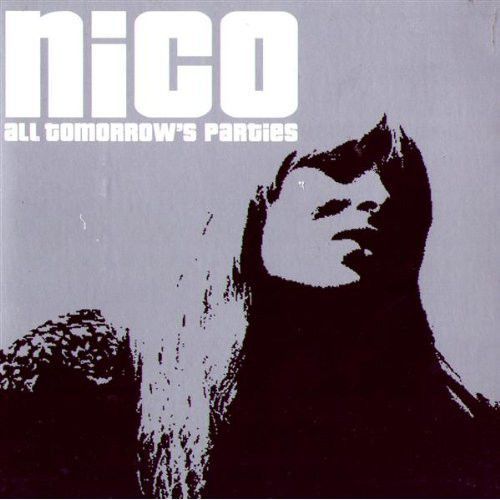
Titling your novel after a hip for a newfangled piece of future technology? That'll get the attention of the cool kids. Naming the second book in the trilogy with some funny sounding Japanese name will bring in the people who like exotic stuff or think its some weird ghost horror story. But naming your third book after a Velvet Underground song intoned by the never less than serious sounding Nico? Now we mean business.
As a writer, Gibson is often accused of crafting interesting settings and describing them with sharply polished prose but skimping a bit on details like plot (or how to make us care for what passes as a plot). Its something that bothered me years ago when I first read the trilogy that started with "Neuromancer" and while revisiting him with this "Bridge Trilogy" has rekindled how impressed I am with the style of his writing, his books are still like being immersed in a dense crowd at a club filled with garishly flashing lights and music so loud that only the bass is actually audible . . . afterwards once my hearing recovers I may be able to indicate that I had a great time but I'm not quite able to articulate exactly what it is I experienced.
Case in point: with much of this trilogy trying to write these reviews a week or so after finishing the books in questions I often had trouble remembering character motivations or even the finer details of the plot, let alone standout scenes. All I could recall were the basics, in "Virtual Light" the rent-a-cop and the bike messenger were being chased over a pair of funky glasses. In "Idoru", everyone wanted to reenact the end of "The Graduate" with a pop star and a friendly computer program (oh, and Tokyo is a strange place).
Here, it all comes together by bringing it back to the beginning, or at least the setting where it started, along with pretty much every character we've picked up along the way in a great big cyberpunk convention. Of course, since the book would be wrapped up in about fifty pages if everyone was in the same room from the get-go, we have to follow at least three plots in alternating fashion . . . one features our friend from the first novel Berry Rydell, who has quit yet another job and is now running errands for Colin Laney, who after his stint in Tokyo was so inspired by Japanese living arrangements that he now exists in a cardboard box, obsessed with a rich executive and convinced that the world is racing toward a nodal point to end all nodal points. Another has Berry's ex- and bike messenger to the star Chevette spending most of the novel escaping a different ex-boyfriend while traveling with a lady Ken Burns that wants to make documentaries about everything, including one about how to make documentaries. And our final plot features a mysterious assassin roaming around following the Tao, which apparently has found a new branch that accommodates hired killers doing what they do best, which is casually killing people. Oh, and there's a kid who doesn't talk that much and is also obsessed with watches, which since he resembles every single person who now stares at their phone or smartwatch constantly is probably the element of this story that looks the most like the future we live in now.
Also thrown in the mix is Rei Toei, the sentient computer system from the last book, now not so much in the man hunting business as the being on the front lines of the future transforming business.
If you think this will all converge somehow on the Oakland-Bay Bridge once again, then you've successfully noticed this is called "The Bridge Trilogy." If you think all these threads hold too much plot for a three hundred page novel, then you haven't read too much Gibson. While more plot oriented than the last two books, its still very episodic in feel, with all the other character wandering around as if waiting for each one to make the first move, all the while getting closer to each other. He's still at his peak for crafting a mood and setting, giving us a future where mobs and guns and computers and talking computers and pseudo-mystical assassins all seem to live comfortably together. In other hands this could be a teenage boy dictating you write a novel about the coolest things he can imagine but in Gibson's hands it becomes this almost sleek contraption, capable of taking us smoothly down whatever dark highway he conjures.
A lot of the local color comes from the supporting cast, whether its the people who call themselves "students of existential sociology" and take stream of consciousness notes with a straight face, kids named Boomzilla (his sections made me laugh, to be honest) or the band that Rydell hangs out with that sing some pretty serious country songs. All of this keeps you from fearing that for all the going that the book is doing, its not going anywhere climatic, especially after two books where climaxes were in short supply.
The drought continues here as well. We get more action sequences than we were treated to previously and some of the threads from the earlier books reveal themselves to have some kind of purpose (namely what was shown in the funny glasses and the existence of Rei Toei) but the main thrust is a series of episodic sequences that showcase everything good about Gibson without taking us anyplace really new. Its more a consolidation of his talents, with all the stuff you like and dislike about him still intact. Even the promise of stronger plotting gives way to elements that seem more like vehicles for Gibson's cultural fascinations and while he's good at conveying why he finds them interesting it winds up being a bunch of things happening without any strong emotional hook to draw you in. And while that's been a problem all along we come the closest to solving it here, with the philosophical differences between Laney and corporate CEO bad guy Harwood symbolizing a conflict that can't be immediately shot at or hacked into.
Of course, that's exactly how its resolved, with lots of shooting, explosions and stabbings to keep the audience interested while the actual resolution happens in the background yet again due to hackers coming out of left field and doing something nebulous that appears to solve or at least postpone the immediate concern. In the first two books it was forgivable because we still had books to go but to reach the end of this and still not be quite sure what it was all about or what the stakes were remains a little disappointing.
But I guess with Gibson its more about the journey than the destination, so to speak. He still remains one of the better SF authors to articulate what its like to live in the future and what the future should feel like and there is something about his claustrophobic computer-laced scenarios where the rich have all the cards and everyone else is keyed in without really understanding the situation or each other certainly has a familiar feel at times. But for all the brilliance of his prose and the sheer sensory texture of his settings there still seems to be a disconnect between what I experience and what I'm supposed to feel about it. Which feels like these days as well, at times, in a way that shouldn't make anyone feel optimistic.
My dad was able to get along with just about any kind of person on earth, constitutionally, and I think also because he got heavy into drugs in his youth and drugs are, like the old secretive underground gay culture, a levelling mechanism, the dealer's being a place where all the classes meet, like in the Velvet Underground's "Waiting for the Man". My dad knew this guy, another Freddie, as he was, Freddie Facious, something like that. Who knows how they met. I barely remember it, as it was long, long ago, but Freddie Facious, who was my dad's age, had I think two boys our age, and they lived in a house Freddie Facious had built himself out of junk in the woods. I remember the feeling of being inside it, the uneven floors, something like the Merzbau of Schwitters or that apartment for the elderly some artists designed to be treacherous and impossible to get used to, in order to keep the brain and muscles sharp and active in old age. And I remember thinking, how cool to make a house out of junk, and I remember feeling, at the same time, how cold it was in there, in Connecticut, and how uncomfortable I felt to be inside it.
I reread this book in the aftermath of the Oakland Ghost Ship fire, in which many friends of friends were lost. In that context, Gibson's ending seems overly optimistic, but perhaps that's the dark bitterness of 2016 talking. In the context of his work, this is a far less awkwardly happy ending than is often the case -- it feels organic and the right balance of satisfying and ambiguous. This helps, I think, to soften how hard this book hits whatever the self-satisfying equivalent of fanservice is: authorservice?
It's very very thick on the ground here. All the major male characters in the story, it seems to me, are versions of Gibson -- all characters are probably versions of the author, but it's spectacularly visible here. Rydell, the earnest Southerner, friendly, polite, and harmless; Fontaine, the humane and lightly amused collector of 20th Century objects, frequently brooding on history and place via those objects; Laney, the breathless tormented digester of torrential cascades of information, able to percieve change about to happen, but not predict or control it (like the Whether Man, in The Phantom Tollbooth -- "whether there will be weather, not what the weather will be".) Most nakedly aspirational, perhaps, of any character he's ever written, is Konrad, the Taoist assassin, so obviously Gibson's version of the anxious masculine longing he sees (and mocks) in knives, army surplus stores, military fetishism, etc, that he lampshades it, having Rydell literally weep with envy. Yet even this is outdone, perhaps, by the use of Gibson's own hobby, wristwatch collecting, become the obsession of his final doppelganger, Silencio, the autistic (or something) street kid whose imagist perception turns into recitation of watch-collecter-nerd jargon; totally gratuitous except in some high-school-English symbolism sense, watches : time : things changing!!!
Unusually for Gibson, the women are less developed and little more than fantasies. Rei Toei, of course, is nothing but; a hologram engineered, successfully, to reflect the desires of every man in her audience. But even Chevette has not much to do, and it's disappointing. Early in the book, Tessa makes explicit Gibson's idea of Chevette: "You know what I like about you? You aren't middle class. You just aren't." Yet returning to the Bridge, it doesn't seem that way at all. Chevette is distanced from it, never seems like she ever had been a part of it. Tessa, a sort of late-90s Slacker-descended media-obsessed hipster type, actually does a better job of "act like you've been here before" as the saying goes: she cheerfully hangs out in the Bridge environment without any actual feeling of slumming (despite Gibson trying by making her talk like she is, and having her filming everything with drones, a prescient note), making friends with randos wherever she goes and seeming completely comfortable; while Chevette, the supposed native street kid, hovers awkwardly, can't have a real conversation with her old friends, just wants to go home. She's bourgeoisified, like Pip in Great Expectations, and it doesn't make much sense to me.
But I think that perhaps speaks to my own anxieties and feelings of inadequacy. For me as for Gibson, the Bridge, like its inspiration the Walled City of Kowloon, is a dream, something beautiful, and nobody telling me how "there's nothing romantic" about this sort of anarchist squatter community can ever make me believe it in my heart -- and yet, we are living in the aftermath of just exactly that kind of community's inability to adequately self-regulate, which killed 36 people in a beautiful, romantic deathtrap. Gibson says he felt compelled to burn the Bridge because it was his "biggest Cornell box", a collage of all his favorite things, and it spooked him; the Ghost Ship too was a Cornell box people lived in, with no good exits and staircases made of pallets, and it didn't take obnoxious mercenaries with incendiary bombs to burn it down. We never learn the number of casualties on the Bridge, but we do see it is not totally destroyed, and the city cares, and has a plan in place, and gets there in time to put the fire out: overly optimistic, as I say, although perhaps Gibson couldn't have known that.
But the thing that really hurts, for me, is that I'm not like any of the characters in the book, except perhaps the new middle-class-ified Chevette. What makes me feel guilty about the Ghost Ship is not even that I romanticize that kind of illegal artist space, though that guilt certainly exists and is what separates me from Tessa, for example, who is gleefully unconscious of what might be problematic of her fetishism of the "interstitial". Rather, it's that, with my introversion, my awkwardness at parties, my need for my own room and a door I can close, to have my own books and music with me, and my (acquired somewhere, and hideously deepening seemingly no matter what I do) inability to get along with people, exactly the opposite of my dad -- when I did Food Not Bombs, back in Connecticut, I was shy around the bright young college kids and the earnest religious people and the homeless guy actively hated me for reasons I never understood -- I know I could never have lived there. I never even went, though I'd heard of it, though it seems like everyone I know in California knew someone who was in there, and though I am constantly longing for an artist scene to be a part of; I couldn't live there, and so I couldn't be there, to die with them. Only, like another slumming bourgeois tourist, to look at pictures and say, how beautiful it was, they were, and donate some money to the victims.
This entire review has been hidden because of spoilers.
This felt like the least convincing of the three, mostly because it is so frenetically paced and relies on the reader already being aware of the characters, that it attempts to be a much more plotty novel, when the other two aren’t like that pretty much whatsoever. But the real issue, for me, was that because of this change-up, each character didn’t feel very situated in the setting anymore, whereas that area was where they excelled in the previous books. So, basically it made the finale feel incongruous with the others.
That said, there’s fun to be had here. Though the characters aren’t that well developed, the people who read primarily for plot will finally be satiated. And thematically, the interplay between the books feels as taut as ever. Surprisingly optimistic even, in a kill your darlings kind-of-way.
Whenever I need a dose of the future past, I turn to William Gibson. I’m catching up. Soon I’ll be able to read The Peripheral. But first we need to return to Northern California, circa sometime in the near future that never was. All Tomorrow’s Parties definitely has a conclusive feel to it. The Bridge trilogy has always felt somewhat laid-back in its connections across books—characters in common, vague references to events, but each book has been very much its own story. This has a lot to do with the way Gibson creates his settings, and the way his characters interact with each other in his weird nearly–post-apocalyptic environments.
Gibson is famous for coining cyberspace and sparking the genre of novels that take place in entire digital realms. Yet I think what makes his stories so interesting is not solely his depiction of cyberspace. Rather, it’s the juxtaposition of cyberspace with real space that matters. The Bridge trilogy exemplifies this. We return to the Bridge in All Tomorrow’s Parties, and Gibson remarks on how its layout has influenced architecture, which in turn affects how Bridge denizens live and get around. Physical space, its layout and decoration and the ideas of ownership over it, is a huge factor in our lives.
In the earlier books, we had characters attempting to control physical space by engineering it with nanotechnology. Hackers of the Walled Garden created their cyberspace environment precisely because it was impractical and dangerous for them to communicate with each other in physical space. Now in this book, the very existence of the Bridge comes under threat, while we spend comparatively little time in virtual worlds. Gibson explores the tension between the real and unreal in subtle ways here, but it reminds me nevertheless of the ways in which some philosophers and sociologists have mused on the effects of the Internet on our society.
Amidst this meditation on space, Gibson gives us characters who are all isolated from the space of relationships. Rydell, now that he broke up with Chevette, has no one. His only “friend” is his coworker at the Lucky Dragon. Laney has withdrawn almost totally from society, literally living in a cardboard box in a subway station and peeing into a bottle (ewww). Chevette is running away from an abusive ex-boyfriend and an old life, running back towards the last place she had stable relationships, but connected to it all only by her friend, Tessa. And we have the mysterious hyper-capable assassin Konrad. These are people who are alone despite being next to each other in some cases.
I admit I found the vagueness of All Tomorrow’s Parties’ plot somewhat frustrating. Laney keeps insisting we’re approaching a “nodal point” similar to what happened in 1911. But of all the Gibson’s ways of talking about the future, this one was least impressive or evocative. I’m down with the idea that we could somehow enhance our ability to spot patterns in data flow and anticipate the way events will develop. But he doesn’t really develop that here in the same way he has explored other ideas.
Towards the end of the book we see hints of the bright and dismal nanotech future, thanks to the Lucky Dragon nanofax service. This is an entertainingly anachronistic use of future technology, but with the rise of 3D printing it no longer seems so silly. (Why buy a physical product online if there’s a 3D printer nearby that will print it on demand for you?) Once again Gibson demonstrates that even if a science-fiction author’s job isn’t to predict the future, it’s still mighty impressive when the dart lands in the general vicinity of the bulls-eye.
All Tomorrow’s Parties is a rich, meditative conclusion the Bridge trilogy. It’s one last shot to see some of those old characters again, and it’s another walk through Gibson’s fantastically fertile imagination. It didn’t grab me as one of his more impressive works, but it certainly has his characteristic originality mixed with a patient appreciation for characterization and setting.
This is 'Future Noir'. That's what he does. Seems like he invented it. A crashing good read, but I came out wondering what happened.
Nice short chapters read as prose poems. Good book for waiting. For anything.
Leading the chapters with pronouns, without reference, keeps me puzzling for a while - "who's he talking about?" - sometimes I figure it out; sometimes I don't.
Colorful, greasy, mechy-techy, always a lower class view of world changing, and unclear, events. Cultural textures are true and bright and consistent, no matter whether they refer to past (our present) or future (their present).
"And looking backward is very nearly as much fun as looking forward, though our digital soup does thin out rather rapidly, that way down the timeline." (Harwood, p 304)
Great Dismal did not "envision the internet", any more than Al Gore, but he certainly did envision virtual reality, as 'cyberspace'. That vision keeps developing inside his books and out. It was Dante that envisioned the internet, or maybe Wikipedia, in the 15th century. What did Harwood make of that?
I hadn't read any of William Gibson's works for many years, so it was a pleasure to find that All Tomorrow's Parties gave me the same sense of delight that Neuromancer did. Gibson understands the world-changing impact of digital media and creates a series of delightful riffs on the subject. A number of characters are in play, from Tokyo to the Bay Bridge ghetto in San Francisco. One of the nodal points of history is about to happen involving Rei Toei, the Japanese Idoru, a digital being who is about to play a direct role in history. Good stuff!
I love William Gibson’s work, and I love the characters in this novel, but this one kind of fell flat for me. It lacked that usual William Gibson magic for some reason. There were glimmers of the oomf you usually get, but that was about it. I can only recommend this to people who’ve read the first two novels in his Bridge trilogy - and I recommend it being read relatively soon after reading Idoru. This was a rare miss from Gibson.
«Все вечеринки завтрашнего дня» — это ответ на ваш вопрос, если вы удивлялись тому, какая связь между «Виртуальные очками» и «Идору». В этом романе встречаются и очки, и уникальный «живой» мост, и виртуальный идол из Японии, и старые знакомые компьютерные гении.
Сюжет романа развивается по классике — разные дороги многочисленных героев вдруг начнут витиевато переплетаться, в голове читателя начинает потихоньку формироваться общая картина. Правда, мне кажется, что в книге все больше сконцентрировано на быте героев, на антураже, на кипящей жизни на улице и в домах. Потому что даже после половины прочитанного мне было сложно понять, о чем эта книга в плане истории. Та самая цифровая певичка из второй книги была похищена, как я понял. Она очень интересно объясняет свою позицию бывшему копу, в чьи руки она и попала, какие проблемы в отношениях могут возникнуть у живого человека и компьютерной программы. И оказывается, что почти все герои «Вечеринок» — это пешки, нейтральные люди, которые попали не в то место и не в то время. А теперь им приходится бежать и искать укрытия от непонятных людей. И пока я понятия не имею, что на самом деле происходит, и какие якудза за всем этим стоят, в моей голове при прочтении рисуются яркие и необычные виды киберпанкового будущего, в лучших традициях Уильяма Гибсона.
И да, концовка заставила мой рот открыться от удивления. Ох уж это одновременное дефилирование знойной красотки-азиатки в разных частях мира...
Gibson's deliberately cool, crisp writing--it conjures using an intense _specificity_ and delectable word choice--conflicts with the frequently grubby and detritus-laden settings of his stories.
This is the end of something. The "interstitial" society of the Bridge is becoming contaminated by the larger culture, in the form of tourists and commercial/media observation and outside investment and involvement. The counterculture is becoming the culture and being absorbed or at least encroached upon and monetized.
It felt like a heist or caper, at least at the start, but the slow impression is that the caper aspects are not built around a plan or plot of human invention. The characters are reacting to emergent or nonhuman behavior they don't understand, and the results are intensely disorienting. This is a theme taken up with the later Blue Ant series: a person (a villain?) who does not as much _cause_ or _do_ a thing as take advantage of a thing already in progress. Which is somehow even more horrid.
While the final book didn't hold it's end up well it was at least more cohesive with the first book than the second one was. Gibson continues to flesh out the anarchical society that has developed on the now damaged and abandoned bridge. Which makes for the best part of the book as he seems to have let his characters fall to the wayside.
I'm really wondering what happened to Chevette and Rydell as they now seem more like caricatures. All their self possession and ability to use decisive action seem to be missing. Laney makes only brief appearances that are as ethereal as Rei Toi herself. As for the villains, the word cardboard comes to mind.
However I am still in awe of Gibson's imagination and wordsmithing. Every location is lovingly crafted and described. It's just too bad that it didn't extend to the people that populate this world.
Der Super-Hacker Laney (dem Leser eventuell bekannt aus "Idoru") ist ein Kistenmann geworden, er haust in einem U-Bahnschacht von Tokio (oder ist es eine andere Stadt?). Doch auch dort ist er online, eingeklinkt in die schier uferlosen Datenströme dieser Zukunftswelt. Und Infolge einer Behandlung mit einer Droge kann er sie auch lesen und erkennt, dass sich in der nächsten Zeit die Welt schlagartig ändern wird, und der Ausgangspunkt ist die Golden Gate Bridge in San Francisco. Deshalb schickt er den Ex-Polizisten und jetzigen Ladenwachmann Barry Rydell auf eine Erkundung zur Brücke. Rydells Ex-Freundin Chevette, die auf der Flucht vor ihrem letzten Freund ist, begibt sich mit ihrer Freundin, einer Medienwissenschaftsstudentin, auch dorthin, um eine Dokumentation zu drehen. Die Golden Gate Bridge kann wegen eines schweren Erdbebens nicht mehr als Verkehrsweg genutzt werden, dafür haben sich Menschen, entwurzelte und Randgruppen verschiedenster Art auf ihr niedergelassen. Hier handeln, verkaufen, bewirten, fabrizieren sie, die Brücke ist ihr Lebensraum. Eine fast schon autonome Zone ist so entstanden, ein Multikultigewühl von erstaunlicher Stabilität. Der Leser lernt noch einige weitere Figuren kennen, die auf der Brücke leben, darunter der seltsam autistische Silencio (von dem man nicht so recht weiß, wie alt er eigentlich ist), der aber über ein fast fotographisches Gedächtnis verfügt. Er begegnet dem datenschattenlosen Mann, einem Killer, von dessen Bedeutung für die Veränderung Laney überzeugt ist. Hinzu kommt noch der drogensüchtige Musiker Buell Creedmore. Einen Gegenspieler gibt es natürlich auch, es ist der mächtige und sehr reiche Stadtplaner und Unternehmer Harwood. Viele Charaktere setzt Gibson in Bewegung und sie sind trotz seines lakonischen Schreibweise sehr genau gezeichnet. Aber nicht nur Casey, sondern auch Harwood weiß von dem Knotenpunkt, und da er auch in der Zukunft mitmischen will, ist er zu diesem Zeitpunkt präsent - als Drahtzieher von skrupellosen Söldnern, aber im Hintergrund als Anteilinhaber auch bei der Einführung eines auf Nanotechnologie beruhenden Materiefax-Systems. Die Handlung wird konsequent dem Spannungshöhepunkt zugeführt, ja, sie wird fast atemlos vorangetrieben. Und in diesem dramatischen Finale passiert wirklich sehr viel, so dass der Leser auf seine Kosten kommt. Man wird nicht so recht schlau dabei, wie die alte Welt endet und wie die neue aussieht erfährt man nicht. Casey deutet an, dass alles mit einem kleinen Ereignis anfangen kann. Es gilt einfach nur den Knotenpunkt zu besetzen, um Einfluss auf die Veränderung zu nehmen. Lediglich das Schlusskapitel deutet eine neue Welt an, in der alte Qualitäten mit modernster Technik bewahrt werden. Das Gefühl beschleicht einem, dass es Gibson selbst ist, der die Figuren einfach noch einmal zusammenführen wollte, um die locker geknüpfte Trilogie, bestehend aus „Virtuelles Licht“, „Idoru“ und „Futurematic“ zu einem Abschluss zu bringen. Gibson liebt es die Dinge genau zu beschreiben. Er ist sehr präzise, so dass man einen lebhaften Eindruck von dieser Zukunftswelt gewinnt. Das kann manchmal auch zu weit gehen. Seine Romane sind bunte Oberflächen, hinter denen alles oder aber auch nichts stecken kann. Jedenfalls ist das dahinter unzugänglich, die Fäden, an denen diese Welt hängt, verlieren sich in den Datenströmen. Das trifft die Weltwahrnehmung vieler heutiger Menschen. Gibson ist reifer geworden, aber seine Schreibweise hat sich nicht wesentlich geändert. Man muss sich darauf einlassen können. Wenn man das schafft, liest man den Roman mit großem Gewinn.
Къберпънк-приключението, наречено "Трилогия за моста" свършва тук. Завръзката се случва, когато Колин Лейниж забелязва нодална точка, която ще промени света. Тя ще се случи точно на Моста в Сан Франциско, откъдето започва самата трилогия. Той ще помоли Бери Райдел за помощ, а последният както винаги, ще се окаже замесен в игра с доста по-големи залози от тези, които харесва. Няма да издавам от сюжета, но ще споделя, че разкритието на това, което ще промени света, беше леко разочароващо. Очаквах нещо по-уау. Иначе, тук Гибсън се е развихрил и кратките глави се водят от гледната точка на цели осем персонажа: - Колин Лейни (Лани в родния превод), който от кашон в токийското метро ще се опитва да е кукловод. - Шевет Уошингтън - познатата от "Виртуална светлина" вече бивш куриер, която ще се завърне в родния мост, преследвана и опитваща се да открие нов смисъл. - Бери Райдел - бившето ченге и вече бивш на Шевет, който приема доброто предложение на Колин Лейни да отиде на Моста и да се опита да попречи на нодалната точка да се случи. - Шиния Ямазаки, който е уж е социален антрополог, но освен да изследва и наблюдава, в общия случай и участва. - Конрад - безмилостен и много умел убиец, който ще преживее няколко катарзиса. - Силенсио - дете, което открива манията си по часовниците и се оказва, че има необичайната дарба да ги открива независимо колко добре са скрити. В този роман, това е по-важно отколкото би предположил човек. - Фонтейн - часовникарят на моста ще се сдобие с калфа, че и повече. - Буумзила, през чийто очи ще видим ситуацията и промените в нея през странични очи. Мега-добро използване на персонаж, който да е перфекто завоалиран инфо-дъмп и помощна ръка в определни етапи на сюжета.
В заключение, трябва да се спомене роднотно фенско издание и превод, които станаха причината да прочета най-сетне трилогията. Преводът е много добър - Гибсън не е никак лесен за превод и Александър Перошанов се е справил повече от добре, започвайки още от заглавието - "Всяко възможно утре". Книгата е направена така, сякаш е част от "Кристална библиотека "Фантастика"" от едно време и е много добре направена като дизайн. Може би илюстрацията на корицата можеше да е една идея повече по темата, но това по никакъв начин не нарушава традицията в предишните две части.
"All Tomorrow's Parties" is an exciting, tightly written, and interstitial conclusion to Gibson's Bridge series. Similar to the other books in the series, Gibson jumps between the perspectives of multiple characters facing potentially a world-changing event. The narrative unfolds within the confines of the a DIY patchwork city built on a San Francisco bridge.
The story is wrote in exactly the same way that the bridge is conceptualized within the book -- as a patchwork of disconnected nodal points of information, pieced together to form a dynamic, mechanical, living whole. The reader moves through these narrative nodal points as they come closer and closer together, until they nearly crash the whole system.
Gibson packs the heat here. The characters truly appear to be living in Gibson's world. And most of them, are returning characters. I am so happy Gibson decided to bring some many characters back, while also introducing a few very mysterious characters. This brings the reader a good familiarity, while also keeping them guessing. A great balance.
Gibson's writing here is also really amazing. The pacing is fast -- I would consider it a "page-turner" -- while also having many amazing philosophical reflections from the perspectives of the characters. It is a very interesting read throughout, and goes absolute bonkers towards the end. Gibson's writing feels like you are watching a movie, its a trip.
This entire review has been hidden because of spoilers.
Gibson has done intensity before, but never on this catastrophic scale, absolutely earth shattering, mind bending, nail biting stuff, of his three trilogies I've thus far encountered (last being yet unfinished) this is the one to beat in one opinion. Usually the author alternates between two prevailing viewpoints, great excitement and fun to find him here masterfully balancing considerably more perspectives with the coordination of an orchestra conductor. Also the first instance he really portrayed an intensely chilling character, downright iconic and unforgettable, making for an exciting blend of genres somewhere between Thomas Harris or Dean Koontz in the context of Infinite Jest plotlines. Stuck the landing weaving all the stories and most of the characters together, the only thing I was saddened by was a lack of resolution or loose end for one supporting character (unless I missed some subtle telegraphing or alluding which is very possible) whose conclusion in the previous installment was among the most heartbreaking moments in all of the writer's work to date? Would love to see a future novel or short story fleshing out the before or after of that background narrative someday!
As a conclusion to Gibson’s Bridge Trilogy this was a disappointment. Virtual Light was OK and better than I remember. Idoru was markedly better than I recalled and stands up well to a contemporary reread. All Tomorrow’s Parties falls just a little flat in comparison.
This is Gibson tying up his loose ends and plot points. We have a cast of characters returning from the previous two books in the series, and as usual there’s a MacGuffin involved. Here Gibson engages with nanotech and 3d printing (although in a now hilariously dated way - he uses a nanotech fax machine as the core technology). It all just feels a little lacklustre though, a bit William Gibson by numbers.
On his day there’s no-one to touch Gibson, but this sadly feels like a low point in his writing.
"The beggar has wrapped his legs and feet in brown paper tape, and the effect is startling medieval, as though someone has partially sculpted a knight from office materials. The trim calves, the tapered toes, an elegance calling out for ribbons. Above the tape, the man is a blur, a spastic scribble, his being abraded by concrete and misfortune."
"She is a voice, a face, familiar to millions. She is a sea of code, the ultimate expression of entertainment software. Her audience knows that she does not walk among them; that she is media, purely."
"She hated being around people when they were on it, because it made them selfish, too pleased with themselves, and nervous; suspicious, too prone to make things up in their heads, imagining everyone out to get them, everyone lying, everyone talking behind their back."
I had a crazy experience with his book: I started it three times and gave up before really getting into it the fourth time. That's partially an index of how Gibson's stories take a while to get going, and partially credit to his imagination, which requires you to quickly wrap your mind around a lot of things going on in a book like this.
So the book is really strong: very readable, very interesting, lots of compelling, unique characters who act very different from each other. And by the end, there are even quotations it's easy to remember, and places you feel like you've been, and people you feel like you know.
The funny thing is, without spoiling anything, I'm not sure I actually understand the meta-story that was going on, and I'm not sure everything pays off. It's fun that things aren't really explained, and that sort of makes the world richer, but still, it's fascinating to have enjoyed a book and not be sure that you understand it very much.
Well this is the first William Gibson book I’ve ever read and I’ve got to say I loved it. I really like the style of writing and the way in which the story took place. Gotta love me a good realistic dystopia! I’ll definitely be looking out for more William Gibson books in future I don’t know how it took me all this time to find him!
I enjoyed reading this but unsure about any purpose or point. The whole thing seemed to hint at other things that might have been more interesting. Not even sure this could have made a 5 page comic strip for 2000AD.