What do you think?
Rate this book

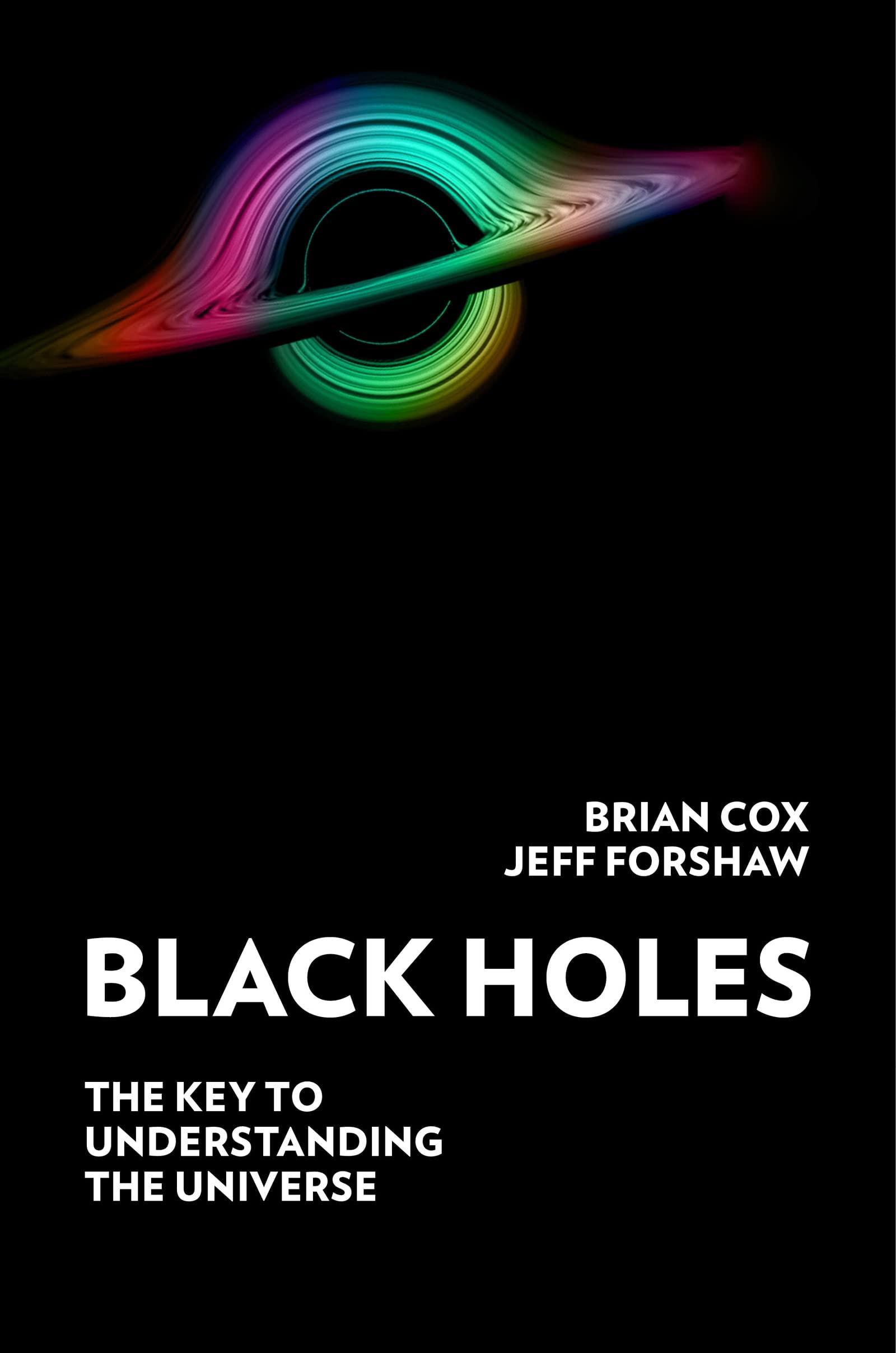
560 pages, Hardcover
First published October 5, 2022


‘At the heart of the Milky Way, there is a distortion in the fabric of the Universe caused by something 4 million times more massive than our Sun. Space and time are so warped in its vicinity that light rays are trapped if they venture closer than 12 million kilometres. The region of no return is bounded by an event horizon, so named because the Universe outside is forever isolated from anything that happens within. Or so we used to think when the name was coined. We have named it Sagittarius A* and it is a supermassive black hole.’
‘In the film Interstellar, Matthew McConaughey dives into a black hole called Gargantua and emerges inside a multi-dimensional reconstruction of his daughter’s bookshelves. That’s not what happens in Nature. But what is the fate of an astronaut who decides to embark on a voyage beyond the horizon into the interior of a black hole? We are now equipped to answer that question for black holes that do not spin, according to general relativity…For our purposes, we are going to recruit three more astronauts to join Red and Blue from the previous chapter in their exploration of the supermassive black hole in M87.’
‘But in science, unlike modern-day politics, principles matter. If Hawking was right, black holes would render the Universe fundamentally unpredictable and the foundations of physics would crumble. We now know that Stephen Hawking was wrong – information is not destroyed and physics is safe – as Hawking himself came to accept with delight, not regret, not least because the ongoing programme of research stimulated by his original claim continues to propel us towards a new understanding of space and time and the nature of physical reality.’//
‘Today, the study of black holes appears to be edging us in a new direction, towards a language more often used by quantum computer scientists. The language of information. Space and time may be emergent entities that do not exist in the deepest description of Nature. Instead, they are synthesised out of entangled quantum bits of information in a way that resembles a cleverly constructed computer code. If the Universe is designed, it seems, the designer is a programmer. But we must take care…we are in danger of over-reaching. The role of information science in describing black holes may be pointing us towards a novel description of Nature, but this does not imply we were programmed. Rather we might conclude that the language of computing is well suited to describing the algorithmic unfolding of the cosmos. Put in these terms, there is no greater or lesser mystery here than Wigner’s miracle of the appropriateness of the language of mathematics for the formulation of the laws of physics. Information processing – the churning of bits from input to output – is not a construction of computer science, it is a feature of our Universe. Rather than spacetime-as-a-quantum-computer-code pointing to a programmer, we might instead take the view that earth-bound computer scientists have discovered tricks that Nature has already exploited. Viewed in this way, black holes are cosmic Rosetta Stones, allowing us to translate our observations into a new language that affords us a glimpse of the profoundest reason and most radiant beauty.’//
‘This is the ultimate vindication of research for research’s sake: two of the biggest problems in science and technology have turned out to be intimately related. The challenge of building a quantum computer is very similar to the challenge of writing down the correct theory of quantum gravity. This is one reason why it is vital that we continue to support the most esoteric scientific endeavours. Nobody could have predicted such a link.
‘Be clearly aware of the stars and the infinity on high. Then life seems almost enchanted after all’, wrote Vincent van Gogh. The study of black holes has attracted many of the greatest physicists of the last 100 years because physics is the search for both understanding and enchantment. That the quest to understand the infinities in the sky has led inexorably to the discovery of a holographic universe enchanting in its strangeness and logical beauty serves to underline Van Gogh’s insight. Perhaps it is inevitable that human beings will encounter enchantment when they commit to exploring the sublime. But it’s bloody useful too.’