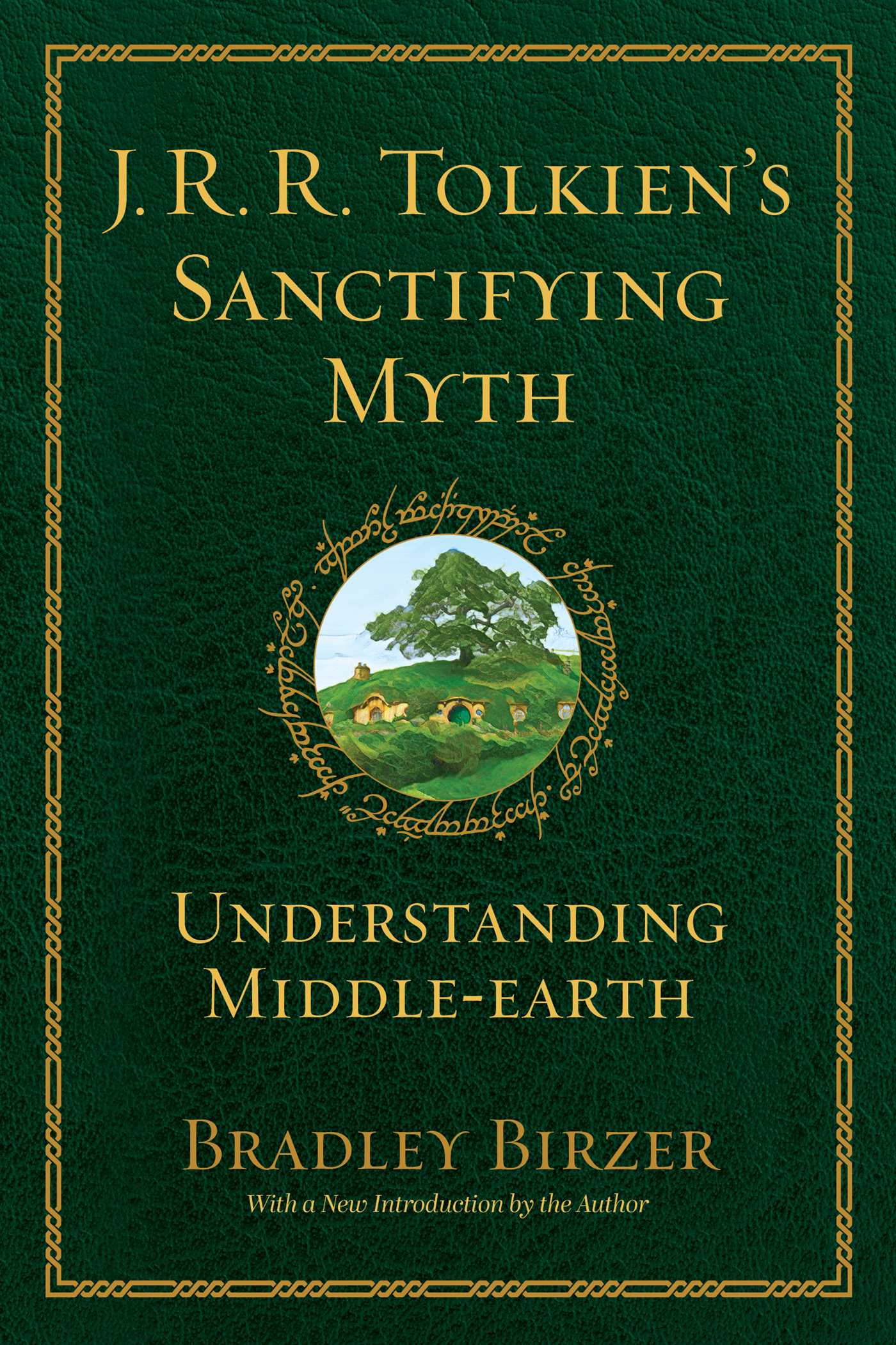
Summarizes much of Tolkien's themes and legacy while cutting through assumptions and erroneous thinking that Tolkien himself attempted to dissuade. Also offered some insight onto Tolkien's life, relationships, and how he managed his fame after the Hobbit and LOTR were published.
tolkien believed that myth can teach men and women to be fully and truly men and women, not mere cogs in the vast machine of modern technological society.
for tolkien, even pagan myths attempted to express God's greater truths. True myth has the power to revive us, to serve as a way of bringing to conscious experience ancietn experiences with transcendence...myth could be perilous if it remained pagan...one must sanctify it...make it Christian and put it in God's service .this anamnesis is a way for peole to recall encounters with transcendence that had helped to order their souls and their society...it could offer a "sudden glimpse of truth", a brief view of heaven. At the very least, sanctified myth revealed the life humans were meant to have prior to the fall.
tolkien gave us a glimpse of the truth, beauty, and excellence that lies beyond and behind our tangible world. That glimpse, which leads to real joy, tolkien labeled the euchatrastrophe. In fantasy, one gains a "fleeting glimpse of Joy, Joy beyond the walls of the world...the ultimate fairy story, or true myth then is the incarnation, crucifixion, and resurrection of Christ...the heart of Christianity is a myth which is also a fact
tolkien wrote a piece in morgoth's ring to exlpain the reason for evil and the fall...men are both flesh and spirit but they often remember one at the exclusion of another...Illuvatar gave this restlessness to men so they would desire a return to their true home, heaven. Melkor precipitated the restlessness, lying that death was punishment, not a gift. men believed melkor, and they grew to resent illuvatar...evil labous with vast power and perpetual success--in vain: preparing always only the soil for unexpected good to sprout in.
tolkien explains that god allowed the fall so that he could manifest his own sovereignty over Satan all the more, of Christ's incarnation, the spread of his light from one person to another, and the final consummation at Christ's return
frodo thinks that to be a true here he must sacrifice himself-but when he is still alive after the ring is destroyed he is stunned. he failed to realize his task was over. The divine economy is limited to what is sufficient for the accomplishment of the task appointed to one instrument in a pattern of circumstances and other instruments. to claim more, would be to claim the sole right of Jesus Christ, as the savior of mankind. Mercy belongs to God
tolkien hoped his myth would serve as an anamnesis, a return to right reason. he viewed this world and its history as irredemable through sheer human will or reason...in the end, though, evil will fail to corrupt the good, which to tolkien meant those saved and sanctified through Christ...this does not mean one should despair and abandon the world to the enemy or isolate oneself. on the contrary, one of the most important themes in tolkien is heroism as a result of grace. through his mystery, majesty, and grace, god allows evil to happen to that the good may do good.
frodos journey as the suffering servant-only at the last moments does the weight of the ring-symbolizing the weight of sin and temptation-become too great. even at the cracks of doom he has merely played out God's role for him. Carrying the cross changes him permanently
on religion in tolkien: the religious element is absorbed into the story and the symbolism...one may find God in the plot itself. elements of true Christian herorism are represented by the 4 major characters: gandalf, the prophet; Aragorn, the kind; frodo, the priest; Same, the common man and servant...Middle earth is saved through the priestly self-sacrifice of the hobbit Frodo, thru wisdom and guidance of Gandalf and masery of Aragorn, heir of kinds. Also forces beyond these. As eash agent responds to his calling he grows in power and grace. each becomes increasingly christian...tolkien's myth echoes christian teaching in that once one accepts one's specific calling or vocation and employes one's gifts for the good of the body of Christ, the journey of sanctification begins.
the desctruction of the ring represents the victory of "christ's army" allowing persons like Sam to lead the peaceful lives they were meant to lead, and to thus freely enjoy the gifts that God gave them and intended them to use
Eternity beckons sam. he too will one day depart from the Grey Havens to the Blessed Realm and experiences, like Frodo, a purgatorial rest. But until then, Sam will enjoy his family and his garden
like a true prophet, Gandalf, the servant of the Flame Imperishable, inspires men to use their gifts for the greater good of society, to live up to the best of the past, and to transmit this tradition to future generations
in essence, the king and the prophet do what is demanded of them by providence. they willingly place themselves and their forces in a position that may prove their undoing and their death. as true servants of Illuvatar, they are willing to sacrifice themselves for the opportunity to serve the greater good.
"it is in making the good interesting that the inklings may have made their greatest contribution"
if we are profoundly moved by tolkien what are we to do? we as human persons are to sanctify our own gifts by putting them to the service of the betterment of ourselves, our community, our society, the Church, and the world...All we have to decide is what to do with the time that is given us.
tolkien wanted to teach his readers that God's grace, like faerie is everywhere. but we must be open to it, willing to accept it as freely given gift and realize, as Frodo did not when he desired martydrom at the cracks of mount doom, that we are given just enough to achieve our given task, an no more. tolkien's myth calls us to embrace that sanctity of each human person and our obligation to act as faithful stewards of creation. we are also called, like beowulf or aragon, to fight for the protection of the good and the oppressed, even to the point of self-sacrifice.
" i do so clearly believe that no half-heartedness and no worldly fear must turn us aside from following the light unflinchingly."