Real-world writing advice, minus all the lectures. You're an aspiring writer. Maybe you've just discovered your love of words and dream of being a novelist someday. Maybe you've been filling notebooks with science-fiction stories since middle school. Maybe you're contemplating a liberal arts degree, but you don't know what the heck you're going to do with it. The last thing you need is another preachy writing manual telling you how you should write. This book isn't a writing manual. It is a series of candid and irreverent essays on the writing life, from a writer who's lived it. Kerri Majors shares stories from her own life that offer insights on the realities all writers developing a writing voice, finding a real job (and yes, you do need to find one), taking criticism, getting published, and dealing with rejection. Don't have enough time to write? Learn how to plan your days to fit it all in. Not sure how your guilty pleasures and bad habits translate into literature? Kerri explains how soap operas and eavesdropping can actually help your writing. Need a reader for your first novel? Find a writing buddy or a writing group that will support you. Nervous about submitting your first piece? Learn from Kerri's own roller coaster journey to find an agent and get published. This Is Not a Writing Manual is the writing memoir for young writers who want to use their talents in the real world. ATTENTION TEACHERS! The Teacher's Edition for This Is Not a Writing Manual is now available! This FREE supplemental PDF includes a series of lesson plans and writing class essentials that will improve the writing of students in middle and high school--and beyond. To access, e-mail us at writersdigest@fwmedia.com to receive your free download, or visit Kerri Majors's website.
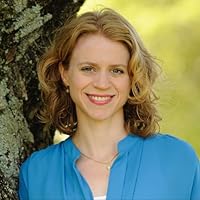
Formally: I'm the author of This is Not a Writing Manual; Notes for the Young Writer in the Real World (Writer's Digest Books, available Summer 2013). I'm also the Editor and Founder of YARN, an award-winning literary journal of short-form YA.
Informally: I'm a recovering book snob who used to think only classics and contemporary literary fiction were worth reading. I've learned my lesson. Now I read everything, from Virginia Woolf and A. S. Byatt, to E.L. James to E. Lockhart to A. S. I think aspiring writers rock, and die-hard readers rock harder. Let's keep books (paper or digital) in print!! My favorite YARN project is the BFSRE--I hope you'll contribute, and I'll see you there, and here in the Goodreads discussion pages.
I was looking for something to read in the YA section, but I wasn’t in the mood for paranormals or romances. The title and the wide-open mouth on the cover enticed me to take a closer look. Normally, I don’t read books about writing. Other than keeping a meticulous journal during my childhood and teen years, I have never done any serious writing other than what was required of me for school or work.
Writing requires time, effort, self-discipline, patience, and a thick skin. Since I’m the greatest procrastinator around and don’t deal too well with rejection, I’m not convinced that being a writer is the best use of my time. But I do love words, and I love that other people have the ability to string them together in meaningful ways that make my heart sing. Reading books makes me happy, and any book that helps young, aspiring writers gain confidence is very important.
Even though it was on the YA shelf, there are plenty of useful tips that could benefit writers of all ages. Look elsewhere if you want to learn the mechanics of writing. Kerri Majors uses personal anecdotes and solid advice to show the reader how to attain the creative life. I loved this book’s conversational tone and enjoyed reading about the author’s journey to publication.
Read this book and be the best writer you could possibly be! The world needs more writers so I can have more books to read.
I'm walking around Barnes and Noble, tall pumpkin spice soy latte in hand, the weight of the journal in my purse weighing down my arm. You see, I'm actually at that point in my writing career where I feel like a real writer. I'm not published and I don't have an agent, but I get up everyday with writing on my mind. I go to bed every night with thoughts of my work in progress in the forefront of my mind. Every night I go to sleep hoping that I will dream something that will work for this character or a plot twist that will liven up my scenes. Writing is really on my mind all the time.
So, back to the story. I'm wandering around Barnes and Noble, trying to decide what I want to purchase with my book allowance that week. I've been struggling with some parts of writing, so I go to the writing section. I sit my bag down, grab several books on writing off the shelf, and sit in the middle of the aisle to flip through the pages of books with titles that promise to help me sell my novel.
But that's not what I'm looking for. Do I want to eventually sell my novel? Duh. Don't ask me stupid questions like that. Of course I want to sell my novel, but it's so much more than that. I want to be a writer. I want to eat, sleep, and breath writing and the writing life. When I saw This Is Not a Writing Manual by Kerri Majors, I'm not going to lie, the first thing that attracted me was the cover. It's kind of creepy, but I love it. The second thing was the title. Finally, something that just wrote about writing, not how to get published or how to sell. I wanted -needed- a book to tell me that all writers go through the same struggles. This book is exactly what I needed.
In the introduction, Majors states that the book "is not a manual, textbook, guidebook, or handbook..." Good, because I definitely wasn't looking for any of those things. She goes on to say that she likes to think of the book as "therapy for writers." Yes. I had found exactly what I was looking for.
The book is broken into three parts: The Writing Process, The Writing Life, and Looking Ahead: Supporting Yourself, Getting Published, and Not Getting Published. Awesome, I thought. Those are all important topics to me. Throughout the book, she outlines things that worked for her and things that didn't work for her. The prose is conversational. I felt like the entire time I was reading, I was listening to Majors talk to me about the craft and life of a writer. I felt like she and I could be sitting in my favorite coffee shop sharing stories and me, being the obvious fan girl that I am, taking in all of her advice like it was a life saving medicine.
Here is a list of quality pieces of advice that I got from this wonderful, amazing, enlightening novel:
1. Protect your writing time (10)
2. Read, and don't feel guilty about it (15)
3. It's totally legit to eavesdrop (16)
4. Be brave, and leave the ego elsewhere (54)
5. Writing is difficult, and it should be (98)
6. And the last tidbit I'm sharing here (I'm not telling you all the good stuff, you really have to read it all!) is this: "If you're writing just to get published, you won't be writing for ver long, and you almost certainly won't get published. You have to write for pleasure." (145).
Now, I must tell you, this isn't a comprehensive list. I enjoyed reading this novel so much that at the end of each chapter I found myself writing my own thoughts about what she had said and how it had affected me.
So, needless to say, I really loved this book. I loved it so much that I'm trying to miraculously find enough money to purchase a copy for all of my learners who participate in Writer's Block Writing Club. I want them to read this at the age that I wish I could have read it. I loved it so much I went to the author's website and left her a comment!
So, if you are writerly, go buy this book! You won't regret it!
To say that this book is "fantastic" and that it should be compulsory reading for all aspiring writers would not be doing this book justice. The author, Kerri Majors, although she has published this book, and several short stories, essays, and other publications as well as holding an MFA in Creative Writing and starting up the publication YARN, is, like so many of us, waiting for the book deal for her fiction to come through. Of course, it helps that she has an agent who believes in her and is working hard to make that happen, but regardless of that, she has suffered and survived the trials and tribulations we all have.
The funny thing is that I asked myself whether I would have liked to have a book like this when I was in high school and had just started writing, but the more I thought about it the more I realized that right now is the time that makes the most sense for me to have read this book because I am in a position where I am open to listening and to learning whereas before, when I was younger, I may not have been as receptive to the helpful and necessary messages contained within this book.
In a sea of writing manuals and prescriptive "how to" guides that promise to improve x y and z for writers of all stripes, some of which are, of course, wonderful resources, it's so necessary to have a book like this on one's shelf no matter what age a writer is. It's not about "do this" or "do these exercises" or "do this homework" or anything of that nature. It's an examination of a writer's life and some of the valuable lessons she has learned along the way delivered in an honest, sincere, and well put-together volume. She also discusses the ever-important topics of what holds writers back, how we can sometimes be our own worst enemy, those two well-worn companions--jealousy and envy, hatred and angst aimed at others, self-loathing, etc. Although some of the chapters have been rewritten from pieces that have appeared online and elsewhere previously, where she acknowledges them, every chapter has something new and insightful to offer readers. It's also practical advice--you won't find any airy fairy, "head up in the clouds" type of advice. And unfortunately, some of the advice we get from others particularly when we're younger does apply, and it turns out they're right on a few counts, but I think a lot of writers will feel all the better for having read this book.
This is the kind of no-nonsense, non-pandering, non-head-patting book about the writer's life that I have been waiting to read for a long time.
I wanted to love this, I really did. I heard so many great things about this, that it was so inspiring to writers. But, I felt as though I was just reading Kerri's biography. I get it, it's NOT a writing manual, but it's supposed to help writers see what's out there in the world of writing. And she showed her experiences, and only HER experiences and some of these "tips" are very basic and common writing tips that I find on Pinterest! Some of the stuff she wrote about I actually did find helpful and interesting, but for 70% of the book, I was bored.
I found it very helpful for living as a writer. As Kerri Major states, it is not a book about writing, though there are tips for being a better writer. It's filled with suggestions and things I want to try with my own writing at the first chance.
I'm probably a little older than the target audience of this book (having graduated college, worked a couple jobs, and started contributing to a 401k), but I did find it incredibly valuable as a high-level overview of the writing life. Kerri is upbeat and engaging throughout, adding (necessary!) levity to chapters with less pleasant/happy subjects, and I found the whole book to be very hopeful while still being realistic. Very much "writing life is hard, but life is hard period, and it's still possible and achievable and fulfilling and even FUN during the struggle." I would have liked to see a little more content dedicated to writing communities, writing classes, and writing workshops, particularly geared toward transitioning beyond the school environment. Even with a target audience of high school and college students, I think giving a bit of insight into adult writing communities and how to maintain such groups would have been helpful and worthwhile.
This book is FANTASTIC! There's so much good information in here for young aspiring writers. Turns out I was doing a lot of things wrong while submitting short stories. I never would have known otherwise—but I read this book.
This book also made me feel better about not having a big fancy writing career. Truth is, that rarely happens and just because it hasn't happened doesn't mean you're a bad writer. Kerri is basically the writing BFF I've been looking for for ages and I wish I could be real-life BFFs with her.
As the title says, this is not a how-to manual that shows you how to write well or get published. But it is really helpful to a struggling writer if for nothing else than to see that someone else is going through the same things that you are. It is mostly a memoir, but you can learn from the author's experiences.
The title tells you right up front. This is not a writing manual. I thought it was just a catchy title but it's more of a documentary of the authors writing life with a small amount of helpful info thrown in. It wasn't quite what I was looking for.
I was not familiar with Kerri Majors or YARN, but having been given This Is Not a Writing Manual by a trusted friend and colleague, and seeing it was published by Writer's Digest, I was optimistic about giving it a try. I'm happy I did. As an older, yet still unpublished, writer, much of the content resonates with the me of today as it would have with the younger me. In the Introduction Kerri describes the words of wisdom she was given which brought back the vivid recollection of proudly showing a family member my award letter for having won that year's creative non-fiction contest and being told, “Well, THAT and $5 will get you to the end of the drive-way.” She goes on to share her BIG dreams of her younger years, despite the depressing outlook provided by those around her. I knew, at that point, I wasn't putting this “not a writing manual” down. I knew immediately that Kerri Majors and I were of one soul and had traversed similar paths. This Is Not a Writing Manual covers all aspects of writing from the importance of writing every day and how procrastination prevails despite our best attempts at focusing during our writing time to doubting every word we put on the page and constant revision, thus the reason we call writing a process. It discusses taking risks and embracing the fears, working through our doubts, and allowing ourselves to make mistakes because not all mistakes are bad. Kerri professes from the very beginning that she is not going to lecture; that this is not a manual, textbook, or guidebook. It is simply a book showing those with writing dreams and aspirations what the journey looks like. She covers the emotional aspects as well as the technical side of writing. She goes through the steps of submitting pieces that don't require an agent, onto finding an agent and the steps gone through from agent to publication. Kerri is honest in her evaluation of the process and gives an objective overview of the industry. She also provides an excellent Appendix and Bibliography full of information to help you continue the writing adventure, if you so choose. She provides a vast array of related fields that might be better suited to your talents as well. When I have finished a book, no matter the topic or genre, fiction or non-fiction, I like to feel I have gained something. This Is Not a Writing Manual by Kerri Majors has made me feel that the years I have pursued my passion have not been in vain. Although she declares it is not meant to be a handbook, it will be added to my reference shelf and I daresay, I will be using it more than once for guidance in the future. It may be geared toward the young adult writer, but it is ageless.
So normally I never review books, I just read and go. But this book... the minute I opened this book, I knew I just had to review it. To put it simply, it felt like a more contemporary version of On Writing, except Stephen King is a middle-aged female author writing to teenagers, not the entire world.
But on a more personal note, it felt like I was sitting across from my "big sis", and she--who is not a writer like me--was giving me advice. (I may or may not have hid the book under the table during class and read when I was supposed to be paying attention.)
Kerri, it felt like this book was written to me and only me. I don't know how you did it, but you did. Thank you for being so personal with us--I know how much courage it takes to do so.
This book is a must-read if you are a young writer like me. My copy is colored yellow and blue with all the note-taking and highlighting I did. I'm tempted to reread it, having just finished it, but there are many more books to be read. I'm glad I had the pleasure of reading this one. I will definitely be recommending this to every young writer I know. Not only is it full of writing lessons, but it is full of life lessons.
After reading The Paris Bookseller. I saw this earlier book by Kerri Maher (then Kerri Majors) and the title was so intriguing, I decided to read it and was glad I did. Tailored towards the young writer getting started this is also a book that any writer could learn something from. The author throughout the book gives advice on how to get started, how to network, find an agent and/or editor, etc... She is also the founder of YARN an award winning literary journal for young writers.
What I particularly found interesting is the book was written before she achieved the success she now has as a historical fiction writer. In a lot of chapters she shares a lot of herself, speaking to how hard it is to get published and seeing other writers successes. She is not afraid to bear her soul in chapters like Those who cant do teach, Hating your bestfriend, Hating Yourself. Dealing with subjects like envy, jealousy and Schadenfreude. I found some of her thoughts and definitions just so spot on and helpful in how to deal with these feelings.
I feel this book opens up a lot of doors for aspiring writers and lets them know that they are not alone in their struggles and successes.
DNF somewhere before 8/07/2019. I tried. I loved the cover and I wanted to love the insides as well.
I can't do it.
The author gives really good advice if you're willing to read through her arrogance and drawn-out sequences of how great she is at writing, but it's the same advice you'll find elsewhere.
Fantastic waste of time and reader-patience, and I'll defend this statement to anyone who questions it, but in the interest of time, pick up a more helpful book like Stephen King's "On Writing" or Chuck Wendig's "The Kick-Ass Writer." These are way more user-friendly, have good resources and better stories for the advice they're trying to drive home.
I wanted to love this, I really did. I heard so many great things about this, that it was so inspiring to writers. But, I felt as though I was just reading Kerri's biography. I get it, it's NOT a writing manual, but it's supposed to help writers see what's out there in the world of writing. And she showed her experiences, and only HER experiences and some of these "tips" are very basic and common writing tips that I find on Pinterest! Some of the stuff she wrote about I actually did find helpful and interesting, but for 70% of the book, I was bored.
I'm not really the young writer this is aimed at but but boy could I relate. My story is similar to Kerri's. Writing is in me and I've known it my whole life. It's both my greatest love and struggle! Everything in this book is true to the writing life. No matter where you are on your journey you'll find something of value here. Even if it's just taking comfort in the fact you're not alone.
This is a collection of anecdotes about the author's personal writing journey, along with some inspiration for all struggling writers. It could have been written as a blog. I appreciated the encouragement in this book, but I also found it somewhat hollow because the author is not yet herself a published fiction author. A such, the lack of expertise/ credibility sinks the book.
Writing a book about the writing life seems like a strange thing to do when one hasn't been published. Doesn't seem too useful.
While I related to what she had to say, I don't think I benefitted or realized anything whilst reading this. There was nothing here I didn't already know or have figured out for myself.
Not entirely captivating, but I read the whole thing other than the first 6 chapters of Part 3. I read the book because the cover art is stellar and the title struck as funny. I already committed to reading it before I realized how much it was geared towards teens. Maybe a good read for teens.
4.5 Stars. Though this book is geared towards younger writers, it features lots of useful advice for all age groups and skill levels. A fun read too, not overly dry or academic.
Due to NaNoWriMo, the NLB's eBooks program was recommending me a bunch of writing books. It took me some time after Nano, but I decided to take a look at their selection. I've heard of this book before (I think), so I decided to give it a go. After all, I'm still on my NaNoWriMo high.
This is Not a Writing Manual is catered towards young writers (for some reason, I think young female writers instead of people like my brother. I don't know why, it's just a feeling I got), and it's divided into three parts:
Part 1: The writing process. This was pretty interesting, and since it covers things like drafting, feedback (how to take feedback), revision, what you can learn from soap operas, and much more. I really like the advice of leaving your ego at the door. This was probably the most useful section to me.
Part 2: The Writing Life. Here, she talks about workshops, writing groups, and classes. She strongly strongly recommends writing classes. Sadly, I don't think there is a writing class in my uni. I do agree with the writing circles thing though, she praises Figment, and I'd like to add in WriteOn as a way to get good feedback (My review of Figment vs WriteOn vs Wattpad here).
Part 3: Looking ahead - Supporting yourself, Getting Published and not Getting Published. This part... I didn't like so much. Perhaps it's because we got off on the wrong foot, when she started by debating whether writing was a hobby or a job. I agree it can be a job (there are plenty of self-publishing authors who make a full-time living at this). But she calls her writing "work" but her friend Phils attempts at triatholons and photography a "hobby". But wait, Julia Child's writing is a job. And her conclusion is "writing is not a hobby because it's too much work." Uh well, yes, it is work, but it's also fun. Every hobby is going to involve work (except perhaps doing TV drama marathons. Although I suppose the work needed to get back to normal will be tremendous). So yes, I disagree with her here - I think writing can be a hobby or a job, depending on what you want.
The second thing is about self-publishing. She talks about it briefly, basically saying that it's a lot more work than traditional publishing, but you know, it's gaining respectability. So far so good, but then she says "You will also have to swallow Amazon's (or Barnes and Noble's, or Apple's) standard profit-sharing rate for e-publishing." Because my latest reading-up topic is self-publishing (one of the not-so-weird topics, I used to google the weirdest stuff), I really wish she actually gave figures. For Amazon, it's 35% or 70%. That's still more than traditional publishing, where it's between 8%-15% based on type of paper book and volume, and 25% of ebooks. (And don't forget, agents get 15% of your cut) So even the highest tradpub royalty rate is lower than Amazon's lowest rate. When you think about it this way, paying Amazon 30% to sell your books is really cheap.
Woah, that deviated quickly. Ok, back to topic - The craft section of this book will be inspiring to a young author. Part 2 may or may not be helpful depending on where you live, but Part 3 is meh. I would say this is for the author-to-be's, those that need a dose of encouragement.
One day, I was browsing my town's library page for any news about anything interesting going on in the book world, events happening at the library, new books, etc. I stumbled across a notice that said that Kerri Majors was going to be at the library that day to speak about her book, This Is Not A Writing Manual. I had never heard of her or her book, so after a ten minute quick research of her on the internet, I grabbed my notebook, library card, told my mom I was going to something that'll make me a better writer, and left to jog to the library. Now, at the library, Ms.Majors gave a wonderfully entertaining little talk about her book, and it was then that I realized that I forgot to bring something- money. She was selling her book there, and was signing them. After hearing her talk, I was really bummed about not being able to buy one with her signature in it. When question time was over, and she finished signing books, I gathered my courage and went to talk to her. I shyly introduced myself, and with shaking hands, told her I want to be an author one day. I remember how she smiled at me kindly, and told me to keep on doing my thing, and someday I'll reach my goal. I left the library that day with an intense desire to read her book and new hope that maybe, just maybe, I can be like her in the future.
This Is Not a Writing Manual went on my long list of books I need to read. Months passed. I asked my parents if they could buy the book for me and they said: "yeah, sure." Nothing happened. Months passed.
THEN finally my birthday came and my parents asked me what I wanted. Of course, the only answer was: Books. (I mean, what else could I possibly want?) I had already bought or read a lot of the books on that long, never-ending list, so This Is Not a Writing Manual had become the first one on that list! (Yay!) They bought it, I got it, my parents were happy that I only ever want books for my birthday or christmas, and yeah. I read it.
I don't know why it took me so long to actually get to the reviewing part but here it is:
I truly enjoyed reading this book! Writing and becoming a published author was just sort of an unclear, foggy dream up until I finished this book. To be honest, I sort of got a little scared after reading this, because now the dream is so real, and no longer a dream but a goal. A goal that seems impossible now, but a goal that I've never wanted to reach for so much in my life. The narrator's tone is light, fun, and easy to go along with. You have to be prepared for the harsh realities that are weaved in this book, but they're worth more facing now than later.
I recommend this book to anyone who has even had the slightest thought of becoming an author in the future!
Majors does a lot of great things in this book. She gives lots of ideas for careers and just general ways to immerse yourself in writing that will help better your skills as a writer, while maintaining a thick skin. I found myself highlighting a lot of info that will be helpful as I continue to write in my spare time.....
However, there were two big critiques I had with this book. The first is that I feel the overall book was geared a little too young. I'm only 26, still pretty young, but even I felt the suggestions were too kiddish. I don't feel like a lot of 16 year olds, even ones who are aspiring writers, would go out and look for these books to purchase. I as hoping this was more geared to the twenty something individual who is trying to struggle and follow their dreams as a writer. My second biggest complaint was how she tells people to be teachers because If you have to work for a paycheque while you pump out your next big novel, teaching will give you lots of time off to do it.
Seriously!? I teach at a public school grades 3-8 and let me tell you, reading this book and finding the time to do the review took months! Do not urge any young people into the profession of teaching for the time off (which is really when you have to mark, lesson plan and make sure you're matching curriculum standards) and keep pumping out the illusion that teachers have it easy. That's why we have an influx of people fighting for jobs who are not in it for the right reasons. Man, after that rant I got all peeved again and took my rating from 4 stars to 3, not cool Ms. Majors! Not cool.