An engaging narrative that describes the important contributions of geology to our understanding of climate change. What emerges is a much more complex and nuanced picture than is usually presented. For more information - and a book club guide - go to www.climatewholestory.com
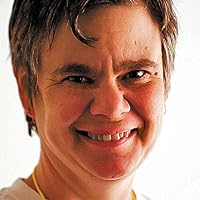
Dr. E. Kirsten Peters is a scientist with interests in everyday aspects of energy, cars, light-bulbs and other consumer products, and the broad intersection of science and engineering with our lives. Dr. Peters, a native of the rural Northwest, was educated in geology at Princeton and Harvard.
When I started reading the book, I thought I knew some things about climate change and global warming. I read the IPCC reports (AR5), talked about it, supervised theses, wrote book chapters on the health effects, :-).
Then I read this book.
The world view changed.
The mesh of climate change, that change is the only constant, and that climate change will happen irrespective of humans and human causation, yet there is a role of anthropogenic effects, fossil fuels, carbon emission -- all of it, that there is a history to it all, the meshwork of history, geography, geology, chemistry, climate science is weft so beautifully in this book, and in such a gripping and lucid way, I have to say that this should be a book that everyone should read.
What did I specifically like about this book?
The style, above all. Climate change from the perspective of a scholar is not easy to explain for everyone in the world (assuming nothing), yet maintain a gripping storyline as you if you are telling a detective story. This is the strength of this book. The style is so attractive that in the words of a popular newspaper advertisement in India, the book is "unputdownable". Second, the scholarly, balanced views looking at everyone's perspective, impassively. Third, the debates and vignettes of history that challenges and informs me, the reader and invites me to connect. I think this is a unique piece of work. Third, a great annotated bibliography with web links. Incredible rich resource.
Overall, this is the best book on environmental science and climate that I have read so far. I did not find any shortcoming in the book at all, and the storytelling is so good that you will easily finish it, or keep going back to it time and again once you have started reading it.
If you are a beginner in climate change world, start with this book before you read anything else. Just too good a book.
This is a remarkable book with lucid, approachable geological science. It's written in a way that shows the author's passion for geology and for teaching. She also folds in memorable vignettes about the lives of figures whose discoveries paved the way to what we know now about climate science. This is a very, very good read, and equally thought-provoking.
Dr. Peters paints a picture of constant climate change from the perspective of a geologist. Dr. Peters in plain concise language explains why any discussion of climate change must include the state of constant climate change told by the earth it's self. That story is told by geology. Dr. Peters does and excellent job of telling us what the study of geology has to say about climate change, as recorded by the earth it's self. Dr. Peters explains how our climate can flip in a very few years, as it has done many times it the past. She cautions us about passing legislation that may do more harm than good. She goes on to explain that we may see a new ice age or maybe more warming. That sounds like a contradiction or bit of waffling. IT IS NOT! Read the book and find out why. A must read for anyone interested in climate change.
Kirsten Peters stays out of the fray in her book "The Whole Story of Climate". She is not an "Algoreian alarmist" and she is not a "denier". What she presents are facts ascertained by looking into various branches of science which detail how dramatically, how frequently and how rapidly climate has changed in the past without the help of man. She presents the fact that regardless of any effect man MIGHT have upon the climate, earth might well be at the end of an interglacial and what may well follow will be a deep freeze the like of which could have an exceedingly ugly effect upon the global human population. I never thought otherwise.
The author’s knowledge of the topic is considerable. The reader gains an informed perspective of the evolving climactic ages of our planet; that is, there have been multiple cycles of heating and cooling over the many millions of years of the Earth’s past.
Notwithstanding, one must be careful not to be lulled into a sense of complacency about the threat of climatic change brought on by human economic activity. The increase in GHG (CO2) in the atmosphere from pre-industrial times to the present 280ppm to mid 400s is directly attributable to us. To stabilize GHG concentrations in the 550ppm range and limit temperature increases to 2 to 3C, according to some studies (see The Stern Review, and updates) will required a significant cut in emissions (>25%) by 2050. Yet even at this level, the direct market, catastrophic event, and the non-market (e.g., health, environment, conflict issues, etc.) will take a considerable toll on growth and welfare. The failure to act resolutely may trap us in an irreversible current of temperature increases and feedback loops, with devastating results for our grandchildren.
Louis Agassiz, famous for his work on fossil fish, vacationed in the Swiss mountains in 1836 He was skeptical of the idea of De Charpentier that Switzerland had once been covered in ice. His observations of glaciers revealed that they flowed and produced lateral and terminal moraines. Their movement polished the surrounding bedrock. Observation of moraines, polished bedrock and glacial erratics well below current glaciers lead him to understand that the valleys had been filled with glaciers at one time. This was especially surprising as few had any concept of the polar regions at that time.
Geology of the 1800s developed mapping which showed that the Pleistocene glaciers had a southern limit. Further, various layers showed that climate changes had occurred repeatedly. The glacial impact on sealevel was studied with the realization that Scandinavia and the Hudson Bay area are still flexing upward with the removal of the weight of the glaciers. The floods from lakes Bonneville and Missoula were recognized.
Cuvier and Agassiz were the first to study fossils,and recognize that the rock layers represented a sequence through time. The revelation of extinctions conflicted with the then current religious view that the earth was created in a perfect and unchanging form.
In 1940s and 1950s the study of pollen in peat bogs and carbon-14 dating revealed the cold dry Dryas periods separated by the warmer Oscillations, which lead to the warmer Holocene.
Andrew Douglass pioneered tree ring analysis. He felt he could see the eleven year sunspot cycle in the succession of tree rings but but for the period from 1650 to 1720. Walter Maunder showed that during this period the sun had hardly any sunspots and was also the time of Europe's Little Ice Age The author includes a good discussion on the limitations and challenges of dendrochronological research.
Ice research provides yearly data on temperature through oxygen isotopes, gas concentration through air bubbles, dust and volcanic ash deposition and trace salts that indicate past wind speeds. This information shows that climatic periods often started or ended with rapid climate change events (RCCE's) which have been as short as a human generation. The warm periods have been much shorter than the cold periods, occurring in the present, 125000 years ago (the Eemian), 230000 and 325000 years ago.
Milutin Milankovitch showed that orbital motion causes cycles in the amount of sunlight reaching earth, and these cycles correspond to the these warm and cold periods. The fit is not exact with the differences attributed to clouds, sea to land ratios and snow-and-ice cover.
The author describes the fast tempo Heinrich, Dansgaard/Oeschger and Bond cycles but without any timeline to put them into context. These have been muted in the Holocene, which has been relatively warm and stable. In recorded history we have the cold Dark Ages, the Medieval Warming and the Little Ice Age that started in 1315. The Medieval Warming was a period of high sunspot activity, while the sunspots largely disappeared during the later part of the Little Ice Age.
If this history of the Pleistocene cycles continues, the warm Holocene will end and earth will again suffer an extended cold period with advancing glaciers. Cooling from the 1940s through the early 1970s created a concern that this change was imminent. William Ruddiman has proposed that the development of agriculture has released enough carbon to counter the reversion to cold climate during the Holocene.
The three interacting Milankovitch cycles give the general form of the temperature cycles during the Pleistocene, with greenhouse gases following these ups and downs. The author goes on to describe the development of the idea of global warming through the IPPC with Mann's hockey stick and McIntyre and McKitrick's discovery of it's flawed basis.
In conclusion, the author observes that it is still far from clear whether the climate will cycle back to Pleistocene cold or whether global warming will take place.
Peters states that global underground coal fires release huge amounts of carbon. She feels that extinguishing these fires would result in a 2- 3 percent reduction in CO2. In describing the problem, however, she notes how difficult it is to fight such fires.
The book is complicated by the geological time scale. The author discusses events in the time frame of the Younger, Older and Oldest Dryas periods. Being American, the author then helpfully calibrates everything in football fields! The book desperately needs charts. The first does not appear until halfway through the book where the temperature record is shown against time in years and football fields, but no reference to the named periods.
However, it is an excellent book showing that the global warming narrative is only one of a wide range of possibilities for the future climate of earth.
Eén van die eye-openers. De Amerikaanse Peters, van Scandinavische afkomst, fileert politiek en activisme van wetenschap (en haar beperkingen) in dit schitterende werk met veel boeiende anekdotes en wetenschapsgeschiedenis.
Probably the most insightful and edifying book I have read in years.
Most of us know that the Earth's climate is changing. Some propose that the 4.5 billion year old Earth's climate is static but is changing now due to an increase in greenhouse gases. This book recognizes not only the impact of industrialization on global temperatures but also the impact of agriculture, both man made effects. But most importantly, what this book does, is scratches far beyond the surface of current global warming journalism and outlines the many natural effects on climate that have played out and continue to play out throughout the history of our planet.
Geological evidence teaches that the Earth's climate has changed through staggering extremes, both hot and frigid. Furthermore, recent advances in geology has revealed that most major changes in climate occurs quickly, within one human life.
For example, 4,000 years ago the Sahara Desert was a lush landscape filled with life. This changed within a couple of decades. The people of Egypt went from living lavish lifestyles to literally eating their dead to survive. That is how quickly and violent the climate of northern Africa radically changed.
Only a few thousand years ago, ice sheets buried almost all of Canada and the northern US. Asians literally walked across the water over the ice, thus settling North America.
If we measure back 1.8 million years to the beginning of the Pleistocene Epoch the evidence shows that the Earth runs in cycles of roughly 100,000 years of ice with 10,000 years of thaw in between. Our current 10,000 year period is called the Holocene Epoch. That is the period we are living in.
To visualize, if the beginning of the Pleistocene was an end zone on a football field and 2025 is at the other end zone, every 5.5 yards you travel would be the Earth in a freeze period and the next half a yard would be temperate temperatures like we have now. That cycle of 5.5 yards followed by a half a yard would be repeated down the whole football field.
Indeed, we are overdue for a return to a freeze, something scientists were actively warning about in the 1970s. There is a theory that the greenhouse effect may be temporarily holding off the return of the glaciers.
The purpose of the book is not to debunk those who argue that man causes climate change but rather to provide the full context of the science. Partial knowledge, while convenient because it is more manageable and malleable, is not the proper predicate to base policy off of. By just focusing on such a small sliver of the science, we are not tackling a problem with our eyes open.
Even within the gambit of greenhouse gases, there is much to be revealed. Currently, there are hundreds if not thousands of ongoing coal fires particularly in India and China. These fires serve no purpose other than it is deemed too expensive to put out. It has been estimated that if we just put out the Chinese coal fires, we would do more to limit carbon burning than if every American car was outlawed. And this is before getting to India which has even more coal fires!
This book is a wealth of knowledge. If you are truly concerned about the Earth's environment and the climate, this is a must read. It will not appeal to any political standpoint, it appeals to science, facts and working theories.
A rare and valuable perspective on climate change from a geologist (met her at a talk here in Moscow, she's a professor at WSU). Yes, climate change is happening; yes, it's caused by anthropogenic CO2; and yes, that's not a good thing for life as we know it on earth. But all of that is only a short-term perspective. Over the long-term, geologically speaking, earth has seen far greater shifts in climate in both directions. And they haven't always been gradual, either. Peters introduced me to historical RCCEs: Rapid Climate Change Events. There have been times in the geological past when the weather 'snapped' and an ice age onslaught began in just a few decades, or even just a few years! Technically we're overdue for another ice age right now, geologically speaking. Having a long-term perspective on the climate subtly alters the way one thinks about anthropogenic global warming today. Yes, we should quit it, but we shouldn't do so under the mistaken notion that earth has one stable "perfect" climate that we're messing up. The climate would eventually change somehow regardless. We need a broader view of the climate and how we relate to it.
My two big takeaways from the book---or perhaps I should call them private conclusions, since Peters didn't talk about them explicitly---are as follows: (a) we should emphasize an anti-fragile approach to climate change (inspired by N. Taleb), trying to be ready for a wide variety of climactic circumstances, and more specifically (b) we should take measures to prevent the ice age that should be coming eventually. It's possible our current CO2 emissions could prevent the 'scheduled' ice age from happening, but the cost in the meantime would be too high. Hypothetically if we sequestered our massive CO2 emissions into a form where they could be easily released if needed, then both problems would be solved. So for example, if we made the Sahara Desert into a giant forest, that would sequester most of the CO2 we've emitted (yeah, do the math... it's a lot...). And if a RCCE ice age ever begins to happen, we can simply burn down the Sahara Forest to magnify the greenhouse effect and hopefully prevent the ice age from occurring. :-) Maybe a crazy idea, but that's the sort of thinking this book provoked me to do. A good book.
(Sadly, the book did need an editor. I'm not sure if it was self-published, but it certainly has that self-published feel about it, which can be distracting at times. Also a bit rambly.)
What a fantastic book! Although a tad dry in places, it's very readable. The author covers the history of how geologists and other scientists became aware of the earth's recent history of ice ages, and the various climatic factors - temperature, CO2 levels - in effect as the earth was heating up or cooling down. Her main point is that the earth has a history of climate change, that changes happen very quickly, and that interglacial periods of the past have seen higher temperatures than the current one.
She doesn't argue that modern greenhouse gas emissions aren't having a substantial effect on climate, but she explains the various factors that are believed to have caused climate change in the past. These are mainly variations in the tilt of the earth and in the eccentricity of its orbit around the sun, as well as some mention of solar activity cycles. These factors are still in play, and all the excitement over the use of fossil fuels misses the point that there are astronomical (literally) inputs to the earth's climate over which we have no control.
In fact, she points out that we're overdue for a start to the next glaciation period, and that perhaps anthropogenic global warming is forestalling a cooldown. And that a return to the next glacial period would be far more devastating to the earth's population than the currently projected rise in temperature.
As an aside, I've never understood the emphasis on global warming with respect to the negative aspects of burning fossil fuels. The argument goes like: "We have to stop burning fossil fuels because it puts a lot of crap into the atmosphere that's causing the planet to warm up." In my view the argument could be shortened by putting a period after the word 'atmosphere'.
This book is exactly what I was looking for. A reasonable, calm, evidence-based perspective on climate change without all of the media hype. The author presented the facts as we know them from a geologist's perspective about how the earth's climate has changed regularly and sometimes dramatically for thousands of years without man's influence. Widespread agriculture, industrialization, and greenhouse gas emissions might have some influence today and in the past hundreds/thousands of years, but the earth has flipped from ice ages to warm periods throughout geologic history.
I found this book to be a dense read. I had to read slowly to absorb the ideas presented, but the author helps by explaining the various scientific studies with a story-telling approach. She tells the story of climate change from a historical perspective, starting with the scientists who first realized that glaciers covered large parts of the United States, Canada, and Europe thousands of years ago, and building the case scientist by scientist until she gets to the present teams of researchers. She presents fair, high-level summaries of the research findings. She has clear transitions between the various scientific studies and subjects that lead the reader gently onto the next subject or chapter.
Highly recommended for anyone interested in a fair, balanced perspective on climate change.
So I HATED this book. On the one hand, the author speaks eloquently and concisely about climate change as a whole, and notes that drastic changes in climate are inevitable and coming soon, but they also spend large portions of the book dumping on the IPCC and climatologists for being too "alarmist" about global warming. Ordering the deck chairs on the titanic? Critiquing the choice of Nero's tunes while he fiddles? Feel free to choose your own analogy. And I found this at the Berkeley Public Library (Berkeley!) while looking for something that would help me to understand major climate trends due to oceanic changes over time (fail, my bad, coal fires suck). The true danger of this book is that any fossil fuel enthusiast (I'm looking at you, Mr. President) could use these arguments to point out how detrimental climate concerns could be to industry. Exactly what we are seeing now in the use of fights against antisemitism being used to push blatantly racist and bigoted policies. This book may be technically correct on most points, but it is massively problematic in this current environment, which I agree will undoubtedly be changing dramatically in the short-term.
This book was so stressful and caused a lot of debate in my household. In the end, the author concludes that climate change is real (thank goodness) and that it is caused by human activity (good for her) but she presents such an interesting and terrifying case for the constant changes on planet Earth and how there are many threats to our climate that can happen at any time. I thought I know a ton about climate change, as I've been reading books on it since Elementary school. But this book opened my eyes to way more than I was aware of. Now I have a new interest in geology and weather science.
Very interesting introduction to how the geologists first discovered that the Earth's climate natural status is change and how has the climate changed over the Pleistocene to our current epoque. It starts the history of how the first geologists got their clues from glaciers, layers of rocks, until modern times ice cores and computer models.
I only give it 3 stars for two important reasons: 1. She doesn't use, ever, international units, which is a lack of respect for international readers. 2. Sometimes the text is repetitive and slow. Otherwise, very recommendable.
DNF: I read the Kindle sample and hope to read the rest of the book eventually. In a nutshell, she makes the case that climate scientists cannot tell us the whole story of climate change because their research relies on such recent records and future models. Geologists can tell us more because they read the earth’s long-term patterns in its crust…and its patterns show that climate change is the norm. Climate stasis would be unnatural.
If I were to recommend one book on climate change, this is definitely the book. Before entertaining the idea of solutions to climate, we have to understand the problem. And the mainstream media, both liberal and conservative, has wholly failed at providing a sober perspective on the issue.
Peters makes clear that while greenhouse gas emissions from human industry and agriculture may have a significant impact on the global climate, its impact on human civilization is far from certain. What is much more certain is that for hundreds of thousands of years, the climate has fluctuated drastically at long intervals (Milankovitch Cycles) and short intervals. The flourishing of human civilization has taken place during a relatively warm period (the Halocene), which has lasted longer than warm cycles of the relatively recent past. Is it possible human emissions have staved off a preciptious fall to another glacial period? Peters does not go so far to speculate one way or the other. However, she is quite clear that past natural climate change has had significant, often negative impact on human civilizations.
Bottom line. Climate change is not an aberration; the climate is naturally unstable. Beware moral grandstanding by either side of the political debate. What we need are tools and policies that will help us adapt and mitigate sudden and unpredictable changes - human induced and otherwise.
After having read a few other books on climate change this was just the geological and long term historical piece I missed.
Very interesting to view human history in the light of clima-change and ice-ages. (Chapter 9. Have Humans Shaped Climate for Millennia?): did we just extremely narrowly escape the beginning could-have been next ice-age? Not as something that may slowly some day happen as the talk in the 1960s, but something that was starting to happen in the 1700s.
Very well written: explanations and scientific details without becoming boring. I did not like the “we are the US and the rest of the world does not exist”-voice.
Excellent book providing a more complete scientific explanation of climate change. The author describes natural cycles of change which are little discussed in the public debate about climate change. I wish everyone would read this.
“Our world is fragile... Because we know that climate is bound to evolve, it surely is past time to start new conversations not predicated on the delusional framework of somehow holding climate static through sacrifices that would be imposed by carbon taxes or caps. We can adopt whatever carbon policies we choose, but we surely had better invest in tools for climate adaptation and mitigation. It's high time we begin to think about how we will cope with sharp changes in weather patterns, those that could be in the direction of either warmer or colder conditions and wetter or drier years. For the important point is and always will remain that if we think of climate change as our enemy, we will always be defeated. Change is coming and it will reshape our world.”
For the last 1.8 million years, the earth's climate has run in major cycles of about 100,000 years of cold with glaciers covering Canada, the Great Lakes, New England, Midwest to Nebraska, and northern California, followed by a shorter 10,000 year warm period when the glaciers disappear. Recently there have also been much more frequent less extreme climate shifts occurring over 20 or 30 years. The present warm period began about 10,000 years ago and is thus due to end soon if the long term natural pattern continues to repeat itself.
Natural shifts in climate can come on quite rapidly. The cooling that marked the beginning of the Younger Dryas period occurred over 12 years and ended 1000 years later in a span of 3 years. The quick onset of such cold, wind, and drought could disrupt agriculture in the breadbasket regions of the world.
This is a fantastic contribution to the discussion on global climate change. What makes this book so good is that the author carefully lays out for the reader what the study of geology has to offer on the subject, and the contributions are many. She tells the story of the many ice ages and interstadial warming periods giving the reader a highly realistic portrait of the violent swings in climate that are totally normal for this planet.
The book, however, fails one one arena. Any person who is a geology hobbyist, such as I am, will be familiar with the concept of snowball Earth, which I wish she would have discussed. The reason it was left out is obvious enough--it is outside of the timeframe that this book deals with. I do, however, think that in the context of this discussion, explaining the concept to the reader and telling the reader how such a thing comes about is important.
Nonetheless, I give this book 5 stars because it gives a fine geological discussion and is highly sensitive the political nature of the topic. Also the book deserves 5 stars because the author has an innovative way to cut the amount of carbon being dumped into the atmosphere that wouldn't break the bank and would improve the lives of many--putting out the long burning and out of control coal fires that I was only vaguely aware of previously.
This is an interesting look at climate change through the lens of geology. The author (a geologist) looks at the history of how climate change was discovered and then comes to the issue of what the future holds. She is properly skeptical of international governmental/scientific publications that are vetted by the same authorities as create the content. The future likely holds change, but to heat or cold is the question.
I can see where our feeble attempts at predictions are pretty "out of scale." Interestingly written. I wish all literate readers would use this sort of book to get them started thinking about climate change. It is wonderfully readable for those of us who have only sketchy science backgrounds particularly and provides an excellent context for all of the current discussions of global warming and climate change.
A balanced and broad interdisciplinary look -- lucidly written and meticulously documented -- at just what goes into what we call "climate." It should be required reading for national legislators since it has a bearing on many large national policy issues not usually thought of as related to climate, such as agriculture, forestry, land use, and preparation for an expected increase in severity and frequency of extreme weather "events."
A balanced and broad interdisciplinary look -- lucidly written and meticulously documented -- at just what goes into what we call "climate." It should be required reading for national legislators since it has a bearing on many large national policy issues not usually thought of as related to climate, such as agriculture, forestry, land use, and preparation for an expected increase in severity and frequency of extreme weather "events."
Too much to consider, since climate was one of the things that defined our planet. Trying to go back to the earliest times is a lot of guesswork by some very skillful, smart people. Dr. Peters is apparently both.
If you think you know, or want to know something about Climate Change but you're not a geologist, then you need to read this. Doesn't matter what your politics are if you want the facts and knowledge to help form your opinion.