

What do you think?

Spit Temple
Poetry/Performance. Latino/Latina Studies. Art. Edited by Rosa Alcala. SPIT TEMPLE collects texts and transcriptions of Vicuna's uncategorizable improvised performances, which combine singing, movement, chants, and stories. Also included are a critical introduction by Rosa Alcala, a poetic memoir by Vicuna (translated by Alcala) addressing her life in performance, and a series of response pieces from contemporary writers including Juliana Spahr, Rodrigo Toscano, and Maria Damon."Vicuna's work, at its very essense, is 'a way of remembering'--as if exile and recall joined to unravel an 'autobiography in debris;' as one personal story within a larger narative."--Roberto Tejada
344 pages, Paperback
First published November 1, 2012
About the author
Cecilia Vicuña
46 books54 followersNació en Santiago en 1948, en medio de una familia de artistas, "un mundo en donde escribir, pintar, leer y esculpir eran cosas propias de la vida" ("Una obra para los 'ojos que no ven'", La Segunda, 24 de marzo de 1979, p. 23). Su bisabuelo Carlos Lagarrigue fue escultor, al igual que su abuela, Teresa Lagarrigue, mientras que su abuelo paterno, Carlos Vicuña, fue escritor. Estudió en el Liceo Manuel de Salas y, posteriormente, Arte en la Universidad de Chile. A los 16 años, en Concón, ideó el concepto de las "esculturas precarias", construidas a partir de desechos del mar.
Como poeta, participó en el grupo "Tribu No" (1966), integrado además por Claudio Bertoni, Marcelo Charlín, Francisco Rivera y Coca Roccatagliata. Junto con los dos primeros publicó a fines de los años sesenta una serie de poemas en la revista mexicana El corno emplumado. La "Tribu No" apareció en escena en agosto de 1969, fecha en la que -con motivo del encuentro de escritores efectuado en Santiago- divulgaron un manifiesto crítico, donde declaraban que era este un encuentro en contra de la poesía: "Nada menos revolucionario, ni menos humano, ni menos vivo que esta burocracia de la literatura, que esta supuesta cara del escritor. Ustedes son a la poesía lo que a la Iglesia sus tergiversadores" (El Mercurio, 15 de enero de 1970). Como colectivo, autoeditaron la antología Deliciosas criaturas perfumadas, que en Chile no tuvo mayor repercusión; sin embargo, algunos de estos poemas fueron traducidos al italiano y al inglés. Los recitales de la agrupación pasaron directamente a la mitología: el primero, por invitación de Nemesio Antúnez, se celebró en el Museo Nacional de Bellas Artes, en 1970, con acompañamiento de música rock, trutrucas araucanas, clavecín barroco, danza moderna y abstractoscopio cromático. El éxito fue rotundo.
En 1971 Vicuña montó "Otoño" en el Museo Nacional de Bellas Artes, una intervención que consistió en cubrir de hojas secas una de las salas del Museo, para la cual Nemesio Antúnez propuso el irónico título de "Salón de Otoño". En 1972 se hizo conocida como pintora naif en la exposición "Pintura Instintiva Chilena". Ese mismo año partió a Londres becada por el British Council para estudiar pintura en la Slade School of Fine Arts del University College de Londres. Allí publicaría su primer libro individual de poemas, titulado Sabor a mí (1973).
Se radicó en Bogotá en 1975, donde permaneció durante tres años, en un viaje exploratorio que le permitió aprender sobre chamanismo andino, mitología y tradiciones orales. En estos años internacionalizó su carrera, exponiendo su obra en muestras individuales y colectivas, tanto en países americanos (Colombia, Venezuela), como europeos. En 1978 fundó el grupo "Taller de nueva plástica", trabajó con compañías de teatro y filmó ¿Qué es la poesía para ti? y Santo pero no tanto. En 1979 publicó en la capital colombiana Siete poemas (1979).
Tras conocer a quien sería su marido, el pintor argentino César Paternosto, se instaló en Nueva York en 1980, donde editó el libro Precario/Precarious en el año 1983. Ese mismo año participó de la muestra "Video at el Museo", donde dio a conocer su trabajo "Three video poems", consistente en fotografías de sus esculturas unidas a paisajes y a escenas urbanas de Chile y Colombia, todo combinado con música y poesía, en una ingeniosa síntesis de oralidad y visualidad. En México publicó Luxumei o el Traspié de la doctrina (1983) y un año más tarde, en Buenos Aires, PALABRARmas (1984). Más tarde aparecieron Samara (1986) en Colombia y La Wik'uña (1990) en Chile. En Estados Unidos editó la antología bilingüe Unravelling Words & the Weaving of Water (1992), en Bélgica dio a conocer La realidad es una línea (1994) y en Escocia, Word & Thread (1996). El 2004 publicó en Buenos Aires I Tú (2005).
Además de su actividad como poeta y artista visual, se ha desempeñado también como editora de poetas latinoamericanos e hispánicos. En 1990 editó The Cardboard House,
Como poeta, participó en el grupo "Tribu No" (1966), integrado además por Claudio Bertoni, Marcelo Charlín, Francisco Rivera y Coca Roccatagliata. Junto con los dos primeros publicó a fines de los años sesenta una serie de poemas en la revista mexicana El corno emplumado. La "Tribu No" apareció en escena en agosto de 1969, fecha en la que -con motivo del encuentro de escritores efectuado en Santiago- divulgaron un manifiesto crítico, donde declaraban que era este un encuentro en contra de la poesía: "Nada menos revolucionario, ni menos humano, ni menos vivo que esta burocracia de la literatura, que esta supuesta cara del escritor. Ustedes son a la poesía lo que a la Iglesia sus tergiversadores" (El Mercurio, 15 de enero de 1970). Como colectivo, autoeditaron la antología Deliciosas criaturas perfumadas, que en Chile no tuvo mayor repercusión; sin embargo, algunos de estos poemas fueron traducidos al italiano y al inglés. Los recitales de la agrupación pasaron directamente a la mitología: el primero, por invitación de Nemesio Antúnez, se celebró en el Museo Nacional de Bellas Artes, en 1970, con acompañamiento de música rock, trutrucas araucanas, clavecín barroco, danza moderna y abstractoscopio cromático. El éxito fue rotundo.
En 1971 Vicuña montó "Otoño" en el Museo Nacional de Bellas Artes, una intervención que consistió en cubrir de hojas secas una de las salas del Museo, para la cual Nemesio Antúnez propuso el irónico título de "Salón de Otoño". En 1972 se hizo conocida como pintora naif en la exposición "Pintura Instintiva Chilena". Ese mismo año partió a Londres becada por el British Council para estudiar pintura en la Slade School of Fine Arts del University College de Londres. Allí publicaría su primer libro individual de poemas, titulado Sabor a mí (1973).
Se radicó en Bogotá en 1975, donde permaneció durante tres años, en un viaje exploratorio que le permitió aprender sobre chamanismo andino, mitología y tradiciones orales. En estos años internacionalizó su carrera, exponiendo su obra en muestras individuales y colectivas, tanto en países americanos (Colombia, Venezuela), como europeos. En 1978 fundó el grupo "Taller de nueva plástica", trabajó con compañías de teatro y filmó ¿Qué es la poesía para ti? y Santo pero no tanto. En 1979 publicó en la capital colombiana Siete poemas (1979).
Tras conocer a quien sería su marido, el pintor argentino César Paternosto, se instaló en Nueva York en 1980, donde editó el libro Precario/Precarious en el año 1983. Ese mismo año participó de la muestra "Video at el Museo", donde dio a conocer su trabajo "Three video poems", consistente en fotografías de sus esculturas unidas a paisajes y a escenas urbanas de Chile y Colombia, todo combinado con música y poesía, en una ingeniosa síntesis de oralidad y visualidad. En México publicó Luxumei o el Traspié de la doctrina (1983) y un año más tarde, en Buenos Aires, PALABRARmas (1984). Más tarde aparecieron Samara (1986) en Colombia y La Wik'uña (1990) en Chile. En Estados Unidos editó la antología bilingüe Unravelling Words & the Weaving of Water (1992), en Bélgica dio a conocer La realidad es una línea (1994) y en Escocia, Word & Thread (1996). El 2004 publicó en Buenos Aires I Tú (2005).
Además de su actividad como poeta y artista visual, se ha desempeñado también como editora de poetas latinoamericanos e hispánicos. En 1990 editó The Cardboard House,
Ratings & Reviews
Friends & Following
Create a free account to discover what your friends think of this book!
Community Reviews
Displaying 1 - 15 of 15 reviews

March 27, 2013
This is an enormously useful book for readers who want to consider the shamanic/performative/improvisatory/politicized work of Cecilia Vicuna. Rosa Alcala did a tremendous amount of work in sifting through Vicuna's archives/files and doing works of translation on multiple levels: both in terms of literal language-to-language translation and in terms of working to translate performance into text. I very much like Vicuna's "autobiography" and the accompanying essays by a variety of respondents. This is an impressive and necessary book.

December 30, 2012
//Spit Temple// is an eye-catching title, and this collection of poems and performances by Cecilia Vicuna are also mind-catching. Reading the introduction by editor and translator Rosa Alcala does help to later read and feel the performances presented later on, which can otherwise seem too mysterious, and it sets the reader up in anticipation for the artist’s work to come. The prose-poems in the first section meet this anticipation; the first ones especially are very beautiful and deceptively simple. The poems are an autobiography and a kind of second introduction in addition to being works of art. She says of the books of various languages in her childhood home: “No one told me they were written in ‘other languages.’ I read and semi-understood them. Not understanding opened the door to other forms of imagining.” This magical and elastic attitude towards language is contagious, implanting itself outside of the book in the reader, and so //Spit Temple// accomplishes what I imagine a live performance would.
April 8, 2021
i found myself writing down a lot of insights from this collection, the favorites of which i've pasted along. i read this at a time where the possibility of poetry began to really open up for me and this will always carry that weight :,) lots of gratitude here.
“fate is to speak / and you fate yourself as you speak / as
you name the name.”
- soft for the present tense and alert sensitivity that invigorates poetry performances//readings beyond recitation. thinking about the sonic space generated in a reading and how we can curate experiences for each other, and how that carries the "aboutness" more than the words and their denotative meaning when left on paper.
form was not born of an idea.
it was an idea vanishing
- thinking about writing as a pursuit and chase of ephemera and letting the words/formulations that arise from that be the "work" as opposed to the resigning oneself to the limitations of work interested in classically//institutionally celebrated postures like capture or moralisms.
it is not to mystify illusion, but to clarify the role of illusion in our perception of reality
- i feel for the longest time i was afraid to claim poetry as the "making cryptic" of simple ideas, and if my poetry, then so too my communication with others. but it is quite liberating to view poetry//writing in general as something that embraces and shows with greater resolution the "role of illusion" or all that language and logic does not naturally hold in the human experience. v rich read :)
“fate is to speak / and you fate yourself as you speak / as
you name the name.”
- soft for the present tense and alert sensitivity that invigorates poetry performances//readings beyond recitation. thinking about the sonic space generated in a reading and how we can curate experiences for each other, and how that carries the "aboutness" more than the words and their denotative meaning when left on paper.
form was not born of an idea.
it was an idea vanishing
- thinking about writing as a pursuit and chase of ephemera and letting the words/formulations that arise from that be the "work" as opposed to the resigning oneself to the limitations of work interested in classically//institutionally celebrated postures like capture or moralisms.
it is not to mystify illusion, but to clarify the role of illusion in our perception of reality
- i feel for the longest time i was afraid to claim poetry as the "making cryptic" of simple ideas, and if my poetry, then so too my communication with others. but it is quite liberating to view poetry//writing in general as something that embraces and shows with greater resolution the "role of illusion" or all that language and logic does not naturally hold in the human experience. v rich read :)
February 16, 2024
and the voice is the transfiguration / of milk

September 25, 2015
Fascinating adaptations of Cecilia Vicuña's performance poetry "quasars." In these performances, Vicuña is often concerned with etymology, myth, and activism. She weaves together songs, chants, her poetry, autobiography, storytelling, explanation, and other sources into performances that don't generally demarcate between transitions. She also often code-switches without translation, but the sound and context often give clues even if audience members aren't speakers of certain languages.
Also included in the book are short autobiographical prose pieces that are often poetic, a few poems, and essays by writers and scholars who have attended Vicuña's performances. I haven't finished the essays yet, but everything else I read made an impression on me. I appreciated this books even more than I expected to.
Also included in the book are short autobiographical prose pieces that are often poetic, a few poems, and essays by writers and scholars who have attended Vicuña's performances. I haven't finished the essays yet, but everything else I read made an impression on me. I appreciated this books even more than I expected to.

November 29, 2018
This is great both because of Vicuñas texts (which read not-quite like poetry, but something more indefined between oral and written multilingual storytelling) and because of Alcalá's editorial work. The introduction, "memoir" and responses at the begin and end of the book really enrich Vicuñas performances with useful background information and other points of view.
«A poem only become poetry when its structure
is made not of words but of forces.
The force is poetry.
Everyone knows what poetry is, but who can say it?
Its nature is to be felt, but never apprehended.»
«A poem only become poetry when its structure
is made not of words but of forces.
The force is poetry.
Everyone knows what poetry is, but who can say it?
Its nature is to be felt, but never apprehended.»
December 14, 2024
Using the definition I found online for Poetry of Entanglement “a combination of images
and words that invites us to consider our relationship with the natural world and how seasonal
changes evoke different emotions within us.” It is very apparent how Vicuña establishes an
environment-voice in her poetry/ performances.
Through her voice (writing and improvisation) she is like a funnel that channels the
energy of the room, the landscape of the place she is reciting about, and the languages that may
be found there into a spiritual realm, where nature does reign over everything.. There are many
examples of this, but one of the most succinct ones can be found in the Nazca/ South Peruvian
poetry at Art in General: “For the time being/ I am alive/ I am/ the continuing thread/ mallki.”
These lines have incredible power in the context of the performance; the audience has been tied
with thread to Vicuña since the start, and she has been describing to them the battered landscapes
of southern Peru, with its deserts and ozone hole, and using the word for fruit tree in Quechua to
describe herself and the audience as a root system in the desert, still alive, despite the lack of
seeds. Spiritually, Vicuña creates a morality myth in the room, when a few lines down she says
“You will remember/ whatever you did/ and others did/ and others will do/ that is the change”
reminding the audience of their inherent connection to each other and the land, like the ends of a
root system of a tree that may bear fruits depending on their collective actions.
Vicuña describes how her process has always been innate to her from the beginning. She
says of what she remembers of her first performance as a 5-year-old ballerina, “I was free to
observe the audience. They became the spectacle, not me.” (42) She doesn’t think of
performance the same way an actor or musician might, where the audience is there to watch and
respond to a performer. Rather, she is equally as interested in the room (people and setting),
which is why improvisation works so well for her practice. She creates a symbiotic circle where
the energy flows from the space to her to the audience in a circle, rather than just out from the
stage. She describes this perfectly in her poem K’isa / Alango / A Vibratory Disorder: “(You
don’t put a mask on to be seen, but to see with different eyes.)” (124) She sees performance as
something that happens to the performer, rather than just the audience, which she completely
embraces and uses to find deeper levels to her written work.
To speak of her poetry is to speak of another element of nature. She uses language as if it
were an integral part of nature, capable of interaction with the earth, and affected by the same
forces like erosion (her breaking apart of words like el mole culo) and sudden, excruciating death
(the Luis Gómez lament on page 169). Vicuña learns from the indigenous cultures she projects,
and the power they know language can have: “In Inca/ they say/...the verses are very very very
small/ very short/ but they contain/ as many verbs/ as many powers/ as many rays/ as many
thunders...” For example, songs for rain or for good harvest can manifest the way lightning can
start a fire, the same way Vicuña’s poetry about facism in Chile can manifest a revolution.
and words that invites us to consider our relationship with the natural world and how seasonal
changes evoke different emotions within us.” It is very apparent how Vicuña establishes an
environment-voice in her poetry/ performances.
Through her voice (writing and improvisation) she is like a funnel that channels the
energy of the room, the landscape of the place she is reciting about, and the languages that may
be found there into a spiritual realm, where nature does reign over everything.. There are many
examples of this, but one of the most succinct ones can be found in the Nazca/ South Peruvian
poetry at Art in General: “For the time being/ I am alive/ I am/ the continuing thread/ mallki.”
These lines have incredible power in the context of the performance; the audience has been tied
with thread to Vicuña since the start, and she has been describing to them the battered landscapes
of southern Peru, with its deserts and ozone hole, and using the word for fruit tree in Quechua to
describe herself and the audience as a root system in the desert, still alive, despite the lack of
seeds. Spiritually, Vicuña creates a morality myth in the room, when a few lines down she says
“You will remember/ whatever you did/ and others did/ and others will do/ that is the change”
reminding the audience of their inherent connection to each other and the land, like the ends of a
root system of a tree that may bear fruits depending on their collective actions.
Vicuña describes how her process has always been innate to her from the beginning. She
says of what she remembers of her first performance as a 5-year-old ballerina, “I was free to
observe the audience. They became the spectacle, not me.” (42) She doesn’t think of
performance the same way an actor or musician might, where the audience is there to watch and
respond to a performer. Rather, she is equally as interested in the room (people and setting),
which is why improvisation works so well for her practice. She creates a symbiotic circle where
the energy flows from the space to her to the audience in a circle, rather than just out from the
stage. She describes this perfectly in her poem K’isa / Alango / A Vibratory Disorder: “(You
don’t put a mask on to be seen, but to see with different eyes.)” (124) She sees performance as
something that happens to the performer, rather than just the audience, which she completely
embraces and uses to find deeper levels to her written work.
To speak of her poetry is to speak of another element of nature. She uses language as if it
were an integral part of nature, capable of interaction with the earth, and affected by the same
forces like erosion (her breaking apart of words like el mole culo) and sudden, excruciating death
(the Luis Gómez lament on page 169). Vicuña learns from the indigenous cultures she projects,
and the power they know language can have: “In Inca/ they say/...the verses are very very very
small/ very short/ but they contain/ as many verbs/ as many powers/ as many rays/ as many
thunders...” For example, songs for rain or for good harvest can manifest the way lightning can
start a fire, the same way Vicuña’s poetry about facism in Chile can manifest a revolution.

September 5, 2025
Three and a half stars. Maybe a full fourth could be nudged in. I was wry from the beginning. Personal performance art that starts with the when-I-was-a-kid narrative of being overly smart, underly social, and self-aware in a way some of us were and some of us wish we had been. But once Vicuña spread out her focus, I was more drawn in. Addressing/including the cultural vivisection of the Chilean Sept 11 with the CIA shitting on yet another country's leader to install a genocidal dictator was a deftly handled turn, and I thought it the best handful of performance/written pieces in the collection.
A wonderful inclusion to any shelf of Chilean/South American poetry of the 20th/21st century era.
A wonderful inclusion to any shelf of Chilean/South American poetry of the 20th/21st century era.

December 18, 2021
There is no poet or performer quite like Vicuña! This was the second book of hers I've read thoroughly, every night before bed, and fell in love as if in a dream of walking into a room and ready to receive a transmission.
January 29, 2024
‘i played by making wet tracks in wet sand, avoiding the footprints of people I didn’t like. I later learned it was better to walk on fresh sand’.
the poetic memoir in this is how a memoir SHOULD be done
the poetic memoir in this is how a memoir SHOULD be done

August 14, 2024
engaged with here: https://5cense.com/24/1173.htm
December 1, 2024
Very cool
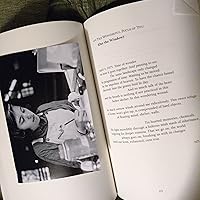
February 3, 2026
Such extreme respect for this person

September 10, 2020
📚 SPIT TEMPLE by Cecilia Vicuña, edited and translated from the Spanish (Chile) by Rosa Alcalá, 2012, @uglyducklingpresse
What a delight this book is - so unique in style! Rosa Alcalá brings together decades of Vicuña's art and life into this volume, which is quite challenge to do when an artist defies categorization like Vicuña does!
There's a scrapbook of her early life in Santiago, her early memories and attraction to art and the written word with a series of prose poems. With some other renegade poets and artists, she forms a literary gonzo group called Tribu No (No Tribe) and they garner attention from major figures like Salvador Allende, Julio Cortázar, and Mario Vargas Llosa - Spoken word and performance art in the 1960s. It's really a blast to read about and see their 'manifesto' and photographs. Reminded me a lot of the renegade poets from Bolaño's THE SAVAGE DETECTIVES (one of my fave books in recent years...)
.
She develops her style further upon exile after the coup in 1973. Leaving Chile, she moves first to the UK and then to the US, going back to South Erica frequently. She employs sculpture, found objects, chanting, poetry, textiles and wool, dance into her art and many of her poems.
Alcalá transcribes/translates various performances of her long form poetry conversations / improv with her audience. She often distributes fibers/strings to her audience formimg an elaborate woven pattern through performance + words.
Perhaps when your last name is Vicuña, you are naturally drawn to fibers... She mixes this element of wool with traditional Andean weaving techniques, and Pachamama eco-feminist cosmology into several of her works.
Her long form pieces weave stories from all over - childhood, myths, eroticism, various languages of Indigenous peoples of Chile, chants/songs.
One movement of her story notes her response as a Chilean on September 11 (1973), when Allende was murdered and Augusto Pinochet's dictatorship began, and her own flight to Europe. She notes that September 11 now lives in her mind also for the Twin Towers, as she lived a few blocks away from them in 2001.
There's a lot more to share, but I'll keep it there. Several of her installations are available to view online at various galleries, and there's a great YouTube video from the Museum of Fine Arts on Boston from 2019 with Vicuña and 2 scholars discussing an exhibition on quipu, a fiber construction that was used by the Incas to record events and keep public memory.
"the weaver sees
her fiber
as the poet
sees the word
her word
the thread feels the hands
as the word feels the tongue
structures of feeling
in the double sense of sensing
and signifying
and the word and the thread
feel out passing
as I feel this
getting into my nose
you know this
you can breathe it in
.
in the Andes
people say that
unspun wool
contains the power
of the cosmos
it has not been spun
it's no thing
it's pure potential
pure future
pure being"
What a delight this book is - so unique in style! Rosa Alcalá brings together decades of Vicuña's art and life into this volume, which is quite challenge to do when an artist defies categorization like Vicuña does!
There's a scrapbook of her early life in Santiago, her early memories and attraction to art and the written word with a series of prose poems. With some other renegade poets and artists, she forms a literary gonzo group called Tribu No (No Tribe) and they garner attention from major figures like Salvador Allende, Julio Cortázar, and Mario Vargas Llosa - Spoken word and performance art in the 1960s. It's really a blast to read about and see their 'manifesto' and photographs. Reminded me a lot of the renegade poets from Bolaño's THE SAVAGE DETECTIVES (one of my fave books in recent years...)
.
She develops her style further upon exile after the coup in 1973. Leaving Chile, she moves first to the UK and then to the US, going back to South Erica frequently. She employs sculpture, found objects, chanting, poetry, textiles and wool, dance into her art and many of her poems.
Alcalá transcribes/translates various performances of her long form poetry conversations / improv with her audience. She often distributes fibers/strings to her audience formimg an elaborate woven pattern through performance + words.
Perhaps when your last name is Vicuña, you are naturally drawn to fibers... She mixes this element of wool with traditional Andean weaving techniques, and Pachamama eco-feminist cosmology into several of her works.
Her long form pieces weave stories from all over - childhood, myths, eroticism, various languages of Indigenous peoples of Chile, chants/songs.
One movement of her story notes her response as a Chilean on September 11 (1973), when Allende was murdered and Augusto Pinochet's dictatorship began, and her own flight to Europe. She notes that September 11 now lives in her mind also for the Twin Towers, as she lived a few blocks away from them in 2001.
There's a lot more to share, but I'll keep it there. Several of her installations are available to view online at various galleries, and there's a great YouTube video from the Museum of Fine Arts on Boston from 2019 with Vicuña and 2 scholars discussing an exhibition on quipu, a fiber construction that was used by the Incas to record events and keep public memory.
Read
May 31, 2017 Spit Temple is a collection of work by the Chilean performance poet Cecilia Vicuna. The first section, a collection of short autobiographical pieces that straddle the line between prose and poetry, is the strongest. Many pieces end with a kind of punch line or twist. The Conversationalists has one of the funniest endings. When the child Vicuna tells her cousin about her plans for changing the world through persuasion, her cousin replies, “but that’s socialism!” (47) Some of the childhood pieces have a fantastical tone, particularly the one where Vicuna learns to write without ever being taught. Vicuna is more focused on the feeling of memory than the literal truth. Many of the pieces work alone, as well as part of a larger narrative. However, some of the later pieces wouldn’t stand alone because they are focused on describing events rather than imagery or style.
Spit Temple also includes transcriptions of Vicuna’s oral poetry. Cecilia Vicuna broadens the definition of what counts as a poetry reading. Sometimes she mocks the idea of accepted academic speaking styles, as in her performance at Barnard where she began a performance by moaning (or screaming- it’s not clear from the transcript), acknowledges that everyone is tired, then used the typical academic opener, “I’d like to thank.” At her performances, there’s no clear distinction between the poetry and the stage prattle before and after it. This is an oral equivalent of William Carlos William’s Spring and All. There’s also no clear demarcation between one poem and the next, as they rarely have titles. The performance is a whole, rather than a set of poems. Sometimes she reads radically different versions of the same poems (or the same ideas) at her different performances. Vicuna’s writing is reminiscent of jazz. She improvises off a theme, changing slightly each time.
The final section of the book includes essays by various authors about attending Vicuna’s performances. Many of the essays have a melancholy, nostalgic tone as they try to recapture something lost. I’m not sure that’s an attitude that Vicuna would share. Vicuna was an amazing improviser, who incorporated her environment into her performance. Maybe she wouldn’t have minded if the viewer had imagined her performance differently than the reality but would consider reading a performance in the reader’s head. I actually preferred reading Vicuna’s poetry to watching her performances on YouTube because my knee jerk response to performance poetry is discomfort and skepticism. Some of the poems in this collection are overly New Age-y but others are surprisingly powerful. I’m glad my poetry professor put this book on the syllabus because it forced me to take Vicuna seriously.
In addition to transcription, this book is partly in translation, making it several layers removed from the original. Cecilia Vicuna is interested in the possibilities of speaking multiple languages (“when she sung to me/two matrices/two melodies/ were/ mixing/ the Andes/ and Mesopotamia”) but she’s one of the few poets who believes in translation, “I speak to you in English I think/ translation is possible because/ thoughts are word less/ and the voice is the transfiguration/ of milk/ the milk of thought.” (149) For Vicuna’s poetry, the details are less important than the big ideas. This book preserves Vicuna’s imagination and her ability to weave together seemingly disparate concepts. It’s not the same as attending one of Vicuna’s performances but it’s well worth reading.
Spit Temple also includes transcriptions of Vicuna’s oral poetry. Cecilia Vicuna broadens the definition of what counts as a poetry reading. Sometimes she mocks the idea of accepted academic speaking styles, as in her performance at Barnard where she began a performance by moaning (or screaming- it’s not clear from the transcript), acknowledges that everyone is tired, then used the typical academic opener, “I’d like to thank.” At her performances, there’s no clear distinction between the poetry and the stage prattle before and after it. This is an oral equivalent of William Carlos William’s Spring and All. There’s also no clear demarcation between one poem and the next, as they rarely have titles. The performance is a whole, rather than a set of poems. Sometimes she reads radically different versions of the same poems (or the same ideas) at her different performances. Vicuna’s writing is reminiscent of jazz. She improvises off a theme, changing slightly each time.
The final section of the book includes essays by various authors about attending Vicuna’s performances. Many of the essays have a melancholy, nostalgic tone as they try to recapture something lost. I’m not sure that’s an attitude that Vicuna would share. Vicuna was an amazing improviser, who incorporated her environment into her performance. Maybe she wouldn’t have minded if the viewer had imagined her performance differently than the reality but would consider reading a performance in the reader’s head. I actually preferred reading Vicuna’s poetry to watching her performances on YouTube because my knee jerk response to performance poetry is discomfort and skepticism. Some of the poems in this collection are overly New Age-y but others are surprisingly powerful. I’m glad my poetry professor put this book on the syllabus because it forced me to take Vicuna seriously.
In addition to transcription, this book is partly in translation, making it several layers removed from the original. Cecilia Vicuna is interested in the possibilities of speaking multiple languages (“when she sung to me/two matrices/two melodies/ were/ mixing/ the Andes/ and Mesopotamia”) but she’s one of the few poets who believes in translation, “I speak to you in English I think/ translation is possible because/ thoughts are word less/ and the voice is the transfiguration/ of milk/ the milk of thought.” (149) For Vicuna’s poetry, the details are less important than the big ideas. This book preserves Vicuna’s imagination and her ability to weave together seemingly disparate concepts. It’s not the same as attending one of Vicuna’s performances but it’s well worth reading.
Displaying 1 - 15 of 15 reviews