Jump to ratings and reviews
Rate this book

Ai Weiwei: According to What?

Rate this book
A leading figure among Chinese artists of his generation, Ai Weiwei creates art that poses fundamental questions about the ways in which art and culture interrelate with society and how society interrelates with individual existence. As a result of his internationally acclaimed work and his direct engagement with Chinese policies and politics, Ai has been thrust into the global spotlight. Featuring his most significant works since 2000, this catalog offers insight into the artist’s use of simple forms and artistic methods reminiscent of Conceptual and Minimal art, his preoccupation with the traditional design of furniture and other daily objects, and his iconoclastic attitudes toward traditional values and political authority. The book includes works in sculpture, photography, video, and site-specific architectural installations, making it an invaluable resource on Ai’s enormously diverse oeuvre.

144 pages, Hardcover

First published January 1, 2012

2 people are currently reading
52 people want to read

About the author

Ratings & Reviews

What do you think?
Rate this book

Friends & Following

Create a free account to discover what your friends think of this book!

Community Reviews

5 stars
13 (28%)
4 stars
25 (55%)
3 stars
6 (13%)
2 stars
1 (2%)
1 star
0 (0%)
Displaying 1 - 9 of 9 reviews
Profile Image for Geoff.
444 reviews1,548 followers
February 21, 2013
The Sun, Sunflowers, and Sunflower Seeds

A minimum of biographical information is necessary, so that we might attempt an understanding of our subject and his objects. Ai Weiwei was born to a poet in Beijing in 1957; not long after his birth, his poet father was denounced as a rightist bourgeois sympathizer and the family was exiled to the Xinjiang Region, and as it was with many of those troublesome intellectuals during the Cultural Revolution, his father was made to shift his creative endeavors from the rhythm of lines on a page to the rhythms of the saw blade clearing forests and the swish-swish of brushes swabbing lavatories- that tight beat and regulated line of forced labor. That they lived in poverty is needless to say. In 1976 the family was allowed to return to Beijing and in 1978 Ai enrolled in the Beijing Film Academy. In the Xinjiang Region, though life was work and subsistence and impoverishment, it was at least far from the beating, bleeding heart of totalitarianism. Beijing was that pulsing bloody organ. So, like many aspiring Chinese artists, he headed West in search of a less-tightened grip of authority, and in 1981 he moved to the USA, briefly living in California and Philadelphia before spending the 80’s in New York City, studying design at Parsons, supporting himself with odd jobs and spying through an active camera shutter the mundane and the fabulous impressions Gotham has to offer a creative-minded Chinese immigrant. Scads of black and white prints document these years. It was in New York that Ai came to know the art of Jasper Johns and Marcel Duchamp and Warhol and Donald Judd. At home, Tiananmen Square happened. In 1993 his father became ill and Ai Weiwei returned to a China whose economic reforms and liberalism found themselves staring down tanks in the town square. A greater embracing of the free market had led, as it does, to more massive and widespread corruption, and the new Communist economic machine was juggernauting right along. This opening up to the world of the Chinese economy (much as a tulip opens its petals to let any wasp or bee that would come dip of nectar, thus enriching flower and stinger) led to a greater foreign interest in contemporary Chinese art, and Ai found opportunity to work within the artistic communities existing in China, bringing with him the influences he had acquired in New York City, producing Black Cover Book which involved translations of texts by Warhol and Duchamp, as well as exhibiting the work of young Chinese artists. Ai began looking for ways that mid-twentieth century American avant-garde, pop, and surrealist art could be applied to the burgeoning reality of late-twentieth century Chinese culture, and White Cover Book and Grey Cover Book and a studio and an archives and warehouses and workspaces followed; an infrastructure for contemporary Chinese art was being founded.

Let’s let years I know nothing of fly past. Ai became interested in the specific objects of Donald Judd as they could be related to the more traditional materials and textures and colors he was finding in Chinese markets. An interest in volume and form and use of space led to studies in architecture and sculpture, minimalism and theoretical representation of place. Ai was looking for ways traditional Chinese techniques of joinery and porcelain making, wood- and metalworking, architecture and textile production, could be applied to make objects that retained cultural resonances but that were divested of the hierarchy of commodity pieces. Thus his interest in rendering functional, everyday objects- market objects, consumer products- useless through manipulated construction, destruction, and restructuring. His art also became more and more concerned with resurrecting the dignity of the individual apart from the masses, rescuing historical heritage from the bulldozer and the razed ruins of a new free market landscape. Thus his series of photographs of Provisional Landscapes showing leveled and barren sections of cities all over China (therefore, spaces existing between the past and the future, devoid of objects and people, “a void with many questions” as Ai has said). This is all to say that Ai Weiwei’s art was ever more becoming something concerned with social justice, human rights, the meaning of an individual life amid the forces of state and economy and vast technological changes. Shall I just let Ai speak? “For artists and intellectuals today, what is most needed is to be clear about social responsibility, because that’s what most people automatically give up. Just to protect yourself as an individual is very political. You don’t have to march on Tiananmen, but you have to be clear-minded, to find your own means of expression.”

description

description

description

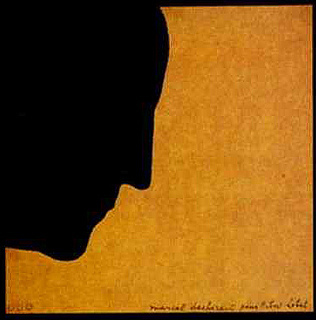
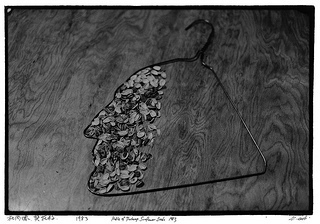
(Marcel Duchamp’s Self-Portrait in Profile; Ai Weiwei’s Profile of Duchamp, Sunflower Seeds; Ai Weiwei’s installation at London’s Tate Modern, 100 million porcelain sunflower seeds produced individually in kilns in Jingdezhen.- “Sunflower seeds are not only a favorite snack for Chinese people, but during the Cultural Revolution it was often said that Mao Zedong is the sun and the Chinese people are like sunflowers turning toward him.” Each of the 100 million porcelain sunflower seeds, being handmade, are unique, yet piled in such quantities their individuality becomes ambiguous. Note that the use of the coat hanger to form Duchamp’s profile is a reference to Jasper Johns’ recurring use of coat hangers in his work, thus this piece can be seen as a neat image of Ai himself- Duchamp's profile, Johns' methods, Chinese seedlings.)

The Olympics, Earthquakes, Celebrity

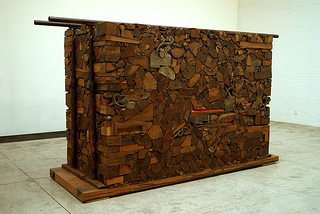
Ai’s reputation grew and his works increased in scope and ambition, and he was asked to collaborate on the design of the Beijing National Stadium for the 2008 Olympics. The first room of the exhibit According to What? at the Hirshhorn in Washington DC is wallpapered, floor to ceiling, with images of the construction of the stadium at various stages, in various weather, but all in the mode of the Provisional Landscapes, that is, devoid of human figures, with wiry protrusions of girders and piles of building material and construction vehicles and equipment left standing empty in rain or snow or bleak sky- hundreds of photographs of the transition toward the “opening up of China” represented by skeletal forms, resemblances to hellish industrial bird’s nests if imagined by Bosch. This is an impressive array of photographs, no doubt, but the context becomes clear only upon immediately leaving that room, when the observer is presented with Ai’s Kippe, a set of gymnastic parallel bars tightly binding and framing a three-dimensional puzzle made of stacked wood salvaged from dismantled Qing dynasty temples. The implications of the transition here from the Olympic stadium room to this object of gymnastic bars restricting and containing the ruins of temples are many, but one that may not be immediate is the resemblance this pile has to cords of firewood.

description

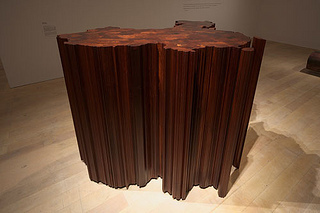
Adjacent to Kippe was placed Ai’s Map of China, which at first appears to be a tall, intricately wrought wooden sculpture resembling a tree trunk. This too is made of salvaged wood from dismantled Qing dynasty temples.
description

What is not easily seen from the point of observation on the gallery floor is that the top of this structure is a detailed profile map of China. What struck me about this piece was that whatever cultural unity is represented by a map of a country (its very body) in this form is rendered unobservable in its prominence by the very height and depth of its destroyed and reformed history. China has risen to its current high place in the world on the wood of razed temples.

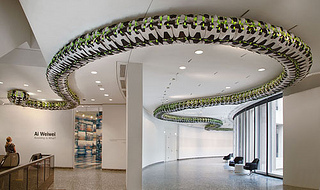
Immediately after the Sichuan earthquake of May 12, 2008, when more than 9,000 people died and of them were 5,000 children killed when shoddily constructed schools collapsed, Ai visited the sights of destruction. Around the ruins he found scattered here and there children’s backpacks. This inspired the first piece one encounters when entering According to What?, Snake Ceiling, a serpentine form composed of interlinked children’s backpacks, a tribute to the souls of those who perished.

description

As one rises on the Hirshhorn’s escalators to enter According to What?, various detached voices are broadcast reciting the names of the children who died in the earthquake, spoken by Ai’s fans and supporters who supplied the recital to the artist via the web; covering the walls as you enter the exhibit are the names of the dead in bare lines of script; to anyone residing in Washington DC this can only also evoke the Vietnam War memorial.

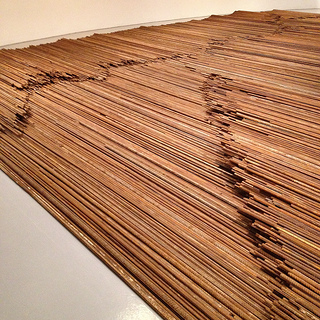
Another piece in the exhibit, Wenchuan Steel Rebar, is made from intricately stacked rebar from the collapsed schools, made to look like a topographical anomaly or a seismographic image turned into landscape. The rebar, taking up the floor of an entire room, when salvaged, were twisted and deformed from the collapse, but Ai had them straightened into perfect lines and lengths and placed in careful progressions across the gallery floor, as a sign of his “concern over society’s ability to start afresh, almost as if nothing had happened”. The twisted forms that represented so much chaos and death were easily straightened and sorted into pleasing patterns.

description

Ai Weiwei’s increasing human rights activism and activities brought him into an ever more precarious relationship with the Chinese government, culminating in May 2009 when Chinese authorities shut down his blog, which he had been using as a platform for discussions of art, social advocacy, rants against government injustice, and a “citizens investigation” into the coverups involving the Sichuan earthquake deaths. That same year he was beaten and detained by police, which resulted in a head injury requiring emergency surgery to prevent hemorrhaging and brain damage (this too made it into According to What?, as Brain Inflation, large prints of the MRI images of his injuries). These incidents, along with his arrest in 2011 on trumped up accusations of tax evasion, when he was confined for 81 days without being charged with any crime, brought Ai even more into the public sphere and turned him into something of an international name and icon of human rights activism. Here enters into the conversation the unpleasant topic of Celebrity. The question of whether Ai Weiwei is more successful as an activist or an artist, or where the line is drawn between the two, and whether distinctions like this must even be made, and whether his art can speak for itself, or must be seen in the context of his life and struggles, are valid, and can only be answered by seeing the work. According to What? is Ai’s first showing in North America, and in this humble observer’s eyes, those questions were resolved. The art is powerful. The art is complex and driven by concepts and history and a respect for the efficacy of the object and the image. The art attempts to arrange historical facts and traditions within modern contexts, in order to speak of what is lost and gained in periods of great transition, how men relate to the raw material of their surroundings, and how these relations either elevate the individual life or feed dehumanizing power structures.

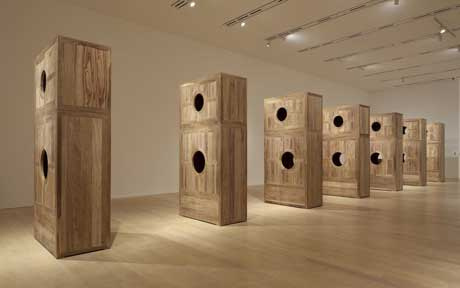
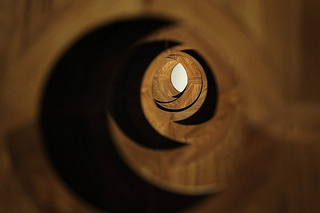
Take one of my favorite pieces in the exhibit, Moon Chest, a series of 81 10-foot tall chests made of huali wood, a fine wood coveted by wealthy Chinese. The chests are rendered functionless as containers of possessions by Ai’s cutting into each four circular openings, precisely incised at various points so that the chests, when aligned and the openings peered through, show every phase of the moon.

description

description

Seven of them are shown at the Hirshhorn. Beyond being a striking technical achievement, this piece seems to encapsulate much of Ai Weiwei’s aesthetic intent- what would be prized objects of wealth in Chinese upper society have been divested of their functionality in a consumer context, and rendered a series of objects that when pieced together create a very humanistic, enduring image- the moon in its cycles. How do we choose to use the materials at our hands? What do we make of the world around us and how do we see ourselves in relation to this society, this world? Ai Weiwei wants us to see materials not as products of market and economy, but full with all their historical and spiritual essence. He wants us to look at the dignity of the individual creating the thing, and how the individual is compensated by that creation, shaped by their work, evolved in body and soul by modern World-forces that often feel ineffable, inevitable. This liberation of persons and things is attained through the arts, through creative processes that do not demean the human, but fulfill the individual.

“Art is an action that transforms our thoughts. It is a process that turns nothing into something. As Confucius said in the Analects, “Thought without action is laziness; action without thought is labor lost.” On one hand, if we merely think but take no action, there would be no progress. On the other, acting on thoughtless impulse is doomed to failure. Our ancestors understood this quite well. The relationship between thought and action is the most important source of human wisdom and joy. With both, the process of turning art into reality is the path to happiness. It’s like a game. Only through this process can we understand who we are. So the game will continue.”- AW

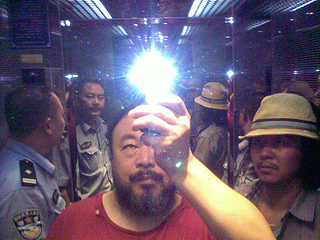
I’ll end with one of my favorite pictures of an artist ever, Ai Weiwei’s cellphone portrait in the elevator as he is being detained in 2009, right before he was beaten by police, in the moment before an act of brutality by an overwhelming authority made an artist into a Name.

description
Profile Image for Ike Rakiecki.
47 reviews
May 5, 2018
This book discusses the life of Chinese artist/social activist Ai Weiwei, his artwork, and the inspirations for his work. I found the book's interview with Weiwei to be especially insightful as it distilled his philosophies on social activism and art. Many of his pieces are large-scale constructions meant to point out social injustices. The fact that he uses centuries-old materials in some of his installations was especially cool.
Profile Image for Monica.
573 reviews4 followers
February 18, 2017
After seeing Chinese artist Ai Weiwei's exhibit at the Indianapolis Museum of Art, I am now enamored with him as an artist AND as an activist who lives out his convictions in much more challenging circumstances than I could ever imagine. This catalog is a great introduction to the pieces included in the traveling exhibit, and has inspired me to read and watch and find out much more about Ai.
Profile Image for Kitap Yakıcı.
794 reviews34 followers
August 3, 2013
Prior to my family's 14 July visit to the Indianapolis Museum of Art, I had not heard of the artist Ai Weiwei. I am glad of that visit, because without the experience of and impression left by the artworks themselves, this catalog wouldn't (couldn't) do the artist justice, although it does provide a sense of his talent, versatility, and impact. This book is a powerful memento of a visit to the exhibition, but is in no way a substitution, since so many of the artist's works rely on senses other than the visual to fully appreciate. I am reminded of the compost-like fragrance of pu-erh tea that surrounded the two one-ton, house-shaped blocks of tea (similar to the one seen on 62–3), and the sense of scale involved in appreciating Cube in Ebony (60), Map of China (68–9), China Log (70–1), and Wenchuan Steel Rebar (128–9), the last of which brought me to tears. His art is controversial—since my museum visit, I have engaged in two stimulating conversations about Dropping a Han Dynasty Urn—and his provocative and compassionate activism has resulted in abuse and persecution at the hands of the Chinese police state.
Art is an action that transforms our thoughts. It is a process that turns nothing into something. As Confucius said in the Analects, "Thought without action is laziness; action without thought is labor lost." On one hand, if we merely think but take no action, there would be no progress. On the other, acting on thoughtless impulse is doomed to failure. Our ancestors understood this quite well. The relationship between thought and action is the most important source of human wisdom and joy. With both, the process of turning art in reality is the path to happiness. It's like a game. oOnly through this process can we understand who we are. So the game will continue. (43)

F*** You, Motherland – Ai Weiwei's Mission to Save China From Herself
Profile Image for Bradley Filice.
5 reviews2 followers
January 13, 2013
Ai Weiwei has the most powerful combination of social context and aesthetic beauty I've seen in any exhibit of artwork. The collection is a feast of works that question the value of tradition and objects compared to the value of human life in China and the world.

So the more you get the backstory the more emotionally you feel his work. The exhibit at the Hirshhorn does it fabulously and this hardcover collection is the perfect memento.
Profile Image for lisa.
1,753 reviews
August 27, 2013
I had never heard of Ai Weiwei until I saw the film Never Sorry, but I jumped at the chance to look at this book of his art, with interviews and background.
Profile Image for Jeffrey.
814 reviews27 followers
September 10, 2013
This "magazine" style version of the show catalogue is excellent - two fine essays and a very thoughtful interview with Ai Weiwei - now I want to read more about him and his work!
Displaying 1 - 9 of 9 reviews

Can't find what you're looking for?

Get help and learn more about the design.