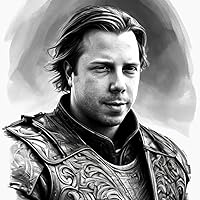
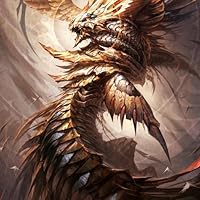
The strange deeds of Antony Ferrara, as herein related, are intended to illustrate certain phases of Sorcery as it was formerly practiced (according to numerous records) not only in Ancient Egypt but also in Europe, during the Middle Ages. In no case do the powers attributed to him exceed those which are claimed for a fully equipped Adept.
AKA Arthur Sarsfield Ward (real name); Michael Furey.
Arthur Henry Sarsfield Ward (15 February 1883 - 1 June 1959), better known as Sax Rohmer, was a prolific English novelist. He is best remembered for his series of novels featuring the master criminal Dr. Fu Manchu.
Born in Birmingham to a working class family, Rohmer initially pursued a career as a civil servant before concentrating on writing full-time.
He worked as a poet, songwriter, and comedy sketch writer in Music Hall before creating the Sax Rohmer persona and pursuing a career writing weird fiction.
Like his contemporaries Algernon Blackwood and Arthur Machen, Rohmer claimed membership to one of the factions of the qabbalistic Hermetic Order of the Golden Dawn. Rohmer also claimed ties to the Rosicrucians, but the validity of his claims has been questioned. His physician and family friend, Dr. R. Watson Councell may have been his only legitimate connection to such organizations. It is believed that Rohmer may have exaggerated his association in order to boost his literary reputation as an occult writer.
His first published work came in 1903, when the short story The Mysterious Mummy was sold to Pearson's Weekly. He gradually transitioned from writing for Music Hall performers to concentrating on short stories and serials for magazine publication. In 1909 he married Rose Elizabeth Knox.
He published his first novel Pause! anonymously in 1910. After penning Little Tich in 1911 (as ghostwriter for the Music Hall entertainer) he issued the first Fu Manchu novel, The Mystery of Dr. Fu-Manchu, was serialized from October 1912 - June 1913. It was an immediate success with its fast-paced story of Denis Nayland Smith and Dr. Petrie facing the worldwide conspiracy of the 'Yellow Peril'. The Fu Manchu stories, together with his more conventional detective series characters—Paul Harley, Gaston Max, Red Kerry, Morris Klaw, and The Crime Magnet—made Rohmer one of the most successful and well-paid authors of the 1920s and 1930s.
Rohmer also wrote several novels of supernatural horror, including Brood of the Witch-Queen. Rohmer was very poor at managing his wealth, however, and made several disastrous business decisions that hampered him throughout his career. His final success came with a series of novels featuring a female variation on Fu Manchu, Sumuru.
After World War II, the Rohmers moved to New York only returning to London shortly before his death. Rohmer died in 1959 due to an outbreak of influenza ("Asian Flu").
There were thirteen books in the Fu Manchu series in all (not counting the posthumous The Wrath of Fu Manchu. The Sumuru series consist of five books.
His wife published her own mystery novel, Bianca in Black in 1954 under the pen name, Elizabeth Sax Rohmer. Some editions of the book mistakenly credit her as Rohmer's daughter. Elizabeth Sax Rohmer and Cay Van Ash, her husband's former assistant, wrote a biography of the author, Master of Villainy, published in 1972.
Although not the best of Sax Romer’s novels, it certainly is one of the creepier and scarier of his works. Certainly it is a wonderful book for that cold, dark autumn night while sitting by the fireplace. Romer’s "Brood of the Witch-Queen" is set around World War I in post- Victorian England; most of the action is in England with some action taking place in Egypt. I especially enjoyed the blending of science and the supernatural with spiders and other bugs, haunting smells and glowing lights, and actually some vampires and even mummies! The use of ancient Egyptian magic (everything Egypt was very popular at this time) along with the Egyptian pyramid adventure along with spiders and some very serious creepy crawly bugs added to the atmosphere. I struggled with a 3 or a 4 on this one as I really like it; however, I was a bit let down by the ending, so I gave it a 3. Still, I enjoyed it from its strong, sinister start to the weaker finish.
It begins on a sinister note as Robert Cairn sees Apollo, the king of the swans, who seems to have died without apparent reason right in front of his eyes! When Robert goes to investigate, he discovers that the swan had its neck broken in three places. He goes to the nearest home, the one of Antony Ferrara. Ferrara has always been a strange and mysterious person; he is the “son” of a man who is good friends with Robert’s father. While in Ferrara’s home, Robert sees and smells some strange things; he glimpses numerous Egyptian artifacts and the strangest of all, an unwrapped mummy. Just who is this Ferrara? The answer to that question while take you through this delightful, almost 100 year old book!
... I chose to read this book on a whim as it was a free read from Kindle and I was trying to lessen my exorbitant book-purchase costs...
All I can say is that I was pleasantly surprised, albeit slightly weirded out by some of the creepy content of this book. I enjoyed it from start to finish, and especially loved the incorporation of the Egyptian and Egyptology themes. It definitely did not seem as if it was written in the early 1900s! The writing style seems much more modern, in my opinion.
I read through, constantly wondering what would happen next! It's been a while since I've read something that kepy my attention so well, and I must admit that I was surprised to find it in this book since it was so randomly picked up!
Of the ten books by Sax Rohmer that I've read, this is among his best. Originally serialized, it reads like a collection of short stories as the Father-and-son team of Bruce and Robert Cairn hunt the evil magician Antony Ferrara across England and Egypt. Many of the scenes are quite creepy, and must have pushed the envelope for 1918. The heavily dramatic prose and characterizations might deter some readers, and the ending is abrupt; but this book will hold high entertainment value for aficionados of the genre.
This book was published in 1918 by Sax Rohmer (real name Arthur Henry Ward). Rohmer was a popular writer of the early twentieth century and was especially known for his Fu-Manchu novels. Several years ago, I started a collection of hardcover Rohmer novels but have only read a few of them. I enquired to an online website devoted to Rohmer what books they would recommend reading and several stated that Brood of the Witch-Queen was a favorite. Since i did not have a copy of this, I decided to read it on-line as a free download.
Well, the book was quite strange about an Englishman named Robert Cairn, and his acquaintance with Antony Ferrera who appears to be in league with the devil or some other occult deity. He is suspected of black magic by both Cairn and his father, Dr. Bruce Cairn. Ferrera was adopted and he is also suspected of his adopted father's death. This puts Antony in line to inherit his father's money but first he must deal with his beautiful cousin, Myra Duquesne, who inherits half the estate. Myra is also a love interest of Robert's. The novel shifts from London to Egypt where Dr. Cairn relates the origin of Antony and his relationship to the Witch-Queen of Egypt. The story then returns to England where both Robert and Myra are in great danger from Antony's sorcery. So can they be saved? Well, as usual with these types of novel, the answer is yes!
I kind of enjoyed this for what it is, an old-fashioned romance of the early 1900's dealing with the occult. The occult and Egyptology were hot items of the time and many authors dealt with them including A. Conan Doyle, Rider Haggard, and others. From wikipedia: H.P. Lovecraft compared the novel to Bram Stoker's Dracula, alongside Richard Marsh's The Beetle or Gerald Biss' The Door of the Unreal in his essay Supernatural Horror in Literature. Les Daniels identified the book as being probably Rohmer's best novel, noting that it lacked the pseudo-scientific explanations usually employed by the author and concluding that "Rohmer's occult lore was never as well employed as in this tale... and he never equalled the claustrophobic chills of the scenes in the bowels of a pyramid." But overall, I would only mildly recommend this. The writing to me was a little flat and old fashioned and the ending was much too abrupt.
A wonderful black magic/Egyptian novel that takes place during the early 20th during the height of the Egyptology crazy. For the most part the story in this book is fantastic as the adventure of the main characters takes them from London to Cairo has they chase down and ancient evil force of magic.
There are only a couple of hiccups that make the story less than perfect. First, the character development seems less than realistic. The son in the book never seems to fully grasp the danger of the magic he is I despite the repeated instances of it upon him. And the father keeps resisting to explain the happenings to those around all the characters for some unknown reason.
All of that is minor though beside the major failing of the ending. After traveling half the globe with the characters and building incredible suspense until the last page, the very last paragraph of the book completely destroys the ending and all of the suspense built throughout the book.
This book was all ready to be placed on one of my favorite of all time lists, but the ending blew it. I highly still recommend it for a read though if you are looking for a romp through Egypt, magic and evil.
The writing in this book felt surprisingly almost modern. I mean, surprisingly for something written almost 100 years ago. I also got the impression that the chapters were published in a series of periodicals, the references to earlier events sometimes felt like the author expected people to have forgotten. Anyway, not much else to say, liked the whole Egyptologist's-ghost-story-deal, pretty good, quick read
Sax Rohmer is most famous for creating the diabolical Fu Manchu, but he was also a writer of weird and asupernatural tales. This book presents 12 of his wierd fictions and the full-length novel of Egyptian horror, Brood of the Witch-Queen.
All of the weird tales collected here are pulpy, intriguing, horrifying, and very readable. His protagonists spend a lot of their time determining natural causes for the "magical" happenings in the stories--almost as if he's trying to debunk all the weirdness. Only the tale "The Whispering Mummy" was disappointing to me in that regard.
The novel Brood of the Witch-Queen suffers mostly from a character who knows what is going on, but reveals only what he wants to (or has time to as he is always running around doing something else). That being said, the novel is still exciting and very creepy. Rohmer is excellent at creating the atmosphere of exotic dread that is necessary for this tale and parts of his tale are down-right scary.
This collection is quite different from his Fu Manchu tales; but if you enjoyed those, give some of his other stuff a try.
Supernatural pulp fiction from 1918 featuring Egyptian sorcery in contemporary London. I had a little trouble with the author’s writing style, which had alot of abrupt scene transitions. (I read in another review that this story had originally been published in a magazine in serial form, so perhaps that accounts for the abrupt transitions.) The characters were a bit melodramatic, too. However, I still enjoyed the story. An entertaining read, if you’re in the mood for it.
Re-revised forward to these overseas reviews: Since emulating a yo-yo, I continue to rely on the old-style Kindle 3G for any non-technical reading. I tip my hat to the fine folks at Project Gutenberg: virtually every title I have or will be reading in the near future comes from them.
The Brood of the Witch-Queen is a return to Egyptian mysteries rather than that of China for Sax Rohmer. (He seems to have split his attention between the two if one disallows the Fu Manchu canon from the remainder of his work.) It relies more heavily on supernatural elements than many of his other works. There is still an evil genius (or evil fiend) but his abilities come from the strange rituals and sacrifices that he makes to garner the arcane energy and abilities that he exhibits rather than his own brilliance or the workings of a powerful and malignant cult.
But that’s just quibbling. This novel’s fiend is the adopted son of our two protagonists’ friend and associate, the late Sir Michael Ferrara. His true beginnings are known to the father Dr. Cairn, but because of a pledge given to his friend hidden to all others. Eventually, he has to reveal what he knows to his own son who has been attacked by the mental energy of Ferrara junior. Once after they believe he has be beaten and “contained” he slips away to Egypt only to further his power and attempt to complete his destiny (maybe Lucas read this once long ago).
Although it is fairly fast-paced, the heavy occult and supernatural details make this feel a bit different from the more run-of-the-mill evil doer story. I thought it was pretty effective and liked the change of pace. I think it was a better read than the serious “Orchard of Tears”, but then I’m reading for excitement and adventure when I read Sax Rohmer, not littr’y fiction.
Three and one-half (3.5) ancient evil Stars.
You can get this book for free from the Gutenberg Project site.
This was such a random read for me- was a free choice for Kindle. I'm a lover of all things witchy and underworld, so naturally this caught my eye (and did I mention, it was free?) The book starts off fairly quickly and doesn't waste any time jumping into the supernatural. I wouldn't say that this got me creeped out or anything, but it was interesting enough for me to keep reading past midnight- it felt more like watching a really cooky show. As several have noted the ending is completely stupid, but that's ok- I wasn't expecting much from this one any way. It served it's purpose- kept me occupied and out of trouble for a bit!
This is basically the Sax Romer of the first three Fu-Manchu novels with a few alterations. 3-stars.
Each of the five main characters corresponds to one of the 5 main characters of the Fu-Manchu novels (without Fu-Manchu's minions). The super villain uses supernatural means to accomplish his more down to earth motivation (why didn't he have a supernatural motivation?). The magic is of ancient Egypt. And the damsel in distress (the delightful, delectable, delovely Myra Duquesne) is saved from certain death.
Fairly interesting story. Not nearly up to horror standards of today, but it had its moments. Due to this being written in London in the early 1900s, the language can be difficult to follow at times. I would have given this 3 stars, but the ending was like a Steven King ending - no idea how it should really end so just do something stupid.
This book was written nearly a century ago, so maybe that accounts for my negative feelings about it. I guess he was using cheesy phrases and syntax before it was cheesy. The story is not bad, although it's a little too predictable. My real issue is the use of over-the-top language and lots and lots AND LOTS! of exclamation points. LOTS!
This is my second Sax Rohmer book and without getting into the racism that permeates both, Brood of the Witch-Queen has the same storytelling problems I found in the first Fu Manchu novel. Both were printed serially in periodicals and then collected into book form and neither pulls together very well as a complete story.
In both, Rohmer pits a group of heroes against a sinister villain for a series of encounters. The heroes continually try and fail to overcome the villain until the end when their plans finally work for no other reason than it's time to wrap up. The heroes don't learn anything from their earlier attempts, there's no character growth, nor does the villain get worn down into making a fatal mistake.
That said, Rohmer does a great job of making the individual encounters exciting and Brood of the Witch-Queen is especially creepy and atmospheric as an adventuring doctor and his son try to take down a mysterious sorcerer who threatens them and those they love. It's a very cool journey with some excellent set pieces, even if the conclusion to it isn't completely satisfying.
I liked it. It's the WWI equivalent of a full-season arc on Buffy where they fight one especially scary vampire.
There's a lot of good spooky post-Victorian magic in here. I especially liked the mummy skull full of magic beetles.
The ending is such a resounding anticlimax that I almost like it. Rohmer knew he was going to end it fast, too, which is why he was dropping so many hints about it.
Suspenseful over the top tale. Reminds me of the old black and white 'B' movies on TV late at night. Loved it! The narration sold the entire experience.
This reminded me of those cheesy mystery shows that used to air back in the day. I feel like a lot happened in this book but when you really squeeze out the juice it amounts to not much at all. I didn't hate it, but I'm quite underwhelmed.
Excellent prose and, for its time, revolutionary fantasy concepts, cannot save this book from the absolutely disgusting sensibilities that plague the works of Rohmer and his contemporaries.
The sad part is you can almost hear the blatant hypocrisy in Rohmer's writing - his works would not work at all if not for his outright obsession with the "mystical" foreign cultures to be found on the other side of the world, and if he'd only let himself enjoy those things for their own merits instead of as a contrast to what contemporary europe considered "good" and "godly" this book could have been something truly special, a hundred years ahead of anything similar.
This is without a doubt the best of Rohmer's works, and without a heavy re-write I can only recommend it for academic comparison.
at times, the tone of this story seemed highbrow, hoity-toity, as you're reading along, taking it all in, trying to get a handle on the bad guy...this brood who is....doing things...doing things says something w/o spoiling it...
...and...you're (i was) wondering, why? why is he? well, cause he is the brood of the witch-queen. and so on and so forth. heh heh.
there's some weirdness happening...these unattached hands. kind of an Addams Family sort of thing...remember that show? Was it Thing? or It? The hand? One of them, thing/it was the hairball creature. could be that television ruint me...thinking or making this Adams Family connection where none exist.
But...the story moves around...Europe, Egypt...
Also at times, I heard this old black and white movie....
oh shit, the mummies following us. let's all walk a little faster.
Just finished Brood Of The Witch Queen and I can say that the story was highly imaginative and kind of fun to read since it was written so long ago. Some of the scenes were just so unique and strange. I wouldn't call the book particularly scary, but it is well worth reading. The characters are sometimes so overly dramatic as to be rather humorous, but that's just because the story was written such a long time ago - when women were prone to swooning!
Wonderful build up of menace throughout the book, and the only thing that stopped it getting 5 stars was that the ending was a bit abrupt. It's also an entertaining way to learn about some of the beliefs and practices of ancient adepts. When reading Rohmer on the occult, it is always worth keeping in mind that he wrote a very good non-fiction book on the subject - The Romance of Sorcery
Combines the breathless overheated excitement and adventure and the diabolical criminal masterminds of Rohmer's Fu Manchu and Sumuru novels with all manner of fiendish occult wickedness. It’s very very pulpy, it’s campy and it’s trashy, but it’s also fast-paced, clever, ingeniously contrived and thoroughly enjoyable.
I've read this book first time when I was 12 maybe 15 years old. And I loved it. So when I piked it up few years ago I was very disappointed. Writing was terrible, plot so so, characters plain and whitout any charisma. Maybe in orginal was better, but the translation was average.
Possibly Sax Rohmer's most supernatural novel. As with many of Rohmer's early novels, due to magazine publication, it's as much a collection of short stories, which is fine as most of them are very good, but it also makes for a unsatisfyingly perfunctory ending.
Another will written fantasy novel by Sax Rohmer with zombies, vampires, and scary surroundings. I would recommend this novel to readers of fantasy. Enjoy the adventure of reading 📚 or 🎶 listening 🔰to books 2021🏰👑😤
was worth reading once...I did not like how the ending was presented and the antagonist's back history was scanty but understandable...the protagonist's back history needed more explanation...
Roman d'horreur vieille école toujours agréable à lire de l'auteur britannique, normalement plus porté sur la Chine (la série des Fu Manchu). Cette "engeance de la reine-sorcière" nous enmène pour quelques chapitres en Égypte, puisque le mal y a établi ses quartiers, et pour le reste se passe à Londres. J'imagine que ce regain d'égyptomanie provient de la découverte alors récente, en 1912, du buste de Néfertiti et des mystères qui l'entouraient à l'époque. Sax Rohmer nous fait cependant grâce du classique roman de la momie: le mal vient de beaucoup plus loin, en temps et en espace, probablement de l'époque sumérienne pré-biblique.
Si on lit entre les lignes, on s'aperçoit que ce roman catalogue toutes les craintes de l'omnipotent Empire Britannique d'alors. Et tout d'abord, en faisant référence à son peuple originaire, les Celtes. Le nom du héros, Cairn, est d'ailleurs un nom écossais ou gaélique. Quand Rohmer écrit son roman, il eut été malaisé d'évoquer quoi que ce soit d'anglo-saxon, des tribus germaniques, puisqu'on était en guerre contre l'Allemagne impériale (bien que l'action du roman se joue en 1914, avant la Grande Guerre, qui n'y apparait donc pas). Ce seront donc les Celtes, opposés une première fois à une juive polonaise, source de malheur (le nomade/l'est/la femme), puis surtout au vilain de l'histoire, Anthony Ferrara, fils adoptif d'un égyptologue renommé, que ce dernier a pris en charge lors d'une excavation en Égypte. Ce qui n'est pas innocent, tant les peuplades colonisés sont - au mieux - considérés comme des enfants adoptifs de cet Empire où, comme chacun sait, le soleil ne se couche jamais. Mais au lieu de profiter des bienfaits d'une civilisation que se croit encore supérieure à tout, le fils adoptif se rebelle, tu parles d'une ingratitude! La physionomie de Ferrara est clairement orientale, mais aussi androgyne; à un moment donné le narrateur évoque sa voix de sirène, vieille métaphore de la séduction féminine. Et Ferrara s'appliquera à utiliser une magie noire millénaire, contre laquelle le rationalisme britannique est (tout d'abord) impuissant. Bref: l'orient, le nomadisme, l'irrationalisme, la femme - tout ce que fait peur à l'Empire post-victorien. Qui du coup semble bien fragile.
Deutsch:
Immer noch angenehm zu lesender Old-School-Horror des britischen Autors, der sich normalerweise eher mit China beschäftigt (die Fu-Manchu-Reihe). Diese "Brut der Hexenkönigin" führt uns für einige Kapitel nach Ägypten, da das Böse dort sein Quartier aufgeschlagen hat, und der Rest spielt sich in London ab. Ich nehme an, dass das Wiederaufleben der Ägyptomanie auf die damals neue Entdeckung der Büste der Nofretete im Jahr 1912 und die Geheimnisse, die sie damals umgaben, zurückzuführen ist. Sax Rohmer erspart uns jedoch den klassischen Mumienroman: Das Böse kommt von viel weiter her, zeitlich und räumlich, wahrscheinlich aus der vorbiblischen sumerischen Zeit.
Wenn man zwischen den Zeilen liest, stellt man fest, dass dieser Roman alle Ängste des damaligen omnipotenten Britischen Empire aufzeigt. Und zwar in erster Linie durch den Verweis auf sein ursprüngliches Volk, die Kelten. Der Name des Helden, Cairn, ist übrigens ein schottischer oder gälischer Name. Als Rohmer seinen Roman schrieb, wäre es schwierig gewesen, etwas Angelsächsisches, Germanisches zu erwähnen, da man sich im Krieg mit dem kaiserlichen Deutschland befand (obwohl der Roman im Jahr 1914 spielt, vor dem Ersten Weltkrieg, der daher nicht vorkommt). Es ist also der mannhafte Kelte, der zunächst gegen eine polnische Jüdin als Quelle des Unglücks antritt (Nomade/Osten/Frau), und dann vor allem gegen den Schurken der Geschichte, Anthony Ferrara, Adoptivsohn eines berühmten Ägyptologen, den dieser bei einer Ausgrabung in Ägypten in seine Obhut genommen hat. Was an sich bedeutsam ist, werden doch die kolonisierten Völker - bestenfalls - als Adoptivkinder dieses Empires betrachtet, in dem die Sonne bekanntlich nie untergeht. Aber anstatt die Vorzüge einer Zivilisation zu genießen, die sich noch immer für überlegen hält, rebelliert der Adoptivsohn - von wegen Dankbarkeit! Ferraras Physiognomie ist eindeutig orientalisch, aber auch androgyn; an einer Stelle erwähnt der Erzähler seine sirenenhafte Stimme, eine alte Metapher für weibliche Verführung. Und Ferrara wird sich einer uralten schwarzen Magie bedienen, gegen die der britische Rationalismus (zunächst) machtlos ist. Kurzum: Der Orient, das Nomadentum, der Irrationalismus, die Frau - all das, was dem postviktorianischen Zeitalter Angst macht. Das Empire wirkt dadurch sehr zerbrechlich.