

What do you think?

Humor In Art: A Celebration Of Visual Wit
“Insightful, and mirthful...Six comprehensive chapters define, examine, and illustrate various types of visual humor, including wit and whimsey, parody and satire, and even comic nonsense and Surrealism....Focusing on 20th-century studio art and design, the text also explores caricature and cartooning.”— Curriculum Review. “A light-hearted, visual romp through the whimsical and the witty in 20 century art.”— Art Times.
- GenresArt
Hardcover
First published June 30, 1997
Ratings & Reviews
Friends & Following
Create a free account to discover what your friends think of this book!
Community Reviews
Displaying 1 - 4 of 4 reviews

April 4, 2016
One laugh is worth a thousand groans. ~ Confucius
More of a textbook than a coffee table art book, this is something of a treat for anyone who's ever wanted to burst out laughing in a gallery or a museum.
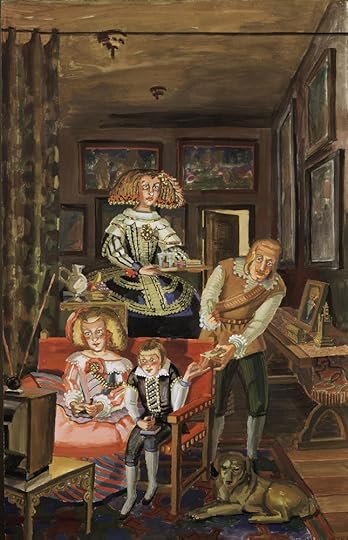
Louise Stanley, Functional Family Triptych (Kids' Version), 1993.
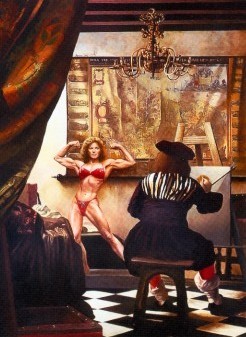
Guy Johnson, Vermeer with Model, 1986.
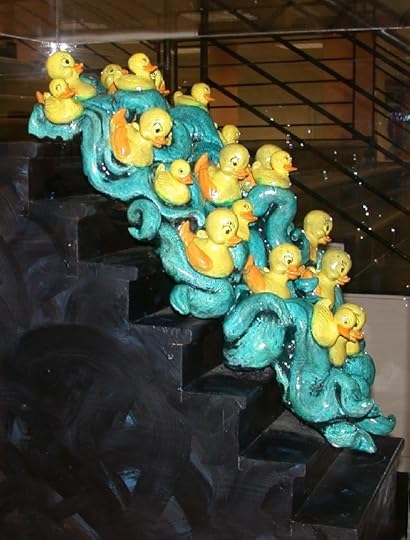
David Gilhooly, Ducks Descending the Staircase (After Duchamp), 1991.
Go ahead - let 'er rip!
Sometimes art is meant to be funny.
More of a textbook than a coffee table art book, this is something of a treat for anyone who's ever wanted to burst out laughing in a gallery or a museum.
Louise Stanley, Functional Family Triptych (Kids' Version), 1993.
Guy Johnson, Vermeer with Model, 1986.
David Gilhooly, Ducks Descending the Staircase (After Duchamp), 1991.
Go ahead - let 'er rip!
Sometimes art is meant to be funny.
Currently Reading
September 21, 2015The book I read was Humor in Art by Nicholas Roukes. His purpose is to entertain the reader by showing you the funny side of art and discover why visual humor is a funny business. He examines and illustrates the various types of visual humor.
The theme of the book is ‘humor’. The author is trying to tell the reader how you can see the humor in some things but mainly in art. He explains to you all things about that. A good quote that shows you the theme is “Humor does more than tweak the funny bone and tickle the intellect” (XIII).
The style of this book is persuasion because it seeks to convince you and it makes you think that art is not simply art and you can see it differently. One quote that proves that style is “The artist with a sense of humor is a thinking and feeling person” (3). The style is very effective.
My opinion of this book is that it is a good book because it shows you many things about art, like good and famous painters, and good and funny paintings. It teaches you how you can see art with a different view. I would change some information about many painters because there are many and it’s hard to remember it all. I like that it shows us many images and is easier to see and understand humor. This book is not similar to any book I’ve ever read because this is an information book and it does not tell a story.
The theme of the book is ‘humor’. The author is trying to tell the reader how you can see the humor in some things but mainly in art. He explains to you all things about that. A good quote that shows you the theme is “Humor does more than tweak the funny bone and tickle the intellect” (XIII).
The style of this book is persuasion because it seeks to convince you and it makes you think that art is not simply art and you can see it differently. One quote that proves that style is “The artist with a sense of humor is a thinking and feeling person” (3). The style is very effective.
My opinion of this book is that it is a good book because it shows you many things about art, like good and famous painters, and good and funny paintings. It teaches you how you can see art with a different view. I would change some information about many painters because there are many and it’s hard to remember it all. I like that it shows us many images and is easier to see and understand humor. This book is not similar to any book I’ve ever read because this is an information book and it does not tell a story.

August 26, 2010
"We are the only creatures who both laugh and weep, and I think it is because we are the only creatures who see the difference between the way things are and the way they might be. Tears bring relief, but laughter brings release." Robert Fulghum
"For health and the constant enjoyment of life, give me a keen and ever present sense of humor; it is the next best thing to an abiding faith." George B. Cheever
"For health and the constant enjoyment of life, give me a keen and ever present sense of humor; it is the next best thing to an abiding faith." George B. Cheever

June 10, 2012
Hated it: academic and indulgent. Pretentious. It did however reference some key works and artist but then tried to cobble the lot together under the same all in theme.
Not all of it was 'humor'.
Pretty pictures to be had.
Not all of it was 'humor'.
Pretty pictures to be had.
Displaying 1 - 4 of 4 reviews