Jump to ratings and reviews
Rate this book

The Lady and Her Monsters

Rate this book
The Lady and Her Monsters brings to life the fascinating times, startling science, and real-life horrors behind Mary Shelley’s gothic masterpiece, Frankenstein.

Montillo recounts how—at the intersection of the Romantic Age and the Industrial Revolution—Shelley’s Victor Frankenstein was inspired by actual scientists of the period: curious and daring iconoclasts who were obsessed with the inner workings of the human body and how it might be reanimated after death.

With true-life tales of grave robbers, ghoulish experiments, and the ultimate in macabre research—human reanimation—The Lady and Her Monsters is a brilliant exploration of the creation of Frankenstein, Mary Shelley’s horror classic.

336 pages, Paperback

First published February 5, 2013

162 people are currently reading
5578 people want to read

About the author

Roseanne Montillo

12 books98 followers
Roseanne Montillo is the author of two other works of nonfiction, The Lady and her Monsters and The Wilderness of Ruin. She holds an MFA in Creative Writing from Emerson College, where she taught courses on the intersection of literature and history. She lives outside of Boston.

Ratings & Reviews

What do you think?
Rate this book

Friends & Following

Create a free account to discover what your friends think of this book!

Community Reviews

5 stars
237 (16%)
4 stars
537 (37%)
3 stars
478 (32%)
2 stars
166 (11%)
1 star
31 (2%)
Displaying 1 - 30 of 279 reviews
Profile Image for Will Byrnes.
1,372 reviews121k followers
November 2, 2023
I collected the instruments of life around me, that I might infuse a spark of being into the lifeless thing that lay at my feet. It was already one in the morning; the rain pattered dismally against the panes, and my candle was nearly burnt out, when, by the glimmer of the half-extinguished light, I saw the dull yellow eye of the creature open; it breathed hard, and a convulsive motion agitated its limbs. (Chapter 5 – Frankenstein)
Roseanne Montillo has dug up information about diverse real-world elements that influenced Mary Shelley in the creation of her seminal novel Frankenstein, joined the parts into a cohesive whole and energized them with intelligence, insight and wit, breathing new life into our appreciation of that great tale. She shows also the monster-rich environment that influenced MS, a world that was very well populated with mad scientists, mythical beasts, grave robbers, an actual evil stepmother, and people close to her who had monstrous leanings of their own, long before she added her creation to the list.

Your first experience of Frankenstein probably looked like this.
description

Boris Karloff’s interpretation of the never-named “wretched creature” of the novel, gave him literal baby-steps and a child-like yearning for love and acceptance. Dramatizations of the character that Mary Wollstonecraft Shelley wrote rarely show him possessing the sort of intellectual curiosity and power with which she imbued him. Hollywood is definitely good at keeping things simple and it did so here. Most people think of Frankenstein’s monster as a big, inarticulate lug, who got a raw deal out of life the second time around and succumbed to an angry, pitchfork and torch-wielding mob, like two guys carrying a gay-pride banner at a Tea Party convention. It was not quite that way in the book.
I ought to be thy Adam, but I am rather the fallen angel, whom thou drivest from joy for no misdeed. Everywhere I see bliss, from which I alone am irrevocably excluded. I was benevolent and good; misery made me a fiend. Make me happy, and I shall again be virtuous.
The monster’s plea to his creator shows him to be something other than the grunting fiend of cinema, more of an articulate fiend.

I heartily recommend reading the core material here, before, during or after you take on Montillo’s exposition. In a way, it is like putting on special glasses and seeing the 3d contours of an image when all that one had perceived previously was strictly two dimensional. Or watching a pop-up videos version of a familiar song. You will learn a lot reading Montillo’s book.

The book tells two tales. The first is Mary Shelley’s personal history. The second is a portrait of the world in which she grew up, the external influences on her, and how they contributed elements to her novel. There is, obviously, overlap.

2010 painting of the young Mary by Esao Andrews
description

Mary Godwin was the daughter of William Godwin, a leading writer and philosopher, and Mary Wollstonecraft, the author of A Vindication of the Rights of Woman (1792), an early manifesto on gender equality. Clearly Mary got pretty high-end brain DNA from both parents. Unfortunately, Mary’s mother died ten days after introducing her to the world.

Mary’s makers
descriptiondescription

Mary grew up in an intellectually lively environment. As dad was a big cheese in the intellectual world, gatherings at the Godwin manse tended toward the illustrious. Thomas Paine read from his famous work in her home, as did many luminaries of the time, including a well-opiated Coleridge, who read his Rime of the Ancient Mariner while young Mary secretly listened in. This piece of that poem found its way into that little girl’s book.
Like one who, on a lonely road,
Doth walk in fear and dread,
And, having once turned round, walks on,
And turns no more his head;
Because he knows a frightful fiend
Doth close behind him tread.
Dad remarried four years after his wife died, to Mary Jane Clairmont. Mary’s new stepmother was straight from central casting for any of several tales by the Brothers Grimm. One result of this, some years on, was an attempt to keep Mary away from her father after she hit adolescence, and was a threat to absorb too much of daddy’s attention. MJ saw to it that Mary was banished for a stretch to a distant seaport, residing with a family that was only barely among Godwin’s friends. Mary had opportunities while there to hear many a fish story from local seamen.

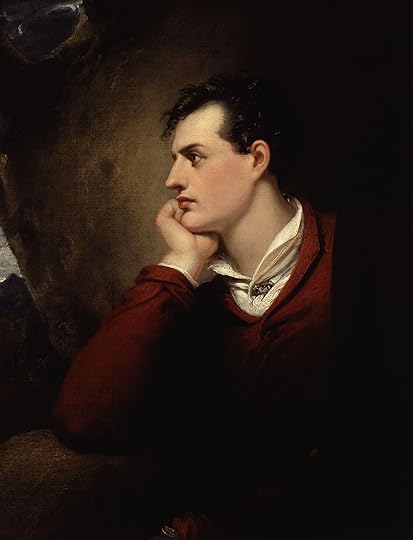
Her relationship with poet Percy Bysshe Shelley began when she was in her mid-teens. Shelley was married at the time, which was awkward, but that did not prevent the young couple from cementing their relationship. Shelley found Mary to be a true intellectual equal, which more than made up for her average looks. Scandal pursued them, but the young couple seemed not to care. A circle formed, Mary, Shelley, Mary’s half-sister Claire, who was smitten with PBS, and later, Lord Byron. It got complicated. There are bits from Mary’s relationships that contributed material to the book.

Shelley and Byron


As was common at the time, artists and scientists were not the divided clans they tend to be today. The greatest scientists of the age wrote poetry. And Shelley was renowned at his college for the many dangerous experiments he had running in his room. Shelley taught Mary, who had been home-schooled, a lot about science. They had several children together, only one of whom survived. It may be that one element in her story was a desire to bring back a dead child.

Montillo takes us through the travels of the pair, and later the group, showing the places they stayed, the routes they took, their stops along the way and the stories Mary is likely to have accumulated at various locations on their journey. Yes, there really was a guy named Frankenstein. Another local alchemist sort had been pursued by angry townspeople after some imagined outrage.

Professor Montillo also offers considerable history and color of the time. The era in which Mary Godwin grew up was the Enlightenment. Science, unchained from the restrictions of superstition, was on the move.
The modern masters promise very little; they know that metals cannot be transmuted and that the elixir of life is a chimera but these philosophers, whose hands seem only made to dabble in dirt, and their eyes to pore over the microscope or crucible, have indeed performed miracles. They penetrate into the recesses of nature and show how she works in her hiding-places. They ascend into the heavens; they have discovered how the blood circulates, and the nature of the air we breathe. They have acquired new and almost unlimited powers; they can command the thunders of heaven, mimic the earthquake, and even mock the invisible world with its own shadows. (from Chapter 3 of Frankenstein)
Resurrectionists
description

Daring scientific experiments were being performed across Europe. There were things in the air at that time that had never been wafting about before. For example, there was a fellow named Galvani, who not only developed a particularly useful battery, but wanted to use his invention to re-animate the newly dead. In fact there was a lot of medical training at the time that required a steady supply of fresh material. As England restricted access to the needed product to the newly executed, that created a considerable market for materials from other sources, giving rise to the growth of so-called Resurrectionists, although flesh-miners might have been a more fitting term. Competition became pretty steep among gangs of grave robbers. The trade was so lucrative that some of the nearly departed were sped on their way by greedy practitioners.

Dissections were often open to the public


Also a lot of this medical work for which the sack-‘em-up-men labored so lustily was done in public fora. Popular entertainment was different in form from what we have today, but I expect the content is particularly consistent. Anatomists vivisected bodies in front of audiences of medical students and the public. Think of it as a monstrous live theater version of CSI. Public hangings were major social events, attended by large throngs ever eager to revel in the misfortune of others, or an early version of reality TV. And of course there is always room to amp up the excitement level, particularly when some of the edgier medical sorts had LARGE ambitions. Giovanni Aldini, nephew to Galvani, performed a particularly gruesome re-animation attempt so shocking that Galvani ultimately had to find some other way of making a living. It does, however, bear remembering that every time the paddles are applied and a doctor yells “Clear” we have mad scientists like Aldini to thank for the many cardiac patients who have been, literally, reanimated by the application of electricity. It’s enough to make you want to scream “It’s Alive!


Montillo also goes into some of the history of alchemy, as Mary makes plentiful reference to practitioners of that art in her book. There is a particularly curious description of how to create a homunculus. (no mention of blond hair and a tan ) Montillo also brings in the obvious connection between Mary’s creation and folkloric notions of golems.

One of the fun bits in the book is a description of a London emporium that sought to capitalize on the growing popular interest in the possible uses of electricity. The Celestial Bed and the Temple of Health was begun by a medical quack interested in the potential benefits of electric stimulation. But the place cloaked its true nature under the guise of providing medical care. I suppose The Celestial Bed did offer plenty of sparks, but the heavenly electricity generated within its walls was produced at least as much by its patrons as by galvanic devices.

The greatest benefit of The Lady and her Monsters is that it lays out many of the elements that Mary was or might have been exposed to in her few years on earth before she took pen in hand to write her contribution to a group ghost-story contest. There is indeed some interesting material offered on Mary’s life after the 1818 publication, most particularly her decision, when revising some years later, to alter Victor’s mode from Promethean arrogance to tool of the gods, reflecting her own denial of responsibility for the events of her life. But other material having to do with the time after publication was not as interesting as that concerning events that inspired the book. Her subsequent life was not a happy one, and I am not sure how much we gain by learning that.

Nevertheless, The Lady and her Monsters is a delightful book, both informative and entertaining. It does a high-voltage job of bringing to life the story of how Mary made her monster.

The trade paperback version came out on 10/22/13


==============================EXTRA PARTS

This very nice bio of Mary Shelley, from The Poetry Foundation, has considerable information about her other works.

A nifty web-site on Resurrectionists. Can you dig it?

Frankie for free, courtesy of Project Gutenberg

3/17/18 - MIT Press has produced an annotated version (Print and on-Line) of Mary Shelley's classic novel. It is intended for use by STEM students, raising scientific and ethical questions from the original work. The comments are joined from diverse sources, particularly in the on-line version, with some by scientists, and some by students. The print version sticks to annotation articles by professionals. A fun way to approach this book if you have not yet had the pleasure, or a nice pathway back if you are returning for a visit. It is called, appropriately, Frankenbook. You can find the digital version here.
Profile Image for Amy H. Sturgis.
Author 42 books405 followers
January 19, 2013
I received this book as part of the Goodreads First Reads program.

This may sound odd, but I'm trying to work out why I enjoyed this as much as I did.

Those interested in Mary Shelley and the writing of Frankenstein would be better served looking elsewhere. (The Hooblers' The Monsters: Mary Shelley and the Curse of Frankenstein comes immediately to mind, but there are several other worthy treatments.) Roseanne Montillo gives an uneven glimpse into Shelley, exaggerating some aspects of her life and ignoring others, and, strangely enough, she doesn't really engage with the text, main themes, or messages of Frankenstein itself.

This book reads like two separate texts, one following Mary Shelley and one focusing on scientific experiments in Europe related to the practice of dissection and the hope of reanimating the dead. (This leads to discussions of galvanism and grave-robbing, among other topics.) Montillo doesn't seem to have much of a grounding in intellectual history or the history of science, and so when she makes sweeping generalizations about the development of trends and practices over time (for one example, her depiction of alchemy), they are more than a little problematic. That said, when she focuses on specific scientists (such as Giovanni Aldini) or crimes that changed public opinion and policies (such as those of Burke and Hare), she chooses these examples very well, and there's a gleeful enthusiasm that makes these sections fascinating and atmospheric.

"Atmospheric" is perhaps a good word to use in describing this book. It's suggestive. I kept waiting for the author to connect the dots and analyze how the Scientific Revolution and the research it inspired affected the Romantics like Shelley and the fiction they wrote in response to it, but the two halves of the book never really connect. Montillo doesn't leave the reader with a conclusion or "big ideas" (or, for that matter, a discussion in the Epilogue of Nick Dear's and Danny Boyle's recent award-winning adaptation of Frankenstein - a startling oversight considering the other works she mentions, especially since its theme fits well into a larger argument that could have been drawn from the material she provides).

The book's oversimplifications and lack of depth mean that it doesn't hold its own against the standard works on Shelley, Frankenstein, or the history of science. It does, however, offer an intriguing and seductive glimpse for those new to the subjects, information to assist further reading, and some wonderfully spine-chilling moments that are both entertaining as well as instructive.
Profile Image for Tara.
Author 24 books619 followers
November 4, 2014
This was the perfect book to read near Halloween. I'm not one to pick up nonfiction books, but having written a paper on Mary Shelley's Frankenstein ages ago, I was intrigued. This is everything you wanted to know about Mary and her times but was afraid to ask...and perhaps read. Not for the feint of heart, this book details the trend in anatomy dissections and experiments in bringing the dead back to life, using electricity.

Montillo does an amazing job of skirting around Mary and her own biography with the historical trends that probably inspired her to write the classic that has in many ways outlived her famous peers: Byron and Percy Shelley. There are some passages and details I skimmed, but for the most part, I found this an insightful look at the period history combining literature, feminism, sexuality, and medical and scientific advances.

Basically, you will be grateful for living in our times, which are mostly free of body snatchers, the ghoulishness of public hangings, but with access to psychological counseling. Boy, Mary's friends and family sure needed some therapy and medication, and it's tragic what can happen during a time when these were unavailable. I wonder what else she may have produced with better health care.

OK, I'm getting off the topic. A fascinating and rewarding read, and likely the most well-researched book on the creation of Frankenstein.
Profile Image for Homo sapiens.
19 reviews8 followers
March 21, 2018
The book has a very interesting concept, that is why I bought it, but I don't think it lived up to it. There is no structure or coherence, facts are just thrown in there in a random order in my opinion. This was pretty annoying while reading obviously, but the biggest problem of this book is that it does not focus on Mary Shelley! And yes, the book states that it is BOTH for the era/science contemporary to Frankenstein AND Mary. The problem is that it is basically about the era/science of the time, and P. B. Shelley and Lord Byron and a bunch of other dudes, and who got laid with whom. I bought a book with Mary's name on the freaking title, I want to read a book about MARY.

The part about ressurectionists (grave diggers) seems well researched, as well as everything about dissections. I also liked chapter 8 (the one with Hare and Burke murders), but I cannot understand why it was placed there. Learning about all these things was very interesting, and gave me insight on a part of history of Science I ignored until now.

The part about Mary was not ok. The main characters in the book are her husband, her husband's friends, her father. And according to the author, these are the people to whom we owe the creation of Frankenstein. The author falls to the "how could a young girl have written this book" thought. Well, with her own mind and hands I guess?? Silly me, it was because she was surrounded with these great and knowledgeable male brains. Duh! In general very few details are given about Mary, especially when compaired to the details we get about everyone else.

As for P. B. Shelley, I am really confused with how certain aspects of him are presented. For example, the author states that he was interested in ghosts and the paranormal. Well 2 weeks ago I read his own essay about the non-existence of an afterlife. This leaves me quite confused, and wanting to explore this further.

A final complain is that we get all this information for everyone's lives before the creation of Frankenstein, some things about the actual writing of the book, and only one and a half page about the aftermath/legacy of the book and how it is still relevant today. I wanted more about the last one!

So yeah. Cool enough on the grave diggers/galvanism stuff, not that ok on everything else, not coherent or greatly structured. 2 stars.
120 reviews4 followers
January 29, 2015
A muddled, meandering depiction of what could have been an incredibly fascinating topic. Sadly, very little ink is given to the actual writing of Frankenstein, instead most of the Mary Shelley parts of the book focus on the gordian relationships among her, her sister, Percy Shelley, and Lord Byron. The sections on grave ribbing and anatomization are merely mediocre.
Profile Image for Maura Heaphy Dutton.
746 reviews18 followers
August 15, 2018
This is a terrible, terrible book. It's a testimony to the fascination of the subject matter, and to the obvious passion of the author, that it's surprisingly readable, in spite of dodgy writing, poor understanding of the history and culture of the time, and the poor organization of its ideas.

Let's start with the positive things: I learned something! I learned about early experiments in electricity, in human anatomy, and the pre-Frankenstein lives of Mary and Percy Shelley, Lord Byron and their set. I probably could have learned about these things from better, and better organized books, but some fascinating information was here, so don't knock it ... Just for example: did you know that Byron was anorexic? Nope, me neither. And that Dr. Polidori, the least charismatic of the foursome who engaged in the famous ghost story contest that resulted in Frankenstein, and somewhat unfairly, least famous (let's call him the Ringo of the foursome ...) was the uncle of Christina and Dante Gabriel Rossetti. How about that?** Add little things like that to what might almost be called a surfeit of Fascinating Facts about galvanism, grave robbing, alchemy, and the extraordinary sacrifice that frogs made in the name of science, and I'd say this book repaid the investment of my time.

**This is counter-balanced by some odd self-editing: for example, there was a long, and on the whole interesting description of how Byron adjusted his gait to disguise the fact that he limped. But Montillo resolutely refuses to say that the "congenital defect" he suffered was a club foot.

But ... but .... I've said this before, about other books that Could Have Been Better, but Montillo has been very poorly served by her publisher and editor. When I say that the book is poorly organized, it isn't so much that it bounces around, from topic to topic, and detail to detail, but that Montillo gives no sense of how it's all supposed to work together -- why the pieces of the puzzle fit. There are unsubstantiated claims (Dr. Polidori financed his medical education in Edinburgh by indulging in a bit of grave robbing? Just because ... grave robbing happened in Edinburgh, and he was there?) An opening chapter, in which she clearly states her thesis regarding the genesis of Frankenstein could have kept everything on message.

In addition, Montillo's word choice can be very odd. Describing the repressive control of Mary Shelley's stepmother, she describes the second Mrs. Godwin as having "a naughty eye and wagging tongue." She describes Lord Byron's neighbours on Lake Geneva as being shocked by the "strange and scandalous ordeals" they claimed to be able to see, going on at his lakeside retreat. Those are just a couple of examples I jotted down: on almost every page, there was a "huh?" moment, a word or phrase that was just a couple of degrees off.

And finally, Montillo seems to have a very casual acquaintance with the history and culture of late 18th-early 19th century England. For example, this first reference to one of Lord Byron's notorious love affairs: Lady Caroline ... [a]lready married to a man who would later become part of London's parliament ...

Let's unpack that: First, she was Lady Caroline Lamb. Unlike Lady Gaga or Princess Di, she is not quite notorious enough to be on first name basis. Second, the "man" she was married to was Lord Melbourne, who would later become the freakin' PRIME MINISTER, and close advisor to the teenage Queen Victoria. I think that's kinda important. And finally, "London's parliament"? Really?

Where was the editor, that's what I want to know? Approach at your peril -- it's a shame, because there's some good research here.
Profile Image for A C.
296 reviews49 followers
October 15, 2020
I don't know how to rate this? I don't know.

It was a really cool read, and as I feel like I don't know enough about this time period, so this was a great introduction.

However. This was kind of all over the place sometimes? I distinctly remember reading that Percy Shelley's calcified heart was going to cause conflict between Mary and the dude that picked it up, but then...we never got any details about that? It was strange.

However, other than that, I really did enjoy this quite a lot.
Profile Image for Adia.
337 reviews7 followers
February 12, 2025
The Lady and Her Monsters attempts to examine Mary Shelley and her most famous work by exploring the influences that may (or may not, quite frankly) have impacted the author; grave robbing and galvanism were especially covered.
I had a lot of problems with this book. First off, the writing was weird—bordering at times (in my humble opinion) on bad. word choices were questionable and some sentences were just sort of boggling. (For example: "Mrs. Jane Clairmont had declared herself a widow for several years." What does this mean? Was she actually a widow? Was her husband still alive and she was just denying this fact? I don't know.) the chronology isn't consistent either, with the story skipping from person to person with abandon.

Another problem i had was the sheer amount of assumption and speculation that went into this book. far too many passages hedged with phrases like "must have", "may have", and "probably was"...for example, the author suggests that Shelley called her book 'Frankenstein' after the Burg Frankenstein in Germany, which the author speculates Mary may have visited at one point despite little evidence to support this. all of this led to a general distrust of the facts themselves...it all felt dubiously researched.

yet another issue i had, and perhaps the biggest, is that i was expecting a biography of sorts on Shelley, the writer, and her creation. instead the author somehow managed to make this not about Mary, the literary intellect that crafted Frankenstein, but about a jealous, loosely-moralled, even spoiled woman who just happened to write a horror story at one point. i felt like i missed out on learning who Mary Shelley really was...instead i got pages and pages dedicated to the scandals of various and often vaguely related people of the time, the potential paternity of numerous illegitimate children, and a look at the disgusting life of people living upper-class lives while simultaneously begging for the funds to support such lives. (side note: there was a LOT more sleeping around than one would expect for the era.)

Despite the salacious and usually irrelevant detail, the book still managed to be dry at times, which is sort of impressive really. The Lady and Her Monsters was disappointing; especially so as i think this topic could have been fantastic in the hands of a better writer. i found some of the historical bits about resurrection men and the galvanic experiments interesting, but the information was often repetitive. one of the few redeeming points of this book is that the cover glows in the dark. 2.5 stars
Profile Image for El.
1,355 reviews491 followers
October 28, 2014
Dissections. Check.
Real-Life Dr. Frankensteins. Check.
Mary Shelley. Check.

But then the inside cover reads "Told with the verve and ghoulish fun of a Tim Burton film..." Meh. You started to lose me a bit there. Not that this was an awful read, because it certainly was not. But Tim Burton? Makes me think of Johnny Depp. And then I think about Johnny Depp and when does Johnny Depp make an appearance in this book? And then by the end .

It seems to me the author spent a considerable amount of time researching her topics, and according to the bibliography, there's plenty of information from which she drew. In fact, I plan on checking out some of those books because these are fascinating topics.

I felt, however, that the book itself was slightly disjointed, a little forced (as far as bringing the different topics together into one cohesive thesis), and a bit backwards. There's a lot of "this happened, but before that, this happened", so I felt like the story was being told in reverse which (personally) made it hard for me to keep the timeline straight.

The most important aspect of this book for me was not the real-life Dr. Frankenstein (which honestly is maybe two pages long) is the relationships between Mary Shelley, Percy Shelley, Lord Byron, Dr. Polidori, and that whole Villa Diodati trip. Now that I've seen the villa and spent time along the shores of Lake Geneva, I feel even closer to the whole story and want to know more.

There's plenty information along those lines in this book, but it felt to be very biased. Apparently Mary Shelley hated everyone - hated the French in Switzerland, hated the Italians in Italy. I don't know quite enough about Shelley yet to know if this truly was her attitude towards life or if the author was biased. I'll know more once I read Shelley's letters and journal.

If you're also interested in her relationships with her family and friends, this is a fine enough book. It's not the entire story here, as indicated by the subtitle - there's talk of body-snatching and scientific experiments and all that Scientific Revolution stuff that was happening at the time. Mary Shelley was not oblivious to what was going on in the science world around her, and she and her entourage were all pretty interested in it.

Theme-wise, this is a great book to read around Halloween, if that's your thing (which, this year, happens to be my case). There's a lot of supposition and possibly unnecessary comments by the author, but informative. I just won't know until I read more how accurate some of the author's assertions are.

Profile Image for Smith.
121 reviews2 followers
March 29, 2013
Fascinating, but not for the faint of heart, nor those suffering from hypochondria, hysteria, insomnia, night terrors, twitching fits, laudanum addiction or fugue states; nor those who are convinced we are anything more than an offal-stuffed meat packet after we part the final curtain.

In the infinite catalog of crimes committed by man against man, the poor dead corpus has not been exempted. Montillo recounts (not quite with glee, but with plenty of gruesome detail) the galvanic experiments inflicted on the mortal remains of the executed. Knowing the success in modern times of cardiac defibrillators, one cannot help but wonder what would have happened if these early scientists had: a)used a body more recently dead; b)refrained from letting all the blood out before beginning; c)applied the electric shock to the right place, i.e. the heart. One story is recounted of someone actually dying of fright after seeing a dead body made to move its mouth, extrude the tongue, roll the eyes in the sockets and jerk the limbs. I’m sure there would have been more deaths from surprise had they been successful at reanimation.

The only complaint I have with this book is that I am very familiar with the Godwin/Shelley/Byron story, and so it seems rather neatly summed up here, but there are many (many) other books for those who would want to explore those lives, and that fateful summer, more completely. A seemingly inconsequential detour into the life of John Polidori makes sense when one knows, as this book illustrates, that Polidori had a mad crush on Mary and was also a doctor, making him well-versed in the shadowy work of early anatomists that informed her famous novel.

Excellent for a view on early science, and on one of the underlying motivations of the late Romantics (the growing apprehension that man was not a divinely inspired, immortal essence, but rather a briefly sentient meat packet, as mentioned above).
Profile Image for Nikki in Niagara.
4,383 reviews171 followers
February 27, 2013
A fascinating read being even more than I had expected. It is a biography of Mary Shelley but also contains detailed looks at the lives of many other people from a broad spectrum who were either related to Mary, influenced her or were a part of this period of interest in galvanic science and subsequently those who provided the corpses for the doctors to study and experiment on. Captivating, riveting and shocking reading at many times. I learnt of Mary's parents William Godwin, credited with the first detective novel, her mother Mary Wollstonecraft an outspoken feminist in the 1700s. The gloomy lives of debauchery of both Percy Shelley and especially Lord Byron and Mary's sister Claire. Then we also enter into the eerie early scientific world of galvanism, using electricity to animate corpses, in the hopes that it could somehow prove to help the ill, the paralysed. Mary grew up in this world with bother her parents hosting parties for this type of intellectual society and her future husband, Percy being quite taken with the process. Of course this topic lead easily into the underworld of resurrectionists, or simply put grave robbers, and eventually those who couldn't wait for a corpse so made their own such as the infamous Burke and Hare. A treasure trove of information that kept me spellbound; it's no wonder Mary, as young as she was, had the interest and resources to write this Gothic tale of scientific horror (which at the time seemed shocking coming from a young female). I re-read "Frankenstein" just prior to reading this work of non-fiction and am glad I did, but now that I know where Mary was coming from when she wrote it, including the deaths of her children, I know I will have a new appreciation for the work the next time I read it.
Profile Image for Mara.
107 reviews67 followers
January 1, 2016
This would be a great October read! A fast-paced and entertaining look at Mary Shelley's inspirations for Frankenstein, including both her life with Shelley and Byron and the macabre world of grave-robbers in 19th century England and Scotland. (Some of the stolen corpses ended up being used in experiments meant to restore life to them.) I don't think it's necessary to be terribly familiar with Frankenstein to enjoy this one, though it does help...
Profile Image for Erik Graff.
5,167 reviews1,455 followers
April 8, 2022
This is another of the 'light reads' pulled off the shelves at Heirloom Books in Chicago to pass the time between customers. As such, it served, reminding me of what I already knew about the Shelleys and Byron while adding some more details. So, too, a goodly portion of the book was devoted to a review of the grave robbing profession of the 19th century and of early experiments involving the application of electricity to corpses, with some interest in the possibilities of reanimation suggested thereby. This, of course, served as part of the cultural backdrop to Mary Shelley's Frankenstein.

However, if one is expecting an analysis of the various editions of Shelley's novel or even a review of their contents, one will be disappointed. This is not a work of literary criticism. Nor does do more than passingly allude to Shelley's other literary endeavors. Indeed, much of the work, beyond the business of grave robbing, consists of biography, brief biographies of her father, herself, her sisters, her husband, their friends and colleagues.

In a word, there's nothing original, no contribution to scholarship afforded by this work. Still, it is a light read with enough of the grotesque, enough gossip, to entertain.
Profile Image for Roger.
1,068 reviews13 followers
October 3, 2022
The Lady and Her Monsters was an informative read. I expected a little more biography of Mary Shelley than I got. But I should have paid more attention to the cover- this book is the story of how Shelley came to write Frankenstein, and it features bodysnatching and various grotesque experiments-all of which really happened, sadly. Plus speculation on Shelley’s early influences such as the scientific inquiry into Galvanism she must have heard about even as a child. I have learned enough to know that Shelley, her husband, and their friend Lord Byron were incredibly selfish people, which was a bit of a letdown. Nice light Halloween reading.
Profile Image for Shersta.
Author 9 books11 followers
May 14, 2013
In her darkly alluring tour of the grotesqueries of eighteenth and nineteenth century European popular and scientific culture, Roseanne Montillo accomplishes much in her exploration of “the frightful milieu in which Frankenstein was written.” The Lady and Her Monsters is a thrilling jaunt through a horrific yet fascinating history of grave robbing, alchemy, artistic scientists, scientific artists, and everything in between. Equal parts biography, travelogue and ethnography, Montillo’s book features a skillful interweaving of intriguing facts and fantastic speculation, all brought to life by way of the author’s captivating narrative style.

Although biographical in a sense, The Lady and Her Monsters spills over the boundaries of Shelley’s lifetime, from years before her portentous birth to a brief chronicling of just a few of her postmortem achievements. In broad strokes, Montillo’s book situates author Mary Shelley within a historical context, detailing the renewed interest in science, electricity, and the nature of the “spark of life” itself that gripped England during the late eighteenth and early nineteenth centuries. Montillo then skillfully adds the finer details of Shelley’s youth, connecting each one to the beliefs, attitudes and goings-on that must have had an indelible influence on Shelley. In this way, Shelley’s education emerges through the story of educational human dissection; her love affairs intertwine with grave robbers and corpses; her book develops amidst illness and thunderstorms; her melancholy and bereavement sink deep into science and poetry.

Neither biography nor history in the traditional sense, Montillo’s book runs the risk of frustrating connoisseurs of these more stolid genres. At times, historical data feels scant; at others, speculation runs rampant amidst reports of gossip, rumor and undocumented scandal. More evening news than academic study, The Lady and Her Monsters delivers the kind of entertaining jaunt through the macabre with which modern audiences are wholly familiar, signaling Montillo’s thorough understanding of her intended readership. With the appeal of a campfire tale, coupled with evidence of Montillo’s extensive research and knowledge of her subject matter, The Lady and Her Monsters is a compelling read, one that will appeal to lovers of intrigue and horror alike.
Profile Image for RKanimalkingdom.
526 reviews73 followers
May 20, 2019
2/5
I’m being generous when I give this book 2 stars. For a book that was supposed to talk about Mary Shelley and the makings of Frankenstein, very little talked about it. This book has so much filler content in it you can tell that it was stretched to make some x paged deadline. ¾ of this book was dedicated to the medical community and its relation to cadavers. We would get the history for some person who worked for the medical community and then have some vague connection being implied to Frankenstein. I could tell that Roseanne Montillo was trying to show ways that Mary Shelley would have gotten inspiration for her book, but it was so boring to read it. And it’s highly unlikely given her life that Mary Shelley would have received such detailed information. She might have been somewhat inspired given that Europe was abuzz with the concept of medical science, but again, given that she moved around a lot and had to deal with her personal problems, I highly doubt she received such information.

Review Continued Here
Profile Image for Midu Hadi.
Author 3 books180 followers
August 3, 2017

description

Roseanne Montillo’s, The Lady & Her Monsters, Takes us Behind the Scenes & Plops us Down Right into Mary Shelley’s Life

description

Oh, what a sad life Mary Shelley led!

The book follows Mary’s life right from the moment of her birth and touches on every source of inspiration that led to the writing of Frankenstein.

The story would leave Mary for a while at some points and follow other people who were vital to the writing of the book. These deviations made for refreshing changes.

description

Mary's Dad

description

Mary's Mom


Mary came from the union of two geniuses. She gulped down revolutionary ideas, novel theories, and latest scientific developments with her mother’s milk. She grew up sneaking into the soirees thrown by her father every week. Scientists, artists, and all kinds of important people attended those events.

Those ideas took hold in her and came out in the form of Frankenstein’s story.

The pall that we find hanging in the going-ons within the novel is not much different from what Mary had to live with, all her life. She had inherited depression from her mother while her father did his best to make things worse every time she reached out to him for emotional support. Losing three children did not help much and marrying someone who was also going through a lot of guilt for driving their wife to suicide kind of sealed her fate.

description

Lord Byron

description

Polidori

description

Percy Shelley

The people and her so-called friends and relatives weren’t too kind to her either and her husband’s death did the rest of the damage. She died at the age of 53 and the only source of happiness in her life was her happily married son and his wife.

description

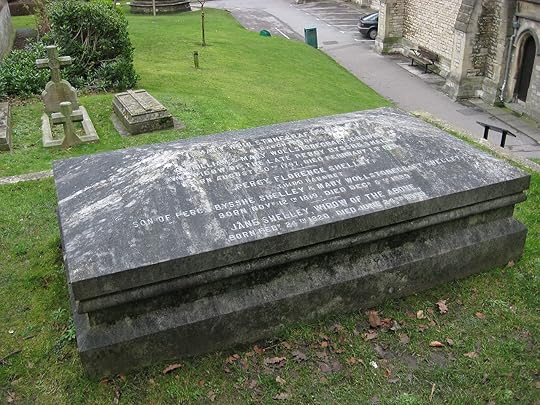
Mary's Grave


Interwoven with Mary’s tale is the tale of grave robbers and resurrectionists who can be found operating in many parts of the world even today! Their profession — stealing bodies — helped medical science but horrified me. Here’s an example, where the body they stole ended up in the hands of Aldini who believed he could shock the cadaver back to life:

“On the first application of the arcs the jaw began to quiver, the adjoining muscles were horribly contorted, and the left eye actually opened.” For those who had not witnessed such things before, Foster actually appeared to have returned to life and was now staring up at them.


The Anatomy Act was introduced as a result of these macabre forays and just made me realize how new laws have to be forged with the arrival of novel situations. Nobody thought they’d need laws for the internet before it became mainstream and yet here we are. It reminds me of something else from the book: even during Mary’s life, others could use her work and adapt it for the theaters etc. There were no copyright laws back then to keep people from doing that!

It is said that while the son inherited his father’s good looks, he didn’t inherit any talent. Personally, I think he was the luckiest of them all.

Some words that stayed with me

All three, it was suspected, formed a crush on Shelley, but only Mary had the mental capabilities and legacy he was attracted to.


Those who came to learn of Shelley’s subsequent romantic adventures knew very well why his wife had been disposed of and that particular mistress gained. Even Harriet knew why she had been set aside. When asked this by Thomas Love Peacock, she replied, “Nothing, but that her name was Mary, and not only Mary, but Mary Wollstonecraft.” Mary Wollstonecraft Godwin, at that.


Some interesting bits

He continued to investigate the drug’s properties and was so astounded with the results, he derived the name laudanum from the Latin word laudare, “to praise.”


One such town was Nieder-Beerbach, on whose summit, barely visible from the water’s edge, stood the famed, or infamous, Burg Frankenstein.
“What’s in a name?” Mary Shelley wrote years later in a book titled Rambles in Germany and Italy.


the castle was the site of much bloodshed when a member of the family was locked in mortal combat with an enemy of unusual fortitude and cunning, with a deep understanding of psychological warfare. The enemy, intent on overtaking Burg Frankenstein, had successfully overthrown other families in the past. Known for his brutality, Vlad the Impaler and his doings provided, in part, inspiration for another gothic masterpiece: Bram Stoker’s Dracula.


most notorious inhabitant, Johann Konrad Dippel, a man who, strangely enough, bore a striking similarity to Victor Frankenstein, and to an extent, to Percy Shelley as well.


Words that I learned

description


Also reviewed at:


BL
BS
WP
LI
ME
232 reviews5 followers
July 23, 2022
If you’re looking for a casual history of grave robbing and Mary Shelley this is the book for you. If you want an in depth biography of Shelley I would say look elsewhere. The author has a tendency to ramble and makes some vague connections between Shelley and other people from that time period. Sometimes they make sense and sometimes they don’t. It does paint an interesting picture of how death was treated during the time. Overall a pretty entertaining read.
Profile Image for Bridget Mckinney.
251 reviews49 followers
April 11, 2013
This might be my favorite book I've read so far in 2013.

Roseanne Montillo delivers a ton of information in The Lady and Her Monsters about alchemists, anatomists, doctors, galvanism, grave robbers, murderers, poets, and Mary Shelley. It's a history of Frankenstein, but it also can be read more broadly as a history of science and science fiction and how the events of the 18th and 19th centuries led to the development of ideas that are still being written about by science fiction authors today.

Sadly, Montillo also tells a story of women like Mary Shelley (and her mother, Mary Wollstonecraft, and sister, Fanny Imlay) who struggled to just survive in a male-dominated society. Even for relatively privileged women, the 18th and 19th centuries were a dangerous time to be alive.

Mary Wollstonecraft struggled with depression, and she was punished in life and after her death for her attempts to live by her proto-feminist principles. She eventually married to attain some level of respectability and stability for her children, only to die at the (literally, not figuratively) filthy hands of the male doctor who was called to assist after the difficult birth of her daughter Mary. She lingered a few days post-birth before dying of puerperal fever.

Mary Wollstonecraft's elder daughter, Fanny Imlay, never married and committed suicide in her early 20s because she feared she was becoming a burden on her family.

Mary Shelley herself suffered a series of miscarriages, stillbirths, and deaths of infants that plunged her into deep depressions that made it difficult to function. Her husband, Percy Bysshe Shelley was unfaithful to her and impatient with his wife's struggles. Her father, William Godwin, told her explicitly that she was basically just a silly woman for being so upset over the loss of her children.

It's also clear on reading the stories included in this book that there were clear double-standards in place, even among such ostensibly socially rebellious people as Lord Byron, Percy Shelley, and William Godwin. What was acceptable for them as men was not tolerated in women.

Byron impregnates Mary Shelley's younger sister, Claire, and then degrades her for having seduced him. Percy Shelley is self-absorbed and focused on his own depression, as well as unwilling to offer his wife much sympathy. William Godwin in his youth was very much akin to Percy and Byron, but is angered when his daughter elopes with Shelley.

Throughout the book, however, the sections that are most interesting are less the ones that are full of old gossip and more those that are full of descriptions of the well-documented nasty goings-on of scientists and doctors of the time. Much of what is presented sounds like a horror story, with lurid accounts of murders, executions, experiments and dissections. Montillo manages to bring to life the setting in which Frankenstein was conceived of and written--in glorious, gory detail.

If you like women's history, literary gossip, science, horror stories or science fiction, you ought to read this book. It took me a while to get through, but only because every single page is packed with stuff that I didn't want to miss by just skimming it.
Profile Image for David.
1,233 reviews35 followers
October 6, 2015
I picked this book up at the Mütter Museum in Philadelphia because I was intrigued about what might have spurred the creation of Mary Shelley's most famous work. The book sets a marvelous scene of what it was to live in Shelley's time period: the scientific potential of 'Galvanism' and its seeming ability to potentially 'raise the dead,' as the people of the time believed that the contractions of muscles of corpses in response to stimulation, especially frogs, was reanimating them through a restoration of their 'inner electric force.' There were even instances of crude attempts at resuscitation, one one (likely completely by chance) cure of Melancholia through an extremely dangerous and unwise use of a species of electro convulsive therapy. (It didn't work in the other cases it was referenced in book).

It seemed, therefore, in Shelley's time, that given the advancement of medical science, 'galvanism,' and the heydays of alchemy, that the forces of life and death might indeed be harnessed by the power of man. (Lo, if they could only see us now, in our Brave New World). Though Frankenstein may seem rather absurdist now, it was viewed as eminently possible in Shelley's era.

The book also exhaustively details the process and advancement of dissection, including the ever pressing need of procuring specimens, which were often procured by 'resurrectionists' (gravediggers), or in later cases, 'Burking,' or outright murder by suffocation. The only legal means of procuring corpses in England for quite some time was by hanging of criminals, which were revealed to be disturbingly popular venues of entertainment, particularly if there was a dissection to follow. (Dissection being seen as an additional insult to the corpse, which many believed would prevent the body from resting in eternal peace based on Christian Tradition).

Where this book falters is its attempt at a biography of Mary Wollstonecraft and the lives of her contemporaries. It does not delve into enough detail to be a true biography, but is far too long for the needs of the book, detracting greatly from it. While I would be interested in reading a biography of Percy Shelley, Mary Wollstonecraft Shelley, and Lord Byron, and their intertwined lives, this novel's abridged version simply didn't cut it, and frankly, shouldn't have tried.
Profile Image for Althea Wynne-Davis.
17 reviews9 followers
February 27, 2013
It takes about 75 pages before Montillo gets to Mary Shelley; however, it is an electrifying 75 pages which describes the environment which bred Shelley's masterpiece. Scientific experiments by Luigi Galvani and Alessandro Volta in trying to re-animate dead frogs, then dead human body parts with electricity. The thriving black market for resurrection men to supply surgeons with dead bodies for dissections - a macabre profession involving grave robbing, public hangings, and profit-minded serial murderers.

All this before Mary Godwin and Percy Shelley's sexual escapades in a London cemetery and eventually, that stormy night in Lake Geneva when a group of friends decide to write their own ghost stories. That night, of course, spawned Frankenstein, but also the first vampire story ever written, The Vampyre by George Polidori.

Montillo does a thorough job laying the foundation of how the scientific and medical advances of that time contributed to Frankenstein's birth. In addition, Montillo writes about Percy Shelley's influence on Mary - his fascination with science and madcap scientific experiments, a surprising side to my vision of the romantic poet.

This doesn't appear to be, nor is it touted as, a biography of Mary Shelley. If going into it with that mindset, you will probably be disappointed. But if you are a fan of the Romantics and Frankenstein, this is a very lively and entertaining read. What led up to Frankenstein is just as exciting, and sometimes as horrifying, as the horror novel itself.
838 reviews85 followers
June 7, 2015
Quite a fascinating book about the background to the creation of Frankenstein. Mary Shelley in keeping with modern parlance was very "aware". Although not a trend setter in that other writers after her emulated her story line. None have. Her book as many of us know did start something much bigger than a following of other writers. Frankenstein became in its way its own culture.
There just a few missing aspects in this book. One being the surprising lack of the follow up to the parentage of the child Elena Adelaide. Her records were put into the collection of Vital Statistics in 1936 and therefore should have been available to any researcher and hence not a mystery. Another being how there isn't a proper mention of how Mary Shelley was able to convince critics, etc. that she was the author of Frankenstein. Otherwise very well done and made to be very interesting, including the curious demise of Percy Shelley. A man who couldn't swim, was excited by sailing and all things marine, and so had a specially rigged boat for himself and subsequently went out in a storm. However, here we find it wasn't just that he went out in a storm or was caught short. Read the book for a rather startling discovery.
435 reviews8 followers
January 1, 2013
NEVER base a book by it's cover....This was an excellent read. Ive been putting it off just reading a lil at a time because I did not know what i was getting into. I began reading this book thinking it was just another book on true horror WOW was I wrong. The book is based on Mary Shelley author of the original "Frankenstein" and what a story it is. It starts at the beginning and goes to her death. most books dont do this. The author Roseanne Montillo goes into deep realizations of what Mrs. Shelley's life really was and the true story about how things were in her day. The emotions brought through her writing seem so true to what a poet really is and how poets from long ago cross generations and still reach into our world today. I truly loved this read. It is a must read for anyone that likes reading about the past, poets, surgeons, scientists etc..

Won on Good read but is one of my best reads so far!!!!
Profile Image for Steven Ramirez.
Author 14 books178 followers
May 6, 2013
You can’t make this stuff up. Galvanism, resurrectionists, anatomists, fey English poets going out of their minds on laudanum and prancing about Italy and Switzerland. Not to mention the weather! It’s the stuff of H. P. Lovecraft and Mel Brooks. Seriously, it’s a wonder anyone kept their sanity. Add to that a soap opera plot that defies logic, and you have ‘The Lady and Her Monsters.’ What a book! And what a cast of characters—Percy Shelley, Lord Byron, John Polidori, and so many others wrapped around the troubled life of Mary Wollstonecraft Shelley. Though it’s interesting how Mary Shelley came to write ‘Frankenstein,’ what fascinated me was everything that led up to the book—especially the alchemy and faux science which had people convinced you could reanimate the dead using electricity. I could go on, but I’ll leave it at this—read this freaking book!
Profile Image for Mark.
438 reviews9 followers
November 22, 2023
The Lady and Her Monsters
Author: Roseanne Montillo
Publisher: William Morrow - HarperCollins Publishers
Publishing Date: 2013
Pgs: 322 pages
=======================================
REVIEW MAY CONTAIN SPOILERS
Summary:
Brings to life the fascinating times, startling science, and real-life horrors behind Mary Shelley’s gothic masterpiece, Frankenstein.

Montillo recounts how—at the intersection of the Romantic Age and the Industrial Revolution—Shelley’s Victor Frankenstein was inspired by actual scientists of the period: curious and daring iconoclasts who were obsessed with the inner workings of the human body and how it might be reanimated after death.

With true-life tales of grave robbers, ghoulish experiments, and the ultimate in macabre research—human reanimation—The Lady and Her Monsters is a brilliant exploration of the creation of Frankenstein, Mary Shelley’s horror classic.
_________________________________________
Genre:
Science
Science Fiction
Literature
History
Anatomy
Horror


Why this book:
A fascination with Mary Shelly and the ghost story on a stormy Swiss lake aspect of the birth of Frankenstein.
_________________________________________

Tropes:
The flavor of Victorian London is thick in the sections regarding the resurrection men, the galvanists, and the subjects of their experiments. Dickens peripherally visiting these pages makes perfect sense.

Uhm Moments:
Considering Mary's history with Germany and Italy, her returning to Venice and Rome doesn't make sense. There were ghosts waiting for her there.

Calling the Ball:
Geez, how many of these people in this era wrote and published stories about what they had for dinner or the nice walk they had or their vacation? This, inadvertently, points out that the inanity of the societal upper crust isn't a recent devolution. Percy, Mary, Byron, their hangers-on(posse), and their ilk(followers) were wannabe influencers before the term came to flower in the internet generations.

Wait...What?:
From the get, we have early anatomists working on corpses in unrefrigerated spaces off their kitchens, and next door to neighbors with the city fathers looking the other way, we have partially dissected frogs hanging from chandeliers waiting for the thunderstorm to roll through, with frogs in place of Ben Franklin's keys, and we have the third generation of these related scientists looking at doing similar work with larger, more developed animals, [insert eyes staring in alarm here]

Turd in the Punchbowl:
Well, that's a depressing frigging thought brought about by Polidori's essay on sleep and the separation of the mind and body. And considering the atmosphere of the times, the Little Ice Age and such, and the stormy, thunderous Lake Geneva setting the novel finds itself in, what if the sleepwalker is seeking his soul's previous family and loved ones? Just a thought...and a magna depressing one at that.

Confirmation Bias:
Byron was a cad using his flights of fancy and his perceived, but never proven, madness as a cloak. Descriptions paint him as flighty as hell. If you leave out his frailties, he would fit well with the modern dudebro running around telling the world that he’s an alpha.

JFC:
From spectators at public executions, scientific dissections, and running electricity through corpses to see how they twitch, to gathering to watch cremations take place atop bonfires, these people were desperate to be shocked, to be entertained, and to see the macabre.

Juxtaposition:
Percy, Mary, Byron, and Claire must have scandalized their world as a quartet roving about. Course it was only the pearl clutchers who would have time to worry about it with all the struggling to survive everyday life and the plague and such.

And the airs taken on by the cultural elites in that era were oh so worldly, even though 99% of them had never been more than a thousand miles from home, much less further into the wider world. But Europe was the entire world to many of those children of privilege playing at the Grand Tour.

Anachronism:
Regarding Mary's publication of Frankenstein, it shows that priggish literary criticism, nerd rage, existed even then, only without the Internet and the ability to blast art before it comes out.

Missed Opportunity:
Mary's story does lend itself to the mood of the era. Though in truth, this purporting to be Mary's story when she is a main character, but hardly the focus. The focus jumps and twists. The story she writes is the focus, but while we've spent the majority of the book laying the groundwork and near its appearance, its presence isn't really felt in the book. "This" could have influenced. "That" may have been part of. Recreating happenstance a century and a half later isn't easy, but that attempt isn't satisfying the point of the book, at least so far. And even though a main character, Mary disappears behind the story of the men in the book. Even, her mother, who is referred to repeatedly as a great feminist and leader of thought, is a cypher left out in the cold.

The Poker Game/DND Table:
I wouldn’t want to sit at a table with any of these people.
_________________________________________
Last Page Sound:
This was well done.

Conclusions I’ve Drawn:
This reads like one of the pretentious tomes of the era when Frankenstein was written, the kind of thing that everyone in the book seems to be het up about publishing and having published about them. Gossip rags and travelogues and the inner thoughts publishing of the era. Despite that, it is well written and flows well.


Percy Shelly was an idiot. Can't swim, but builds a boat. Is in a town full of experienced seamen, but tries to man it all himself. His friend, Williams, obviously fears the boat and all that goes with it, but needs to get home now, instead of waiting for morning when the sailors would sail. Shelly not respecting the sea or boating, reading a book with one hand while manning the tiller with the other. Of course, they drowned.
=======================================
Profile Image for Cari.
280 reviews167 followers
March 21, 2014
I anticipated reading this with the rabid excitement of someone who loves books about the history of books, and I wanted to like it so, so very much. But I didn't. At all. Not because it's bad: in fact, it's quite informative and well-written. Unfortunately, The Lady and Her Monsters is boring as all hell. So I gave up, because life's too short. I can see why many others might love this book but it's not my cup of tea.
Profile Image for Lydia Peever.
Author 12 books130 followers
April 18, 2014
This book certainly made me want to re-read Frankenstein and more about Mary Shelley. I'll be covering this on typicalbooks http://youtube.com/user/sp0okychick as there were some really wonderful bits Montillo dug up. I really enjoyed the device of lightning used throughout, as a bit of whimsy in non-fiction is always welcome. One thing though, I am confused about the claim that this book glows in the dark...
Profile Image for Sarah B.
1,335 reviews30 followers
September 14, 2025
For some reason I had hoped this would be more interesting than it actually was. Yes, I know it's a biography but I have been reading a few of those lately (and memoirs too) but this one just bored me something awful - especially once I got further into the book.

Now I will admit at the beginning of the book there were some rather shocking details in here, not about the author but about society in Europe at the time. These were certainly not things I remember learning in history class at school. The first chunk of the book is about the very real "mad scientists". These were men who were buying corpses to take apart to study the human body. And some of these involved experiments... The experiments are described in here - how they got the dead body to actually move! But one part I didn't like at all is the author who wrote this book never explains WHY the experiment had the result it did. I just think it's very sloppy! So I had to stop reading and go ask Google!! I shouldn't have to ask Google about the results that Galvani (Luigi Galvani) got in his tests. I mean the author should realize that anyone who is going to read this is going to ask WHY he got those results. But that part was totally ignored! And that only frustrated me. As I said, I find that sloppy and careless.

But if what is written in here true, society in Europe was not civilized at all. What the general public considered entertainment is shocking. And that might shock you too. What the people were doing for entertainment was like watching something from a violent R rated movie but in person. Complete with blood and guts on display. It's rather disturbing.

Another part of this book covers the quest to turn lead into gold. Very surprising. But it's in here too. That led me to going down yet another rabbit hole on Google search. But in my opinion it doesn't really have anything to do with Frankenstein (or does it). I guess they didn't realize back then that volcanoes make both lead and gold? And that is when my Google search led me to learn about "Galena" rock / mineral. But as I stated I was doing my own research here. And that was because the author wasn't giving me the information that I wanted or needed to understand this book.

And to my surprise a volcanic eruption actually plays into this story too: Mount Tambora. The awful weather it created around the world. Lots of rain and lightning. Isn't there lightning in Frankenstein?? There sure is!

But when it came to actually telling the life of the author, guess what had happened? I had lost interest! That part just couldn't keep me reading. I found myself doing other things; like watching videos on YouTube or coloring pictures in the adult coloring book I have here. Basically I was preferring other activities than this book. None of it is written in a way that keeps me reading. It's not vivid. There's scandals I just don't care about. The mention of a writing contest was only vaguely interesting.

I guess I just can't relate to this stuff.

Perhaps if the book would be greatly edited and cut out chunks it would be a "cleaner" more precise story about the author? I feel that part was all clogged up with extra info? So the story gets bigger down in excessive detail?? I don't know. I only can say I was bored with this.
Profile Image for Teri-K.
2,489 reviews55 followers
October 23, 2023
I have trouble rating this book. It did tell me quite a bit I didn't know about Mary Shelley and the science of her time, but it also contained a lot of info that wasn't relevant at all - like stories about the grandparents of the scientists. I really wish nonfiction books would stick to their topic, though I suspect they wouldn't then have enough info to make a book. Still, I get really tired of all the padding.

Also, I'd be remiss if I didn't warn readers that there are some horrible scenes in here, including at the opening of the book, detailing the use of animals in scientific research. I suspect a lot of people will be sickened, or at least turned off. I skipped ahead, myself.
Profile Image for Aubrie.
5 reviews
July 31, 2019
This book DOES get better and less dry as it goes on. Many of the early chapters focus heavily on male scientists and doctors, which I found strange considering the title of the book.

If you're familiar with the life of Mary Shelley (or if you've read her Wikipedia article at length), most of the information here won't be new to you. It's a good read if you're hoping for a bit of a fleshed out look into the other things happening around Shelley during this time period.
Displaying 1 - 30 of 279 reviews

Can't find what you're looking for?

Get help and learn more about the design.