Revolutionizing women's dress, Gabrielle "Coco'' Chanel was the twentieth century's most influential designer. Her extraordinary and unconventional journey-from abject poverty to a new kind of glamour- helped forge the idea of modern woman.
Unearthing an astonishing life, this remarkable biography shows how, more than any previous designer, Chanel became synonymous with a rebellious and progressive style. Her numerous liaisons, whose poignant and tragic details have eluded all previous biographers, were the very stuff of legend. Witty and mesmerizing, she became muse, patron, or mistress to the century's most celebrated artists, including Picasso, Dalí, and Stravinsky.
Drawing on newly discovered love letters and other records, Chaney's controversial book reveals the truth about Chanel's drug habit and lesbian affairs. And the question about Chanel's German lover during World War II (was he a spy for the Nazis?) is definitively answered.
While uniquely highlighting the designer's far-reaching influence on the modern arts, Chaney's fascinating biography paints a deeper and darker picture of Coco Chanel than any so far. Movingly, it explores the origins, the creative power, and the secret suffering of this exceptional and often misread woman.
Going in, I was looking forward to reading this account of Chanel's life. After the first 50-60 pages, I was definitely put off with the blatant innuendo and supposition recounted for the reader.
Yes, there are author's notes, notes, and select biographies listed. But I was unable to trust the author once her opinions and guesswork had been sprinkled throughout.
I was undecided whether or not to rate this read 2 stars; but, I then settled on 3 stars for the author surely achieving the goal she had set for the book.
*Upon trying to find out more about the author, I stumbled upon a YouTube interview with Lisa Chaney discussing her book/Coco Chanel and displaying additional pictures not included in her publication.
I really liked this book, so four stars it is. I wanted to read it because I have always agreed with Chanel's basic philosophy about clothes. When you look at a person you should not see the clothes but rather the person. Clothes should not restrict you; they should be comfortable and let you live your life to the utmost. To achieve all this you need simplicity in design and materials that allows movement. My wardrobe consists of comfortable black stretchy shirts and pants, black shoes and the “little black dress”. That is all you need. You don't have to spend hours matching or planning or changing purses. With little effort and time you can get dressed, and still look neat. Traveling is easy, with just a few things to pack! So you see I wanted to know more about this woman. Also, she was French, and I personally love France. Finally, who doesn’t love Chanel No. 5?!
She was born in 1883 in Samur, France, and died in 1971 at the ripe old age of 87 years. She had a terrible childhood, please see below. What she makes of herself is .......admirable, but at what cost? She has a fascinating life, and she knew such fascinating people - artists, authors and politicians. Who should I name? Churchill and Dali and Colette and Picasso and so many others. All the fashion designers between the wars and after the Second World War. These designers were hard for me to keep track of; this is new territory for me. More importantly you learn how she shaped the modern woman, and you come to understand how her ideas were a result of the times she lived through. History and people they shape each other. History, both WW1 and WW2 are essential elements of this book. If historical events bore you, then do not read this book. It is detailed, both concerning history and fashion.
Chanel didn't write - neither diaries nor letters. However, the author has used previous biographies and letters written by others about Chanel, i.e. those who knew her. Chanel contradicted herself; she could say one thing one day and the opposite the next. So which is the truth? You can only see by studying all that is available. Chaney's research is thorough. She both questions what seems false and presents contradictory views. She counters one person's statement against others. I feel now, at the conclusion of this book, I DO understand who she was. I understand her fears, where they came from and how she combated those fears. She feared abandonment and loneliness. She sought to escape through work. Work brought her independence. As I read the book I occasionally questioned some of the author's views, but by the end when I saw all parts of her life and all the choices she made, and where she ends up, I agreed with the conclusions drawn by the author. I wanted to read this book to understand the woman Chanel. This book answered that for me, AND what a very interesting ride it was following this amazing woman.
She was buried in Switzerland, NOT France! Why? Did you know that some saw her as a German collaborator in WW2? Did you know that she had a German lover and he was a spy? You need to know more to understand, to decide for yourself why she did what she did.
I absolutely detested the narration of the audiobook (by Carole Boyd)! As usual, my star rating is based on the content of the written book, not the narration. I am not lowering the stars for the narration. I detest the dramatics with which the lines are read. Boyd plays with accents. Her French is impeccable - I am talking about the pronunciation of French words and names and places - but the tone she uses is highbrow and downright snobbish. Stuffy! The only accent I enjoyed was that she used for the American characters. Others may like that she uses different tones for different nationalities, but since most is in this fake French tone, it drove me absolutely crazy. I like narrators to just slowly and clearly read the text. I don't want to hear the voice but rather the content of the author’s lines. That is me, maybe you are different.
***********************************
After three chapters: Oh, this is one of those books I have to immediately tell others about, AS I read the book. I will say it right out - I love France, more specifically Brittany. I am always blabbing about The Discovery of France: A Historical Geography from the Revolution to the First World War because it gives such a nuanced view of the land. It isn't one land and one people but many. Did you know that French people don't first of all see themselves as French but French of a particular region. Each region is so different. Money(in the past), language, foods, customs - all vary. You must ask, "Which area exactly are you speaking of?" Nothing is homogeneous about this country! Anyhow, my point is that this book about Chanel has all the ingredients of the named book and how it relates to the Chanel family, her paternal ancestors coming from Cévennes. The description of this area, the nature and the landscape is just so very beautiful. Then we told of the change from agrarian to urban life and industrialization. All is told as the background to the choices and decisions made by Gabrielle Chanel's paternal ancestors. You SEE how history shapes individual lives. This is exactly how I want history to be told, through its people. So...this is even better than Robb's book!
After the moving historical introduction the book moves on to her great grandfather, Joseph, and proceeds down to Gabrielle's own parents, Albert Chanel and Eugénie Jeanne Devolle, and herself and her four surviving siblings. Gabrielle was illegitimate; only later was her father coerced into marriage. Her mother dies when she is eleven. Her paternal aunts want nothing to do with her or her siblings, so the girls are pushed off into the cloister Aubazine. Her two brothers were sent to work as tenant farmers for their keep. Her father, well he never showed any interest and just disappeared, but no he probably didn't flee to America. Separated from her brothers, abandoned by her father, life in the cloister was stifling - a shock to a child who had always been on the move. Her father's occupation was an itinerant market trader. This is all very important if one is to understand why Chanel became who she was. Imagination and fantasy allowed her to escape reality. Stubbornness and protest were survival tools. This is all in only the first three chapters. I had to tell someone. I am loving this so MUCH! I hope I am not jinxing the book. Will it now go downhill?
No, I don't like the narration of the audiobook by Carole Boyd, She reads it too emotionally, but I knew I would have to ignore her reading style and focus on the author's words. Why can't narrators just read the lines in the book and and skip all the dramatics?!
When I finished this book, my first thought was, "Oh thank goodness, I'm finally finished with this thing!" I just couldn't get into this, although I didn't dislike it quite enough to give up on it entirely. It took me over month to slog through it. When I read non-fiction or biographies, I want them to be blatantly written for a popular audience: exciting page-turners, ala Erik Larson's Devil in the White City. If I can't have that, then I want the opposite: a book clearly written for an academic audience, usefully footnoted, notable for its rigorous research. The problem with this book is that it didn't fit either of those criteria. It had footnotes, sure, and it appears that Chaney turned up some new info on Chanel, but it also had far too much unsupported conjecture on the part of the author. There was far too much filler here, too. Page after page of background information on Chanel's various lovers didn't often do anything to really illuminate the woman for me and so ended up feeling like the sort of fluff you stuff into a document when you need to reach a particular page count. The bigger problem, though, was that there was so much juicy stuff about Chanel's life that was just glossed over. Things like her drug addiction, her abortion, and her affair/collaboration with a Nazi during WWII were glossed over or not explained fully. I did learn some fascinating facts about Chanel, and this book led to some inspiring conversations at my book club, so I don't entirely regret reading it. I just kept thinking that in the right hands Chanel's story could have been such a page-turner, but overall I found his dull and convoluted.
I have read two previous books on Coco Chanel, one which was terrific and the other not at all. This latest tale started out to be quite promising (I was actually raving about it) but after 186 pages, I called it quits. There is quite a bit more information on Chanel than in the other books plus the people that she was involved with. One thing that really began to get on my nerves was Lisa Chaney's boasting about how she was able to get information that the other biographers were not (she seems full of herself). There's also tons of name-dropping in the book and after so much of this, it became quite tedious and I could no longer stand reading it.
I think I have to admit defeat - I am probably more likely to become queen of Persia than ever finish this book. The subject is fascinating but the writing... Oh, god, the writing. Lets just say it's easier to write on melted butter than to stop your attention sliding away from every word.
I will have to discover Chanel's fascinating life through other books, I'm afraid. Any recommendations are welcome!
Влача тази книга малко повече от 6 месеца. Оставям я и пак я почвам, пак я оставям и пак продължавам. От всеки 100 страници 80 са излишни. Едно дълго и излишно разтягане на локуми.
I love history so I found this book impossible to put down as the background of Chanel's life was so interspersed into the book. The writing is difficult to follow as there are so many places and names that I wasn't familiar with, so I had to check on the internet for more information to understand the context better. What a rich and sad life all at the same time. She was a new generation person living in an old generation time, it seems. She changed the face of fashion, thank goodness -- or we'd be wearing corsets yet! I wish the writer hadn't injected so much of the work she did to find the information: that could have been a book unto itself. Even with the difficult writing I am glad to have the knowledge of Coco's life.
Coco Chanel occupies a singular place in the history of modern fashion. Her name evokes understated elegance, the little black dress, the Chanel suit, and a vision of femininity liberated from the restrictive conventions of earlier dress. Yet behind the polished image of the designer stands a woman whose life was marked by deprivation, ambition, emotional vulnerability, calculated self-invention, and troubling political choices. In Coco Chanel: An Intimate Life, Lisa Chaney seeks to uncover this more complicated figure, moving beyond the familiar mythology of the orphan who conquered Paris to examine the experiences, relationships, and contradictions that shaped Chanel's extraordinary career.
Published in 2011, Chaney's biography draws upon correspondence, historical records, and accounts of Chanel's private and professional life to present a portrait that is both sympathetic and unsettling. Rather than treating Chanel as an uncomplicated heroine of female independence, Chaney explores the psychological costs of reinvention and the uneasy relationship between personal survival and moral responsibility. Her subject emerges as a woman who could be generous and calculating, emotionally wounded and fiercely self-protective, creatively daring and deeply concerned with status.
The book's principal achievement is its refusal to separate Chanel's public success from her private complexities. It recognises that the fashion icon was not simply the product of exceptional talent, nor merely the creation of an ingenious publicity campaign. Her career developed through a combination of aesthetic innovation, commercial intelligence, personal relationships, social opportunity, and an extraordinary capacity to shape the story told about herself.
Chaney's biography is therefore more than a study of fashion history. It is an examination of identity as something constructed, defended, and continually revised. It also asks a difficult question: how should we judge an individual whose achievements transformed a cultural industry but whose private conduct and political associations complicate the legacy she left behind?
From Orphanage to the World of High Fashion
The foundations of Chanel's character are inseparable from her difficult childhood. Born Gabrielle Bonheur Chanel in 1883, she experienced poverty and family instability before the death of her mother in 1895. Her father subsequently left her and her siblings in the care of others, and Gabrielle spent formative years at the convent orphanage of Aubazine. The institution's disciplined environment, with its austere architecture and restrained visual atmosphere, has often been associated with the simplicity of her later aesthetic.
Chaney gives these early experiences considerable psychological significance. Chanel's later determination to escape her origins, establish financial independence, and control her own identity becomes more understandable when viewed against a childhood characterised by insecurity and abandonment. The biography suggests that her ambition was not simply a desire for wealth or celebrity. It was also a response to the vulnerability of depending upon other people.
Nevertheless, the relationship between hardship and achievement deserves careful interpretation. It is tempting to turn Chanel's life into an inspirational narrative in which suffering inevitably produces resilience and success. Chaney's more complicated portrait challenges that comforting formula. Adversity may have sharpened Chanel's determination, but it also appears to have contributed to her emotional guardedness, her sensitivity to social humiliation, and her determination never to return to the circumstances from which she had escaped.
The young Gabrielle's transformation into Coco Chanel was thus both a professional achievement and a personal reconstruction. The name itself became part of a new identity, distancing her from an impoverished past and helping her enter social worlds that had previously been inaccessible to her.
The convent years also offer a suggestive, though not definitive, explanation for her preference for restraint. The severe lines, monochromatic contrasts, and disciplined atmosphere associated with Aubazine can be compared with elements of Chanel's mature design vocabulary. Yet the biography is most convincing when such connections are treated as influences rather than simple causes. Aesthetic innovation rarely emerges from a single childhood experience; it develops through experimentation, observation, materials, commercial demands, and engagement with contemporary culture.
What matters most is that Chanel's early life helps explain the urgency behind her later self-creation. She did not merely wish to become successful. She sought to become someone whom the circumstances of her birth could no longer define.
Reinvention, Simplicity, and the Creation of a Brand
One of Chaney's most compelling themes is Chanel's extraordinary understanding of personal identity as a form of authorship. Long before the modern language of personal branding became commonplace, Chanel recognised that a designer's appearance, lifestyle, social connections, and public narrative could become inseparable from the products she sold.
Her carefully cultivated image was integral to her commercial success. The short hair, understated jewellery, practical clothing, and assured manner presented a striking alternative to more elaborate conventions of feminine display. Chanel made simplicity appear not like a concession to limited means but like a declaration of independence.
This transformation was especially significant in the context of early twentieth-century fashion. Women's clothing often restricted movement through elaborate construction, heavy ornamentation, and rigid silhouettes. Chanel helped popularise garments that drew upon the practicality of sportswear, jersey fabrics, and less constricting forms. Her designs suggested that elegance could emerge from comfort, proportion, and confidence rather than conspicuous decoration.
The little black dress became one of the most recognisable expressions of this philosophy. So did the Chanel suit, with its emphasis on structure, mobility, and a polished but comparatively unencumbered silhouette. Chanel's achievement was not that she single-handedly invented modern women's clothing, but that she helped consolidate and popularise a new vocabulary of modern dress.
Her use of jersey, for example, was important because the fabric had traditionally been associated with practical garments rather than luxury fashion. By elevating a relatively humble material, Chanel challenged established assumptions about the relationship between social status and clothing. She demonstrated that a garment could communicate distinction through its cut and overall effect rather than through expensive ornament alone.
Chaney's account also highlights the commercial intelligence behind this aesthetic. Chanel understood that simplicity could be highly marketable when presented as a symbol of exclusivity. Her clothes did not eliminate the importance of status; they redefined the visual language through which status could be expressed.
This is one of the central paradoxes of her career. Chanel's style appeared to reject excess, yet the brand she built became an enduring emblem of luxury. Her work democratised certain elements of modern dress while preserving the prestige associated with a desirable designer label.
The biography's treatment of reinvention is especially relevant here. Chanel transformed not only garments but also the meaning of her own biography. Her carefully managed persona projected self-sufficiency and authority, while her actual life contained dependencies, compromises, and vulnerabilities that were less compatible with the legend. The gap between the woman and the image becomes one of the book's most revealing subjects.
Love, Loss, and the Vulnerability Beneath the Armour
For all her public confidence, Chanel's private life was shaped by emotional attachments that exposed a more vulnerable side of her character. Chaney pays particular attention to Arthur “Boy” Capel, the English businessman and polo player who became one of the most important figures in Chanel's early adult life.
Capel helped Chanel enter a wider social world and supported her early commercial ambitions. Their relationship was intimate and influential, although it did not result in a conventional marriage. His death in a car accident in 1919 was a profound loss, and Chaney's use of personal correspondence helps illuminate the emotional intensity behind Chanel's otherwise carefully controlled public image.
The significance of Capel extends beyond romance. His support formed part of the network of relationships and opportunities through which Chanel established herself professionally. Her success was an individual achievement, but it was not achieved in isolation. Financial backing, social connections, friendship, and patronage all contributed to the conditions in which her talent could flourish.
This is an important corrective to the familiar narrative of the entirely self-made woman. Chanel possessed exceptional drive, but her career also depended upon access to people and institutions that could help turn ambition into a viable business. Acknowledging those connections does not diminish her accomplishments; it makes them more historically intelligible.
Capel's death also exposes the limitations of Chanel's self-sufficiency. Her cultivated image suggested a woman who could master circumstances through willpower and discipline, yet grief introduced an experience that could not simply be managed through reinvention. The contrast between public authority and private sorrow gives Chaney's portrait much of its emotional depth.
The book also explores Chanel's relationships with figures from the artistic avant-garde, including Pablo Picasso, Igor Stravinsky, and Salvador Dalí. Her connections with artists, writers, musicians, and wealthy patrons placed her within a broader cultural environment in which traditional boundaries between fashion, visual art, performance, and social life were becoming increasingly fluid.
These relationships helped establish Chanel as more than a dressmaker. She became a participant in a modernist culture that valued experimentation, individual expression, and the rejection of inherited conventions. Her friendship with artists and her patronage of creative projects also demonstrate the importance of social networks in the development of modern cultural industries.
Yet it would be simplistic to interpret every relationship as either a romantic attachment or a direct source of artistic inspiration. Such associations operated through friendship, patronage, shared social circles, commercial interests, and intellectual exchange. Chaney's broader achievement is to place Chanel within this interconnected cultural world, even when the precise influence of any particular relationship remains open to interpretation.
Chanel and the Modernist Imagination
Chanel's importance becomes clearer when her designs are considered alongside the wider transformation of European culture in the early twentieth century. Modernism challenged established assumptions about beauty, utility, tradition, and artistic authority. In architecture, painting, literature, music, and fashion, creators experimented with abstraction, simplified forms, new materials, and alternative ways of organising experience.
Chanel's aesthetic was not identical to the theories of modernist artists, but it shared important affinities with this movement. Her preference for clean lines, restrained ornament, and practical forms challenged the idea that feminine elegance required elaborate decoration. Clothing became a means of expressing a modern identity rather than simply reproducing inherited social conventions.
Her relationship with the Ballets Russes production of Le Train bleu in 1924 offers a particularly revealing example of her participation in avant-garde culture. Chanel designed costumes for the ballet, whose creative circle included figures such as Jean Cocteau, Pablo Picasso, and Sergei Diaghilev. The production brought fashion into direct contact with modernist theatre and dance, demonstrating how clothing could contribute to a broader artistic experiment.
Chanel's engagement with artistic circles also complicates the notion that her success was based solely on commercial instinct. She possessed a clear sense of visual composition and an ability to recognise emerging cultural tastes. Her designs responded to changing social conditions, including women's growing participation in public life, leisure, and professional activity.
Nevertheless, her modernity was not without contradictions. The simplicity of her clothing could communicate liberation from restrictive dress, but her business operated within a world of luxury consumption and social exclusivity. Her image of independence was also carefully constructed for commercial purposes.
Chaney's biography is valuable because it allows these different dimensions to coexist. Chanel could be an innovator and a businesswoman, a participant in avant-garde culture and a creator of exclusive luxury, a woman who challenged conventions while remaining deeply invested in status. Her importance lies partly in the fact that these identities were never entirely reconciled.
The Darker Side of the Legend
A biography that concentrates exclusively on Chanel's creative achievements would be incomplete. Chaney addresses aspects of her life that sit uneasily alongside the image of the pioneering modern woman, including her dependence on drugs during parts of her later life, her complex personal relationships, and her conduct during the German occupation of Paris in the Second World War.
These subjects are particularly important because Chanel's public mythology has often encouraged a separation between the designer's artistic achievements and the moral implications of her personal choices. Chaney resists that separation, asking readers to consider how ambition, fear, opportunism, and the desire to preserve status may have shaped decisions made under extraordinary historical circumstances.
During the German occupation, Chanel maintained contact with German officials and became involved with Hans Günther von Dincklage, a German intelligence operative. She also attempted to exploit the antisemitic legal framework of the occupation through efforts to regain control of the Parfums Chanel business from the Jewish Wertheimer family, who owned the perfume company. The arrangement was more complicated than a simple account of personal betrayal: the Wertheimers had anticipated the danger and placed their interests in the hands of a trusted non-Jewish associate before the war. Nevertheless, Chanel's efforts to use discriminatory laws to advance her own commercial interests remain a serious aspect of her wartime record.
Historical accounts also document her involvement in Operation Modellhut, a mission connected to attempts to establish contact with British authorities late in the war. The precise motivations, degree of knowledge, and political significance of her activities remain subjects requiring careful historical assessment. The broader evidence, however, makes it difficult to portray Chanel as entirely detached from the political realities of the occupation.
This is where Chaney's biography becomes morally demanding. To what extent should Chanel's actions be interpreted as strategies of personal survival? How far did opportunism and self-interest shape her conduct? And how should these choices affect our assessment of her professional achievements?
The context of occupation matters. Paris under German rule was a society shaped by fear, coercion, collaboration, resistance, and the uneven distribution of danger. Individual actions must be understood within these circumstances. But context is not the same as absolution. A desire to protect one's position does not erase the consequences of exploiting discriminatory policies or cultivating relationships with occupying authorities.
The most useful approach is therefore neither to reduce Chanel to a villain nor to excuse her behaviour because of her artistic accomplishments. Chaney's portrait encourages readers to hold both realities in view: Chanel's influence on modern fashion was substantial, and aspects of her conduct during the war remain deeply troubling.
There is also a broader lesson about the relationship between biography and reputation. A person's achievements can become so culturally valuable that institutions and admirers are tempted to minimise inconvenient evidence. By confronting Chanel's wartime associations, Chaney challenges the assumption that cultural greatness confers moral authority.
A Critical Assessment of Lisa Chaney's Biography
The principal strength of Coco Chanel: An Intimate Life is its willingness to examine the tensions between the public figure and the private individual. Chaney presents Chanel as a person shaped by early deprivation, but not defined entirely by it; a designer whose creative achievements were inseparable from commercial calculation; and a woman capable of emotional attachment whose need for control often appeared to take precedence over vulnerability.
This complexity distinguishes the biography from more celebratory accounts of Chanel's life. The familiar story of an abandoned child who becomes an international fashion icon has undeniable narrative appeal, but it can turn historical experience into a reassuring tale of individual triumph. Chaney complicates that narrative by showing that self-invention can involve concealment as well as liberation, and that ambition may generate both extraordinary achievement and damaging compromises.
The book also benefits from its attention to Chanel's emotional relationships and cultural surroundings. Rather than presenting fashion as an isolated commercial activity, Chaney connects the designer with the artistic networks, social transformations, and personal attachments that shaped her career. This approach helps explain why Chanel's influence extended beyond clothing into the wider culture of modernity.
Nevertheless, readers should approach the biography with some caution. The psychological interpretation of Chanel's childhood, emotional defences, and later behaviour can sometimes encourage the impression that the adult woman can be explained primarily through early trauma. Such interpretations are suggestive, but they cannot always be established conclusively from historical evidence. Chanel's life was shaped by social structures, economic circumstances, professional decisions, and historical events as well as by personal psychology.
There is also a distinction between revealing private details and achieving a fully balanced historical assessment. The inclusion of intimate relationships and personal correspondence can deepen a portrait, but private material does not automatically establish motives or settle disputed interpretations. Claims concerning Chanel's relationships, wartime activities, and political sympathies are best evaluated alongside independent historical research.
I've seen the recent movies and read several of the older biographies as they came out. Still, there is a lot new here, and always more to learn about this extraordinary woman. Focusing only on the intimate life of Gabrielle Chanel, sets this book apart.
To understand Chanel you have to consider the actual childhood and the childhood she imagined and the power of her first experience of being in love. Arthur Capel and Chanel were in love but her common roots and her growing success made the aristocratic Diana Wyndham a safer choice. His life, his views expressed through his writing, his success and her youth make his marriage and his death defining moments for Chanel. Subsequent liaisons could never measure up/ The men that possibly could have filled his shoes seemed to want to compete with her as she became more and more successful.
Lisa Chaney suggests that Arthur Capel may have committed suicide. I had wondered this, since the accounts of the accident, and the film portrayal of the scene would suggest whiplash and not a burned body. From the newly discovered letters, and his continuing relationship with Chanel after his marriage, he was under enormous strain.
Her success makes it hard to believe the first hand reports about Chanel's drug use. The number of sources and their close relationships with Chanel make them credible. That Reverdy, a lover who in 1924 left Chanel citing her addiction as a reason, means that she functioned as an addict for almost 50 years.
Chanel's circle includes some of those in the Hemingway-Fitzgerald orbit, but, in this book, these American ex-pats hardly figure. There is only one mention of the Fitzgerald's, a passing reference at that.
This book covers one aspect of her life. Other biographies explore her career, style or different periods and single relationships. I would like to see one focus on the business. Chanel claims not to be a good businesswoman... despite her phenomenal success. Her contract on Chanel No. 5, seemed to be foolish and unnecessary, and putting Iribe in charge of renegotiation, more foolish yet. Far too many dresses and accessories were created to be the work of just one person. How was the firm run during her long absences? How did the Wertheimers wind up with not just the perfume, but the fashion house as well? The business end of the business remains a mystery to me.
Chaney helps you understand Chanel, sometimes through Chanel's very own words. Throughout the book there are revealing quotes about her loneliness and the need to compromise with men for their love. She seems to have understood herself and her times.
This is an excellent book and I highly recommend it for anyone interested in Chanel, fashion or this period. what most reviewers here have said - but it's the best book on Chanel I've read. It's full of information, easy to read, and it paints a picture of the deeply complex woman and her times. I recommend it totally.
Coco Chanel was an incredibly interesting figure; she was such a hardworking woman but her life was also so heartbreaking. Her loneliness, her independence, and her stubbornness were an intriguing mix. As far as the book goes, it was well-written but sometimes there was just too much information about the same thing written in several different ways. The book was interesting and there was a lot of information. I really liked that it described all of the stages of Chanel's life chronologically because in many biographies the information can be just simply mixed. Overall, I liked this book but sometimes it was a bit boring.
Повече от колкото бих могла да изразя с думи. Изключително детайлно проучване за живота на една легенда. Единственото, което не ми хареса бяха прекалено многото имена, но в никакъв случай това не променя високата ми оценка. Силно препоръчвам! (Особено за хора, които обожават модата, силата, идеята за независима и борбена жена и се кланят не на името, а на труда положен за изграждането му.) ,,Онези, за които се пишат легенди, са самите легенди”
4.5⭐️ Un libro che non racconta soltanto la storia di un’incredibile donna, ma anche della modernità, di cui è stata un’indiscussa promotrice. L’unica pecca riguarda la mole: il libro avrebbe potuto contare molte meno pagine.
Sāku. Mocīju. Mocīju. Atmetu ar roku. Dažreiz vajag atstāt ilūziju par cilvēkiem. Lai viņa paliek kā spēcīga sieviete biksēs ar pērļu kaklarotu un mazo melno vakarkleitiņu skapī.
"Aging is Adam's charm and Eve's tragedy." Gabrielle "Coco" Chanel made some good quips in her day, and her day was a long one, influencing the way women dressed from the first decade of the 20th century until her death in 1971. She worked hard to escape the poverty of her youth and had a knack for what we would call "networking" today. Some criticize the author for bragging about her new sources, but if you haven't got any new sources why bother with a new book? Somewhere between Gabrielle's sanitized portrait of herself, other biographers versions and recently uncovered diaries lies a truth we can never know but still have a good time speculating over. I began knowing little about Coco Chanel except that she'd made suntans fashionable. (Not strictly true, but close enough.) She did concoct Chanel Nº 5 (the best selling fragrance of all time) invent the "little black dress" and have a list of lovers including Picasso, Stravinsky and a Nazi spy. A fascinating woman. Not entirely sympathetic, but fascinating.
Nu stiam aproape nimic despre Gabrielle Chanel inainte de aceasta carte, iar povestea ei m-a inspirat cum putine personalitati au reusit. Probabil, cel mai complex personaj cu care am „facut cunostinta” pana acum, a demonstrat ca te poti ridica de jos chiar si atunci cand nu ai nimic. In acelasi timp, a stiut sa isi foloseasca farmecul si aerul enigmatic pentru a atrage in jurul ei cele mai puternice personalitati, fara sa isi compromita reputatia.
Ambitia, munca, independenta si curajul de a ramane originala, indiferent de pret, m-au impresionat cel mai mult, mai ales pentru ca scopul ei nu au fost banii in sine, ci construirea unui stil de viata pe masura viziunii sale despre eleganta si haute couture. Nu a renuntat nici macar la apartamentul ei de la Ritz in timpul Ocupatiei germane, desi avea alte proprietati in apropierea Parisului, o dovada a felului in care nu era dispusa sa renunte la stilul de viata pe care si-l construise.
Mi-a placut mult si felul in care Lisa Chaney a scris armonios si elegant, a făcut o cercetare amplă nu doar asupra lui Chanel, ci și asupra oamenilor care i-au influențat viața. Cartea folosește, printre altele, scrisori, jurnale și alte documente descoperite. Loved it 🧡🧡
First time closer look to this fashion icon from this reader. A very complex individual, smart, driven and at the same time incredibly sad and insecure when one looks at her life, dying alone, with no family and hardly any friends left. Work was her driving force and raison d'être, as well as her relentless pursuit for love, which she found in various eras of her life, mostly through affairs. The historical unerpinnings in this book were interesting, giving a glance into high society life in Paris in the 20s.
The book seemed 80% about her affairs and 20% about her business. I would have preferred the reverse. This was the case until Coco was older and less interested in affairs, then the book described her business in much more detail, but that was only in the final fifth of the book.
Ta książka to w 50% opis życia i działalności Coco Chanel, a w 50% przedstawienie historii Paryża za czasów życia Coco. Jeśli ktoś szuka szczegółowej biografii o projektantce to niestety nie jest ta pozycja. Zbyt dużo wątków dookoła, które miały nieznaczny wpływ na główną bohaterkę.
Really enjoyed this book and the amount of context it provided about the world and events occurring around Coco that both influenced her and which she contributed her own influence on. Excellent read.
În general, îmi plac volumele biografice și memoriile. De data aceasta, trebuie sa recunosc faptul ca nu am regăsit plăcerea de a citi despre o personalitate care a marcat sec XX. Legendara sau nu, povestea de viață e trista, lipsita de potențialul inspirațional, pentru mine personal, în ciuda performanțelor profesionale considerate exceptionale! Un destin trist care a reușit sa iasă din anonimat, fără însă să se ridice la înălțimea morală a unei mari personalități!
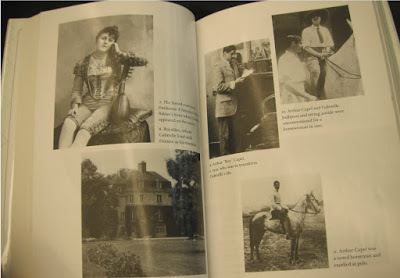
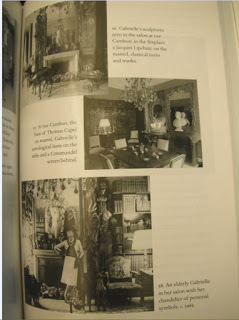
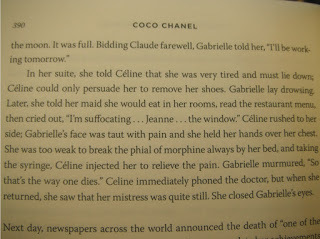
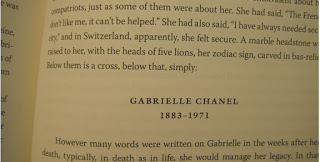
This book is a fascinating journey through the life of one true muse of our time. She was the inspiration for so many artists and women and men of great talent, and she had an amazing life, full of relations with the most dazzling intellectuals and cultural icons of her time. This is the book I read: The parts I enjoyed the most, were the pages with all those pictures showing this remarkable woman at different stages of her life. She was a truly independent person, and she fought for what she obtained with the weapons nature gave her: her feminine ways. She was intelligent and valiant. Here are some pictures portraying her at her youth: Here are pictures of some of her love interests, and there is one of one of her “competitors” in the business of finding the love of her life. There is also photographic evidence of her relationships with artists such as Igor Stravinsky, and with famous names of her time such as Dimitri Pavlovich. There is also a rare photograph with Misa Sert, a remarkable woman believed to be Chanel’s lover as well. As you can see, she was really a serious woman when coming down to the business of love and survival. These are photos with her jewelry designer, also with Dali and other personalities. I couldn’t help to notice that she smoked during all her long life. That was probably a contributing factor for her demise at 87 (just joking!) And here are some depictions of her lavish lifestyle. Her luxurious apartment in the Ritz. Although she lived in a hotel room for 30 years, that did not prevent her to make it her home in every way. Finally, in page 390 we find a description of her death, just as anyone else’s, she stopped breathing after feeling a little ill one Saturday. Her headstone was marked with her name and two years: born and dead. It is simple and elegant.
In summary, very interesting and well-told story from the standpoint of Gabrielle Chanel, the muse, the inspiratory, the artist Maecenas, instead of the very well-known fashion icon.
I had to run over to my stack of library books to remember the last book I had read. That tells me something about this book. I am not all that interested in fashion history but I do have a thing for the French, having lived there for a year a few eons ago. That being said, this is a book that digs into Chanel's life, however, she is a woman who loved to cloak herself in mystery. So no matter how diligently Ms. Chaney dug and dig she did, there is a veil of mystery that one feels in reading to the point where you finish the book and have a hard time saying much about Chanel. I didn't learn much more than I already knew. A string of affairs, dubious wartime conduct, anti-semetic leanings that were confused by deep friendships with Jews. All in all, a woman who freely acknowledged that she was bundle of contradictions. Ms. Chaney is a good writer and knows how to present Coco in a fashion that brings out both her charms and ugliness. She has a very sad background, which was one of the best parts of the book. Most of her life bounced from man to man without any great discovery or revelations and that, perhaps is this books downfall. Most of Coco Chanel's life was lived in success. And sometimes that is not the most interesting story. It's worth checking out though. I did enjoy returning to it while I read and finished the whole book.
Much of the details of Chanel's life are hard to pin down as she was prone to exaggeration and falsification at times. However, the truth would have been much more exciting. Chanel overcame quite a lot to establish herself as an independently wealthy woman, and her rise to fame is quite interesting. The book not only describes Chanel's life but also offers glimpses into the myriad of personalities she associated with in pre-war Paris.
With little to no knowledge of Chanel before I read the book, I found Chanel's life and experiences intriguing. Chaney does at times become a little apologetic about Chanel's actions and often infers quite a bit into her motivations. Due to the lack of information available to her, this does help sketch a better picture. How accurate the picture could be hard to say. Overall, I would say Coco Chanel: An Intimate Read is worth picking up, especially if you are unfamiliar with Chanel herself. You might be surprised about what you learn.
Interesting at times, but overall a dull read that I wouldn't recommend. The author doesn't do a good job of providing historical information that would be relevant to the time period. Sure a little here and there, but I noticed myself consistently wanting more of the background painted for the events in her life. Instead this lengthy biography chooses to drone on about whatever affair she was carrying on at the time-and there were a lot of them.
Cut out the middle third of the book and it would be a much easier (and enjoyable) read. If you want to quit after ~150 pages, I'd recommend fast forwarding to the last hundred pages and picking up there. She goes thru the latter decades of her life quickly, and although it's lacking depth, it's still interesting to see how her life turned out.
We see an intimate life story of Chanel from the very beginning to the end of her days and the legacy she left behind. What made Chanel Chanel? Beside the glamour and luxury that comes with her name, her brand of perfume that we're most familiar with at the moment. The book give details about her past lovers, who she rubbed shoulders with (Salvador Dali, Winston Churchill etc.), the politics and destructiveness brought on by the World War 1 and so on that Chanel had to persevere through.
If I can sum her up in one brief sentence is that Chanel was never apologised or stood in the way of becoming the person she wanted to be. She was proud to be her own person and brave enough to do what she most believed in, whether it is her lifestyle or the clothes that she created. I recommend this as a read if you're looking for memoirs or people from the past to be inspired by.
At first it was really hard to get into the book. It wasn't until the middle of the book that i started enjoying it and i couldn't put it down during the last 100 pages because i couldn't wait to finally read it and move on. It was a very very detailed research. I remember reading the book and coming across Hitler and his dream to go to Paris. And i had to go back a page to see what the connection between Hitler and Chanel was. Then again if you spend 3 years on research you would want to add everything you find. I was simultaneously reading Tamara Mellon's memoir -which i read way faster- and found it much more easier to read. A have set hours for reading and i was looking forward to reading In My Shoes and postponed reading An Intimate Life as much as possible.
Gabrielle Coco Chanel wrote her own epitaph: "My life is the story--and often the tragedy--of the solitary woman. Her woes, her importance, the unequal and fascinating battle she has waged with herself, with men, and with the attraction....and dangers that spring up everywhere. Today, alone in the sunshine and snow...I shall continue, without husband, without children, without grandchildren, without those delightful illusions...My life has been merely a prolonged childhood. That is how one recognizes the destinies in which poetry plays a part...I am not a heroine. But I have chosen the person I want to be."
Life's too short. I read half of this book and it never got good. It reads with about as much enthusiasm as a text book. When they say "intimate life", that's all you get. I'm not that much of a voyeur to care about the love lives of people I don't know. I glanced at later chapters and it didn't look like we were ever going to get into her business. Although well researched, the writing way difficult to get through. The slowest book I have ever read.