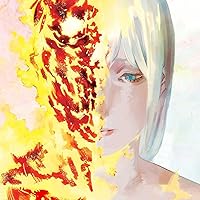
A comic-book adaption of the classic horror tale, released under a Creative Commons Attribution license.
“Richard Upton Pickman, the greatest artist I have ever known—and the foulest being that ever leaped the bounds of life into the pits of myth and madness”
Pickman, painter of grotesque masterpieces too horrible to imagine, disappears without a trace. His last friend among the living recounts their fateful trip to Pickman’s secret studio in Boston’s run-down North End. In his classic tale “Pickman’s Model”, grand master and grandfather of the modern horror-tale H.P. Lovecraft lets his characters delve into the darkest nature of weird art. Though faithful to both Lovecraft's text and spirit, cartoonist Kim Holm’s art argues for a vastly different take on horrific art. In grim brush-strokes and ink-spatters, the art dissolves from cartoony realism into nightmarish expressionism as Pickman leads the unknowing art-lover down into his cellar studio, down into the depths of horror.
Adaptación a novela gráfica del relato de Lovecraft. Los dibujos, en blanco y negro, son una buena ambientación para una historia de terror. Tengo ganas de leer el relato original.
I wasn't looking for H.P. Lovecraft or adaptation of his work when I came across this comic book at the Internet Archive, but I'm glad I did. It's a interesting piece. Kim Holm is the author, but it is based on a short story by Lovecraft which is called "Pickman's Model."
Apparently the short story is unusual for Lovecraft in that it uses a first person narrative. In the story Thurber tells his story to Eliot. We get Thurber's story and his answers to Eliot's questions, but never the questions themselves. So the whole story is a monologue by Thurber.
I think it must be tempting when adapting this story for a visual medium, like a comic book in this instance, to cut the conversation between Thurber and Eliot, and just show what happens between Thurber and Pickman, but Kim Holm doesn't do that. He shows us the man telling the story, his facial expressions, heavy smoking and then cuts to the events of the story he is telling, then back and forth. So he shows us what is happening on two planes, just as Lovecraft did. In that it is a straight adaptation. Holm doesn't use all the text of the story, shortens some parts, but he uses most of it unchanged as far as I can see.
What I think is so good about this book is that Holm manages to retain the strength of the original short story. The creepiness slowly builds up without showing that much. On the whole I liked Kim Holm's version of Pickman's Model quite well.
Kim Holm’s graphic adaptation of H. P. Lovecraft’s "Pickman’s Model" is a stark, powerful homage to the original tale. The black-and-white illustrations are fascinating in their rawness—morbid, dry, stripped down to essentials—perfectly matching the atmosphere of unease and dread that Lovecraft evokes in prose. What makes both the story and this adaptation extraordinary is precisely what remains unseen. Lovecraft never reveals; he hints, suggests, and leaves the terror to the reader’s imagination. Holm translates this into art with remarkable fidelity: the pages thrum with tension, yet the final horror is left just beyond the frame. The result is not only faithful but also artistically bold. Holm deserves full praise for capturing, in lines and shadows, the very essence of Lovecraft’s storytelling—the crescendo of fear that is more effective for what it withholds. A must-read for fans of Lovecraft and of horror comics alike.
Pickman's Model is a classic Lovecraft story, it’s based on descriptions of horrors, or rather, descriptions of something so horrible that it cannot be described. In this case, it’s Pickman's pictures that are so terrible, and Kim Holm does fortunately no attempt to draw these horrors, his portrayal is dominated by the faces of the narrator and of Pickman speaking. It works well. Another classic Lovecraft move is that the horrific truth is revealed in the last paragraph, preferably in the last sentence. With Holm, the revelation comes on the last page. Holm has made a good adaptation of the short story, the weaknesses lie more with Lovecraft than with his adaptation.
Esta historia ya es un gran cuento de terror de Lovecraft pero en este comic se luce Holm construyendo una atmósfera de pesadilla. Es una de las mejores adaptaciones de este cuento, que es uno de los más adaptados de la obra de Lovecraft.