

What do you think?

Porte aperte
A Palermo, verso la fine degli Anni Trenta, «un crimine atroce e folle, di cui è protagonista un personaggio vinto quanto quelli di Verga e sgradevole quanto quelli di Pirandello». La macchina giudiziaria si muove – e sin dall’inizio aleggia sul processo l’ombra della condanna a morte. In Italia «si dorme con le porte aperte»: era questa una delle più sinistre massime del regime, che molto teneva a sottolineare, in mancanza della libertà, il proprio culto dell’ordine. Ma, trasportata a Palermo, «città irredimibile», quella massima assume subito altri significati. Qui «aperte sicuramente restavano le porte della follia». E, controparte della follia, qui regna una vischiosità di rapporti che inficia ogni gesto, ogni parola. Eppure, proprio qui si profila un personaggio che rappresenta l’opposto: il «piccolo giudice» che, trovatosi fra le mani quel delicato processo dove le autorità tenevano ad applicare la pena di morte, quale prova della loro fermezza morale, testardamente si oppone, soltanto perché ha un’idea netta e precisa della Legge. In queste pagine, che vibrano di un occulto furore, Sciascia ci fa avvicinare ancora una volta, e più che mai, al cuore nero e opulento della Sicilia, scenario e humus di una vicenda che «assurge a significare la pena del vivere, lo squallore e l’indegnità di quegli anni, la negazione della giustizia».
109 pages, Paperback
First published January 1, 1987
Ratings & Reviews
Friends & Following
Create a free account to discover what your friends think of this book!
Community Reviews
Displaying 1 - 30 of 69 reviews

May 31, 2026
PLATONE D’ESECUZIONE
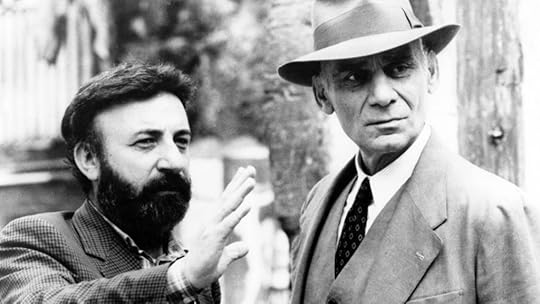
Gianni Amlelio ha diretto l’omonimo film con Gian Maria Volontè protagonista (il “piccolo” giudice) nel 1990.
Sciascia scrive come se giocasse una partita di scacchi: nasconde all’avversario (= il lettore) le sue reali intenzioni; muove un passo alla volta pur sembrando restare fermo; irretisce l’oppositore (= il lettore) e lo porta a dover concludere come vuole lui, ma solo all’ultima mossa (= ultima pagina).
E ha uno spiccato interesse per il ventennio fascista, epoca nella quale ambienta spesso le sue storie. Anche se è facile cogliere che parla a nuora perché suocera intenda: lancia strali e stoccate al fascismo ma si sta rivolgendo anche all’Italia sua contemporanea e a quell’orrido partito che l’ha governata per quasi cinquanta anni.
E ama la materia giuridica, con la quale è facile, pressoché spontaneo, filosofeggiare, trasformare narrativa in saggistica. Diritto in letteratura.
Mi ricorda tanto Friedrich Dürrenmatt.
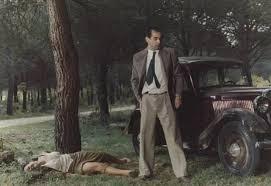
Ennio Fantastichini è l’imputato.
Le porte aperte del titolo sono quelle che secondo il fascio gli italiani possono lasciare perché la sicurezza è da loro (le camicie nere) garantita.
E la sicurezza è assicurata, e quindi le porte aperte sono incoraggiate, perché Mussolini & Co. hanno reintrodotto la pena di morte.
Invece Sciascia, così come il piccolo giudice che è il protagonista di questa novella, non crede affatto ai vantaggi della pena capitale, che reputa ingiusta e oltraggiosa. Porte aperte si può leggere anche come un inno contro la pena di morte, contro occhio per occhio, o ancora peggio, una testa per un dente.
Il giudice è “piccolo” non per la statura, ma per intendere che non è il presidente, solo il giudice a latere.
E come Henry Fonda in La parola ai giurati (= Twelve Angry Men, 1957) sarà quello che dai dai convincerà gli altri giurati, là dell’innocenza, qui dell’ergastolo invece che il plotone d’esecuzione.
Solo che Sciascia ha il colpo di coda che stronca.
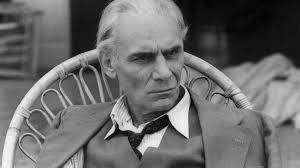
Sciascia definì Porte aperte una parodia del romanzo “giallo”. Non si potrebbe essere più d’accordo: la novella è priva di mistero e caccia al colpevole, non presenta momenti investigativi, l’imputato è reo confesso, non insiste sui fatti delittuosi, ma offre soltanto scarne testimonianze, è reticente sulla discussione in camera di consiglio. L’incertezza sulla sentenza non è dovuta agli imprevisti della discussione, a una testimonianza sorprendente, al ripensamento improvviso di un giurato, quanto alla contrapposizione radicale tra due differenti posizioni sulla pena di morte. Non si cerca il whodunnit, ma il perché, il movente.
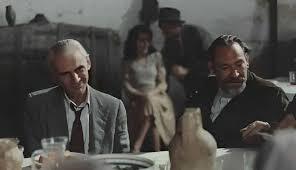
Renato Carpentieri è un giurato popolare.
Gianni Amlelio ha diretto l’omonimo film con Gian Maria Volontè protagonista (il “piccolo” giudice) nel 1990.
Sciascia scrive come se giocasse una partita di scacchi: nasconde all’avversario (= il lettore) le sue reali intenzioni; muove un passo alla volta pur sembrando restare fermo; irretisce l’oppositore (= il lettore) e lo porta a dover concludere come vuole lui, ma solo all’ultima mossa (= ultima pagina).
E ha uno spiccato interesse per il ventennio fascista, epoca nella quale ambienta spesso le sue storie. Anche se è facile cogliere che parla a nuora perché suocera intenda: lancia strali e stoccate al fascismo ma si sta rivolgendo anche all’Italia sua contemporanea e a quell’orrido partito che l’ha governata per quasi cinquanta anni.
E ama la materia giuridica, con la quale è facile, pressoché spontaneo, filosofeggiare, trasformare narrativa in saggistica. Diritto in letteratura.
Mi ricorda tanto Friedrich Dürrenmatt.
Ennio Fantastichini è l’imputato.
Le porte aperte del titolo sono quelle che secondo il fascio gli italiani possono lasciare perché la sicurezza è da loro (le camicie nere) garantita.
E la sicurezza è assicurata, e quindi le porte aperte sono incoraggiate, perché Mussolini & Co. hanno reintrodotto la pena di morte.
Invece Sciascia, così come il piccolo giudice che è il protagonista di questa novella, non crede affatto ai vantaggi della pena capitale, che reputa ingiusta e oltraggiosa. Porte aperte si può leggere anche come un inno contro la pena di morte, contro occhio per occhio, o ancora peggio, una testa per un dente.
Il giudice è “piccolo” non per la statura, ma per intendere che non è il presidente, solo il giudice a latere.
E come Henry Fonda in La parola ai giurati (= Twelve Angry Men, 1957) sarà quello che dai dai convincerà gli altri giurati, là dell’innocenza, qui dell’ergastolo invece che il plotone d’esecuzione.
Solo che Sciascia ha il colpo di coda che stronca.
Sciascia definì Porte aperte una parodia del romanzo “giallo”. Non si potrebbe essere più d’accordo: la novella è priva di mistero e caccia al colpevole, non presenta momenti investigativi, l’imputato è reo confesso, non insiste sui fatti delittuosi, ma offre soltanto scarne testimonianze, è reticente sulla discussione in camera di consiglio. L’incertezza sulla sentenza non è dovuta agli imprevisti della discussione, a una testimonianza sorprendente, al ripensamento improvviso di un giurato, quanto alla contrapposizione radicale tra due differenti posizioni sulla pena di morte. Non si cerca il whodunnit, ma il perché, il movente.
Renato Carpentieri è un giurato popolare.

February 22, 2024
Il fine sarcasmo è, notoriamente, la cifra stilistica di Sciascia.
Un’ ironia che procede a stilettate mettendo in tavola grandi temi della Storia.
Il suo procedere ha una base erudita che utilizza una sintassi intricata e questo può sconcertare il lettore.
Insomma, seppur breve, questa lettura – come quasi tutte le sue opere- non deve essere sottovalutata. Richiede molta concentrazione per poi esserne ripagati con moneta preziosa.
Lo spunto nasce da un fatto di cronaca nera.
Siamo a Palermo nel 1937, un impiegato, dopo essere licenziato uccide la moglie, il collega che doveva prendere il suo posto e il capoufficio noto gerarca fascista palermitano.
A dieci anni, circa della reintroduzione della pena di morte (Codice Rocco), la condanna alla pena capitale dopo un omicidio così efferato è data per scontata da tutti.
Tutti tranne il giudice (detto a latere) che moralmente si oppone ad una logica da Legge del Taglione.
Se nel 1829 Victor Hugo s’immedesimo nei pensieri di un condannato a morte (L'ultimo giorno di un condannato a morte), in questo breve romanzo del 1987, Sciascia ci accompagna nei pensieri di chi ha potere di comminare tale pena.
Oltre alle riflessioni di chi che sa di andare controcorrente al pensiero dominante, l’autore inquadra l’impostura generale in cui la storia si colloca.
La menzogna parte dalla stampa imbavagliata dal regime.
I giornali, infatti, avevano il divieto di riportare i fatti di sangue. La realtà così edulcorata serviva a confermare quell’immagine di sicurezza di un’Italia in buone mani.
Un’Italia dove chiunque poteva dormire con le porte aperte ...
” Non era soltanto un problema di giustizia, di amministrarla secondo la legge o di affermarla contro la legge; era anche un problema di interiore libertà, comunque dovuta a chi è chiamato a giudicare.”
Un’ ironia che procede a stilettate mettendo in tavola grandi temi della Storia.
Il suo procedere ha una base erudita che utilizza una sintassi intricata e questo può sconcertare il lettore.
Insomma, seppur breve, questa lettura – come quasi tutte le sue opere- non deve essere sottovalutata. Richiede molta concentrazione per poi esserne ripagati con moneta preziosa.
Lo spunto nasce da un fatto di cronaca nera.
Siamo a Palermo nel 1937, un impiegato, dopo essere licenziato uccide la moglie, il collega che doveva prendere il suo posto e il capoufficio noto gerarca fascista palermitano.
A dieci anni, circa della reintroduzione della pena di morte (Codice Rocco), la condanna alla pena capitale dopo un omicidio così efferato è data per scontata da tutti.
Tutti tranne il giudice (detto a latere) che moralmente si oppone ad una logica da Legge del Taglione.
Se nel 1829 Victor Hugo s’immedesimo nei pensieri di un condannato a morte (L'ultimo giorno di un condannato a morte), in questo breve romanzo del 1987, Sciascia ci accompagna nei pensieri di chi ha potere di comminare tale pena.
Oltre alle riflessioni di chi che sa di andare controcorrente al pensiero dominante, l’autore inquadra l’impostura generale in cui la storia si colloca.
La menzogna parte dalla stampa imbavagliata dal regime.
I giornali, infatti, avevano il divieto di riportare i fatti di sangue. La realtà così edulcorata serviva a confermare quell’immagine di sicurezza di un’Italia in buone mani.
Un’Italia dove chiunque poteva dormire con le porte aperte ...
” Non era soltanto un problema di giustizia, di amministrarla secondo la legge o di affermarla contro la legge; era anche un problema di interiore libertà, comunque dovuta a chi è chiamato a giudicare.”

July 26, 2013
I only read the novella 'Open Doors', and I did it in the original Italian, 'Porte aperte'. It's a short story about a judge in Palermo (Sicily) who in the 1930s participated in the trial of a man that committed a triple murder: on his wife, on a competing colleague and on the head of his Office. The latter was an important pawn in the ruling fascist party, so everyone expected the death sentence to be pronounced. In this booklet Sciascia in a very dense way presents the musings of the judge, pondering on his conscience, on the pressure that is exerted in offical and unofficial ways, etc. At stake was an important ideological element: the official asumption that with the fascist party of Mussolini in charge, everyone could sleep safely with doors open (hence 'porte aperte'). An interesting but rather tough read, revolving around themes like societal pressure, power politics, individual ethic and disruptional events.
Reread in 2012: Sciascia sure makes his antifascist point, but now I was surprised by a remarkable (and fairly anachronistic) attack against Israel. (rating 2.5 stars)
Reread in 2012: Sciascia sure makes his antifascist point, but now I was surprised by a remarkable (and fairly anachronistic) attack against Israel. (rating 2.5 stars)

March 7, 2024
Sicilia. Regine fascista. Questo è il tempo-spazio dove si muove la scrittura di Sciascia, sempre così tagliente. Centrale è la presa di posizione di un giudice che, contrario alla pena di morte, condanna 'semplicemente' all'ergastolo un triplice omicida reo confesso: non c'è una presa di posizione contro il regime franca, anche se così viene letta la sua azione che avrà ripercussioni sulla carriera, ma una scelta di fedeltà a sé stessi, ai propri ideali e principi a prescindere dalla pressioni esterne e conseguenze. Il personaggio sul finale quindi risalta in tutta la sua grandezza rappresentata dall'integrità, virtù molto cara all'autore e che in un periodo di personaggi grigi trovo sempre rinfrescante.
Ho apprezzato molto la ciclicità del testo che inizia e finisce con la discussione sull'appropiatezza di fare come il regime si aspetta a prescindere dalle proprie idee, per la pace di vivere e la possibilità di carriera, prima e dopo il processo. Nonostante la pena di morte sia applicata comunque a prescindere per la condanna della corte d'assise d'appello, ciò non rende vano il gesto del giudice che non si macchia le mani per inerzia nè per convenienza: non ha potuto bloccare la macchina mortale ma nel suo piccolo ha tenuto il punto, impresso un segno e soprattutto non si è corrotto, forse non ha cambiato il futuro per il condannato ma certo ha mutato il proprio destino e non il proprio essere.
La pace con sé stessi che viene dalle azioni rette, dal rifiuto di tradirsi e non dal nascondersi dietro a un'impossibilità di mutare la realtà e quindi lasciarsi trascinare, come Ponzio Pilato poi scaricando sull'esterno la responsabilità delle proprie azioni.
Ho apprezzato molto la ciclicità del testo che inizia e finisce con la discussione sull'appropiatezza di fare come il regime si aspetta a prescindere dalle proprie idee, per la pace di vivere e la possibilità di carriera, prima e dopo il processo. Nonostante la pena di morte sia applicata comunque a prescindere per la condanna della corte d'assise d'appello, ciò non rende vano il gesto del giudice che non si macchia le mani per inerzia nè per convenienza: non ha potuto bloccare la macchina mortale ma nel suo piccolo ha tenuto il punto, impresso un segno e soprattutto non si è corrotto, forse non ha cambiato il futuro per il condannato ma certo ha mutato il proprio destino e non il proprio essere.
La pace con sé stessi che viene dalle azioni rette, dal rifiuto di tradirsi e non dal nascondersi dietro a un'impossibilità di mutare la realtà e quindi lasciarsi trascinare, come Ponzio Pilato poi scaricando sull'esterno la responsabilità delle proprie azioni.
January 25, 2025
Palermo alla fine degli anni trenta. Un giudice si trova assegnato un processo per omicidio dove sarà richiesta la pena di morte, ripristinata dal governo dieci anni prima, inizialmente per attentato alla sicurezza dello stato, poi estesa ai reati comuni più gravi. Il caso, un triplice omicidio con il coltello, non ha particolari attenuanti, l’autore è iscritto al partito e appartiene alla buona borghesia, impiegato presso una corporazione dello stato, ha ucciso la moglie, un collega, e il suo responsabile, nota personalità cittadina, per i classici futili motivi con tanto di premeditazione, Il partito fascista invoca la pena capitale.
Sciascia racconta il rovello del giudice, deciso per principio a non applicare la pena di morte, anche se ve ne sono tutti i presupposti: una mossa rischiosa che, come ricordato dal procuratore in un lungo e amichevole colloquio, comprometterà sicuramente la sua carriera. Troverà invece più collaborazione in un membro della giuria, un contadino “colto” appassionato di libri come il giudice stesso. Nascerà una sorta di amicizia tra due spiriti liberi e insofferenti dei dettami dell’epoca. E il processo? la condanna a morte? Esistono gli appelli, il trasferimento presso altro tribunale con giudici diversamente orientati…la macchina della giustizia ha molti modi per arrivare a un obiettivo…
Un romanzo breve, lucido e potente che ribadisce l’inutilità della pena di morte e mostra ancora una volta i giochi di potere all’interno della magistratura (argomento ancora molto attuale); nonostante i tanti richiami e citazioni, risulta scorrevolissimo e intrigante fino alla fine. Quattro stelle
Sciascia racconta il rovello del giudice, deciso per principio a non applicare la pena di morte, anche se ve ne sono tutti i presupposti: una mossa rischiosa che, come ricordato dal procuratore in un lungo e amichevole colloquio, comprometterà sicuramente la sua carriera. Troverà invece più collaborazione in un membro della giuria, un contadino “colto” appassionato di libri come il giudice stesso. Nascerà una sorta di amicizia tra due spiriti liberi e insofferenti dei dettami dell’epoca. E il processo? la condanna a morte? Esistono gli appelli, il trasferimento presso altro tribunale con giudici diversamente orientati…la macchina della giustizia ha molti modi per arrivare a un obiettivo…
Un romanzo breve, lucido e potente che ribadisce l’inutilità della pena di morte e mostra ancora una volta i giochi di potere all’interno della magistratura (argomento ancora molto attuale); nonostante i tanti richiami e citazioni, risulta scorrevolissimo e intrigante fino alla fine. Quattro stelle

April 13, 2021
Può lo Stato in nome della legge punire un colpevole con lo stesso strumento, la morte, di cui lo incolpa?
Un reo sgradevolissimo ma un Caino che nessuno deve toccare.
magistrale. Come al solito.
Un reo sgradevolissimo ma un Caino che nessuno deve toccare.
magistrale. Come al solito.

November 9, 2025
“Il sangue della montagna” si presenta come un vero e proprio “romanzo-mondo” che si costruisce intorno la figura grandiosa dell’Etna, la “Montagna” per i siciliani, che diventa una vera e propria protagonista. Essa fa da sfondo e motore alle crisi esistenziali dei principali personaggi, Marco e Paola, le cui vite si intrecciano in seguito alla misteriosa sparizione di un vecchio intagliatore di pietra e poeta. Ma la narrazione è ricca di numerosi spunti psicologici su drammi familiari, le crisi di identità, il tema del doppio e della follia. I personaggi sono spesso costretti e rielaborare i propri dolori e a confrontarsi con i propri fantasmi in un crescendo di malessere e sofferenza. E l’Etna è lì con le sue colate e i suoi brontolii a fare da contrappunto. Spesso Maugeri parla anche di altri temi importanti quali il ruolo taumaturgico della scrittura o la necessità di creare un modello economico alternativo che metta al centro l’uomo e non la sola e bieca ragione di mercato. È un romanzo ricco e complesso in cui l’autore esplora il legame atavico tra l’uomo e la natura tellurica e che si interroga e riflette sul limite umano e l’ineluttabilità del destino e di come la forza primordiale del vulcano plasmi ininterrottamente l’identità e la sopravvivenza della Sicilia.

February 6, 2019
Sciascia è un grande scrittore? Sì, senza alcun dubbio.
Questo libro mi è piaciuto? No, risposta istintiva.
Provo ad approfondire.
Non sono cieca di fronte ai meriti oggettivi dell'opera: temi importanti come la pena di morte e l'integrità individuale vengono trattati con la giusta profondità, e la prosa di Sciascia è estremamente curata. Il problema è che è anche dispersiva, piena di excursus e divagazioni. Inoltre la mancanza di dettagli aiuta a rendere la storia più universale, ma di sicuro non favorisce il coinvolgimento del lettore. Mi sono trovata spaesata più volte e più volte ho tentato inutilmente di riprendere il filo della vicenda, prima di rendermi conto che per tutta la prima metà non c'era un filo vero e proprio da riprendere. Con l'inizio del processo le cose migliorano e si fanno più definite, ma non c'è mai stato un momento in cui mi sia sentita davvero partecipe. Il finale per fortuna è la parte migliore, grazie ad un dialogo che in certi momenti è quasi poetico. Purtroppo però non è bastato a stravolgere il mio giudizio, e questo resta un romanzo di qualità, ma che non mi sono mai davvero goduta.
Questo libro mi è piaciuto? No, risposta istintiva.
Provo ad approfondire.
Non sono cieca di fronte ai meriti oggettivi dell'opera: temi importanti come la pena di morte e l'integrità individuale vengono trattati con la giusta profondità, e la prosa di Sciascia è estremamente curata. Il problema è che è anche dispersiva, piena di excursus e divagazioni. Inoltre la mancanza di dettagli aiuta a rendere la storia più universale, ma di sicuro non favorisce il coinvolgimento del lettore. Mi sono trovata spaesata più volte e più volte ho tentato inutilmente di riprendere il filo della vicenda, prima di rendermi conto che per tutta la prima metà non c'era un filo vero e proprio da riprendere. Con l'inizio del processo le cose migliorano e si fanno più definite, ma non c'è mai stato un momento in cui mi sia sentita davvero partecipe. Il finale per fortuna è la parte migliore, grazie ad un dialogo che in certi momenti è quasi poetico. Purtroppo però non è bastato a stravolgere il mio giudizio, e questo resta un romanzo di qualità, ma che non mi sono mai davvero goduta.
March 25, 2011
"Open Doors"
Leonardo Sciascia is considered--alongside Luigi Pirandello and Giovanni Verga--to be one of Sicily's great writers. Open Doors is rich, intellectually dense story, not an easy read but a rewarding and pleasurable one. The story is set in Palermo Italy during the fascist dictatorship of Benito Mussolini (in power 1922-1943) where it is the task of a judge of the criminal court to decide whether or not to support the death penalty in the case of a man who has murdered three people. There is no question about the man's guilt. The reader is taken through the thought process of the judge as he considers the matter. There is plenty of action, though it's mostly in the form of flashbacks relating to the case at trial. Only 72 pages long, I found the novelette immensely intriguing for two reasons.
First, the historical context. The year is 1936. Mussolini has been popular in Italy for ten years, but now his popularity is starting to wane. Public enthusiasm is fading. The Spanish Civil War has just started. In Russia, Stalin's appalling show trials are underway. And not even the most deluded can now doubt that the Nazi military machine is preparing for war. Add to that the fact that we're in the magical city of Palermo where it is gentle golden November. The three murder victims include a prominent fascist lawyer; for this reason the whole trial is gamed by the fascists to gain public sympathy. In the face of this the judge must decide what to do, knowing that a judgement of life in prison will end his career and perhaps his life. The second reason I liked the book was because it does what all good fiction must do: it takes the reader to another world, which, though perhaps understood historically, is completely unknown. In fact, the first ten or fifteen pages are rich with historic detail.
Unless you're Sicilian you're unlikely to know who Giacomo Matteotti was and what the series of events were that led to his assassination. So minimal Googling is necessary. But undertake this very light research and the book opens up wonderfully.
"Death and the Knight"
I found the writing in the early going very dense. There are the deputy's reflections upon the expensive Dürer hanging on his office wall, "The Knight, Death, and the Devil." This is significant for the deputy is gravely ill and in great pain. It's the following exchange with his chief however that struck me as particularly opaque. They are discussing the murder of Sandoz, a lawyer, the previous evening. Sciascia wants this exchange to dazzle but it just comes across as cryptic. One wonders if it wasn't something he undertook to get the book started, something that might have been edited later had he possessed the time. Scasicia himself died the year after publication of the novella. But all this is impossible to know without the help of a biographer. Sciascia seems not without remorse for the way he has proceeded, if we can read anything into the deputy's thoughts late in the story: "He felt entangled in one of those detective stories where the author, without warning, applies and misapplies toward the reader a meretricious duplicity that never even manages to be clever." This is a perfect description of the opening exchange. But then the ship rights itself. Once Sciascia's tale is properly under weigh it becomes downright gripping. The first sign of this regained equilibrium is the dialogue between Senora De Matis and the deputy, which holds the reader, soothes his discontent at the rough preliminaries, and promises future rewards. The book is not a police procedural. It will not satisfy the reader who wishes to be immersed in forensic detail. In fact, the investigation serves merely as a loose framework from which the deputy's thoughts skew from lucidity to delirium and back again. The objective here is character, not plot.
"A Straightforward Tale"
A retired German diplomat returns to Italy where he still keeps a house. When he finds something unexpected in his attic he immediately calls the police. When the Brigadier arrives at the house the next morning it seems long shut up. There is no answer at the door. All the windows are shuttered but one through which a man may be glimpsed slumped over a table. In Italy the police are independent of the carabiniere; it is the latter who now take an interest in the case. The mutual enmity between the two law-enforcement branches reaches an intensity that is almost comic. Joseph Farrell's Afterword says this about the story: "...If it does not have the multilayered richness of the other stories [in this collection] it is a masterly exercise in narrative. Indeed, it is as expertly plotted as any work of Sciascia's. On this occasion there is no temptation to go beyond the convential bounds of the novel into territory more usually assigned to the essay. The land is Sicily, the characters are Sicilian, and the villains are, although the word is never used, the modern mafia of drug dealers."
"1912 + 1"
Here is another winner with perhaps a bit too much historical context early on for non-Italians. So just google the subjects "Gabrielle D'Annunzio" and the "Gentiloni Pact." After doing so it's smooth sailing all the way with Sciascia's text. There is a fine essay at the end of the book by Joseph Farrell who sums up 1912 + 1 as follows: "The work. . . is of the same type [as Sciascia's Moro Affair]. In it Sciascia recounts the known facts of a celebrated murder case in the decadent high society of pre-WW I Italy, when King Umberto was monarch of the nation and Gabriele D'Annunzio monarch of letters. D'Annunzio worshipped the Nietzschean superman, that ambiguous figure who, in his dealings with other men--or women--viewed himself as exempt from the laws of all conventional morality. . . . [D'Annunzio's novels] are impregnated with a Swinburnean sensuality, and Sciascia, in addition to exposing what to him seemed an evident injustice in the case in question, explored the links between the D'Annunzian culture of the time and the actual conduct of men and women. It was D'Annunzio, with his superstitious refusal to use the number 13 even in reference to the year, who provided Sciascia with a title. . . . The central theme--of justice frustrated--recurs in many of Sciascia's works."
This collection is highly recommended.
Leonardo Sciascia is considered--alongside Luigi Pirandello and Giovanni Verga--to be one of Sicily's great writers. Open Doors is rich, intellectually dense story, not an easy read but a rewarding and pleasurable one. The story is set in Palermo Italy during the fascist dictatorship of Benito Mussolini (in power 1922-1943) where it is the task of a judge of the criminal court to decide whether or not to support the death penalty in the case of a man who has murdered three people. There is no question about the man's guilt. The reader is taken through the thought process of the judge as he considers the matter. There is plenty of action, though it's mostly in the form of flashbacks relating to the case at trial. Only 72 pages long, I found the novelette immensely intriguing for two reasons.
First, the historical context. The year is 1936. Mussolini has been popular in Italy for ten years, but now his popularity is starting to wane. Public enthusiasm is fading. The Spanish Civil War has just started. In Russia, Stalin's appalling show trials are underway. And not even the most deluded can now doubt that the Nazi military machine is preparing for war. Add to that the fact that we're in the magical city of Palermo where it is gentle golden November. The three murder victims include a prominent fascist lawyer; for this reason the whole trial is gamed by the fascists to gain public sympathy. In the face of this the judge must decide what to do, knowing that a judgement of life in prison will end his career and perhaps his life. The second reason I liked the book was because it does what all good fiction must do: it takes the reader to another world, which, though perhaps understood historically, is completely unknown. In fact, the first ten or fifteen pages are rich with historic detail.
Unless you're Sicilian you're unlikely to know who Giacomo Matteotti was and what the series of events were that led to his assassination. So minimal Googling is necessary. But undertake this very light research and the book opens up wonderfully.
"Death and the Knight"
I found the writing in the early going very dense. There are the deputy's reflections upon the expensive Dürer hanging on his office wall, "The Knight, Death, and the Devil." This is significant for the deputy is gravely ill and in great pain. It's the following exchange with his chief however that struck me as particularly opaque. They are discussing the murder of Sandoz, a lawyer, the previous evening. Sciascia wants this exchange to dazzle but it just comes across as cryptic. One wonders if it wasn't something he undertook to get the book started, something that might have been edited later had he possessed the time. Scasicia himself died the year after publication of the novella. But all this is impossible to know without the help of a biographer. Sciascia seems not without remorse for the way he has proceeded, if we can read anything into the deputy's thoughts late in the story: "He felt entangled in one of those detective stories where the author, without warning, applies and misapplies toward the reader a meretricious duplicity that never even manages to be clever." This is a perfect description of the opening exchange. But then the ship rights itself. Once Sciascia's tale is properly under weigh it becomes downright gripping. The first sign of this regained equilibrium is the dialogue between Senora De Matis and the deputy, which holds the reader, soothes his discontent at the rough preliminaries, and promises future rewards. The book is not a police procedural. It will not satisfy the reader who wishes to be immersed in forensic detail. In fact, the investigation serves merely as a loose framework from which the deputy's thoughts skew from lucidity to delirium and back again. The objective here is character, not plot.
"A Straightforward Tale"
A retired German diplomat returns to Italy where he still keeps a house. When he finds something unexpected in his attic he immediately calls the police. When the Brigadier arrives at the house the next morning it seems long shut up. There is no answer at the door. All the windows are shuttered but one through which a man may be glimpsed slumped over a table. In Italy the police are independent of the carabiniere; it is the latter who now take an interest in the case. The mutual enmity between the two law-enforcement branches reaches an intensity that is almost comic. Joseph Farrell's Afterword says this about the story: "...If it does not have the multilayered richness of the other stories [in this collection] it is a masterly exercise in narrative. Indeed, it is as expertly plotted as any work of Sciascia's. On this occasion there is no temptation to go beyond the convential bounds of the novel into territory more usually assigned to the essay. The land is Sicily, the characters are Sicilian, and the villains are, although the word is never used, the modern mafia of drug dealers."
"1912 + 1"
Here is another winner with perhaps a bit too much historical context early on for non-Italians. So just google the subjects "Gabrielle D'Annunzio" and the "Gentiloni Pact." After doing so it's smooth sailing all the way with Sciascia's text. There is a fine essay at the end of the book by Joseph Farrell who sums up 1912 + 1 as follows: "The work. . . is of the same type [as Sciascia's Moro Affair]. In it Sciascia recounts the known facts of a celebrated murder case in the decadent high society of pre-WW I Italy, when King Umberto was monarch of the nation and Gabriele D'Annunzio monarch of letters. D'Annunzio worshipped the Nietzschean superman, that ambiguous figure who, in his dealings with other men--or women--viewed himself as exempt from the laws of all conventional morality. . . . [D'Annunzio's novels] are impregnated with a Swinburnean sensuality, and Sciascia, in addition to exposing what to him seemed an evident injustice in the case in question, explored the links between the D'Annunzian culture of the time and the actual conduct of men and women. It was D'Annunzio, with his superstitious refusal to use the number 13 even in reference to the year, who provided Sciascia with a title. . . . The central theme--of justice frustrated--recurs in many of Sciascia's works."
This collection is highly recommended.

August 3, 2018
“durante il fascismo si dormiva con le porte aperte, oggi dobbiamo stare attenti a ladri e criminali ...”.
“Le porte aperte. Suprema metafora dell'ordine, della sicurezza, della fiducia: «Si dorme con le porte aperte». Ma era, nel sonno, il sogno delle porte aperte, cui corrispondevano nella realtà quotidiana, da svegli, e specialmente per chi amava star sveglio e scrutare e capire e giudicare, tante porte chiuse.
E principalmente erano le porte chiuse dei giornali: ma i cittadini che spendevano ogni giorno trenta centesimi di lira per acquistarlo, due su mille nel popolatissimo sud, di quella porta chiusa non si accorgevano se non quando qualcosa accadeva sotto i loro occhi, qualcosa di grave, di tragico, e ne cercavano la notizia o che non trovavano o che trovavano impudicamente imposturata (la parola non è di buon uso, lo sappiamo...)”.
“[gli Italiani] Non si erano mai posto il problema di giudicare il fascismo nel suo insieme, così come non se lo erano posto nei riguardi del cattolicesimo. Erano stati battezzati, cresimati, avevano battezzato e cresimato...”.
.............
Profonda riflessione sulla pena capitale e storia di un "piccolo" giudice a latere che non se la sente di comminarla, pur conoscendo le conseguenze a cui si espone. Eppure “il dirlo piccolo mi è parso ne misurasse la grandezza”.
Meraviglioso, meraviglioso Sciascia...
“Le porte aperte. Suprema metafora dell'ordine, della sicurezza, della fiducia: «Si dorme con le porte aperte». Ma era, nel sonno, il sogno delle porte aperte, cui corrispondevano nella realtà quotidiana, da svegli, e specialmente per chi amava star sveglio e scrutare e capire e giudicare, tante porte chiuse.
E principalmente erano le porte chiuse dei giornali: ma i cittadini che spendevano ogni giorno trenta centesimi di lira per acquistarlo, due su mille nel popolatissimo sud, di quella porta chiusa non si accorgevano se non quando qualcosa accadeva sotto i loro occhi, qualcosa di grave, di tragico, e ne cercavano la notizia o che non trovavano o che trovavano impudicamente imposturata (la parola non è di buon uso, lo sappiamo...)”.
“[gli Italiani] Non si erano mai posto il problema di giudicare il fascismo nel suo insieme, così come non se lo erano posto nei riguardi del cattolicesimo. Erano stati battezzati, cresimati, avevano battezzato e cresimato...”.
.............
Profonda riflessione sulla pena capitale e storia di un "piccolo" giudice a latere che non se la sente di comminarla, pur conoscendo le conseguenze a cui si espone. Eppure “il dirlo piccolo mi è parso ne misurasse la grandezza”.
Meraviglioso, meraviglioso Sciascia...

February 23, 2010
Leonardo Sciascia is, for me, one of the great writers of the 20th century. His novellas and extraordinary readings of documents--The Moro Affair w/ The Disappearance of Majoranna--in a one volume edition from NYRB Press-are among the most profound examples of what can be achieved by creating simultaneous fictions/investigative writing that along with the subject matter are essays on writing itself, via meditations on the works of other writers. Like Borges and Bolano--albeit refraining from using fictional writers among the examples chosen--Sciascia makes of literature itself the primary concern in examining fiction/historical texts, events, personalties, all of which participate in a complex and intensely compelling interweaving of points of view which plunge the reader into ever wider and deeper vistas of ambiguity and conspiracy. Conspiracy and ambiguity--appropriate subject matter for a Sicilian author indeed! These vistas open into a continually expanding conepot oif the ways in which Power functions conspiratorially not as a concealed agent, but one operating like Poe's Purloined Letter--hidden in plain sight, yet, as seen by the method of Poe's detective Dupin in that story--from a vantage point of plunging oneself into total darkness, so that what emerges, "develops" as a foto in a darkroom, are precisely things illuminated by the energy of "shedding light" from themselves and "picked out" in the darkness, so that when light is shed by an outer source--"plain as day"--the object remains as clear as when seen in the darkness in which the detective has closeted himself for his inductions. As Paul Celan wrote: "Poetry no longer imposes itself, it exposes itself."
The four novellas ion this collection include some set in the Fascist Era of modern Italian history. This era provides the background for the sense of the out in the open conspiracies which reach directly in to the future of the events in The Moro Affair, during the waning years of the Christian Democrat -Mafia alliance.
As in many of Bolano's works,which provide compendiums of Chilean literature since the birth of that nation, Sciascia's continually refer to and quote from the Italian poets and writers whose work is created since the time of Italy's emergence/creation as a Nation. Wrting itself is examined from the collusion between poetry, prose, reprts, documents and Power in its most open acts of torture, betrayal, murder, kidnapping--the Nation operating as Terrorist aided by its own collusion between the mafia and bureaucratic departments with in departments within departments, leading to the disappearance of the guilty parties as they themselves disappear citizens and those persons in/of power who need to be "disposed of."
The title of the collection,after one of the novellas, "Open Doors" indicates the multi-layered ambiguities contained within even such a simple phrase and concept. "Open Doors' implies a state of trust and security--both of which, trust and security, imply their exact opposites--hence the sense pervasive in much of Sciascia's work that language itself is--after a quote from Pasolini-- the symptom offering the "Open Doors" into these regions in which, as Sciascia notes re Moro's chnage of use of the opaque voculabalry he has created as his own rhetorical domain of power, language which had initially been meant to conceal, to refute interpretation, now has to be used to reveal, to open the doors into those behind the scenes behind the scens labyrinthine machinations of Power when it abruptly turns on its own "master." The Red Brigade kidnappers' own terror is turned agsint itself by the state Terror which has--historically, since the Terror of the Jacobins during the French Revolution--preceded and often created as its own weapon precisely such groups as the Red Brigades themselves possessors of a rhetorical opacity rivaling Moro's. Indeed, in the novella "Death and The Knight," a new terrorist group is named The Generation 89--which can be read as those coming of age in 1989--or as a direct citation of the Revolution of 1789 as its own ordinary source and example of the uses of terror. from the ambiquity of which particular 89 is being referred to--not simply either/or considered as possibilities but both/and also. Since the initial action claimed by the 89 is the murder of a powerful political figure, a further ambiguity requires consideration and investigation: are the 89 created to carry out this act as their founding "manifesto," not by themselves, who ever they are, but by the government itself, so the 89 may be read as an even more terrifying Power and terror, that of the State itself operating in plain sight to rid itself of opposition--
Power itself is examined as language--is language the creator of Power, or vice versa?--Or are they same--as in Moro being forced to use his own opaque rhetoric of power as a method of revealing the power which is manipulating both himself and the Red Brigades--
This being forced to speak, forced to write, is for a Russian artist precisely the fascist nature of language itself--that language does not mean to be censored, silenced, but forced to speak, as the victim is under torture.
Given his subject matter, fictional or historical, Sciascia's work and its concerns provide in themselves excellent methods of examining what has been happening to and with language, for example in the USA, since the Reagan Era, but now carried to ever greater extremes by the events of 9/11 2001. The emergence of an ever more intensified public rhetoric of Power by means of the escalation of violence in language as well as in War seems to be something "already written" in Sciascia's work in much the way that he considers the kidnapping of Moro as an event to be in itself an "already written" text. This "already written" indicates not only an elaborately pre-planned series of events, but also the script of different order, in which Power writes not only its own parts, but those of the Red Brigades, the press, the Pope, the mafia, of everyone that is, except for Moro--just as in "Death and the Knight" it is the Deputy Police officer, in continual piin and dying--who begins to see as in a glass, darkly those emergences of light in the manner of Dupin--
Sciascia's works are among the most exciting to read of contemporary writing in the manner that Bolano's are, except that Sciascia himself is part of the already written nature of his writing in that as a Sicilian member of the government, his roles are continually making demands on language which most writers eschew--that of, like Moro, making himself understood in language which is intentionally designed to make oneself incomprehensible. Language functions then as both the cop and the fugitive, with the roles becoming ever more entangled, and the writer, at the heart of the struggle, continually using literature as it were an instrument of attack on language, reflecting the role in which those in Power seek to do. Language, literature are presented not as isolated, separated from events, as is so much the case in the Formalism of so much contemporary American conceptions of writing and poetics--but as the creator and actor of events on a scale threatening to Power itself. Indeed, language, literature, at even their most contemplative are regarded as actions, as events themselves which challenge those very events which themselves appear to be "already written" and hence "mmeant to be," and "meant to be read' on only their own terms. Opacity, such a valorized concept in American poetics as a form of private anti-transparency, while al the while demanding of Power that it be "transparent" is shown by Sciascia to be itself the most transparent of all strategies of concealment, while that which is, like Poe's Purloined Letter, is considered to be concealment itself--is in fact that most obviously hidden in plain sight--all of which, as Sciascia remarks, the evidence of evermore forms of obviousnesses as ever more variations on concealment.
For an American reader today, especially, I find Sciascia's writing to be of the utmost excitement and concern in a culture which continually attempts to conceal from itself what is in fact "right before its very eyes." Another great excitement in the events which Sciascia presents and dissects, comments on, is the continual presence of writing, of literature as itself a living event, presence, in the very heart of historical events and presences, presentations. Writing as action, as thought and allusion, as quotation, as fiction, as evidences, as a method of interrogation and questioning very rarely is endowed with such a profound sense of "playing with Power" as powerful opponent. That language itself is considered as both con-conspirator and opponent to Power only adds to the heightened sense of struggle over what actually is being the text "already written"--
For myself, Sciascia is a never ceasing joy and inspiration, example to read, as he makes writing truly vital in a way which no other author I have read does with such subtlty, dark humor and grace. His is a harsh, terse Sicilian lyricism which throws an intense light on those things themselves already so well lit, so obvious, that they can only be perceived by being seen in the darkness--
The four novellas ion this collection include some set in the Fascist Era of modern Italian history. This era provides the background for the sense of the out in the open conspiracies which reach directly in to the future of the events in The Moro Affair, during the waning years of the Christian Democrat -Mafia alliance.
As in many of Bolano's works,which provide compendiums of Chilean literature since the birth of that nation, Sciascia's continually refer to and quote from the Italian poets and writers whose work is created since the time of Italy's emergence/creation as a Nation. Wrting itself is examined from the collusion between poetry, prose, reprts, documents and Power in its most open acts of torture, betrayal, murder, kidnapping--the Nation operating as Terrorist aided by its own collusion between the mafia and bureaucratic departments with in departments within departments, leading to the disappearance of the guilty parties as they themselves disappear citizens and those persons in/of power who need to be "disposed of."
The title of the collection,after one of the novellas, "Open Doors" indicates the multi-layered ambiguities contained within even such a simple phrase and concept. "Open Doors' implies a state of trust and security--both of which, trust and security, imply their exact opposites--hence the sense pervasive in much of Sciascia's work that language itself is--after a quote from Pasolini-- the symptom offering the "Open Doors" into these regions in which, as Sciascia notes re Moro's chnage of use of the opaque voculabalry he has created as his own rhetorical domain of power, language which had initially been meant to conceal, to refute interpretation, now has to be used to reveal, to open the doors into those behind the scenes behind the scens labyrinthine machinations of Power when it abruptly turns on its own "master." The Red Brigade kidnappers' own terror is turned agsint itself by the state Terror which has--historically, since the Terror of the Jacobins during the French Revolution--preceded and often created as its own weapon precisely such groups as the Red Brigades themselves possessors of a rhetorical opacity rivaling Moro's. Indeed, in the novella "Death and The Knight," a new terrorist group is named The Generation 89--which can be read as those coming of age in 1989--or as a direct citation of the Revolution of 1789 as its own ordinary source and example of the uses of terror. from the ambiquity of which particular 89 is being referred to--not simply either/or considered as possibilities but both/and also. Since the initial action claimed by the 89 is the murder of a powerful political figure, a further ambiguity requires consideration and investigation: are the 89 created to carry out this act as their founding "manifesto," not by themselves, who ever they are, but by the government itself, so the 89 may be read as an even more terrifying Power and terror, that of the State itself operating in plain sight to rid itself of opposition--
Power itself is examined as language--is language the creator of Power, or vice versa?--Or are they same--as in Moro being forced to use his own opaque rhetoric of power as a method of revealing the power which is manipulating both himself and the Red Brigades--
This being forced to speak, forced to write, is for a Russian artist precisely the fascist nature of language itself--that language does not mean to be censored, silenced, but forced to speak, as the victim is under torture.
Given his subject matter, fictional or historical, Sciascia's work and its concerns provide in themselves excellent methods of examining what has been happening to and with language, for example in the USA, since the Reagan Era, but now carried to ever greater extremes by the events of 9/11 2001. The emergence of an ever more intensified public rhetoric of Power by means of the escalation of violence in language as well as in War seems to be something "already written" in Sciascia's work in much the way that he considers the kidnapping of Moro as an event to be in itself an "already written" text. This "already written" indicates not only an elaborately pre-planned series of events, but also the script of different order, in which Power writes not only its own parts, but those of the Red Brigades, the press, the Pope, the mafia, of everyone that is, except for Moro--just as in "Death and the Knight" it is the Deputy Police officer, in continual piin and dying--who begins to see as in a glass, darkly those emergences of light in the manner of Dupin--
Sciascia's works are among the most exciting to read of contemporary writing in the manner that Bolano's are, except that Sciascia himself is part of the already written nature of his writing in that as a Sicilian member of the government, his roles are continually making demands on language which most writers eschew--that of, like Moro, making himself understood in language which is intentionally designed to make oneself incomprehensible. Language functions then as both the cop and the fugitive, with the roles becoming ever more entangled, and the writer, at the heart of the struggle, continually using literature as it were an instrument of attack on language, reflecting the role in which those in Power seek to do. Language, literature are presented not as isolated, separated from events, as is so much the case in the Formalism of so much contemporary American conceptions of writing and poetics--but as the creator and actor of events on a scale threatening to Power itself. Indeed, language, literature, at even their most contemplative are regarded as actions, as events themselves which challenge those very events which themselves appear to be "already written" and hence "mmeant to be," and "meant to be read' on only their own terms. Opacity, such a valorized concept in American poetics as a form of private anti-transparency, while al the while demanding of Power that it be "transparent" is shown by Sciascia to be itself the most transparent of all strategies of concealment, while that which is, like Poe's Purloined Letter, is considered to be concealment itself--is in fact that most obviously hidden in plain sight--all of which, as Sciascia remarks, the evidence of evermore forms of obviousnesses as ever more variations on concealment.
For an American reader today, especially, I find Sciascia's writing to be of the utmost excitement and concern in a culture which continually attempts to conceal from itself what is in fact "right before its very eyes." Another great excitement in the events which Sciascia presents and dissects, comments on, is the continual presence of writing, of literature as itself a living event, presence, in the very heart of historical events and presences, presentations. Writing as action, as thought and allusion, as quotation, as fiction, as evidences, as a method of interrogation and questioning very rarely is endowed with such a profound sense of "playing with Power" as powerful opponent. That language itself is considered as both con-conspirator and opponent to Power only adds to the heightened sense of struggle over what actually is being the text "already written"--
For myself, Sciascia is a never ceasing joy and inspiration, example to read, as he makes writing truly vital in a way which no other author I have read does with such subtlty, dark humor and grace. His is a harsh, terse Sicilian lyricism which throws an intense light on those things themselves already so well lit, so obvious, that they can only be perceived by being seen in the darkness--

January 23, 2019
Porte aperte potrebbe essere un pamphlet contro la pena di morte. Come nelle più efficaci storie che si oppongono alla pena capitale, il caso giudiziario raccontato riguarda un crimine senza attenuanti e vede un triplice omicidio eseguito con freddezza e lucidità. È un crimine che appare subito imperdonabile in cui è impossibile provare un qualunque sentimento positivo per l'assassino. Ciò che però muove il dibattito interiore del giudice protagonista di questa breve storia non ha a che fare col perdono e neanche con la giustizia. La ferma opposizione che questo uomo pone alla pena di morte è di ordine morale: come può una persona prendersi sulla coscienza la responsabilità di decidere sulla morte di un altro individuo, per quanto la legge glielo consenta, per quanto sia lo stesso Stato a dargli questo potere? È questa la domanda fondamentale che si pone il nostro giudice ed è a questo principio morale che deve mantenersi saldo. Un principio che non riguarda la specifica vita su cui si abbatterebbe la condanna, ma che dovrebbe pesare su chi quella condanna la emette e su chi quella condanna la esegue. Non basta essere un brav'uomo rispettoso della legge in quanto "di brav'uomini è la base di ogni piramide d'iniquità".
Questa storia è universale ma nel caso di questo libro si inserisce nel contesto dello Stato fascista che con la reintroduzione della pena di morte in Italia voleva dare una dimostrazione di forza nella lotta contro il crimine (oltre a essere un mezzo per uccidere gli oppositori politici). Questo fantomatico pugno di ferro era ovviamente retorica, in quanto la pena capitale mai nella storia ha avuto efficacia nel far diminuire il tasso di criminalità.
Questa storia è universale ma nel caso di questo libro si inserisce nel contesto dello Stato fascista che con la reintroduzione della pena di morte in Italia voleva dare una dimostrazione di forza nella lotta contro il crimine (oltre a essere un mezzo per uccidere gli oppositori politici). Questo fantomatico pugno di ferro era ovviamente retorica, in quanto la pena capitale mai nella storia ha avuto efficacia nel far diminuire il tasso di criminalità.

October 8, 2022
Prosando
Alla fine del romanzo mi son detto di aver preferito il film, un'opinione personale.
E' stata la prosa, qui, ad avermi fatto inciampare a ogni frase, e più procedevo con la lettura e meno mi ci trovavo immerso, soprattutto per quanto riguarda il senso.
Mi sono lasciato deviare insomma, o forse, più semplicemente, questo prosare non funziona con me.
Ritengo, la mia e non certo quella di Sciascia, un'occasione mancata su un tema importante.
Alla fine del romanzo mi son detto di aver preferito il film, un'opinione personale.
E' stata la prosa, qui, ad avermi fatto inciampare a ogni frase, e più procedevo con la lettura e meno mi ci trovavo immerso, soprattutto per quanto riguarda il senso.
Mi sono lasciato deviare insomma, o forse, più semplicemente, questo prosare non funziona con me.
Ritengo, la mia e non certo quella di Sciascia, un'occasione mancata su un tema importante.
December 23, 2025
Bello come la prima volta che lo lessi
June 21, 2021
“Le porte aperte. Suprema metafora dell'ordine, della sicurezza, della fiducia: «Si dorme con le porte aperte». Ma era, nel sonno, il sogno delle porte aperte, cui corrispondevano nella realtà quotidiana, da svegli, e specialmente per chi amava star sveglio e scrutare e capire e giudicare, tante porte chiuse.
E principalmente erano le porte chiuse dei giornali: ma i cittadini che spendevano ogni giorno trenta centesimi di lira per acquistarlo, due su mille nel popolatissimo sud, di quella porta chiusa non si accorgevano se non quando qualcosa accadeva sotto i loro occhi, qualcosa di grave, di tragico, e ne cercavano la notizia o che non trovavano o che trovavano impudicamente imposturata (la parola non è di buon uso, lo sappiamo;..)”.
E principalmente erano le porte chiuse dei giornali: ma i cittadini che spendevano ogni giorno trenta centesimi di lira per acquistarlo, due su mille nel popolatissimo sud, di quella porta chiusa non si accorgevano se non quando qualcosa accadeva sotto i loro occhi, qualcosa di grave, di tragico, e ne cercavano la notizia o che non trovavano o che trovavano impudicamente imposturata (la parola non è di buon uso, lo sappiamo;..)”.

November 10, 2020
A work of intellectual fiction, if there is such a thing. A familiarity with Italian culture and history is almost a necessity to derive the most from these works. Still, both intellectually stimulating and artistically pleasing writing. Worth the effort involved in reading.
January 8, 2019
Nella Palermo degli anni ’30 si celebra un processo contro un uomo che ha compiuto tre gravi delitti: la sentenza dovrebbe portare fatalmente e senza scampo alla condanna capitale. Così si aspettano la magistratura inquirente, l’opinione pubblica, i rappresentanti locali del partito fascista- una delle vittime ne era un alto rappresentante-e personalità romane. Sì, durante il regime si può dormire con le porte aperte, e la sentenza deve essere esemplare. Senonchè…il giudice che presiede la Corte è contrario alla pena di morte per ragioni umanitarie. Porterà avanti con determinazione le sue convinzioni, trovando pure un imprevisto alleato in un membro della giuria popolare, e le pagherà a caro prezzo. Libretto di impegno civile, come tutta la produzione di Sciascia, che a me ha dato voglia di rivedere la storia della pena di morte in Italia: abolita alla fine dell’Ottocento dal codice Zanardelli, è ricomparsa con le leggi fascistissime per reati politici e poi estesa a reati comuni dal codice Rocco. Apprezzo sempre l’impegno civile e morale nella letteratura, credo che sia comunque un valore da riconoscere, quando si unisce al talento da romanziere e alla accuratezza della documentazione
November 18, 2025
A ideia central é bem bacana. Um tema bem filosófico sobre pena de morte e você se curvar aos seus princípios por causa de um Estado autoritário e fascista.
Porém, a história é bem pobre. O narrador é bem prolixo e confuso.
O ponto positivo é o livro ser curtinho.
6,5/10
Porém, a história é bem pobre. O narrador é bem prolixo e confuso.
O ponto positivo é o livro ser curtinho.
6,5/10

December 19, 2021
3.5 stars

August 20, 2025
Lo straniero di Camus ma dall’ottica del giudice e del procuratore, e col tema del fascismo (e dell’antifascismo, quasi come gioco delle parti).
Però Sciascia (Leonardo) a differenza mia - forse - non aveva colto il tema dell’autismo (canonico) nel romanzo di Camus.
Però Sciascia (Leonardo) a differenza mia - forse - non aveva colto il tema dell’autismo (canonico) nel romanzo di Camus.
October 29, 2017
investigative essays or stories?
Some may hail him as a master of 20th century literature, but I found these four long stories pretty tough going and not always interesting. There is very little description of people, places, or the times when the action takes place. Many characters don't even have names; known only by police rank. Without much knowledge of the author, whom I had not encountered before, I would say that he wrote more for himself than many other writers do. He writes in an always-intellectual style on political, moral, and legal topics that interested him, whether readers share these concerns or not. The phrase "investigative essay" has been used to describe Sciascia's writings and I think it's a fair term. The third piece in the book, "A Straightforward Tale" most resembles a story in the usual sense of the word, though it is delightfully not straightforward at all. All four parts of OPEN DOORS concern murder, the death penalty, justice, and the question of whether it's really possible to understand the nature of crime, though of course we know when one has been committed. "Open Doors", the title piece, harks back to political twists in 1937, the Fascist period in Italy. "Death and the Knight" takes place in 1989, the year the author died, and deals with terrorism. "A Straightforward Tale", already mentioned, is most Sicilian, connecting police, the courts, the church and the Mafia without ever mentioning that last organization. "1912+1" also deals with a murder case, this a real one in 1913, in which a countess shoots dead a young lover---but why? All the stories are interlaced with countless literary references and philosophical wanderings. OPEN DOORS is definitely not beach reading, but thoughtful and illustrative of an interesting mind and a top writer. It's not surprising that he doesn't have a mass following. If Sciascia had not chosen to write in this genre, he might have gotten a Nobel Prize.
Some may hail him as a master of 20th century literature, but I found these four long stories pretty tough going and not always interesting. There is very little description of people, places, or the times when the action takes place. Many characters don't even have names; known only by police rank. Without much knowledge of the author, whom I had not encountered before, I would say that he wrote more for himself than many other writers do. He writes in an always-intellectual style on political, moral, and legal topics that interested him, whether readers share these concerns or not. The phrase "investigative essay" has been used to describe Sciascia's writings and I think it's a fair term. The third piece in the book, "A Straightforward Tale" most resembles a story in the usual sense of the word, though it is delightfully not straightforward at all. All four parts of OPEN DOORS concern murder, the death penalty, justice, and the question of whether it's really possible to understand the nature of crime, though of course we know when one has been committed. "Open Doors", the title piece, harks back to political twists in 1937, the Fascist period in Italy. "Death and the Knight" takes place in 1989, the year the author died, and deals with terrorism. "A Straightforward Tale", already mentioned, is most Sicilian, connecting police, the courts, the church and the Mafia without ever mentioning that last organization. "1912+1" also deals with a murder case, this a real one in 1913, in which a countess shoots dead a young lover---but why? All the stories are interlaced with countless literary references and philosophical wanderings. OPEN DOORS is definitely not beach reading, but thoughtful and illustrative of an interesting mind and a top writer. It's not surprising that he doesn't have a mass following. If Sciascia had not chosen to write in this genre, he might have gotten a Nobel Prize.

November 16, 2012
The novella Open Doors actually brought to mind the movie Fury directed by Fritz Lang, which is about a man (Spencer Tracy)almost lynched for a murder he didn't commit. It's an anti-death penalty, anti-mob rule film. I remember reading an interview with Lang in which he says he chickened out when he made the movie; that the Tracy character should have been guilty of the murder. Sciascia doesn't chicken out--he makes an anti-death penalty story (in Fascist era Italy) where the accused is undoubtedly guilty of three murders.
While I found Open Doors interesting, the best novella in the book in my opinion is Death and the Knight--the perfect blend of crime story and philosophical investigation.
While I found Open Doors interesting, the best novella in the book in my opinion is Death and the Knight--the perfect blend of crime story and philosophical investigation.

August 25, 2026
"Porte aperte" is the fourth Leonardo Sciascia (1921-1989) novel I've read. The other three are "Il giorno della civetta" (1961), "Il contesto" (1971), and "A ciascuno il suo" (1966) — I reviewed each of the three separately on this site. (Note: Italian generally only capitalizes the first word in a title.)
Some background on the writer. Feel free to skip to the three asterisks below for the spoiler-free review of "Porte aperte."
Sciascia was born in Sicily, and most of his work is set there. Beyond fiction, he wrote essays and articles. He was also active in politics, being elected to the Palermo city council in 1975, he went on to serve in the the European Parliament in 1979 and then the lower house of Italian parliament from 1979 to 1983.
Sciascia wrote about the Mafia and its grip on his homeland (in "Il giorno della civetta" (1961) and "Il contesto" (1971), for example). Justice and corruption are frequent topics, and his approach feels philosopohical, erudite, elegant.
***
Now for "Porte aperte" — this novella (less than 100 pages) was first published in 1987, towards the end of Sciascia's life, and caused quite a stir at the time (and was then made into a film in 1990). It's set in Palermo in 1937 (during the Fascist regime) and deals with an honest, principled judge presiding over a murder trial. The man on trial (Tommaso Scalia) is accused of brutally murdering three people: his wife, his former boss who fired him, and the man who took his job. In fact, the accused doesn't deny the crimes and even admits he acted with premeditation. Generally, the accused doesn't seem to have any redeeming characteristics and doesn't seem (at least not to me) to be presented sympathetically in any way at all.
The problem is the death penalty, and that's the crux of the whole thing here.
(Side note: The Kingdom of Italy abolished the death penalty in 1889. It was reintroduced by the Fascist regime in 1926 for a limited numbers of cases, and then the list of crimes punishable by the death penalty grew during the Fascist period. The Italian Constitution which went into effect in 1948 abolished the death penalty, save for rare exemptions under the military code. Those exemptions were also abolished by law in 1984. In 2007 a constitutional amendment was adopted which basically states that the death penalty is not permitted, period.)
The judge in this case is morally, philosophically, and I'd say religiously opposed to capital punishment, but there's strong political pressure to render a swift death sentence.
About the title: "Porte aperte" literally does mean "Open Doors", but it can also mean "Unlocked Doors" which is the more logical interpretation here, although the 1990 film is known in English as "Open Doors". Anyway, the title refers to the Fascist propaganda at the time that the government had made Italy so safe that people could go to sleep with "porte aperte", that is, with their doors unlocked (not really wide open, see expanded note below).
From the opening of the chapter on page 31 of the book (the red-cover Adelphi edition pictured above):
Le porte aperte. Suprema metafora dell'ordine, della sicurezza, della fiducia: "Si dorme con le porte aperte."
Open doors. The supreme metaphor for order, security, and trust: "We sleep with the doors open/unlocked."
(Here I feel that "open" means "unlocked" more than "wide open." Think of when someone knocks on your door and you say "Come in, it's open" — in this case, open doesn't mean "open" because the door is closed; it means "unlocked". Add to this the fact that Italian doesn't have a single word meaning "locked" the way English does. This means that "The door is locked" becomes "La porta è chiusa a chiave" but can be shortened to simply "La porta è chiusa" when the context is clear. The opposite (the door is unlocked) is generally "La porta è aperta." So, "Open Doors" isn't a mistaken or bad translation, but is potentially misleading due to the differences in the two languages.)
I wouldn't recommend this as the first Sciascia book to tackle, because it's not really much of a story; it's more of a philosophical and moral argument in narrative form. The writing is sublime and elegant and polished, but overall, the book lacks the characteristics that we'd expect in a modern novel. Still, much of the general message about how authoritarian regimes are inherently hypocritical and corrupt a society's morality remains relevant. More than once, I paused to think "Wow, some things never change."
Sciascia was a great mind and a talented writer, but this novella is so bound to a particular time and situation that it's difficult for a modern reader, especially one outside of Italy, to appreciate. (There are a lot of cultural and literary references that require a bit of research to understand as well.)
As a powerful classic, it merits five stars, but I'm giving it four based on my personal enjoyment. If you're particularly interested in Sciascia, or the death penalty, or the recent history of Sicily, or in (Italian) Fascism, this is for you. For the general reader who's new to Sciascia, however, I'd recommend "A ciascuno il suo" (1966). (According to Wikipedia, this particular work was translated into English by Adrienne Foulke and published first as "A Man's Blessing" and then republished as "To Each His Own.") The other two Sciascia books I cited above are also recommended and would be fine starting points for this author.
Some background on the writer. Feel free to skip to the three asterisks below for the spoiler-free review of "Porte aperte."
Sciascia was born in Sicily, and most of his work is set there. Beyond fiction, he wrote essays and articles. He was also active in politics, being elected to the Palermo city council in 1975, he went on to serve in the the European Parliament in 1979 and then the lower house of Italian parliament from 1979 to 1983.
Sciascia wrote about the Mafia and its grip on his homeland (in "Il giorno della civetta" (1961) and "Il contesto" (1971), for example). Justice and corruption are frequent topics, and his approach feels philosopohical, erudite, elegant.
***
Now for "Porte aperte" — this novella (less than 100 pages) was first published in 1987, towards the end of Sciascia's life, and caused quite a stir at the time (and was then made into a film in 1990). It's set in Palermo in 1937 (during the Fascist regime) and deals with an honest, principled judge presiding over a murder trial. The man on trial (Tommaso Scalia) is accused of brutally murdering three people: his wife, his former boss who fired him, and the man who took his job. In fact, the accused doesn't deny the crimes and even admits he acted with premeditation. Generally, the accused doesn't seem to have any redeeming characteristics and doesn't seem (at least not to me) to be presented sympathetically in any way at all.
The problem is the death penalty, and that's the crux of the whole thing here.
(Side note: The Kingdom of Italy abolished the death penalty in 1889. It was reintroduced by the Fascist regime in 1926 for a limited numbers of cases, and then the list of crimes punishable by the death penalty grew during the Fascist period. The Italian Constitution which went into effect in 1948 abolished the death penalty, save for rare exemptions under the military code. Those exemptions were also abolished by law in 1984. In 2007 a constitutional amendment was adopted which basically states that the death penalty is not permitted, period.)
The judge in this case is morally, philosophically, and I'd say religiously opposed to capital punishment, but there's strong political pressure to render a swift death sentence.
About the title: "Porte aperte" literally does mean "Open Doors", but it can also mean "Unlocked Doors" which is the more logical interpretation here, although the 1990 film is known in English as "Open Doors". Anyway, the title refers to the Fascist propaganda at the time that the government had made Italy so safe that people could go to sleep with "porte aperte", that is, with their doors unlocked (not really wide open, see expanded note below).
From the opening of the chapter on page 31 of the book (the red-cover Adelphi edition pictured above):
Le porte aperte. Suprema metafora dell'ordine, della sicurezza, della fiducia: "Si dorme con le porte aperte."
Open doors. The supreme metaphor for order, security, and trust: "We sleep with the doors open/unlocked."
(Here I feel that "open" means "unlocked" more than "wide open." Think of when someone knocks on your door and you say "Come in, it's open" — in this case, open doesn't mean "open" because the door is closed; it means "unlocked". Add to this the fact that Italian doesn't have a single word meaning "locked" the way English does. This means that "The door is locked" becomes "La porta è chiusa a chiave" but can be shortened to simply "La porta è chiusa" when the context is clear. The opposite (the door is unlocked) is generally "La porta è aperta." So, "Open Doors" isn't a mistaken or bad translation, but is potentially misleading due to the differences in the two languages.)
I wouldn't recommend this as the first Sciascia book to tackle, because it's not really much of a story; it's more of a philosophical and moral argument in narrative form. The writing is sublime and elegant and polished, but overall, the book lacks the characteristics that we'd expect in a modern novel. Still, much of the general message about how authoritarian regimes are inherently hypocritical and corrupt a society's morality remains relevant. More than once, I paused to think "Wow, some things never change."
Sciascia was a great mind and a talented writer, but this novella is so bound to a particular time and situation that it's difficult for a modern reader, especially one outside of Italy, to appreciate. (There are a lot of cultural and literary references that require a bit of research to understand as well.)
As a powerful classic, it merits five stars, but I'm giving it four based on my personal enjoyment. If you're particularly interested in Sciascia, or the death penalty, or the recent history of Sicily, or in (Italian) Fascism, this is for you. For the general reader who's new to Sciascia, however, I'd recommend "A ciascuno il suo" (1966). (According to Wikipedia, this particular work was translated into English by Adrienne Foulke and published first as "A Man's Blessing" and then republished as "To Each His Own.") The other two Sciascia books I cited above are also recommended and would be fine starting points for this author.

October 31, 2014
Un libro complesso, quasi un saggio sulla legge, la pena di morte e il conflitto tra l'applicazione pedissequa delle norme e quanto dettato dalla coscienza del singolo.
La vicenda dell'omicida rimane parzialmente sullo sfondo trattandosi di un pretesto per parlare della libertà morale dell'individuo che sempre può compiersi.
Che dire dello stile? Splendido, intessuto di citazioni che sono come un regalo in un libro come questo.
La vicenda dell'omicida rimane parzialmente sullo sfondo trattandosi di un pretesto per parlare della libertà morale dell'individuo che sempre può compiersi.
Che dire dello stile? Splendido, intessuto di citazioni che sono come un regalo in un libro come questo.

September 25, 2013
Sciscia is something of a hybrid of the understated philosophical brilliance of Borges and the raw paranoia of Kafka. Each of the 4 novella included in this book centered on the notion of justice and its many miscarriages. Sciascia has an extremely understated though very dark sense of humor. I cannot recommend him highly enough.

January 2, 2021
I’m a big fan of Sciascia but only read Open Doors, the first novella in this edition:
This story of a judge in fascist Italy was interesting but difficult to fully understand without knowing more about Italy in the 1930s. The introduction to the Vintage gave some context, but I still felt like I was missing something.
This story of a judge in fascist Italy was interesting but difficult to fully understand without knowing more about Italy in the 1930s. The introduction to the Vintage gave some context, but I still felt like I was missing something.

April 15, 2009
I would simply reiterate what I wrote about The Wine-Dark Sea.
Sciascia's weird, Sebald-esque ideas of what fiction can be are in full flight here, particularly in 1912+1 and A Straightforward Tale, my two favorite novellas here. But all four novellas are amazing.
Sciascia's weird, Sebald-esque ideas of what fiction can be are in full flight here, particularly in 1912+1 and A Straightforward Tale, my two favorite novellas here. But all four novellas are amazing.

Want to Read
April 17, 2019Incipit
“Lei sa come la penso” disse il procuratore generale.......
Porte aperte Incipitmania
“Lei sa come la penso” disse il procuratore generale.......
Porte aperte Incipitmania
January 3, 2021
Le “porte aperte” erano soprattutto quelle della follia.

January 23, 2020
Alla fine degli anni Trenta, in Italia, ci si vanta di poter dormire con le “porte aperte”. Era questa una delle più sinistre massime del regime, che molto teneva a sottolineare, in mancanza di libertà, il proprio culto dell’ordine. Una metafora ripetuta come un mantra per mascherare le molte altre porte chiuse. Nella Palermo di quegli anni si tiene un processo e tutti si aspettano “una sentenza sbrigativa ed esemplare”. In poche parole, la pena di morte: rientrata, dopo circa quarant’anni, col codice Rocco, nella legge italiana. (DA QUI IN POI: ALLERTA SPOILER!) Ma il “piccolo giudice” esce dalla camera di consiglio, inaspettatamente, con una sentenza che non era di morte. La Cassazione, più tardi, l’avrebbe certamente annullata, dunque egli non ha fatto che prolungare l’attesa dell’imputato. È questo il risultato di una protesta vana. Vana perché portata avanti all’interno di un contesto che non la permette, “se non caricando di maggiore sofferenza l’essere umano” su cui il giudice ha concentrato la difesa di un principio, a cui ad ogni costo ha voluto rimanere fedele.
Dostoevskij e Sciascia, solo apparentemente lontani.
Il piccolo giudice non è altro che un “idiota”. Allo stesso modo dell’eroe dostoevskiano positivo, il principe Myskin, egli è “dotato di quella gentilezza e di quella capacità di perdono che prima di lui possedeva solo Cristo. [Egli] è sensibile in misura pazzesca; sente tutto ciò che accade all’interno degli altri. E queste qualità lo portano inevitabilmente a conflitti dolorosi con il nostro mondo artificiale e convenzionale” (Nabokov).
Due capolavori, due testi necessari e illuminanti. Due penne pungenti secondo scale cromatiche differenti. Due mondi lontani che si incontrano sul terreno imparziale dell’empatia, della ragione, del senso civico, della libertà, quei beni preziosi per la vita di comunità.
Dostoevskij e Sciascia, solo apparentemente lontani.
Il piccolo giudice non è altro che un “idiota”. Allo stesso modo dell’eroe dostoevskiano positivo, il principe Myskin, egli è “dotato di quella gentilezza e di quella capacità di perdono che prima di lui possedeva solo Cristo. [Egli] è sensibile in misura pazzesca; sente tutto ciò che accade all’interno degli altri. E queste qualità lo portano inevitabilmente a conflitti dolorosi con il nostro mondo artificiale e convenzionale” (Nabokov).
Due capolavori, due testi necessari e illuminanti. Due penne pungenti secondo scale cromatiche differenti. Due mondi lontani che si incontrano sul terreno imparziale dell’empatia, della ragione, del senso civico, della libertà, quei beni preziosi per la vita di comunità.
Displaying 1 - 30 of 69 reviews