

What do you think?
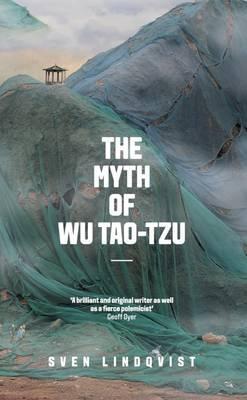
The Myth of Wu Tao-Tzu
'During the Tang dynasty, the Chinese artist Wu Tao-tzu was one day standing looking at a mural he had just completed. Suddenly, he clapped his hands and the temple gate opened. He went into his work and the gates closed behind him.' Thus begins Sven Lindqvist's profound meditation on art and its relationship with life, first published in 1967, and a classic in his home country - it has never been out of print. As a young man, Sven Lindqvist was fascinated by the myth of Wu Tao-tzu, and by the possibility of entering a work of art and making it a way of life. He was drawn to artists and writers who shared this vision, especially Hermann Hesse, in his novel Glass Bead Game. Partly inspired by Hesse's work, Lindqvist lived in China for two years, learning classical calligraphy from a master teacher. There he was drawn deeper into the idea of a life of artistic perfectionism and retreat from the world. But when he left China for India and then Afghanistan, and saw the grotesque effects of poverty and extreme inequality, Lindqvist suffered a crisis of confidence and started to question his ideas about complete immersion in art at the expense of a proper engagement with life. The Myth of Wu Tao-tzu takes us on a fascinating journey through a young man's moral awakening and his grappling with profound questions of aesthetics. It contains the bracing moral anger, and poetic, intensely atmospheric travel writing Lindqvist's readers have come to love.
128 pages, Paperback
First published January 1, 1967
About the author
Sven Lindqvist
56 books168 followersDr. Sven Lindqvist was a Swedish author of mostly non-fiction.
He held a PhD in History of literature from Stockholm University (his thesis, in 1966, was on Vilhelm Ekelund) and a 1979 honorary doctorate from Uppsala University. In 1960–1961, he worked as cultural attaché at the Swedish embassy in Beijing, China. From 1956–86 he was married to Cecilia Lindqvist, with whom he had two children. He was married to the economist Agneta Stark since 1986. He lived in the Södermalm area of central Stockholm.
He held a PhD in History of literature from Stockholm University (his thesis, in 1966, was on Vilhelm Ekelund) and a 1979 honorary doctorate from Uppsala University. In 1960–1961, he worked as cultural attaché at the Swedish embassy in Beijing, China. From 1956–86 he was married to Cecilia Lindqvist, with whom he had two children. He was married to the economist Agneta Stark since 1986. He lived in the Södermalm area of central Stockholm.
Ratings & Reviews
Friends & Following
Create a free account to discover what your friends think of this book!
Community Reviews
Displaying 1 - 23 of 23 reviews

April 2, 2018
This early work by Sven Lindqvist shows the moments of birth of our greatest journalist and stylist, and a great, piercing critic of colonial-inspired genocide world wide. The transformation of a standard journalist takes place within Maoist China, and embodies a long journey into aesthetics and out the other side. The book is a collection of notes, more or less, some just sketched, others lovingly stretched out. It's not a perfect work, but it's a fascinating and inspiring one, especially in the way we can see a mind open out of lesser inspiration, such as Hesse, into a unique voice, by facing its cultural blindness head on. In that, it's pure Lindqvist.

August 6, 2013
Wow, that was unexpected. 100 pages of semi-dream traversing chinese calligraphy, the lure of art, indian democracy, armed afghans and 1940s europe. Ultimately this is an exploration of the reality of the world we live in, and can dangerously lead you into thinking about just how far away from that reality our own everyday lives are.
Borrowed this randomly from the library based on the title. Going to have to buy a copy to re-read now.
Borrowed this randomly from the library based on the title. Going to have to buy a copy to re-read now.

March 27, 2020
Utan överdrivet mycket god vilja kan man se detta som en föregångare till dagens semisjälvbiografiska, autofiktionella, namndroppande (de ständiga Hölderlin, Rilke och Heiddeger, här Hesse, Proust, Musil ) semiessäsamlingar; Murnane, Ugresic (liksom Myrdal är en föregångare till Knausgård). Delvis är denna dock till en början nästan ogenomträngligt esoterisk, kanske krävs större förkunskaper inom den för tiden så populära buddhismen. Sedan, Kina, Lindqvist romantiserande mysticism mot verkligheten, Indien; ideal mals ner av verkligheten. Sorgligt, men bättre än Myrdals blindhet. Konflikten mellan att lämna världen (genom, in i konsten), eller att förändra den, men också en svart pessism mot möjligheten att faktiskt göra världen bättre, "jag kastades in i studier som ingav en förtvivlan utan något slut". Märkligt framsynt, kraftigt svartsynt, ser samma problem då som finns nu, förutspår sedan en ny slutgiltig lösning.

April 8, 2024
Noen interessante poenger og refleksjoner her og et interessant motsvar TIL (!!) (og polemikk MOT!!) Hermann Hesse. Føler dog kanskje at forfatteren mistolker Hesse litt og at Hesse hadde vært mer enig enn uenig? Uansett artig å lese om man har lest Glassperlespillet, men skulle kanskje ønske den gikk mer inn på den romanen. Uansett en ganske nice men også veldig dyster reiseskildring. Ganske mørk lesning til tider. Men sånn er verden vi lever i dessverre. (Ville også vite mer om den myten om Wu Tao Tzu som boka er oppkalt etter)
July 9, 2026
"Jag skall nu försöka besvara den fråga ni bett mig förhandla.
Är social och ekonomisk frihet möjlig uta n våld?
Nej.
Är den möjlig med våld?
Nej."
:)
Älskar formen och språket, men den var lite för spretig.
Är social och ekonomisk frihet möjlig uta n våld?
Nej.
Är den möjlig med våld?
Nej."
:)
Älskar formen och språket, men den var lite för spretig.

May 23, 2021
Det här är egentligen en så otroligt mångbottnad bok att jag inte vet var jag ska börja. Att kliva in i ett konstverk och stanna där. Filosofiska utläggningar om nuet, det som varit, och det som kommer. Kärleken till livet. Resorna till Kina och Indien. Men också oron kring en mörk framtid som tycks vara fylld av fascism, rasism och våld. Den här boken innehåller ungefär allt, men den låter samtidigt läsaren vara delaktig, och man spinner ofta vidare i sina egna tankar.
October 4, 2013
Bit disjointed and not an easy read. Although some great passages let me feeling a bit 'meh'
February 6, 2021
Tar sig betydligt under andra halvan, blir där en en vänsterintellektuells självbiografi a la 60-tal. Första halvan tyvärr mer likgiltig, har velat lära mig mer om kinesisk filosofi än vad jag fick
March 9, 2023
Read for school
Did not finish
What was the point of this book? I don't like books that are just "art" and poetic.
There is no story, just random segments of text about different things. It gave me nothing and I don't see no point in finishing it or just flip through it as it will give me nothing. And it feels like I won't miss anything by not finishing the book. I get the gist, I gave it about 40-50 pages of propre reading. No thank you, next.
Did not finish
What was the point of this book? I don't like books that are just "art" and poetic.
There is no story, just random segments of text about different things. It gave me nothing and I don't see no point in finishing it or just flip through it as it will give me nothing. And it feels like I won't miss anything by not finishing the book. I get the gist, I gave it about 40-50 pages of propre reading. No thank you, next.
February 24, 2026
I honestly have no idea what rating to give this book. I found the first two parts difficult to engage with and confusing to follow, but from part three onwards it was brilliant, and there are certain sections that I don't think I'll stop thinking about for a while. I don't think it's a book I can assign a numerical star ranking to; I could quite comfortably give it anything from a 2 to a 5, but on balance I think a 4 makes sense

December 25, 2023
It was sometimes difficult to tell where the literary criticism, memoir, and political manifesto began and ended, but by the end of I was entranced by Lindqvist's writing, and the absolute shock to remember that this was written in 1967. So much Herman Hesse. I think that this author has a lot to say and will continue to seek out his work.
March 19, 2024
"Det måste gå. Man har alltid förespeglat mig ett klarare och friare sätt att leva. Det måste finnas. Jag har sett det i dikterna och i tavlorna. Jag har hört det i musiken. Där finns en oräddhet som gör mitt liv löjligt. Där finns lyckomöjligheter som skrämmer mig mer än olyckan. Där finns en omvänd avgrund och man faller uppåt."
January 20, 2025
En av de bästa böcker jag läst av en svensk författare. Älskar Lindqvists bilder och hans akademiskt primitiva språk. Och hur han syr ihop den här ärligt talat mycket spretiga boken i slutet. Det är rörande, indignerat och stort.
June 20, 2026
A labyrinth of literary references and self-indulgent musings initially chokes the higher messages of personal experience.
Then the book comes to life at last in the final section, where the structural cruelty of our political and economic systems and powerbases is exposed.
Then the book comes to life at last in the final section, where the structural cruelty of our political and economic systems and powerbases is exposed.

October 1, 2017
The worst book i have never read !!
February 18, 2023
Fattade ingenting! Bokcirkelbok

June 5, 2023
An alarmist, disjointed, naive, rambling, desultory, and often incoherent minor work by a major Swedish writer.

March 11, 2025
A really nice read for me. It’s a little dated of course but it’s poetic, historic and very educating.

Read
March 14, 2025jadu lite deprimerande
September 26, 2025
Det er alltid tankevekkende å lese Sven Lindqvist, men akkurat denne boken blir verken fugl eller fisk.
March 31, 2026
Jag behöver nog läsa om första halvan, när jag inte har tidspress, för att fullt ut förstå varför den är så bra. Känslan att den är så väldigt bra infinner sig dock.
November 22, 2023
“The first casualty of war is the truth. Does a Japanese drama become worse because the Japanese fleet has shelled Tsingtao? Has a bad German book become superior to an English book because those countries are at war? Does the outbreak of war make French culture worthless?
That is what they want us to think. We must refuse to participate in this deceit.”
That is what they want us to think. We must refuse to participate in this deceit.”
Displaying 1 - 23 of 23 reviews